
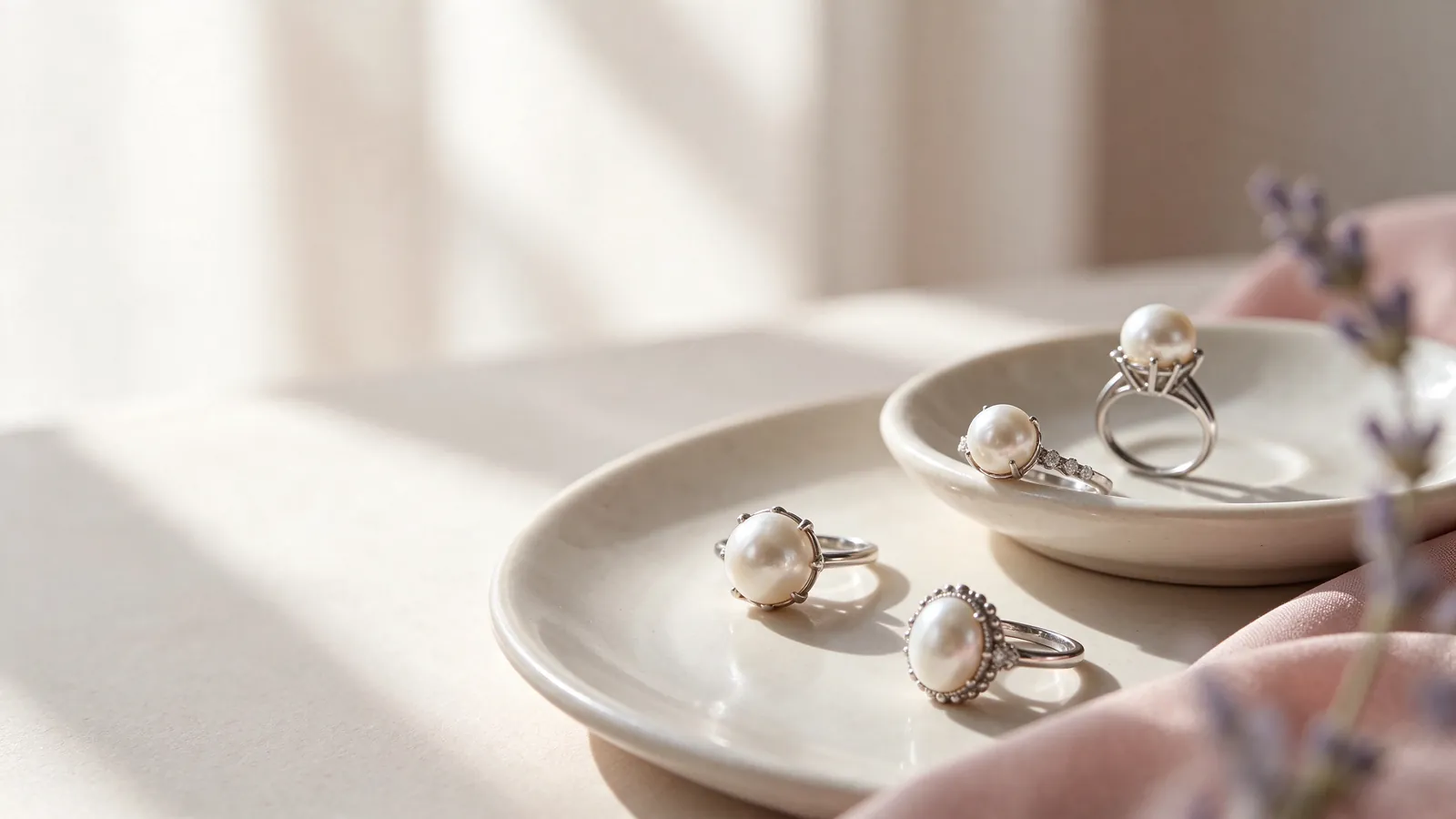
How do pearl spacing and proportions shape a multi pearl ring, from a double pearl ring to a three pearl ring?
Start with the amount of space the whole ring occupies across your finger. A double pearl ring can create two distinct points of interest; a three pearl ring may bring attention to a central pearl or build an even rhythm. Neither description tells you the actual width. Pearl size, the gaps between pearls and the direction of the setting all contribute to the outline. Look at your relaxed hand from an ordinary conversational distance before studying a close-up.
Finger length is a useful reference, not a rule that assigns particular arrangements to particular hands. A horizontal line emphasises width, while an angled line can lead the eye along the finger. Open spaces in the metalwork also change how substantial a ring appears. When exploring pearl rings Hong Kong, compare a multi-pearl arrangement with a single pearl ring to identify whether you actually prefer repeated focal points or simply a larger overall face.
When trying on a multi pearl ring, what should you check about face width and finger movement in a double pearl ring or a three pearl ring?
Straighten your fingers naturally, make a loose fist and then curl them as though holding a cup handle. Check whether the outer pearls press against neighbouring fingers or the face turns towards the palm. A visible gap between pearls does not guarantee clearance beneath their settings. Inspect the side and palm views as well as the front, without holding the ring in position with your thumb.
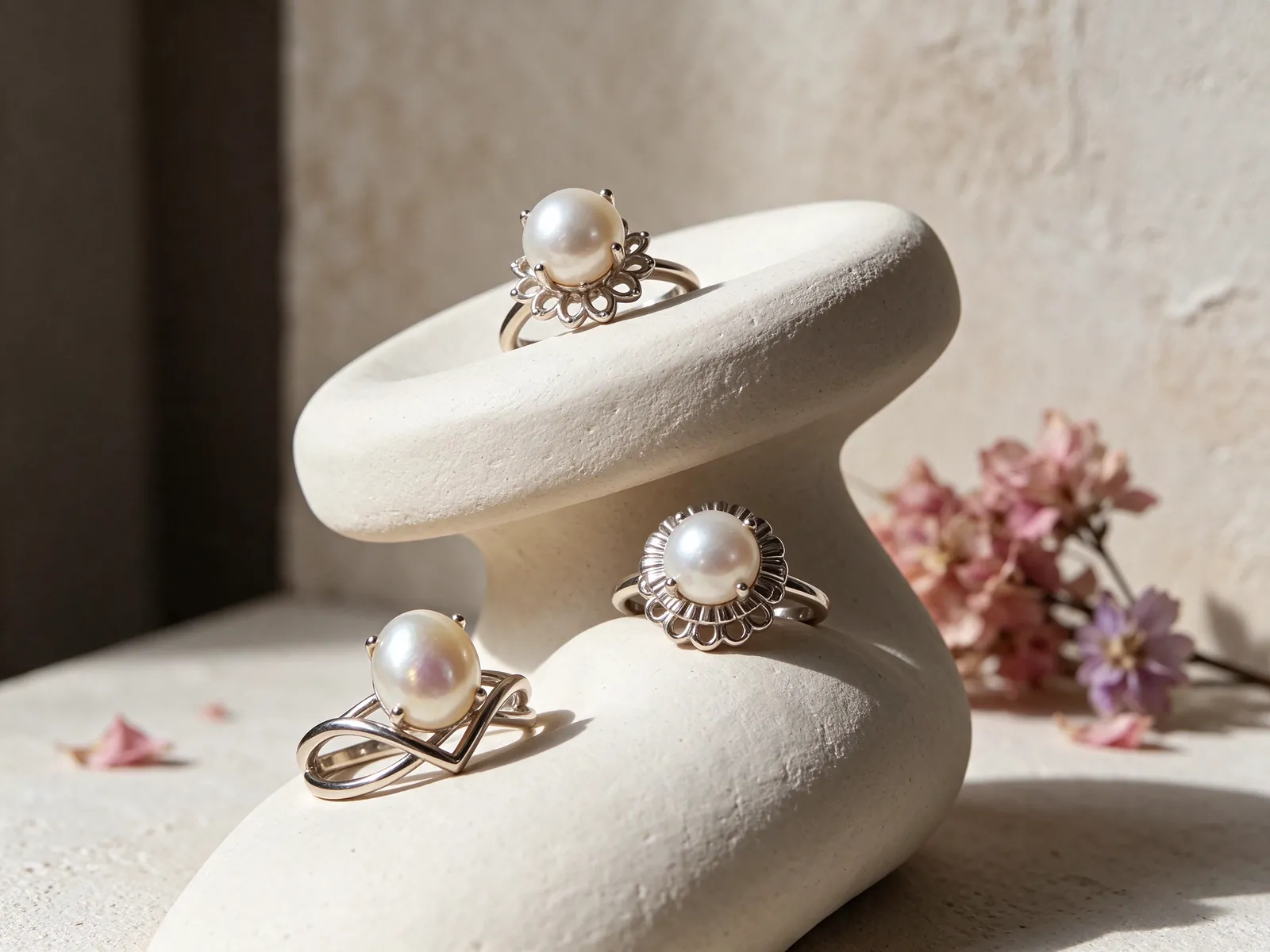
Paired, centre-led or continuous: decide which rhythm you enjoy
Two similarly weighted pearls can make a balanced pair, whereas different sizes or staggered positions create a moving focal point. Consider how the metal connects them: a light line can preserve separation, while a broader shape may make the composition feel more unified. If pearls sit at opposite ends of an open pearl ring, distinguish its visual opening from any stated adjustment function. An open shape alone is not permission to bend the ring.
With three pearls, ask whether the centre leads the composition or all three share similar visual weight. Inspect the ends as well as the middle: a crowded centre and apparently unsupported outer points may not create the balance you want. A longer row should be assessed in the same way. More pearls need not mean a wider face, because smaller pearls, closer spacing and a different angle can change the total span.
Make photographs comparable before judging the arrangement
Keep the same finger, hand position and approximate camera distance when recording alternatives. Include the whole hand rather than cropping tightly around the pearls. An angled close-up can enlarge the nearest pearl and conceal the true span. Label your observations with useful descriptions such as concentrated, airy or raised at one end; these are more informative than ranking designs by pearl count.
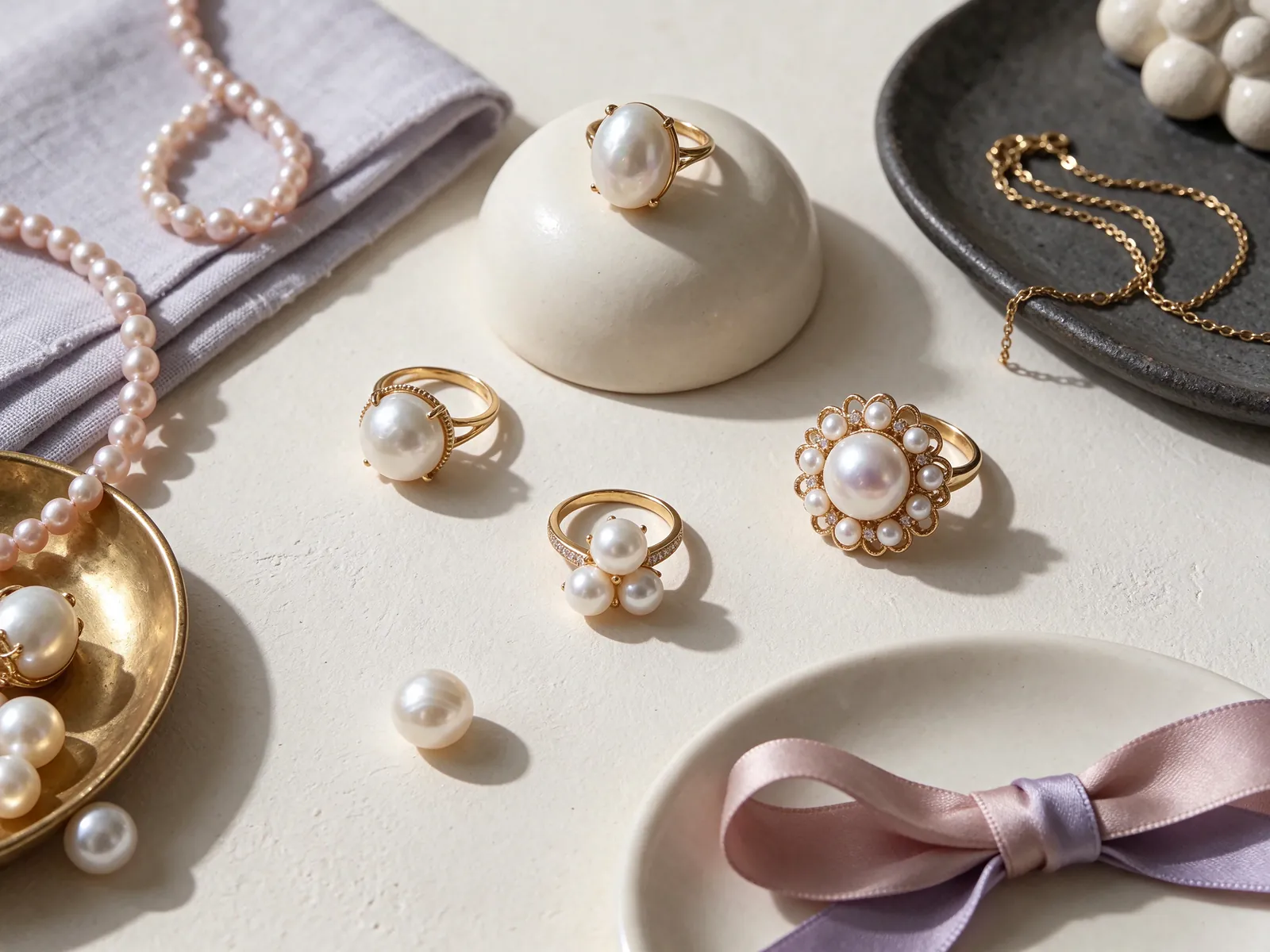
Matching means a considered relationship, not compulsory sameness
Several pearls make differences in lustre and colour easier to notice. For a quiet, cohesive line, view the pearls together under the same light and look for an abrupt change in brightness between the centre and ends. For deliberate contrast, assess whether the difference establishes a clear focal point. Unequal size or shape is not automatically poor matching; the question is whether those differences work as a composition you enjoy.
GIA describes seven pearl quality factors: size, shape, colour, lustre, surface quality, nacre quality and matching. Matching is particularly relevant to a multi-pearl arrangement, but it should not replace the other factors. Turn the face gently to see surfaces near the settings and between adjacent pearls. Appearance alone cannot establish origin, natural-versus-cultured identity or a certificate, so keep visual preferences separate from any identification information provided for a particular pearl.
Describe the colour effect rather than guessing the pearl type
Try phrases such as a consistent tone across the row or a more prominent centre. These explain the desired effect without assuming every colour difference identifies a different pearl type. Compare images taken in similar, gentle light; a filter or strong reflection can exaggerate contrast. If you usually wear plain shirts or soft knitwear, consider whether a quiet line or a distinct colour accent better fits that wardrobe.
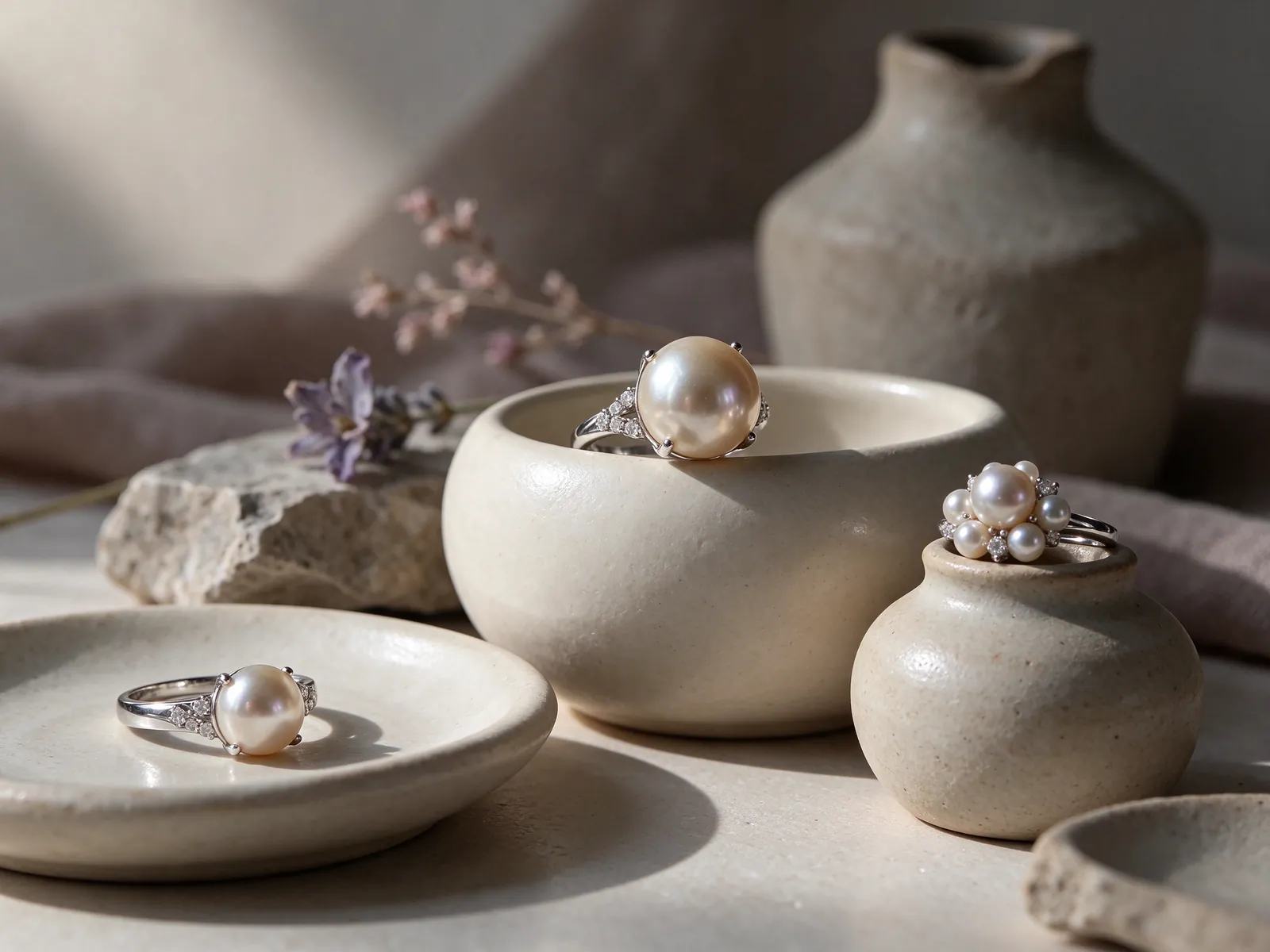
Height, support and finger position affect everyday comfort
Look beyond face width to the height of the pearls and the profile of their settings. A raised end may catch a sleeve or bag opening; a lower arrangement can still rub against the neighbouring finger. Inspect the palm-side band for projecting edges, then try holding your own phone and a familiar cup. These ordinary movements reveal practical interference that a still photograph cannot show.
The middle, ring and little fingers offer different spaces beside the ring. Moving a design to another finger may alter both its balance and its tendency to rotate. If you like a focal point at the outside of the hand, compare the considerations for a pearl pinky ring and pay attention to the exposed outer pearl. A flattering position still needs a suitable fit and clearance from objects you handle.
Locate the discomfort before changing the size
Lower your hand, lift it again and gently bring your fingers together. Notice whether discomfort is at an outer pearl, the finger base or beneath the band. Do not immediately assume that a larger size will solve a width problem, or a smaller size will correct an unbalanced face. Describe the contact point and movement that causes it so the discussion can distinguish fit from arrangement.
Styling and stacking work best when the pearl line has breathing room
A multi-pearl face already supplies repetition, so your outfit need not repeat that density everywhere. With a patterned or pleated cuff, leave a little visual separation between the sleeve and ring. With a plain jacket or top, let the arrangement provide the detail. Earrings do not have to copy the number of pearls: a simpler outline can echo the overall colour while allowing the ring to remain the main focus.
Before combining pearl stacking rings, examine their side profiles together. Check whether the second ring overlaps the pearl settings, and bend your fingers to see whether its metal touches a pearl. A neat-looking stack is not worth persistent rubbing. If two rings compete for the same space, move the companion to another finger or hand; the pairing can still feel intentional without making the pearl line crowded or tilted.
Use metal colour to support the composition
Bring your usual watch or another frequently worn ring into the comparison. Warmer or cooler metal lines can change the impression of the whole arrangement, but the setting profile and comfort still matter. Describe whether you want the ring to blend with those pieces or offer contrast. Neither the metal colour nor a warm-looking photograph establishes the pearl's identity; styling observations and identification are different questions. Flint Jewellery’s customisation material options are 18K 750 white gold, 18K 750 yellow gold, 18K 750 rose gold, PT950 platinum and PT900 platinum.
Care for the gaps and outer pearls without forcing access
After wearing, use a very soft, clean cloth to wipe accessible surfaces gently. Pay attention to the spaces between pearls and the edges of the settings, but do not force a brush, pointed object or tightly twisted cloth into a narrow gap. If you notice movement in a pearl, stop wearing the ring and ask about an appropriate inspection. Twisting the pearl to test its security applies unnecessary force.
GIA places pearl at 2.5 on the Mohs hardness scale and says pearls should never be cleaned in ultrasonic or steam cleaners. The hardness figure is a reminder to avoid scratching, not a prediction of how many impacts a ring can withstand. Remove it before perfume, hair spray or cleaning chemicals, and before tasks that press the outer pearls against hard objects. Store it separately from jewellery that could rub against the row.
Separate a lighting change from a change in position
If one pearl suddenly seems darker, compare it again in the same gentle light and check for surface residue. A changed gap, tilted pearl or shifted face is a different issue and should not be treated simply by wiping harder. Record front and side photographs and note when you noticed the change. Care aims to reduce avoidable contact; it does not imply every surface or setting problem can be reversed.
Prepare a useful brief for a design discussion
Write down the finger you expect to use, whether the ring will be worn alone and the arrangement direction you prefer. Explain whether you want a central focus, two separated points or a line following the finger. Include any contact point that felt uncomfortable during a fitting. These details are more useful than pearl count alone because the same count can produce very different spans, heights and proportions.
Consider the Pearl Jewellery you already enjoy wearing and whether the new arrangement should echo its tone or offer a contrasting outline. When discussing preferences with Flint Jewellery on WhatsApp, a hand photograph and a short explanation of the desired rhythm can make the conversation more specific. Ask about the pearl information, material, ring size and structure of the design being discussed rather than assuming those details from an image.
Make the final comparison about wearability as well as appearance
Review the front proportions, side height, neighbouring-finger clearance, matching effect and care needs together. Decide whether any change in everyday habits is reasonable for the look you like. If using your phone or putting on a jacket requires constant avoidance, reconsider the layout. A successful choice balances your preferred visual rhythm with natural movement rather than simply selecting the greatest number of pearls. Contact Flint Jewellery on WhatsApp at +85260106207 to discuss your preferred arrangement and fit.
| Arrangement | Front-view question | Movement check | Styling approach |
|---|---|---|---|
| Balanced pair | Do both ends have the visual weight you want? | Do outer pearls press against neighbouring fingers? | Leave room for the paired focal points |
| Staggered pair | Does the contrast have a clear direction? | Does the more prominent end catch a sleeve? | Echo the tone with a simpler companion |
| Concentrated trio | Is the centre clear rather than crowded? | Check clearance beneath the settings | Allow the central rhythm to lead |
| Angled trio | Does the line follow the finger pleasingly? | Inspect the raised points as the hand turns | Avoid hiding the angle with another ring |
| Continuous row | What is the overall span, regardless of count? | Check both outer ends beside adjacent fingers | Keep the cuff visually separate |
Pearl knowledge and authoritative references
GIA identifies seven pearl quality factors, including matching alongside size, shape, colour, lustre, surface quality and nacre quality. This framework helps explain why a multi-pearl arrangement should be assessed as a relationship between pearls, not by count alone.
Read the reference for this factFrequently asked questions
Can three smaller pearls look subtler than a pair?
Yes, depending on their overall span, spacing and setting outline. A compact trio can read as a quiet line, while a widely separated pair can occupy more of the finger. Compare the whole hand and side profile, not count alone.
Must all pearls have identical colour for a balanced ring?
No. A consistent tone can support an even line, but intentional contrast can establish a centre or direction. View the pearls together in the same light and assess whether the differences create the effect you want.
Why does a ring feel different when moved to my little finger?
Neighbouring-finger space, exposure at the edge of the hand and fit can all change. Check rotation and the outer pearl's contact with objects rather than assuming an arrangement that works on your ring finger will behave identically elsewhere.
Should I choose a companion ring that fits tightly against the pearl settings?
Not simply for a seamless look. Inspect both profiles and bend your fingers to check for metal-to-pearl contact. Moving the companion to another finger is a useful option when same-finger stacking creates rubbing or tilting.
What should I include when discussing customisation preferences?
Include your intended finger, preferred direction, single-wear or stacking plans and any discomfort noticed during fitting. A photograph of your relaxed hand can explain proportions, but pearl identity and structural details should be discussed separately from appearance.
Updated: