
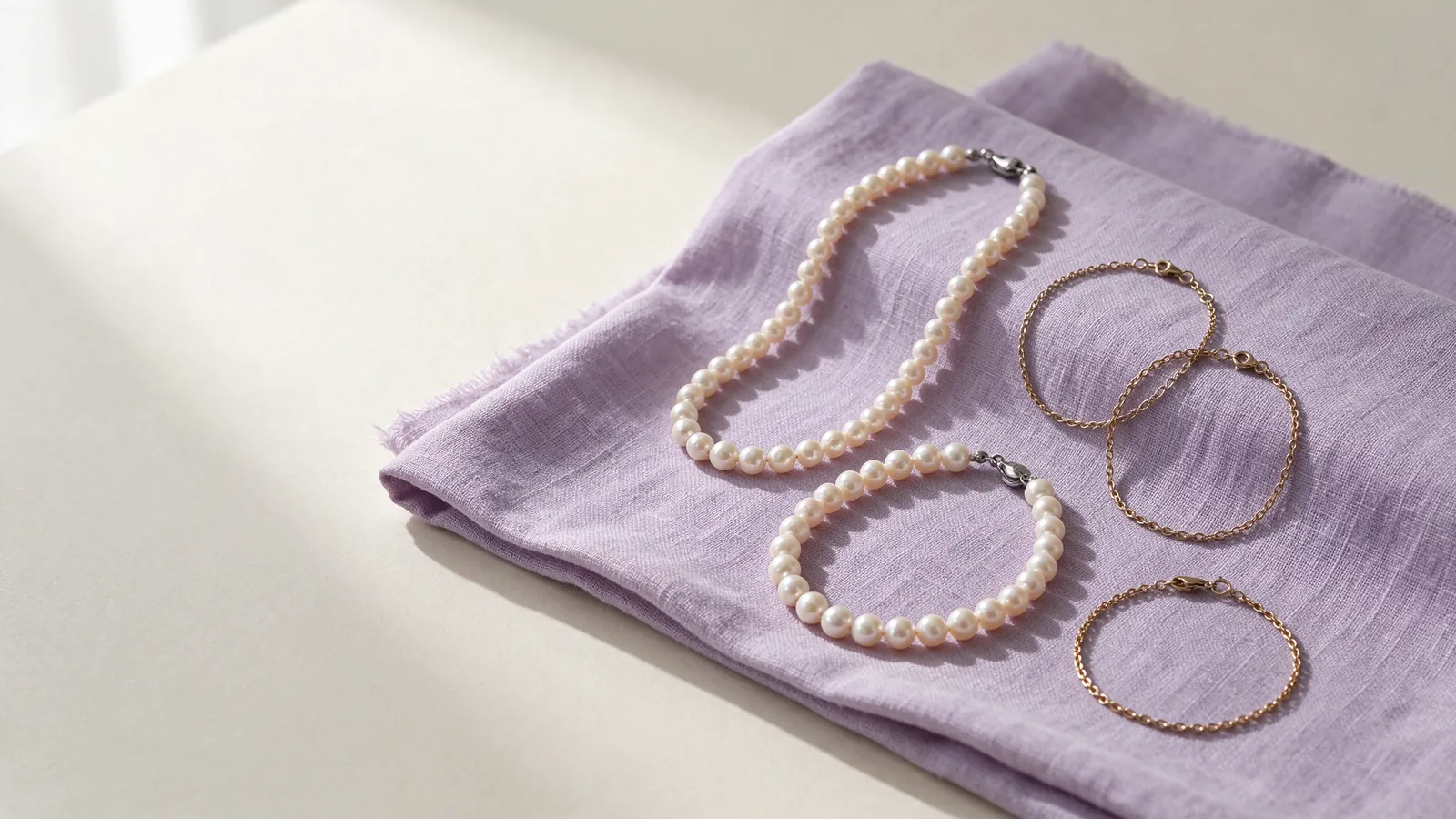
How do pearl spacing and wrist fit shape a pearl station bracelet, pearl chain bracelet or pearl and chain bracelet?
A pearl station bracelet uses the chain between the pearls as part of the composition, rather than treating it as an invisible connector. Begin by deciding whether you want your eye to follow a fine metal line or move through a sequence of distinct pearl highlights. The wider pearl bracelet discussion helps separate those preferences from other structures. A style can look delicate because of open space, not simply because the pearls appear small in a photograph.
With a pearl chain bracelet, overall length and pearl placement must be considered together. A layout that looks evenly balanced on a flat surface changes when it curves around the wrist. A pearl and chain bracelet may also place different visual emphasis on the outer wrist and the palm side. Decide which views matter to you: a clear arrangement beside a shirt cuff, or pearl accents visible as your hand turns. There is no single spacing pattern that answers both preferences equally well.
When trying on a pearl station bracelet, pearl chain bracelet or pearl and chain bracelet, what should you check after fastening it?
Let your arm hang naturally, then turn your palm upwards and bend your wrist as if reaching for a phone. Watch whether the chain becomes taut, the pearls move into an uncomfortable position or the bracelet slips towards your hand. A useful fit allows movement without pressing into the skin or feeling difficult to control. Do not shorten a bracelet merely to keep a favourite pearl permanently centred; natural rotation and comfortable movement need to be judged together.
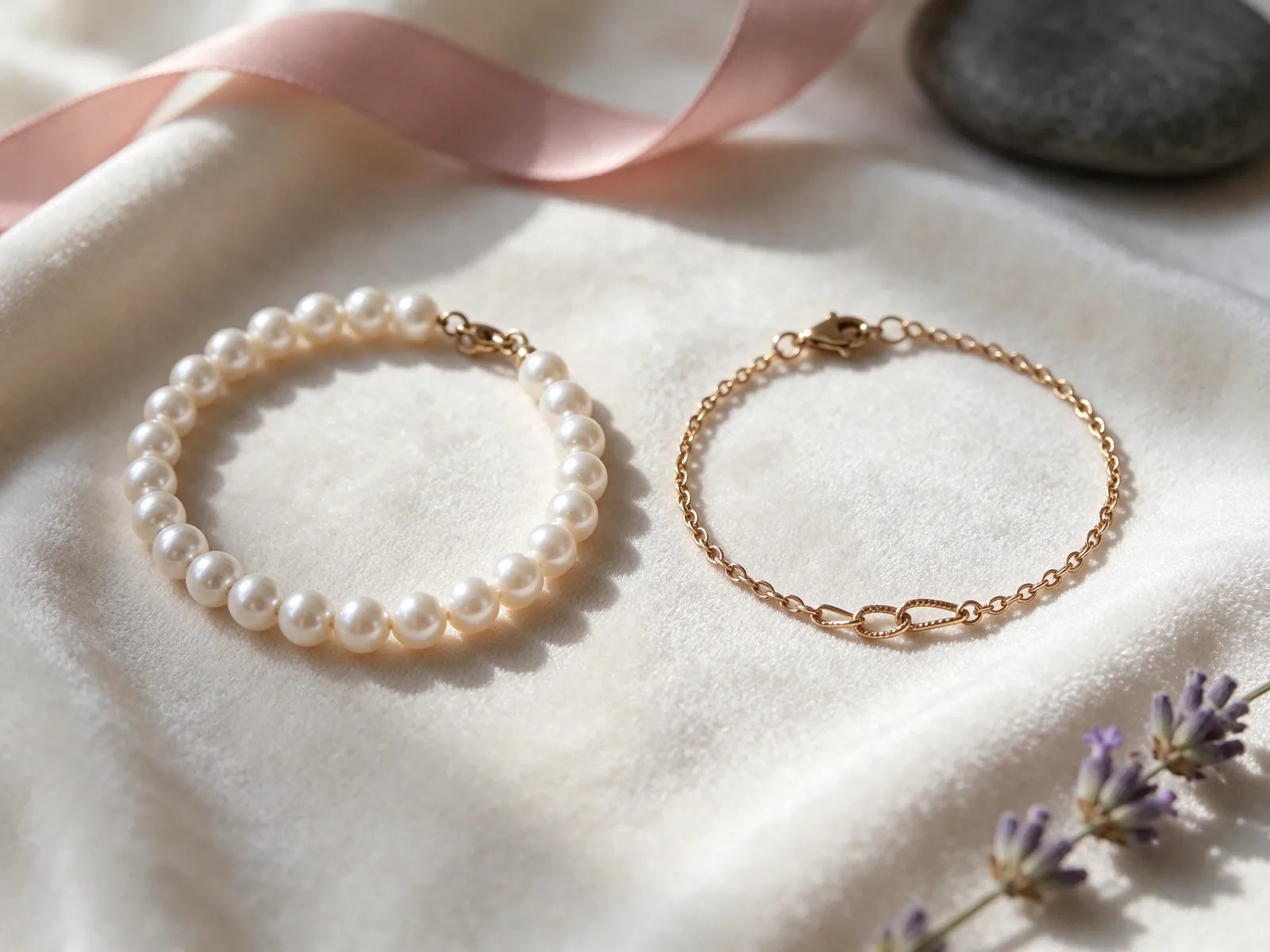
Read the gaps and links before deciding how many pearls you want
More open spacing gives the chain a visible route around the wrist, with pearls acting as pauses along it. Closer spacing creates a more continuous impression of pearl light. Neither is automatically more refined. If you keep choosing nearly uninterrupted pearl coverage, compare a pearl strand bracelet instead of trying to make a station layout behave like a strand. This comparison clarifies whether your preference is really for open chainwork or for a continuous sequence of pearls.
Link outlines matter as much as the gaps. A visually quiet chain can blend into the wrist, while a more pronounced outline creates its own pattern beside the pearls. Compare both against a pale cuff and a darker sleeve to see what attracts your eye first. If the desired effect is a broader band across the wrist, a multi strand pearl bracelet offers a different arrangement, rather than simply a denser version of the same open chain.
Compare similar views rather than enlarged product photographs
Use a consistent wrist position when comparing layouts, and look at the side as well as the top. Counting pearls alone misses the length of the chain, the position of the clasp and the visual area of each pearl shape. Photographs with different magnification cannot reliably establish size. A practical preference such as wanting clear pearl accents on the outer wrist and less projection underneath says more about your needs than asking for evenly spaced pearls without considering wear.
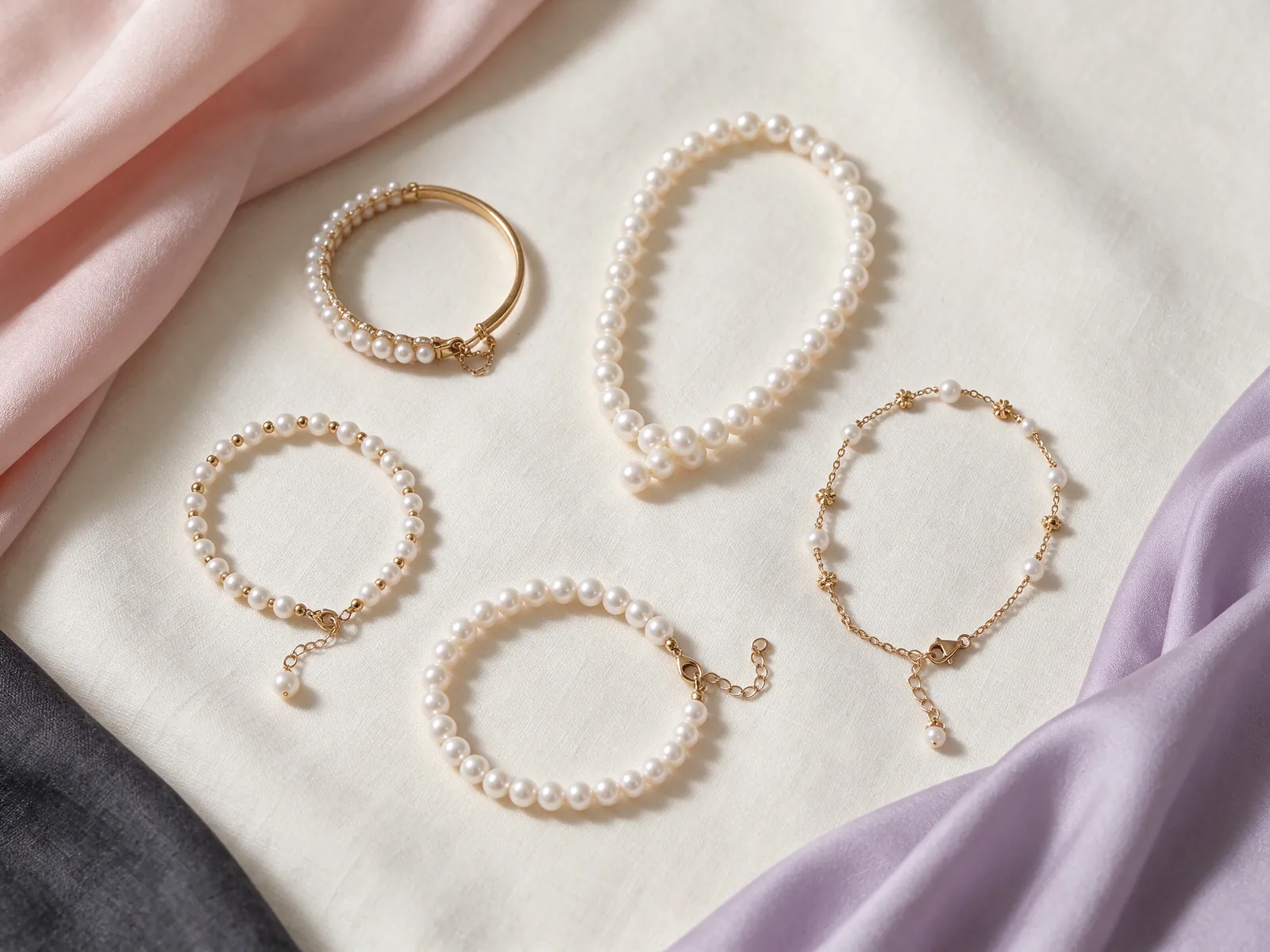
Separated pearls make individual lustre and matching easier to notice
When pearls are separated by visible chain, each one can draw attention on its own. Look slowly in soft, consistent light and turn the bracelet to observe the definition of reflections, changes across the surface and the relationship between neighbouring pearls. Strong spotlights can disguise some differences or exaggerate others. Comparing in the same setting is more useful than deciding from one dramatic photograph, particularly when you want a quiet, coordinated effect for everyday jewellery.
GIA describes seven pearl value factors: size, shape, colour, lustre, surface quality, nacre quality and matching. For a station design, this is a useful reminder that size or roundness alone is not a complete quality assessment. Slight shape variation can be an intentional visual preference, while similar outlines do not establish that every other factor is alike. Neither a chain layout nor a pearl's visible colour identifies its origin, treatment status or natural-versus-cultured identity.
Explain which kinds of consistency matter to your eye
If you prefer an orderly arrangement, specify whether you mean similar outlines, a close colour relationship or a consistent reflection pattern. If variation appeals to you, consider whether it should appear at selected positions or throughout the chain. Images taken in the same light can communicate these aesthetic preferences, but they cannot establish pearl identity. Separating the appearance you enjoy from the information about the pearls makes a design conversation clearer than asking only for the highest grade.
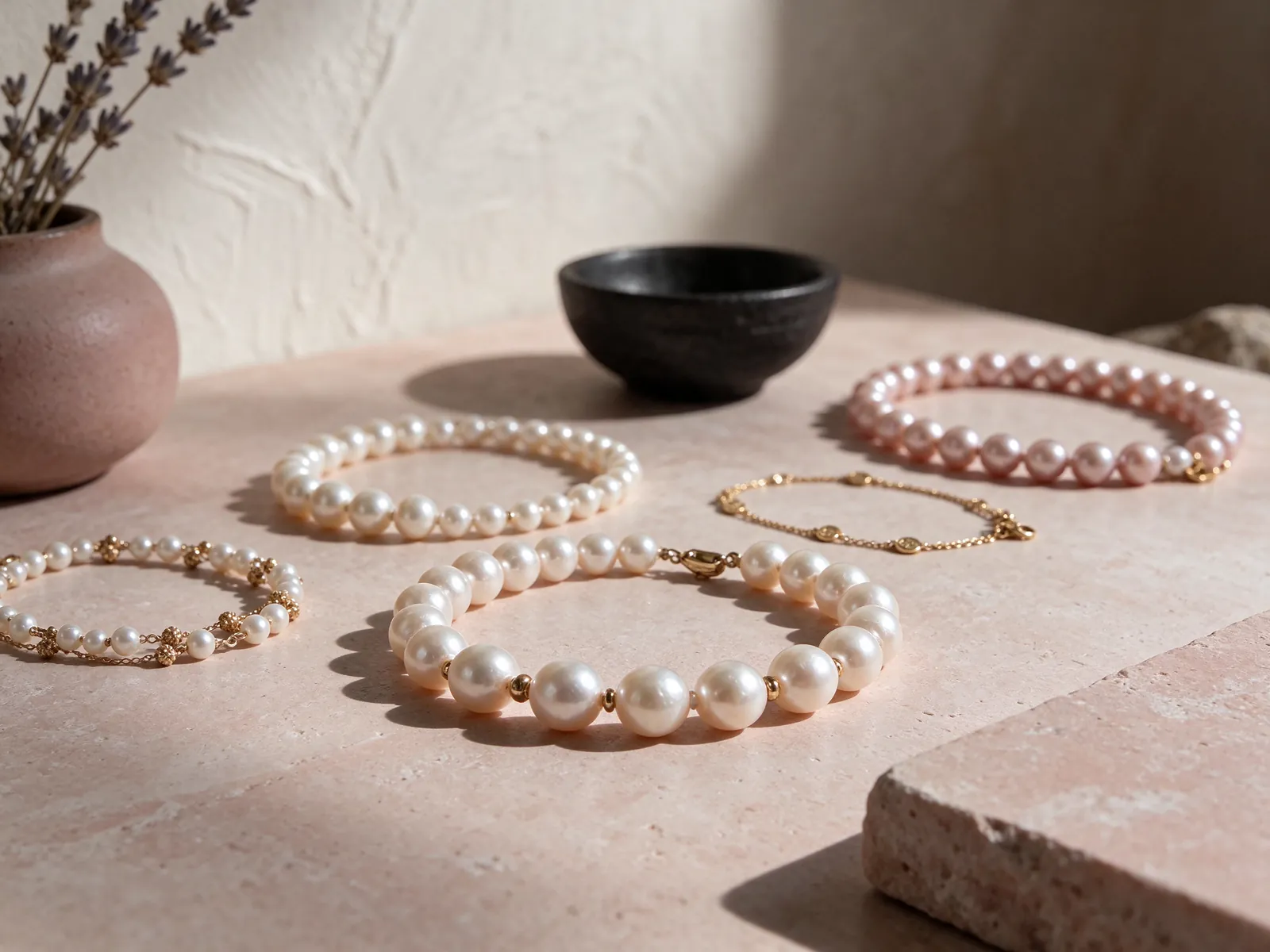
Test the clasp with your sleeves and ordinary hand movements
Measure your wrist where you expect to wear the bracelet, using a flexible tape that rests against the skin without compressing it. Keep sleeve thickness out of that measurement. Wrist circumference is a starting point, not the finished bracelet length: clasp shape, projecting pearl positions and the way a chain moves can all affect the feeling after fastening. Avoid borrowing someone else's preferred length adjustment without testing how the structure behaves on your own wrist.
For office wear, try a shirt or jacket with the cuff you normally use. Check whether it catches on a link, whether a pearl presses against the wrist bone and whether the clasp repeatedly touches the desk. Also test whether you can operate the fastening comfortably and recognise when it is fully closed. A clasp that looks discreet in a photograph may not suit your handling preference, especially if you usually put jewellery on without assistance.
Check the hand you actually plan to wear it on
Your dominant hand may make more contact with cups, bags and desk surfaces. Try the intended wrist while typing, turning your hand and reaching into a bag, rather than judging only a still pose. If you wear a watch, observe whether it meets the pearls as both pieces move. Wearing the bracelet on the opposite wrist can preserve their separate outlines and reduce repeated contact. The aim is comfortable, manageable movement, not a chain that can never rotate.
Give the pearl line a clear role when wearing it alone or layered
Worn alone, an open pearl chain can create a quiet boundary between the wrist and a cuff. With patterned clothing, check that the pearl positions remain readable; with a plain sleeve, notice whether the links become the stronger feature. A half chain pearl bracelet provides a useful comparison if you prefer a concentrated pearl area beside a metal area. That structure emphasises the meeting of two regions, while a station layout repeats the conversation between pearl and chain.
For layering, first decide whether the focal point should be the pearls, metal lines or a moving detail. A pearl charm bracelet introduces a hanging element rather than only fixed stations. If you pair the structures, watch where a charm falls when your hand turns and whether it touches a pearl or catches a link. Space that keeps each piece legible is useful, but if contact keeps occurring during movement, separate wrists are more practical than a perfect-looking still arrangement.
Compare metal colour with the jewellery you already wear
Place your usual rings, watch and sleeve in the same view before deciding on a metal colour direction. You may prefer a coordinated palette or a deliberate contrast; neither requires a fixed rule about skin tone. Keep the lighting consistent so you can judge the relationship between metal and pearl light. Matching colours are a styling choice, not permission for pieces to rub together. Continue to check movement even when the combination looks visually harmonious.
Care for the pearl surfaces as well as the chain connections
GIA gives pearl a Mohs hardness of 2.5. That figure supports caution about scratching; it is not a score for how much impact a bracelet can withstand. An open metal structure does not make the pearls suitable for repeated contact with hard objects. After wearing, gently wipe with a very soft, clean cloth. Support the bracelet as you work rather than pulling the chain to hold one pearl still, which can place unnecessary strain on its connection.
Pearls should never be cleaned in ultrasonic or steam cleaners. Avoid acids, perfume, hair spray and excessive heat, and finish applying cosmetics before putting the bracelet on. For storage, let the chain rest without tangling it into other jewellery and protect the pearls with a soft separation. If a link appears distorted, the clasp stops operating smoothly or a pearl position feels unusually loose, pause wear and have the connection assessed rather than straightening it with household tools.
Do not assume every station bracelet uses the same attachment method
The style name does not explain how each pearl is attached, so a cleaning method suitable for one bracelet should not automatically be transferred to another. Where a construction includes stringing, GIA advises letting the string dry completely after water cleaning before wearing it. If the attachment is unclear, start with gentle after-wear wiping and ask about suitable care. A clean-looking surface does not establish that every joint, pearl hole or connection is appropriate for soaking.
Turn a broad preference into a focused design conversation
Bring your wrist measurement, intended wearing position and typical sleeve style into the discussion. Explain whether you prefer open gaps or a near-continuous effect, visible or quiet links, and solo wear or layering. A side view of the wrist can communicate more about proportion than another enlarged front-facing image. Treat pictures as a way to describe mood and layout, not as evidence of pearl species, dimensions or construction details that they do not show.
Flint Jewellery's customisation material directions are limited to 18K 750 white gold, 18K 750 yellow gold, 18K 750 rose gold, PT950 platinum and PT900 platinum. Begin with the colour relationship and design preference you want to discuss. If a motif interests you, a heart pearl bracelet can help distinguish attraction to a heart outline from attraction to the open spaces beside it. Consider where an added detail would sit during movement, not only where it looks attractive in a flat layout.
For a gift, ask about habits before guessing a length
Find out which wrist the recipient uses, whether a watch is normally worn and how they feel about operating a small clasp. Their usual cuffs and preference for solo jewellery or layers are also helpful. For your own bracelet, note the most important observation from trying a style: slipping pearl positions, catching sleeves or a chain outline you particularly enjoy. Contact Flint Jewellery on WhatsApp at +85260106207 to discuss these details and give the design conversation a practical starting point beyond wanting something easy to wear.
| Comparison | What to observe | How to try it | Preference to explain |
|---|---|---|---|
| Pearl spacing | Distribution and gaps on the outer wrist and palm side | Look from above and the side after fastening | Chain-led openness or a more continuous pearl effect |
| Link outline | Whether the chain competes with the pearls | Compare beside your usual pale and dark cuffs | Quiet lines or a clearly visible chain pattern |
| Pearl relationship | Lustre, colour, shape and overall matching | Turn the wrist slowly in consistent soft light | Close coordination or intentional variation |
| Clasp and movement | Pressure, slipping and sleeve contact | Type, reach for a phone and bend the wrist | The positions that feel restrictive or catch |
| Solo wear or layering | Contact with a watch, charm or neighbouring chain | Allow normal movement rather than a still pose | Separate outlines on one wrist or separate wrists |
Pearl knowledge and authoritative references
GIA gives pearl a Mohs hardness of 2.5, a relevant reason to avoid repeated rubbing against a watch, neighbouring chain or other hard object when wearing a station bracelet.
Read the reference for this factFrequently asked questions
Does a station bracelet need equal gaps between every pearl?
No. Equal gaps create a regular rhythm, while varied spacing can emphasise selected positions. Judge the arrangement after it curves around the wrist, including the palm side. A flat photograph may not show the balance you will see while wearing it.
If the clasp rotates to the top, is the bracelet definitely too loose?
Not necessarily. Chain movement and pearl distribution also affect rotation. Check slipping towards the hand, pressure during bending and any discomfort from the clasp together. Tightening only to stop rotation can compromise a comfortable fit.
Can I work out pearl size and identity from an enlarged photograph?
No reliable measurement follows from magnification alone, and appearance does not establish pearl species, origin or natural-versus-cultured identity. Use the image to communicate spacing and styling preferences, and discuss pearl information separately.
What matters most when wearing it beside a watch?
Observe contact during ordinary movement, not just metal colour coordination. A watch case or strap may meet the pearls as you type or turn your hand. If repeated contact occurs, use separate wrists rather than keeping a combination that only works in a still pose.
What should I learn about a gift recipient besides wrist circumference?
Ask about their usual wrist, watch, sleeves and preference for single pieces or layers. Clasp handling also matters. These habits help frame spacing and fit discussions; your own preferred finished length is not a substitute for their measurement and wearing needs.
Updated: