
Which Setting Heights and Band Contours Matter in pearl stacking rings and stackable pearl rings for pearl ring stacking?
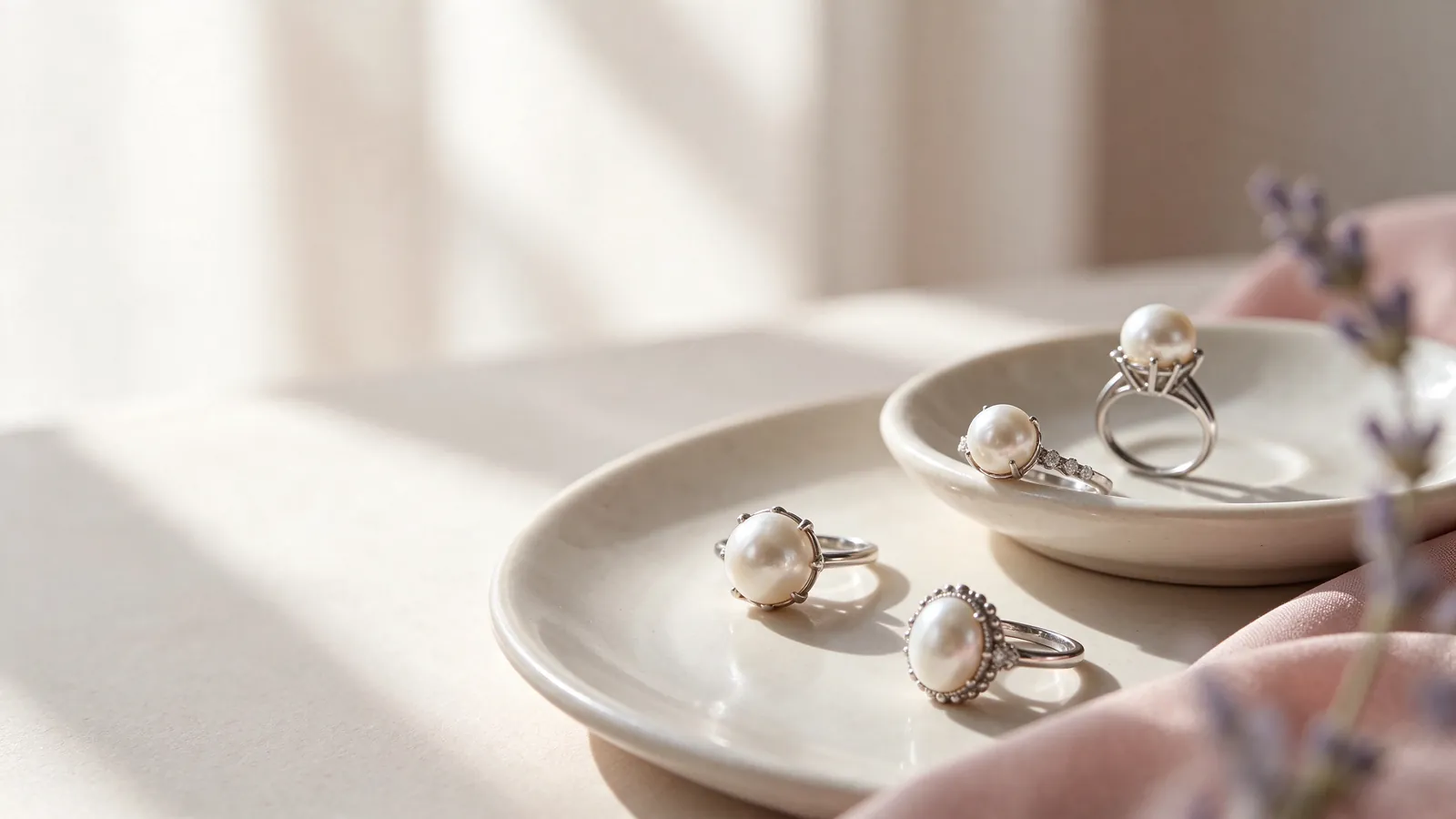
Start with a side view of the setting. Notice where the pearl is supported and whether the neighbouring band enters that space. A taller setting is not automatically more suitable for stacking: another ring may still touch its support or move towards the pearl when it rotates. Look at the arrangement with your hand relaxed, then turn it slightly to see what a front view conceals.
Band contours determine whether a pair sits close, leaves a neat gap or pushes one ring out of alignment. A gap is not necessarily a fault; it can give the pearl a clearer outline. When exploring pearl rings Hong Kong, compare the relationship between setting and band before choosing a companion. Do not force two shapes together simply because a photograph suggests that a seamless stack is the only desirable result.
When Trying pearl stacking rings and stackable pearl rings, How Can You Assess Fit and Contact Points During pearl ring stacking?
Try each ring alone first, then wear them in the intended order. Release your other hand rather than holding the rings in place for a photograph. Touch your thumb with your fingertips and make a loose fist, watching the joins between bands and the area beneath the pearl. If the arrangement needs constant correction or pinches as you move, change the combination instead of accepting discomfort as part of the style.
Choose one focal point before adding another pearl
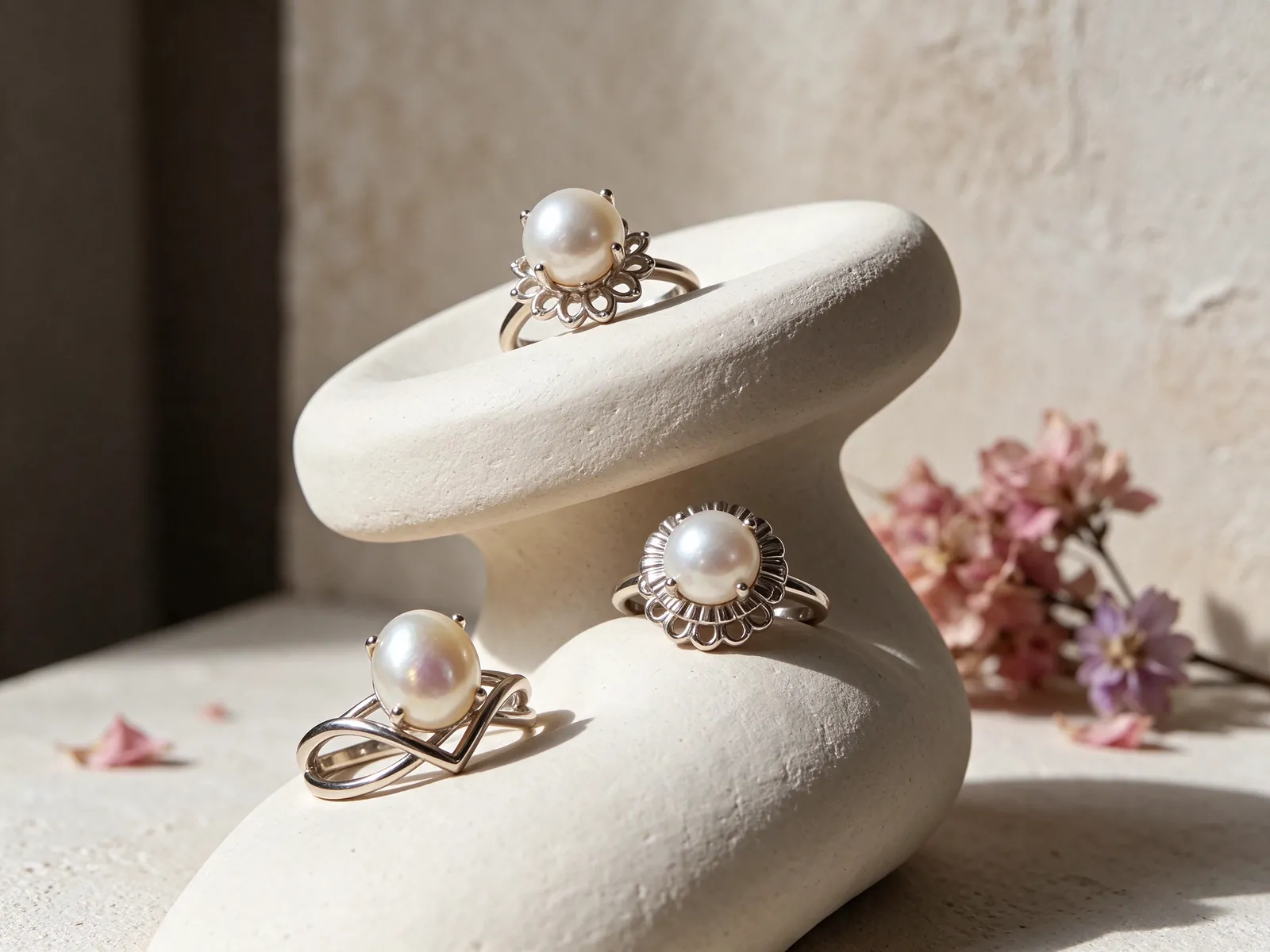
A single pearl ring offers a useful starting point when you want a restrained layered look. Let the pearl lead and use the neighbouring ring to add a line rather than another competing centre. Judge the visible space around the pearl, not just how fine the companion band appears. A very narrow band can look disconnected if its shape has no relationship with the main ring.
With two pearl-bearing rings, decide whether you want their focal points side by side or offset. Both arrangements need checking after the rings rotate naturally. A multi pearl ring already supplies a repeating rhythm, so an equally busy companion may make individual elements harder to see. Consider a quieter band or move the second ring to another finger before adding more visual detail.
Assess the whole hand at an ordinary viewing distance
Look in a mirror from the distance at which someone would usually see your hand. If the first impression is a crowded block of bands, remove one and compare again. If the pearl disappears behind another outline, try a different order. Close-up photographs help reveal contact points, but their lighting and magnification should not dictate every styling decision or be used to identify a pearl's origin.
Treat the fit of the stack as a separate decision
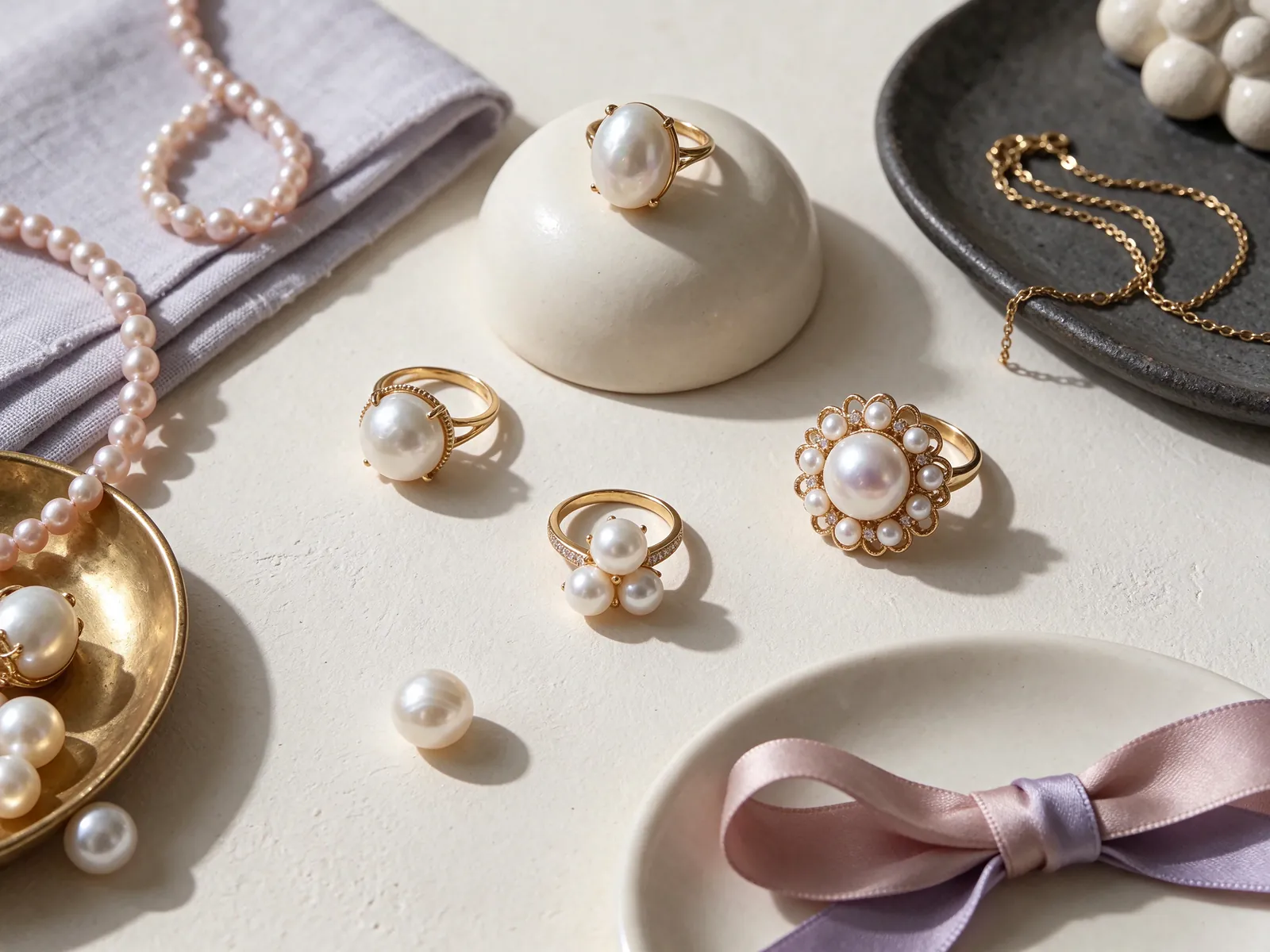
Two rings with the same marked size can feel different because their widths, inner profiles and positions on the finger differ. Wearing them together extends the area covered by metal and may feel closer than wearing either alone. That does not justify a universal instruction to choose a larger size: a looser ring may rotate into a contact point that the original arrangement avoided.
Check passage over the knuckle as well as comfort at the base of the finger. Exchange the order of the rings and notice whether the wider band sits differently or the pearl changes direction. Do not push a clearly tight combination into place. Pressure, pinching or difficulty removing the rings are reasons to stop trying that arrangement, not signs that you should persevere until it looks right.
Use everyday movements to test the arrangement
Mimic holding your phone, typing and adjusting a cuff. Watch whether the setting touches the next finger or catches on fabric. A combination that feels comfortable on one finger may not suit another, because the available space and movement differ. If it only works with your hand held completely straight, distribute the rings across fingers instead of making every layer occupy the same place.
Connect colours through shape, light and clothing
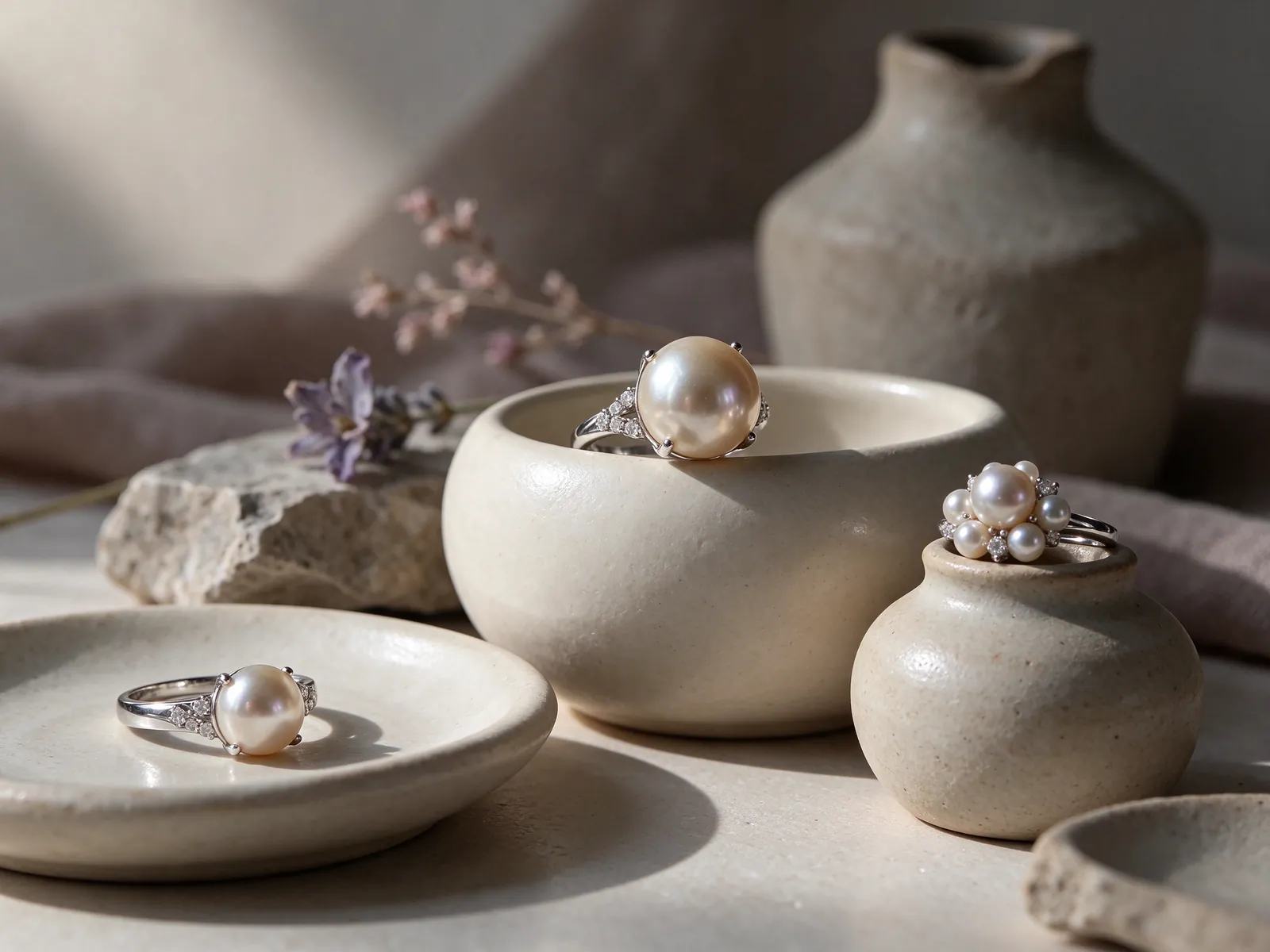
Begin with the clothes you actually wear. You might favour a crisp contrast with a cool-coloured shirt or a softer relationship beside warm knitwear, but neither approach is a rule for every person. Compare pearls under the same lighting rather than placing one near a window and another under a lamp. Otherwise the apparent colour difference may say more about the light than the pairing.
Mixed metal colours can feel intentional when there is another connection, such as a repeated curve or a line echoed by a watch or clothing detail. For metal customisation at Flint Jewellery, the options are 18K 750 white gold, 18K 750 yellow gold, 18K 750 rose gold, PT950 platinum and PT900 platinum. Colour preference remains separate from whether the settings and band contours physically work together.
Understand matching without demanding identical pearls
GIA describes seven pearl value factors: size, shape, colour, lustre, surface quality, nacre quality and matching. Matching is useful when considering the relationship between pearls, but a deliberate contrast can also support your intended style. Observe the visual rhythm of lustre and outline. A colour name or a photograph alone cannot establish origin, natural-versus-cultured identity, a quality grade or the existence of a certificate.
Consider open profiles and layers across different fingers
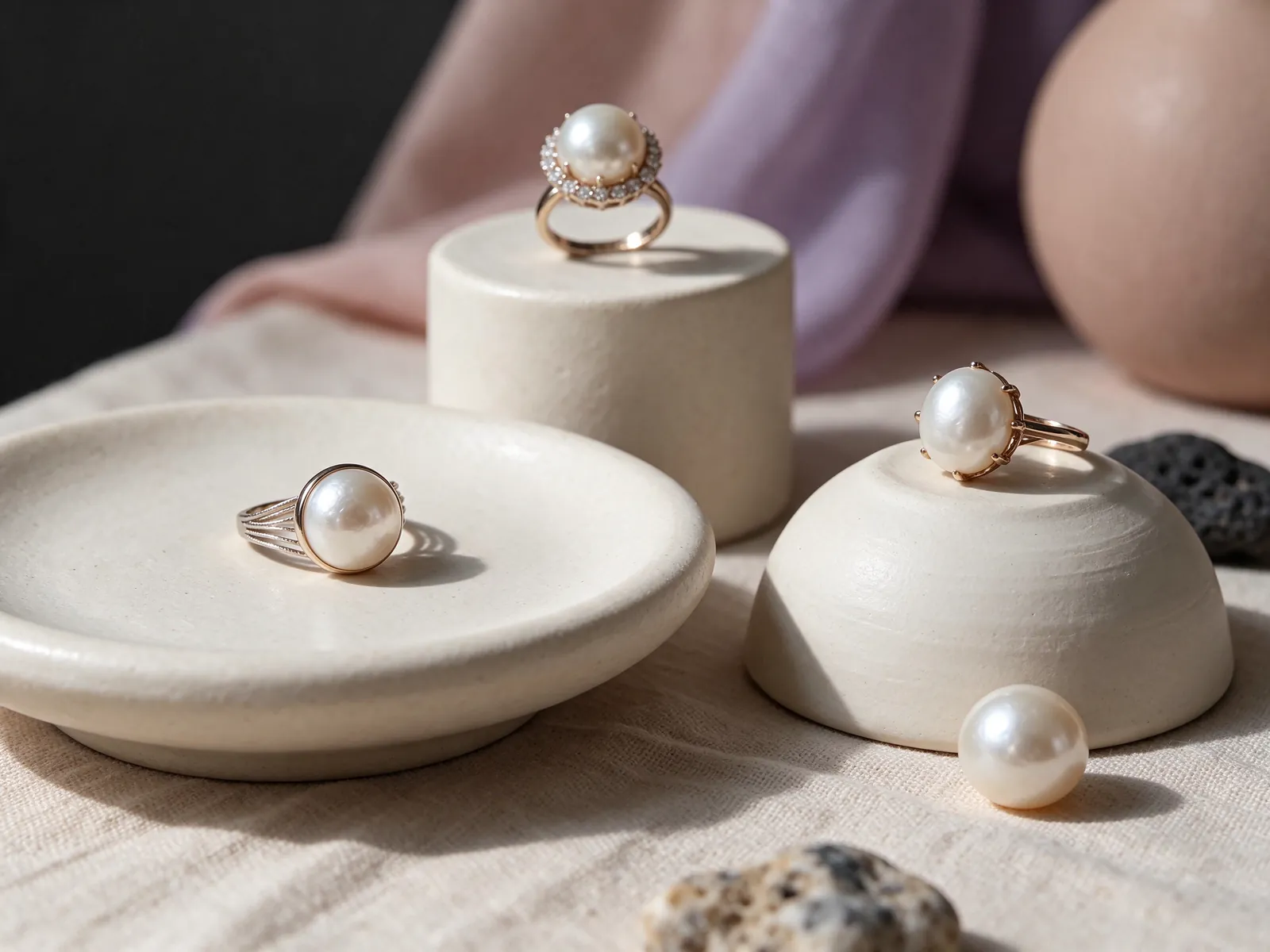
An open pearl ring introduces a directional shape, but a visible opening is not an invitation to insert another ring into it. Check where the ends sit in relation to skin, pearl and neighbouring setting. Do not treat the open shape as permission to bend it repeatedly for sizing. When the outlines interfere, placing the rings on adjacent fingers can preserve their visual relationship without forcing a nested arrangement.
A pearl signet ring can establish a strong face-shaped focal point, making a quieter companion worth considering. A pearl pinky ring places another highlight towards the outer edge of the hand instead of concentrating everything at one finger base. Think about how you grip objects and which hand does most of your daily work, as well as how the arrangement appears with your fingers spread.
Leave some fingers visually quiet
Empty space is part of a jewellery arrangement. Keep the main ring in place and try the companion on the other hand, then assess the balance beside a bracelet or watch. You may find that distributing the highlights lets both rings remain visible. This is particularly useful when you like two pieces whose settings cannot sit together comfortably on the same finger.
Adapt the stack to sleeves, work and the occasion
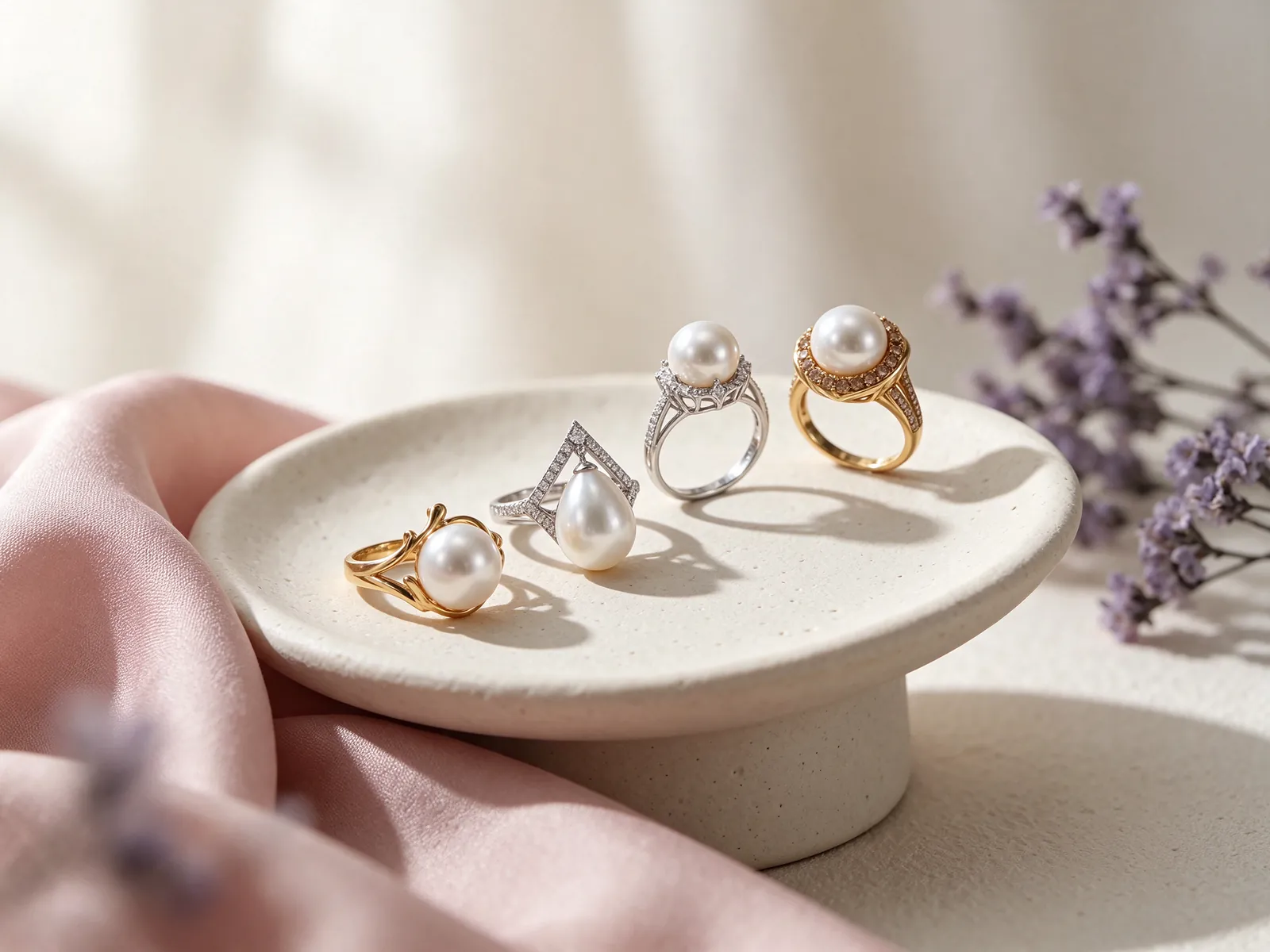
Try the arrangement with the sleeves you expect to wear. A shirt cuff can meet a raised setting differently from a loose knitted sleeve, and a jacket changes how much of the hand is visible. For an evening look, adjust the distribution between hands before increasing the number of rings on one finger. The aim is a composition that works with the outfit, not merely a fuller stack.
Typing, carrying a bag and handling papers may reveal contact that a still pose misses. Remove pearl rings before activities involving heavy gripping, impact or tools rather than relying on a companion band to protect them. When coordinating Pearl Jewellery, earrings or a necklace can supply another focal point and allow the hand to remain simpler. A complete look does not require every area to carry equal detail.
Make a styling conversation specific
Bring the ring you hope to pair, explain the finger you normally use and describe your daily activities. Front, side and relaxed bending views communicate different parts of the idea. If an existing ring has sentimental importance, decide whether its usual position must stay unchanged. These details turn a broad wish for stacking into a conversation about space, proportion and the way you intend to wear it.
Prevent rubbing and reassess each new combination
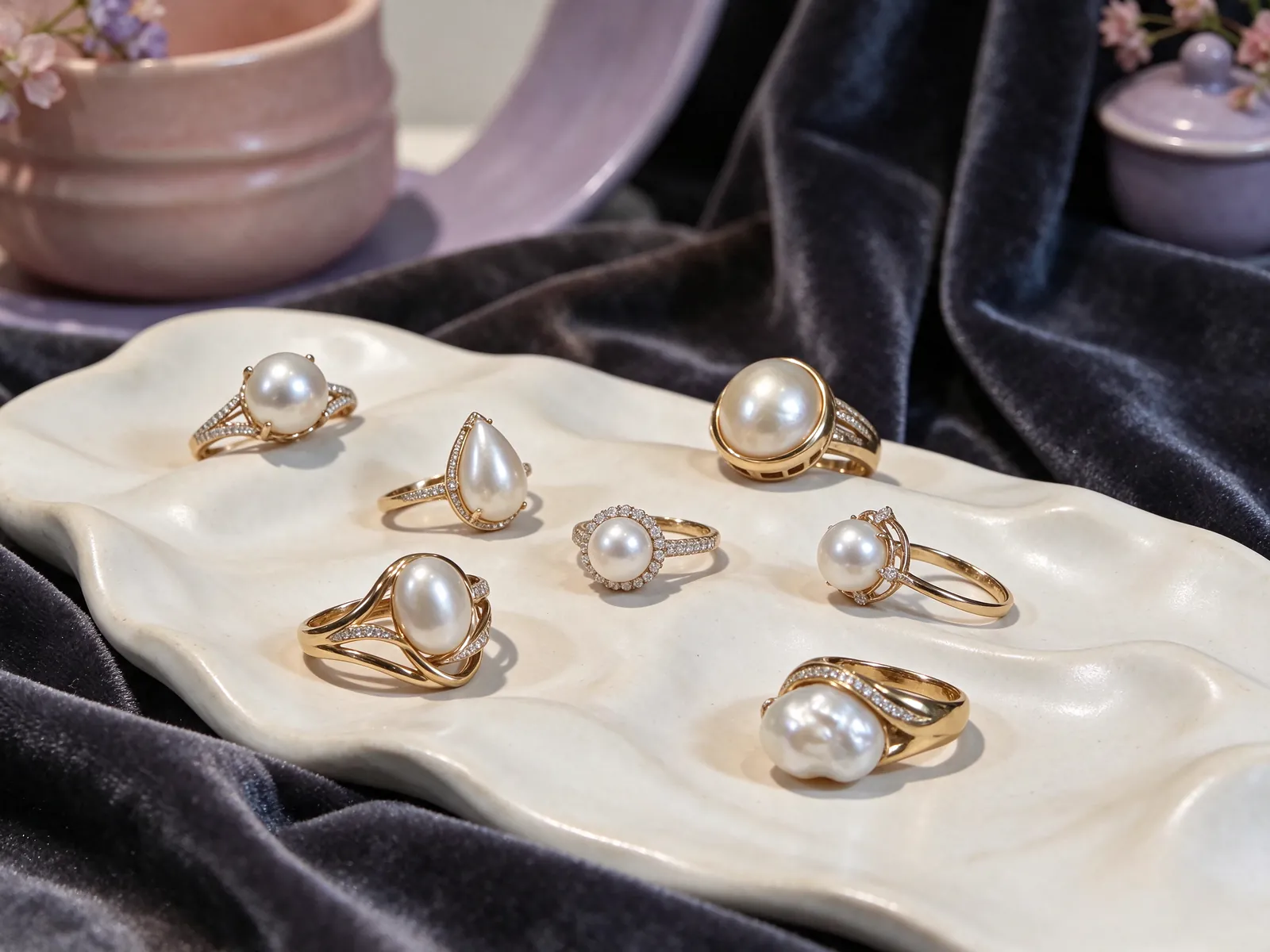
GIA places pearl at 2.5 on the Mohs hardness scale. For stacking, this makes the area around the pearl especially important: a companion band should not repeatedly rub its surface. The absence of an immediate visible mark is not a reason to keep a contact point. After wear, look at the areas that met another ring and stop using the combination if you notice a new mark, looseness or distortion.
Wipe pearls gently with a very soft, clean cloth after wearing. GIA advises against ultrasonic and steam cleaning and warns about acids, perfume, hair spray and excessive heat. A cleaning method suitable for another element in a ring is not automatically suitable for the pearl. Store the pieces separately so that a loose group of rings does not continue rubbing in a pouch or drawer.
Check again after changing order or finger
Adding a ring, reversing the order or moving the arrangement to another finger can create a new contact point. Repeat the relaxed-hand and bending checks rather than assuming an earlier result still applies. If you spend the day rotating a ring back into position, reduce the layers or separate the pieces. Balanced pearl ring stacking should leave room for natural movement as well as a clear visual outline.
Share the rings you hope to pair and your everyday wearing needs with Flint Jewellery on WhatsApp at +85260106207 to discuss the proportions and spacing of your preferred arrangement.
| Arrangement | Visual purpose | Contact to check | Possible adjustment |
|---|---|---|---|
| Single pearl with a quiet band | Keep a clear focal point | Band entering the pearl support area | Change the contour or wear separately |
| Two pearl-bearing rings | Side-by-side or offset highlights | Pearls meeting after rotation | Distribute across different fingers |
| Multi-pearl ring with a companion | Let repetition lead | Hidden pearls or pressure at the finger base | Use a less visually dense companion |
| Open profile with another ring | Emphasise directional lines | Ends touching pearl, setting or skin | Do not force a nested fit |
| Main ring and a pinky ring | Spread highlights across the hand | Neighbouring fingers during gripping | Adjust placement for daily movements |
Pearl knowledge and authoritative references
GIA places pearl at 2.5 on the Mohs hardness scale; check that a neighbouring ring does not rub against the pearl when stacking.
Read the reference for this factFrequently asked questions
Should every ring in a pearl stack have the same marked size?
The marking alone does not settle the fit. Width, inner profile and the total area covered can change how the combination feels. Try the pieces separately and together in the intended order. Check bending, pinching and normal removal rather than applying a fixed rule to increase or match every size.
Is a visible gap between bands a problem?
Not necessarily. A deliberate gap can make the pearl and band outlines clearer. Check that the arrangement stays stable and that the gap does not become a pinching or collision point during movement. Pressing incompatible shapes together is not a substitute for a suitable pairing.
Can I pair a pearl ring with my existing wedding band?
Treat the two pieces as a combination to try in person. Compare the side of the setting, support area, band widths and wearing order. If they interfere with each other, adjacent fingers or separate hands can retain the meaning of both rings without forcing them into the same stack.
Does turning the pearl away from the next ring solve rubbing?
Only if the arrangement remains clear during natural movement, not just while you hold it in position. Release the rings and check bending and rotation. If repeated repositioning is needed, change the order, reduce the layers or separate the pieces rather than relying on a temporary angle.
Do I need two pearl-bearing rings to create a layered look?
No. One pearl focal point beside a simpler band can create layers, and a ring on another finger can extend the composition. Begin with the piece you want to keep central and your everyday wearing habits. More pearls and more rings are not automatically a better-balanced result.
Updated: