
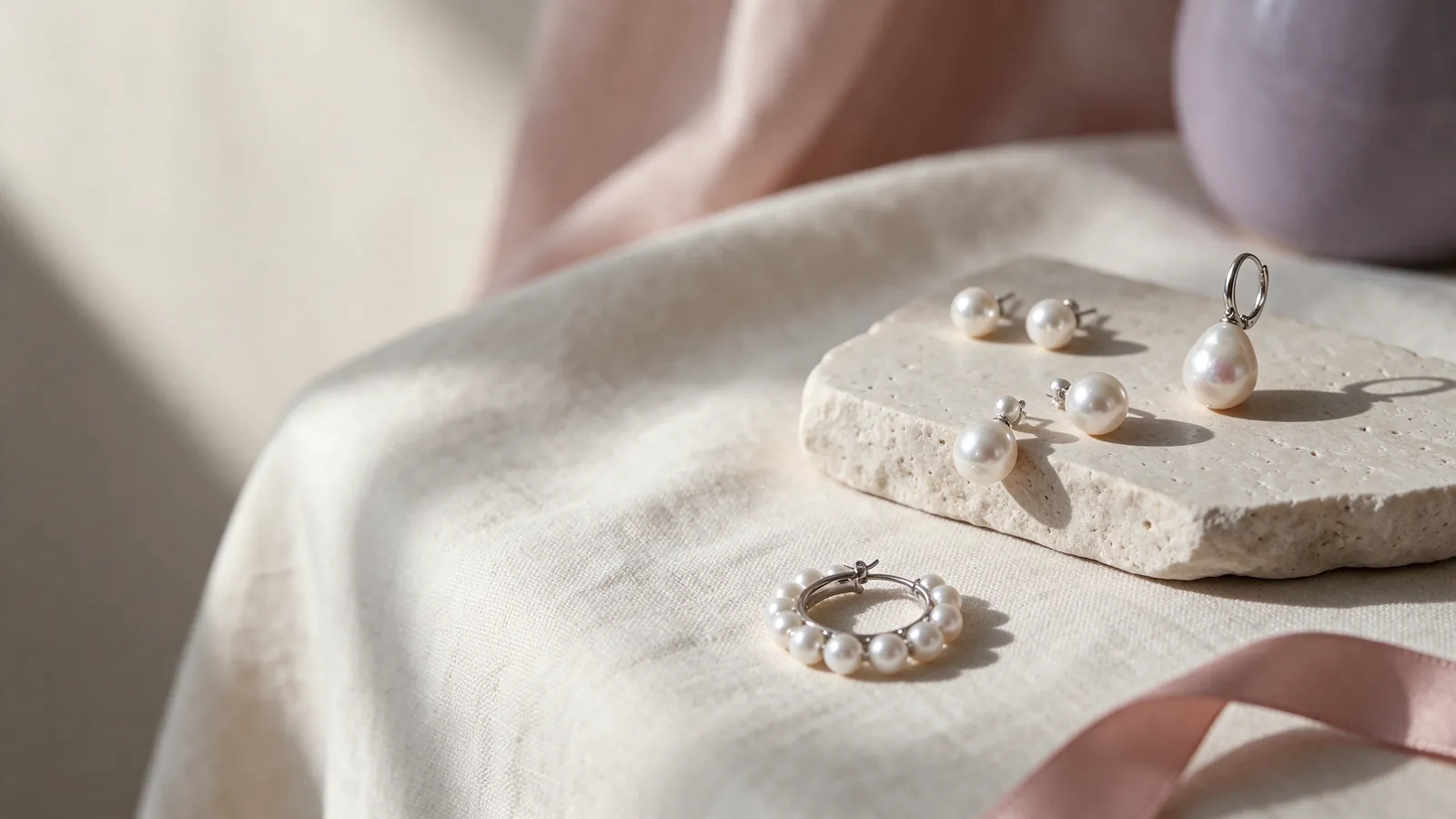
Choosing single-pearl stud earrings: how pearl studs frame the earlobe
A close-to-ear design places the pearl near the earlobe, but its appearance still changes between front and side views. Start with the outline you would like to see beside your face: a quiet accent or a more noticeable point of texture. Then consider how far the pearl projects outwards and where your piercing sits relative to the edge of the lobe. Diameter alone cannot answer all of those questions.
Look at the idea with your hair both down and tucked behind the ear. A stud may be fully visible with a short haircut yet appear as a small highlight through longer hair. Your usual collar and glasses also belong in the decision. The wider guide to pearl earrings Hong Kong helps establish a design direction before you focus on the details of a close-to-ear silhouette.
Styling single-pearl stud earrings with a charm: a new silhouette for pearl studs
Adding a charm moves part of the visual emphasis below the lobe. Discuss where it connects, how it moves and whether the resulting line will sit clear of your collar or hair. Soft Tide can be styled with an earring charm, chosen separately. A restrained extension may suit someone who wants to retain the stud's simplicity; a more prominent line calls for considering the opposite ear as part of the same outfit.
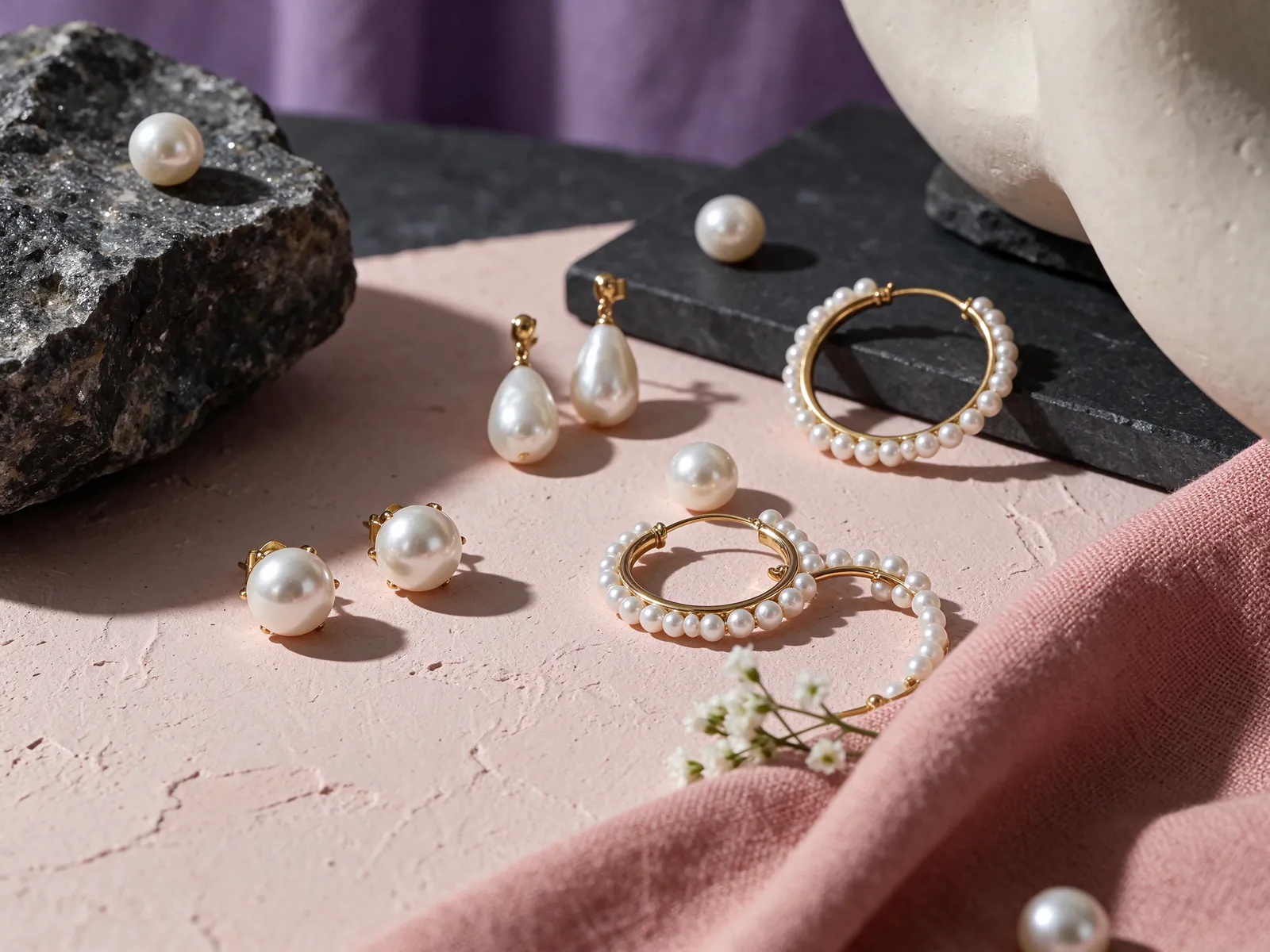
Read a baroque outline as a shape, not just a diameter
A baroque pearl has an irregular outline rather than a perfectly round silhouette. A shape that is wider, longer or softly folded can occupy a different visual space even when its size description sounds similar to another pearl. Describe the character you enjoy: flowing edges, a compact focal point or visible surface texture. There is no need to make every irregularity disappear if that is what draws you to the design.
Colour and shape are only part of a pearl's description. GIA identifies seven pearl value factors: size, shape, colour, lustre, surface quality, nacre quality and matching when jewellery contains multiple pearls. For a stud, look at how light travels across the surface and whether its texture suits the metal lines around it. A white appearance or a baroque outline does not, by itself, establish species, origin, natural-versus-cultured identity or a certificate.
Compare close detail with the view of a whole outfit
An enlarged photograph is useful for seeing folds, but an earring is also viewed at ordinary conversation distance. Separate your observations into surface detail, ear-level proportion and the overall outfit. Turn your attention to each in sequence rather than expecting one image to answer everything. A strong highlight belongs to a particular angle and lighting setup; it is not a promise of identical brightness in every setting.
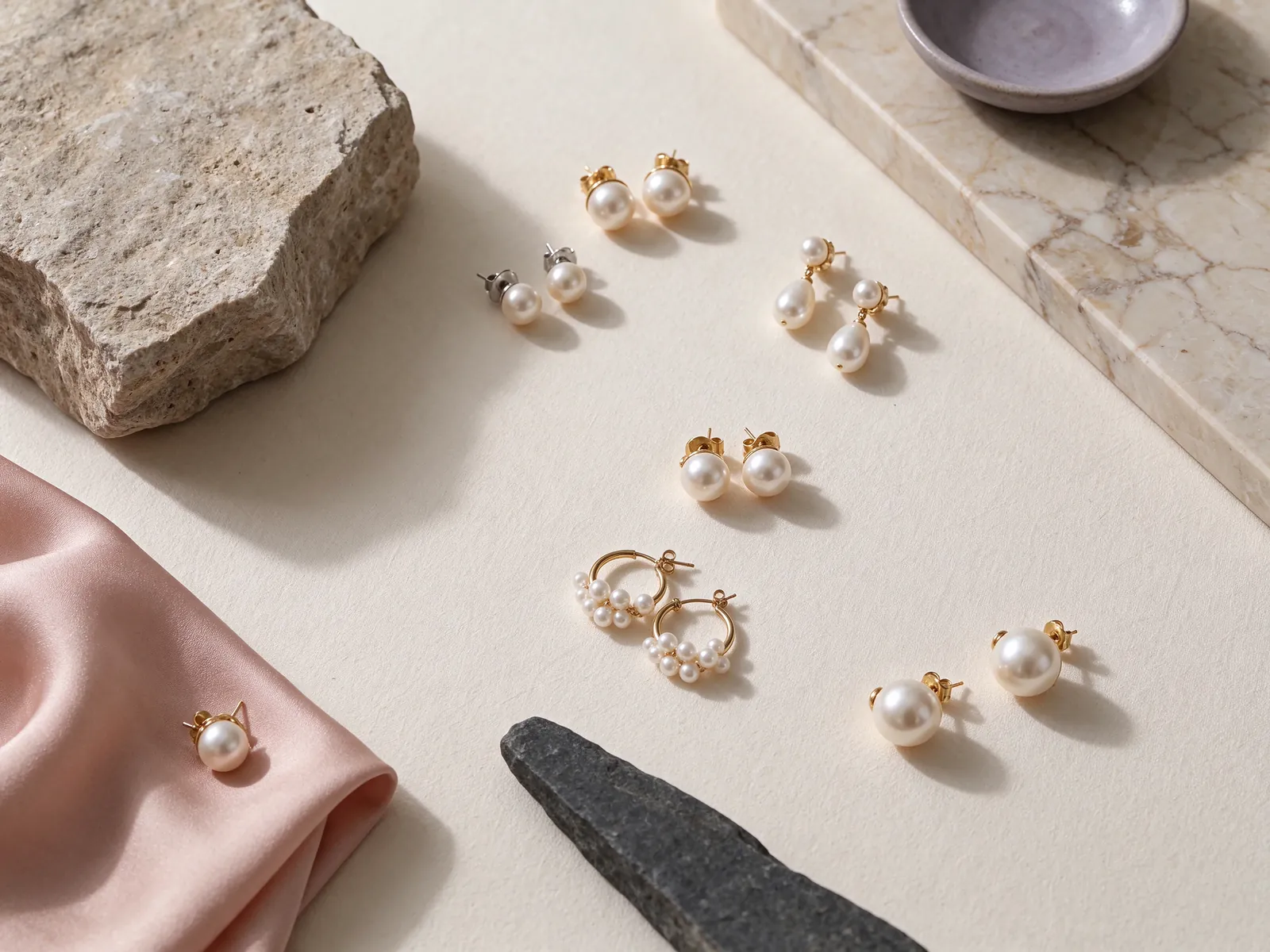
Soft Tide starts with one earring and a deliberate styling choice
Flint Tide · Soft Tide Earrings, design FE014, uses a white baroque pearl measuring approximately 7–8mm and a stud construction. Its product unit is one earring, not a pair. The softly uneven outline keeps the emphasis on the pearl rather than a rigid circular boundary. Treat the size as a starting point for discussing proportion, not a prediction of how every irregular edge will sit against your own earlobe.
Wearing a single pearl earring can be an intentional composition rather than an incomplete matching set. One side may carry the pearl while an existing, simpler earring occupies the other. Alternatively, the visible ear can become the main focus when your hair is swept to one side. If you want a two-sided arrangement, discuss the number of earrings and the desired relationship between them rather than assuming paired supply or identical outlines.
Let the neckline help balance an asymmetric look
A side parting or angled neckline already directs attention across an outfit. Decide whether the pearl should follow that direction or provide a counterpoint. Keep your necklace and other earrings in the picture, too: giving every accessory equal prominence can obscure the soft pearl texture. Thinking about the whole composition is more helpful than requiring the two ears to repeat precisely the same shape.
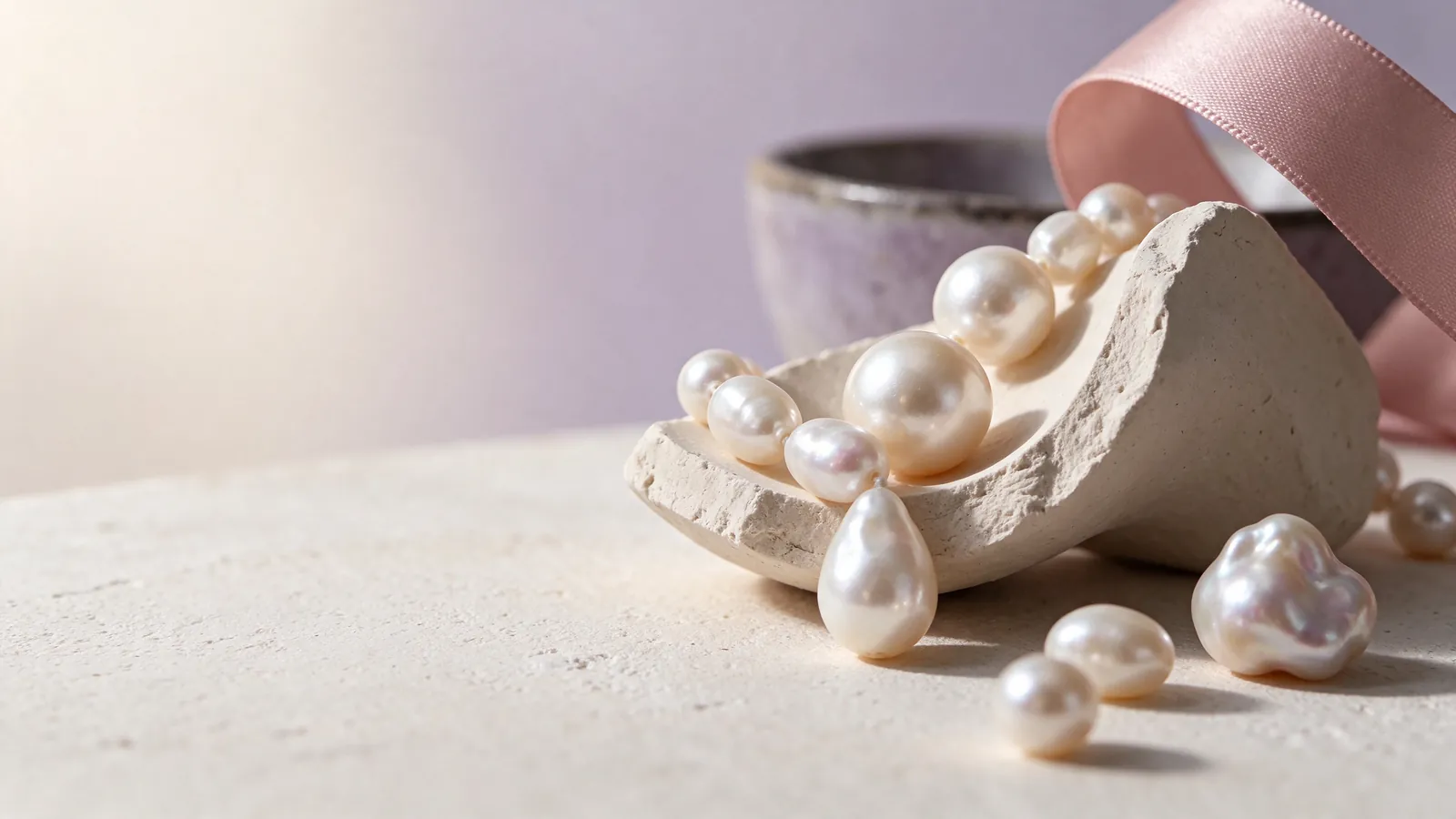
Build an everyday look around the clothes you actually wear
A plain shirt, a soft knit or a clean dress neckline gives an irregular pearl outline room to be noticed. With a bow, ruffles or a busy pattern near the face, a quieter ear-level accent may feel more coherent. When considering everyday pearl earrings, list your usual collars first. That practical starting point helps you choose a role for the earring instead of planning only around a special photograph or occasion.
You need not make every metal detail in an outfit identical. Consider how your watch, glasses and existing jewellery already contribute colour and contrast, then decide whether the ear should remain understated. Include your phone and headphones in the conversation as well. Close-to-ear describes a silhouette; it does not guarantee that the pearl, post or back will clear every accessory or feel the same on every wearer.
Think about contact both in front of and behind the ear
Glasses tend to occupy space behind the ear, while a phone, headphones and hair can touch the front. Describe the accessories you regularly use and consider whether they push against the pearl or fastening. Do not press an earring back tightly just to force a flatter appearance. If wearing it causes discomfort, stop and understand the cause; a metal name is not a substitute for your personal contact experience.
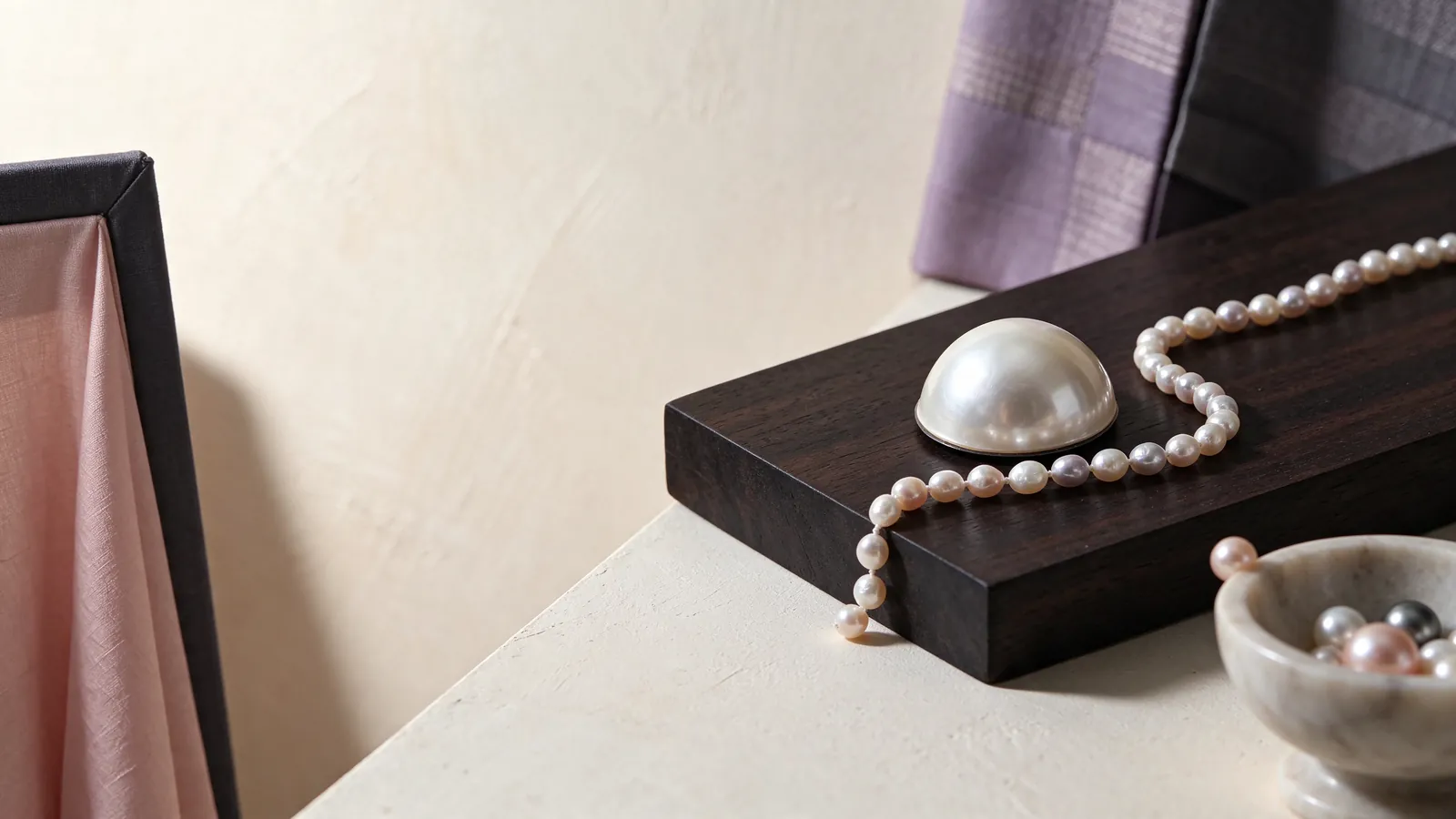
Multiple piercings need a spacing plan
For pearl studs for a second piercing, the useful question is not simply whether a smaller pearl would look neat. Consider the distance between holes, the outline of the neighbouring earring and the space occupied by the backs. Two front profiles may overlap even when their size descriptions sound modest. FE014's approximate measurement does not establish that it suits every second piercing or every combination of existing jewellery.
Choose a focal point before adding several competing highlights. A simpler neighbouring shape can let a baroque edge remain visible, while several textured pieces may merge into one busy area. Consider the first and second piercings together with any charm, rather than making three isolated choices. The actual outline of jewellery you own will communicate more than describing it only as large, small, formal or casual.
Describe your piercing layout without treating styling as medical advice
Explain which holes you regularly use, which side you want to emphasise and whether an existing earring has a hanging element. Front and side descriptions support a discussion about proportion, but they cannot establish comfort. A new or unhealed piercing, pain or persistent irritation requires appropriate healthcare guidance rather than a styling solution. Keep the design conversation focused on positions that are suitable for wearing jewellery.
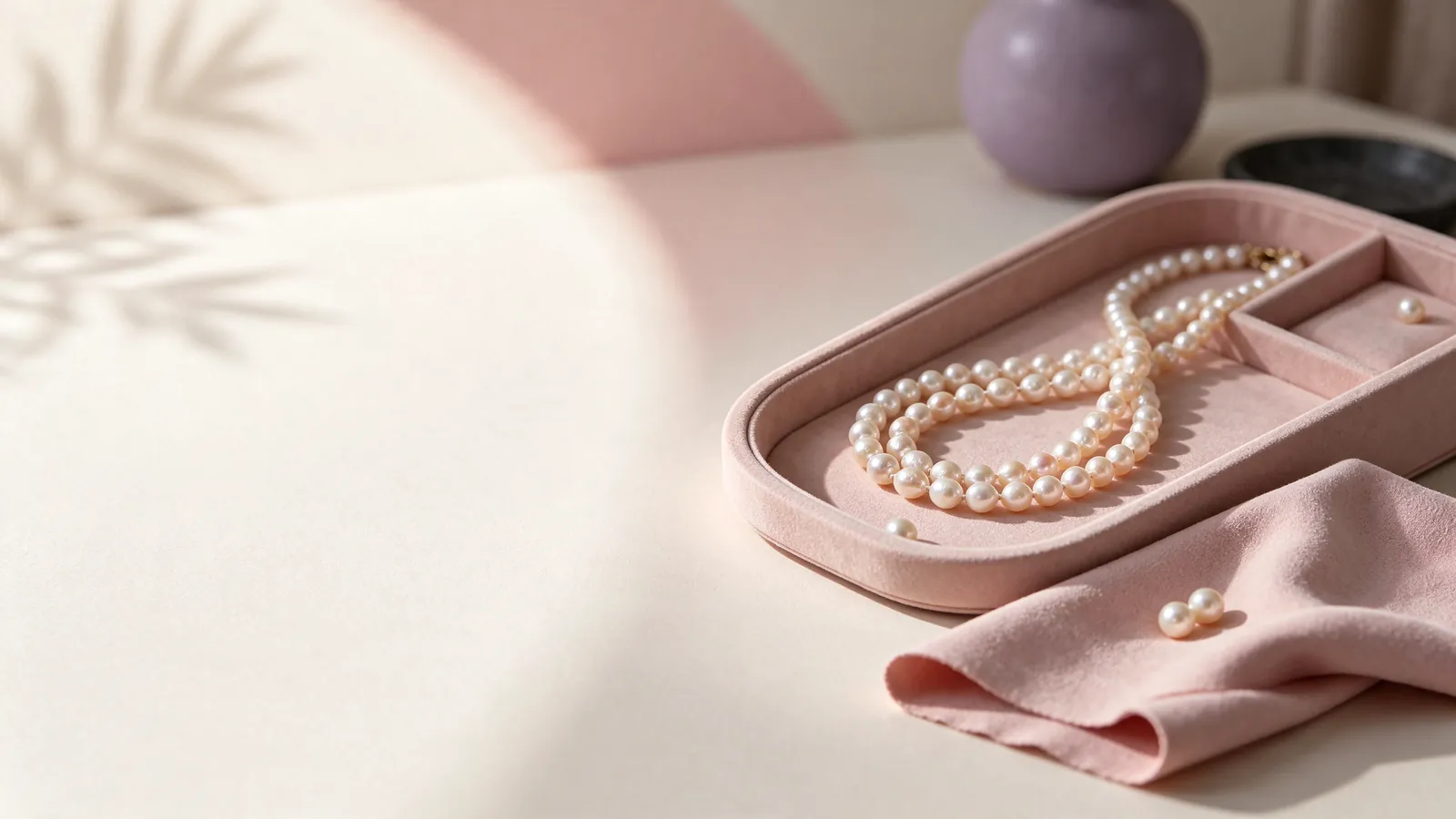
Compare a concentrated accent with a downward line
Studs hold their main outline close to the lobe, whereas pearl drop earrings extend the composition below it. If movement is part of the look you want, consider a hanging silhouette alongside a stud. If you prefer a concentrated accent, begin with the close-to-ear direction. Neither construction belongs exclusively to formal or casual dressing; hair length, neckline and the rest of your accessories all affect the result.
Use pearl studs vs drops vs dangles to compare focus, extension, movement and possible contact with clothing. A stud with a separately chosen charm also changes the complete outline, so assess the assembled look rather than the post alone. If long pearl dangle earrings appeal to you, think about whether hair ends or a high collar would hide their line. Exploring those ideas does not mean Soft Tide includes every hanging style.
Describe the effect before choosing an extra component
Words such as concentrated, flowing, extended or gently moving can make your preference clear. For a change from a work outfit to an evening look, decide whether you want more texture at the ear or a line further below it. Then discuss charm styling and its connection to the stud. Similar-looking components are not automatically interchangeable, and the opposite ear remains part of the composition.
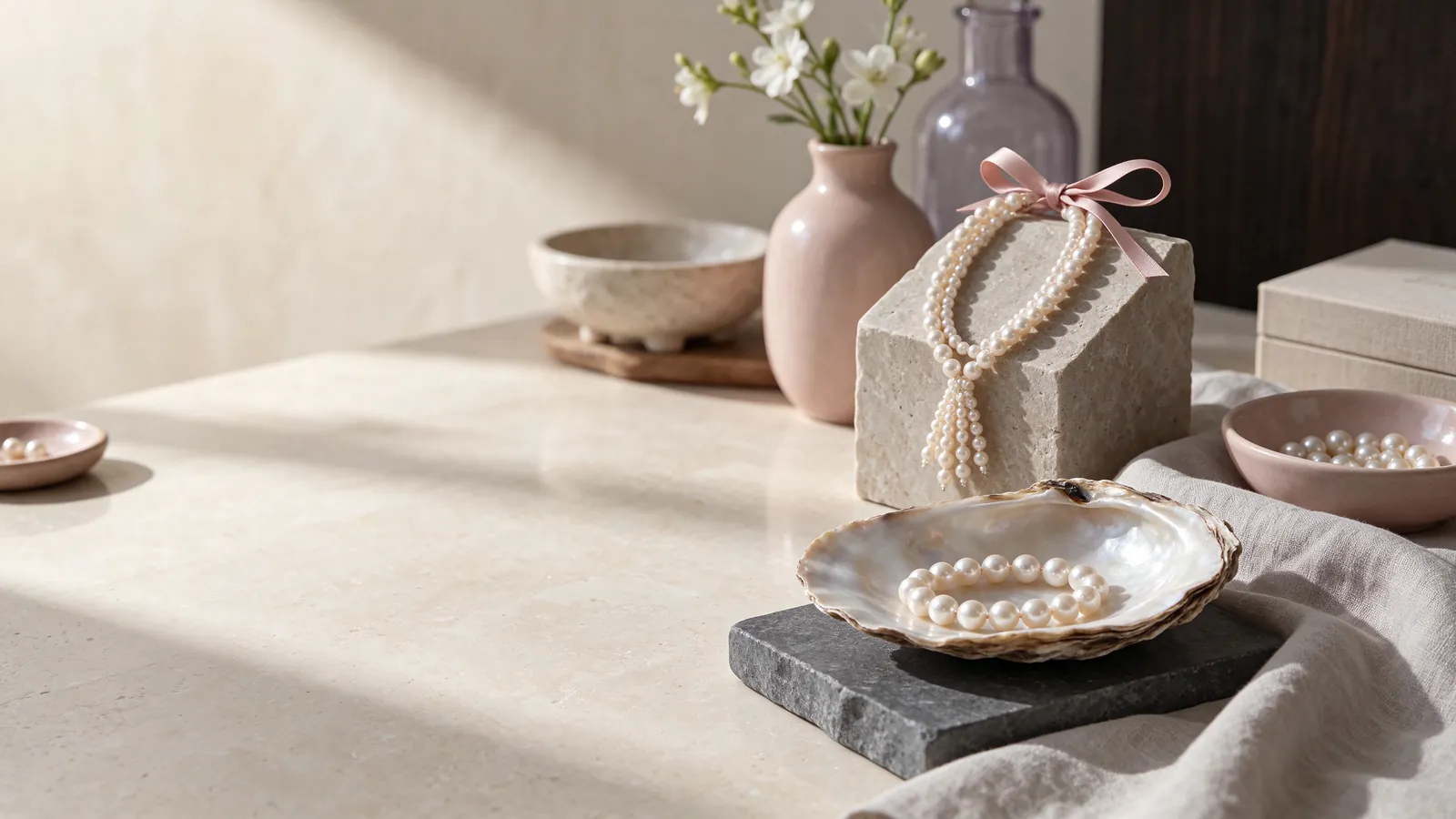
Include care habits and customisation in the same conversation
GIA gives pearl a Mohs hardness of 2.5. A small stud still needs protection from rubbing against harder jewellery and from unsuitable cleaning methods. After wearing, use a very soft, clean cloth gently and store it so the pearl surface does not rub against other pieces. Avoid acids, perfume, hair spray and excessive heat. Pearls should never go into ultrasonic or steam cleaners, even when you mainly want to clean the metal fastening.
Keep the earring away from sprays while arranging your hair. When removing it, handle the construction rather than pulling on the pearl; with a charm, notice whether anything has caught on clothing. Check the post, back and connection before the next wear. If a component feels loose, stop wearing it and discuss the issue rather than tightening or bending parts yourself. These habits do not make an earring waterproof or suitable for every activity.
Bring your outline, quantity and metal preferences to Flint
Tell Flint Jewellery whether your goal is a single-sided or two-sided look, the white baroque outline you enjoy and whether you would like a separately chosen charm. Bespoke material options are 18K 750 white gold, 18K 750 yellow gold, 18K 750 rose gold, PT950 platinum and PT900 platinum. Include any past discomfort with jewellery contact when discussing your needs; choosing a precious metal does not replace consideration of fit and personal sensitivity.
Ready to explore the outline and arrangement you have in mind? Contact Flint Jewellery on WhatsApp or call +85260106207 to discuss a single-sided or two-sided look, the earrings you already wear and your everyday styling habits.
| Decision | What to observe | Question to discuss | Styling consideration | Assumption to avoid |
|---|---|---|---|---|
| Ear-level proportion | Front outline and side projection | Quiet accent or defined focal point? | Consider hair down and tucked back | Diameter alone determines comfort |
| Baroque shape | Irregular edges and surface folds | Which outline appeals to you? | Let simple clothing reveal texture | Baroque means round or identifies species |
| Single-earring arrangement | FE014 is one earring | Which side should lead? | Balance existing jewellery and neckline | The design name means a supplied pair |
| Separately chosen charm | Connection, extension and movement | Keep the focus close or extend it? | Consider hair ends and collars | A charm is included or universally compatible |
| Everyday care | Gentle wiping and separate storage | What accessories or sprays may touch it? | Handle the construction when removing | A small stud can be ultrasonically cleaned |
Pearl knowledge and authoritative references
GIA rates pearl at 2.5 on the Mohs hardness scale. Pearl studs need gentle handling and must not be cleaned in ultrasonic or steam cleaners.
Read the reference for this factFrequently asked questions
Does Soft Tide come as a pair of pearl studs?
FE014's product unit is a single earring, not a pair. It is a stud design with a white baroque pearl measuring approximately 7–8mm. If your aim is a two-sided look, discuss quantity and the relationship between the two sides rather than assuming a matching pair is included.
Will an approximately 7–8mm pearl necessarily sit within my earlobe outline?
No single size description can establish that. A baroque pearl is irregular, and your piercing position, lobe shape and the pearl's side profile all influence the visible proportion. Consider both an exposed ear and your usual hairstyle when describing the effect you want.
Can a charm preserve the simplicity of a stud?
That direction can be discussed. Soft Tide can be styled with a separately chosen earring charm. Consider the connection, the downward line and the opposite ear together. A restrained extension may suit your preference, but appearance alone does not establish compatibility with any particular charm.
Where should a baroque stud sit in a multiple-piercing look?
Choose the focal point first, then consider the distance between piercings and the outline of neighbouring earrings. Check possible overlap at the front and contact between backs. There is no universal position; unhealed piercings or persistent irritation need appropriate healthcare guidance rather than a styling workaround.
Can I use an ultrasonic cleaner just for the post and back?
Do not put a pearl earring into an ultrasonic or steam cleaner, even if the metal parts are your main concern. Gently wipe the pearl with a very soft, clean cloth for routine care. Discuss difficult residue or loose components before attempting stronger cleaning or adjustments.
Updated: