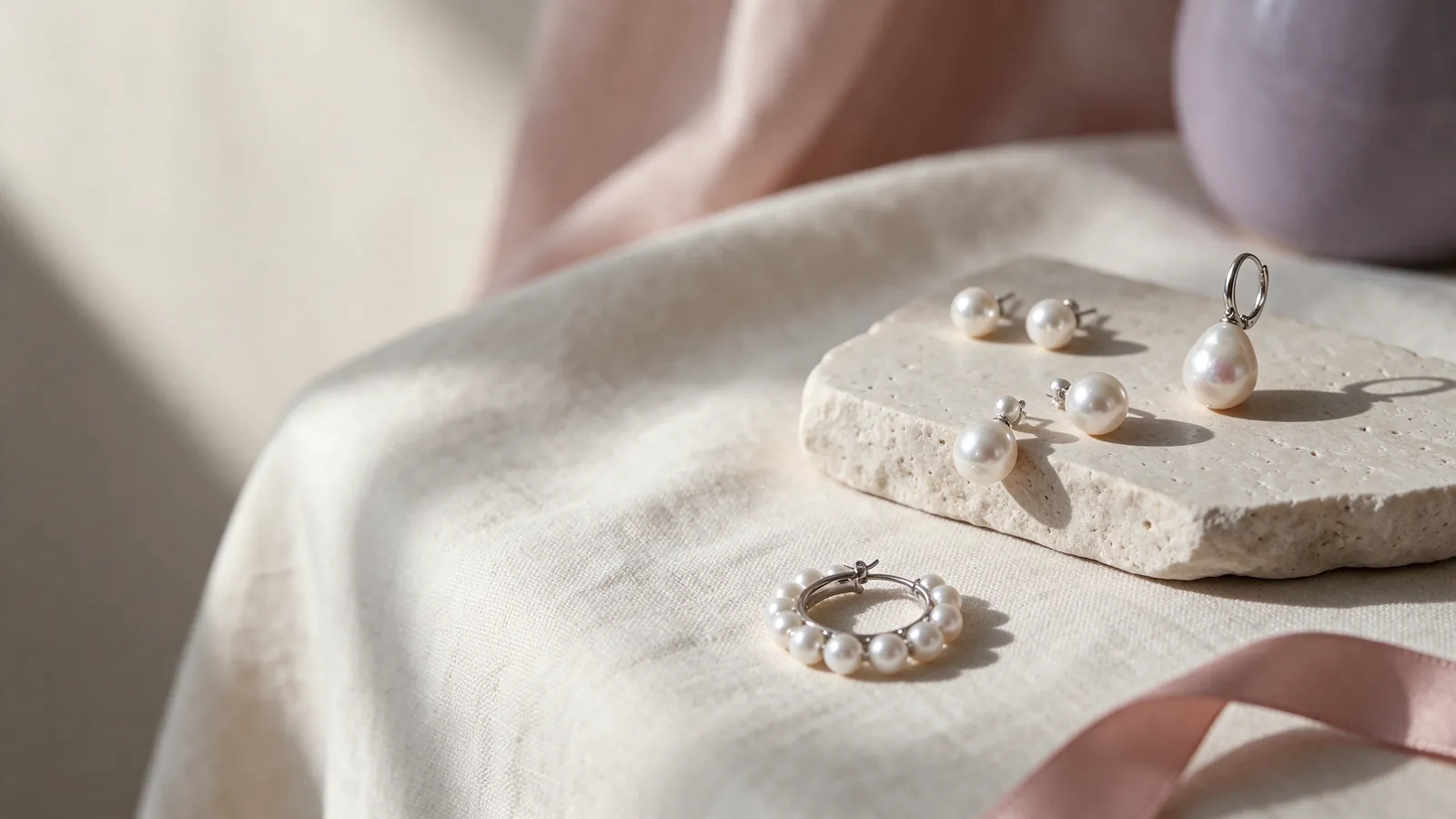
How hoop size and pearl placement shape pearl hoop earrings, from subtle pearl hoops to more prominent hoop earrings with pearls
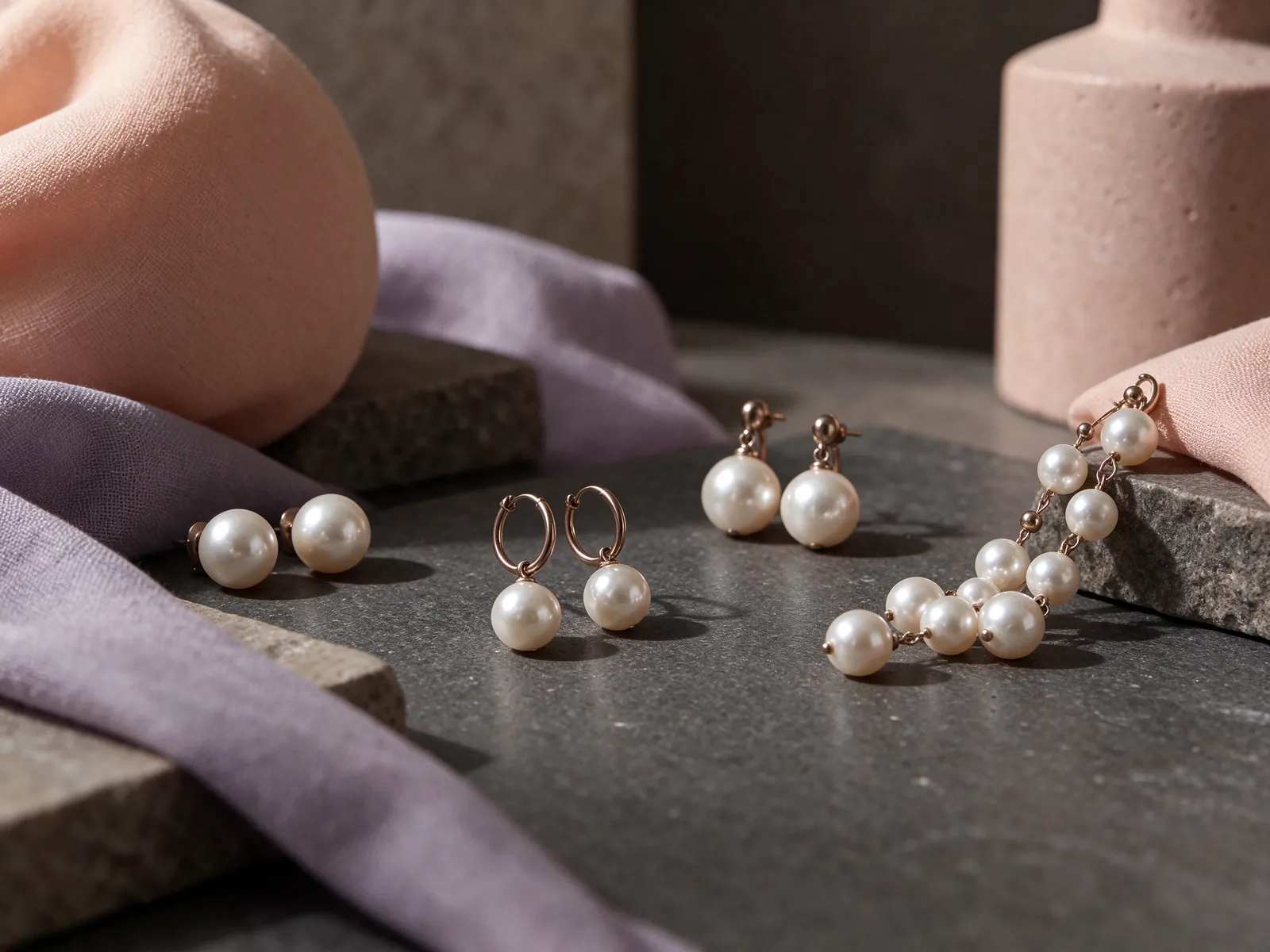
The outline of pearl hoop earrings comes from two elements working together: a metal curve and the pearl beside it. Start by looking at the open space within the hoop. A clear opening makes the curve more noticeable, whereas a pearl that occupies much of that space can become the main focus. Compare this balance with other styles within pearl earrings Hong Kong before deciding whether you want a framed outline or a quieter pearl accent.
Hoop size alone does not explain the appearance. The thickness of the curve, its angle on the ear and the pearl's position can all change the result. A pearl at the bottom draws attention below the earlobe; one placed nearer the ear keeps the emphasis closer to the face. With pearls arranged along a curve, look at the rhythm between them rather than treating their number as a measure of suitability.
When trying on pearl hoop earrings, how should pearl hoops and hoop earrings with pearls sit beside the earlobe?
Stand naturally and check whether the earlobe hides part of the pearl or fills the opening you wanted to see. Then turn sideways to observe whether the hoop faces forward or angles outwards. Gently lower your chin and turn your head to check contact with your neck or collar. A close fit is not automatically a comfortable fit; stop trying the earrings if you experience pressure, pulling or persistent discomfort.
Understand fixed pearls, hanging pearls and detachable combinations
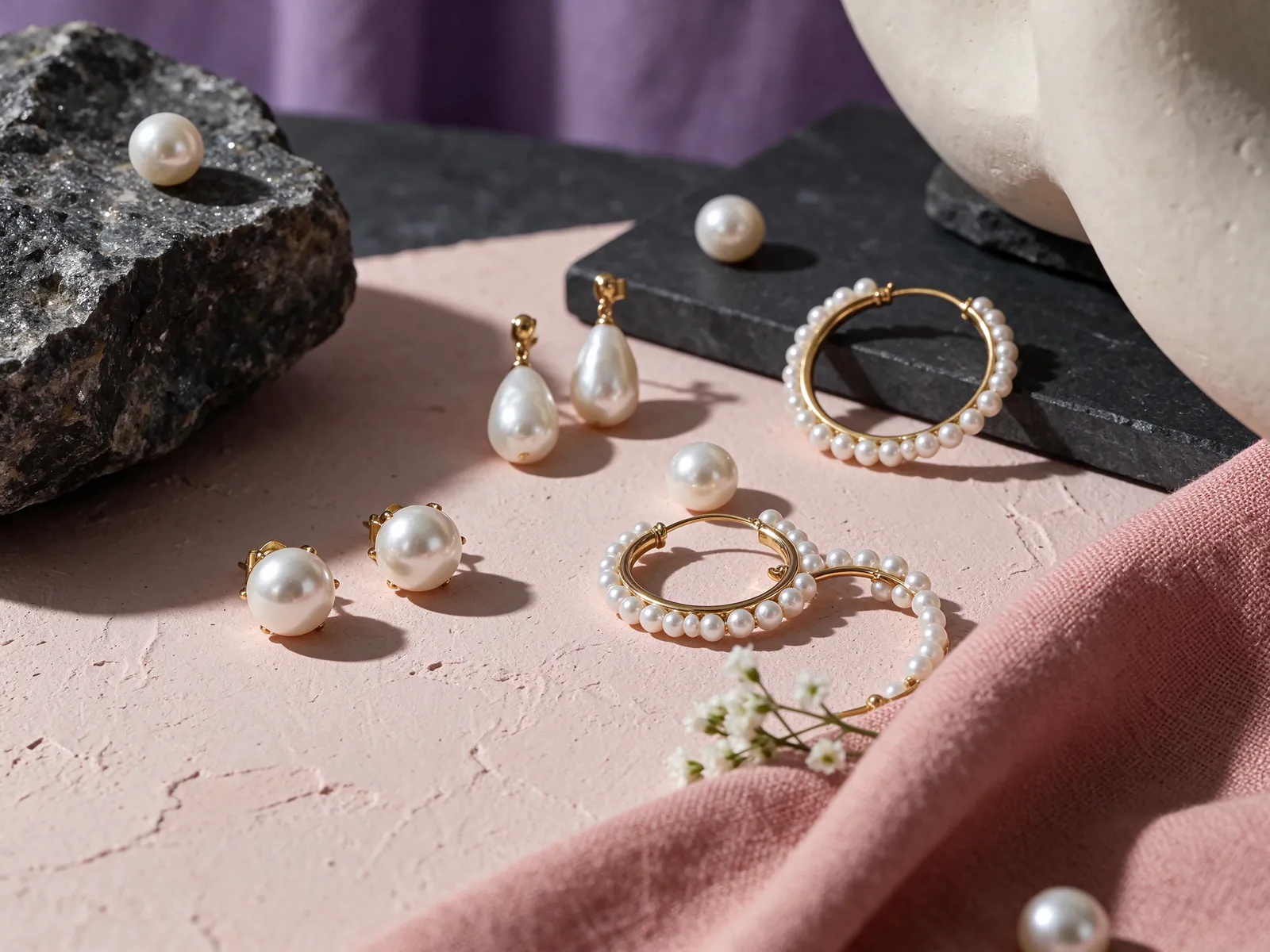
A pearl fixed to the hoop has a more consistent visual position, so inspect how the setting frames the pearl and how much of its surface remains visible. A hanging pearl can turn as you move. Look beyond a still photograph to see whether it swings behind the hoop, twists at the attachment or rests against the metal. Front, side and back views help explain a construction that a close-up portrait may conceal.
If changing the look appeals to you, explore detachable pearl earring charms as a separate construction question. The charm opening, hoop thickness, closure and final hanging direction must work together. Similar-looking parts are not necessarily interchangeable. Existing decoration on the hoop may prevent a charm from reaching the intended position, so assess the actual combination rather than assuming that any pearl attachment will fit any curved earring.
Check the connection without forcing the parts
For hoops you already own, photographs of the closure and the back are more useful than a styling image alone. Identify the route a charm would need to travel before considering its final appearance. When handling a detachable combination, use a stable surface and somewhere to place the loose parts. Do not pull on the pearl to open the hoop or force an attachment through an obstruction.
Make the closure and wearing position part of your comparison
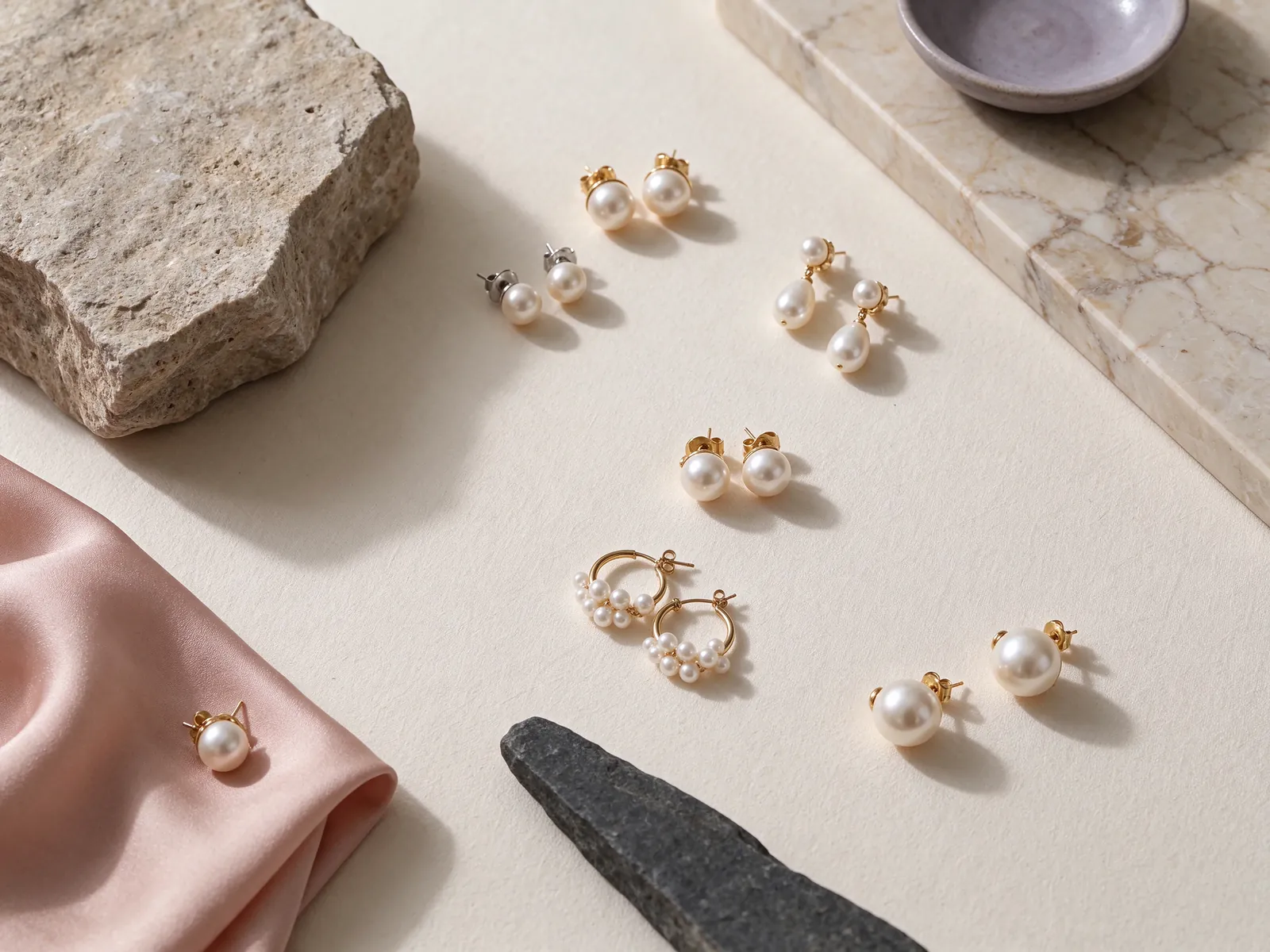
A hoop silhouette does not specify one fastening method. Check where the post enters, how the closure opens and whether your fingers can operate it without tugging on the decoration. Once closed, inspect the back as well as the front. Space around the fastening and the thickness of your earlobe matter independently of the visible hoop size; an attractive outline does not tell you whether the fastening sits well.
Without pierced ears, clip-on pearl earrings offer a different route to an earlobe design, but the pressure points and operation differ from a post. A pearl ear cuff places the accent elsewhere on the ear and should not be treated as the same fit in another name. Choose the intended wearing position first, then assess how the curve and pearl appear there. No style label guarantees comfort for every wearer.
Try ordinary movements and your usual accessories
Speaking, turning your head and looking down can reveal whether the hoop shifts or pulls the earlobe. If you use glasses, a mask or headphones, consider the path your hands and straps take past the ear. Remove jewellery before sleeping, showering or exercise rather than relying on the fastening to prevent every snag. These practical habits complement the fit check; they do not turn any closure into a guarantee against loss.
Style the curve around your hair and neckline
With short hair or an updo, the open curve is easier to see as a complete outline. With hair worn down, check which part of the earring actually remains visible. A pearl may disappear behind the ends of your hair even when the hoop looks prominent in a close-up. Return to your everyday hairstyle before choosing; pulling all your hair back for the fitting can give a misleading impression of the result.
A shirt collar, polo neck or scarf changes the available space beneath the ear. Turn your head to see whether a hanging pearl meets the fabric. An open neckline offers more room to compare the framed curve with pearl drop earrings, where the visual emphasis follows a downward line. If your necklace already attracts attention, use the earrings to echo its mood rather than assuming every accessory needs equal prominence.
Change the framing before changing the earrings
For an office outfit, a clear hoop outline can sit alongside a simple shirt and restrained accessories. Before dinner, putting your hair up may make the same earrings more noticeable without changing their scale. Check a normal-distance front photograph and a half-profile view. Formality comes from the complete outfit, not from a rule that hoops are always casual or that pearl jewellery must always be reserved for an occasion.
Compare curved outlines with hooks and longer drops
If movement matters more to you than a complete curve, pearl hook earrings are worth comparing. The hook supports a hanging line, while a hoop introduces a frame around open space. Similar pearl positions can therefore give different impressions. Keep your hair and neckline unchanged during the comparison so that you are judging the design rather than the styling. A hook is not necessarily lighter simply because the outline looks more open.
By comparison, long pearl dangle earrings extend the focus farther below the ear. A hoop with a hanging pearl can also lead the eye downwards, but it retains the curved element. With a high collar, check where the end meets the fabric; with exposed shoulders, look at how the line occupies the space beside your neck. Front balance, side profile and personal preference offer more useful guidance than a rigid rule based on face shape.
Create intentional asymmetry rather than accidental imbalance
A single pearl earring can introduce an asymmetrical styling direction when paired thoughtfully with a different accent. Similar pearl colour or a related metal tone can connect the two sides without making them identical. Check whether hair hides the longer side, then take a front photograph at an ordinary distance. If attention is pulled strongly to one side, adjust the hairstyle or simplify the other accessories before abandoning the idea.
Judge pearl matching separately from the shine of the metal
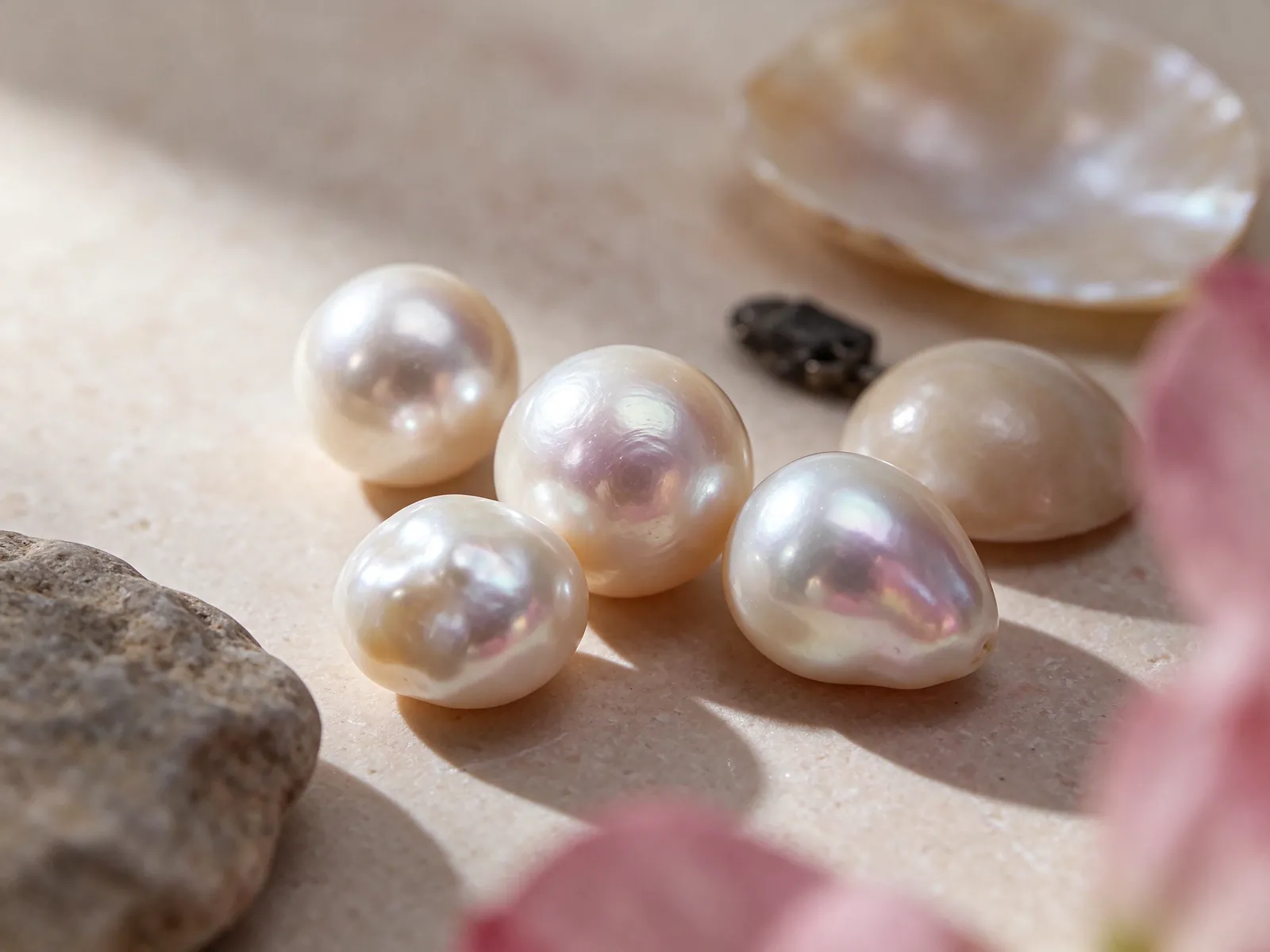
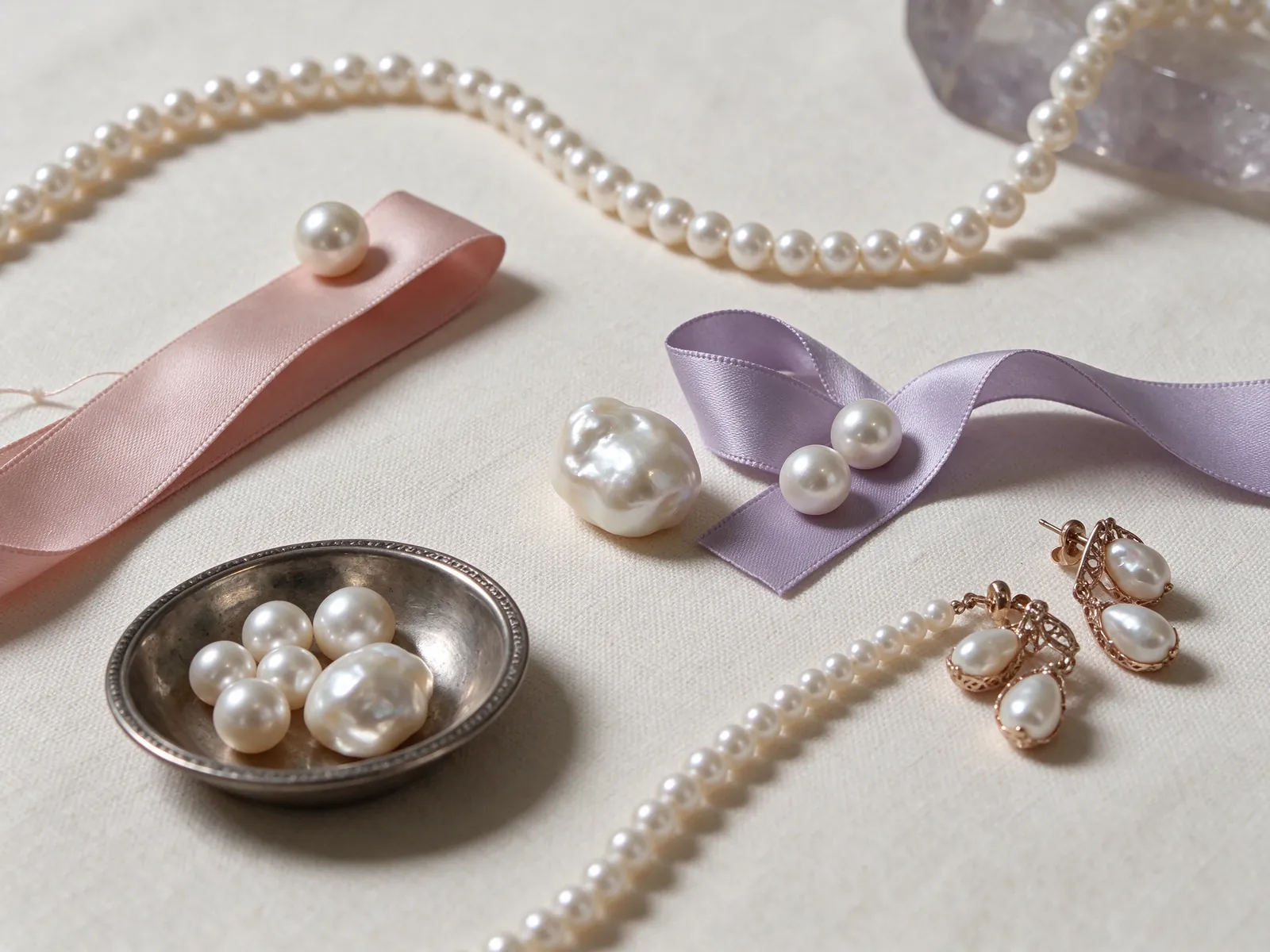
GIA describes seven pearl quality factors: size, shape, colour, lustre, surface quality, nacre quality and matching. Matching is particularly useful when looking at earrings as a pair. At a realistic viewing distance, compare how the pearls relate in colour and lustre and whether their positions make one side appear more prominent. Then look closely at the surfaces, without forgetting how the curve and surrounding metal affect the overall impression.
Bright metal reflections are not the same as pearl lustre. Softer light can help you see the pearl rather than a sharp white flash from a phone camera. Shape or colour alone cannot establish origin or natural-versus-cultured identity. If identity matters to your choice, read the information relating to the particular pearl instead of drawing conclusions from a photograph. Keep your aesthetic preference separate from questions that require specific documentation.
Bring your wardrobe into the metal-colour discussion
Metal options for discussion are 18K 750 white gold, 18K 750 yellow gold, 18K 750 rose gold, PT950 platinum and PT900 platinum, with suitability considered for the particular design. Think about the tones of your usual rings, glasses frames and necklaces: should the hoop blend in or provide contrast? A metal name does not predict a pearl's colour or your wearing experience, so assess the actual combination rather than treating the label as the finished look.
Care for the pearl as well as the hoop and attachment
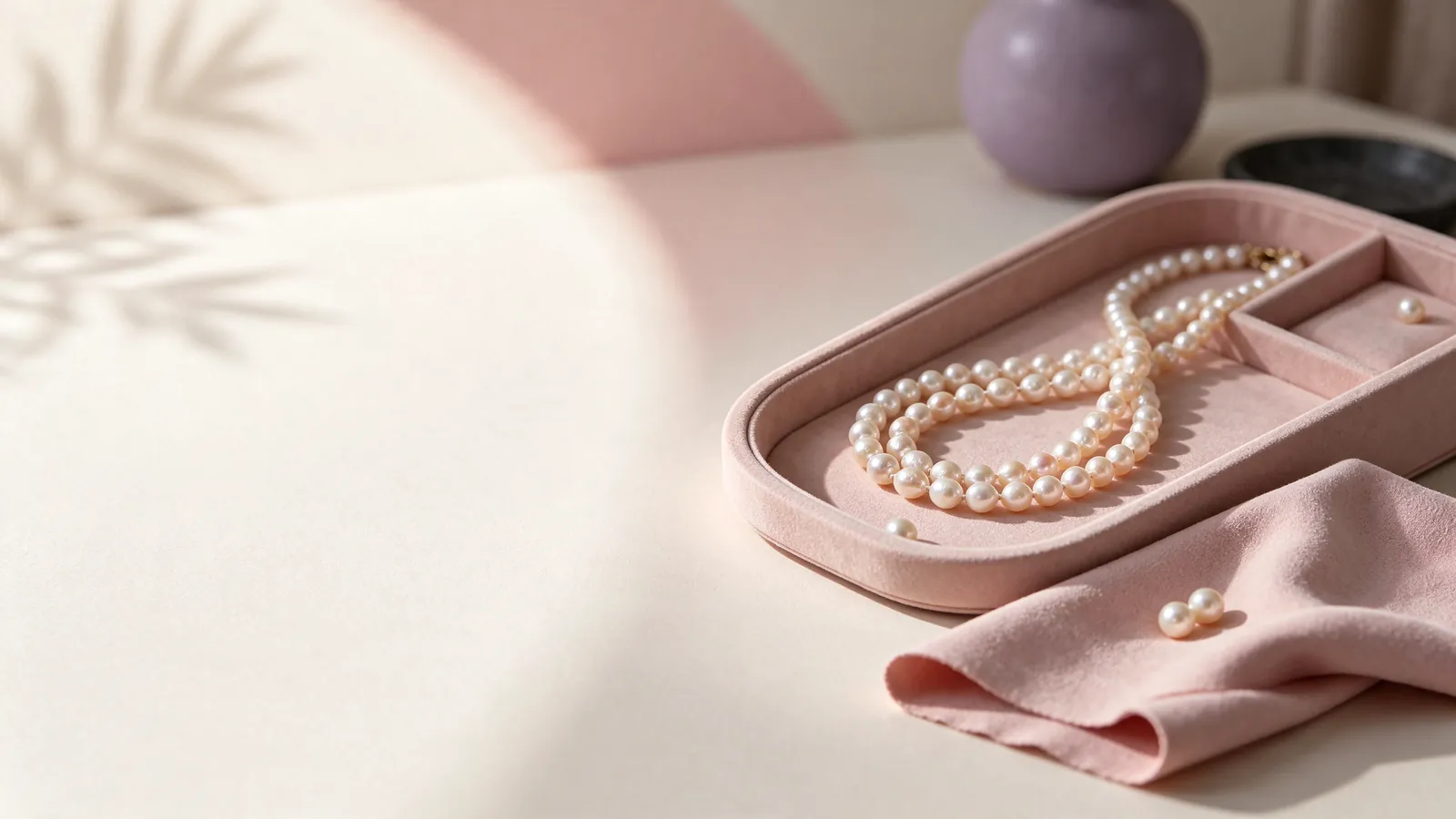
GIA gives pearl a Mohs hardness of 2.5, making contact with the metal hoop and other hard objects a practical storage consideration. After wearing, gently wipe pearls with a very soft, clean cloth. Store the earrings separately so curves and attachments do not catch together. A hanging pearl should not be trapped under other jewellery, and a fixed pearl should not rest where repeated rubbing against a hard surface can occur.
Never put pearls into ultrasonic or steam cleaners. Avoid direct contact with perfume, hair spray, acids and excessive heat; finish hair styling and cosmetic application before putting on the earrings. If the hoop needs attention, do not immerse the whole piece in a metal-cleaning solution without understanding how the pearls should be handled. Small hanging connections also deserve care: do not twist them forcefully or pry them with a sharp object.
Prepare specific styling questions for a useful conversation
Bring together your usual necklines, hairstyle, preferred amount of open space and interest in fixed or hanging pearls. For a charm combination, include photographs of the hoop and closure. For a gift, first establish whether the recipient wears pierced earrings and which constructions they normally choose. You can discuss these styling priorities with Flint Jewellery on WhatsApp, keeping the conversation focused on how you intend to wear the design rather than a photograph alone.
| Aspect | What to observe | Styling effect | Fitting check | Useful question |
|---|---|---|---|---|
| Open space | The opening beside the earlobe | Balance of curve and pearl | View from front and side | Does the earlobe hide the pearl? |
| Pearl position | Fixed on the curve or hanging below | Focus near the face or below the ear | Turn your head gently | Does the pearl turn behind the hoop? |
| Closure | Post route and fastening position | Direction of the worn curve | Open and close as intended | Does the back press against the earlobe? |
| Charm connection | Opening, hoop and closure together | Final hanging direction | Try the actual combination | Can the parts connect without force? |
| Hair and collar | Overlap with hair ends and fabric | Visibility of the outline | Use your everyday hairstyle | Does movement bring it against the collar? |
Pearl knowledge and authoritative references
GIA ranks pearl at 2.5 on the Mohs hardness scale, so prevent the pearl from rubbing against the metal hoop or other hard objects during storage.
Read the reference for this factFrequently asked questions
Will a small hoop automatically suit a thicker earlobe?
No. Visible hoop size does not describe the post route or the room around the closure. Check the actual fit and whether fastening the earring creates pressure, rather than choosing by the outline alone.
Can I add any pearl charm to hoops I already own?
The opening, hoop thickness, decoration and closure must be compatible. Check the route the charm needs to pass through and its final direction. A similar appearance does not establish that two parts will connect properly.
Why does a hoop look less circular from the front?
The angle of the ear piercing and the direction of the hoop affect the visible outline. Compare front and side views in a natural posture instead of expecting a full circle from every angle.
Do I need a larger hoop to make the pearl visible with long hair?
Not necessarily. First check whether the pearl sits behind the ends of your hair. A different pearl position or moving one side of the hair away may make the accent clearer without increasing the hoop's scale.
Can an ultrasonic cleaner be used if most of the earring is metal?
No. GIA advises that pearls should never be cleaned in ultrasonic or steam cleaners. The presence of a pearl determines this care requirement even when the metal curve is the larger part of the design.
Updated: