
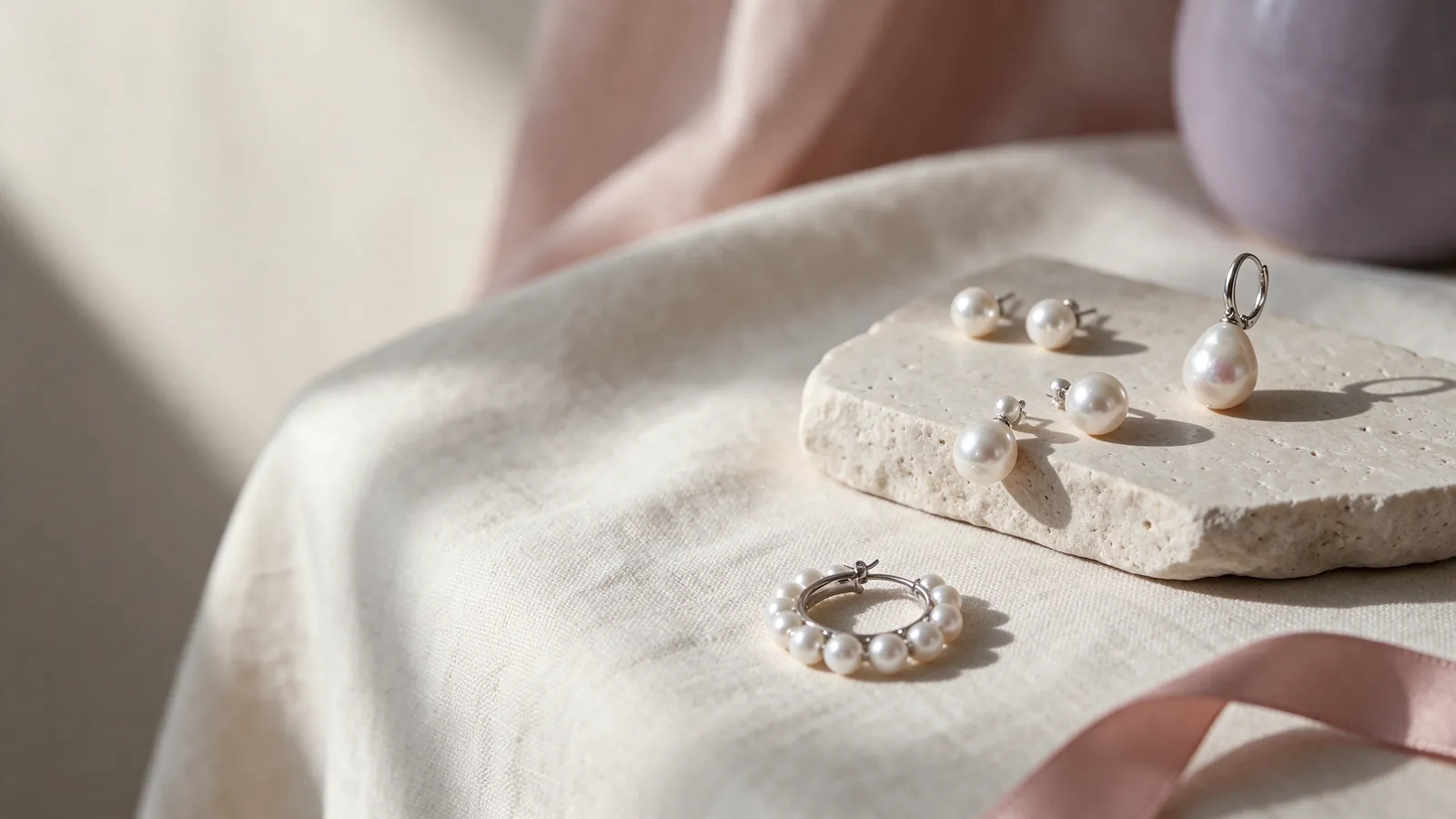
When comparing geometric pearl earrings, how do the width and drop of rectangle pearl earrings and square-frame pearl earrings affect visual balance?
When comparing geometric pearl earrings, start with the complete silhouette rather than the pearl alone. Frame width, the drop from the fastening to the lowest point, and the position of the pearl all contribute to visual emphasis. Open square-frame pearl earrings may foreground space, whereas rectangle pearl earrings can lead the eye down a straight line. Exploring pearl earrings Hong Kong by wearing format first helps separate a preference for close-fitting earrings from a preference for geometry.
For a useful comparison, keep your hairstyle, clothing and viewing distance similar. A broad outline is not automatically bulky, and a long outline does not automatically make the face appear longer. Thin and substantial frame lines read differently, as do a central pearl and a pearl below the frame. Check where each design sits beside the cheek and collar before deciding which proportion feels more natural on you.
How can your hairstyle and neckline help you assess the proportions of rectangle pearl earrings and square-frame pearl earrings when trying on geometric pearl earrings?
Wear your hair as you normally would, then tuck it behind the ear to see the whole outline. Repeat with a familiar crew neck or shirt collar, looking straight ahead and from the side. A square hidden except for one corner may lose its visual identity; a rectangular drop overlapping a collar may lose its clean direction. The aim is readable proportion in your everyday setting, not a rigid face-shape rule.
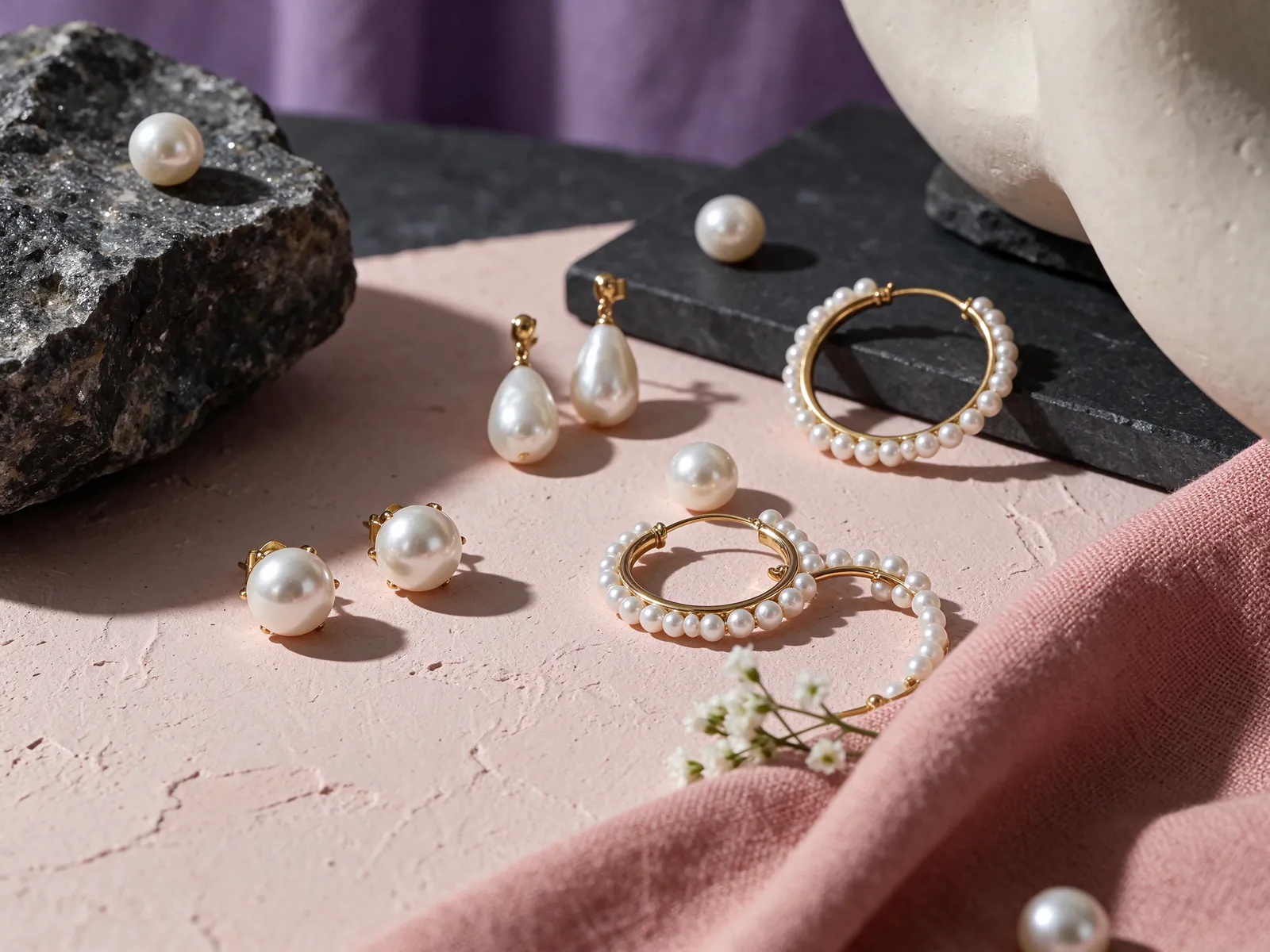
Read the pearl position and the space around it
A pearl inside an open frame creates a different relationship from one suspended beneath it. In the first arrangement, consider how much empty space remains around the pearl. A closely filled opening reads as a compact unit; more space lets the frame and pearl register separately. Geometry describes the fittings here, not a requirement for the pearl itself to have a square shape.
A pearl below the frame shifts attention towards the lower part of the earring. A pearl placed to one side creates an offset focal point, even if the frame is symmetrical. Look at the pair together to establish whether the placement is mirrored or repeats the same direction. Do not assume that a symmetrical outline will sit symmetrically once worn, especially when parts can move independently.
Test open frames against your own clothing colours
An open frame takes its background from hair, skin and clothing. Try a pale top and a dark top to see whether the outline stays visible and whether the pearl remains distinct. A line that looks crisp against a white photographic background can blend into your hair in everyday wear. This simple comparison tells you more about usable contrast than a close-up on its own.
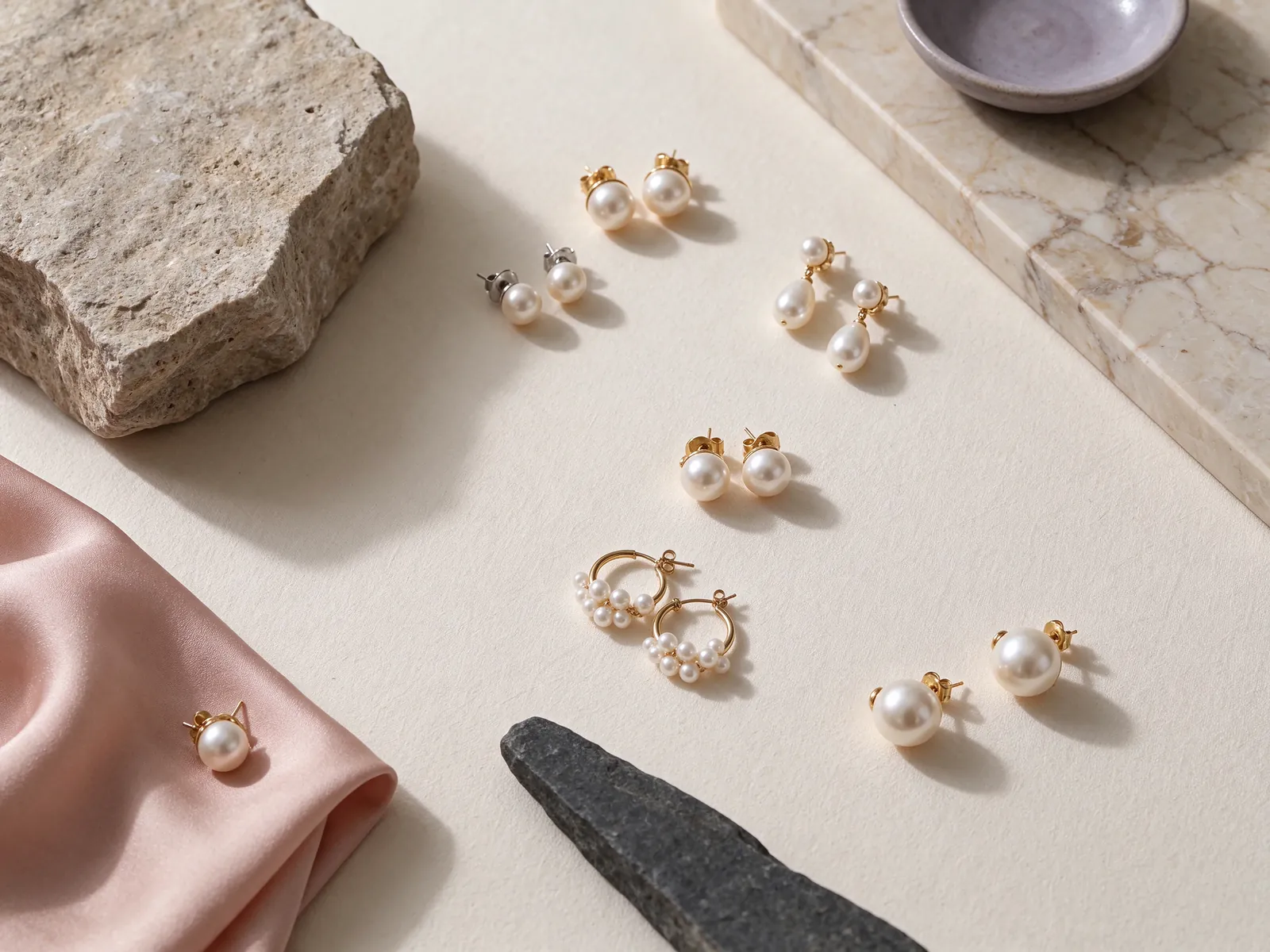
Give the earrings room beside collars, hair and spectacles
For an office shirt, settle the collar before trying on the earrings. Turn gently to check whether the lowest point brushes a collar tip. A vertical frame can echo a shirt placket, but several competing lines around the neck may also feel crowded. With a plain rounded neckline, a square outline may be easier to distinguish. Assess the actual arrangement rather than assigning one shape to every work outfit.
For an evening gathering with a more open neckline, check the relationship between the earrings and the space around the neck. You need not add a prominent necklace simply because that space is available. If the earrings already combine a clear frame and a pearl focal point, a simpler necklace can leave their contrast visible. Step back from the mirror to decide where you want the main emphasis to fall.
Include the accessories you use on a normal commute
Put on your usual spectacles before assessing the upper frame: the arms and earring may occupy the same visual area. With short hair, check whether the ends conceal the upper edge; with tied hair, see whether full exposure feels too prominent. If you use headphones, practise putting them on and removing them while stationary, without forcing them past the earrings. Everyday handling is part of a useful try-on.
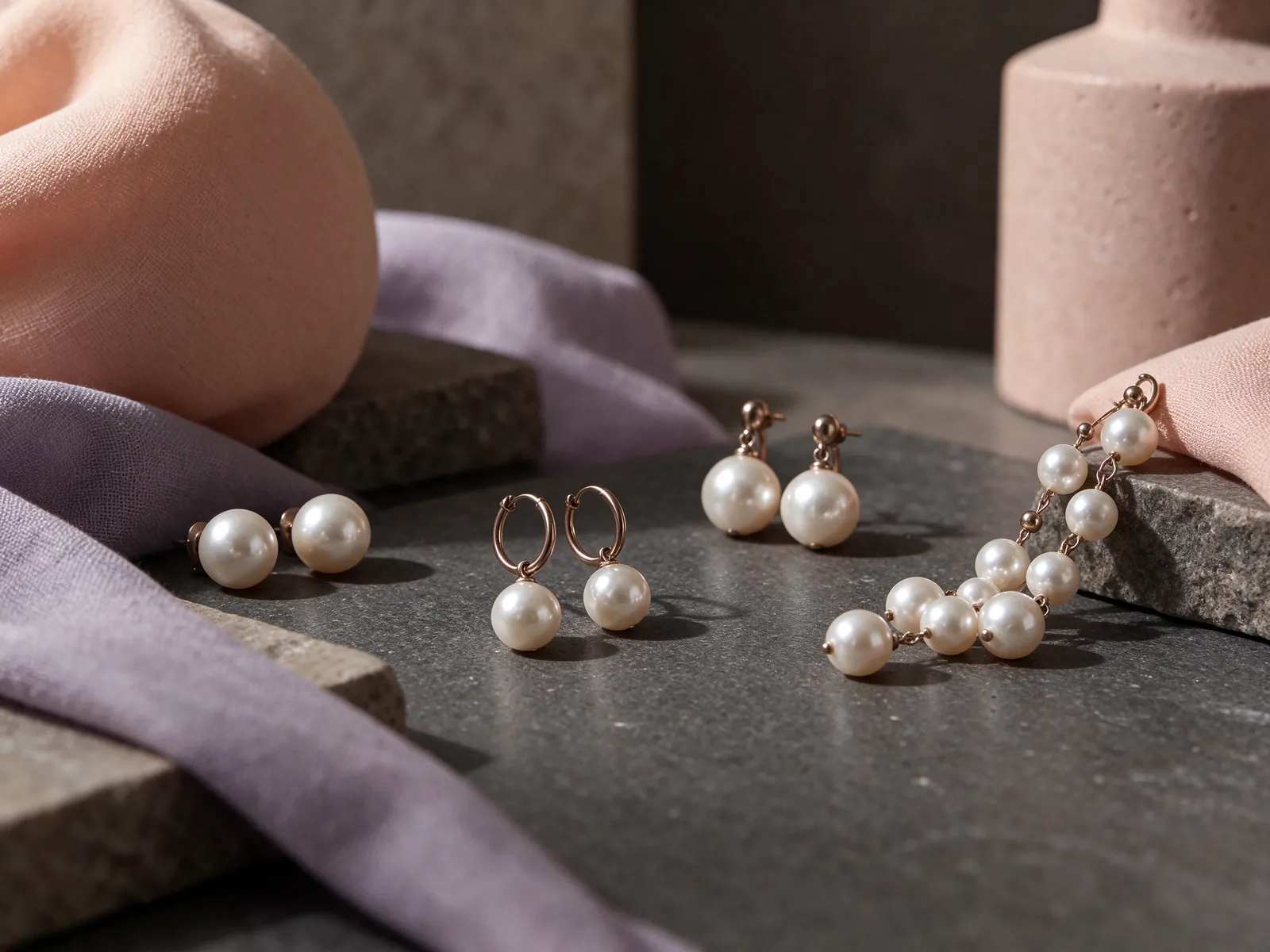
Separate metal colour from the strength of the outline
Compare 18K gold pearl earrings and platinum pearl earrings as material topics, then assess the geometry separately. The five metal options to discuss are 18K 750 white gold, 18K 750 yellow gold, 18K 750 rose gold, PT950 platinum and PT900 platinum. A frame's shape does not identify its material. Read the stated details of the individual piece rather than treating a photograph or a particular colour as proof.
A fine frame allows the empty space to dominate, while a stronger line defines the boundary more clearly. Look at corners, joins and the area around the pearl setting to see whether the outline feels consistent. Examine the piece in soft daylight and indoor light, because reflections can change which element attracts attention. Metal brightness should not become a substitute for observing the pearl's own lustre.
Compare the frame with your regular wardrobe, not a colour rule
Use the colours you genuinely wear as a background. Warm neutral clothing may blend with a warm-toned line, while a pale line against darker hair can create a different contrast. Include your watch or other jewellery if you normally wear it. The question is whether you enjoy a coordinated or mixed appearance, not whether a particular skin tone must be assigned one metal colour.
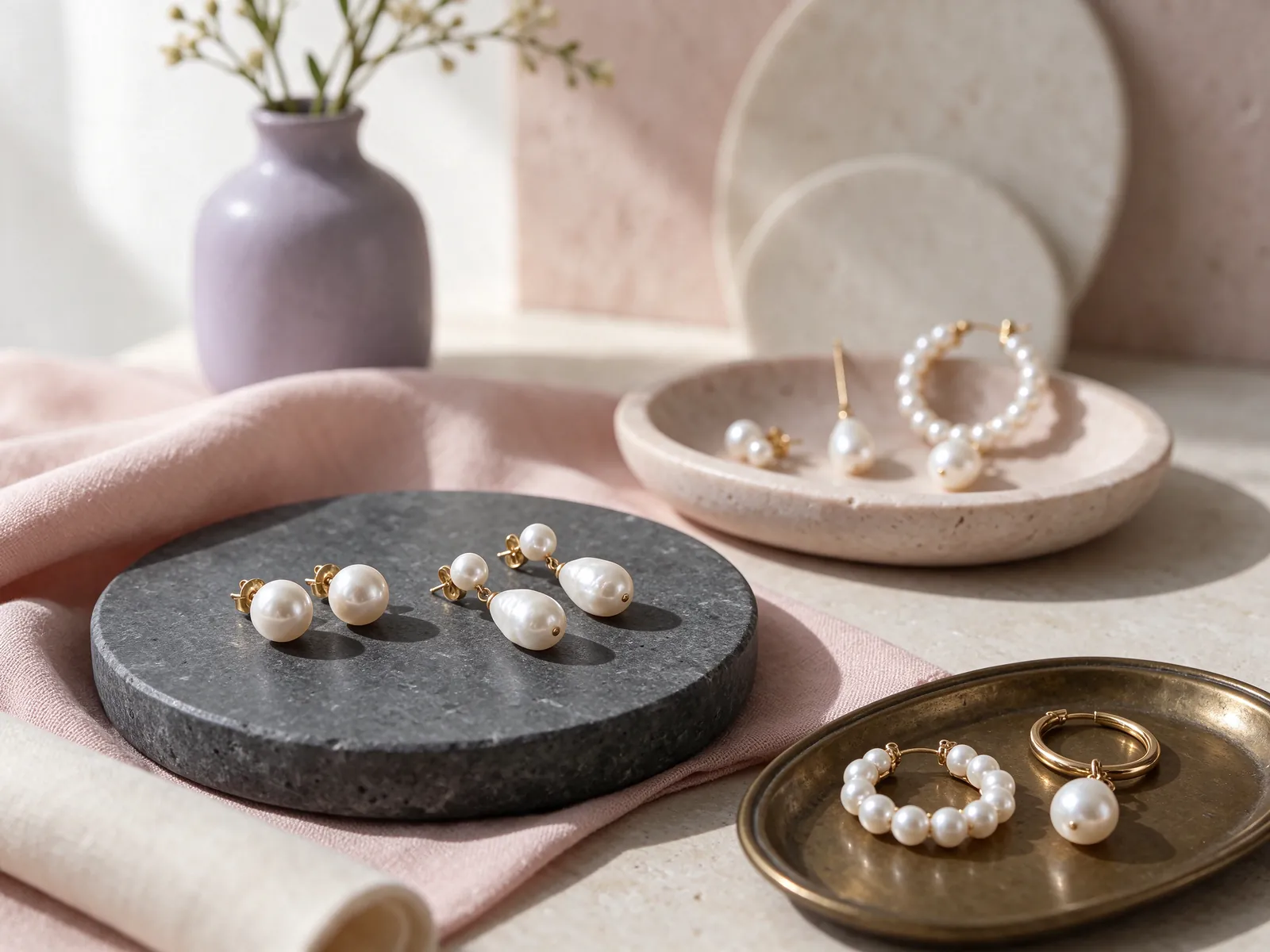
Check support, tilt and movement before judging comfort
A geometric outline can lean forwards or turn sideways once attached to the ear. Inspect the post position, the distribution of the frame and pearl, and how the back supports the earlobe. Understanding pearl earring back types helps you distinguish fastening choices, but an incompatible back should not be forced onto a post. Tightening excessively is not a sensible way to disguise a fit that feels uncomfortable.
Turn your head gently, look down and return to a neutral position. Notice whether the frame brushes the cheek, catches hair or settles in an unexpected direction. A visually delicate outline does not establish low weight. If you feel pulling or discomfort, remove the earrings before trying another structure. The discussion of pearl earrings for sensitive ears can help separate contact-material questions from styling preferences, without promising a universal skin response.
Use a side view to check what the front view hides
A front view describes width, while a side view reveals projection and tilt. Tuck hair away before looking at the distance between the frame and the earlobe, and check whether the pearl projects forwards. Some flat frames become visually narrow when you turn. Movement need not be eliminated, but you should know whether the changing outline still suits your preferences and feels comfortable.
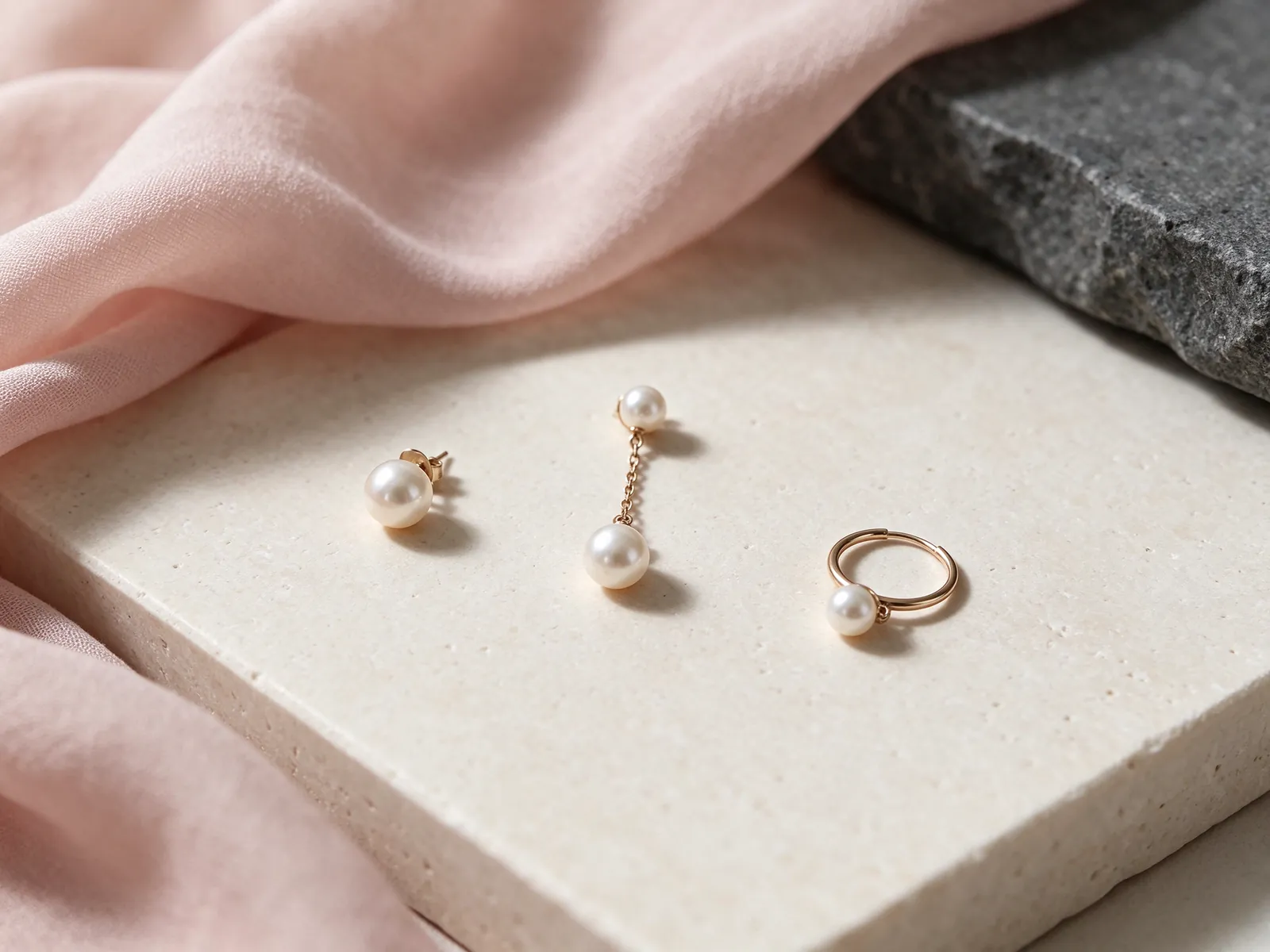
Compare abstract geometry with recognisable motifs
A square or rectangle can communicate structure without requiring a particular symbolic meaning. If you prefer a recognisable image, compare star-motif pearl earrings for their points and directional lines, or heart-motif pearl earrings for a softer contour. Focus on the outline you enjoy and the settings in which you will wear it. There is no need to assign a motif to a particular age or personality.
The flowing or folded lines discussed in ribbon pearl earrings offer another useful contrast. Ask whether you like a regular boundary or a softer movement around the pearl. Keep overall visual presence reasonably similar when comparing motifs; the difference between a small stud and a prominent drop is not solely a difference in pattern. Naming the detail you enjoy makes the selection more deliberate.
Let one set of lines lead the outfit
With stripes, checks or strong prints, consider whether the earring frame repeats the clothing's rhythm or competes with it. You can still wear geometry with patterned clothes, but reducing other prominent accessories may make the composition easier to read. A plain top leaves more room for the contrast between pearl and frame. Choose the focal point intentionally instead of expecting every accessory to stand out equally.
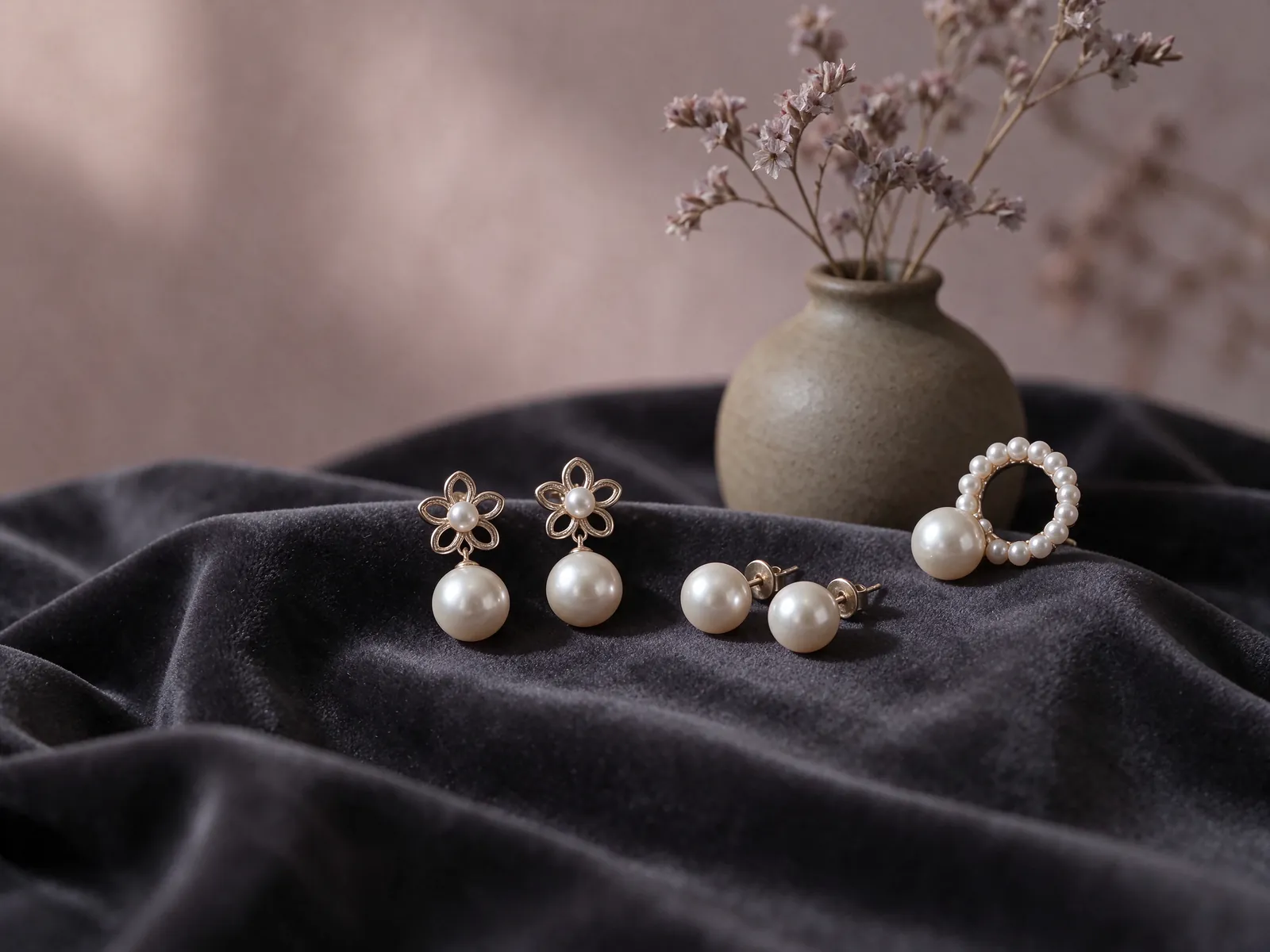
Assess the pearls independently and care for the whole earring
Once you like the frame, look closely at the pearls. GIA identifies seven pearl value factors: size, shape, colour, lustre, surface quality, nacre quality and matching. They provide a way to separate questions about the pearl from questions about the metal outline. Compare the pair's visible colour and lustre, but do not use shape or colour alone to establish origin or natural-versus-cultured identity. Matching applies to jewellery containing multiple pearls, including the relationship between the pearls in a pair of earrings. GIA provides general assessment guidance, not a grade or certification for an individual piece.
A substantial-looking frame does not make the pearl suitable for harsh cleaning. GIA gives pearl a Mohs hardness of 2.5 and advises against ultrasonic and steam cleaners. After wearing, wipe with a very soft clean cloth and store the earrings so frame corners cannot rub the pearls. Apply perfume and hair products before putting them on. If hair catches in an open frame, disentangle it gently rather than pulling against the pearl.
Keep a comparison record that reflects actual wear
Record the front outline, side tilt, pearl position, collar clearance and ease of fastening, then add observations about the pearls themselves. Compare try-on photographs with the same top before narrowing your choices. Eliminate structures that interfere with your usual movements, then choose the lines you enjoy most. This is more informative than relying on broad descriptions such as flattering or versatile without testing what they mean for you.
To discuss square-frame space or a rectangular outline, contact Flint Jewellery on WhatsApp or call +85260106207. Describe your usual hairstyle, spectacles and neckline, and whether you prefer a close-fitting silhouette or a drop. These details help focus the conversation on the proportions and everyday handling that matter to you.
| Feature | Square-frame observation | Rectangular observation | Try-on check |
|---|---|---|---|
| Outline | Look for clear width and open space | Look for an uninterrupted vertical line | Compare hair down and tucked back |
| Pearl position | Notice how much of the opening is filled | Notice where the lower focal point falls | Compare front and angled views |
| Neckline | Check the frame beside the cheek | Check the lowest point beside the collar | Wear a familiar top and turn gently |
| Support | Observe changes when the frame rotates | Observe tilt and swinging parts | Check compatible backs and earlobe comfort |
| Pearl appearance | Do not focus only on bright corners | Do not focus only on drop length | Use GIA's seven factors to separate observations |
Pearl knowledge and authoritative references
GIA identifies seven pearl value factors: size, shape, colour, lustre, surface quality, nacre quality and matching. Use them to assess the pearls separately from the geometric fittings.
Read the reference for this factFrequently asked questions
Does a square worn diagonally behave like an upright square?
The rotated outline places corners at the top and bottom, changing the overall width, drop and visual emphasis. Compare the worn silhouette rather than the length of one frame edge. Check whether the corners catch hair or approach the collar, and where the pearl sits within that new outline.
Is it a problem if the frame almost disappears from the side?
Not necessarily. A flat frame may look narrow from that angle. Check whether you enjoy the change during normal movement and whether the earring tilts or projects in a way you dislike. The front photograph cannot answer those wearing questions by itself.
Should an offset pearl always be mirrored on the other ear?
Not always, but establish whether the pair is mirrored, repeats one direction or uses different arrangements. Try both earrings together so you can judge the relationship to your face. Do not infer the pair's arrangement from a photograph of a single earring.
How should I test a pearl hanging below the frame?
While stationary, turn and lower your head gently. Notice whether the pearl and frame meet, catch hair or settle awkwardly. Do not shake the earrings forcefully or pull on the pearl. Remove them if you feel discomfort or pulling before considering another structure.
When wearing spectacles, should I prioritise width or drop?
Put on your regular spectacles and assess the arms, frame width and pearl position together. Then check the lower edge beside your neckline. A short design can still crowd the ear area, while a longer design can remain visually distinct, so length alone is insufficient.
Updated: