
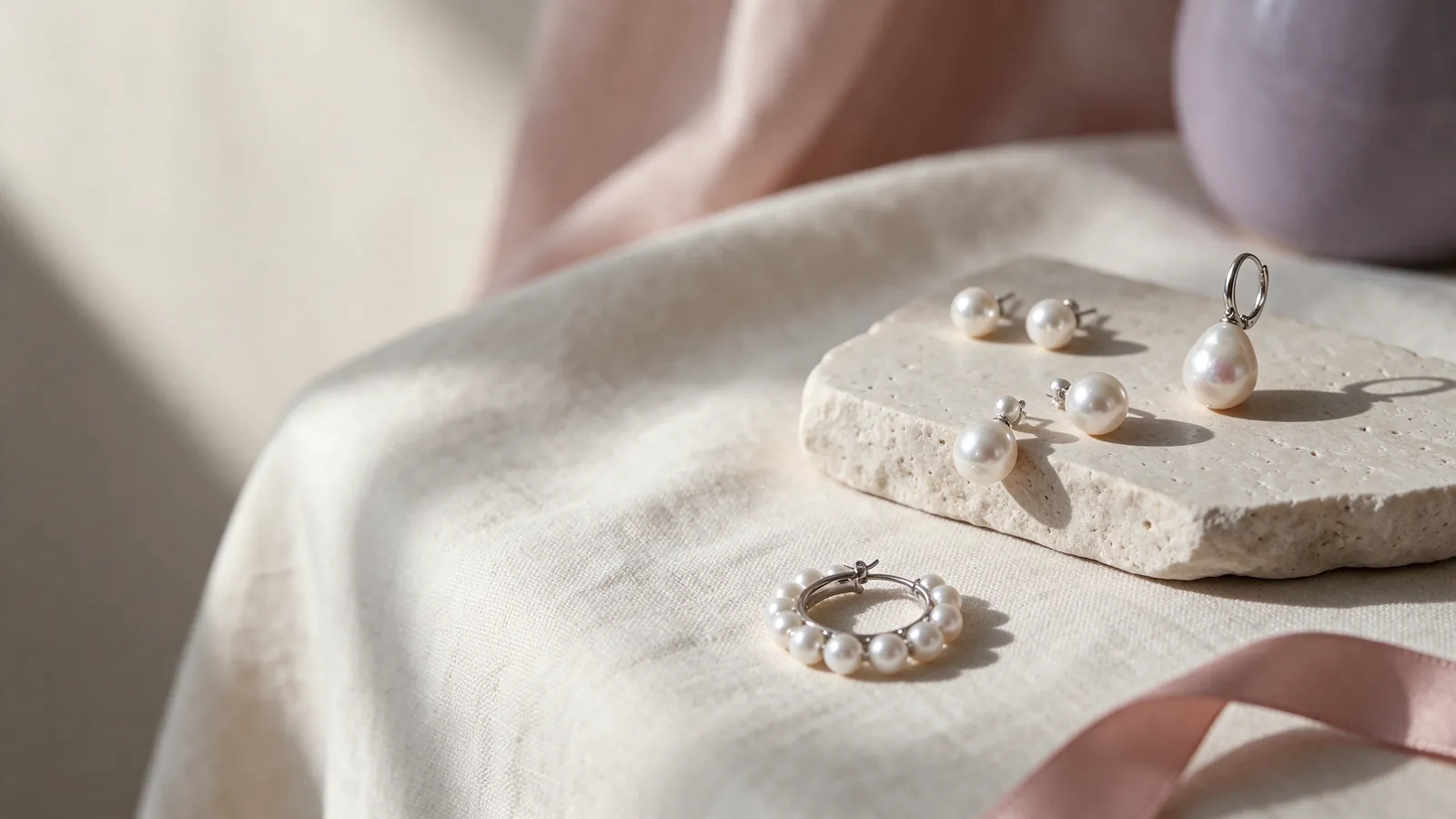
How does pearl shape guide platinum pearl earrings, from PT950 pearl earrings to PT900 pearl stud earrings?
A useful starting point for platinum pearl earrings is the outline you want to see beside your face. Flint Tide · Soft Tide Earrings uses a white baroque pearl, approximately 7–8mm, with a simple stud construction. Its softly irregular edge gives the design character without requiring a long drop. Think about whether you prefer a rounded impression, a little downward extension or a fold that catches the light when you turn.
PT950 pearl earrings and PT900 pearl stud earrings are platinum directions you can discuss with Flint Jewellery, rather than shortcuts to a particular wearing experience. The pearl's orientation, the stud position and the back also matter. Soft Tide's product unit is a single earring. If you want to wear it on both ears, make the request for a coordinated pair explicit instead of assuming that the design description includes two pieces.
How can a simple stud complement a baroque outline in platinum pearl earrings, whether PT950 pearl earrings or PT900 pearl stud earrings?
Consider the side view as well as the front. A tucked hairstyle reveals how far the pearl projects, while loose hair may leave only its leading edge visible. Describe which part of the outline you want to emphasise and how close you like an earring to sit. Those observations communicate more than asking for an undefined 'perfect' baroque shape.
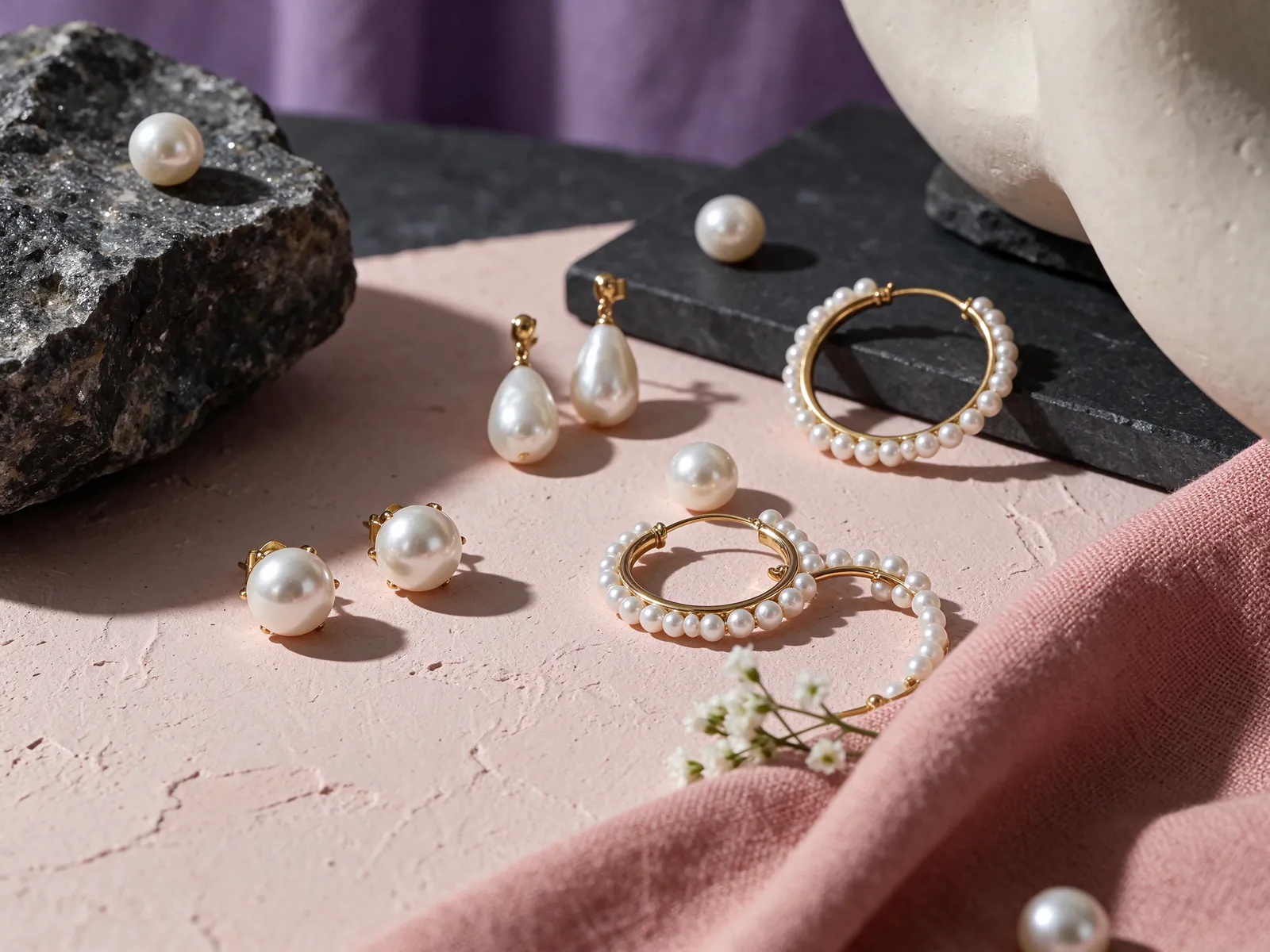
Let your existing jewellery help frame the metal discussion
Start with the pieces you already reach for: a ring, a watch, spectacles or a necklace. Do you want the earrings to repeat their visual tone or introduce a quiet contrast? Reading about pearl stud earrings can help organise that decision around visible metal, clothing colours and everyday habits. A metal label alone does not describe the complete stud, its back or how comfortable it will feel on your ear.
For a wardrobe of warm ivory, pale pink or lavender, compare the overall effect rather than treating one colour combination as mandatory. You can also explore 18K gold pearl earrings as a different design direction. Flint's material choices for discussion are 18K 750 white gold, 18K 750 yellow gold, 18K 750 rose gold, PT950 platinum and PT900 platinum. This selection does not imply that every combination is a finished item ready to purchase.
Separate the platinum choice from the outline you prefer
A clear request might name PT950 or PT900 first, then explain the visual goal: less visible metal from the front, a softly extended pearl edge or coordination with an existing necklace. If you have not chosen the metal yet, begin with your clothing and wearing habits. There is no need to turn the two labels into a quality ranking or a claim about the pearl.
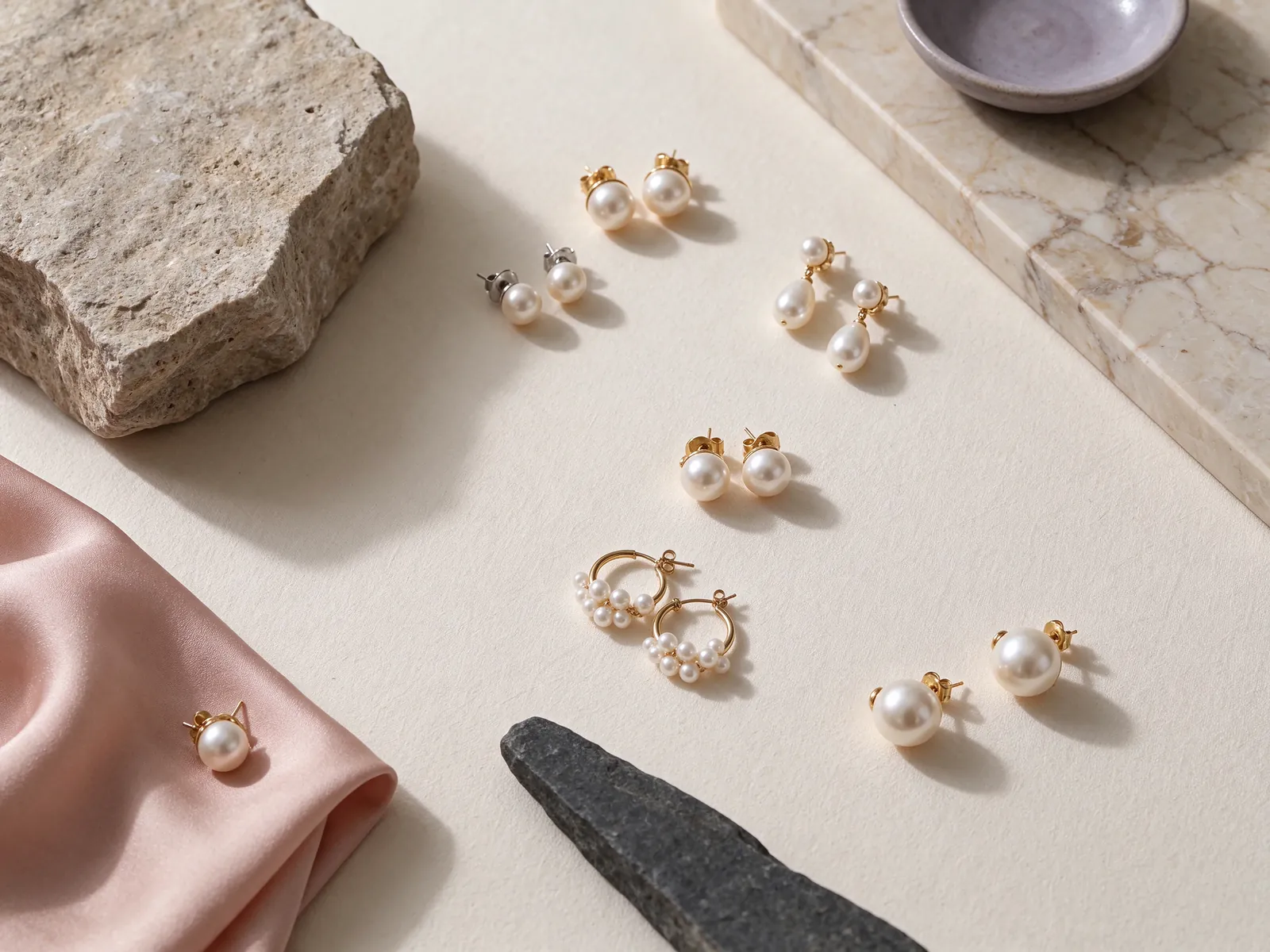
Discuss the back as carefully as the front
A small-looking front does not tell you how the whole earring will sit. Piercing position, earlobe shape and the relationship between post and back affect its angle. When considering pearl earring back types, explain whether previous studs tipped forwards or were awkward to fasten. Practical handling matters alongside appearance. Pushing a back tightly against the ear is not a substitute for discussing an appropriate fit.
If forward tilting is your concern, earlobe support backs for pearl earrings offers another way to think about the contact area and ease of use. Distinguish an elongated pearl outline from the entire earring leaning forwards. Soft Tide is described as a stud, but that does not identify a particular included back. Bring your preferred fastening and support needs into the bespoke discussion rather than assuming the construction from the front view.
If your ears have reacted before, describe the contact points
The topic of pearl earrings for sensitive ears can help you organise questions about the post, back and wearing habits. Neither PT950 nor PT900 should be treated as a universal hypoallergenic promise. Explain previous discomfort and any advice you have received from a healthcare professional. Stop wearing earrings and seek appropriate medical advice if redness, pain or discharge persists.
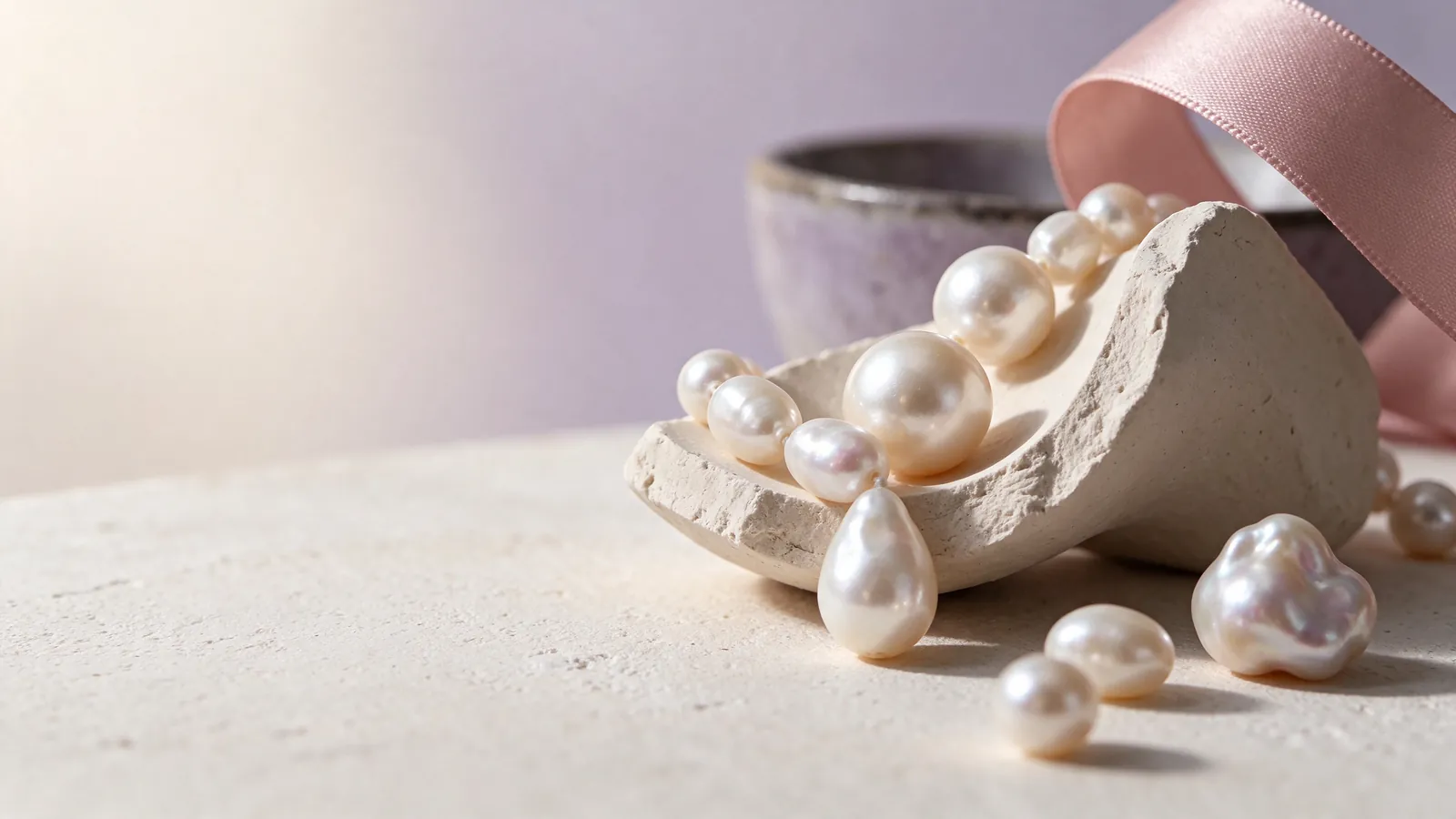
Pair baroque pearls by visual balance, not diameter alone
For a pair, look for a relationship between the two outlines rather than expecting identical folds. Similar visual presence, compatible direction and a harmonious white appearance may be more useful descriptions of your preference. Soft Tide's approximately 7–8mm pearl description does not establish the width, height or projection of every outline. Tell Flint whether you prefer a more balanced impression or enjoy a small difference between the ears.
GIA identifies seven pearl value factors: size, shape, colour, lustre, surface quality, nacre quality and matching. That framework makes shape one consideration among several, rather than a complete judgement. When looking at a baroque stud, notice the clarity of reflections and how the visible surfaces relate. White colour and an irregular outline cannot establish origin, natural or cultured identity, or the existence of a certificate.
A single focal point and a pair need different decisions
Wearing one earring can create deliberate asymmetry, while a pair puts more emphasis on balance. Picture both with your normal hairstyle before deciding. Product quantity, matching preferences and styling are separate questions: state how many earrings you want, how closely you want them to relate and whether a charm will be part of the conversation.
Give the pearl some space beside collars and hair
For an office shirt, the Soft Tide outline can provide a gentle contrast to a crisp collar. Keep neighbouring details simple if you want the pearl to be the focus. Check whether spectacles, hair and the earring gather around the same point. Rather than following rigid face-shape rules, use the spacing between accessories to decide what feels balanced with the clothes you actually wear.
With knitwear or a softly draped neckline, the white surface can become a restrained point of brightness. If you enjoy more defined lines, geometric pearl earrings is a useful styling topic to compare with the flowing baroque outline. That comparison does not mean Soft Tide includes a geometric fitting. Consider whether you want to keep the stud simple or discuss a separately chosen charm, especially where scarves or long hair could catch.
Explain the occasion before adding a charm
Soft Tide can be paired with an earring charm, but the charm is a separate styling choice. Say whether you imagine everyday office wear, dinner or a more formal outfit, then discuss the line and the overall balance. An extension changes the space the combination occupies; do not assume it will behave visually like the stud worn alone.
Care for the pearl, not just the chosen metal
GIA places pearl at 2.5 on the Mohs hardness scale and advises against ultrasonic or steam cleaning. Choosing platinum does not remove the pearl's care needs. After wearing, use a very soft, clean cloth for a gentle wipe. Do not select an aggressive cleaner simply because it is intended for metal, or immerse the whole earring without considering its pearl and connected construction.
Keep perfume, hair spray and excessive heat away from the pearl. Finish your beauty routine before putting on earrings, and store them where other jewellery cannot rub against their surfaces. Take care when removing a mask or pulling clothing over your head. A platinum choice is not a waterproof promise; remove pearl earrings before swimming, showering or tasks involving cleaning products.
Keep separate components from rubbing in storage
Use a soft, separated storage space for the stud, another earring and any separately chosen charm. Before wearing, notice loose fittings, a bent post or anything caught around the construction. Do not force a component back into place. Describe the problem and seek suitable advice rather than assuming that every repair will produce the same result.
Turn your preferences into a practical bespoke conversation
Begin with Soft Tide and explain your intended quantity, preferred outline, usual hairstyle and existing accessories. If you are also reading about sterling silver pearl earrings, keep that comparison separate from the materials being discussed for this design. A knowledge topic does not add a new Flint material option. The useful question here is how the approved stud direction can relate to your own wearing needs.
Next, say whether you want to discuss PT950 or PT900, any fastening concerns and the possibility of a separate charm. If budget or a particular date matters, raise it directly rather than inferring a price or completion time from an image. Choose one priority to lead the discussion, such as balanced outlines, less visible metal or coordination with a favourite necklace.
Distinguish the pearl description from the whole combination
White baroque pearl, approximately 7–8mm, stud construction and single-earring unit each answer a different question about Soft Tide. Your preferred platinum option, back and charm are further discussion points. Contact Flint Jewellery through https://wa.me/85260106207 with these practical preferences; you do not need to assign a pearl species or quality grade before starting.
| Decision | Starting point | Preference to describe | Styling effect | Do not assume |
|---|---|---|---|---|
| Outline | White baroque pearl | Rounded or more extended edge | Front focus and side profile | Species, origin or certification |
| Scale | Approximately 7–8mm for Soft Tide | Visual presence and closeness to the ear | Space beside hair and collars | Every outline's width or projection |
| Metal | Discuss PT950 or PT900 platinum | Coordination with existing jewellery | Role of visible metal | Universal hypoallergenic or waterproof performance |
| Construction | Stud earring | Fastening and support needs | Orientation and handling | A particular included back |
| Combination | Single earring; charm can be discussed separately | One ear, a pair or an extension | Balance and overall line | A pair or charm is already included |
Pearl knowledge and authoritative references
GIA identifies seven pearl value factors: size, shape, colour, lustre, surface quality, nacre quality and matching. For baroque earrings worn as a pair, matching deserves attention alongside shape.
Read the reference for this factFrequently asked questions
Is PT950 automatically a better choice than PT900 for Soft Tide?
The name alone cannot settle that decision. Both are platinum choices for discussion. The pearl outline, stud position, back and your wearing habits also affect the complete design, so begin with the effect and practical fit you want.
Does approximately 7–8mm mean a pair will have identical outlines?
No. The stated pearl size does not describe every baroque fold or projection. For a pair, explain whether you want similar visual presence and direction or prefer some irregular difference. Matching is more than sharing a size range.
Does the Soft Tide description include two earrings?
Its stated product unit is a single earring. If you want earrings for both ears, explicitly discuss a coordinated pair and your matching preferences. Do not infer quantity from the design name.
Will a separately chosen charm preserve the stud's close-to-ear appearance?
An added charm creates an extended combination, so its line and movement should be considered alongside hair and clothing. Soft Tide can be paired with a charm, but that does not mean one is included or that the combined appearance is identical to the stud alone.
Can I use an ultrasonic cleaner because the earrings are discussed in platinum?
No. The pearl still needs pearl-appropriate care. GIA advises against ultrasonic and steam cleaning for pearls. Use a very soft, clean cloth after wearing and avoid perfume, hair spray and excessive heat.
Updated: