How do pearl ear cuffs and a non-pierced pearl ear cuff sit along the ear?
A pearl ear cuff changes the height of the focal point: instead of hanging only from the lobe, it brings attention to the ear's outer contour. Start by looking at the folds of your own ear and deciding which part you would like to show. A pearl facing forwards has a different effect from a line visible mainly in profile. Front and side views therefore serve different purposes. The first helps you judge the relationship with your face; the second shows how the metal follows the ear and where the decoration projects outwards.
Do not assume that every curved ear ornament attaches in the same way. An open cuff, a design with a moving fastening and an ornament incorporating a post require different handling. A non-pierced pearl ear cuff should be assessed through its actual construction, not simply through its name. If your priority is decoration at the lobe, compare clip-on pearl earrings rather than treating a lobe clip as an interchangeable cartilage fitting. Begin with a position that the design can support naturally, then decide whether its visual height suits you.
When comparing pearl ear cuffs, which fastening details matter for a non-pierced pearl ear cuff?
Identify the supporting metal separately from the pearl decoration. Hold the support when putting the cuff on, follow the intended opening or closing direction, and check that any moving part is fully engaged. Observe whether the pearl pulls the piece outwards or changes its angle. A fit that requires painful pressure is not a useful solution to movement. Unless the design is described as adjustable, do not bend the opening yourself; even an adjustable mechanism needs to be understood before you apply force.
Use an everyday fitting routine, not just a still photograph
A cuff that appears balanced while you stand still may behave differently when you talk or turn your head. Assess contact first: does the metal rest along a supported curve, or concentrate pressure at one point? Then move normally and watch for rotation, sliding or contact with your cheek. Comfort and retention are separate observations. Tightening something until it hurts does not demonstrate that it suits your ear. Take it off if it causes pain, clear pressure marks or other discomfort rather than treating those sensations as a necessary settling-in period.
Bring the things you normally wear around your ears into the comparison. Glasses may press against the back of a cuff, while a mask loop can catch its opening during removal. Hair can also obscure the pearls or wind around the metal. Try your usual arrangement rather than an unusually tidy hairstyle reserved for the fitting. If you frequently use headphones or remove glasses throughout the day, consider whether the cuff leaves a practical route for those actions. The space behind the decoration matters as much as its visible front.
Describe the issue precisely when asking about fit
Useful observations include 'the back touches my glasses', 'the pearls turn behind my ear' or 'hair catches as I remove it'. Those descriptions are more informative than calling every problem looseness. Front and profile photographs can record position and proportion, but cannot establish pressure or security. Ask how the fastening works, whether adjustment is intended, which ear it is designed for and how it should come off. This makes it easier to separate an unsuitable wearing position from an incompatible construction.
Read pearl quality and the cuff's silhouette as different questions
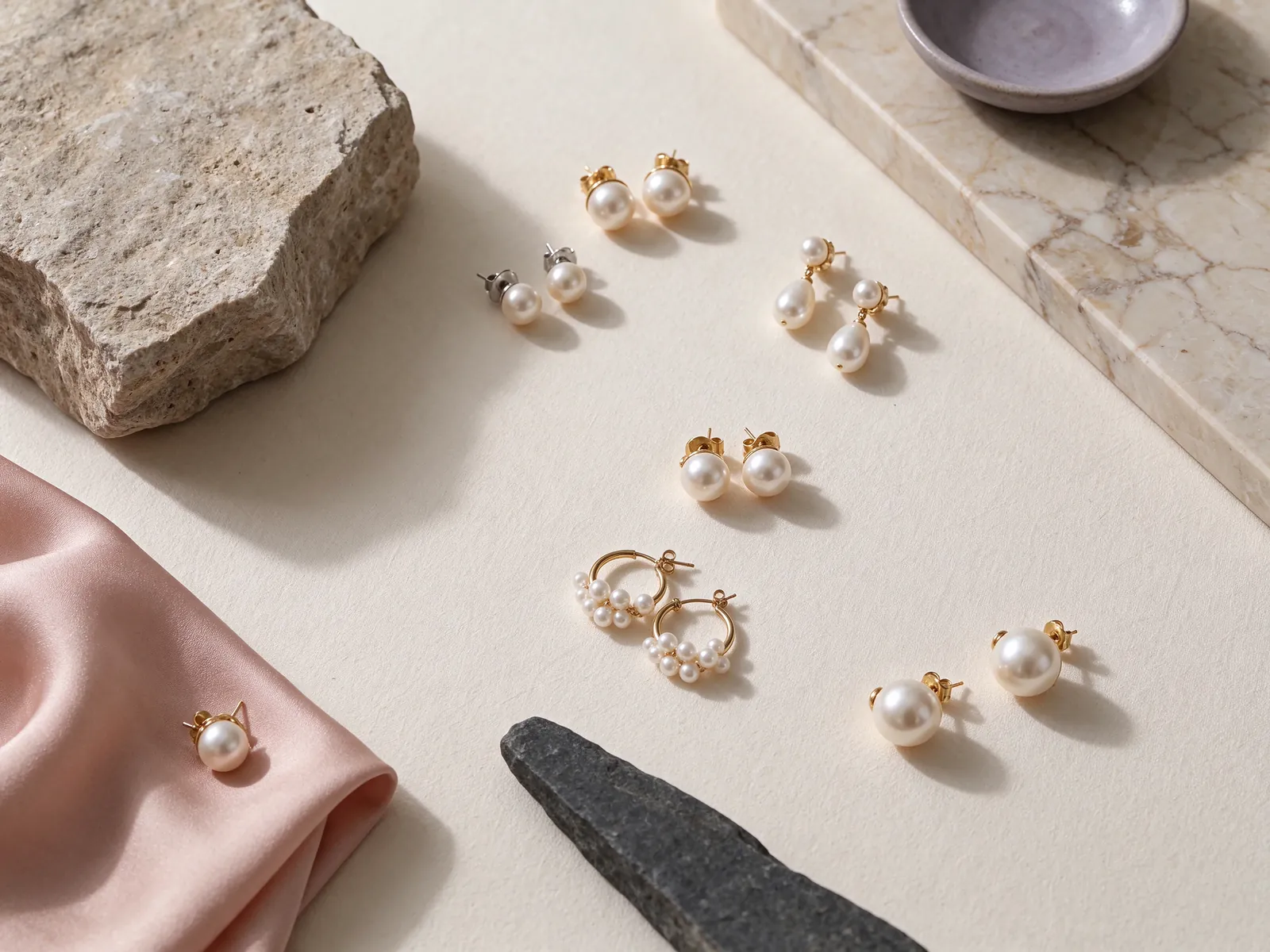
A single visible pearl can punctuate the ear without covering its outline; several pearls can create a route for the eye to follow. Neither arrangement is automatically a higher-quality choice. Look at the spaces between pearl and metal, the direction of the visible surfaces and whether the outermost element hides the ear's contour. If you usually leave your hair down, check which details remain visible in that setting. Choosing a large-looking decoration that disappears behind your hair may not deliver the effect you intended.
GIA identifies seven pearl value factors: size, shape, colour, lustre, surface quality, nacre quality and matching. For a cuff, these provide a more useful framework than a vague quality label. Compare visible surfaces in similar lighting and consider how several pearls work together. Colour in a photograph can change with exposure and reflected surroundings, so it cannot by itself establish a pearl's identity, origin or natural-versus-cultured status. Likewise, a round outline is a shape observation, not evidence of a certificate or a particular pearl type.
Decide whether you want continuity or deliberate variation
An orderly pearl line may suit a restrained silhouette, while graduated or contrasting outlines can introduce movement. Ask whether a variation looks intentional within the whole design rather than demanding that every element look identical. GIA's matching factor is helpful when comparing the coordination of multiple pearls, but does not require every design to use the same shape. Keep the design's rhythm separate from the condition of each visible surface, so that an intentional change in outline is not mistaken for a quality judgement.
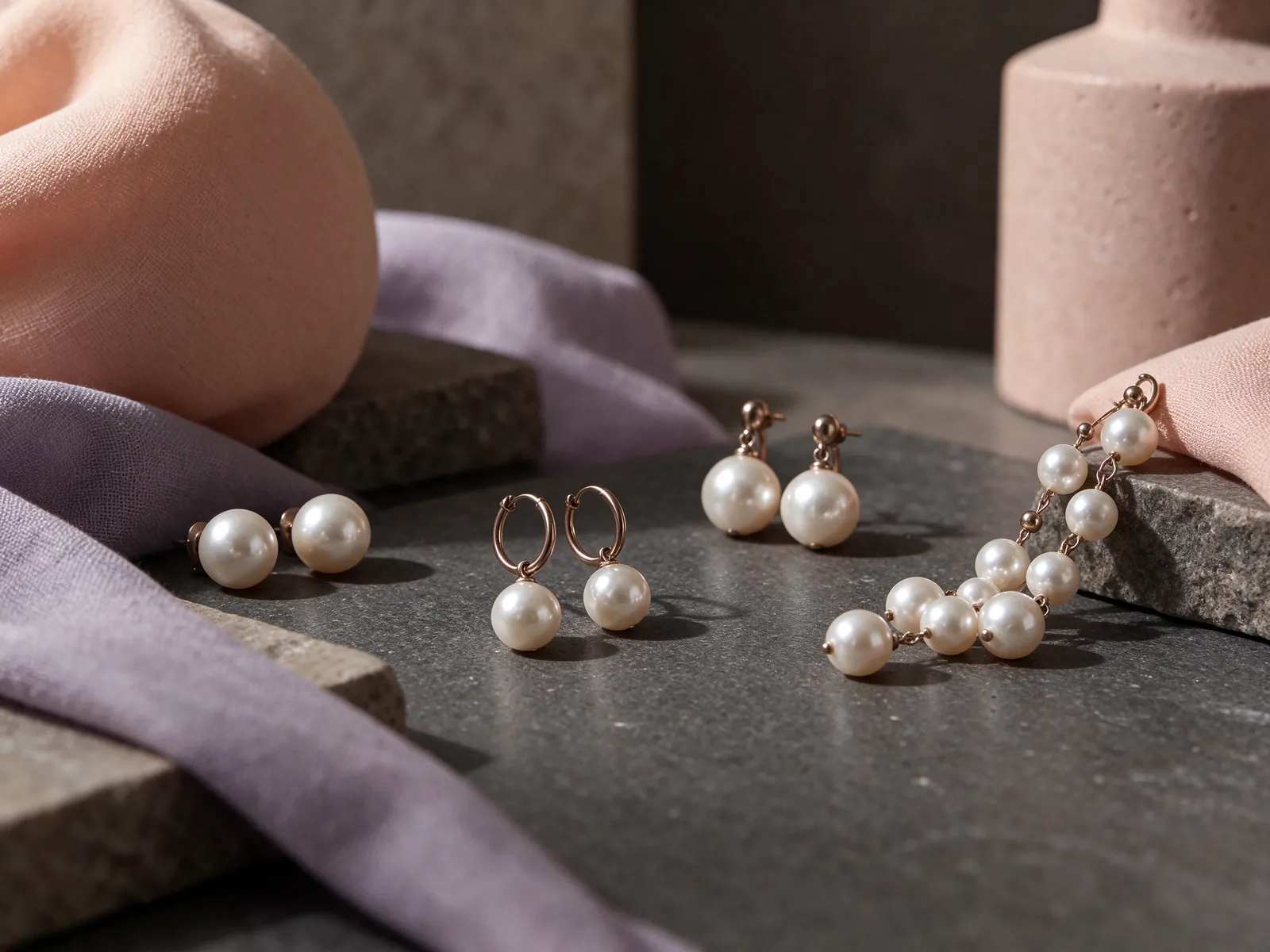
Balance a one-sided accent with your hairstyle and glasses
A cuff worn on one side can establish asymmetry without making the opposite side feel unfinished. The styling approach behind a single pearl earring is useful here: treat the upper-ear accent and the lobe as separate focal points. Choose one to lead and let the other offer a quieter response. If both pieces project strongly towards the face, they may overlap from the front even when there is space between them on the ear. Step back from the mirror to judge the whole face and shoulder line, not only the jewellery close up.
If you enjoy rounded silhouettes, compare pearl hoop earrings with the arc of a cuff. A lobe hoop places its curve lower, while an ear cuff traces a different part of the ear. They can create a dialogue, but visual similarity does not mean they will leave each other enough room. Look in profile for touching edges and in front for competing circles. Tucking hair behind one ear can reveal the cuff naturally; repeatedly moving the cuff to compensate for hair coverage is less useful than choosing a suitable visible position at the outset.
Keep the area around the face readable for workwear
With glasses, first check whether the frame and cuff create several intersecting lines beside the face. A shirt collar, simple knit or tailored jacket can leave the ear accent clear, but the deciding factor is available space rather than how formal the garment is. For an after-work change, adjusting your hair or the lobe jewellery can alter the balance without repeatedly repositioning the cuff. A clear focal point often comes from removing visual competition, not from adding another decorative element.
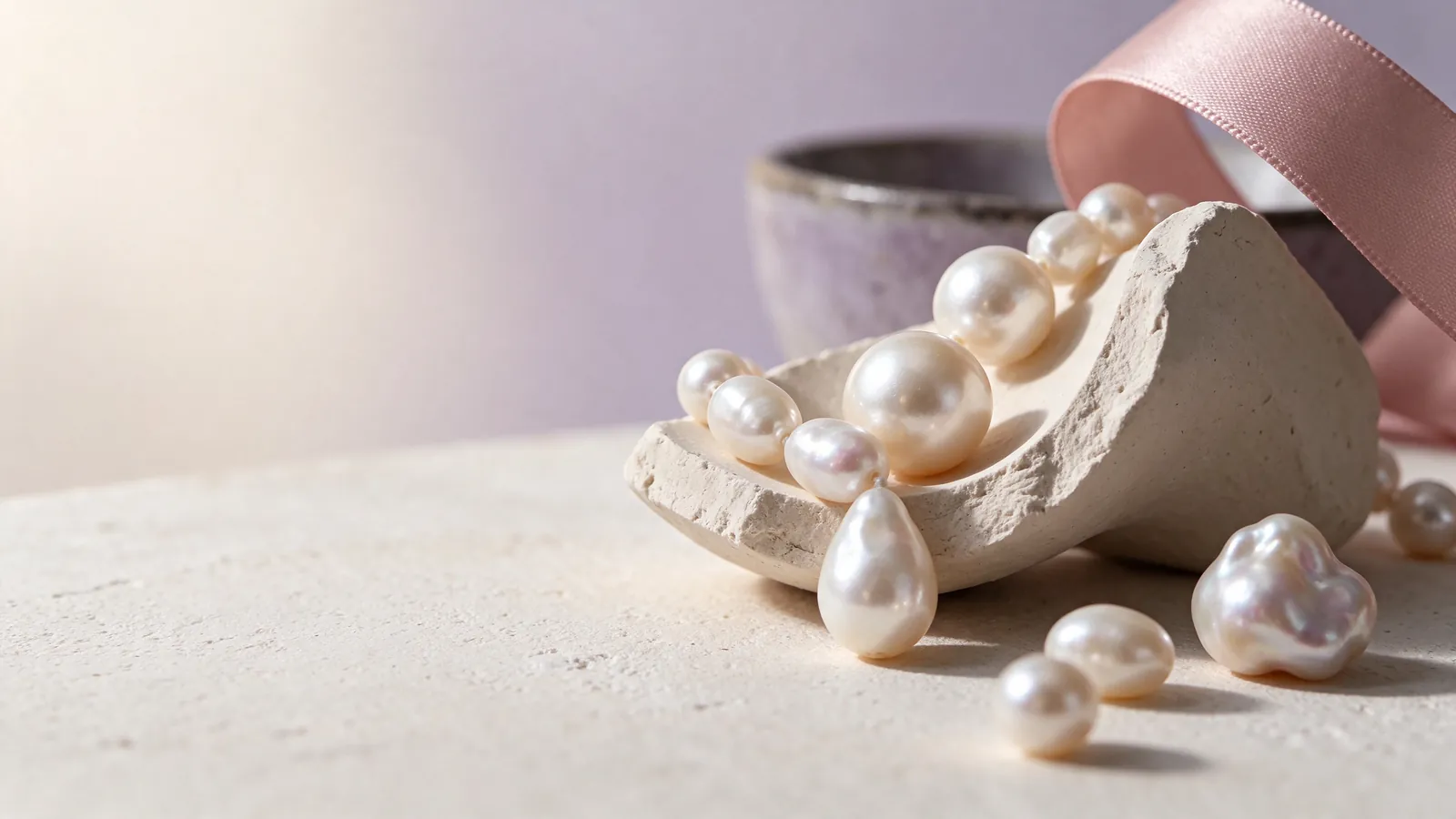
Plan a layered ear look around movement and spacing
When combining a cuff with multi-pearl earrings, choose a dominant direction. You might let the cuff guide the eye upwards and keep the lobe compact, or give a descending lobe line priority with a quieter upper-ear detail. If every piece has a pronounced curve, projecting pearls and hanging elements, the individual shapes can become difficult to read. Space is not merely an empty gap: it allows each ornament's beginning and direction to remain visible. Try the combination as a complete look before deciding that more pieces create more definition.
Movement needs its own check. A lobe drop may swing towards the cuff when you turn your head, or a connecting element may catch on the cuff's opening. Watch what happens during ordinary movement rather than assuming that separation in a still photograph is enough. Necklaces and high collars also contribute to visual density beside the face. To highlight the cuff, simplify the neck area; for a fuller arrangement, distribute the decorative weight across distinct heights rather than placing every detail into the same small space.
Do not treat a cuff as a universal attachment point
The idea of detachable pearl earring charms can help vary lobe styling, but a detachable component is not automatically compatible with an ear cuff. Its connection, direction of support and moving weight all matter. Do not hang a charm from an unprovided point on the metal arc merely because it appears to fit through an opening. Keep the cuff's intended structure intact and use removable elements only with jewellery designed to accept them. That preserves a clearer distinction between a styling idea and an appropriate mechanical connection.
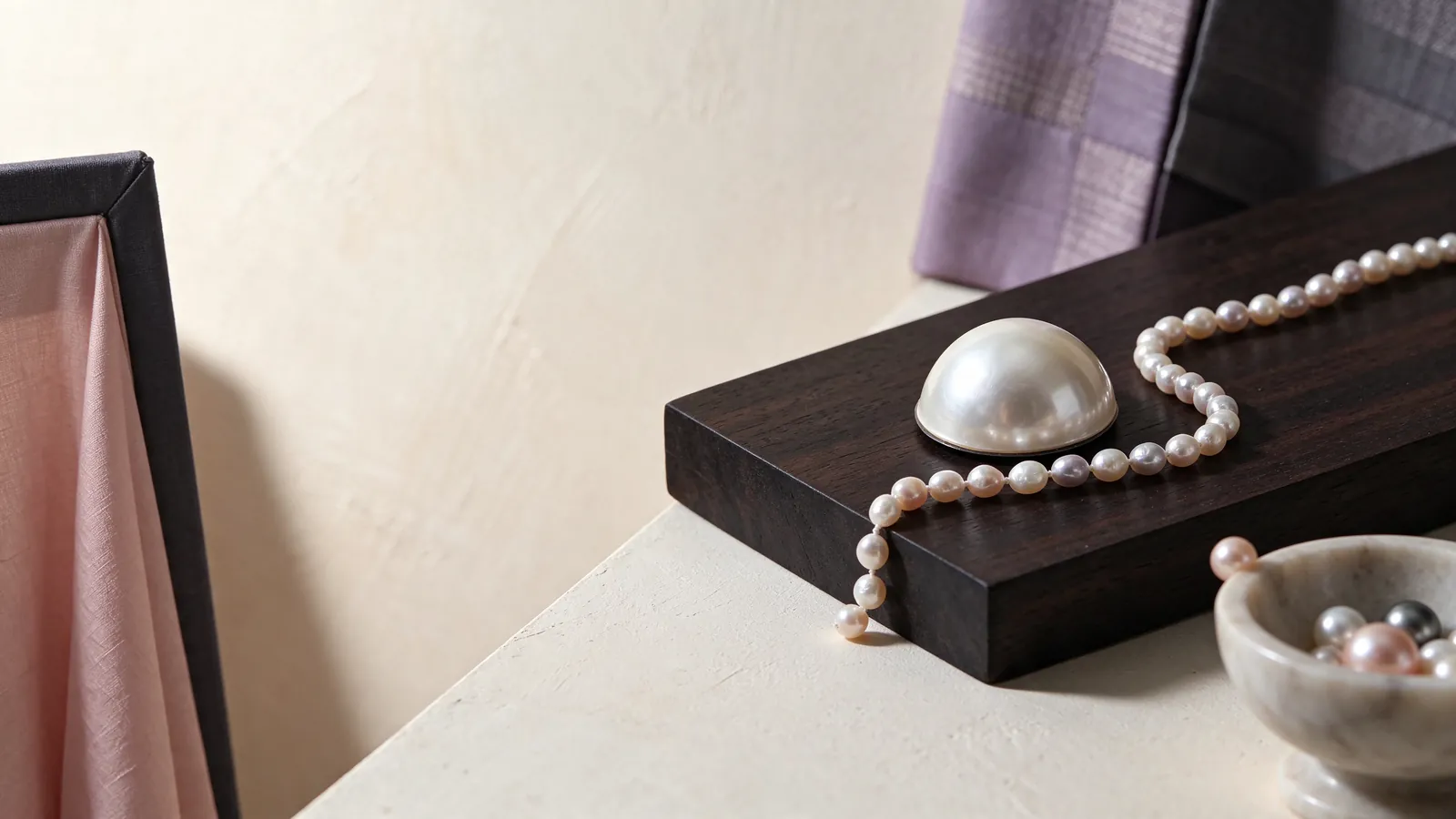
Handle the supporting metal and give pearls gentle care
Putting on and taking off a cuff brings your hands close to hair and styling products. Finish perfume and hair preparation before wearing the jewellery, allowing relevant products to dry so that spray is less likely to land directly on the pearls. During removal, operate the intended fastening and support the metal rather than twisting a pearl as a handle. If something catches, stop and identify whether hair, a closed mechanism or the removal direction is responsible. Pulling harder can add force to the wrong part of the ornament.
GIA places pearl at 2.5 on the Mohs hardness scale and advises against ultrasonic and steam cleaning. After wear, use a very soft, clean cloth and avoid acids, perfume, hair spray and excessive heat. A cuff also contains connections between pearl and metal, so a cleaning method suitable for one component should not be assumed suitable for the whole piece. Avoid prolonged soaking when the construction is not understood. If a pearl moves in its setting, the fastening becomes difficult or the arc changes shape, stop wearing it and seek advice appropriate to the actual structure.
Separate the cuff from harder edges during storage
Use a soft individual compartment or pouch so that pearl surfaces do not rub against other jewellery. Before putting the cuff away, remove caught hair and check that moving parts are in a stable position. Do not nest other earrings inside its curve or squeeze the arc to fit a crowded case. For travel, an organised position is preferable to several loose pieces moving around together in a hard box. Protecting the outline also helps preserve the wearing geometry you assessed during fitting.
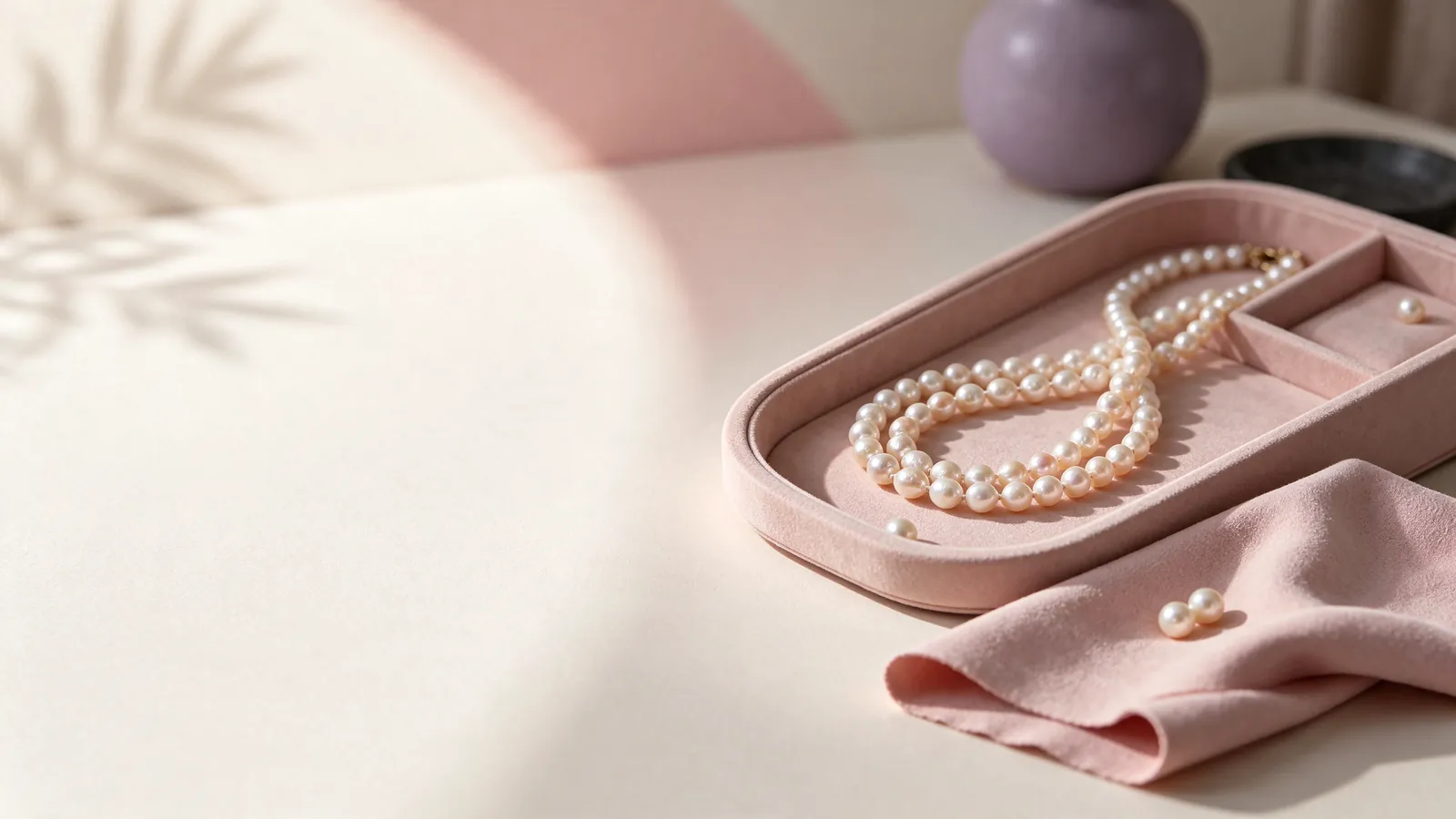
Choose the effect you want, even if another earring format suits it better
If a cuff repeatedly conflicts with the things you wear around your ear, moving the pearl accent to the lobe can be a considered design choice rather than a compromise. For a broader comparison, the pearl earrings Hong Kong guide explores other ways to frame the face. Decide whether your priority is a pearl point, a rounded line or a descending accent, then compare formats that can deliver it. Start with non-negotiable daily habits, such as glasses or frequent headphone use, instead of insisting on an upper-ear position that interrupts those habits.
For a more extended pearl line, pearl fringe earrings create a downward rhythm rather than following the ear's contour. Compare where you want the eye to travel: close to the upper ear or towards the shoulder. Similar pearl arrangements in photographs can have very different fastening and movement. This distinction is particularly useful for a gift, when the recipient's piercing situation and everyday accessories may differ from yours. An attractive outline alone cannot establish whether the receiving person will find its position practical.
To discuss earring position and styling, contact Flint Jewellery on WhatsApp or call +85260106207. Tell us how you usually wear glasses, use headphones and arrange your hair, so that your questions focus on the outline, movement space and handling details that matter to your routine.
Confirm the wearing side and the sales unit before deciding
Check whether the item is supplied singly or as a pair, and whether its curve is intended for a particular ear. A photograph showing an arrangement is not necessarily a description of what is included. For gifting, find out whether the recipient prefers a one-sided focus or balanced decoration, then understand the actual contents and removal method. Clear answers about side, fastening and unit make comparisons meaningful without relying on assumptions about how every ear cuff is sold or worn.
| Comparison | What to observe | How it informs the choice |
|---|---|---|
| Wearing position | Front-facing pearl surfaces and support in profile | Choose a naturally supported location before judging decorative height |
| Fastening | Opening, moving mechanism and any separate post | Establish piercing requirements from construction rather than the name |
| Daily accessories | Contact with glasses, mask loops and hair | Leave a practical route for routine putting on and removal |
| Pearl arrangement | Visible surfaces, negative space and coordination | Distinguish a single focal point from a line without ranking them as quality grades |
| Handling and storage | Metal support, caught hair and compartment space | Avoid using pearls as handles or crowding the cuff against harder jewellery |
Pearl knowledge and authoritative references
GIA lists pearl at 2.5 on the Mohs hardness scale and advises that pearls must not be cleaned with ultrasonic or steam cleaners. This supports gentle handling of the pearl surfaces on an ear cuff.
Read the reference for this factFrequently asked questions
Does a non-pierced pearl ear cuff guarantee a comfortable fit?
No. The description concerns the attachment approach of the individual design, not how it will feel on every ear. Inspect the construction, intended location and pressure during actual wear; a non-pierced requirement and comfortable support are separate considerations.
What should I test if I wear glasses every day?
Wear your usual glasses during the fitting. Look for pressure at the back of the cuff and observe whether putting on or removing the glasses catches the decoration. A clear front view does not reveal every interaction behind the ear.
Can I move a cuff higher to make the pearls more visible?
Only consider positions compatible with the design and your ear's folds. A higher location is not automatically better supported. If hair hides the decoration, changing the hair arrangement may be more practical than forcing the cuff into a new position.
Is a multi-pearl cuff necessarily better than a single-pearl outline?
No. They create different compositions. Compare pearl quality using relevant factors, and compare the arrangement according to the effect you want. More visible elements do not by themselves establish better quality or better fit.
What should I establish before choosing a cuff as a gift?
Understand the recipient's usual ear accessories, preference for one-sided styling and piercing situation. Then check the actual fastening, wearing side and whether the purchase includes one piece or a pair. Do not infer those details from a styled photograph.
Updated: