
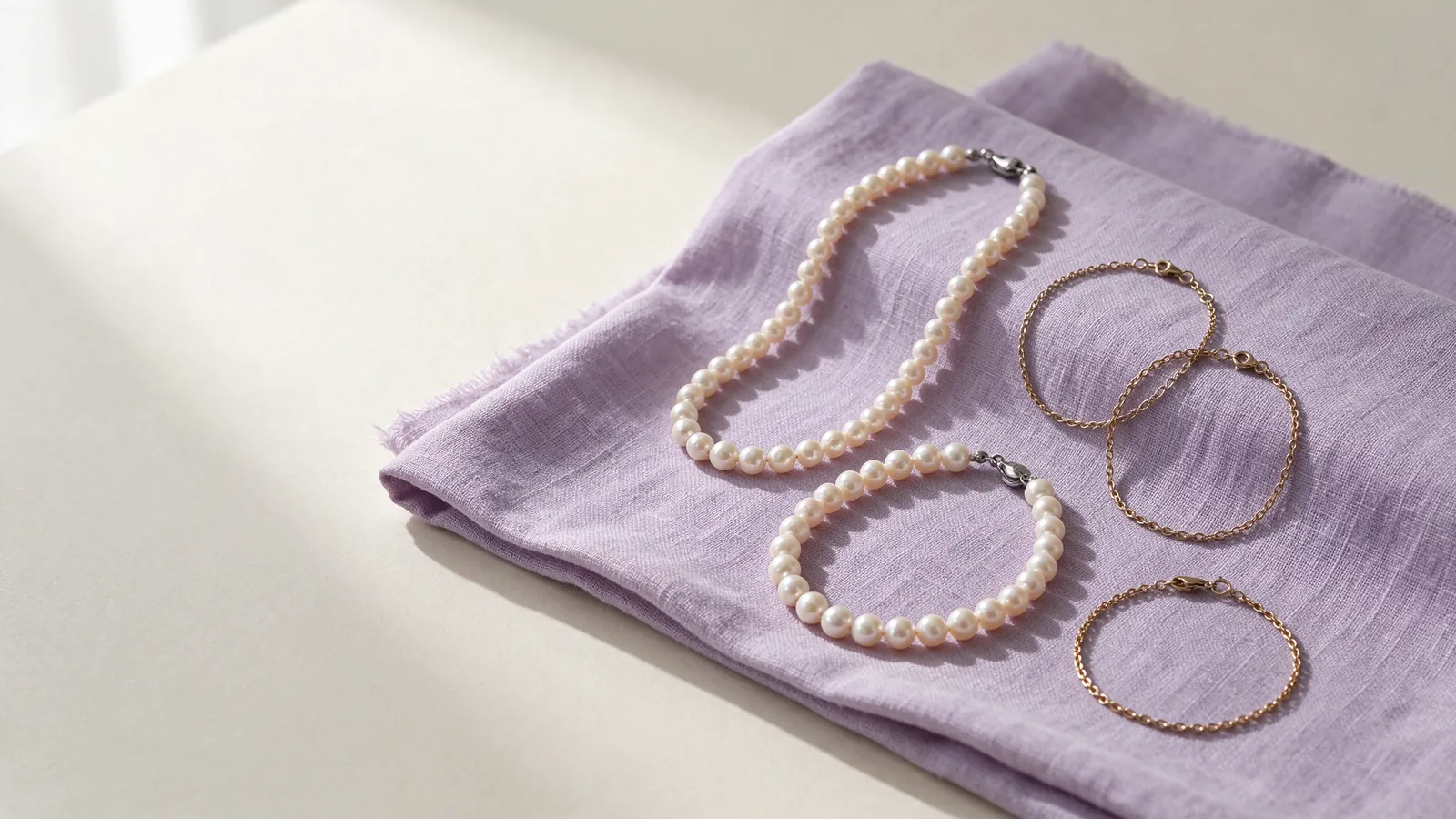
pearl bracelet size guide: why “how to measure wrist for pearl bracelet” starts with wrist circumference, not pearl bracelet length
Wrist circumference describes the distance around your skin at the intended wearing position. Overall bracelet length describes a measurement taken along the jewellery, usually while it is laid flat. Inner circumference concerns the space available on the wrist-facing side when the bracelet is closed. These are different measurements, not interchangeable labels. Before comparing a stated length with your wrist reading, find out which measurement it represents and whether the clasp or extension is included.
Two bracelets with the same overall length need not feel equally loose. Three-dimensional beads, connections and the way the clasp closes can change the relationship between flat length and usable space. Ask how the closed inner circumference is measured rather than applying a fixed deduction to the overall length. For a pearl strand bracelet, consider the visible scale of the beads separately from the usable space the closed construction provides around your wrist.
pearl bracelet size guide: after “how to measure wrist for pearl bracelet”, how do pearl size and rows affect pearl bracelet length?
Larger bead bodies occupy more space, but diameter alone cannot tell you a finished strand’s inner circumference. Shape, spacing and the connections between pearls also matter. Multiple rows introduce width and may bend differently around the wrist, particularly where they meet the clasp. If a small pearl bracelet appeals to you, compare its actual closed dimensions as well as its delicate appearance; small-looking beads do not remove the need to consider movement and fit.
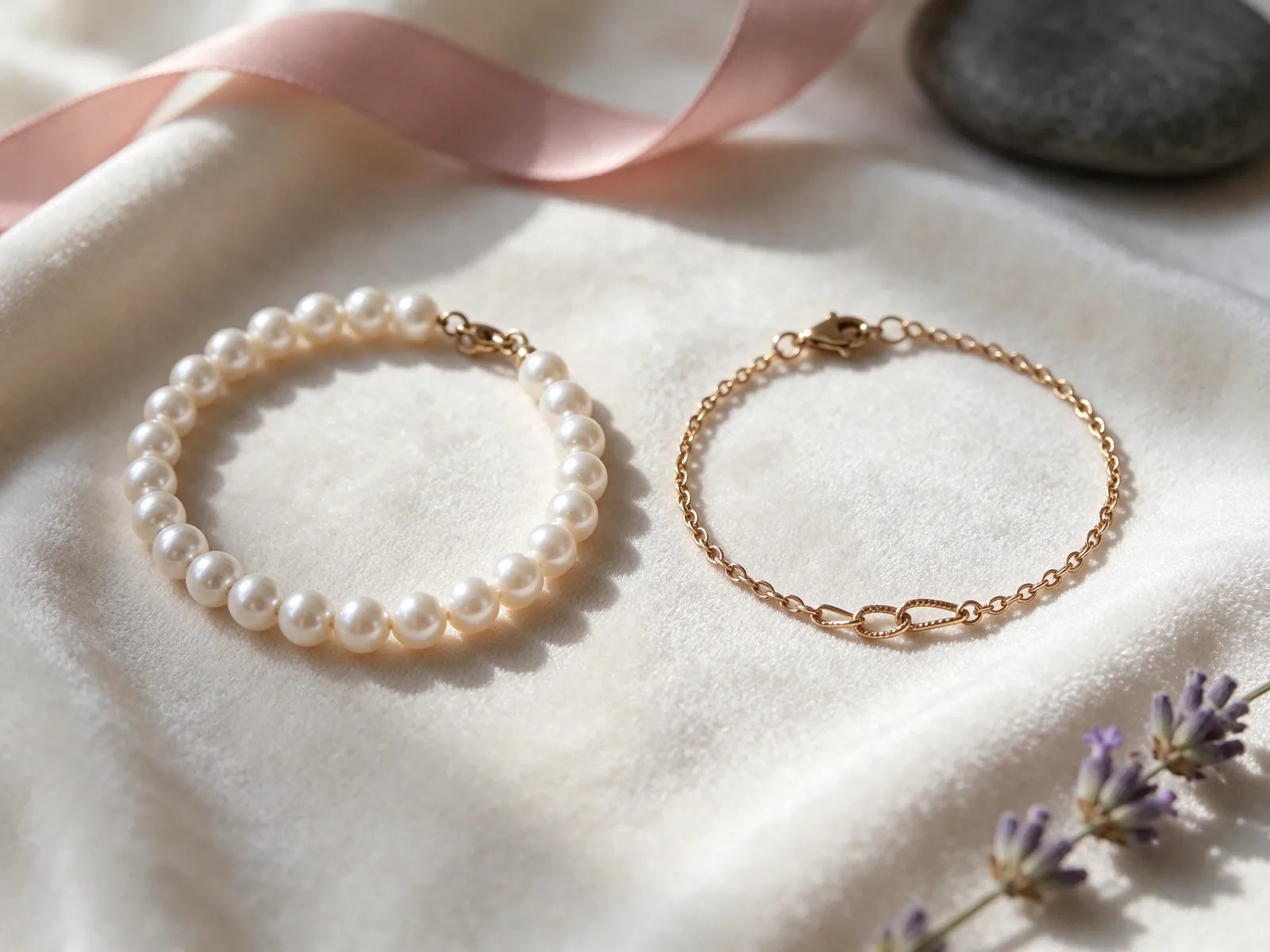
Take a wrist reading at the position you actually plan to use
Decide whether you want the bracelet near the wrist bone or a little farther up your arm. Relax your hand and wrap a flexible tape around that position, keeping it level and close to the skin without drawing it tight. Do not add room for the bracelet at this stage. Your first reading should describe your wrist; the allowance you prefer is a separate decision made when considering the bracelet’s construction.
If a flexible tape is unavailable, use a strip of paper that does not stretch. Mark where the ends meet, lay it flat and measure that length with a ruler. Avoid elastic thread, which may change length as you hold it. Record the unit, the hand measured and the wearing position. A watch strap measurement is not a substitute: the strap’s thickness, fastening and usual position may differ from those of a pearl bracelet.
Keep the measuring conditions alongside the number
Repeat the measurement at the same position to check that the tape has not twisted or been held inconsistently. If your wrist feels different on another day, keep both readings and note the circumstances rather than automatically choosing the smallest. A photograph can explain where the tape was placed, but camera angles can make a scale difficult to read. A written measurement and a description of the position are more useful than simply saying you normally wear a medium.
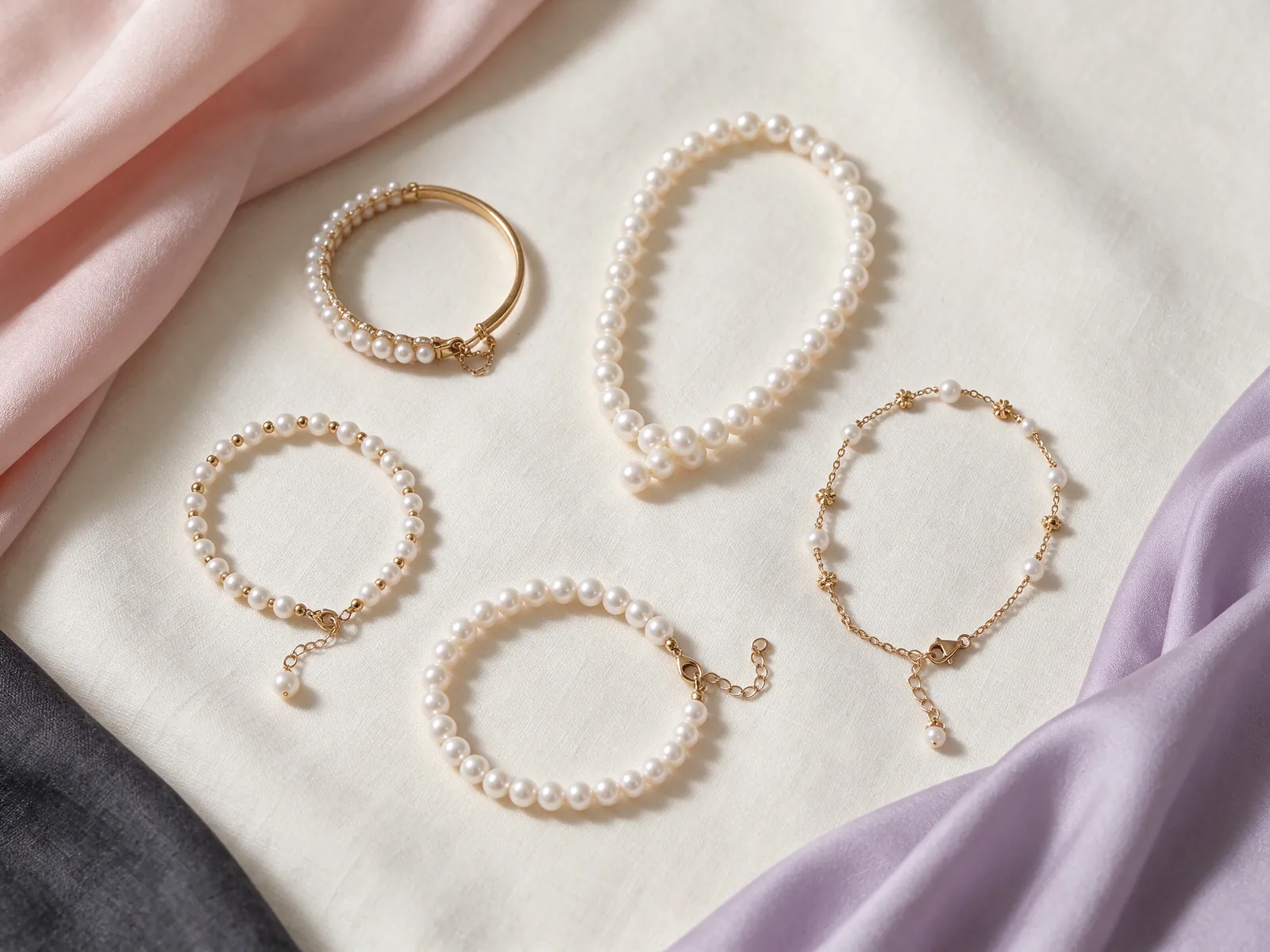
Choose room to move around your routine, not a universal formula
A close fit, a little movement and a pronounced drape are distinct preferences. Think about typing, carrying a handbag, putting on a jacket and whether you want the bracelet to remain near the same part of your wrist when you lift your hand. Close should not mean compressing the skin. Loose should not mean so long that the strand repeatedly reaches the base of the palm or strikes the desk during normal activity.
A suggestion to add an allowance to wrist circumference can start a conversation, but it does not replace the closed inner measurement or a fit check. Do not carry the same addition from a fine chain to a substantial pearl strand without considering construction. Describe the result you want: perhaps less travel towards the hand when reaching for something, or more freedom when bending the wrist. These descriptions make your preference clearer than requesting a standard length alone.
Check the resting position and the position during movement
With the bracelet closed, let your hand hang naturally, then gently raise it, turn your wrist and imitate familiar movements. Watch for the strand catching, the clasp rotating to an awkward place or pressure as the wrist bends. Do not pull the jewellery to test its fit. A finger-under-the-strand test may help you compare your own experiences, but finger size and bead shape vary, so it is not a universal sizing standard.
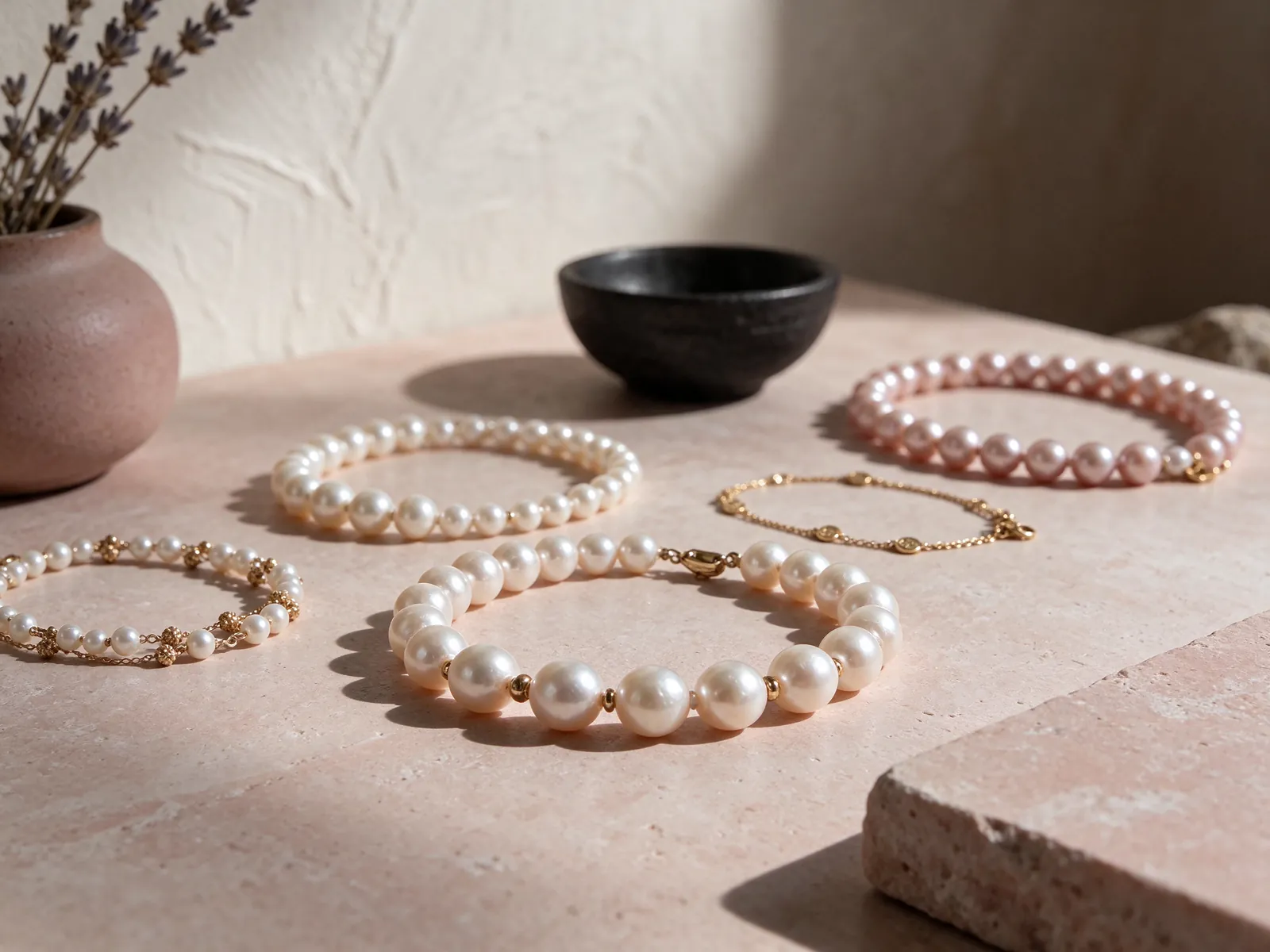
Include the clasp, extension and hanging details in the fit discussion
A fastening affects more than how a bracelet opens. It can influence the shape of the closed loop and how the bracelet is measured. The pearl bracelet clasp guide can help you think through operation as well as appearance. When comparing pearl bracelet length, establish the start and end points and the fastening position. If you usually put jewellery on yourself, consider whether the clasp is manageable with your opposite hand at your preferred fit.
An adjustable pearl bracelet still needs an appropriate inner circumference at the position you expect to use. Consider both the closed loop and the part left hanging beyond the fastening. A longer setting may change where the bracelet sits, while a shorter one may leave more extension visible. With long sleeves, look for contact with the cuff; at a desk, notice where the tail falls. Adjustability is useful to evaluate, not a reason to skip measuring.
Decide where a charm should rest before adding length
For a pearl charm bracelet, the position of the hanging detail can matter as much as the strand’s drape. Consider whether it is likely to rest on the side of the wrist, over the hand or near the palm. If it repeatedly touches a work surface, making the bracelet longer could increase its movement rather than solve the problem. Look at the attachment point, the allowance and your preferred display position together before deciding what silhouette suits you.
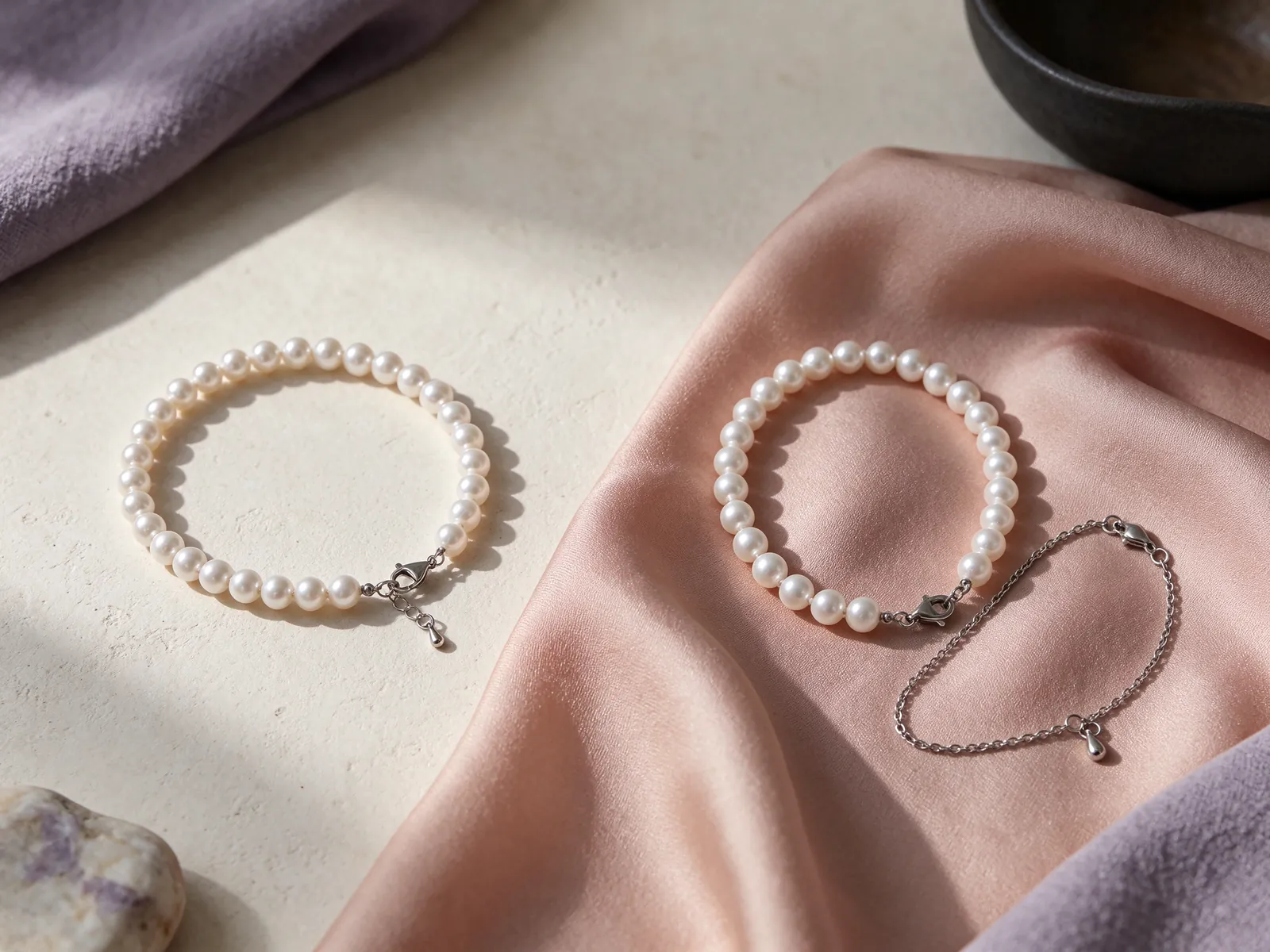
Try the fit with sleeves, a watch and the jewellery you actually wear
A fit you enjoy when wearing a bracelet alone can feel different in a stack. A watch edge, another fastening or a shirt cuff may move the strand from its resting position. When styling a white pearl bracelet with a shirt, consider how much remains visible beyond the cuff and whether the fabric pushes it towards your hand as you bend your wrist. Colour coordination and practical clearance are separate decisions, and both contribute to the finished look.
GIA lists pearl at 2.5 on the Mohs hardness scale. That makes contact with harder edges relevant when planning a stack, but hardness is not a measure of comfort or a prediction of service life. Notice whether pearls repeatedly rub against a watch case, metal edge or another piece of jewellery. If contact is persistent, wearing the pieces separately may be a better styling choice than tightening the pearl strand to hold it in place.
Use everyday actions to assess a sleeve pairing
Move a cuff, pick up a bag and sit as you would when typing. Check whether the bracelet becomes trapped by fabric or slides to a position where it meets the desk. With multiple rows, see whether they remain arranged naturally after movement. A bracelet fitting inside a sleeve does not establish that it will feel right there; heavier fabric may press against it. Identify whether the issue is length, bracelet width or the combination of garments and jewellery.
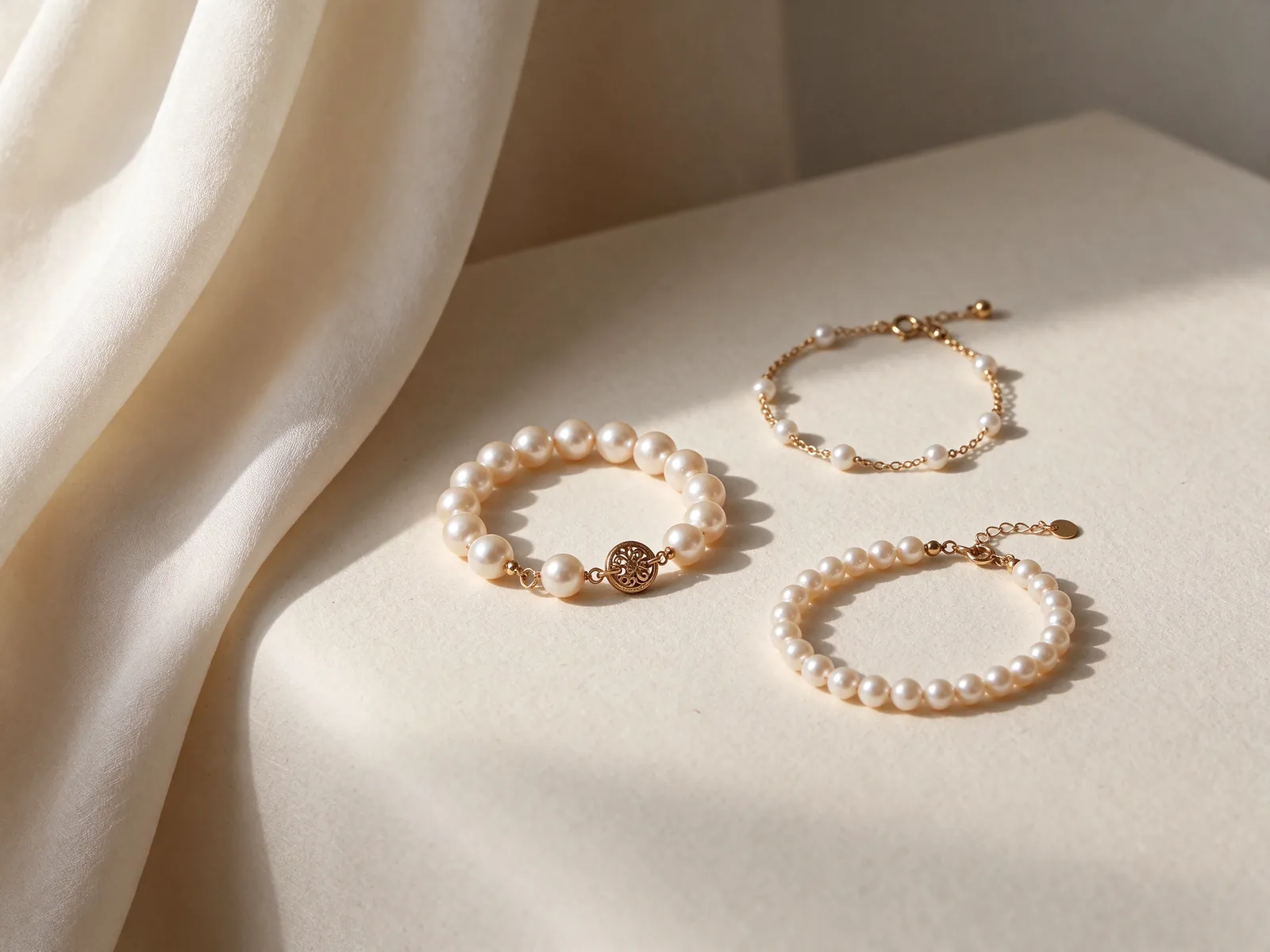
Use an existing bracelet as a comparison, not an automatic size template
A bracelet you already enjoy wearing is a helpful way to describe your preference. Record how its flat length is measured, where it fastens and how much it moves on your wrist. Then note whether it is a fine chain, a bead strand or a wider design. A new bracelet with more substantial pearls or additional rows may not reproduce that feeling at the same overall length. Compare like measurements and keep the old bracelet as a guide to sensation.
For a gift, clothing size, height or a photograph cannot reliably establish wrist circumference. With the recipient’s agreement, obtain a wrist measurement or details of a frequently worn bracelet, including its measuring method and preferred fit. If those details are unavailable, discuss how the measurement can be obtained before treating a guessed size as settled. When reading international pages, also check the unit: a number stated in inches is not the same length as that number in centimetres.
Replace small, medium and large with a defined measurement
Size names can organise a page, but their definitions may differ between sellers and designs. Find the associated numerical length, the unit, what is included and the closed inner circumference before comparing them. A flat photograph without clear measuring endpoints is not enough to infer usable space. Keeping your wrist reading, the dimensions of an existing bracelet and your fit preference as separate notes prevents a familiar size label from hiding differences in measurement.
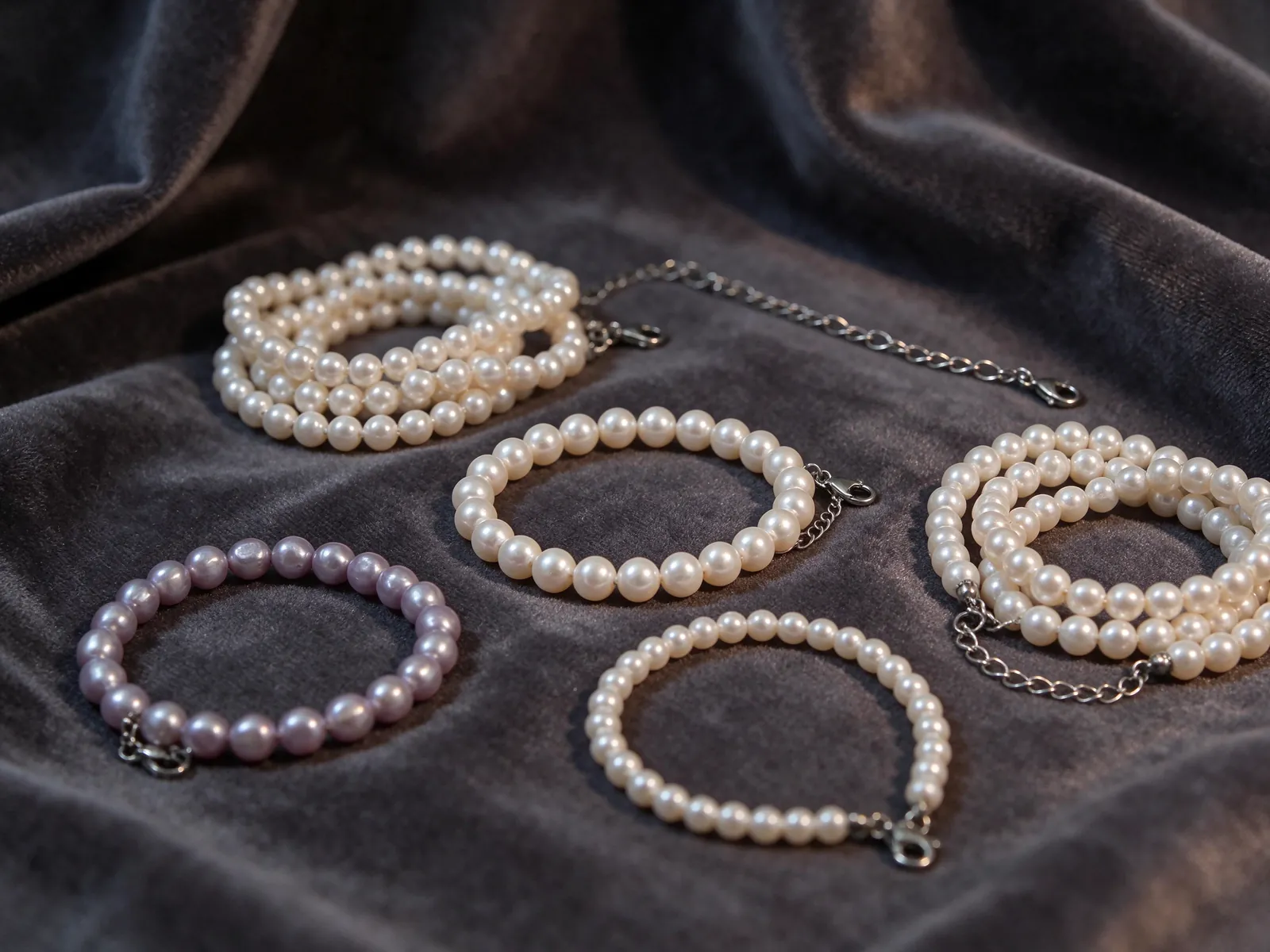
Bring a useful fit brief to your sizing conversation
For a conversation with Flint Jewellery, prepare your wrist measurement and unit, the hand and position you plan to use, and whether you prefer a close fit or visible drape. Mention a watch, usual sleeves and any existing bracelet that illustrates your preference. Explain what feels wrong as well as what looks right. Too loose might mean sliding towards the palm, an extension catching a cuff or the clasp rotating, and those are different questions.
When discussing a particular construction, ask about the closed inner circumference, the parts included in overall length and the fastening or adjustment method. Altering an existing strand is not simply a matter of changing a number: arrangement, connections and clasp position may also be involved. Describe the movement you hope to improve rather than dismantling or stretching the bracelet yourself.
If the fit changes, check the situation before changing the length
A different wearing position, fastening point, sleeve or stack can change how the same bracelet feels. Also look for an unusual connection or a clasp that is no longer closing normally. Do not assess a newly cleaned strand while its thread is still wet: GIA advises allowing the string to dry completely before wearing after water cleaning. Difficulty fastening or a loose connection should prompt attention to the jewellery’s condition, not forceful pulling to recreate its previous fit. To discuss bracelet sizing with Flint Jewellery, share your wrist measurement and fit preferences on WhatsApp at https://wa.me/85260106207 or call +85260106207.
| Item | What it describes | Reading detail | Effect on wearing | Useful question |
|---|---|---|---|---|
| Wrist circumference | Skin circumference at the chosen position | Keep the tape close without adding allowance | A different position may feel different | How should this reading be compared with inner circumference? |
| Overall length | Defined endpoints along the laid-flat bracelet | Establish whether clasp and extension are included | Does not directly describe the closed space | Where does the measurement begin and end? |
| Inner circumference | Wrist-facing space of the closed bracelet | Identify fastening position and method | Beads, connections and arrangement influence fit | At which fastening position was this measured? |
| Preferred allowance | The room you want between wrist and strand | Describe ordinary movements | A strand may slide or press in different positions | Where should it stay when I lift my hand? |
| Adjustment position | The setting you expect to use | Observe both loop size and hanging tail | Cuffs and work surfaces may interact with the tail | What is the inner circumference at my usual setting? |
Pearl knowledge and authoritative references
GIA lists pearl at 2.5 on the Mohs hardness scale. When combining a pearl bracelet with a watch or other jewellery, consider repeated contact with harder edges; this number does not guarantee fit, comfort or service life.
Read the reference for this factFrequently asked questions
Should I leave bracelet room when taking the tape measurement?
No: first take a wrist reading with the tape close to the skin without compressing it. Decide on the desired room separately when comparing the bracelet’s closed dimensions. Leaving space in the measurement and then adding another allowance can mix the two decisions together.
Why does a pearl strand feel tighter than my chain at the same stated length?
Their measuring endpoints, bead bodies, connections and fastenings may differ. Confirm that both stated lengths were measured in the same way, then compare the closed inner space. Matching flat length alone does not establish matching fit.
Can a finger-under-the-bracelet test replace the wrist measurement?
It can help you describe a fit you have tried, but it is not a universal size standard. Finger size and bead shape vary. Keep the measured wrist circumference and assess gentle wrist movement as well as the resting position.
Is a recipient’s watch strap size enough for a gift bracelet?
It offers context, not a direct pearl bracelet size. Watch straps may have different thickness, fastening and wearing position. A wrist measurement and the recipient’s preferred looseness are more useful, or compare a bracelet whose measuring method is understood.
Does an adjustable fastening remove the need for a fit check?
No. Compare the inner circumference at the setting you plan to use and look at the extension’s resting position. Check sleeves and everyday movement too; an adjustable label alone does not establish that every setting suits your routine.
Updated: