
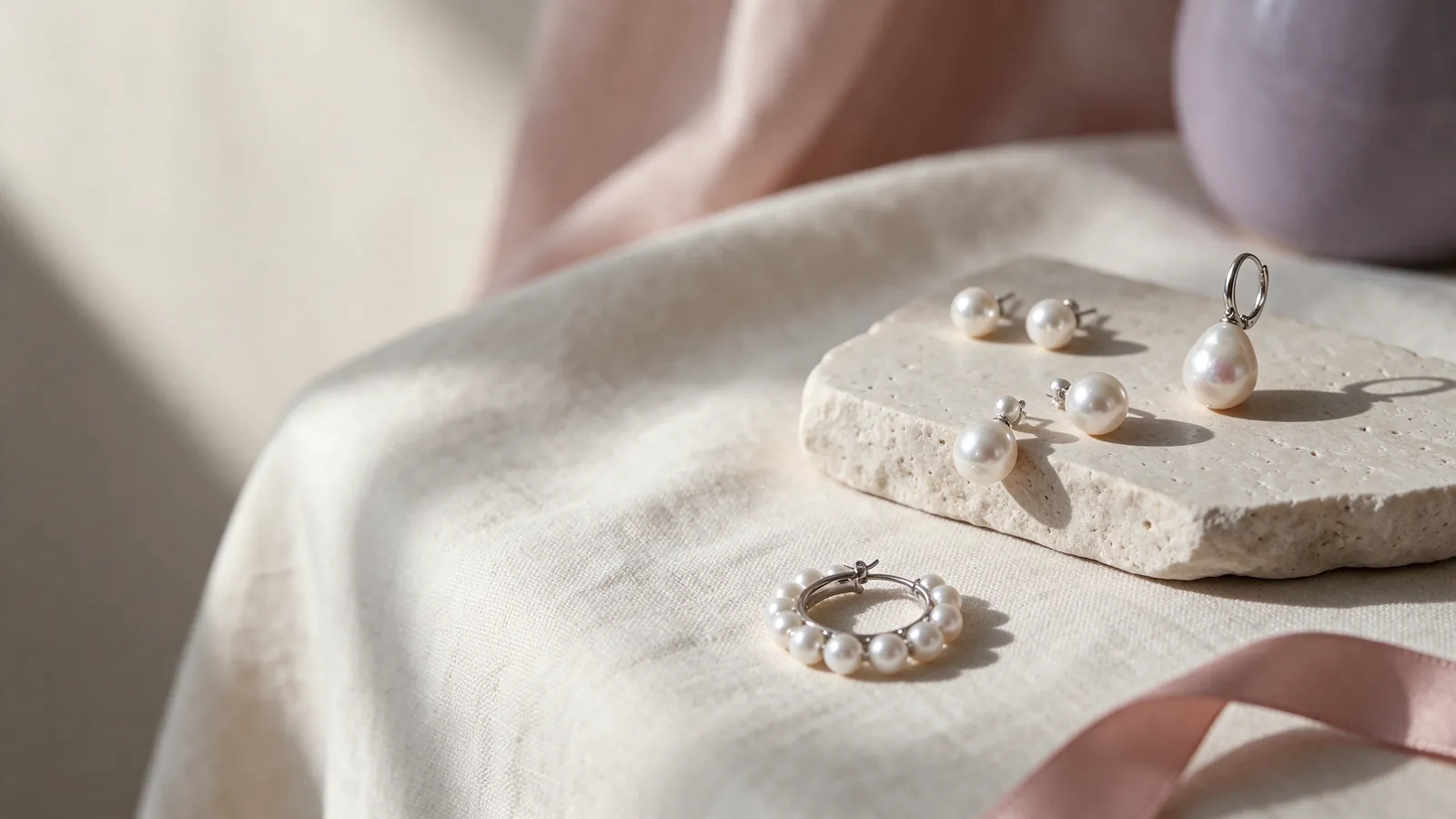
Position and hanging length in the pearl earring styles guide: how do pearl studs vs drops vs dangles compare, including drop vs dangle pearl earrings?
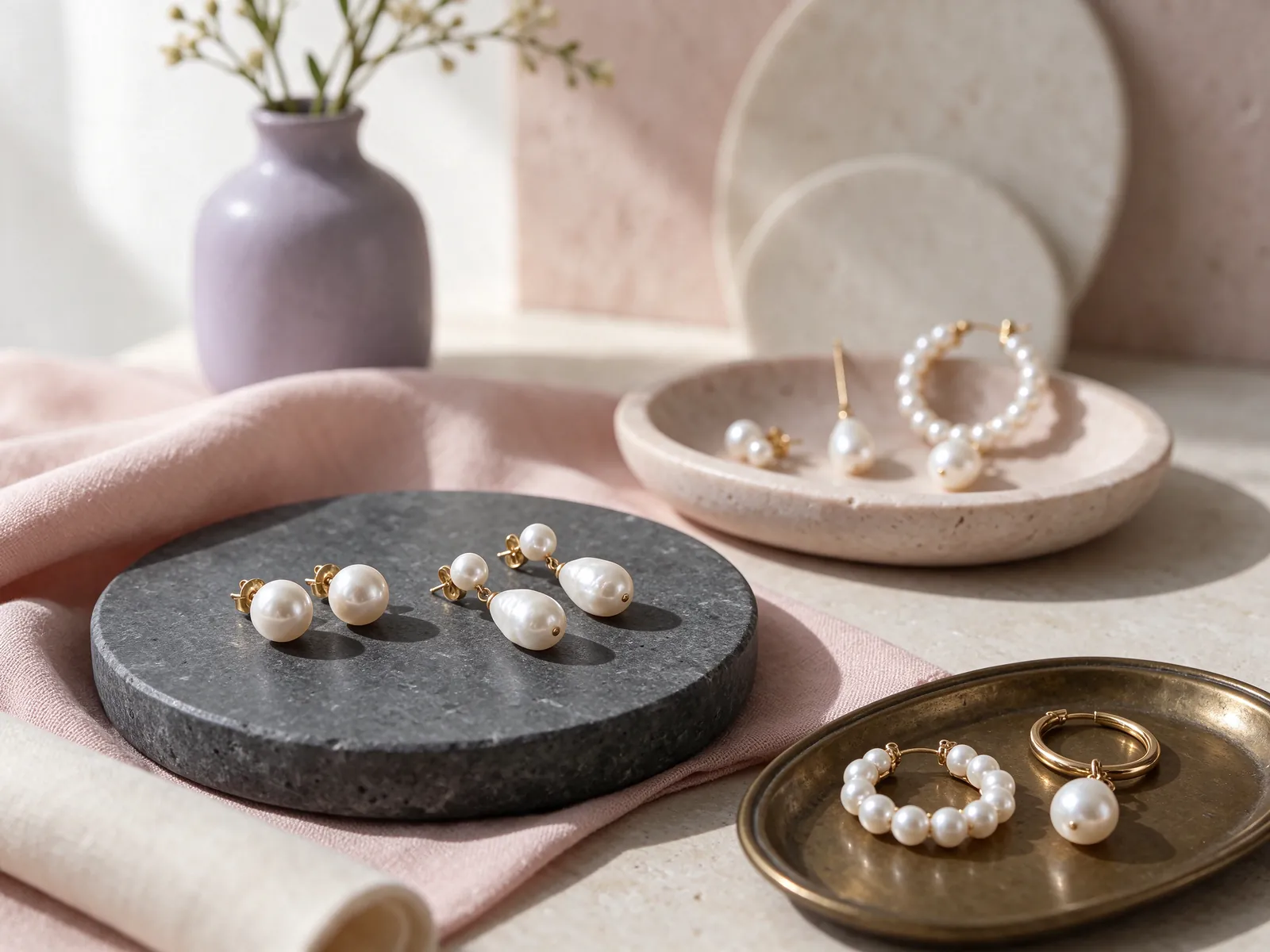
A useful comparison begins at the piercing. A stud places its main ornament on the earlobe, a short drop places it slightly below, and a longer dangle extends the line down the side of the face. When comparing pearl earrings Hong Kong, look beyond a front photograph: a side view helps show where the attachment ends and the hanging ornament begins.
There is no single length boundary that resolves every style description. Ask whether a stated length runs from the post to the lowest point or covers only the hanging element. These measurements describe different parts of an earring. Your piercing position and the lower edge of your lobe also change how much space appears beneath it, even when the construction is otherwise similar.
Movement in the pearl earring styles guide: how does sway differ for pearl studs vs drops vs dangles, especially drop vs dangle pearl earrings?
Length and movement are related but not interchangeable. Studs generally have no suspended joint; short drops are relatively stationary; longer dangles can sway through movable connections. A short link may still move, while a rigid setting can hold an ornament below the lobe. During a try-on, turn gently and watch the connection rather than assuming that every hanging design behaves alike.
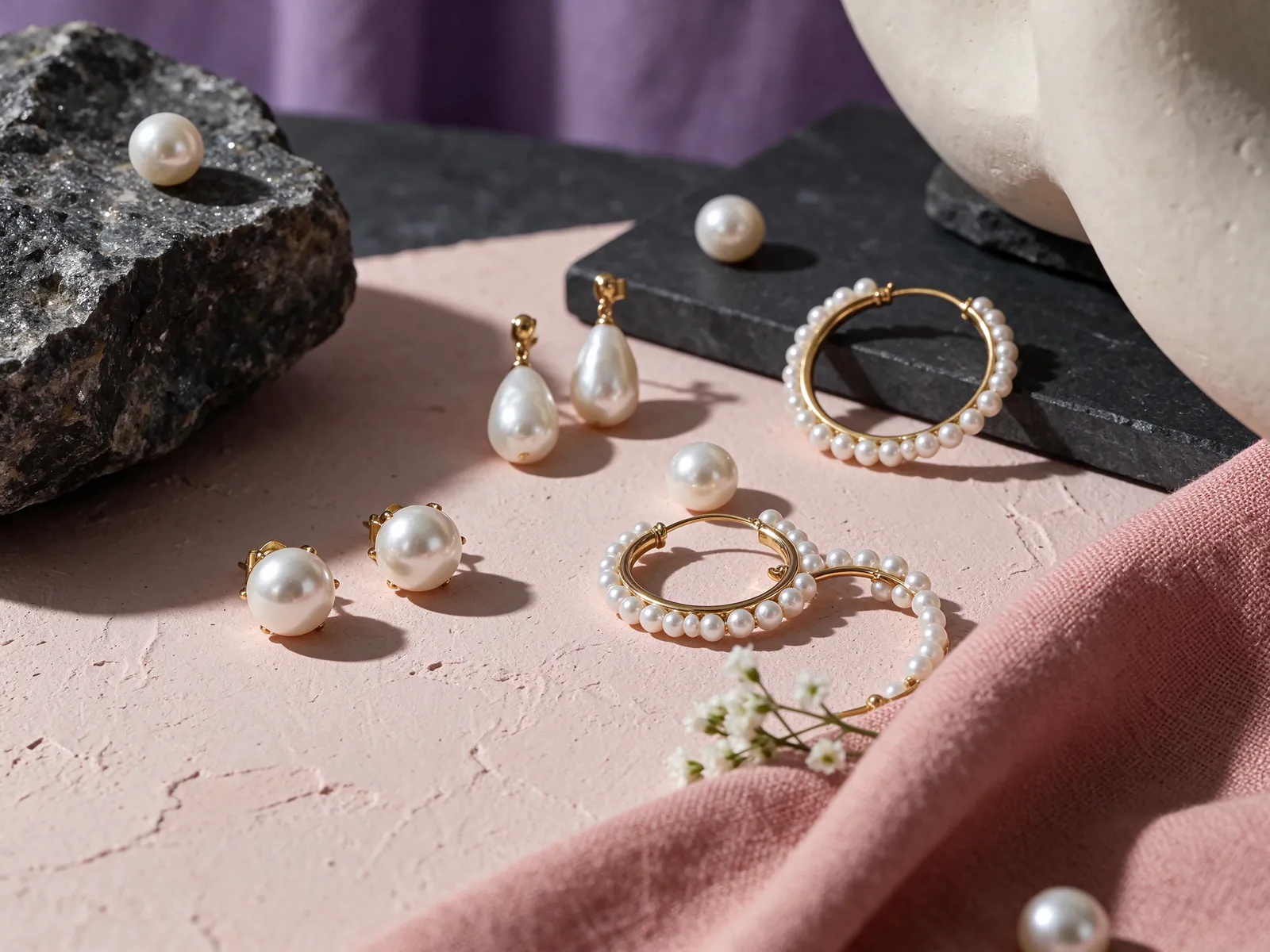
Separate the pearl's shape from the earring's attachment
The word drop describes how an ornament hangs, not a promise of a teardrop-shaped pearl. A round pearl can form a drop earring, and an elongated pearl can be arranged close to the ear. Keep two questions separate: what outline does the pearl have, and where will that outline sit when worn? This prevents a familiar name from replacing a proper construction comparison.
Attachment names add another layer. With pearl hook earrings, inspect the suspended part below the hook; it may be short or more extended. With pearl hoop earrings, distinguish a pearl attached to the hoop from one hanging beneath it. Hooks and hoops describe support structures, so neither label alone tells you the pearl's final position or its range of movement.
Read the joints before deciding on the silhouette
Look for a rigid support, a linking ring or a chain section between the fastening and the pearl. These elements help explain whether the ornament remains facing forward or can turn independently. If you want a little space below the lobe without noticeable sway, describe both preferences. Asking only for a short earring leaves the movement question unanswered.
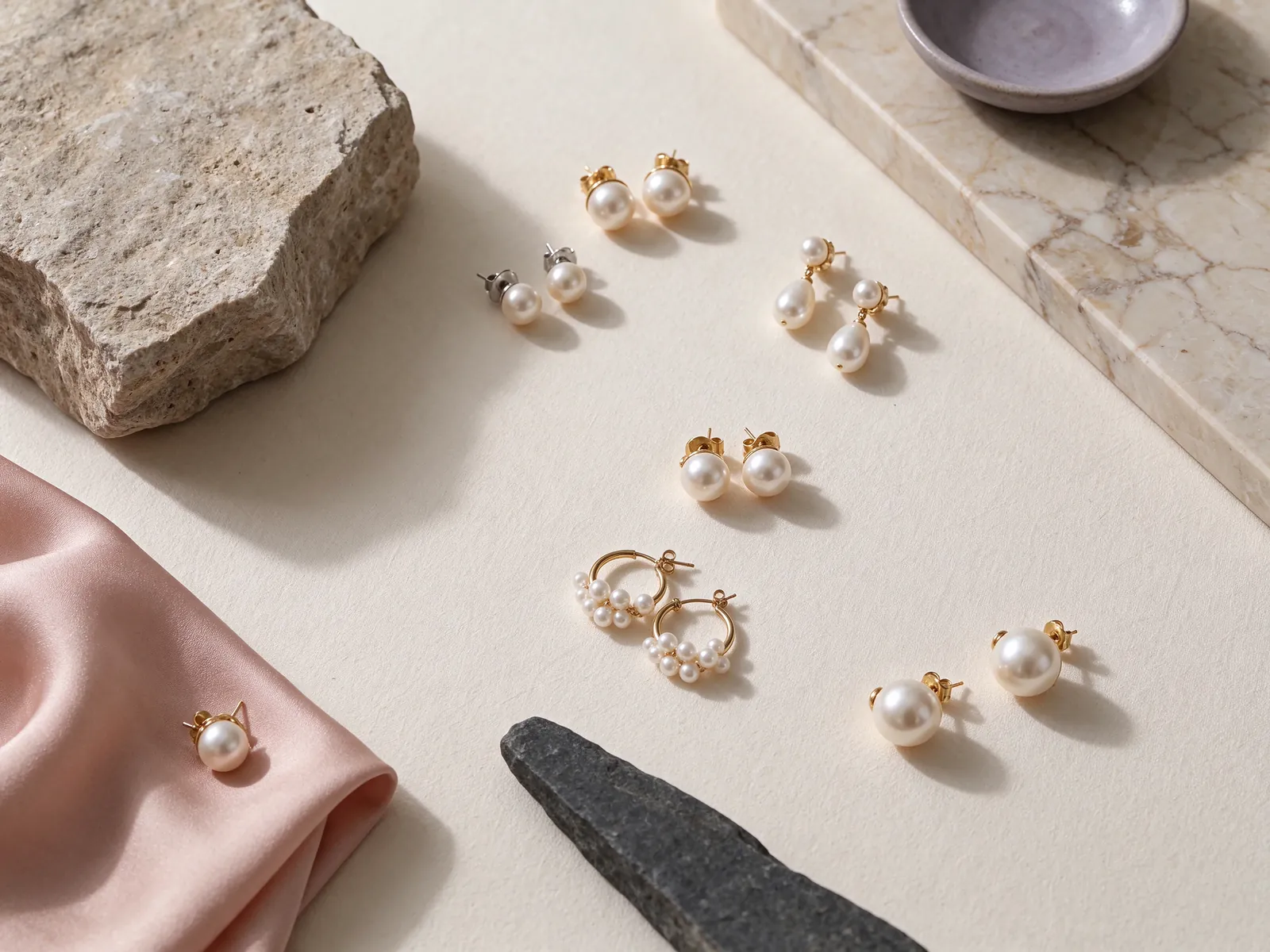
Use your hairstyle and collar as practical boundaries
Try the silhouette with the hairstyle you actually wear. Tucked-back hair makes a stud easier to see; loose strands can obscure the top of a short drop. With long pearl dangle earrings, check whether the lowest ornament remains visible beyond the hair or disappears into its ends. Choose the line you want to emphasise, rather than treating a face-shape rule as an obligation.
A raised collar, scarf or structured shirt can occupy the same space as a hanging earring. Look in the mirror standing and seated, then turn and lower your head slightly. Contact may appear only during movement. An open neckline gives a different visual setting, but it does not automatically make the longest style the best option; the balance with your clothes still matters.
Check spacing when another piercing is involved
When pairing the main earring with pearl studs for a second piercing, compare their positions and possible paths of movement. An ornament should not need to push against the neighbouring stud to sit as intended. Allow each outline to remain readable, and assess both ears because piercing placement can differ. Matching every ornament in size is less important than a comfortable, coherent arrangement.
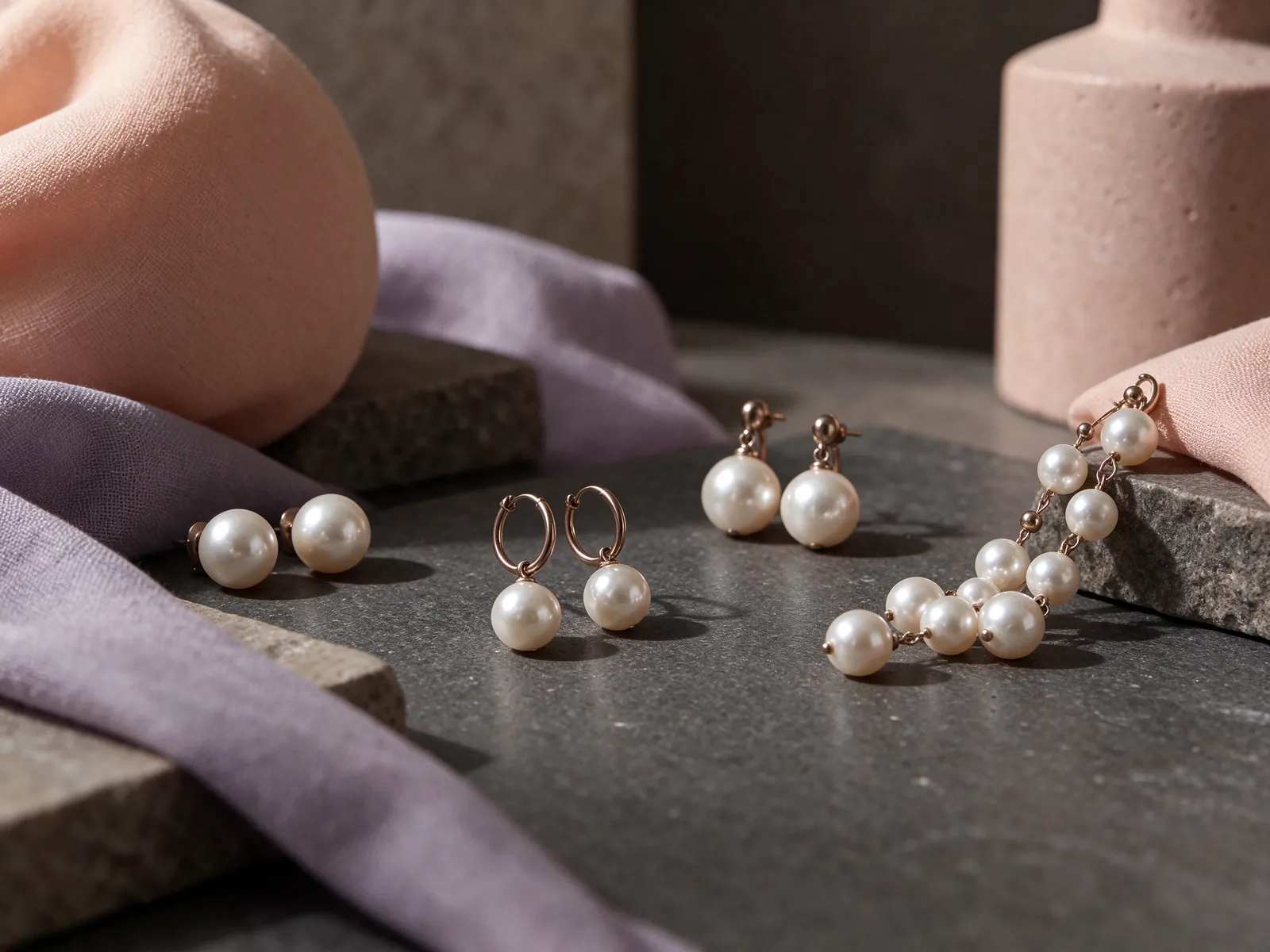
Choose for real routines, not a hierarchy of occasions
Studs are not automatically casual, and dangles are not reserved for formal evenings. For everyday pearl earrings, consider your phone, headset, glasses and outerwear. A close-fitting design can still touch equipment; a longer design may work well with your routine if its movement stays clear. The useful question is whether you can make your ordinary movements without unwanted pressure, catching or distraction.
For a dinner or celebration, decide which part of the outfit should lead. A decorated collar may favour a more concentrated outline at the lobe, while a plain neckline leaves hanging details easier to read. If a necklace already creates a strong focal point, compare whether a short drop preserves the space you want beside the neck. No occasion requires a particular earring length.
Compare two designs with the same outfit
Keep hairstyle, neckline and viewing distance similar when comparing photographs of a try-on. A close-up can make one option appear more prominent simply because it is nearer the camera. Include a side view and a seated view, then use practical contact and your preferred level of movement to decide between attractive options. This gives a more useful comparison than separate images styled differently.
Assess pearl matching separately from the setting
GIA identifies seven pearl value factors: size, shape, colour, lustre, surface quality, nacre quality and matching. These describe the pearls, not whether a stud or dangle suits your wardrobe. After choosing a construction, compare the pair under similar lighting for the colour, lustre and overall relationship you prefer. Style names cannot replace a pearl-quality comparison, and a larger visual outline is not a complete quality judgement.
Matching also deserves attention on the ear. Look at the direction of each setting and the apparent balance between left and right. A hanging ornament may turn to reveal another side when you move, whereas a stud usually presents a more concentrated frontal view. Pearl shape or colour alone does not establish origin, natural-versus-cultured identity or whether a certificate exists; photographs answer visual questions, not all identity questions.
Describe prominence without reducing it to size
If you want the earring to stand out, specify whether you want more presence at the lobe or a longer line beside the face. Those are different design aims. You can then discuss pearl appearance and pair matching separately from length. A clear description of position, outline and movement is more informative than asking for a bigger pearl and expecting the entire silhouette to follow.
Include the fastening and removal method in a try-on
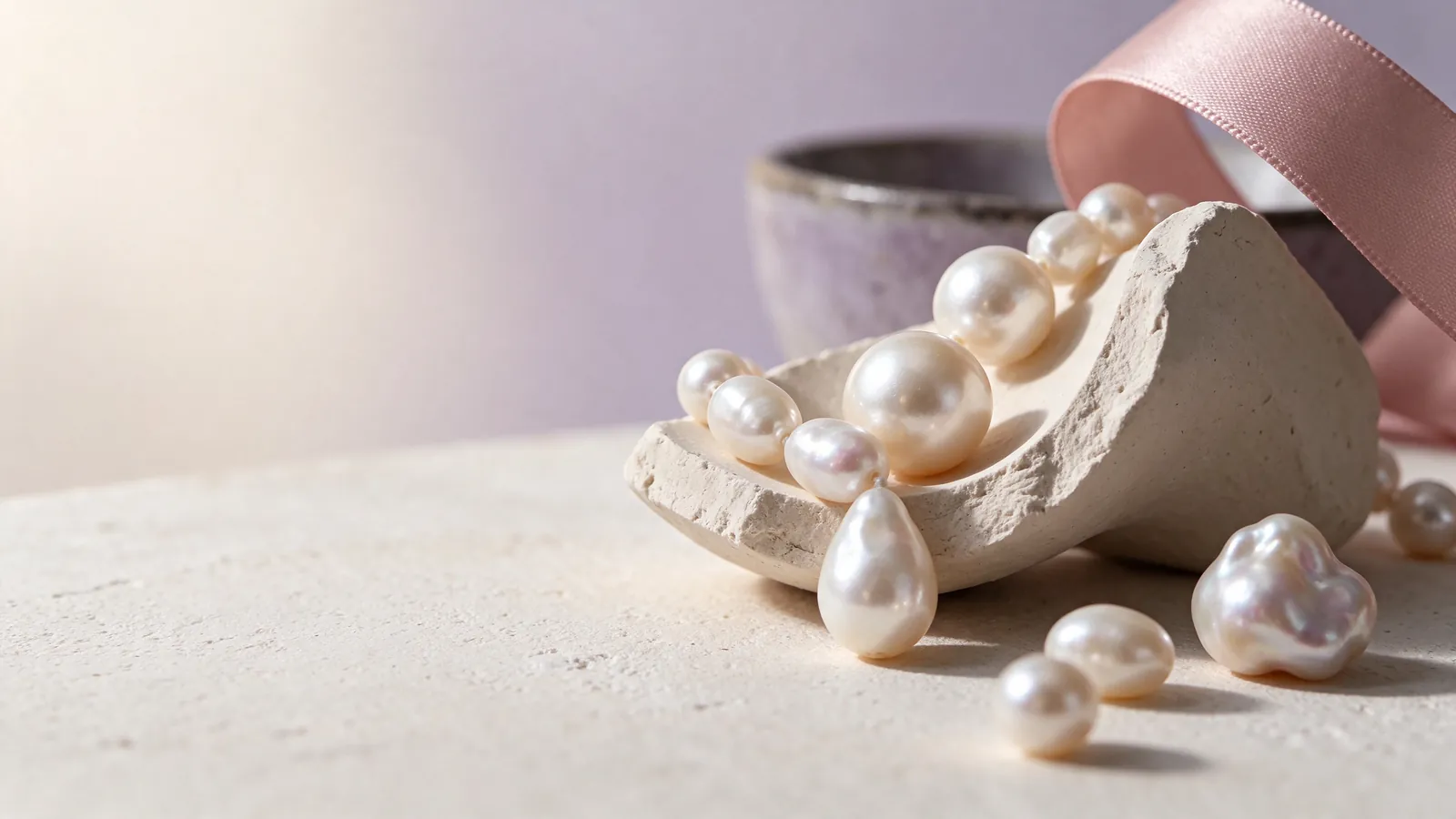
The back of an earring matters as much as the front. With a stud, notice the post and backing against the lobe; with a hanging design, assess whether the fastening supports the intended direction. If you feel pressure, pulling or discomfort, remove the earring rather than tightening it to force a particular look. A style label cannot guarantee comfort or predict an individual's skin response.
Support the fastening when putting on or removing earrings instead of pulling the pearl or the lowest ornament. If you remove jewellery frequently for work or changing clothes, compare how easily you can operate the closure yourself. A longer design also needs attention at its joints: hair or fabric can pull an element out of position even when the front initially looks balanced.
Do not use length as a substitute for weight
An earring's weight includes its whole setting, not just its visible pearl or hanging length. A compact stud is not necessarily lighter than every drop. Compare the specific construction and your own wearing experience. If you have previously reacted to jewellery, address that personal need separately rather than assuming that one shape or fastening provides a universal hypoallergenic solution.
Care for the pearl and the moving construction together
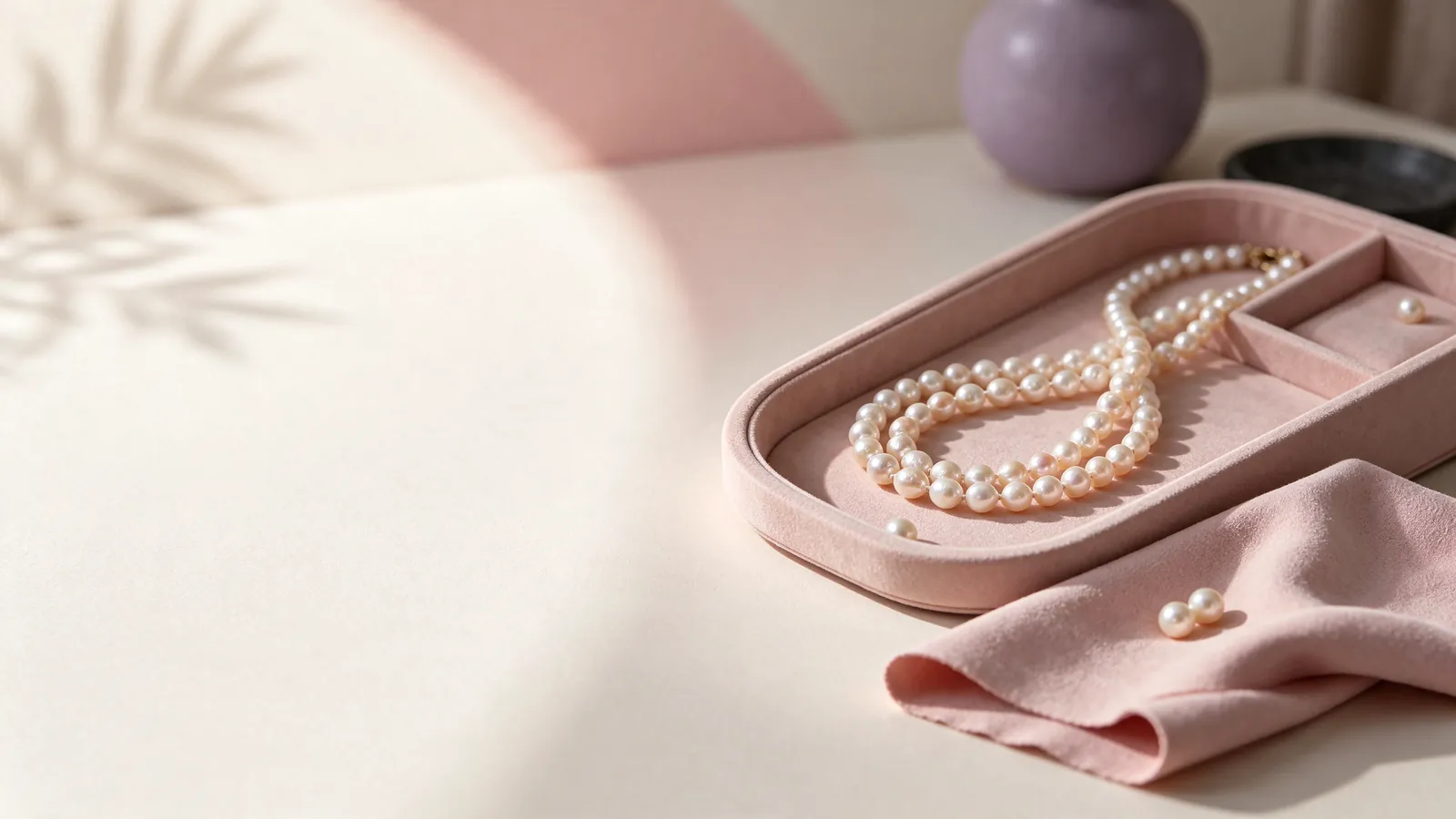
GIA places pearl at 2.5 on the Mohs hardness scale and advises against ultrasonic and steam cleaning. After wearing, use a very soft, clean cloth and store earrings separately from harder jewellery. For drops and dangles, also keep chains and linking parts from tangling or being compressed. Care should protect the pearl's surface and the supporting construction, rather than focusing only on the visible front.
Put earrings on after applying perfume and hair spray, and avoid acids and excessive heat. Before storage, separate the pair and check whether the fastening or hanging parts are caught together. If a backing becomes loose or a joint changes shape, stop wearing the earring and arrange an inspection. Cleaning cannot correct a fastening problem, and pulling a tangled ornament can place stress on its connections.
Bring a clear wearing brief to the conversation
For a discussion with Flint Jewellery, begin with the pearl's desired position, your preferred amount of movement and your usual neckline. Add hairstyle, piercing placement and fastening preferences. This turns the comparison into a practical brief for customisation without assuming a particular pearl identity from a photograph. An inspiration image can communicate a silhouette while leaving the actual pearl and construction choices to a separate conversation. Contact Flint Jewellery on WhatsApp at +85260106207 to discuss the position, movement and everyday styling you prefer.
| Consideration | Studs | Short drops | Longer dangles | What to check |
|---|---|---|---|---|
| Ornament position | On the earlobe | Slightly below the lobe | Extends down beside the face | Piercing-to-end position |
| Movement | Usually no suspended joint | Relatively stationary; joint-dependent | Longer line that can sway | Connections during a gentle turn |
| Hair visibility | Clearer with hair tucked back | Upper part may be hidden | Ends may overlap hair ends | Your usual hairstyle |
| Clothing contact | Concentrated near the lobe | Needs space below the lobe | Check collars and scarves | Seated and moving views |
| Handling | Support post and backing | Do not pull the ornament | Keep moving parts untangled | Fastening and storage method |
Pearl knowledge and authoritative references
GIA lists seven pearl value factors: size, shape, colour, lustre, surface quality, nacre quality and matching. Pair matching can be assessed separately from whether the earrings are studs, drops or dangles.
Read the reference for this factFrequently asked questions
Can a short pearl drop move even if it is described as stationary?
Yes. Relatively stationary describes the general distinction from longer, swaying dangles, not an absence of all movement. A short drop with a linking ring can still turn or shift. Inspect its connection and try a gentle head turn to understand the particular design.
Should I compare total length or just the hanging ornament?
Compare the same measurement basis for both designs. Total length from the attachment to the lowest point answers a different question from the length of the suspended ornament alone. Then consider where the piercing sits on your own lobe to judge the visible space below it.
Does a hoop with a hanging pearl count as a dangle?
The hoop describes the supporting structure, while the hanging pearl can introduce a drop or dangle element. Look at the pearl's position, length and movable joints rather than requiring the entire design to fit one label. This also helps distinguish it from a pearl mounted directly on the hoop.
Are studs always the simplest option for a headset?
Not necessarily. A headset can press against a stud or its backing, while a hanging fastening can also interfere. Try the actual equipment with the earring and check the contact points. Remove jewellery when needed rather than relying on a style name to guarantee clearance.
What should an inspiration photograph communicate?
Use it to show the silhouette you like: close to the lobe, slightly below it or extending further, with restrained or visible movement. It should not be used to infer pearl origin, identity, diameter or certification. Those are separate questions from the photographed style.
Updated: