
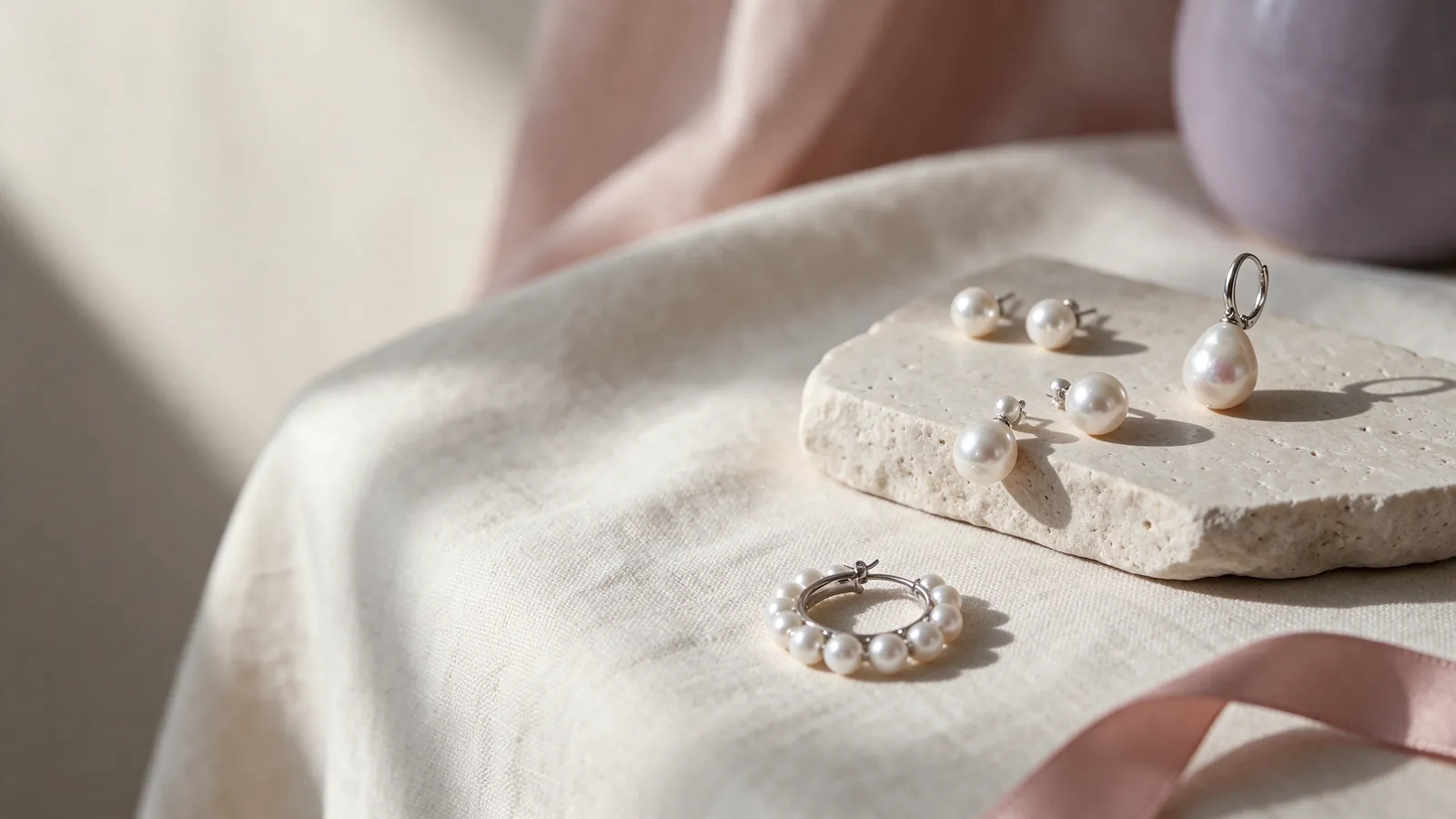
How do small pearl stud earrings complement your ear proportions and hairstyle? Balancing 4.5–6mm pearl earrings for the look of delicate small pearl studs
Start with the effect you want from small pearl stud earrings: a discreet point of light, or a round outline that remains easy to notice when someone is speaking to you. The same diameter can occupy different proportions of different earlobes. Piercing position also changes the balance, so a description such as a round or oval face is not enough to make the decision.
With your hair tucked back, look at the space between the pearl and the edge of your lobe. Then turn your head and inspect the setting from the side. If you need a wider comparison before choosing a quiet scale, the pearl earring size guide can help you consider other outlines. Keep lighting and viewing angle similar so the photograph does not become the deciding factor.
When comparing small pearl stud earrings, what should you notice about 4.5–6mm pearl earrings to judge the effect of delicate small pearl studs from the front and side?
Use both a close view and a whole-outfit view. Close up, check the visible lobe margin and the outline of the setting. From farther away, notice whether the pearl remains visible with your normal hairstyle. Delicate small pearl studs do not need to dominate a full-length photograph; a detail that becomes apparent in conversation may be exactly the effect you prefer.
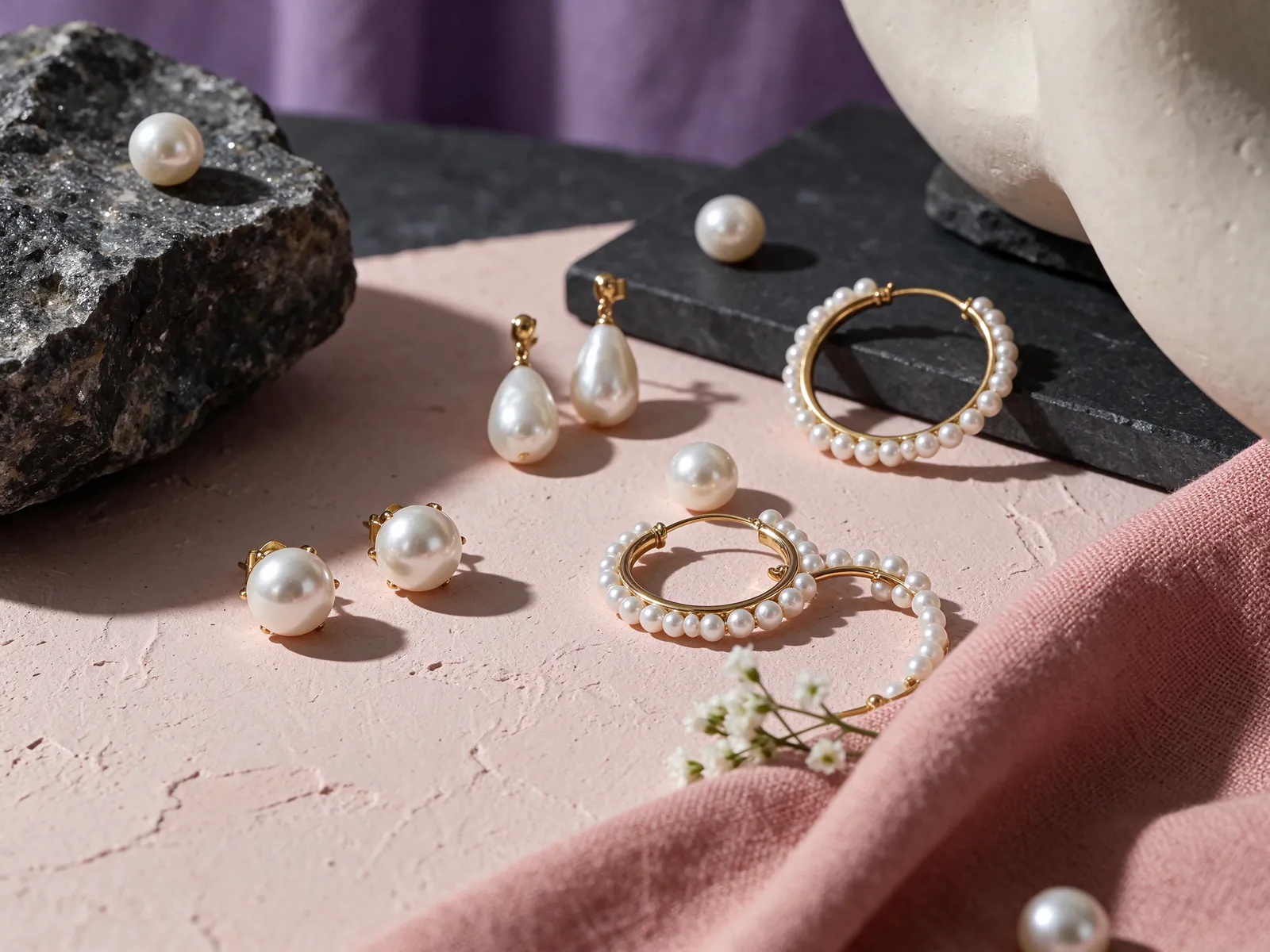
Read the diameter alongside the setting's complete outline
The 4.5–6mm pearl earrings range is useful for discussing visual scale, rather than defining a universally correct size. At the smaller end, you may prefer the extra visible space around the lobe; towards the larger end, you may prefer a clearer circular accent. Neither choice establishes a level of elegance. Compare the outline against your own ear rather than treating a number as a style ranking.
A pearl measurement describes the pearl, not necessarily the full front of the earring. A metal rim or decorative setting can add to the visible footprint, while the side profile depends on how the pearl is mounted. When comparing pearl stud earrings, separate diameter language from the broader question of fit. Read the pearl measurement and the complete earring description as different pieces of information.
Why a close-up photograph is not a size test
An enlarged photograph is useful for looking at surface detail but may say little about wearing scale. Do not estimate diameter from how much of the screen the pearl fills. Screen size, cropping and zoom all change that impression. Look for stated measurements and comparable wearing views, and avoid using a phone image held beside your ear as though it were a calibrated ruler.
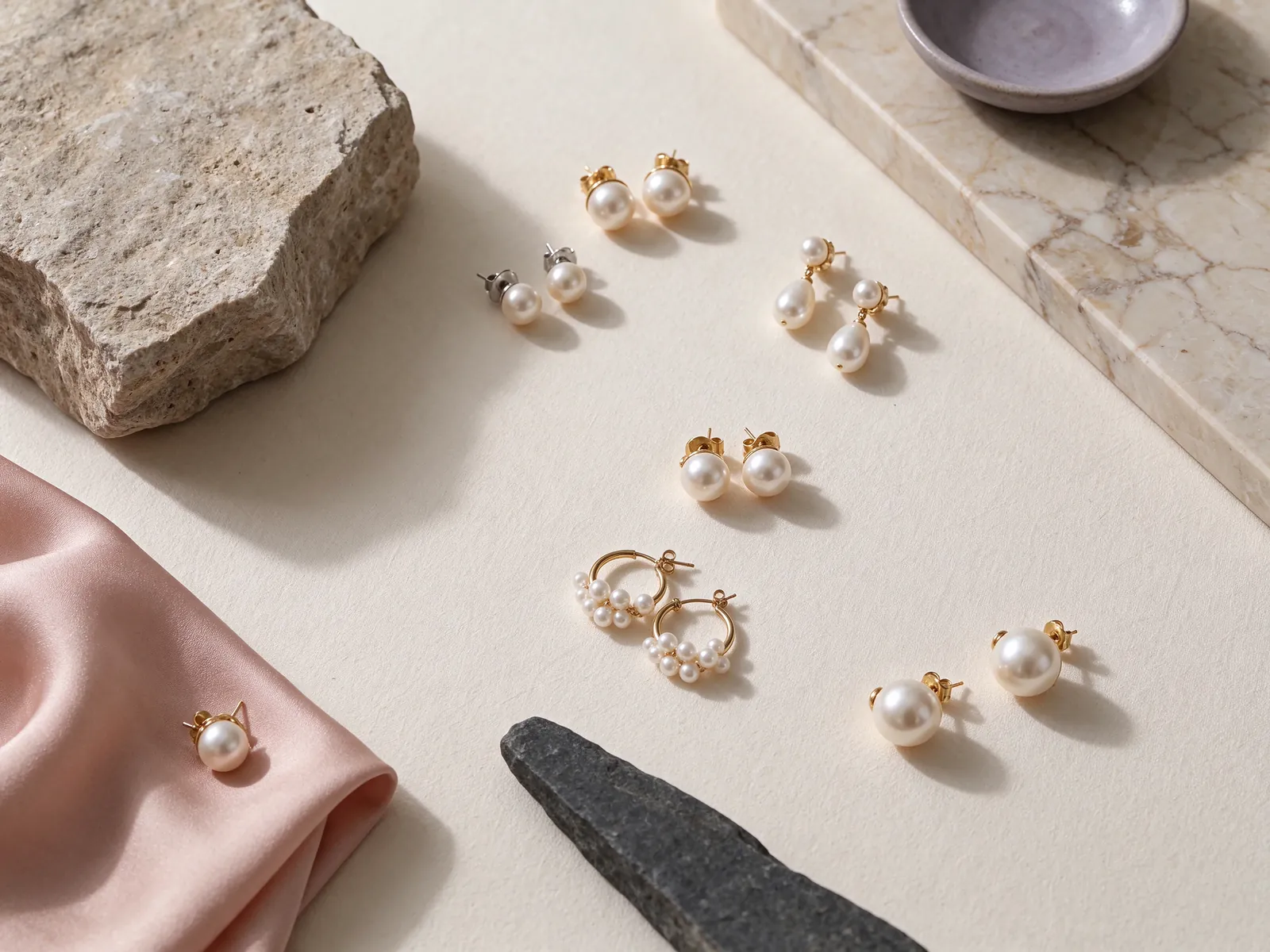
Consider small lobes and additional piercings separately
A small lobe does not automatically require the smallest pearl. More useful questions concern where the piercing sits and how much of the ear's edge you want to show. A low piercing may position a stud differently from a central one. When coverage matters most, pearl earring size for small earlobes addresses the relationship between the earring outline and the lobe, rather than prescribing a size from face shape.
For several healed piercings, give each earring enough space to retain a clear outline. Similar circles can create a tidy rhythm; a more noticeable size contrast can establish a main accent and a supporting detail. Choosing pearl studs for a second piercing also means looking at setting width and the relationship between backs. Diameter alone cannot establish whether two earrings will sit comfortably beside each other.
Allow for differences between your left and right ear
Your lobes and piercing positions may not be identical. Inspect each ear first, then judge the pair as a whole. Do not tighten a back simply to force a symmetrical photograph. When comparing the pearls themselves, look for a coherent visual relationship in size, shape, colour and lustre, while allowing the natural shape of each ear to influence the final position.
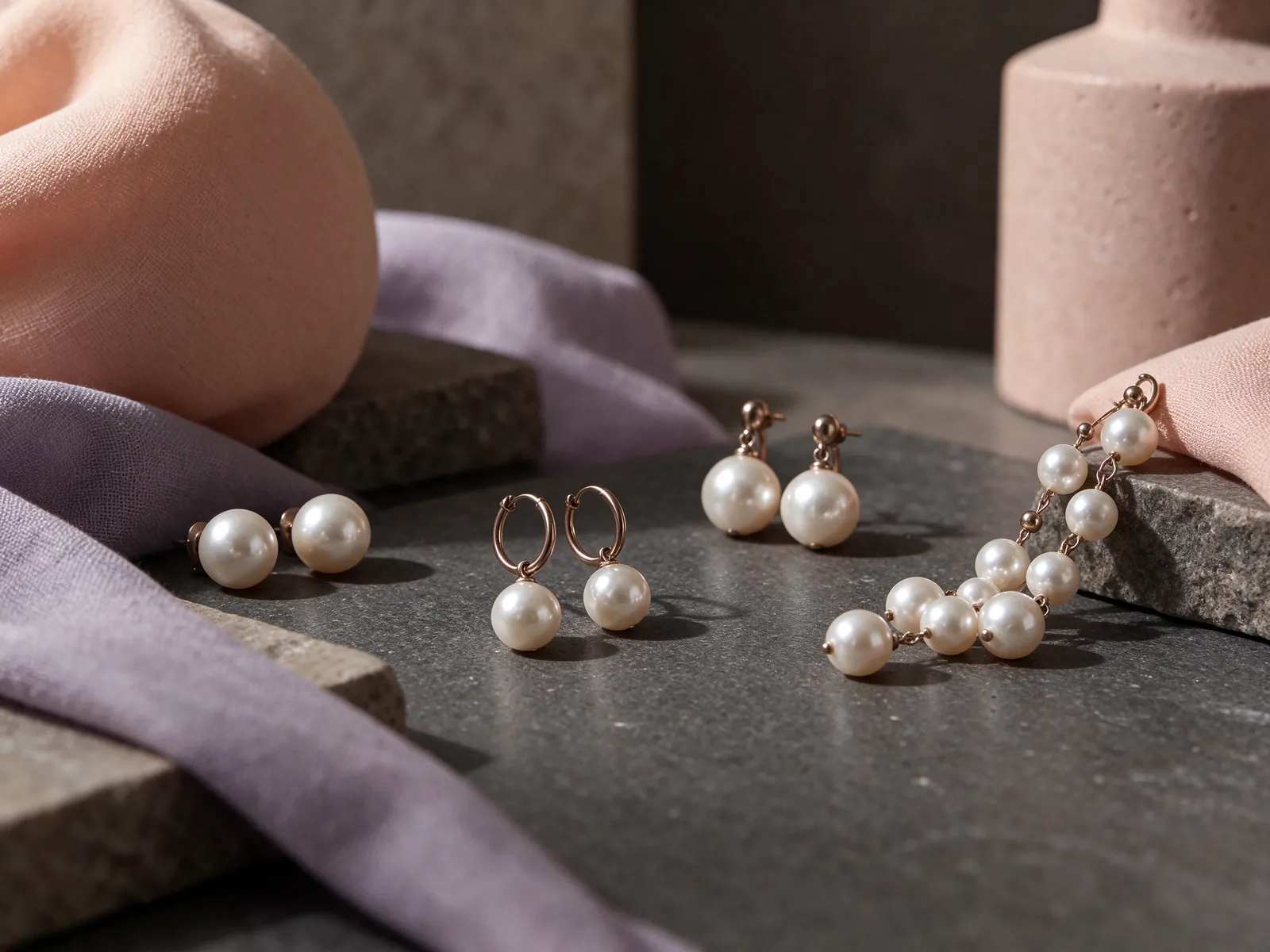
Test your usual hairstyle and glasses, not an empty backdrop
Loose hair may reveal a small pearl only as you move, whereas a short cut or an updo leaves its outline more exposed. Before deciding that a pearl is too discreet, try moving the strands that frame the ear. A small change in hair placement can clarify the accent without changing the jewellery, and may suit someone who wants a quiet everyday look.
Glasses, hair clips and earrings share the area around your face. A strong spectacle frame may leave the pearl as a supporting detail; a fine frame and tucked-back hair may make it more noticeable. There is no single rule that small studs must follow. Wear your normal glasses when comparing earrings, rather than choosing from a fitting where your usual accessories are absent.
Watch the side profile while turning your head
Turn slowly and check whether hair catches around the post or back. A small pearl does not mean every part of the earring is close to the ear. Finish applying hair spray and arranging your hair before putting pearls on, reducing contact with styling products. If the side structure interferes with your usual movements, include that in the choice instead of considering the front view alone.
Use collars and other jewellery to set the visual hierarchy
For work, a small stud can provide a soft detail beside a crisp shirt or knit. When a collar already has a bow, print or prominent buttons, a simple earring outline can keep the composition readable. With a plain neckline, the pearl's lustre may supply the contrast you enjoy. The question is what you want to draw attention to, rather than whether office dressing demands a particular diameter.
An evening outfit does not necessarily need a larger earring. An open neckline or swept-up hair can give a small pearl more space to be seen. If you wear a prominent necklace, the stud can remain a quiet companion. If earrings are your only jewellery, use hairstyle and clothing colour to frame them instead of expecting pearl size to provide every element of the look.
Compare the complete outfit before changing the size
Try the earrings with a top you actually wear and your usual accessories. Remove one competing detail, then put it back and compare the balance. This helps distinguish a size issue from an overcrowded composition. If your aim is an understated accent discovered at close range, a small stud need not remain prominent in every group photograph to be a successful choice.
Include posts, backs and everyday contact in your fit check
A smaller pearl does not establish the weight of the complete earring. The setting, post and back all contribute to its structure. If a stud tips forward, consider the post position and the contact area at the back rather than attributing the issue only to diameter. The discussion of earlobe support backs for pearl earrings helps you think about support and positioning as related but separate design considerations.
A back should fasten as designed without being forced against the ear. Excess movement and uncomfortable pressure are both reasons to reconsider the fit. Learning about pearl earring back types can help you understand the fastening arrangement and whether a particular post and back belong together. Do not use extra tightness as a substitute for a structure that sits appropriately on your ear.
Think about headphones and phone use
If you regularly use over-ear headphones or hold a phone against your ear, consider the space occupied behind the lobe. Remove the earrings if contact creates pressure. Small diameter is not a reason to assume uninterrupted wear suits every activity. Persistent pain, redness or swelling calls for stopping wear and seeking medical advice, rather than trying to solve the issue by choosing a different pearl size alone.
Look beyond size to matching, lustre and gentle care
GIA describes seven pearl quality factors: size, shape, colour, lustre, surface quality, nacre quality and matching. That framework makes size one consideration, not a complete quality verdict. For earrings, compare the two pearls under similar lighting and look at how their outlines, colour and lustre work together. A small pearl still deserves close attention to the visual details that make a pair coherent.
Small size, a round shape or a particular colour does not establish pearl species, origin or natural-versus-cultured identity. If one of those characteristics matters to you, read the relevant description and documentation for the pearl concerned. For care, GIA says pearls should never be cleaned with ultrasonic or steam cleaners. A delicate-looking stud needs the same respect for the pearl surface as a larger earring.
Keep the pearl surface away from hard objects in storage
After wearing, wipe pearls gently with a very soft, clean cloth and keep them from rubbing against harder objects. GIA lists pearl at 2.5 on the Mohs hardness scale, so small diameter does not remove the need to avoid scratching. Handle the fastening gently as well. If it becomes loose or no longer closes properly, stop wearing the earring and arrange an appropriate inspection.
Would you like to compare a quiet pearl accent with your usual hairstyle and neckline? Contact Flint Jewellery on WhatsApp or call +85260106207 to discuss the earring proportions you prefer.
| Comparison | What to inspect | Front view | Side view | Decision focus |
|---|---|---|---|---|
| Pearl and setting | Separate diameter from complete outline | Visible margin around the lobe | Projection of the mounting | Choose the amount of space you enjoy |
| Piercing position | Position relative to the lobe edge | Balance on each ear | Whether the stud tips forward | Assess each ear without forcing symmetry |
| Hair and glasses | Your usual framing accessories | How much of the pearl is visible | Hair contact around the back | Try your real daily hairstyle |
| Additional piercings | Complete settings and available space | Rhythm or contrast between circles | Interaction between backs | Do not decide spacing by diameter alone |
| Backs and care | Fastening and contact points | Position of the earring | Pressure or unwanted movement | Combine fit checks with gentle cleaning |
Pearl knowledge and authoritative references
GIA identifies seven pearl quality factors, including size and matching. For a pair of small studs, diameter should therefore be considered alongside shape, colour, lustre, surface quality, nacre quality and the visual relationship between the two pearls.
Read the reference for this factFrequently asked questions
Is the larger end of 4.5–6mm always the better choice for work?
No. Think about how visible you want the pearl to be, the space around your lobe and the way your work clothes frame your face. The complete setting matters too. A discreet detail and a clearer circular accent are different preferences, not better and worse versions of the same choice.
Do small pearl studs necessarily weigh less?
Diameter does not give the weight of the complete earring. The setting, decorative parts, post and back also contribute. Read the complete description and assess how the earring sits, including whether the back creates uncomfortable pressure.
Can loose hair work with a small pearl earring?
Yes, if you enjoy a pearl that appears as you move. Try adjusting the strands around the ear before deciding to change diameter. Check that hair does not catch around the post or back, and judge the look with your usual hairstyle rather than only with hair tied up.
Must a pearl in a second piercing be smaller than the first earring?
Not necessarily. Similar circles can create an orderly rhythm, while a size difference can establish a main accent. The complete settings, backs and spacing between healed piercings determine whether the arrangement is practical; do not force earrings together when they collide or cause pressure.
Does a small stud need special attention when cleaning?
The small scale does not change pearl care principles. GIA advises against ultrasonic and steam cleaning. Use a very soft, clean cloth after wearing and avoid contact with perfume, hair spray and excessive heat. Check the fastening gently rather than tugging on the pearl.
Updated: