
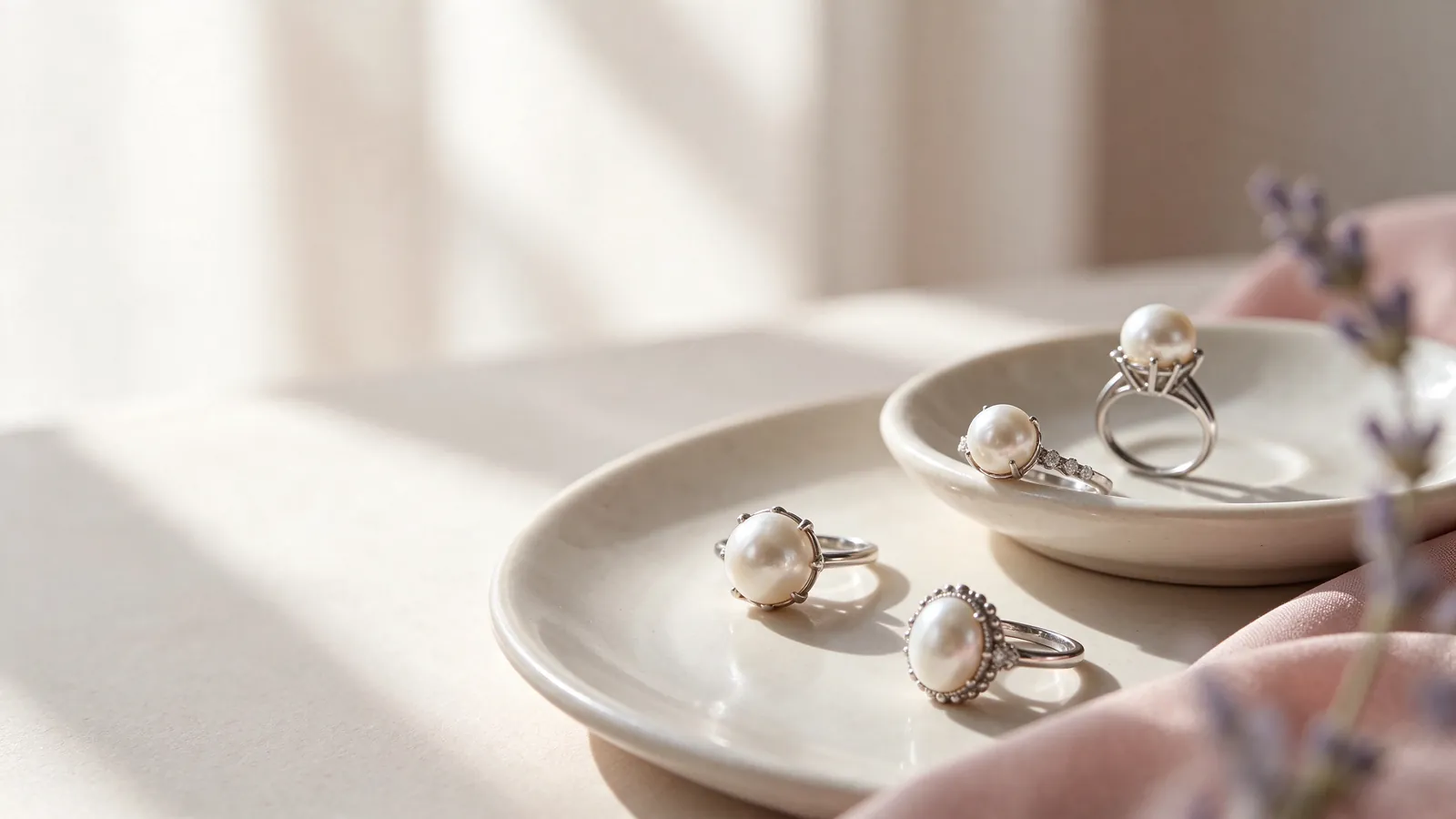
How do band width and ring size shape the fit of freshwater pearl rings in different freshwater pearl ring designs?
Begin with the finger you intend to use, not a size remembered from another ring. A broader band contacts a different area of the finger from a narrow one, so its fit may feel different even when the stated size is the same. Compare using a band of similar width and note both the journey over the knuckle and the position at the finger base.
A freshwater pearl ring should be assessed while your hand moves naturally. Open your palm, curl your fingers and hold a pen without pressing the ring into place. Notice whether the band edges pinch, whether adjacent fingers are pushed apart and whether the setting turns uncomfortably. Check again at another ordinary time rather than relying on a single hurried try-on; finger comfort can change with daily activity.
When trying on freshwater pearl rings, how can you check knuckle clearance and comfort in freshwater pearl ring designs?
Move the band over the knuckle slowly, with a gentle turn if necessary, rather than forcing it. Once it is seated, rest your hand on a table and pick up your phone. Pressure between fingers may come from the setting's width, not simply a small ring size. Removal should remain manageable. Pain, numbness or a persistent pressure mark is a reason to stop wearing it and reconsider the fit.
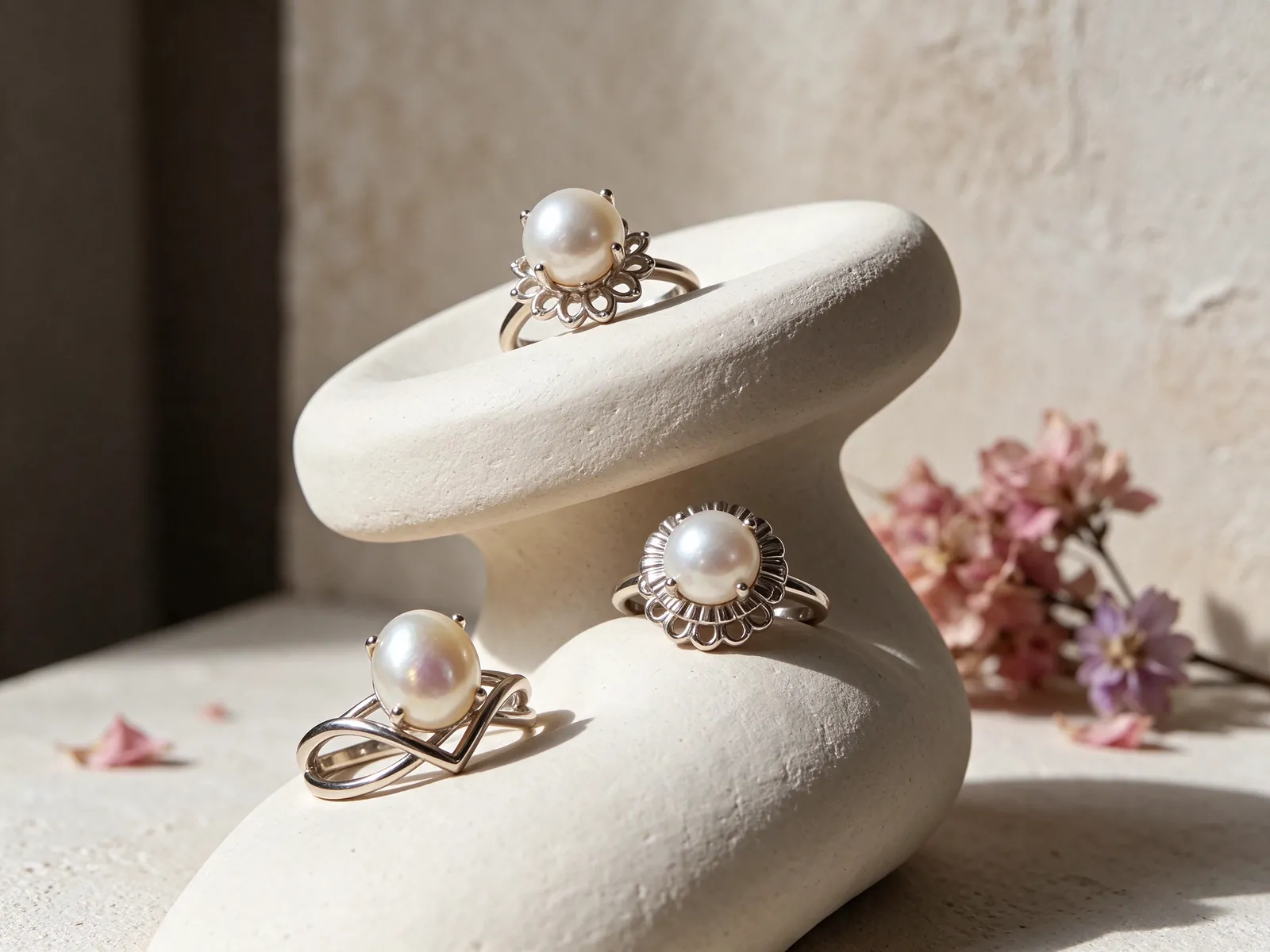
How can a side view change your choice of silhouette?
An overhead photograph tells only part of the story. Look at the relationship between the pearl, its support and the band from the side, then lower your hand as you would during conversation. A setting that looks balanced from above may project further than expected. Think about shirt cuffs, bag openings and the way you reach into a pocket before deciding how prominent you want the outline to be.
Judge proportion across your whole hand: the pearl's outline, your nail shape, the knuckle and any neighbouring ring. A broad visual shape creates a different focus from one that extends along the finger. If you are still choosing a design direction, the pearl rings Hong Kong guide offers a broader starting point; then return to the freshwater option and prioritise the way it sits and moves on you.
What should you check before adding another ring?
Try the pearl ring alone before introducing a second band. Bend your finger and gently tilt your hand to check whether the other ring's edges or raised setting can touch the pearl. A pleasing arrangement on a still hand may change during movement. If the clearance is inadequate, use a different finger or the opposite hand rather than forcing both rings into the same space.
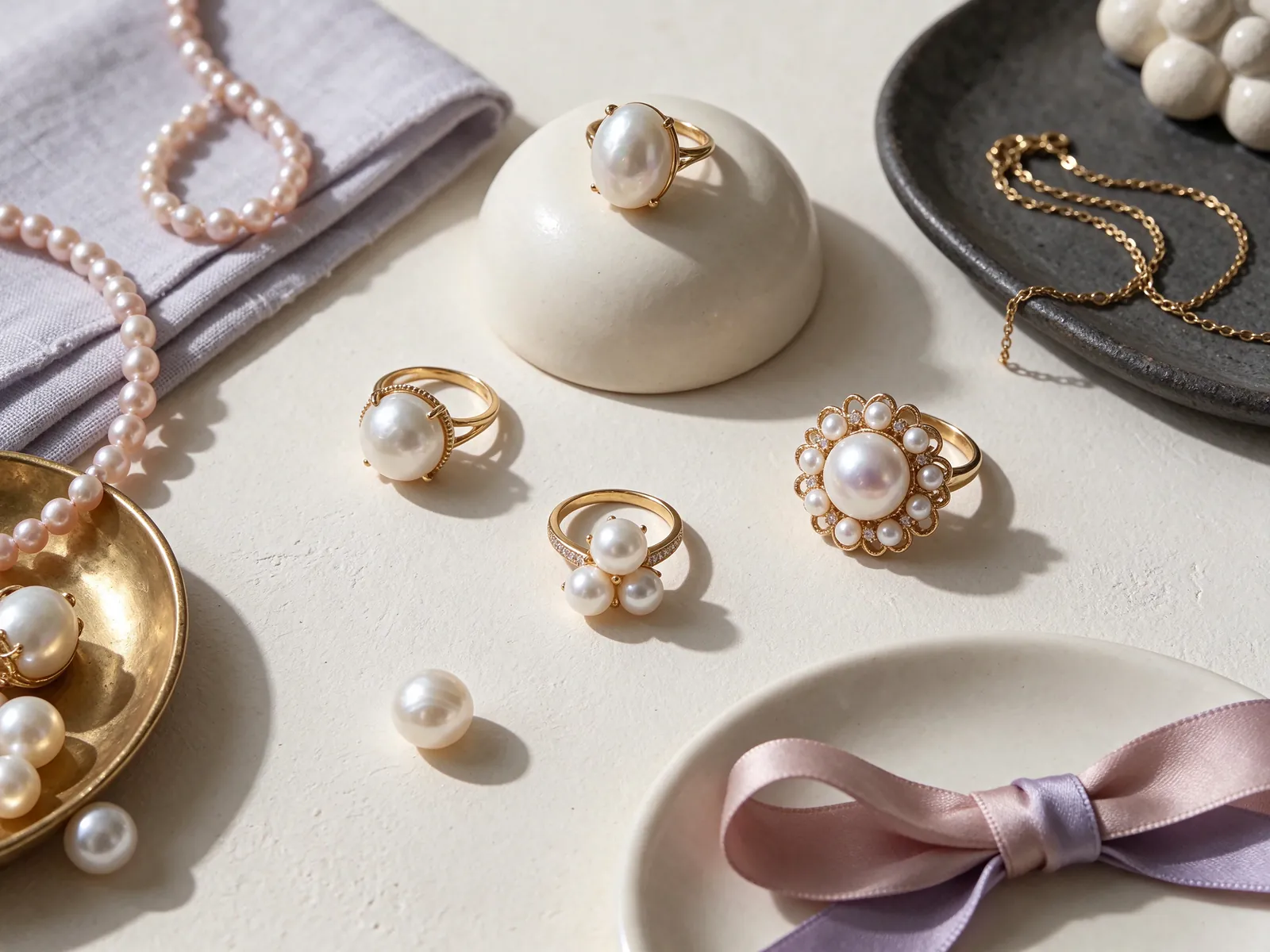
Which pearl qualities are worth comparing separately?
Freshwater describes the topic, not a complete quality judgement. GIA identifies seven pearl value factors: size, shape, colour, lustre, surface quality, nacre quality and matching. For a ring, begin with the appearance that attracts you, then separate its reflections, outline and visible surface characteristics. A single-pearl design does not involve matching several pearls in the same way as a strand, although harmony with the setting still matters.
For background, read what are freshwater pearls before making comparisons. Colour or roundness alone cannot establish origin, natural-versus-cultured identity or certification. When comparing options, keep lighting and viewing distance similar: a close-up of one pearl is not a fair visual comparison with a distant hand shot of another. Point to the particular surface feature you notice instead of treating an unexplained letter grade as the whole answer.
Why rotate the pearl instead of choosing its brightest photograph?
Look from the front and at an angle, then step back to see the complete ring on the hand. Reflections and visible texture can change as the view changes. This observation does not measure nacre thickness; it helps you understand the appearance you will actually wear. With an uneven outline, identify which face you prefer and discuss how its orientation could work with the setting.
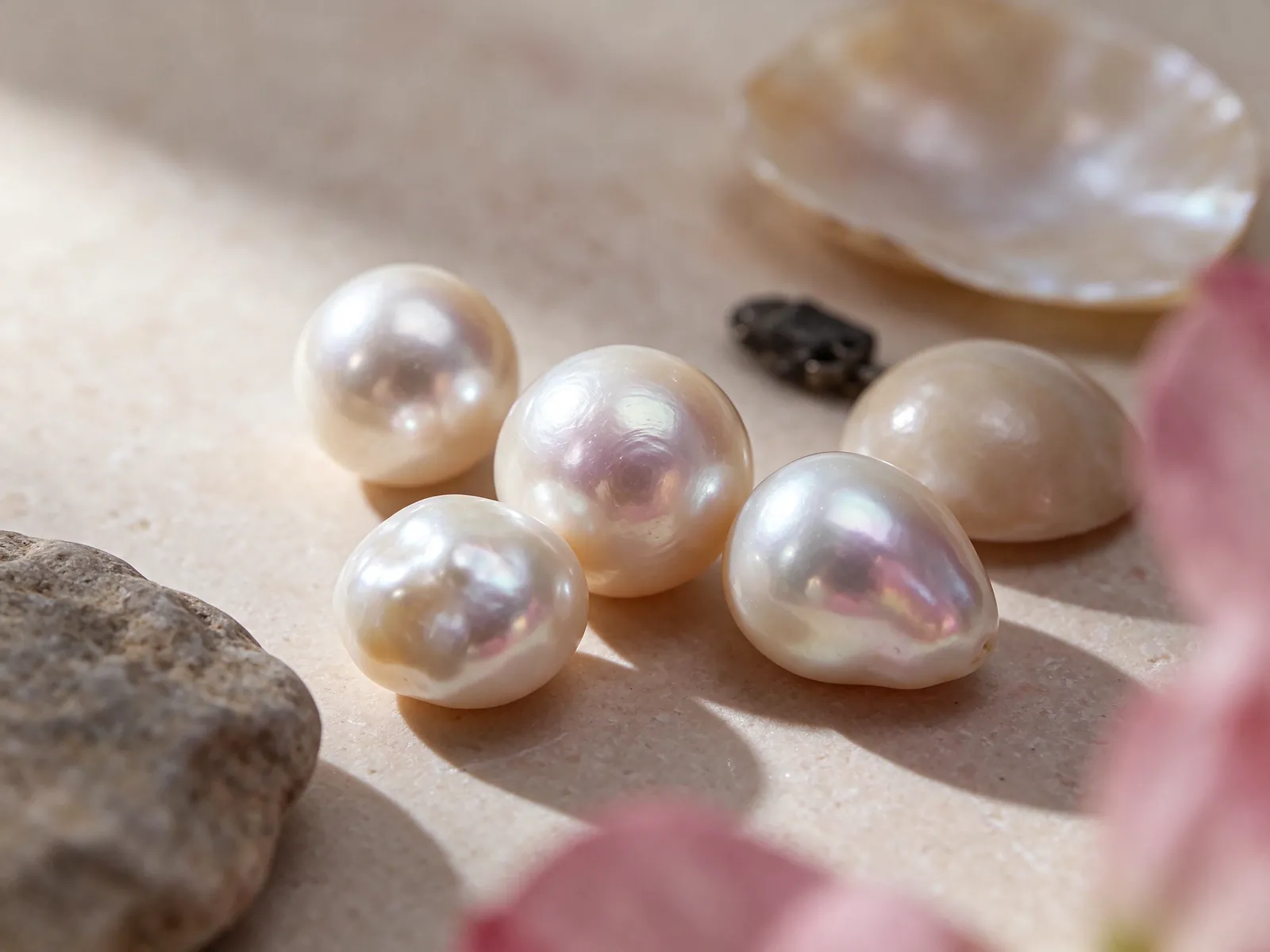
How do pearl colour, clothing and metal work together?
GIA distinguishes bodycolour, overtone and orient, and not every pearl displays all three. Rather than choosing from a colour name alone, compare the impression beside a white shirt, an ivory knit or a dark jacket from your wardrobe. If soft pink or lavender appeals to you, the pink freshwater pearl ring guide can help focus your styling questions on warmth, contrast and the amount of attention the ring draws.
Metal directions for discussion include 18K 750 white gold, 18K 750 yellow gold, 18K 750 rose gold, PT950 platinum and PT900 platinum. Consider band width alongside colour rather than assuming a metal name gives every pearl the same effect. If you favour charcoal, navy or black clothing, compare the styling ideas in the Tahitian pearl ring guide to decide whether a pale focal point or a darker visual emphasis better suits you.
How should you account for changing light?
Compare colours against the same background under comfortable lighting, then view them near soft window light if possible. Do not place one option in glare and another in shadow. Add the watch or ring you normally wear to judge the overall balance. Photographs can record your preferences, but screen colour is not a substitute for seeing the pearl; describe whether you prefer a warm, cool, blended or contrasting effect.
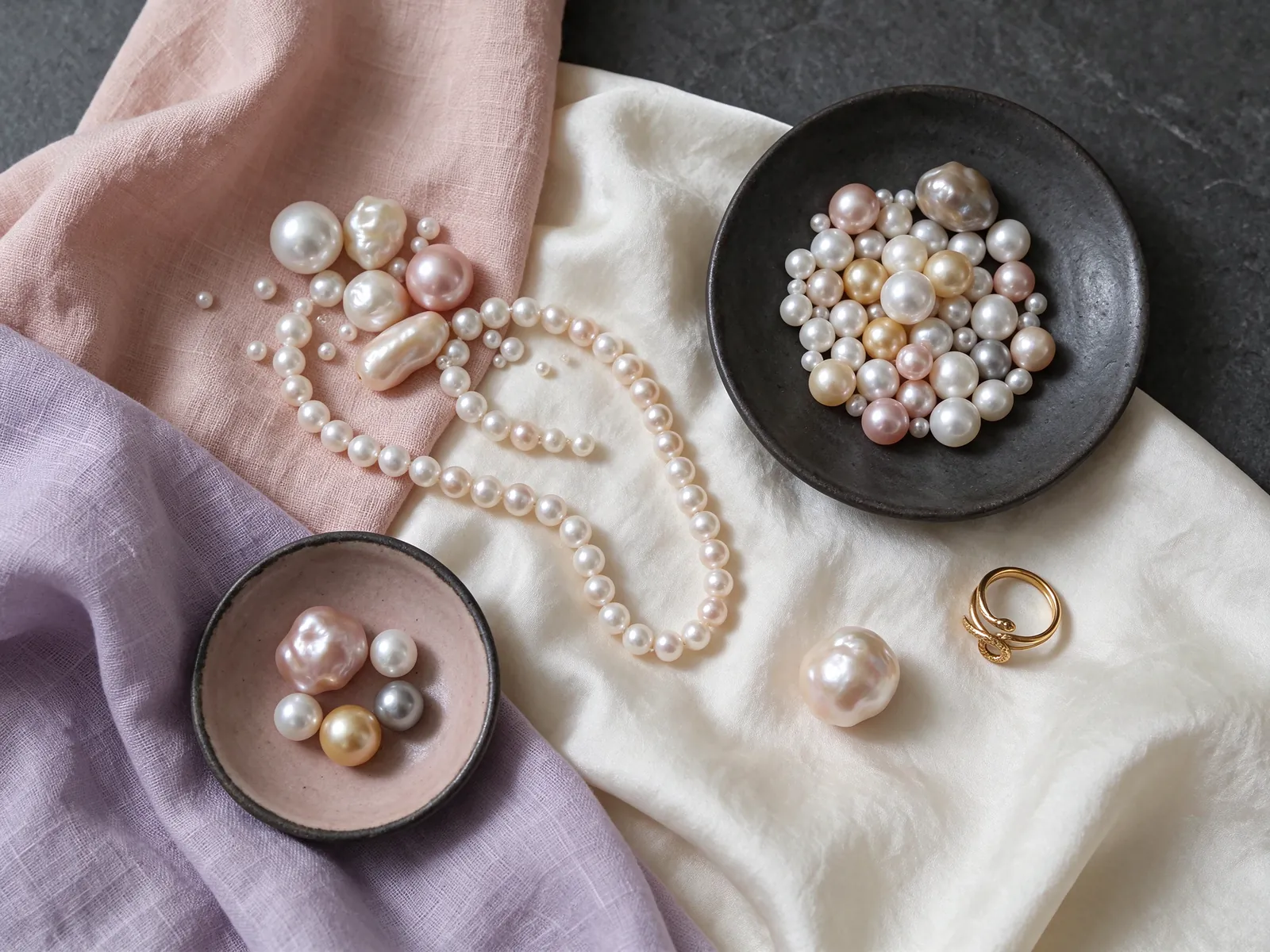
Should you choose a rounded outline or a more individual shape?
A rounded outline tends to gather attention into a compact focal point, while an irregular outline makes direction part of the design. Shape alone is not a ranking of quality. The baroque pearl ring guide is useful if you enjoy natural-looking contours: check where a projection points, whether it reaches towards an adjacent finger and how it looks from your own view when you glance down at your hand.
For a different design comparison, consider the Akoya pearl ring guide and focus on the placement of the setting and surrounding space, rather than assuming a pearl type promises a particular shape or lustre. Structured tailoring may lead you towards a concentrated outline; soft knitwear may encourage a more flowing silhouette. These are starting points for trying freshwater pearl ring designs, not rules that override your comfort or individual taste.
How do you explain a preferred asymmetric direction?
View the ring with your hand where it normally rests, such as beside a keyboard or on a handbag. Compare the longer end pointing towards the fingertip and towards the wrist. Explain the result in practical terms: you might want length along the finger or no projection towards its neighbour. If the ring keeps turning, distinguish a loose fit from the intended offset design before deciding on the direction.
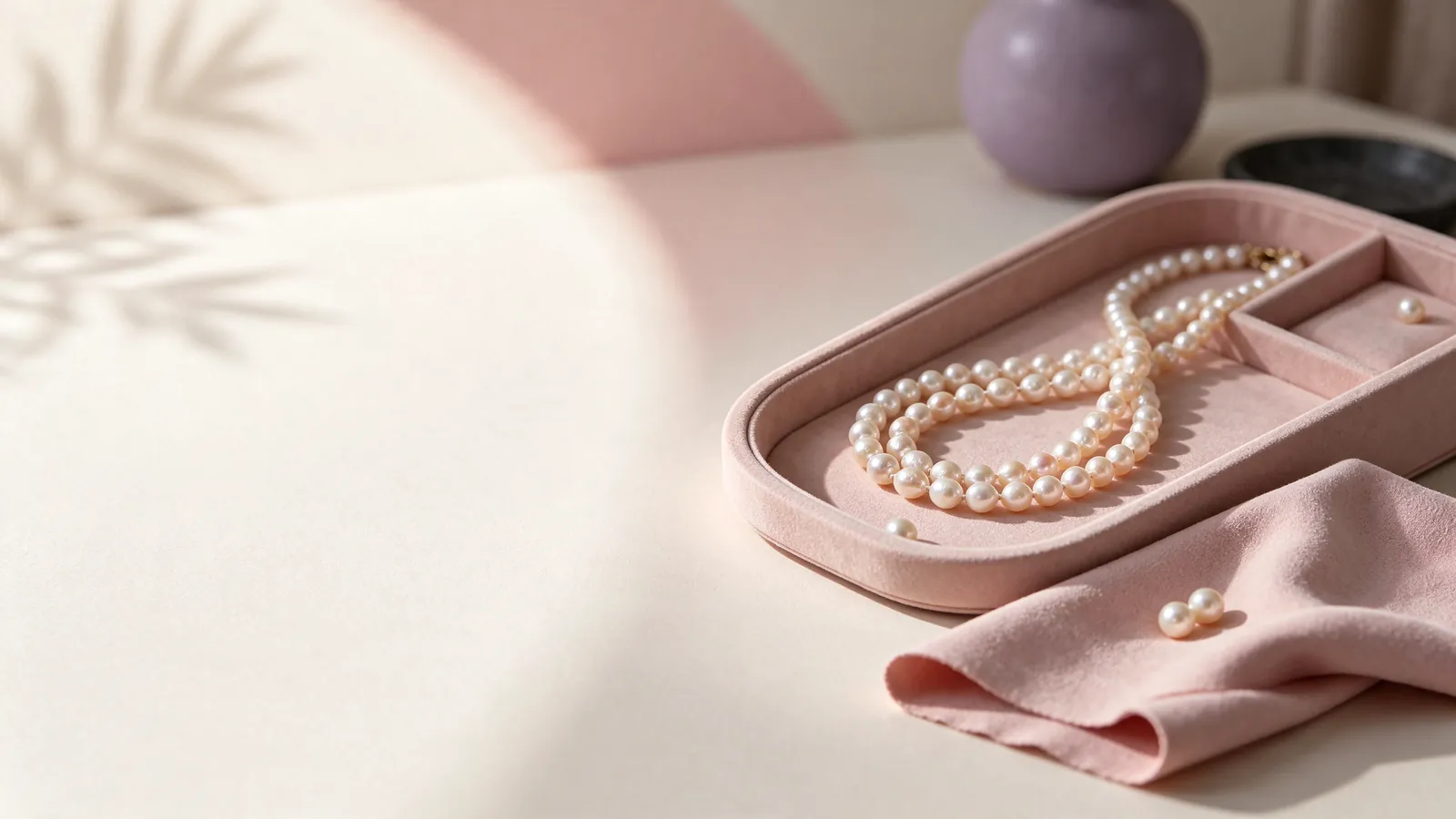
Which wearing habits help protect a pearl ring?
GIA lists pearl at 2.5 on the Mohs hardness scale. This is a reminder to consider scratching, not a prediction of how many years a ring will last. Hands meet door handles, bag straps and hard surfaces throughout the day. If you regularly carry heavy items, use tools or handle cleaning products, plan to wear the ring after those tasks rather than looking to setting height alone for protection.
Put the ring on after perfume, hair products and your usual preparation, avoiding direct spray onto the pearl. Before washing, exercise or cleaning, consider removing it and placing it in a dedicated safe spot away from the edge of a basin. Do not leave it loose with keys or other hard objects. A consistent storage routine is especially useful when moving between an office, restaurants and evening events.
What is appropriate after-wear cleaning?
Gently wipe the pearl with a very soft, clean cloth after wearing and store the ring separately from jewellery that could scratch it. GIA advises against ultrasonic and steam cleaners for pearls, as well as acids and excessive heat. Avoid probing around the pearl with a sharp tool or soaking the complete ring in an unfamiliar cleaner. Ask a jewellery professional about stubborn residue and the needs of the whole setting.
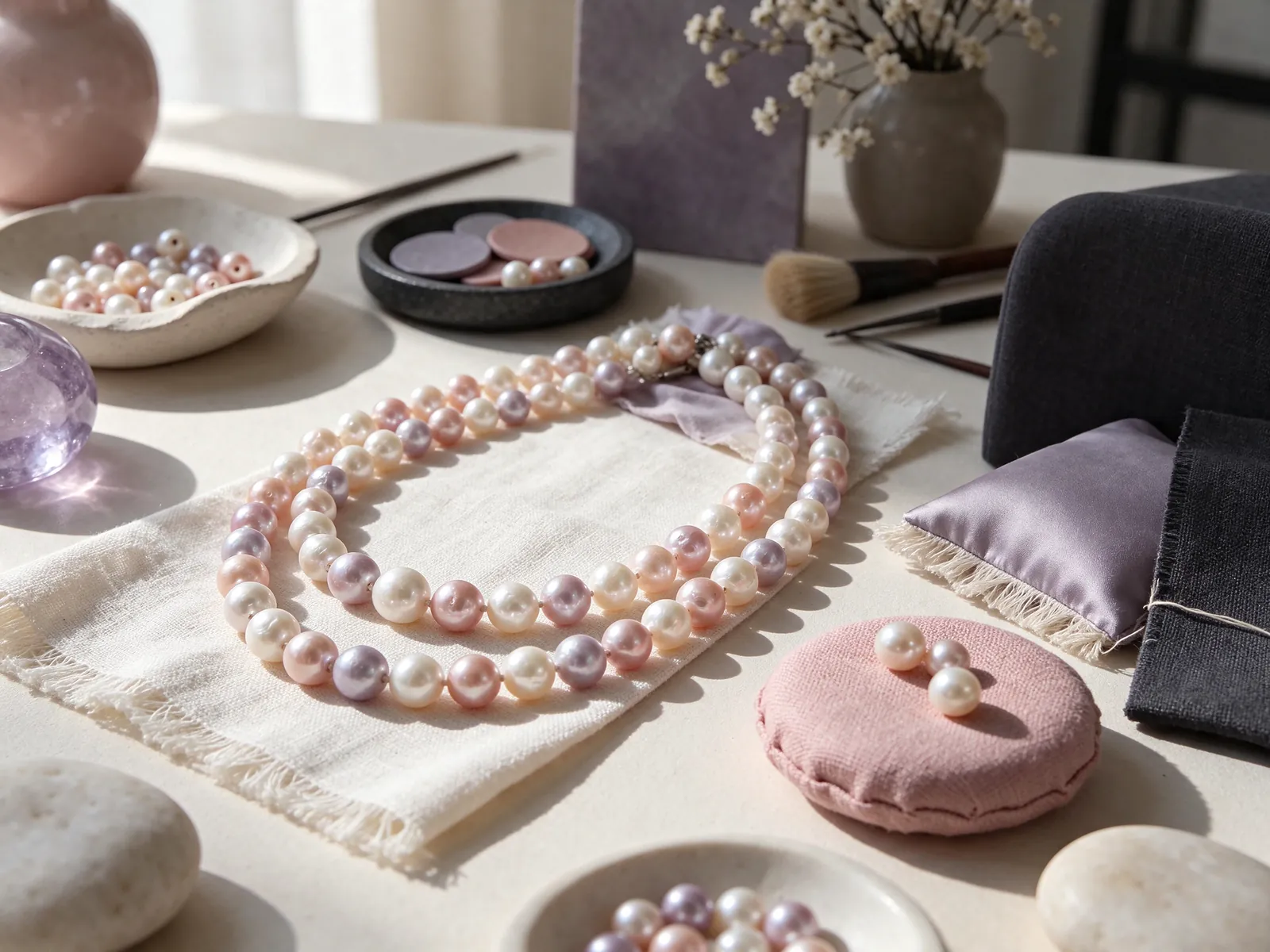
How can you prepare a clear design and sizing discussion?
Separate your brief into comfort requirements, visual preferences and points you are willing to adjust. The intended finger and space between fingers are practical needs; a soft colour or a compact silhouette expresses style; band width and orientation may be open to comparison. Rank these priorities before choosing a favourite image so that a striking front view does not outweigh a wearing requirement that matters more to you.
Bring observations from a ring you already wear, your usual clothing colours and the occasions you have in mind. Images help communicate lines, but explain what attracts you: concentrated shape, open space, gentle colour or a restrained side profile. A discussion with Flint Jewellery about freshwater pearl rings is more useful when pearl selection, setting form and sizing are considered together rather than treated as separate decisions.
How do you make the final comparison practical?
Check the preferred direction against ordinary actions: passing a cuff, holding a pen and wearing your usual watch or ring. If one detail does not work, consider another finger, a different orientation or a change in band proportion before abandoning the style. Record the features you want to keep and those you can change. This produces a clearer decision than simply choosing whichever ring attracts attention first. When you have your priorities ready, discuss freshwater pearl ring proportions, sizing and wearing preferences with Flint Jewellery on WhatsApp at +85260106207.
| Aspect | How to compare | Comfort check | Styling consideration | Question to discuss |
|---|---|---|---|---|
| Size and band | Use a similar-width fitting band | Knuckle passage and finger-base fit | Try alone before adding rings | Does it turn when holding a pen? |
| Setting height | View from above and the side | Cuff and adjacent-finger clearance | Restrained or prominent outline | Will your usual cuff catch? |
| Pearl appearance | Rotate under comparable lighting | Direction of any projection | Compact or flowing contour | Which face do you prefer? |
| Colour and metal | Compare beside clothes and a watch | Include band proportion | Blending or contrasting tones | Do you prefer warmth or coolness? |
| Daily activities | List hands-on tasks | Avoid contact with hard objects | Choose suitable wearing moments | When should the ring come off? |
Pearl knowledge and authoritative references
GIA lists pearl at 2.5 on the Mohs hardness scale, making contact with hard objects an important consideration when choosing and wearing a pearl ring.
Read the reference for this factFrequently asked questions
Does a turning pearl ring always need a smaller size?
Not necessarily. Band width, setting shape and finger shape can affect its position. Check looseness at the finger base and movement during ordinary tasks, using a similar-width band for comparison. Do not reduce the size until removal becomes difficult just to stop rotation.
Is an irregular pearl a poor choice for a ring?
An irregular outline can offer distinctive lines. The practical questions are its orientation, clearance beside other fingers and the view you enjoy when looking down. Shape alone does not decide overall pearl quality or whether the complete design suits you.
Must a pink pearl be paired with rose gold?
No. Look at the pearl's bodycolour and overtone alongside clothing and the metal directions you are comparing. A blended effect and a contrasting effect can both be appealing. Check the impression in comparable lighting rather than choosing by the colour name alone.
Can I stack a pearl ring next to a diamond ring?
First check that the other ring's edges and raised setting cannot touch the pearl, including when your finger bends or the rings move. If there is inadequate clearance, use different fingers or opposite hands instead of forcing the stack.
Does a Mohs hardness of 2.5 mean occasional wear only?
Hardness is not a wearing schedule or a lifespan. It highlights the need to avoid scratching. Base your routine on activities: remove the ring before tools, heavy handling or cleaning products, then wipe it with a soft clean cloth after wear. Avoid ultrasonic and steam cleaning.
Updated: