
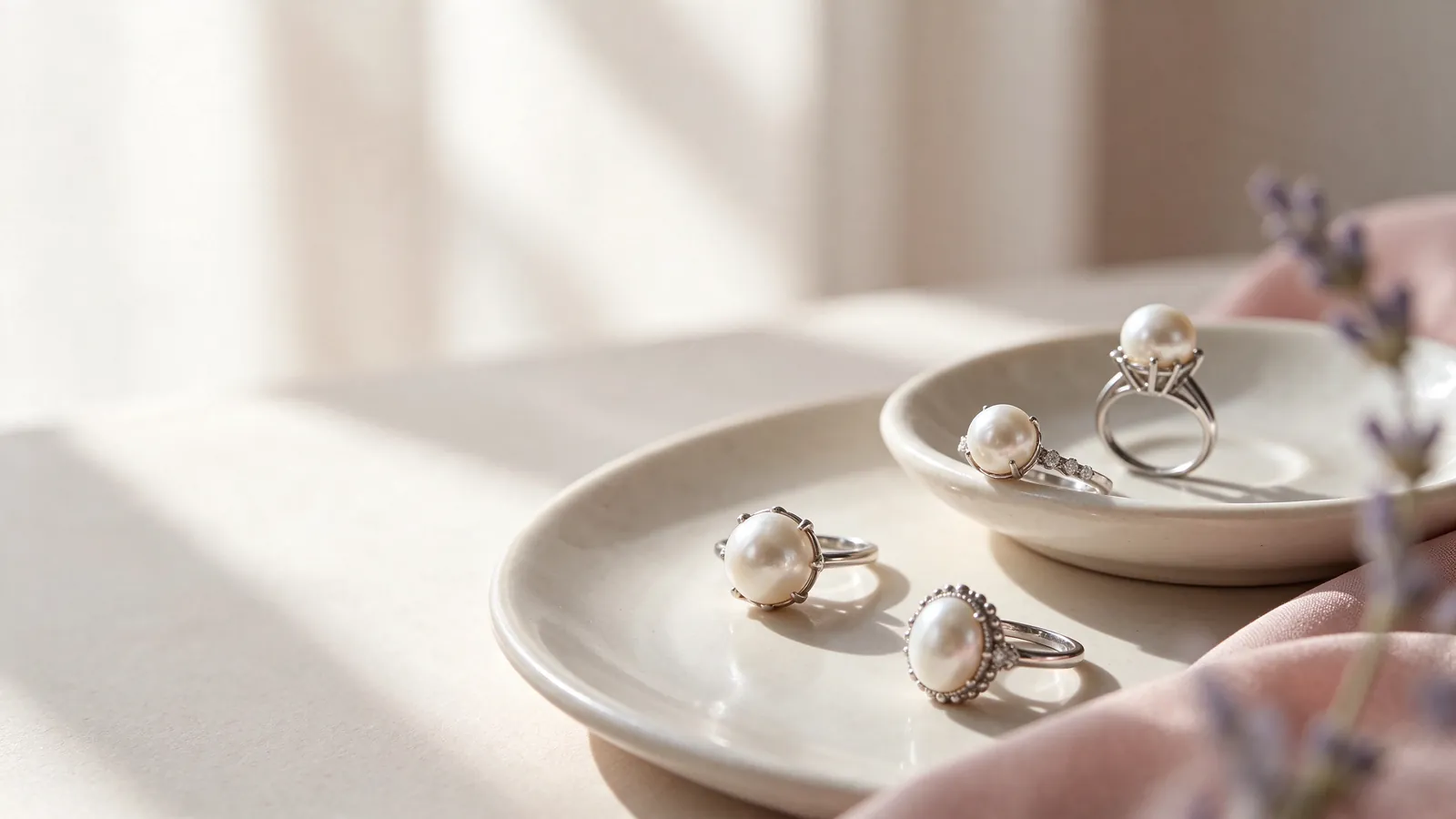
How do band proportions and fit shape a single pearl ring or pearl solitaire ring with a minimalist pearl ring look?
Start with your hand relaxed and look at the whole composition. Notice how much of the band remains visible beside the pearl and whether that space gives the centrepiece a clear outline. A fine band can emphasise the pearl, but a more substantial line can frame it just as neatly. Minimalism is a relationship between elements, rather than a rule that every metal component must be narrow.
Visual proportion and ring size need separate attention. A ring that looks centred in a photograph may turn when your hand hangs naturally; an attractive band may press against neighbouring fingers when you bend them. Compare each band width on its own terms. The comfortable fit of a different ring is useful background, but it does not settle how this particular combination of band and centrepiece will feel.
When trying a single pearl ring or pearl solitaire ring, how can you assess the fit of a minimalist pearl ring?
Gently close and open your hand, hold your phone normally and let your arm rest by your side. Observe whether the pearl repeatedly shifts away from the position you prefer, without shaking your hand or pulling on the setting. If removal is difficult, pressure persists or you keep correcting the ring, pause and discuss the fit. These observations help describe comfort; they are not a test of structural strength.
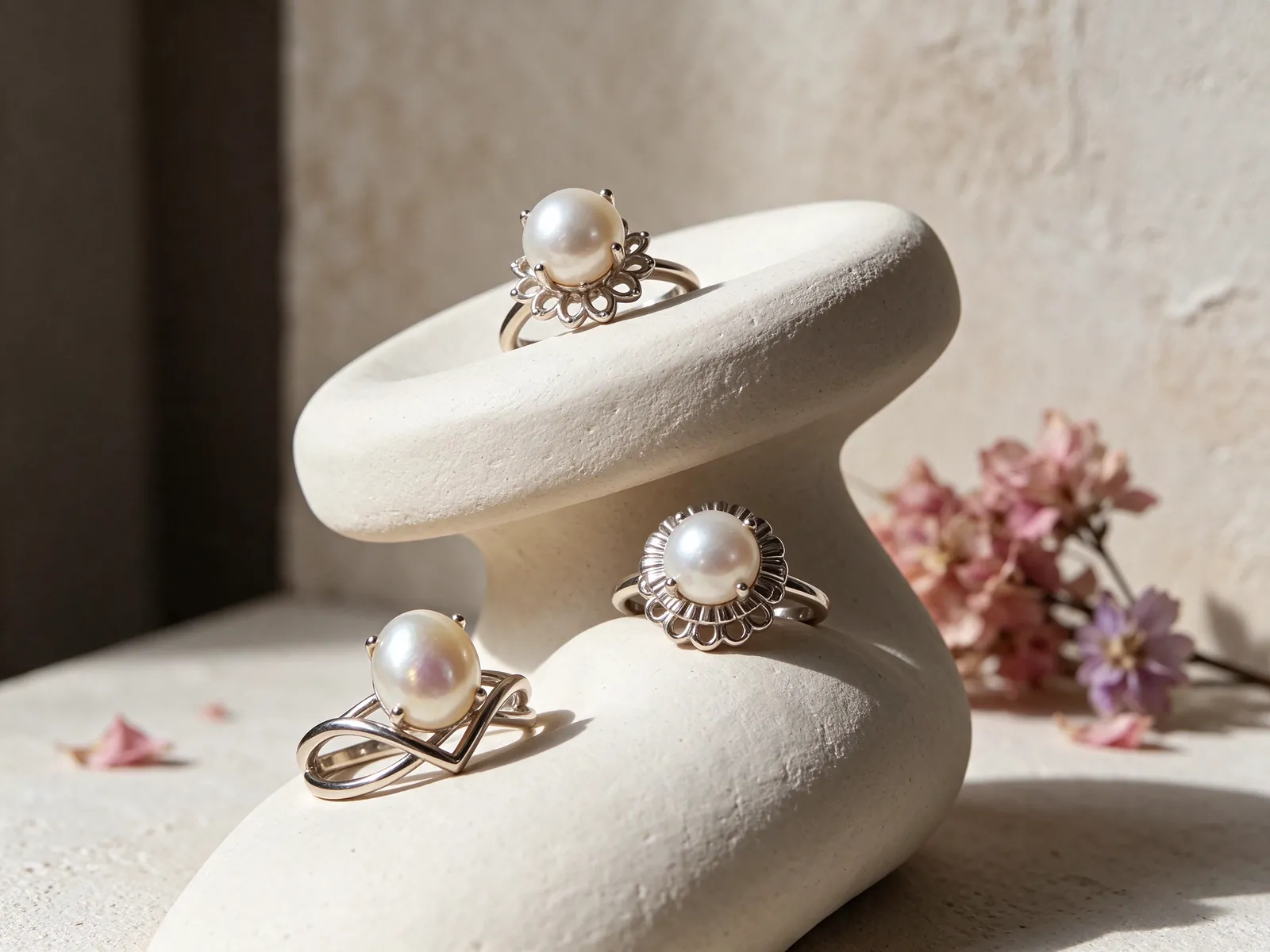
What should you notice when one pearl carries the design?
With a single centrepiece, its shape, lustre and surface become especially visible. Turn the entire ring gently under soft lighting and look at the outline from several directions. Notice the clarity of reflections and how visible surface features are at a normal viewing distance. A strongly lit close-up can be useful for detail, but exposure and background may create a different impression from the ring on your hand.
For a broader comparison, the guide to pearl rings Hong Kong helps place the single focal point among other layouts. A multi pearl ring introduces relationships between several pearls, while a solitaire concentrates attention on one pearl and its frame. Neither arrangement establishes quality by itself. GIA describes seven pearl value factors: size, shape, colour, lustre, surface quality, nacre quality and, for multiple pearls, matching. A preferred shape is a style choice, not evidence of origin or identity.
Separate outline preferences from pearl information
Describe the outline first: rounded, elongated or asymmetric, for example. Then describe the reflection and surface appearance separately. This keeps a request for a distinctive silhouette from becoming an assumption about pearl type. Colour or shape alone cannot establish natural-versus-cultured identity, origin or a certificate. When discussing a particular pearl, treat its accompanying information as a separate question from whether you enjoy its appearance.
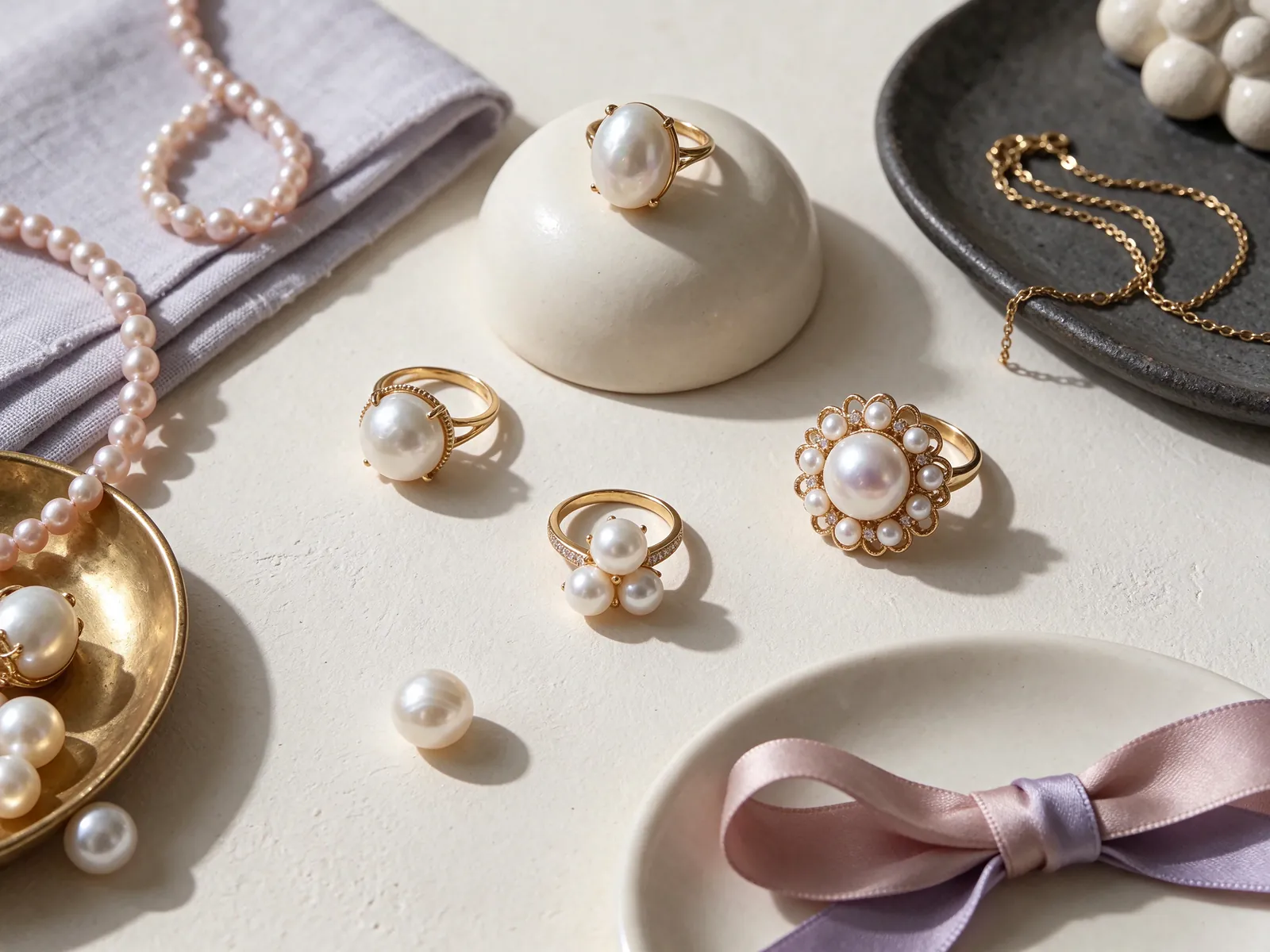
How does the side profile change everyday practicality?
A restrained view from above can conceal a more prominent side profile. Look at the space between the pearl and your finger, the visible support and the points where the ring might meet a cuff. A raised outline may deliver the sculptural effect you enjoy, yet it also deserves consideration when you put on a jacket, carry a bag or reach into a pocket.
Ask how the pearl is supported rather than inferring the fixing method from a photograph. A hidden support is not proof that there is no support, and a delicate appearance does not establish strength. If you like an interrupted silhouette, an open pearl ring offers another design direction to explore. An open-looking band should not be treated as permission to bend it repeatedly or adjust it yourself.
Use familiar movements to locate contact points
During a fitting, use a sleeve similar to one you often wear and slowly make an ordinary phone-holding or bag-carrying movement. Notice contact without deliberately catching or tugging the ring. If your work involves hard surfaces, cleaning products or forceful gripping, consider when you would remove jewellery. Choosing a profile that suits your routine is more useful than expecting a pearl ring to accommodate every task.
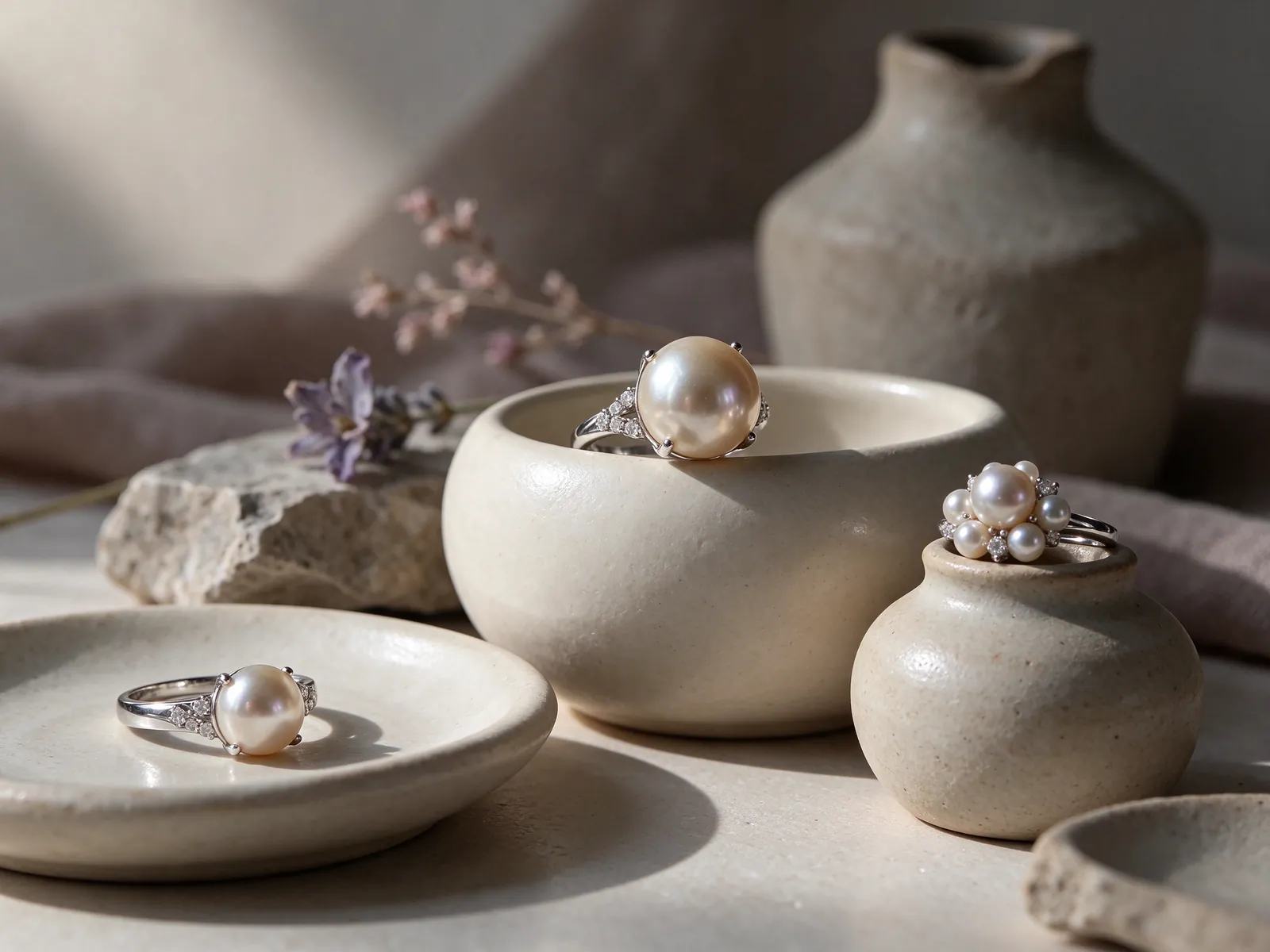
How can band colour and line keep the composition calm?
Band colour changes the contrast between the pearl, your skin and the rest of your accessories. Try the visual combination with a familiar watch or earrings rather than relying only on a warm-or-cool skin label. Matching colours can create continuity, while a deliberate contrast can make the pearl ring the focal point. Check a softer natural light as well as indoor lighting before deciding which effect you prefer.
Material discussions with Flint Jewellery can centre on 18K 750 white gold, 18K 750 yellow gold, 18K 750 rose gold, PT950 platinum and PT900 platinum. Alongside colour, describe the line you want: straight, gently curved, rounded at the edges or visually substantial. A material name does not specify band width, setting height or comfort. Those choices need to be considered within the actual design rather than treated as consequences of the name alone.
Compare one visual change at a time
Choose a silhouette before comparing the appearance of the band surface. Ask whether bright reflections compete with the pearl or whether a quieter visual effect works better with your wardrobe. This is a styling decision, not an automatic durability ranking. When recording options, use similar camera angles and backgrounds so that a change in lighting does not get mistaken for a change in design.
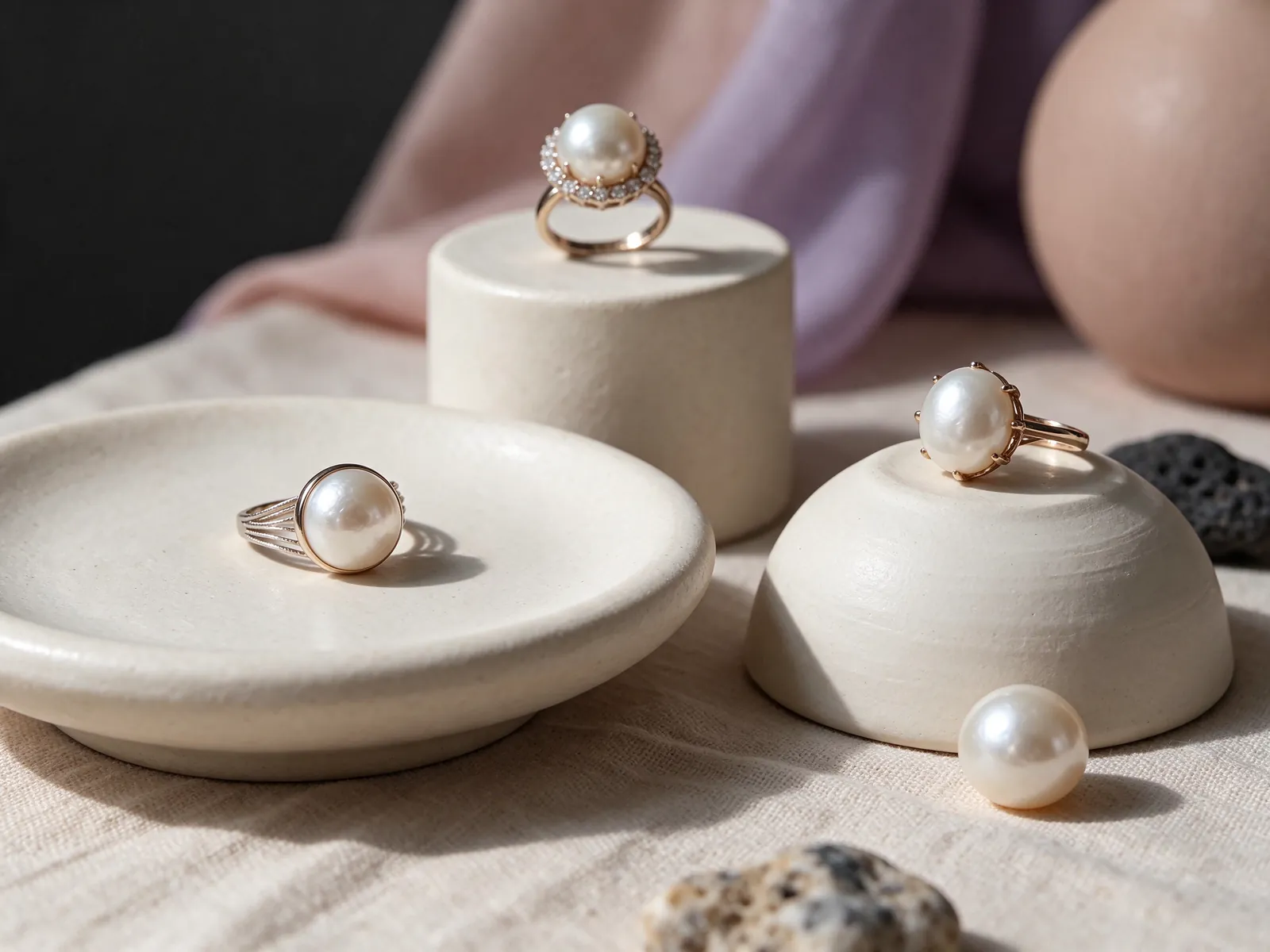
How can you style the ring for work, weekends and layering?
For an office outfit, a single pearl can provide the hand's main point of interest beside a simple watch and an uncluttered cuff. At the weekend, the same idea works with a plain shirt or knitwear without requiring additional statement pieces. Think about sleeves in motion as well as the finished outfit. Removing the ring for an unsuitable activity is more practical than organising a look around continuous wear.
If you enjoy pearl stacking rings, first inspect where the neighbouring band sits. It should not be selected purely because the colours match if it presses against the pearl, meets its support or tilts the main ring. Wearing the second ring on another finger can create a layered impression without direct contact. Decide which piece leads the composition, then let the accompanying lines remain visually quieter.
Check layering from the palm side too
Two bands can look neatly aligned from above while pressing together beneath the finger. Relax your hand, bend it gently and inspect the side and palm views. Notice whether combining rings changes the fit that felt comfortable separately. If preserving open space is your priority, distributing jewellery across the hands may show the solitaire's outline more clearly than concentrating everything on one finger.
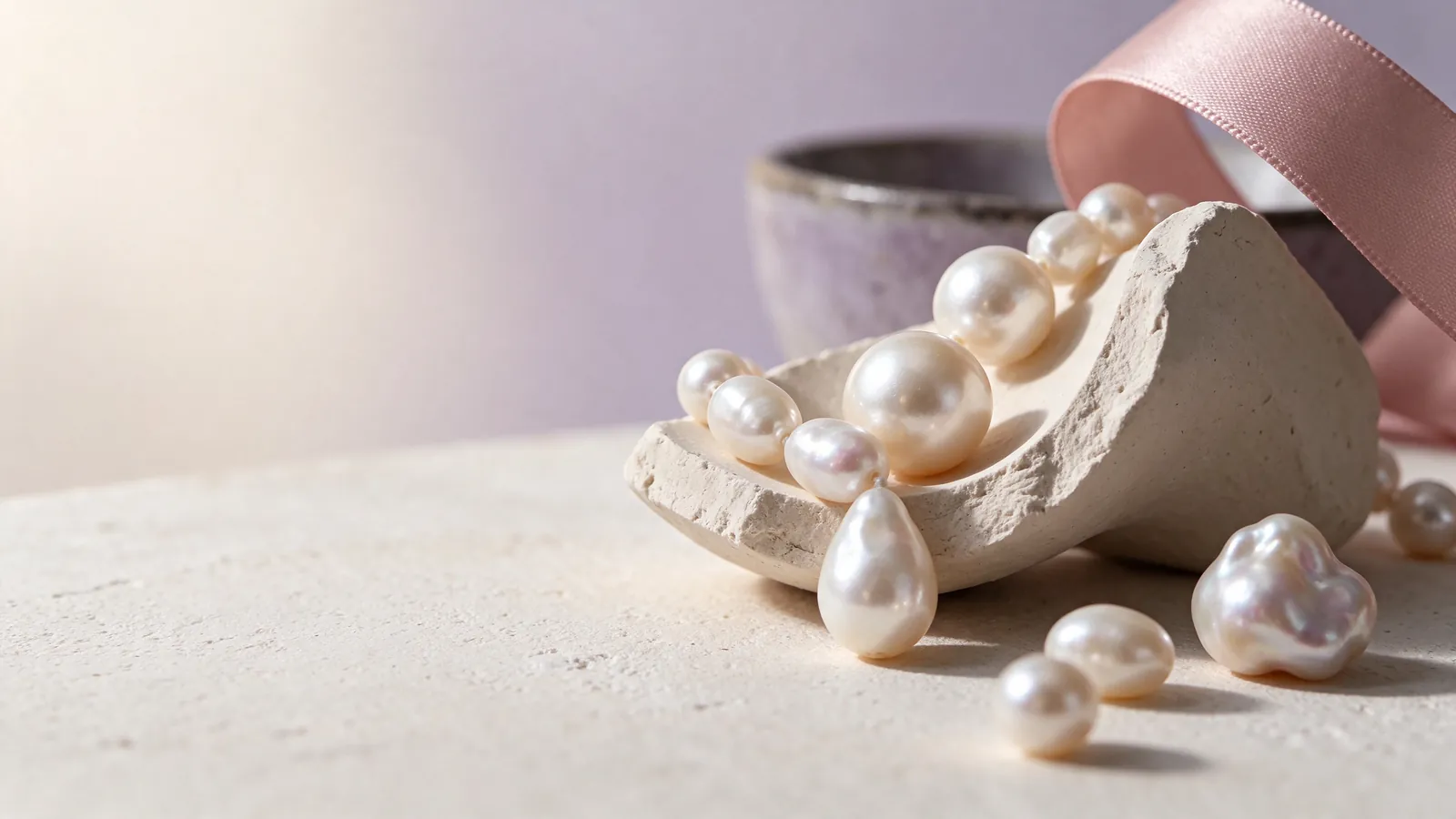
Which alternative layouts help clarify your preferred style?
Finger placement changes both the visual frame and the way neighbouring fingers meet a ring. A pearl pinky ring can leave a different amount of open space around the centrepiece than a ring on the middle or ring finger. Explore that effect with a suitable fitting rather than transferring a size from another finger. Your preferred placement should be part of the design conversation from the start.
A pearl signet ring is worth comparing if you prefer a more defined face around the pearl. Consider whether the face shares attention with the centrepiece or whether the pearl remains visually dominant. A pearl charm ring introduces a different question: whether you enjoy movement instead of a fixed focal point. These comparisons help narrow the design brief; combining every attractive feature can work against the simplicity you originally wanted.
Turn 'simple' into a useful design description
Write down your intended finger, how prominent you want the pearl to feel and whether you plan to wear another ring nearby. Add one situation you want to avoid, such as frequent cuff contact or a face that feels visually busy. These details distinguish a single focal point from a thin band or an unadorned face, all of which can be described casually as simple.
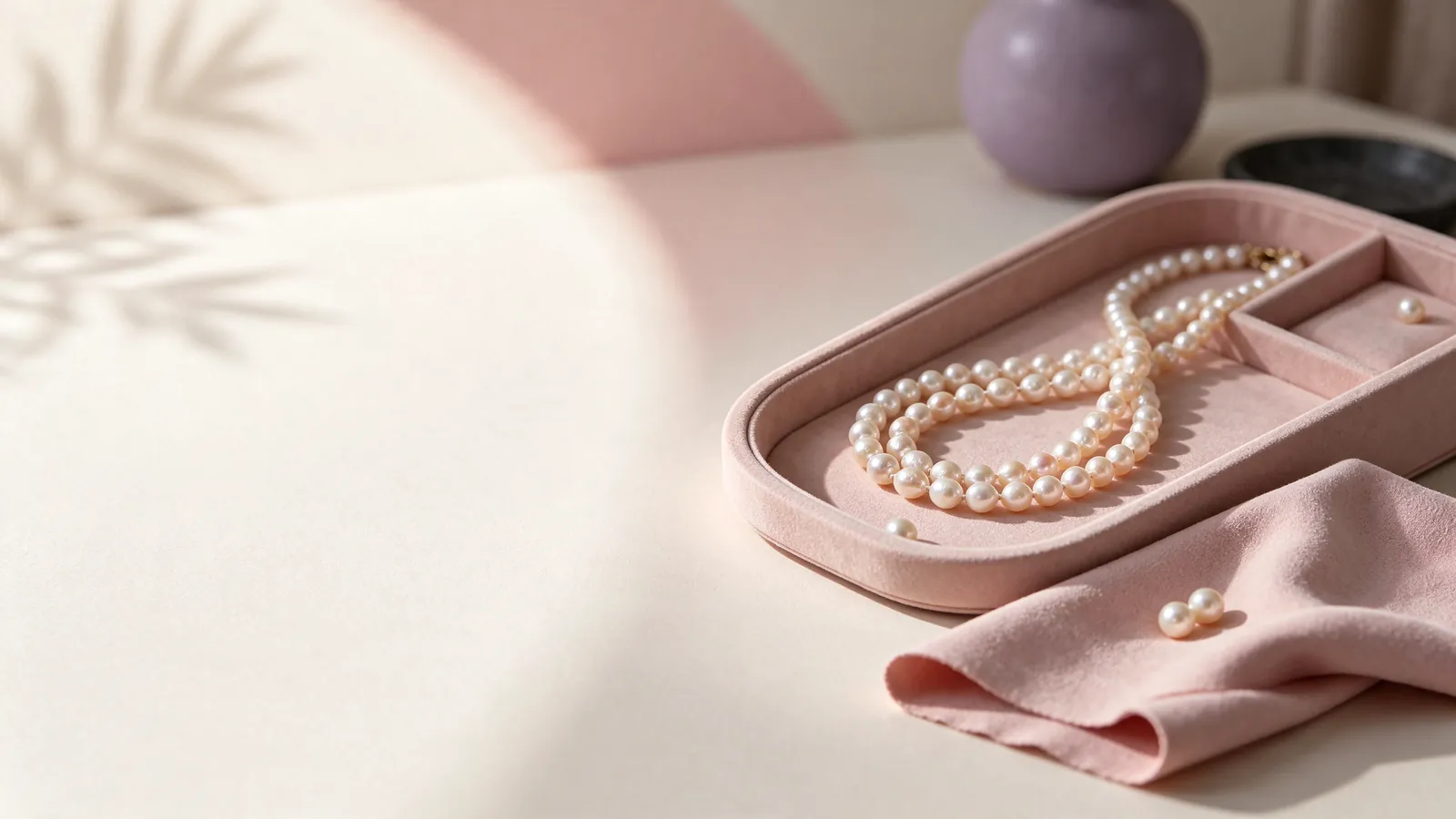
What care habits belong in the buying decision?
GIA lists pearl at 2.5 on the Mohs hardness scale and states that pearls should never be cleaned in ultrasonic or steam cleaners. The hardness figure is material information, not a measure of how many knocks a ring can withstand. After wearing, use a very soft, clean cloth and avoid acids, perfume, hair spray and excessive heat. Cleaning the metal must also take account of the pearl attached to it.
Choose a consistent, safe place to put the ring before cleaning, exercise or activities likely to bring the setting into contact with hard objects. Store it without rubbing against other jewellery, and do not twist the pearl to move the ring. If the centrepiece feels loose or its appearance changes, stop wearing it and seek an inspection rather than trying to test or repair the support yourself.
Bring wearing habits into a customisation conversation
When discussing a single-pearl direction with Flint Jewellery on WhatsApp, describe the finger, everyday sleeves, preferred accessory colours and any layering plans. Front and side silhouettes are more useful together than a front view alone. For a gift, learn the recipient's ring-wearing habits rather than estimating size from a photograph. A practical brief connects the pearl's focus with the proportions, support and fit you want to explore.
| Design aspect | What to observe | Practical check | Styling decision |
|---|---|---|---|
| Front proportion | Space beside the pearl | Look at the relaxed whole hand | Clear focus need not mean the finest band |
| Side profile | Cuff and setting contact | Make a gentle, familiar movement | Balance sculptural presence with your routine |
| Fit and rotation | Pressure and position changes | Close and open the hand gently | Assess each band width separately |
| Layering | Contact with pearl or support | Inspect side and palm views | Use another finger if contact is unsuitable |
| Pearl care | Avoid unsuitable cleaning | Use a very soft, clean cloth after wear | GIA hardness 2.5; no ultrasonic or steam cleaning |
Pearl knowledge and authoritative references
GIA lists pearl at 2.5 on the Mohs hardness scale and advises never using ultrasonic or steam cleaners for pearls.
Read the reference for this factFrequently asked questions
Is a pearl solitaire ring the same thing as a thin-band ring?
No. Solitaire describes a single focal pearl, while band width describes its frame. A broader, restrained band can still support a minimalist look. Compare the whole silhouette and fit rather than assuming the terms specify the same construction.
Can I judge rotation by the ring's front photograph?
A photograph shows a position at one moment. During a fitting, relax your hand and make gentle, normal movements to observe shifting. Repeated correction or discomfort is worth discussing, but do not pull on the pearl or shake your hand to test it.
Should I dismiss an asymmetric pearl for a simple design?
Not automatically. An asymmetric outline can be the single visual feature of an otherwise restrained ring. Consider its direction and the band line separately from pearl identity or quality information; shape alone does not establish those details.
Does matching the band colour make two rings suitable for stacking?
Colour coordination is only a visual consideration. Check whether the second ring touches the pearl or support and whether combining bands changes comfort. Another finger or the opposite hand can give a coordinated effect without direct contact.
What should I mention when discussing a gift ring?
Describe the recipient's preferred finger, existing jewellery, sleeves and whether they enjoy understated or prominent centrepieces. Avoid guessing ring size from an image. These habits help focus a design conversation without assuming a specific pearl or finished arrangement.
Updated: