
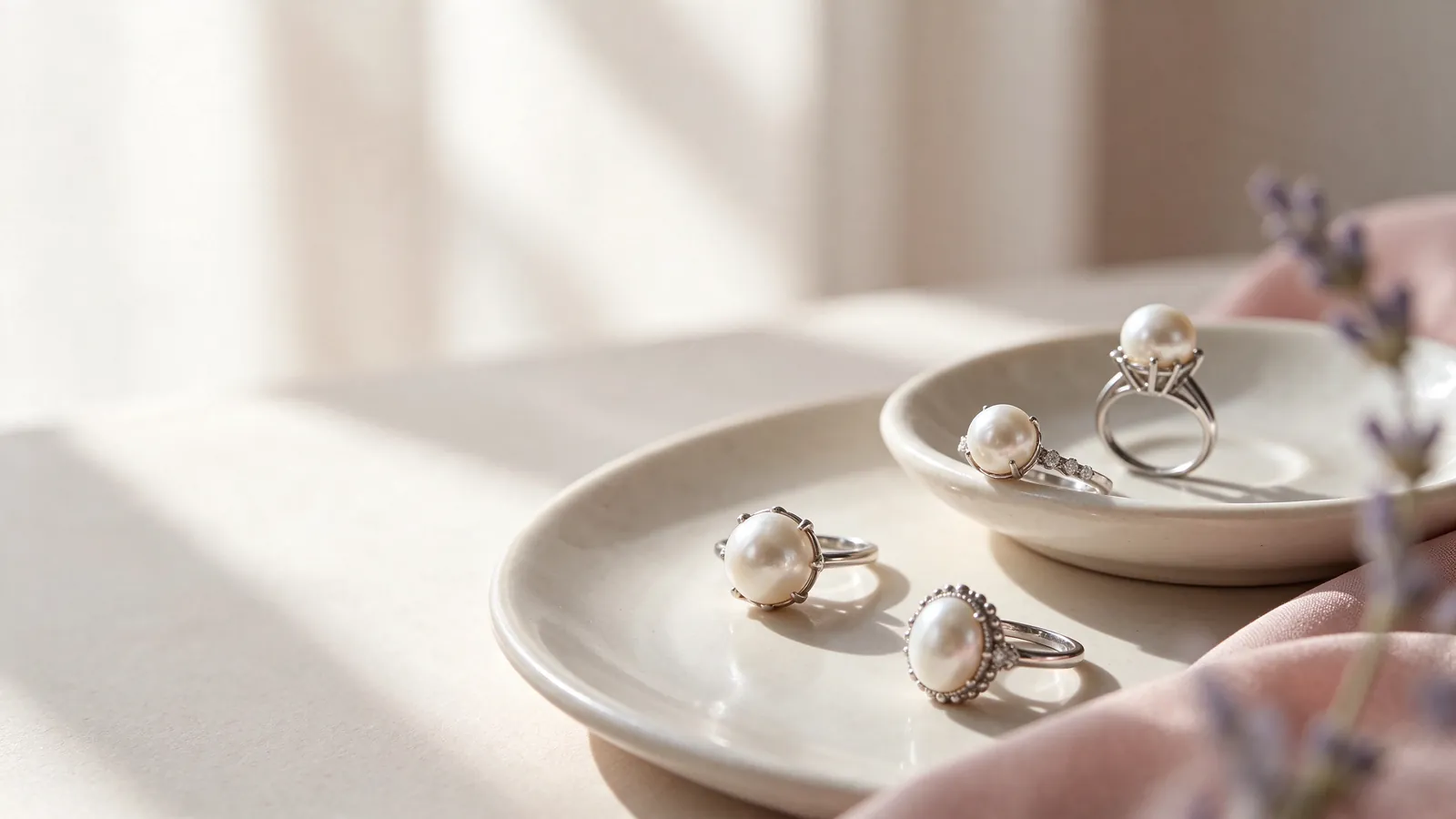
How do band width and fit influence a pearl solitaire ring or single pearl ring with a minimalist pearl ring design?
Begin by deciding what you want the eye to notice first. If the pearl is the focus, look for enough visible space around it to make its outline distinct. A narrow band may create a strong contrast, while a more substantial band can supply a calm, defined frame. Neither is automatically more minimalist. The result depends on the relationship between the pearl, the band and the proportions of your hand.
Next, separate the visual choice from the fit check. Rest your hand naturally and notice how the band sits near the neighboring fingers. Gently bend your fingers and pay attention to pressure on the palm side. A style that looks balanced when your hand is flat can feel different in motion. Assess a change in band width independently rather than assuming that a familiar ring size will feel identical in every design.
When trying on a pearl solitaire ring or single pearl ring, what fit details matter for a minimalist pearl ring?
Try ordinary, gentle movements: hold your phone, loosely close your hand and let your arm hang comfortably. Does the pearl stay near your preferred position, or do you repeatedly turn it back? If the ring is difficult to remove or feels persistently uncomfortable, stop forcing the fit and discuss alternatives. Avoid shaking your hand or pulling the pearl; a fitting is for describing comfort, not for testing the setting's strength.
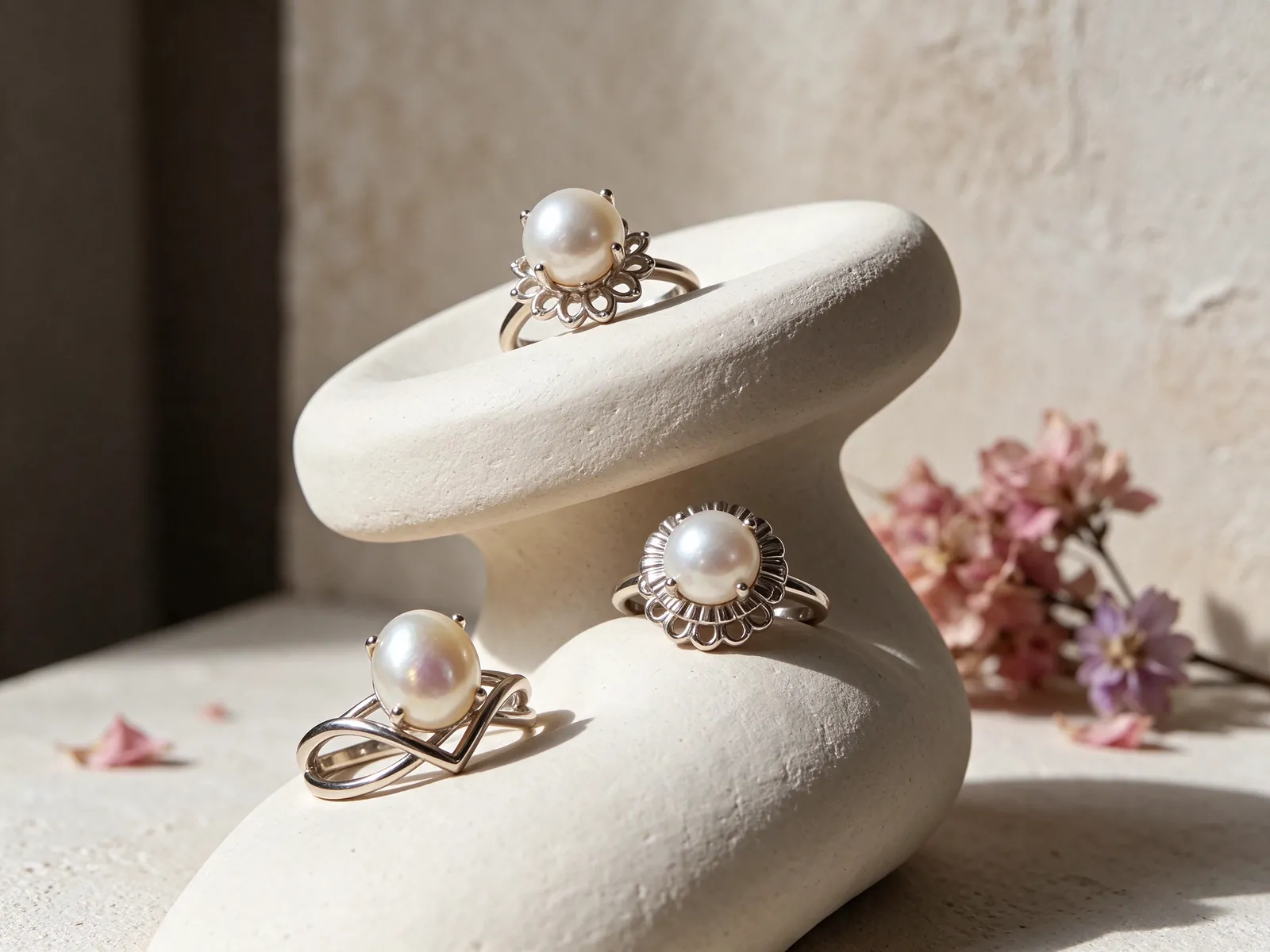
How do you evaluate the pearl without letting size dominate?
A solitaire makes small visual differences easy to notice because there are fewer competing elements. Under soft lighting, gently turn the whole ring and observe the clarity of reflections, the outline and the surface at a normal viewing distance. Then look at the hand as a whole. A close-up may reveal detail, but a bright background or strong exposure can exaggerate the effect you see in a photograph.
The broader pearl rings guide provides context for different compositions. A multi pearl ring asks you to consider the arrangement of several pearls; a single-pearl layout puts more attention on one pearl and its surrounding band. GIA identifies seven value factors: size, shape, color, luster, surface quality, nacre quality and, for multiple pearls, matching. This framework is more informative than ranking a ring by size alone, and a shape or color does not establish pearl origin or identity.
Describe what you see before deciding what it means
You might prefer an elongated outline, an asymmetric shape or a rounded silhouette. Record that preference separately from questions about the pearl's identity and documentation. Noticing an unusual outline does not identify a pearl type, and a pleasing color does not establish origin, natural-versus-cultured identity or a certificate. Separating visual preference from factual information makes the selection conversation more precise.
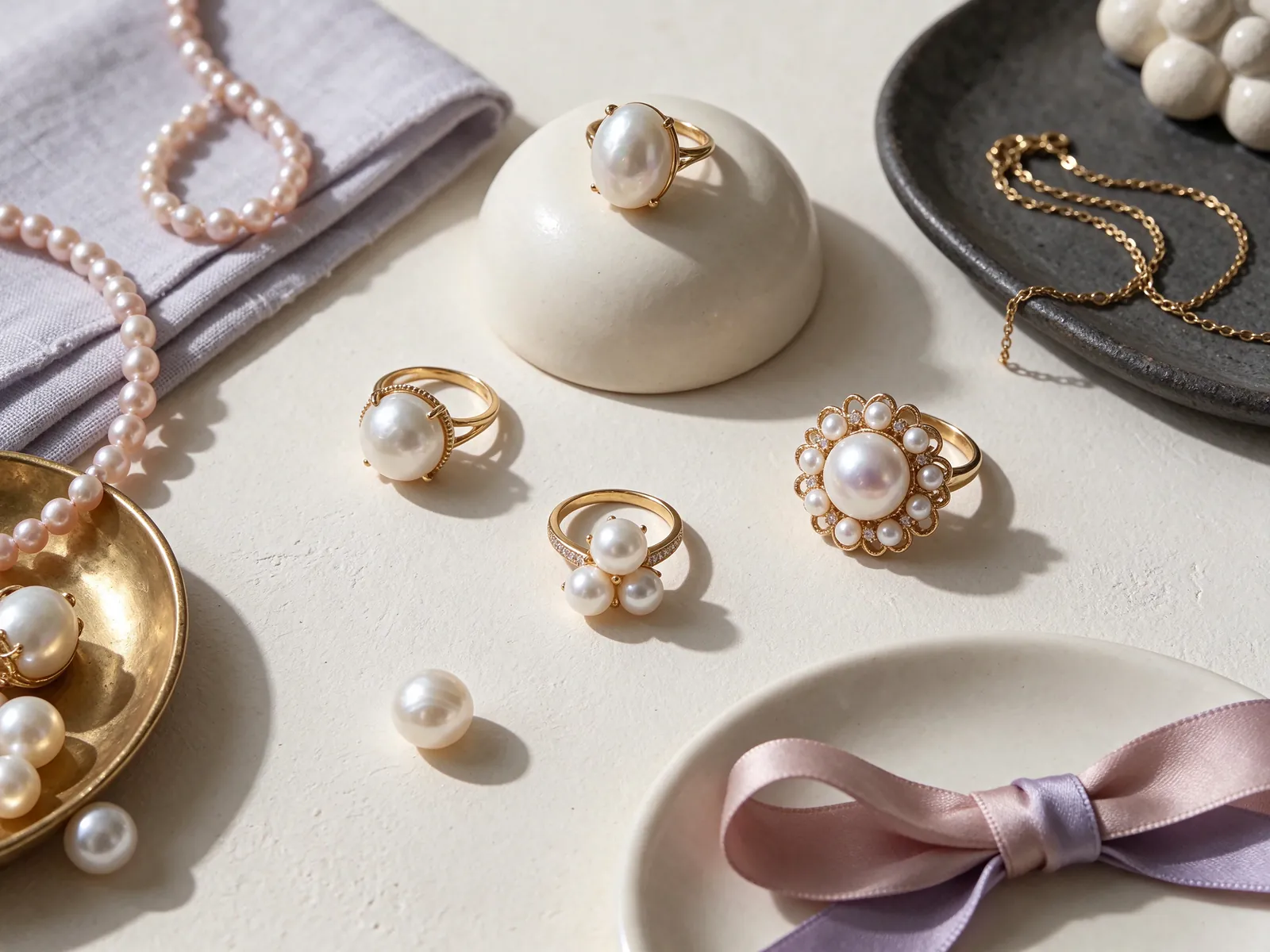
Why should the side view be part of your shortlist?
The side profile shows how the focal point occupies space above the finger. Look at the pearl's distance from your hand, the outline of its support and the areas that may meet clothing. A prominent profile can be an intentional sculptural choice. It also needs to make sense when you put on a coat, carry a tote or reach into a pocket, rather than only when your hand is posed.
Ask for an explanation of how the pearl is supported and what contact to avoid. Do not infer a fixing method or strength from a clean front view. If open space in the band appeals to you, compare an open pearl ring as another silhouette. An open appearance is a design feature, not an instruction to bend the ring repeatedly or adjust it at home.
Let your routine expose the relevant contact points
At a fitting, slowly perform a familiar movement with a cuff similar to one you wear regularly. Observe where fabric or a bag handle meets the ring, without deliberately snagging it. For work that involves hard objects, cleaning substances or firm gripping, include planned removal in your decision. A pearl ring can be chosen for appropriate moments rather than expected to suit every part of the day.
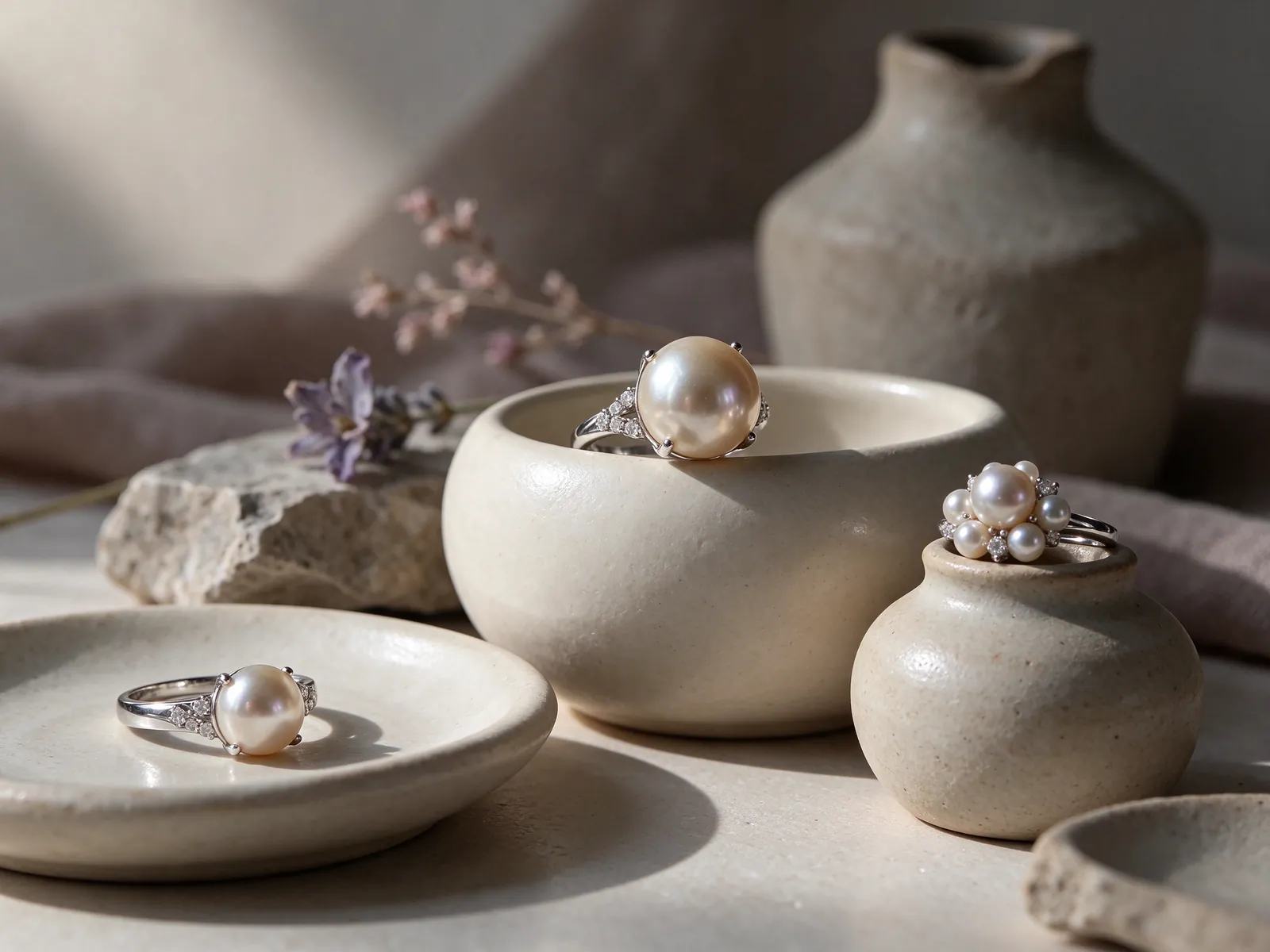
What role do metal color and band lines play?
Metal color changes how the pearl reads against your skin and your other jewelry. Compare the ring beside a watch or earrings you actually wear. Coordinated colors can make the whole outfit feel connected, while contrast can direct attention to the solitaire. Neither choice needs to follow a strict skin-tone rule. Look at the combination in softer natural light as well as indoors before choosing the effect that feels right to you.
Design discussions with Flint Jewelry can focus on 18K 750 white gold, 18K 750 yellow gold, 18K 750 rose gold, PT950 platinum and PT900 platinum. Describe the desired band line as well: straight, curved, softly rounded or visually substantial. The material name alone does not define the width, setting height or wearing feel. Keep those details in the design conversation instead of treating them as properties settled by a label.
Keep comparison photos visually consistent
Once you have a preferred outline, compare surface appearances without changing every other element at once. Notice whether the band's reflection shares attention with the pearl or acts as a quieter frame. That is an aesthetic choice, not a promise about durability. Similar backgrounds and camera angles make it easier to distinguish a genuine preference from a photograph that simply has more flattering lighting.
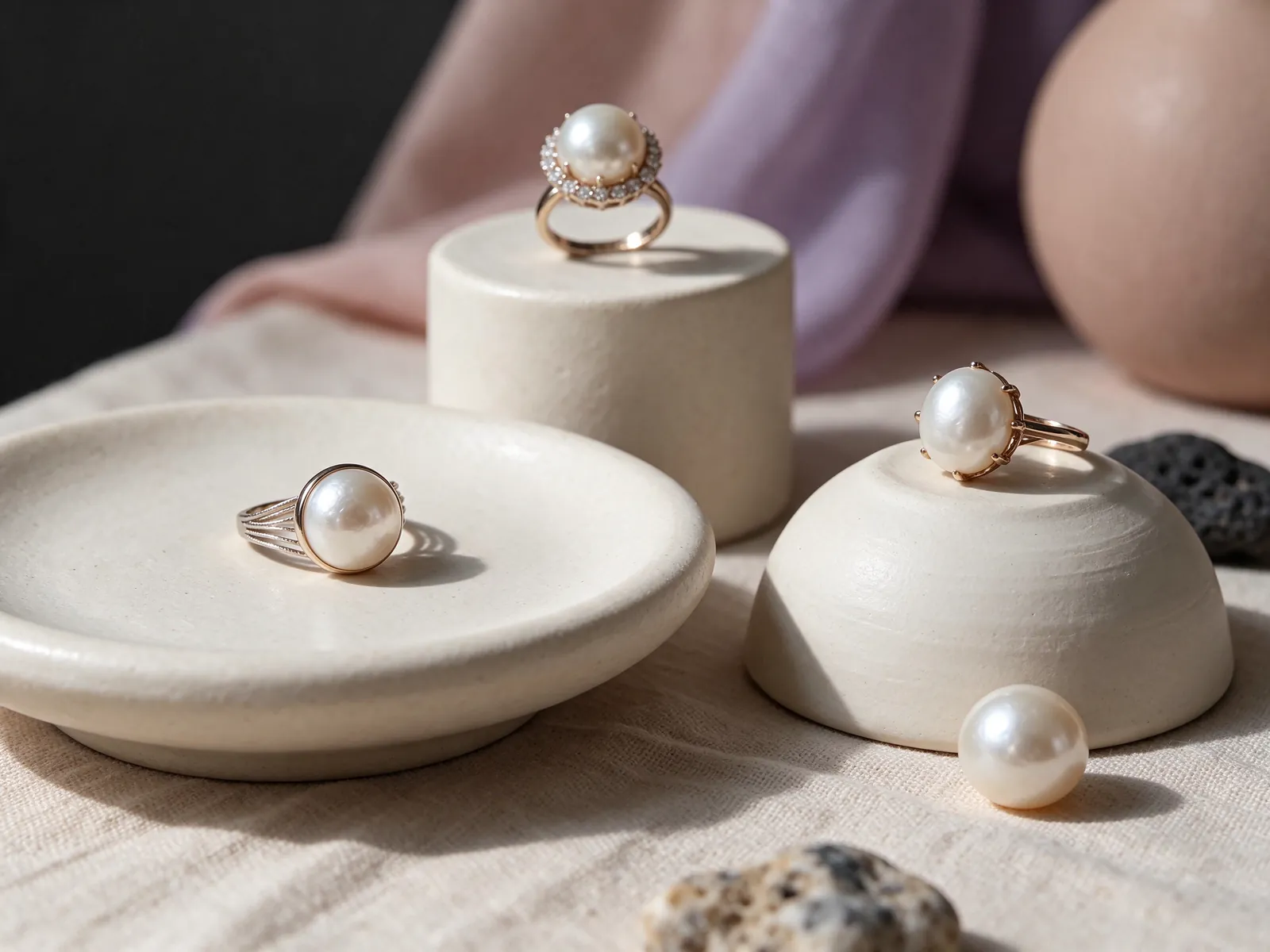
How do you keep a solitaire the focus when adding jewelry?
With a plain shirt, knit top or tailored jacket, the pearl can be the hand's main visual accent. A restrained watch or a clear cuff helps give it room without making the outfit feel unfinished. For a more expressive look, choose deliberately which accessory should lead. Adding several equally prominent pieces can obscure the single focal point even when each piece looks simple on its own.
When exploring stackable pearl rings, inspect the physical relationship before the color combination. A neighboring band that pushes the setting, touches the pearl or tilts the solitaire is not a good visual match merely because the metals coordinate. Place the companion on a different finger or the opposite hand if that preserves space. Layering does not require every ring to touch, and the pearl can remain central without a tightly packed stack.
Recheck comfort after combining bands
Look at the palm side and the side profile while your hand is relaxed, then gently bend your fingers. Bands that felt comfortable individually may create pressure together. Notice any change in rotation as well as tightness. If your goal is a minimalist composition, leaving space between fingers can often present a clearer outline than adding another band directly beneath the pearl.
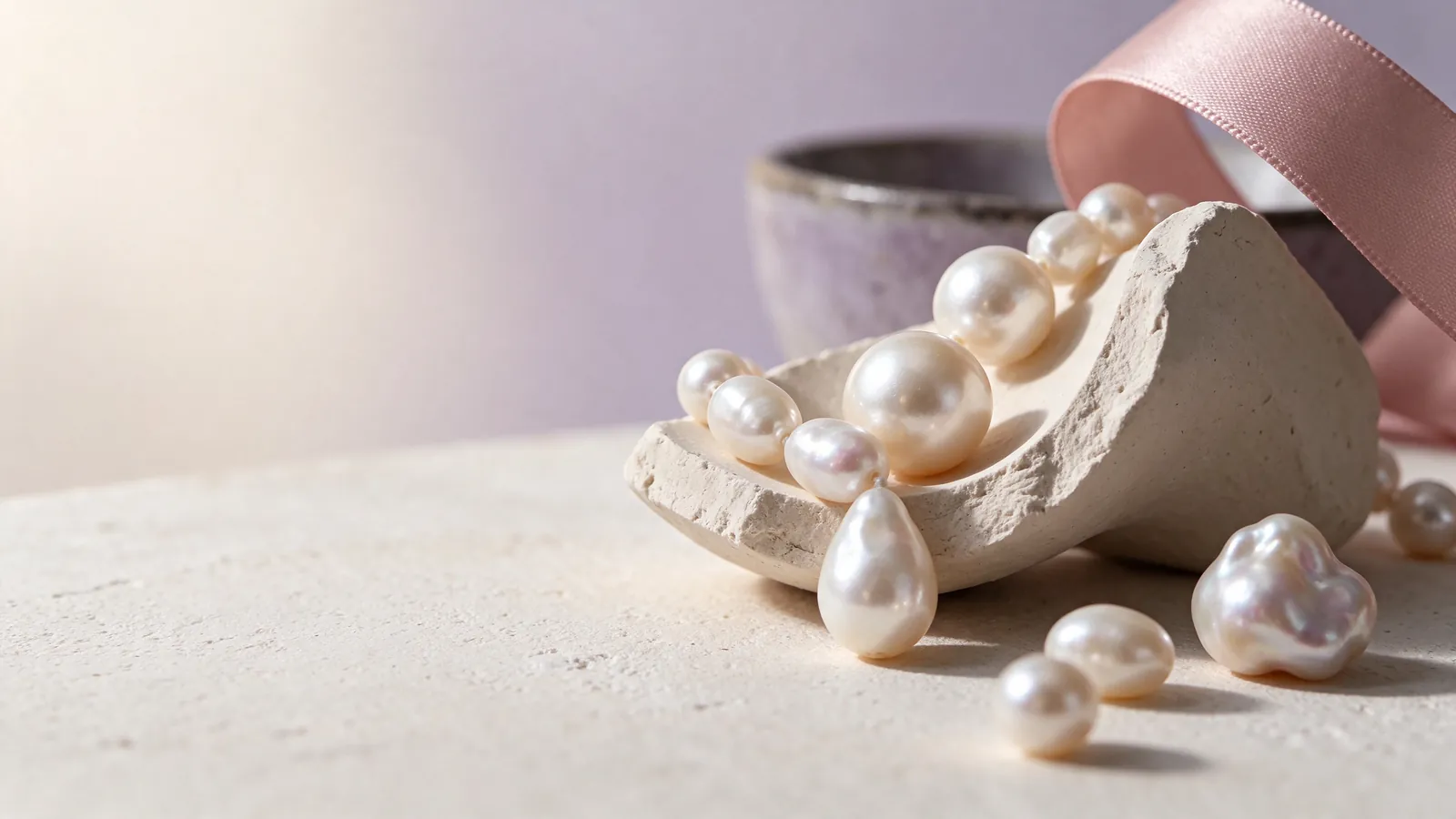
How can alternative ring styles sharpen your design brief?
Start with finger placement. A pearl pinky ring creates a different frame around the focal point than a ring on a central finger, and the neighboring-finger contact changes too. Consider that placement during a suitable fitting, not by moving an unsuitable size and judging only the photograph. The intended finger helps establish both the visual proportions you like and the practical questions you need to discuss.
A pearl signet ring is a useful comparison if you prefer a more clearly defined face. Ask whether the face and pearl become a shared focal point or whether the pearl remains dominant. A pearl charm ring instead raises the question of movement and hanging details. Comparing these directions does not mean incorporating them all. It helps identify whether your idea of simplicity means one focus, an uncluttered face or restrained lines.
Name your priorities and one thing to avoid
Before a design conversation, note the finger you plan to use, the prominence you want from the pearl and whether another ring will be nearby. Add one practical concern, such as contact with a sleeve or a face that feels too busy. These details are more actionable than asking only for something simple, and they help keep the design focused as options are discussed.
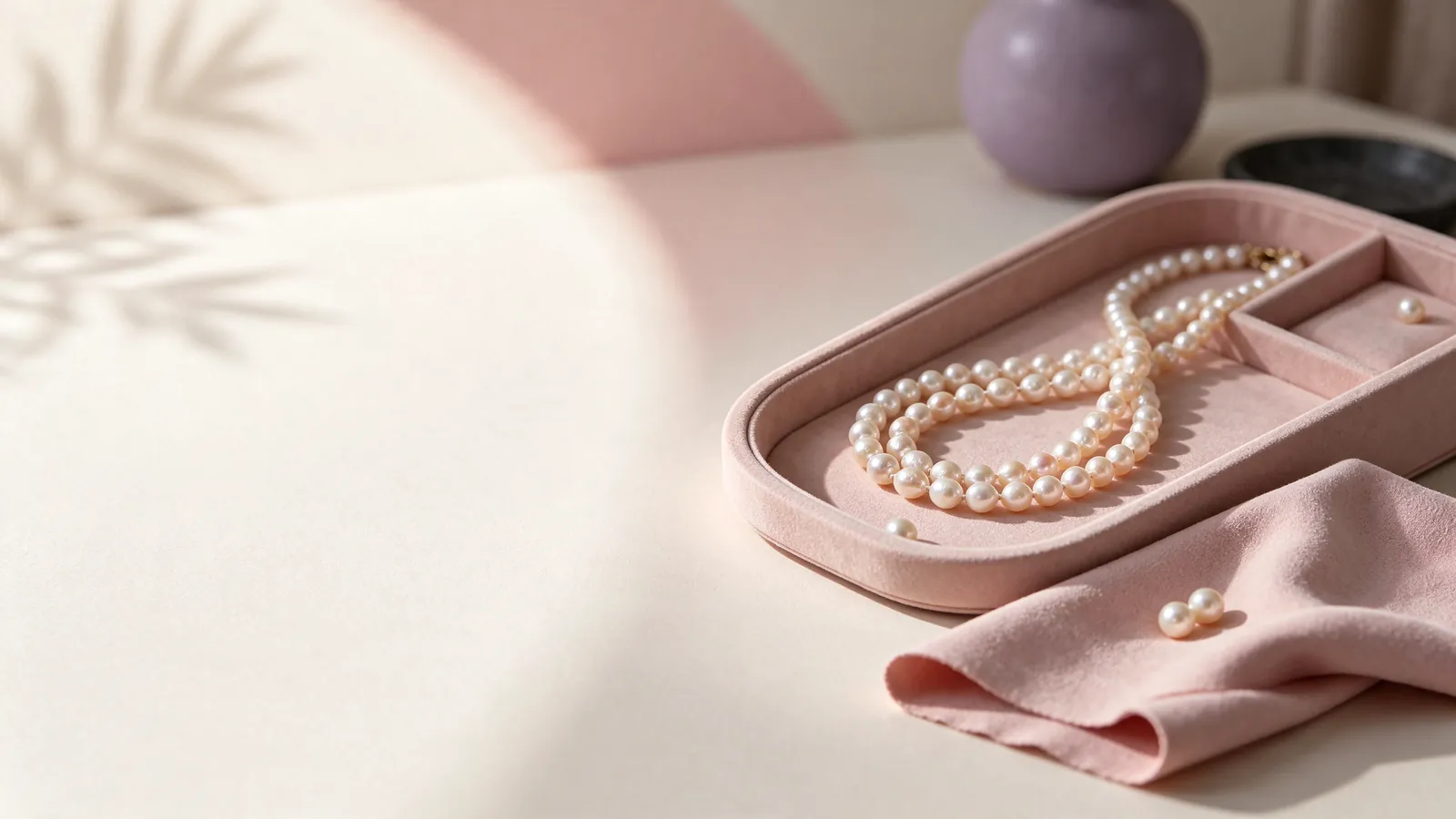
What should you know about care before choosing the ring?
GIA gives pearl a Mohs hardness of 2.5 and states that pearls should never go into ultrasonic or steam cleaners. That number explains a material characteristic; it does not predict a safe number of impacts. After wearing, gently wipe with a very soft, clean cloth. Avoid acids, perfume, hair spray and excessive heat, and remember that a method intended for the metal still affects the pearl on the same ring.
Choose a safe, consistent storage spot before household cleaning, exercise or activities likely to bring the ring against hard objects. Keep it from rubbing against other jewelry. Do not use the pearl as a handle to twist the ring around your finger. If the focal point feels loose or looks different, pause wearing and seek an inspection instead of using tools or force to investigate the support.
Make a customization conversation about real wearing habits
When contacting Flint Jewelry on WhatsApp, explain your preferred finger, usual cuffs, accessory colors and layering plans. Include side-profile preferences alongside a front silhouette. If the ring is a gift, learn how the recipient wears jewelry rather than estimating size from a hand photograph. A clear conversation can connect the single focal pearl with the band proportions, support and fitting questions that matter to the wearer.
| Aspect | Look for | Try this | Decision to make |
|---|---|---|---|
| Front silhouette | Open space around the focal pearl | View the entire relaxed hand | Choose the frame, not just the narrowest band |
| Side profile | Support outline and cuff contact | Use a gentle everyday movement | Balance prominence and routine |
| Fit | Pressure or repeated rotation | Bend and relax the fingers gently | Assess every band width on its own |
| Nearby rings | Contact with the pearl or setting | Inspect from the palm side | Separate rings across fingers when needed |
| Care | Appropriate cleaning and storage | Wipe with a very soft, clean cloth | GIA hardness 2.5; avoid ultrasonic and steam |
Pearl knowledge and authoritative references
GIA lists pearl at 2.5 on the Mohs hardness scale and states that ultrasonic and steam cleaners should never be used for pearls.
Read the reference for this factFrequently asked questions
Does solitaire mean the pearl has a particular shape?
No. Here, solitaire describes one focal pearl, not a specific outline or pearl identity. You can prefer a rounded or asymmetric silhouette while evaluating pearl information separately. Shape alone cannot establish origin or natural-versus-cultured identity.
Should I choose the lowest possible setting for a minimalist look?
Not necessarily. Minimalism concerns the whole composition, while height affects the side profile and contact with clothing. Compare the sculptural presence you enjoy with your usual cuffs and movements rather than choosing height by a single rule.
Can the same ring size feel different with a wider band?
Assess each design independently. Band width, its relationship to adjacent fingers and the focal point can change your wearing experience. During a fitting, gently bend your fingers and notice pressure or shifting instead of relying solely on another ring's size.
Do I need another band to make a solitaire look complete?
No. The pearl and its frame can provide a complete visual composition. If you enjoy layering, first check contact and comfort. Another finger or the opposite hand can add interest while leaving the single pearl's outline clear.
What if the pearl seems loose after wearing?
Stop wearing the ring and seek an inspection. Avoid twisting the pearl, pulling it to check strength or attempting a tool-based repair. Keep the ring safely stored while you discuss an appropriate assessment; gentle routine cleaning is not a solution for a support concern.
Updated: