
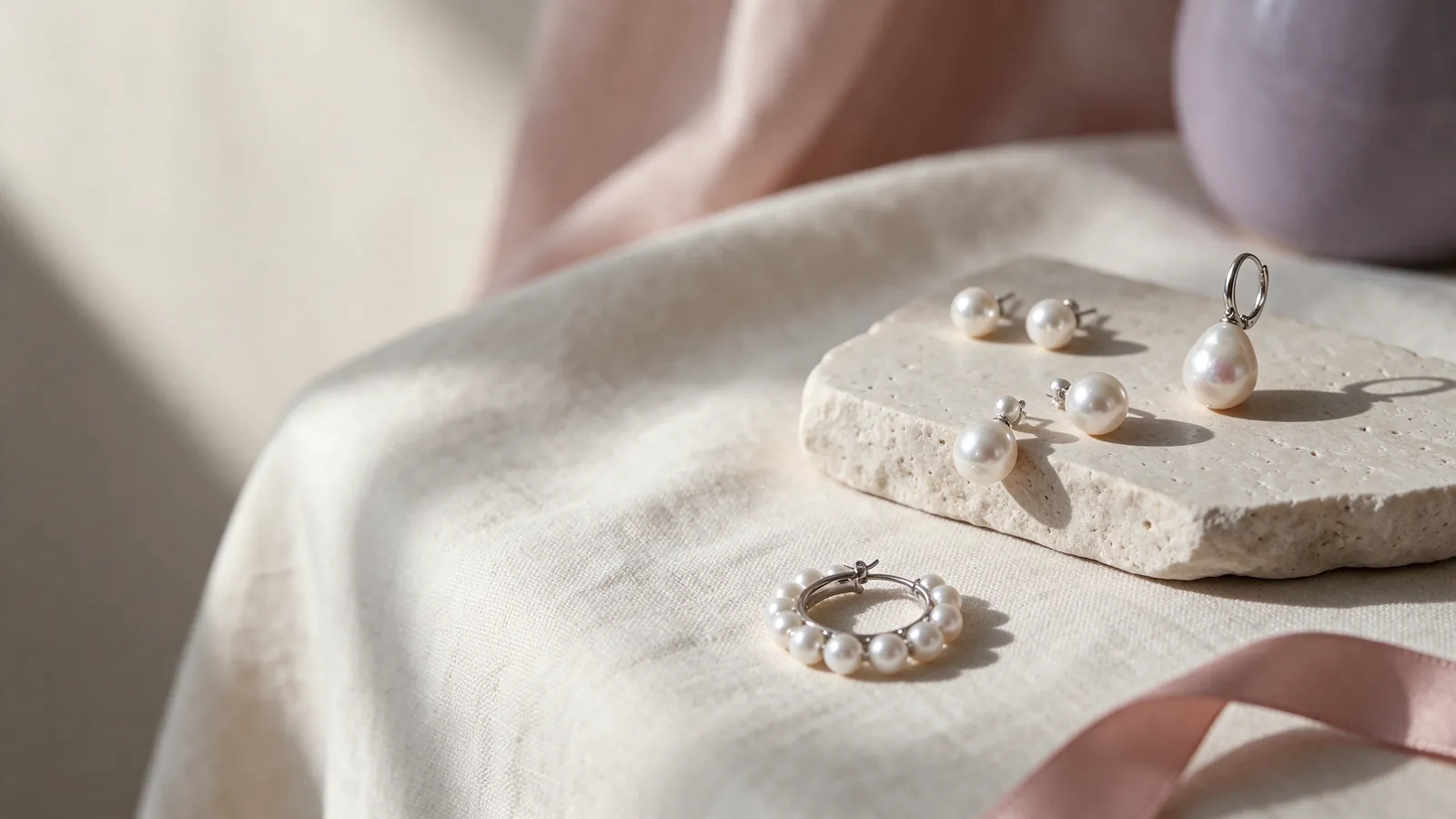
How can a single pearl stud earring balance a single pearl earring of a different length in mix-and-match pearl earrings?
Start by choosing the lead side of the look. A close-to-ear pearl and a longer earring can feel connected when they share a soft curve or a restrained point of brightness, even though their lengths differ. You do not need equal decoration on both sides. When the combination feels busy, simplify one feature: movement, shine or outline. Comparing the broader silhouettes of pearl earrings is more helpful than trying to make every small detail agree. The aim is a readable arrangement around the face, not an inventory of identical parts.
Consider visibility as well as physical length. A small stud beside an uncovered ear may command more attention than a longer piece behind loose hair. Wear the shirt or dress you have in mind, then look at the arrangement head-on and from either side. Notice where the brightest area sits and which outline moves as you turn. If you enjoy the pearl alone, leave the other ear bare. That open space is part of the styling decision and can make the single point of light more distinct.
Could a charm on a single pearl stud earring echo the shape of a single pearl earring in mix-and-match pearl earrings?
Before adding a charm, name the connection you want it to create. A curved line might relate to an existing earring, while a downward extension might supply a deliberate length contrast. The discussion of detachable pearl earring charms is also about fittings: how the attachment sits, how it moves and how it works with the post and backing. A convincing visual idea does not prove that two components fit together. Bring clear side and backing photos of an existing piece instead of relying only on an inspirational front view.
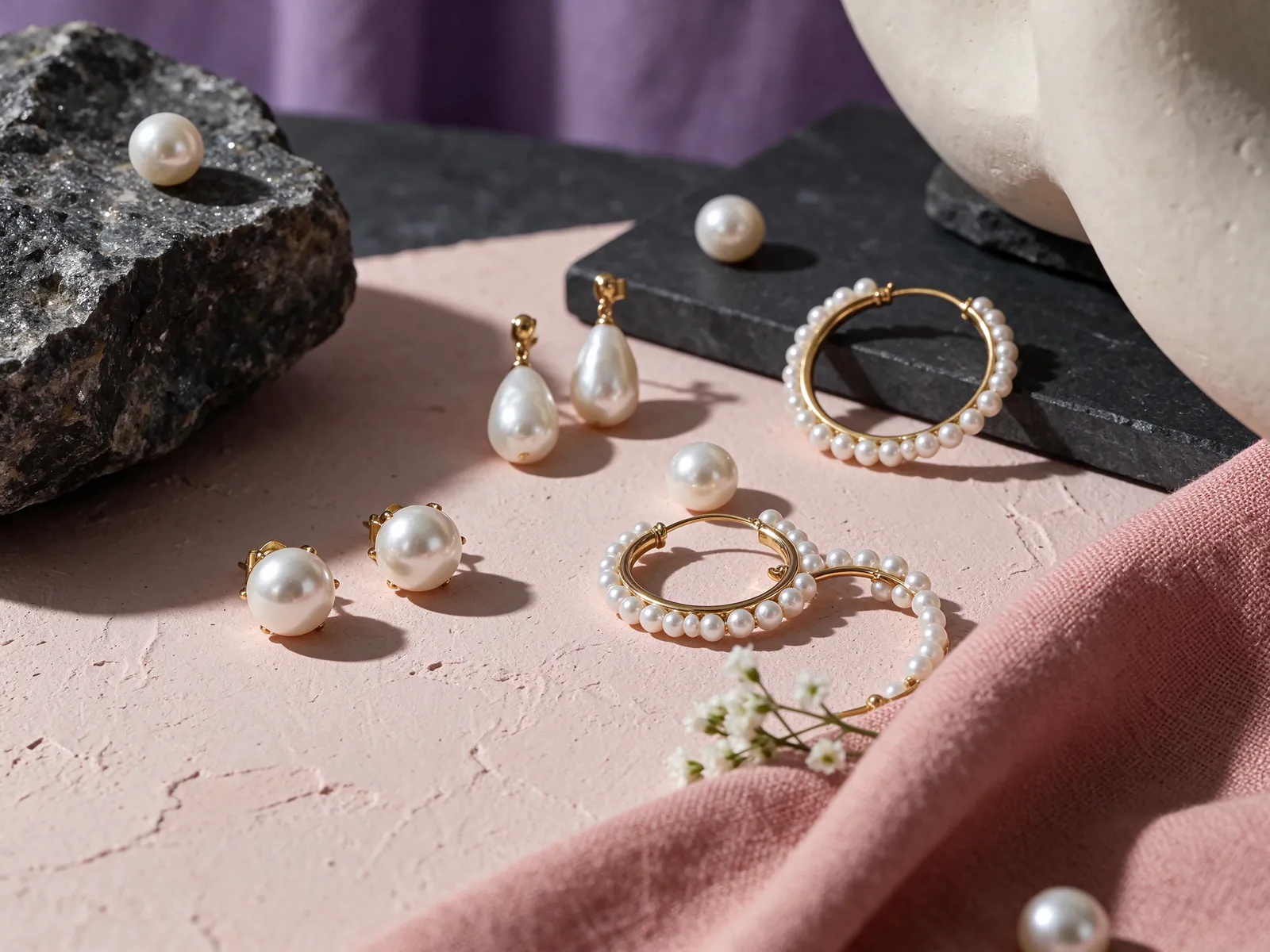
Read the baroque outline before choosing a contrast
Flint Tide · Soft Tide Earrings feature a white baroque pearl in a simple stud construction. Its uneven edge offers an organic detail close to the ear rather than a strictly circular silhouette. Look at the outer contour, the surface folds and the profile as separate elements. Which of those appeals to you most? A plain top can make the answer easier to see because fewer details compete beside the pearl. Neither a white appearance nor the word baroque establishes origin, natural-versus-cultured identity or a certificate.
An asymmetric look can vary outlines without creating a large difference in length. One side might feel compact and rounded while the other looks narrow and linear. If multi-pearl earrings interest you as a styling direction, consider the whole line they create and whether several points of light would compete with your single pearl. This comparison is a way to refine your preferences, not an offer of an additional design on this page. Evaluate what each side contributes to the overall composition rather than judging the pieces separately.
Matching still matters when it is selective
GIA lists seven pearl value factors: size, shape, color, luster, surface quality, nacre quality and, for multi-pearl jewelry, matching. For intentional asymmetry, you can choose which visible qualities connect the sides while allowing others to differ. Related color impressions may tie together different shapes, for example. Keep this styling use of matching separate from a full quality assessment. Nacre quality cannot be settled by looking at an outfit photograph, and a balanced appearance does not establish pearl identity. The framework helps organize questions; it does not certify a Flint piece.
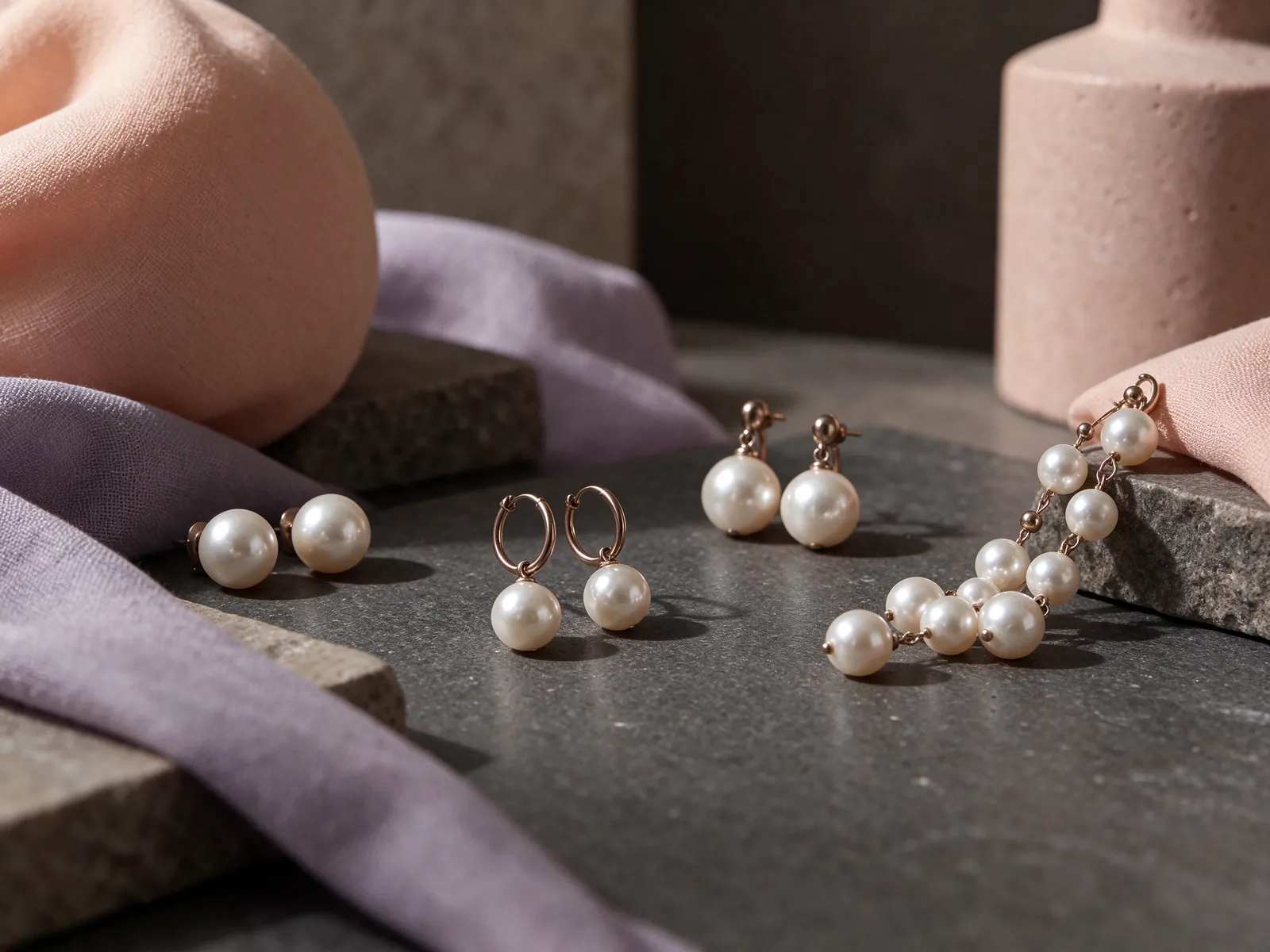
Let hair, collars and everyday habits guide placement
The choice of left or right is personal rather than prescribed. Think about your regular part, which side you tuck behind an ear and how you wear your hair at work or at an event. An exposed side makes the pearl easy to read immediately. A partially covered side can offer a quieter glimpse when you move. Try both with the actual outfit, and compare non-mirrored photos if you usually rely on selfies. A blank-background close-up does not show how the ear detail relates to the rest of your look.
A structured shirt collar and an uncluttered neckline can frame a stud clearly. A ruffled collar, shoulder bow or asymmetric drape may already create a strong focal point. If the area looks crowded, remove the necklace before deciding that the earring needs to change. Exploring a pearl ear cuff can introduce a different discussion of placement and structure, but a stud and a cuff are not interchangeable constructions. Do not assume that an attractive ear-level image tells you how a fitting will sit or feel on your own ear.
Test more than a still pose
Look at the arrangement while sitting, turning your head and putting your hair back in its normal position. Glasses, headphones and outerwear can create contact points that are easy to miss in a posed image. Discuss a proposed charm's movement in relation to hair and fabric, not just its outline against empty space. If something pulls or feels uncomfortable, stop wearing it. A minimal design or a particular metal name does not guarantee comfort, and maintaining visual asymmetry should never require ignoring how the piece feels.
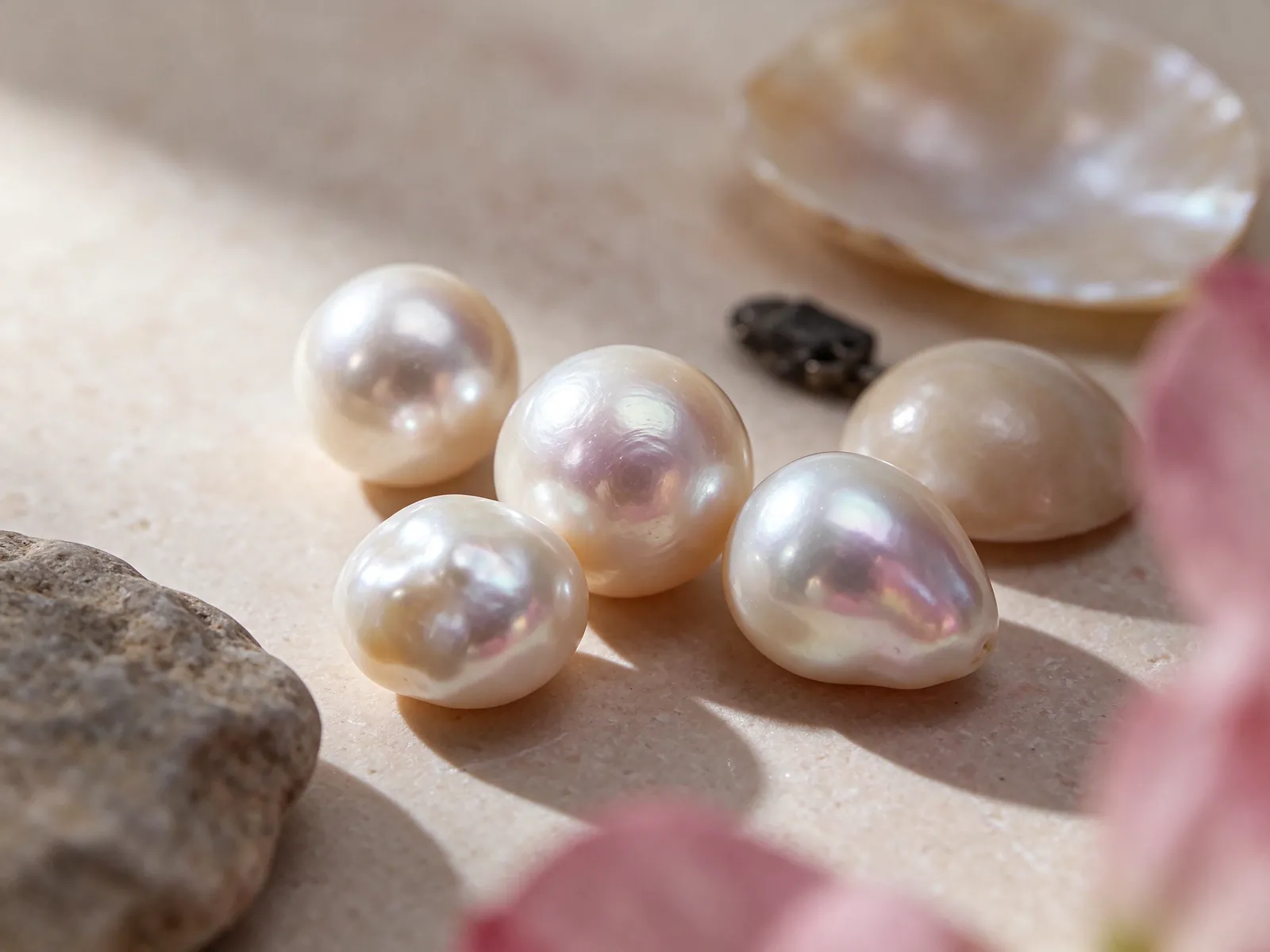
Use personal style instead of gender categories
A pearl does not need a gender label to belong in your wardrobe. With sharp tailoring, its soft contour can provide a single organic accent. With relaxed layers, a clear ear-level detail can add definition. When comparing pearl stud earrings, focus on line, proportion and individual expression rather than assigning a look to a category. Wearing one earring already changes the familiar symmetry of a pair. You can keep the rest of the outfit straightforward and still make a deliberate personal choice.
An existing metal earring on the other side can be a useful starting point. Look for a relationship in its contour or finish before deciding every accessory needs the same color. A jacket fastening or the shape of your glasses may already supply a connecting line. If you want to explore stronger sparkle, reading about pearl and diamond earrings can help you think through concentrated versus dispersed brightness. That is a design comparison, not a statement that Soft Tide includes diamonds or that another earring accompanies the single unit.
Keep the first experiment simple
Use a familiar outfit and hairstyle, then change only the earrings from a pair to a single piece. Next, compare a bare opposite ear with a simple earring you already own. You will be able to identify the effect of each change more easily than if you also replace your necklace and rearrange your hair. When introducing color, begin with one area of fabric and see whether the white pearl remains a clear focal point. This is an observation method, not a restriction on personal taste.
Separate a new asymmetric look from restoring a lost pair
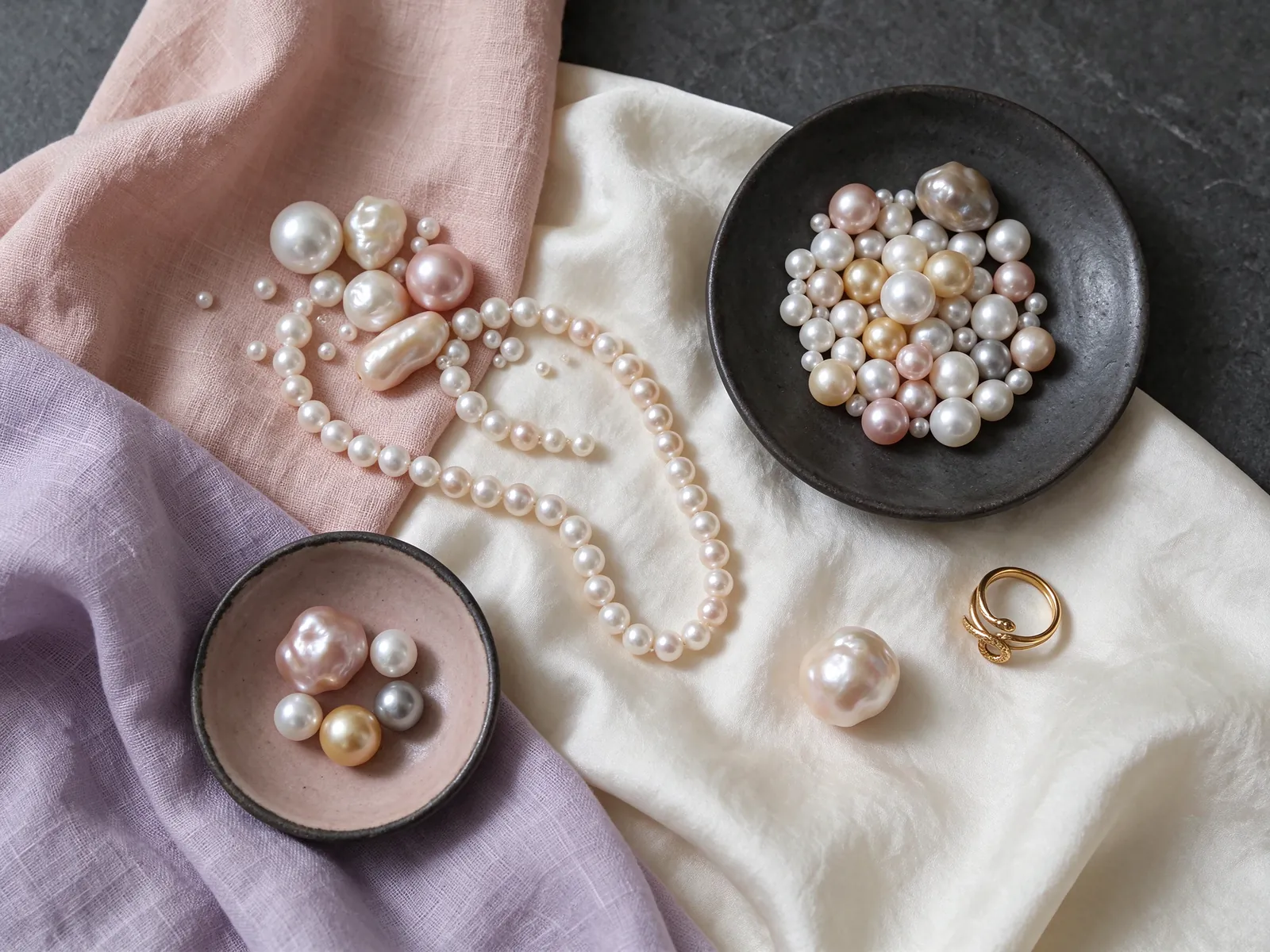
A remaining earring can inspire a new arrangement, but that is different from recreating the pair you used to wear. If restoration is the goal, discuss color, luster, shape, construction and wearing direction together. If you prefer a fresh asymmetric look, identify the feature you want to preserve and the contrast you are willing to introduce. Comparing pearl studs vs drops vs dangles can help you describe the compact or extended outlines you prefer before deciding between matching and redesign. Broad resemblance is not the same as an identical match, so keep the existing piece intact instead of changing its post or removing its pearl.
Useful preparation includes front, back and side photos in soft natural light, plus a view of the earring being worn. If you still have documents about the original piece, they can clarify what is known without treating an image as pearl identification. Explain whether your priority is its color impression, apparent size, orientation or personal significance. For a redesign, say which characteristics may change. A clear description of your expectations is more useful than the open-ended instruction to find something similar.
Give the intended difference a purpose
Try writing two short statements: what should connect the ears, and what should differ. You might want a related soft tone while keeping one side close to the ear and extending the other downward. That visible contrast serves a styling purpose. A subtle color mismatch may instead be frustrating when the goal is to recover an earlier paired effect. The actual pearl and fitting determine what can be discussed; no single existing design should be treated as an automatic replacement for every lost counterpart.
Clarify what you want from the single stud and any charm
Flint Tide · Soft Tide Earrings have a single-earring product unit, stud construction and a charm-pairing option for discussion. Start with that unit when deciding whether to wear one alone, combine it with an existing piece or explore arrangements for both ears. The plural design name does not mean a pair is included. A separately chosen charm needs its own conversation about the connection, outline and movement you prefer. A styling illustration or idea should not be read as a complete set of components supplied together.
Custom material choices for discussion are 18K 750 white gold, 18K 750 yellow gold, 18K 750 rose gold, PT950 platinum and PT900 platinum. Consider whether the metal color should blend with your regular jewelry or provide contrast beside the white pearl. This choice is not a prediction of individual skin response. A useful brief also goes beyond the word minimal: explain whether you want the pearl close to the ear, a compact side profile or a line that extends downward through a charm. Those observations communicate a tangible preference.
Make customization relevant to your actual outfit
Describe the wearing side, the feature you want to keep and the element you want to change. For example, you may favor the right ear, retain the soft white outline and seek contrast with your existing left earring. For charm customization, show the backing and explain how much movement you have in mind without assuming compatibility. Include your regular neckline and hairstyle as well. A conversation with Flint Jewelry can then focus on the way you intend to wear the piece, rather than a disconnected mood image.
Store and handle the single pearl as a distinct piece
Give the earring a regular, separate place instead of letting it mingle with harder accessories. GIA places pearl at 2.5 on the Mohs hardness scale, a useful reminder to avoid scratching rather than a forecast of a particular impact. After wearing, gently wipe with a very soft, clean cloth and store the piece so its surface does not rub against other jewelry. If you use a charm, understand the intended removal method before separating components. Pulling at an unfamiliar attachment is not a suitable way to test it.
Avoid direct contact with perfume, hair spray and excessive heat. Finish those parts of your routine before putting the pearl on to reduce direct spraying. GIA advises that pearls should never go into ultrasonic or steam cleaners. If the backing becomes loose, the movement changes or wearing feels uncomfortable, remove the earring rather than forcing a tighter fit. A process intended for a metal component is not automatically appropriate for the whole pearl piece. Care needs to account for both the pearl and the way the design is assembled.
Notice changes before continuing to wear it
In good light, look at the post, backing and any charm attachment before wear and after removal. Check for obvious changes or hair caught around a connection. This routine is observation, not a way to establish structural safety on your own. If something appears bent, loose or unfamiliar, stop handling that fitting and ask a focused question about it. Choosing a single-earring focal point can be creatively flexible while still giving the piece a consistent, thoughtful handling routine. To explore wearing one alone, leaving the opposite ear bare or adding a separate charm, talk with Flint Jewelry on WhatsApp at +85260106207 and share photos of your everyday outfit and existing earring.
| Starting situation | Connection to keep | Difference to explore | What to observe | What to discuss |
|---|---|---|---|---|
| One pearl on its own | A clear ear-level focal point | An unadorned opposite ear | Hair and the visible side | Preferred placement |
| Stud with a longer piece | A soft tone or related curve | Length and motion | Profile and collar space | Visual lead side |
| Existing metal earring | A simple contour | Metal color against pearl texture | Other details near the face | Blend or contrast |
| A separately chosen charm | The pearl's recognizable outline | A downward extension | Fitting, backing and fabric contact | Connection and removal |
| One earring from a former pair | A personally important feature | An intentionally different counterpart | Remaining piece and documents | Matching versus redesign |
Pearl knowledge and authoritative references
GIA lists seven pearl value factors: size, shape, color, luster, surface quality, nacre quality and, for multi-pearl jewelry, matching. Intentional asymmetry can retain selected visible connections without duplicating every feature.
Read the reference for this factFrequently asked questions
Is there a correct side for wearing just one pearl earring?
There is no required side. An exposed ear makes the detail more immediate; a partly covered ear can reveal it as you move. Try both with your usual hair and neckline, then compare non-mirrored photographs.
Does the Soft Tide design name mean I receive a pair?
Its product unit is a single stud earring. Arrangements for the other ear and a separately chosen charm should be discussed individually, rather than inferred from the plural name or a styling concept.
Do asymmetric pearl earrings need different lengths?
No. You can create contrast with shape, movement or visual weight while keeping similar heights. A related color impression or soft outline can provide a connection between the sides without making them mirror images.
What should I bring if I want to style an earring I already own?
Bring front, side and backing photographs, a view of it being worn and any existing documents you have. Describe the features you want to retain and whether your goal is a matching partner or intentional asymmetry.
Can I clean the entire pearl stud like its metal parts?
Do not assume one method suits the whole piece. GIA advises against ultrasonic and steam cleaning for pearls. Use a very soft, clean cloth for routine wiping, avoid direct perfume and hair spray contact, and consider the construction when discussing further cleaning.
Updated: