
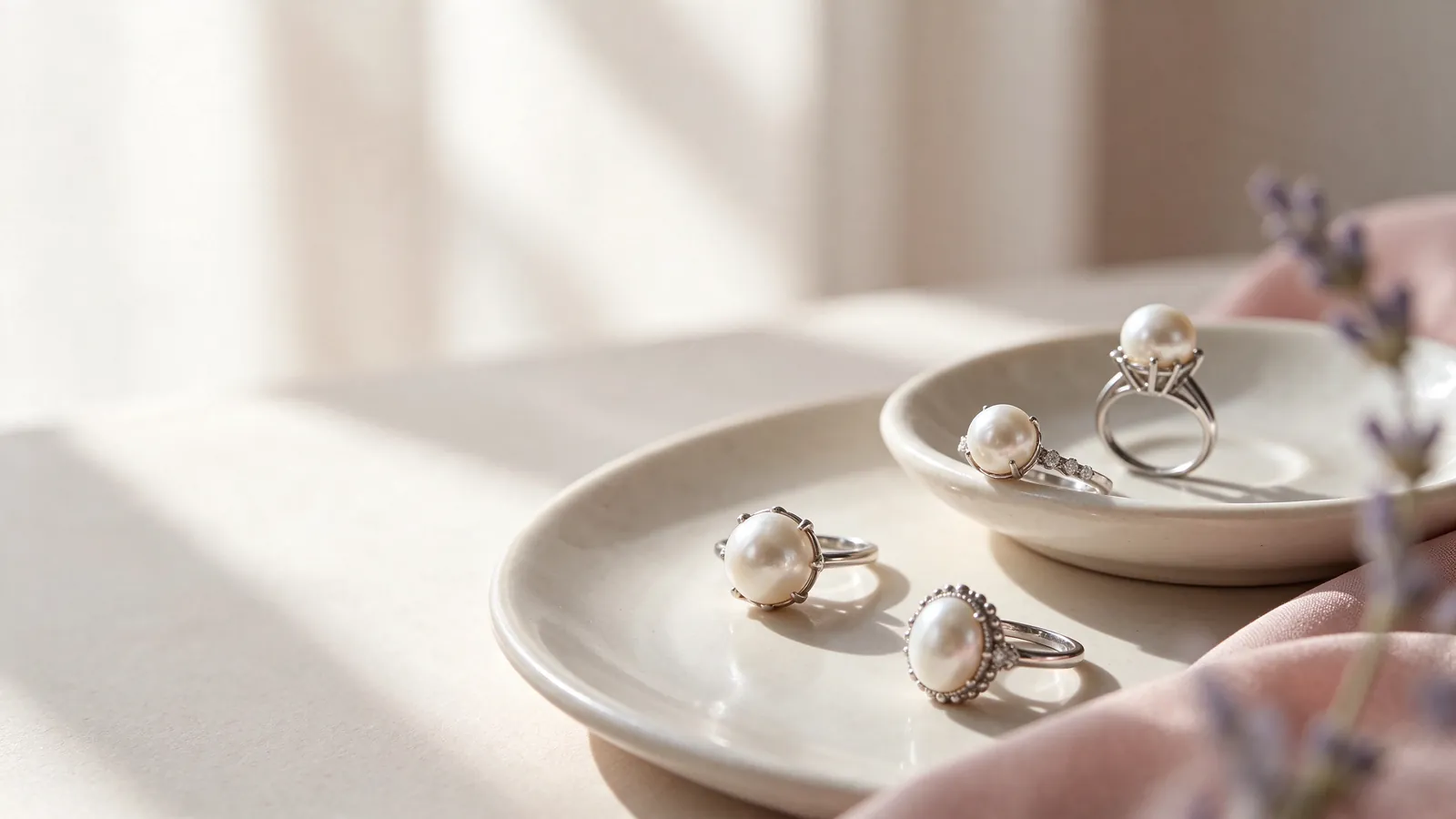
How can a pearl charm ring, dangling pearl ring or dangle pearl ring suit your everyday activities?
The defining feature is a suspended detail that moves with the hand instead of remaining a fixed focal point. In this guide, the word dangling refers to the ring's charm, not a necklace pendant. Before comparing pearl rings, think about the experience you want: a quiet accent when the hand is resting, a changing silhouette during conversation or a ring reserved for particular outfits. Each preference gives you a different reason to look closely at movement.
Recreate your own everyday activities during a fitting. Picking up a phone, writing a note and holding a bag handle do not use the hand in the same way. Watch whether the suspended pearl travels toward a neighboring finger or meets a hard surface when you rest your hand. Rather than asking whether the style is universally practical, identify the gestures that feel comfortable and the ones that create unwanted contact.
When trying on a pearl charm ring, dangling pearl ring or dangle pearl ring, how can you assess room for the charm to move?
Start with your arm relaxed at your side. Slowly turn the hand and curl the fingers, noticing both the charm's route and any pinching. Check the gap beside nearby fingers and the space around the band. Avoid forceful shaking: a dramatic swing is not a substitute for observing the gentle movements you actually make.
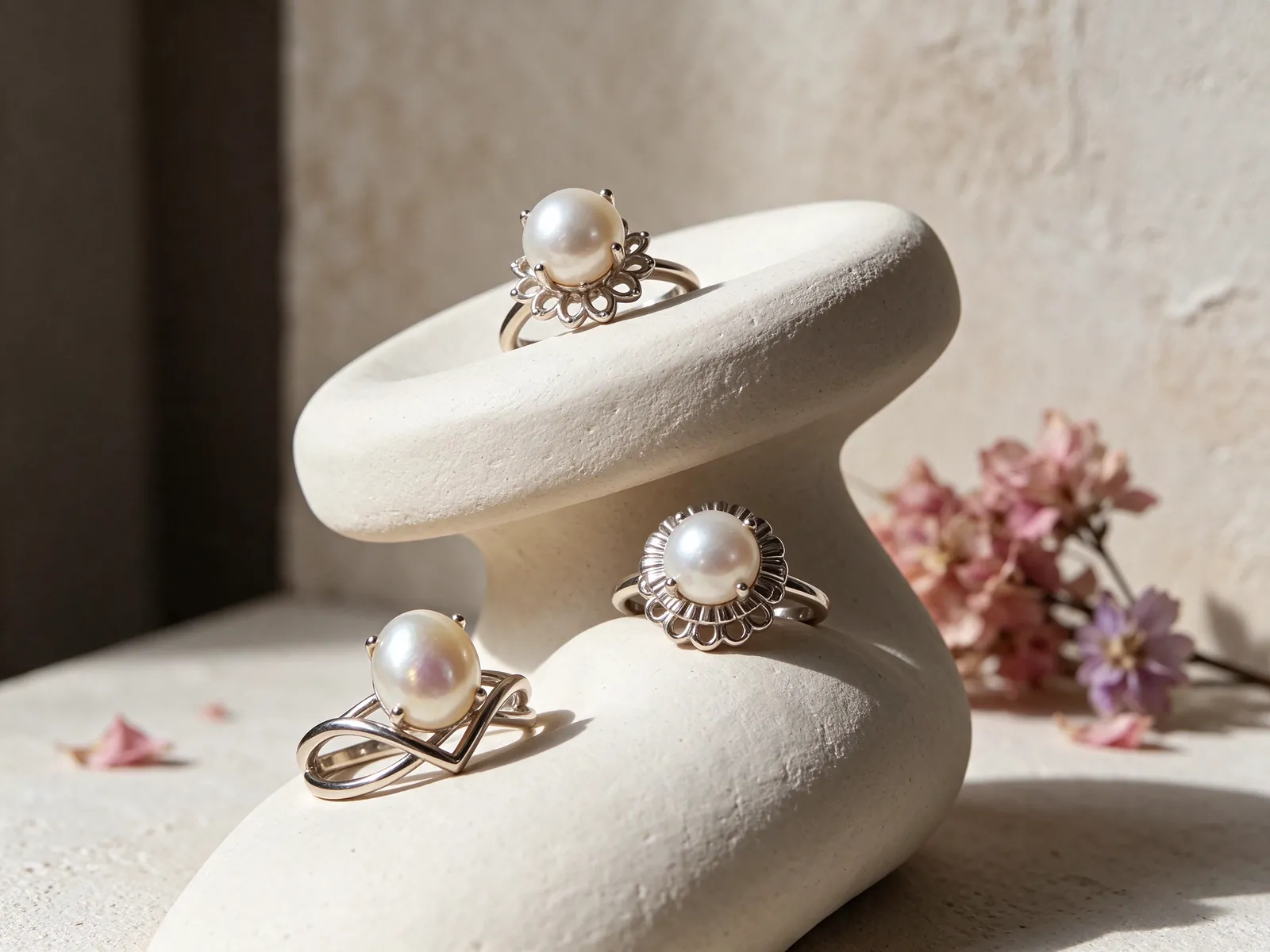
Read the attachment as part of the whole design
A front-facing photograph may emphasize the pearl while hiding how it connects to the ring. Look at a side view and trace the arrangement from the band through the moving part to the pearl's support. This helps separate the intended movement from the fixed elements. Where the attachment sits can matter as much as how far the charm drops, especially when the hand closes.
Do not assume that a short charm cannot touch the skin or that a longer one always moves freely. The available space and direction of travel need to be observed on the hand. If the pearl repeatedly meets the band or another component, identify which position causes it. Redirecting the charm by bending a loop at home is not an appropriate way to resolve the issue.
Notice changes without pulling on small parts
A designed moving joint should not be confused with newly loose pearl support. An unfamiliar gap, bent part or change in movement deserves attention before further wear. Explain when you noticed it and whether the ring caught on clothing. Let a jewelry professional assess the piece instead of tugging, prying or repeatedly rotating its components as a test.
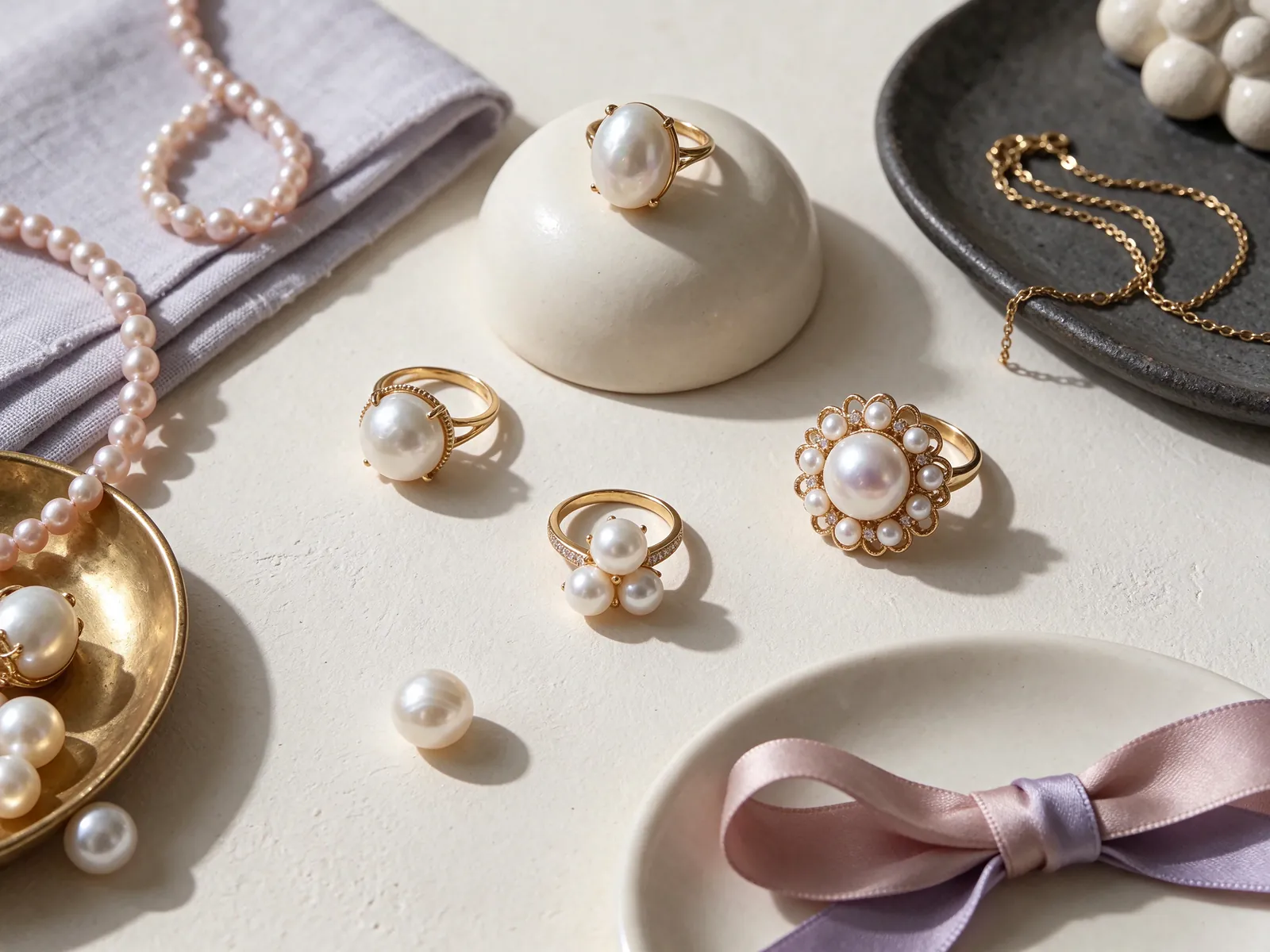
Make the intended finger central to the fitting
Judge the band before judging the charm. If the ring keeps turning sideways, its suspended detail may settle somewhere different each time you move. Look for a position that feels stable without squeezing the finger. Making the fit tighter simply to hold the pearl in place can hide a clearance problem while creating pressure. The goal is comfortable band placement and an appropriate path for the charm together.
The little finger has a different relationship to surrounding space than a middle finger, so a pearl pinky ring comparison should happen on the finger you intend to wear it on. If an open pearl ring also interests you, separate the open outline from the moving-charm idea. An open shape is not evidence that you can safely resize a ring yourself, and neither style name answers the fitting question on its own.
Keep useful notes about position and pressure
Record which hand and finger you tried, whether the ring rotated, and how it felt while you held a pen or bent the finger. Mention any difference from your usual finger condition. These details complement a size measurement because band width, inner contour and attachment position also affect what you feel.
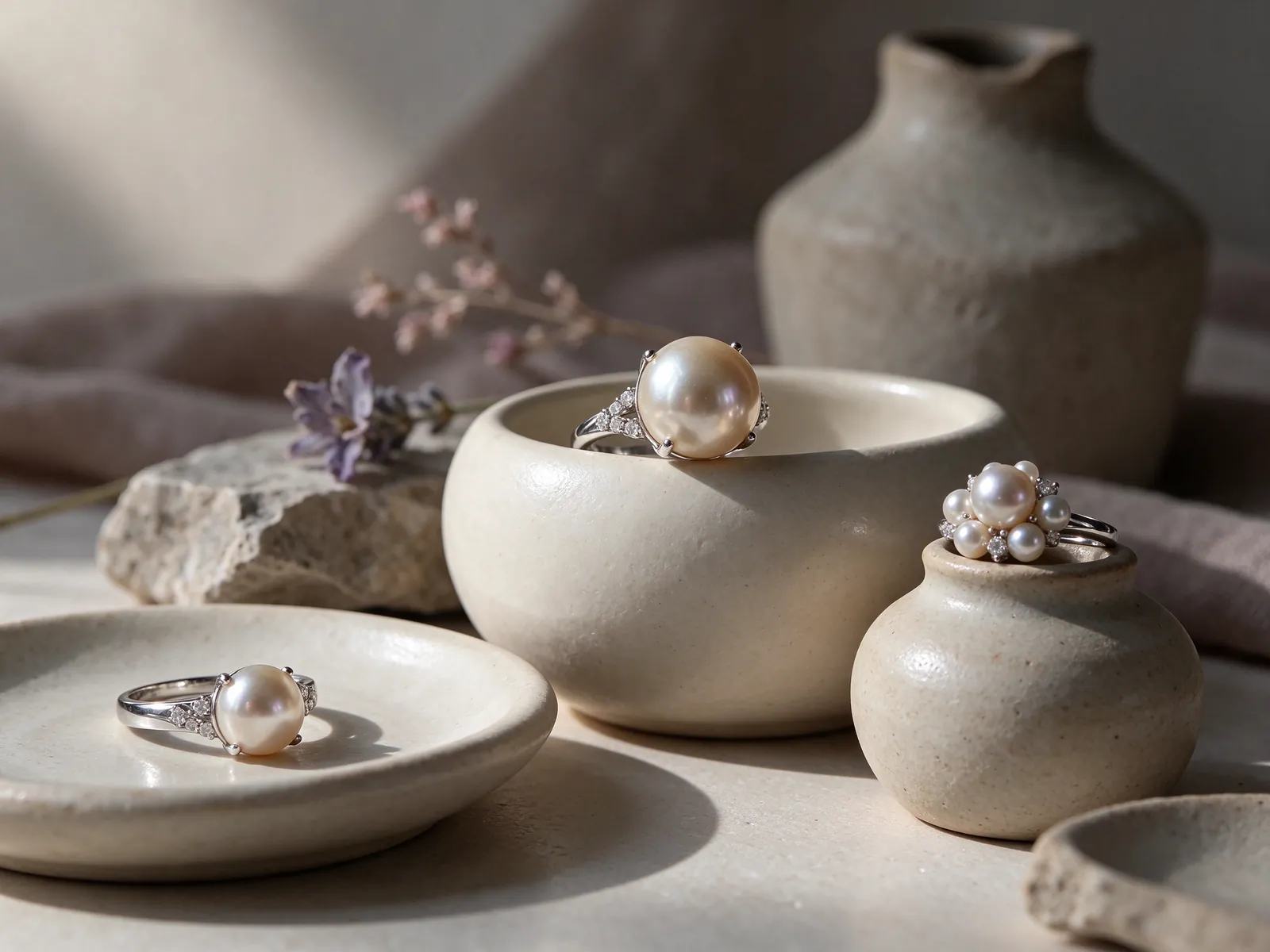
Compare the pearl beyond the brightest reflection
A moving pearl can flash differently as the hand turns. Enjoy that effect, but also inspect the pearl while it is still in gentle light. Look at the sharpness of reflections and visible surface characteristics across different sides. Because the detail may rotate, the area facing away from the viewer is also part of the wearing experience. A single bright image cannot show every aspect.
GIA identifies seven pearl value factors: size, shape, color, luster, surface quality, nacre quality and, for multi-pearl jewelry, matching. These offer a structured way to ask what you like about a pearl instead of relying on a vague quality word. Color and shape by themselves do not establish origin or natural-versus-cultured identity. If you plan to wear several pearl pieces, compare their visual relationship rather than assuming all pale pearls will look identical.
Keep silhouette preferences separate from identity questions
A rounded contour, a lengthened outline and an irregular form can create different style impressions. Consider the line you prefer and how it appears beside your fingers. Questions about a pearl's identity or treatment call for its specific description and relevant documentation; a pleasing shape is a design observation, not proof of where the pearl came from.
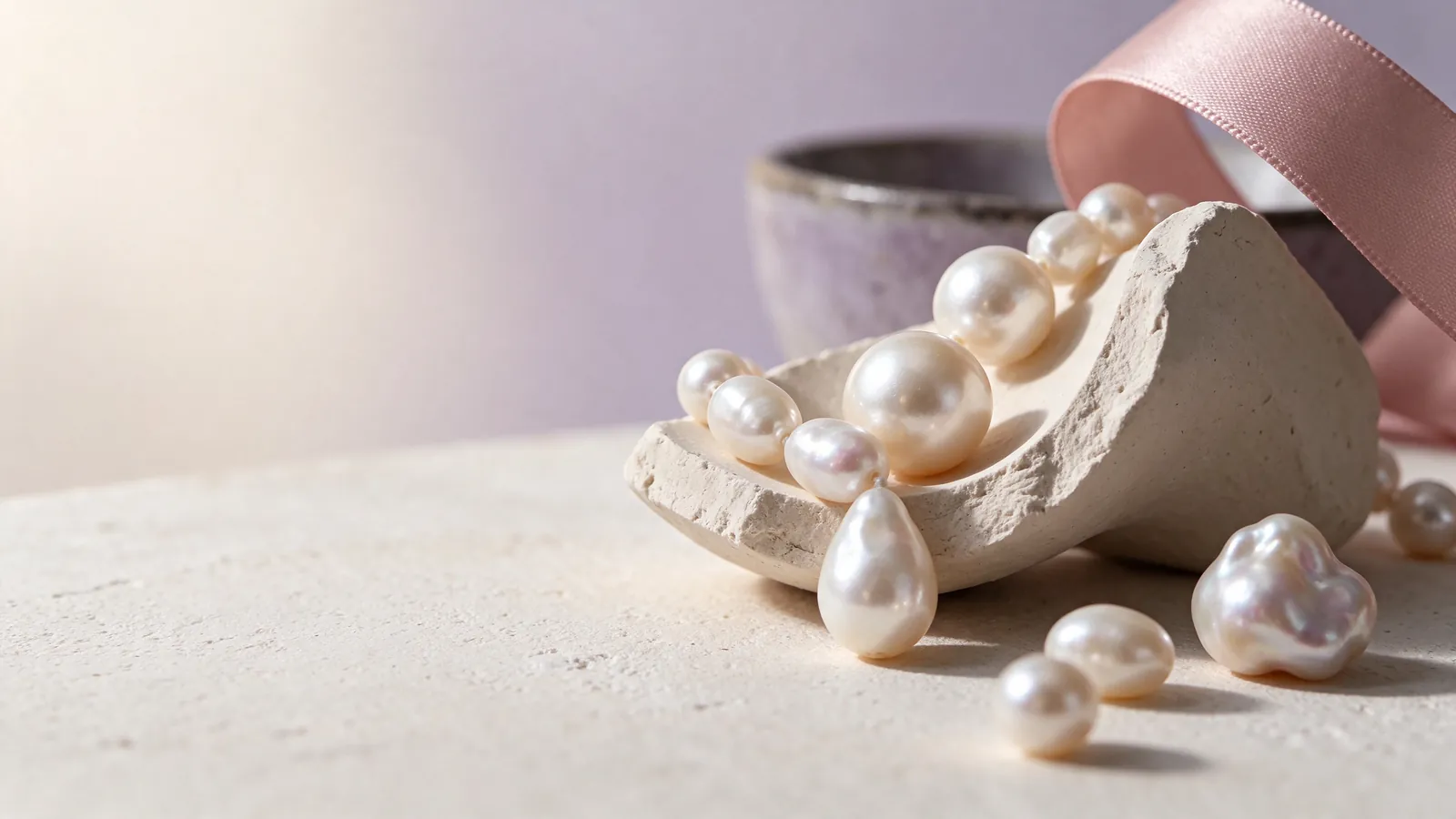
Build an outfit around space, not just matching colors
Wear the charm ring by itself first so you can see where the moving detail normally rests. Then add any rings you expect to wear alongside it and repeat the same hand gestures. Even a thin neighboring band may rub against the pearl or its connection when your fingers bend. A coordinated color palette can look appealing, but physical clearance is a separate requirement that needs its own check.
For a decorative alternative, a pearl flower ring can help you compare how a focal point is organized around an ornamental outline. A pearl tiara ring suggests another comparison through an upward-reaching profile. Use these ideas to clarify whether you prefer movement or a particular silhouette, not to assume every combination can be stacked. Keep the charm's travel area open when assessing an actual pairing.
Include layers and sleeves in the outfit test
Try reaching through a familiar jacket sleeve or past a shirt cuff. Pay particular attention to knitwear, lace and fabric loops that might catch the detail. When something catches, stop the movement and ease the fabric free; pulling away can stress the connection. Checking your normal layers is more useful than considering only a bare-arm photograph.
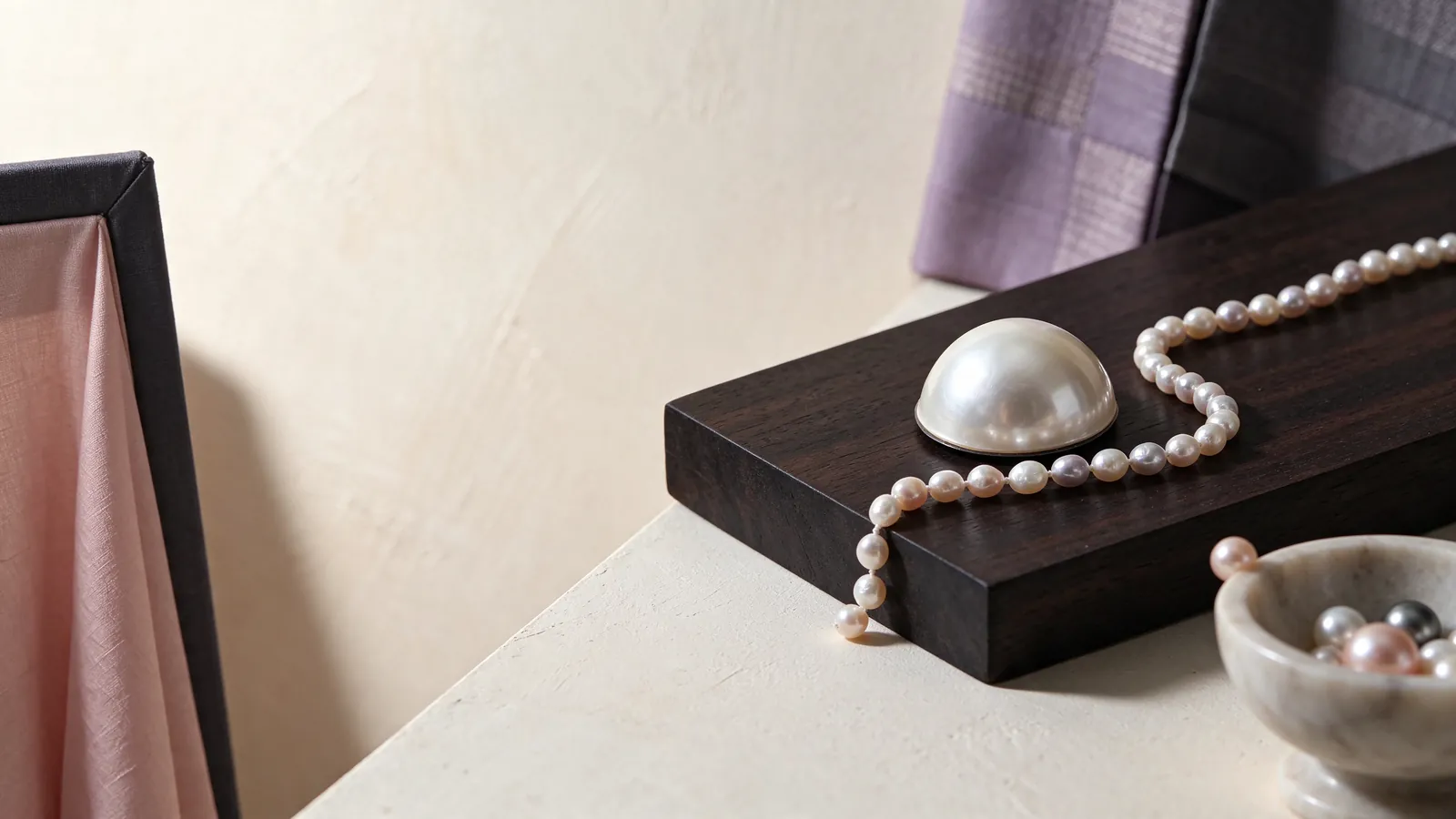
Match wearing time to the kind of hand activity
A ring chosen for a meal or a social event faces different demands from one worn while lifting, exercising or cleaning. Consider removal before activities that involve cleaning substances, forceful gripping or repeated contact with hard objects. A bold band does not make a pearl immune to surface damage, and a delicate appearance does not tell you the construction's strength. Look at what will actually touch the piece.
If you want a steadier visual focal point, compare the styling approach of a pearl signet ring with the motion of a charm design. This is a way to clarify preferences, not a durability ranking based on names. The suspended detail asks for attention to nearby space and contact. It may be more satisfying to choose suitable wearing occasions than to expect that movement to work equally well during every task.
Understand what the Mohs number does and does not say
GIA places pearl at 2.5 on the Mohs hardness scale. The figure concerns scratch resistance, not an approved number of wearing hours or a guarantee against impact. For a charm ring, reduce repeated rubbing between the pearl and other jewelry, metal parts or hard surfaces rather than using the number to predict a lifespan.
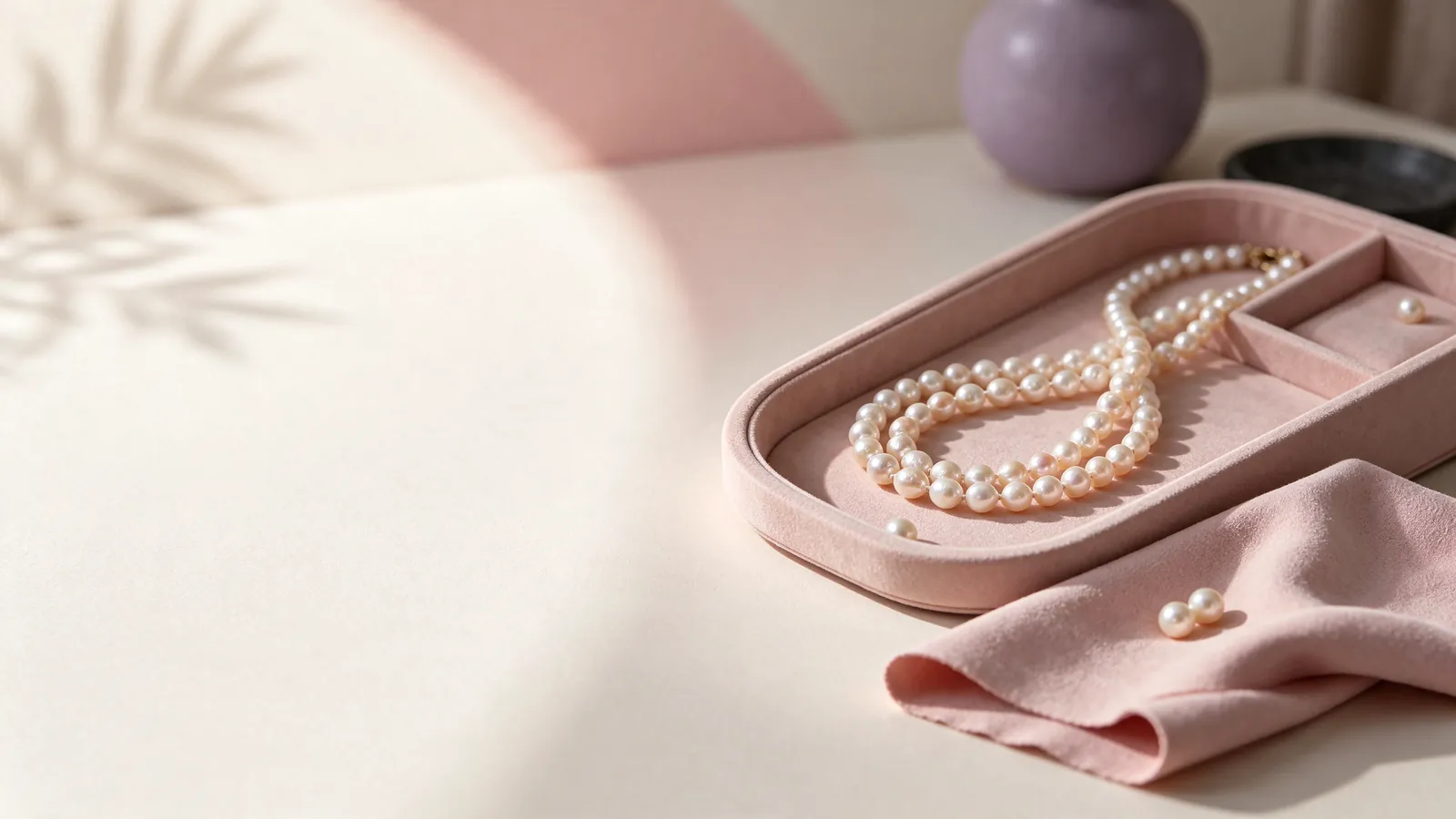
Use gentle care and specific preference descriptions
A very soft, clean cloth is appropriate for gentle routine wiping after wear. GIA cautions against acids, perfume, hair spray and excessive heat, and states that pearls should never go into ultrasonic or steam cleaners. Take care not to snag a moving connection with the cloth. For dirt lodged around small components, ask a jewelry professional about cleaning the complete piece instead of probing the space.
Store the ring apart from harder jewelry and allow the suspended detail to rest without being pressed beneath other items. Before wearing it again, look for a change at the connection or pearl support. A clean, bright surface does not confirm that every attachment is secure. Treat appearance care and attention to structural changes as separate habits, particularly after the ring has caught on clothing.
Explain the movement you want in everyday terms
When talking about preferences with Flint Jewelry, describe your intended finger, usual sleeves and nearby rings. If you have tried a charm style, explain which gesture caused contact and whether the band stayed in position. Saying you prefer a restrained moving accent or a more flowing line gives the discussion direction while keeping practical wearing needs alongside the look you enjoy. Talk about the movement you prefer and your wearing routine with Flint Jewelry on WhatsApp, or call +85260106207.
| Observation | Hand or outfit test | Comfort goal | Pairing question | Do not attempt |
|---|---|---|---|---|
| Resting point | Relax the arm and slowly turn the hand | No recurring pinching beside the finger | Where does the focal point settle? | Lengthening the charm by pulling |
| Band fit | Hold a pen and gently curl fingers | Stable placement without squeezing | Is this the intended wearing finger? | Forcing a tight fit to control movement |
| Attachment | Watch the designed moving area | Recognize new looseness separately | Does another ring touch the connection? | Bending or tightening a loop |
| Sleeves | Reach through normal clothing layers | Avoid repeated catching | Do knitwear or lace meet the charm? | Pulling against caught fabric |
| Surface care | Wipe with a very soft, clean cloth | Limit rubbing against hard objects | Can the ring be stored separately? | Ultrasonic or steam cleaning |
Pearl knowledge and authoritative references
GIA lists pearl at 2.5 on the Mohs hardness scale. The number relates to scratching and does not establish impact resistance, lifespan or permitted wearing hours for a charm ring.
Read the reference for this factFrequently asked questions
Is the ring's charm the same as a pendant worn on a chain?
No. This guide concerns a suspended detail connected to a ring on the finger. Its movement must be evaluated beside fingers, ring bands and sleeves rather than at the neckline.
Will a shorter drop automatically stay clear of my fingers?
Not necessarily. Attachment position and the direction of movement matter along with length. Observe the actual detail on your intended finger with your hand relaxed and gently bent.
Can the ring be made comfortable simply by wearing it tighter?
Pressure is not a substitute for appropriate clearance. Check band stability and the charm's path separately. If contact remains at a comfortable fit, compare another position or design approach rather than forcing a tight fit.
Can I judge pearl identity from a swinging pearl's color or outline?
Color and shape alone cannot establish origin or natural-versus-cultured identity. Use them to describe appearance preferences, and look to the specific pearl's description and relevant documentation for identity questions.
Does wiping the pearl also confirm that the connection is secure?
No. Surface cleaning and structural condition are different matters. Notice unfamiliar gaps, distortion or new looseness before wearing, and seek professional assessment if a change is apparent.
Updated: