
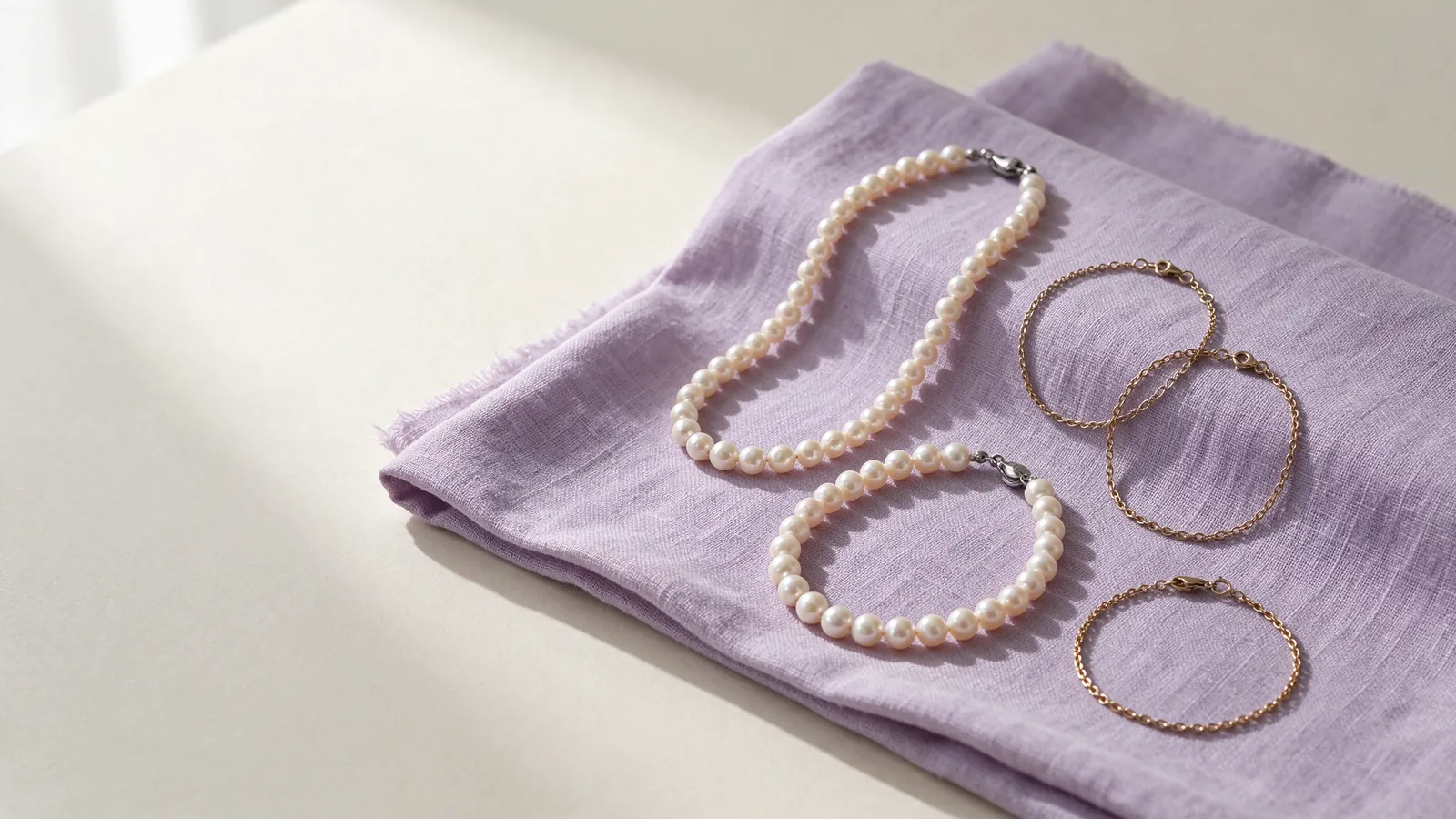
What wrist measurements matter when choosing a Japanese Akoya pearl bracelet or an Akoya cultured pearl bracelet?
Measure the wrist where you intend the bracelet to rest, using a flexible tape against bare skin without squeezing. Treat that snug measurement as a baseline, not a finished bracelet size. Next, describe the movement you want: close to the wrist, a little freedom, or a lower drape toward the hand. Pearl thickness and closure structure change the usable space inside a bracelet, so overall length alone does not predict how it will feel.
A pearl bracelet should be checked with the wrist both relaxed and gently bent. A strand that looks balanced when you stand may press near the wrist bone once you sit at a desk. An overly loose fit may slide toward the palm and place the clasp in the path of your work. Clarify how any stated measurement was taken instead of assuming that every bracelet can use the same allowance above your wrist size.
How can clasp placement and wrist movement help you assess the fit of a Japanese Akoya pearl bracelet or an Akoya cultured pearl bracelet?
Start with the clasp at the side, then rotate your wrist, spread your fingers and make the movements you use for typing or picking up a cup. Check whether a pearl or closure presses into the tabletop, and whether the strand pulls as the hand bends. A good assessment includes opening and closing the clasp yourself and looking at the connection when shut. A click by itself does not establish that it is properly engaged.
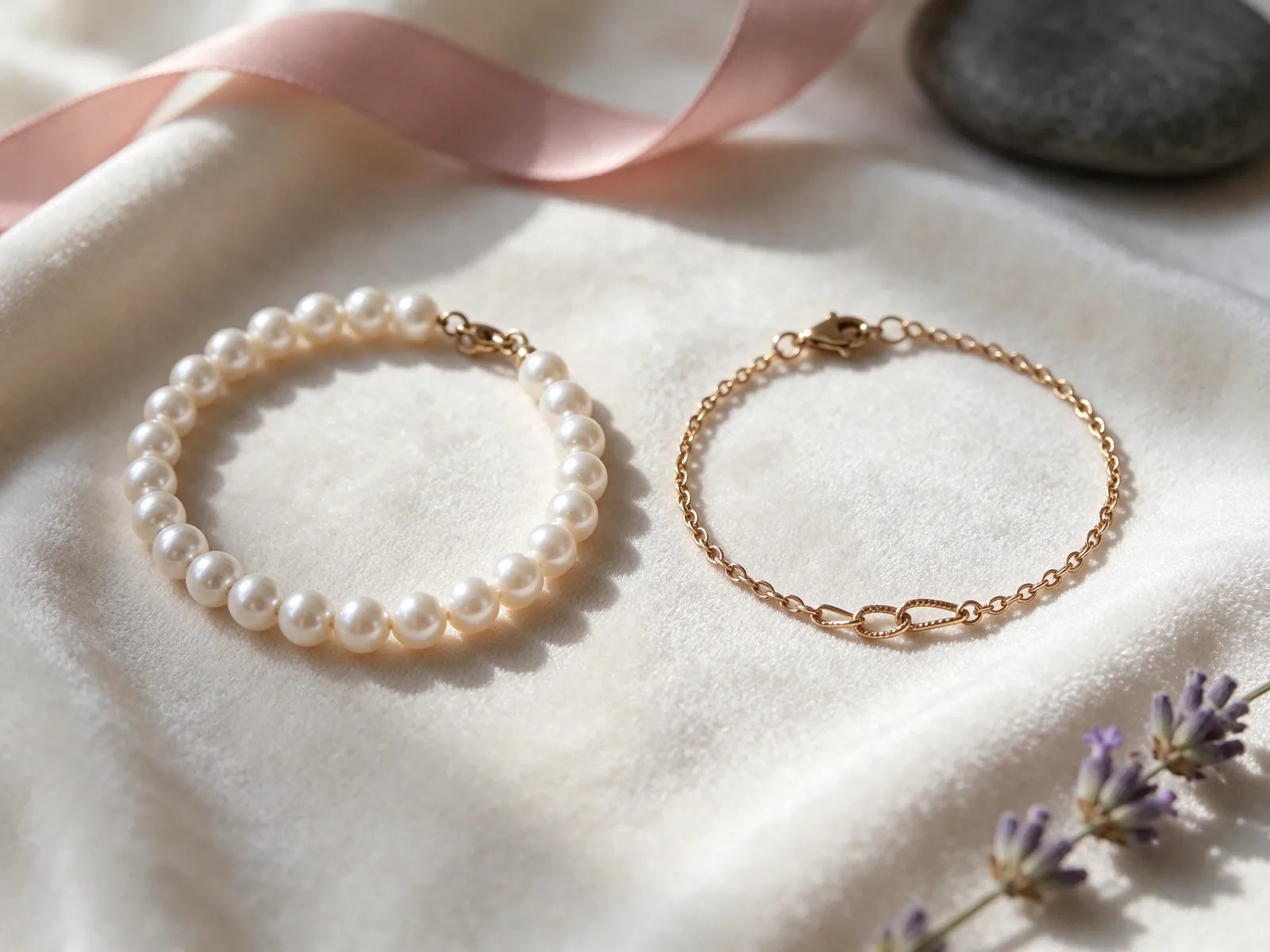
Separate the bracelet's name from its identity details
Akoya describes a pearl type, cultured describes formation with human involvement, and Japanese refers to origin. One term does not establish the other two. Pearls forming within living organisms are not therefore automatically wild-natural, and a Japanese-style name is not proof of where a pearl was grown. When considering a Japanese Akoya pearl bracelet, read those identity details individually rather than allowing a familiar phrase to stand in for the complete description.
The Akoya pearl necklace guide offers a related strand comparison, but return to the specific bracelet when reading its identity details. An origin statement may concern pearl cultivation, processing or jewelry assembly; those are different stages. Ask which stage is being described. A shop's address and the origin wording for a separate piece cannot establish the origin of this strand. Likewise, a white color and a round outline cannot identify its cultured status or place of formation.
Use a clear sequence of questions when comparing descriptions
Ask first what pearl type is described, then whether the pearls are cultured, and then what the origin wording covers. Ask about color treatment separately rather than treating a color name as an answer. If paperwork accompanies the bracelet, read the scope of its findings and the item it identifies. This keeps the conversation focused on the piece you are considering, without mistaking a quality adjective for a complete statement of identity.
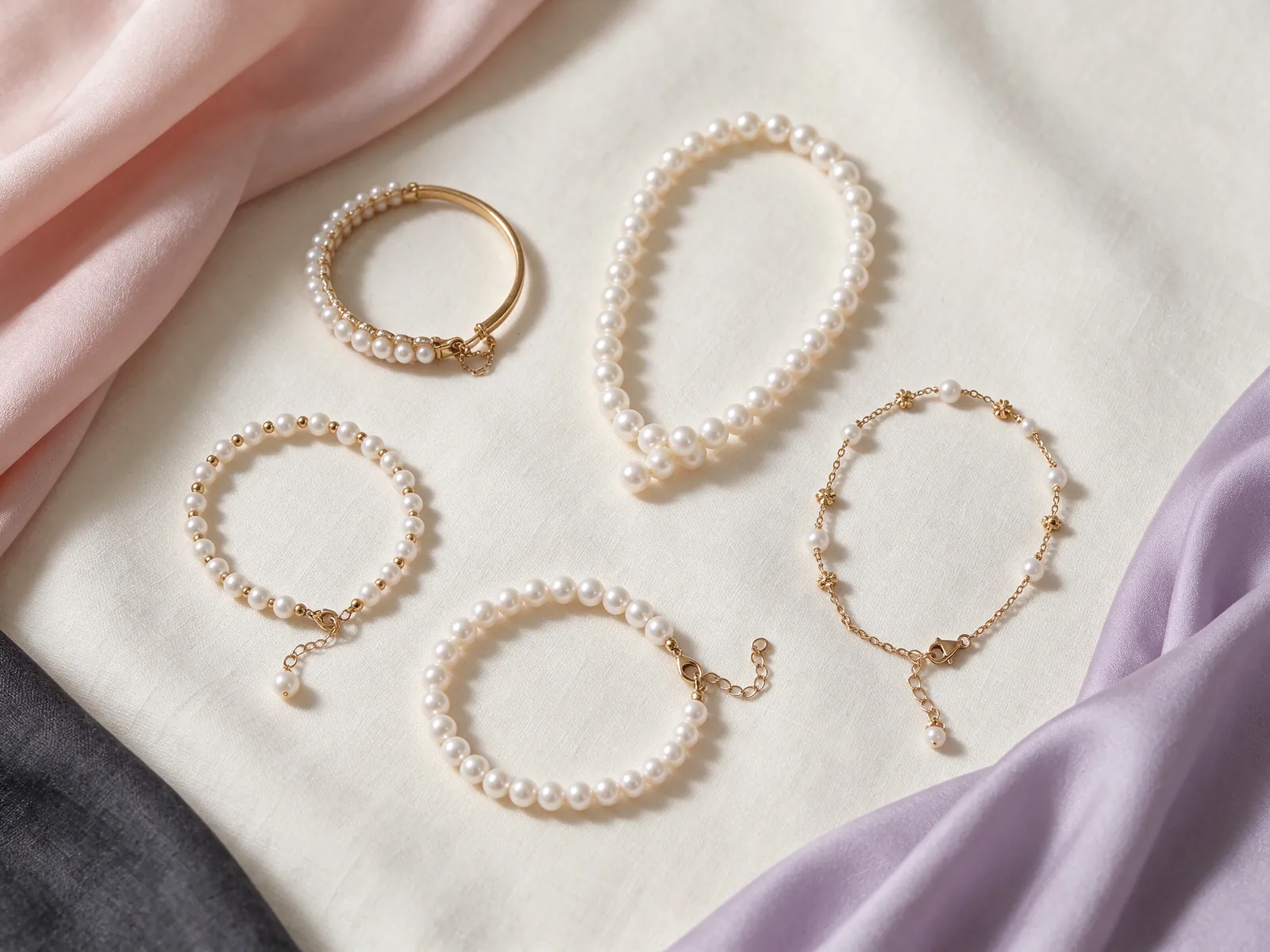
Look for a balanced strand under consistent light
Because a bracelet rolls around the wrist, the entire strand matters more than one carefully positioned pearl. Observe the relationships between neighboring pearls, then consider individual surface features, shape and luster. GIA names seven pearl value factors: size, shape, color, luster, surface quality, nacre quality and matching. They provide a useful framework for comparison, but a photograph cannot reveal every factor. Bright reflections alone do not establish the actual condition of the nacre.
Compare pieces in the same gentle lighting and notice how reflections and color relationships change as the bracelet turns. Avoid drawing conclusions from one sharply lit image beside another taken in shadow. If you are also considering a freshwater pearl bracelet, write down the appearance you enjoy independently of pearl type. Rounded shapes, pale colors and pleasing luster can guide a preference, but those visual qualities cannot by themselves confirm identity.
Treat dark and pale colors as different styling directions
A pale bracelet may create a soft transition against a light sleeve, while a darker strand may serve as a stronger accent. The black Akoya pearl bracelet guide considers that alternative direction. Dark color wording does not establish a shared natural color origin, and treatment information remains a separate consideration. Look at whether the strand achieves the composition you want instead of ranking quality purely by how light or dark the pearls appear.
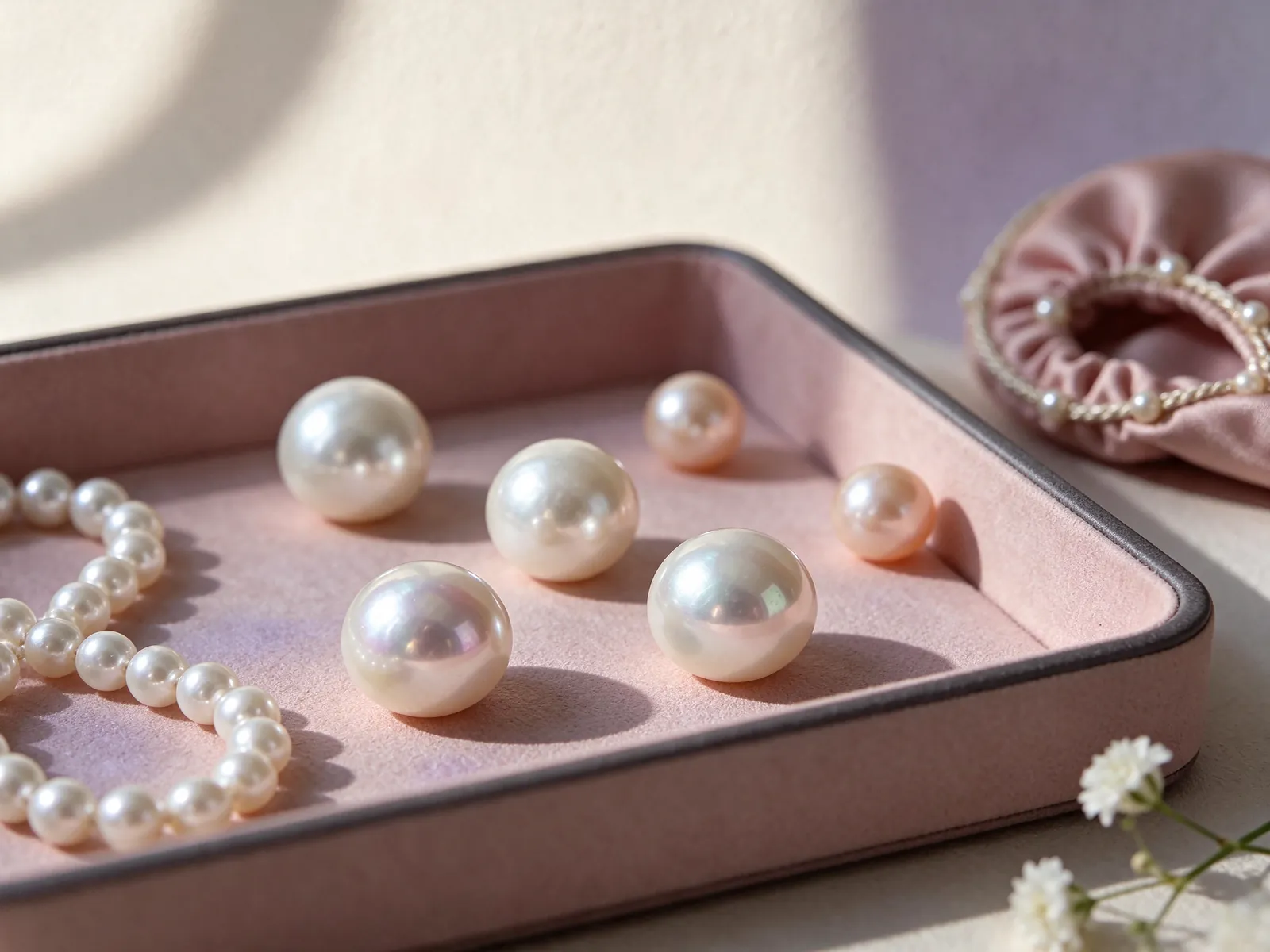
Match the bracelet's outline to the way you dress
A continuous strand presents a complete band of pearls, while a design with metal spaces between pearls produces a more open rhythm. Neither arrangement belongs exclusively to one pearl type. Decide whether you want a continuous wrist accent or smaller separated highlights, then examine how the clasp and connecting parts fit the composition. A fuller silhouette is not automatically a better choice for an occasion; the surrounding clothing and jewelry also shape the effect.
Bring the sleeve question into the fitting. A thick cuff may push the bracelet downward, and textured fabric may catch a projecting connection. With short sleeves you see more of the strand, so the full outline carries greater visual weight. A baroque pearl bracelet offers a different shape-based comparison if you prefer less regular contours. Roundness and irregularity describe visual directions, not a simple hierarchy of overall pearl quality.
Give a watch and a pearl strand enough separation
Wearing the two pieces on opposite wrists can reduce direct contact. If you want them together, watch for repeated rubbing against the watch case, band edges or closure as you reach and bend your hand. Styling photographs show the arrangement, not the friction it may create. Test the combination while seated as well as standing, and choose a single wrist piece when your activities bring it repeatedly against hard surfaces.
Consider clasp handling before choosing a decorative focal point
A closure is part of the bracelet's everyday function. The pearl bracelet clasp guide helps frame questions about access, opening and position. Check whether your fingers have room to operate the mechanism and whether you can see that it has closed properly. Fabric caught in the opening can complicate that check. A larger clasp is not necessarily more comfortable, just as a smaller clasp cannot be judged unsuitable by size alone.
If the clasp is a visible design feature, see where it settles naturally during use. Its movement depends on the bracelet's fit and weight distribution, not simply the closure's appearance. Do not make the strand uncomfortably tight just to keep a decorative element facing upward. Where an extension exists, look at whether its end reaches the desk or catches your sleeve. An adjustment to overall length may not reproduce the fit of a differently structured strand.
Use everyday handling rather than a tug test
Try the closure with the hand you will actually use when getting dressed. An operation that requires an awkward twist or depends on a fingernail may not suit your routine. Avoid forceful pulling to test security, since the load can reach the string or connecting parts. If the mechanism becomes difficult to close or a connection changes, stop wearing the piece until the issue is understood instead of repeatedly forcing it shut.
Compare metal colors without confusing them with pearl quality
Metal descriptions and pearl descriptions belong in separate parts of your comparison. An 18k gold pearl bracelet may be discussed in terms of 18K 750 white gold, 18K 750 yellow gold or 18K 750 rose gold. For a platinum pearl bracelet, the relevant metal descriptions are PT950 platinum and PT900 platinum. These names do not identify the pearls' type, origin or treatment, and they do not establish the quality of the strand.
Evaluate the metal and pearl color relationship with clothing you regularly wear. A cream or pink sleeve may support a softer composition, while a dark background can make the bracelet's outline more distinct. There is no universal skin-tone rule that replaces your own preference in everyday light. If you already wear a ring, compare the visual balance and observe whether the pieces contact one another rather than pursuing a matching set at the expense of comfort.
Examine connections from the side as well as the front
Spacers and closures can change the rhythm of the strand, but front-facing photographs may hide their profile. Check the side of the wrist for projecting parts close to skin or fabric. More metal is not itself a pearl quality grade. Separate priorities for pearl appearance, construction and styling when considering your budget, so an eye-catching detail does not distract from how the complete piece will be worn.
Build pearl care into the decision, not just the purchase
GIA lists pearl at 2.5 on the Mohs hardness scale. On a bracelet, frequent proximity to desks, watch cases and other jewelry makes repeated rubbing a practical concern. That hardness figure does not predict a lifespan or promise resistance to impacts. Apply perfume, hair spray and skincare before putting pearls on, avoid acids and excessive heat, and remove the piece before chores or activities involving frequent water contact.
Use a very soft, clean cloth for a gentle wipe after wearing, and store the strand apart from harder jewelry. GIA says pearls should never be cleaned with ultrasonic or steam cleaners. When strung pearls are cleaned with water, the string must be fully dry before wearing again. During handling, notice changes around knots, drill holes and connecting parts, but do not turn that visual check into an improvised repair or a forceful stress test.
Choose for the movements and habits you actually have
Bring your wrist measurement, preferred looseness, common sleeves, watch habits and clasp-handling experience together before deciding. If you prefer jewelry that stays on through every activity, consider whether pearl contact and cleaning needs fit that preference. A thoughtful choice combines a description you understand, an appearance you like and comfort in normal movement. A prestigious name or an attractive posed photograph cannot replace those practical checks. Contact Flint Jewelry on WhatsApp or call +85260106207 to discuss your wrist measurement, usual sleeves and clasp preferences.
| Selection point | Details to compare | Try this | Do not assume |
|---|---|---|---|
| Usable wrist space | Snug wrist size, pearl thickness and closure | Bend the wrist gently after fitting | Listed length is the inside circumference |
| Identity wording | Akoya type, cultured formation and origin | Ask which stage an origin claim covers | A Japanese name establishes pearl origin |
| Strand balance | Neighboring pearls' luster, shape and color | Rotate the strand in consistent light | One bright pearl represents all the others |
| Closure comfort | Finger access, position and projecting parts | Close it yourself with a regular sleeve | A prominent closure will stay facing upward |
| Wear routine | Desk contact, watches and care products | Recreate typing and reaching movements | Metal durability establishes pearl durability |
Pearl knowledge and authoritative references
GIA identifies seven pearl value factors: size, shape, color, luster, surface quality, nacre quality and matching. For a bracelet, matching directs attention to the relationships across the whole strand rather than one pearl.
Read the reference for this factFrequently asked questions
Does Japanese in a bracelet name tell me where the jewelry was assembled?
Not necessarily. An origin statement may describe pearl cultivation, processing or assembly, and those are distinct stages. Ask what the wording covers for the particular bracelet rather than inferring assembly location from its name.
Can I use a chain bracelet I own as an exact sizing guide?
It can help describe the fit you enjoy, but it is not an exact conversion. A pearl strand with thicker elements and a different clasp may have less usable internal space at the same overall length. Compare structure as well as measurements.
Is the brightest photograph the best way to judge luster?
No. Lighting and image processing can alter how reflections appear. Compare strands under consistent light and examine the whole bracelet. Photographs alone cannot determine all seven of GIA's pearl value factors.
Should I tighten the bracelet to stop it touching my watch?
Not simply for that reason. A tighter fit may still allow contact and can introduce pressure when the wrist bends. Consider separating the pieces onto opposite wrists or wearing one at a time, and test any arrangement during ordinary movement.
Can I wear a strung pearl bracelet immediately after cleaning it with water?
Only after its string is completely dry. GIA specifically advises complete drying before wearing strung pearls again. Ultrasonic and steam cleaning are not appropriate alternatives for pearls.
Updated: