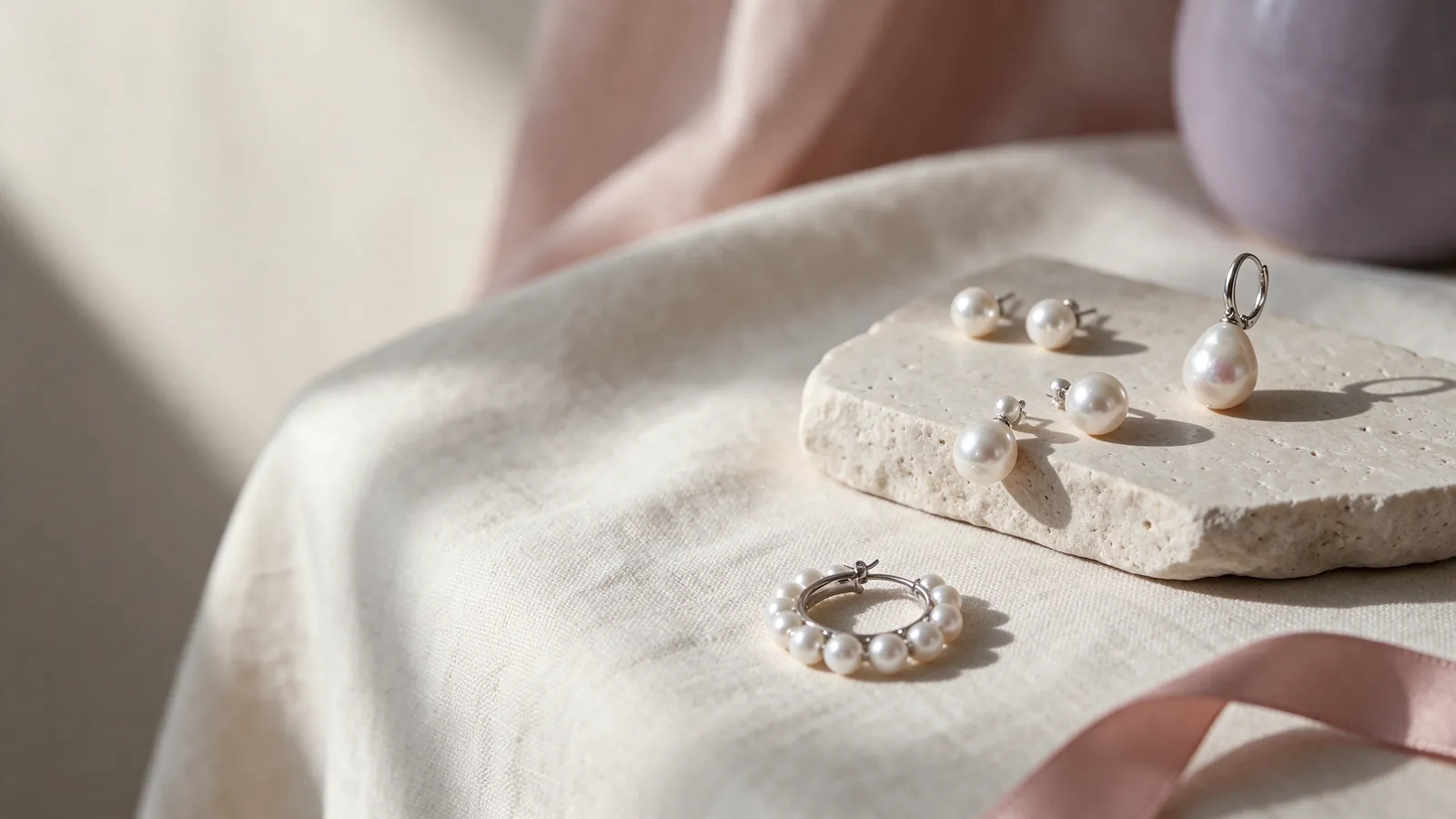
How do lobe proportions shape your choice of everyday pearl earrings, whether pearl stud earrings for work or other office pearl earrings?
Your piercing position is a useful starting point for choosing everyday pearl earrings. Look at the space above, below and beside the setting instead of concentrating only on the pearl in a product-style close-up. The same outline can appear prominent on one lobe and restrained on another. A guide to pearl earring size for small earlobes can help organize that comparison without turning a single diameter into a rule for everyone.
Include the setting in your assessment. Metal around the pearl and the distance it projects forward affect the visible size and profile. Check whether you prefer a little space around the lobe or a fuller outline, then see how that choice relates to your brows, glasses and shoulder line. If an earring tilts, inspect the way it is fitted rather than trying to correct the angle by pressing the backing more tightly.
When trying on everyday pearl earrings, what can front and side views reveal about the balance of pearl stud earrings for work and other office pearl earrings?
Begin at the distance from which another person would normally see you. Turn slightly to compare the profile and the space between the pearl and your lobe, then repeat with your usual hairstyle. Keep photo lighting and camera distance consistent. Including the neckline helps you decide whether office pearl earrings work with your outfit, rather than whether they look striking in a tightly cropped image.
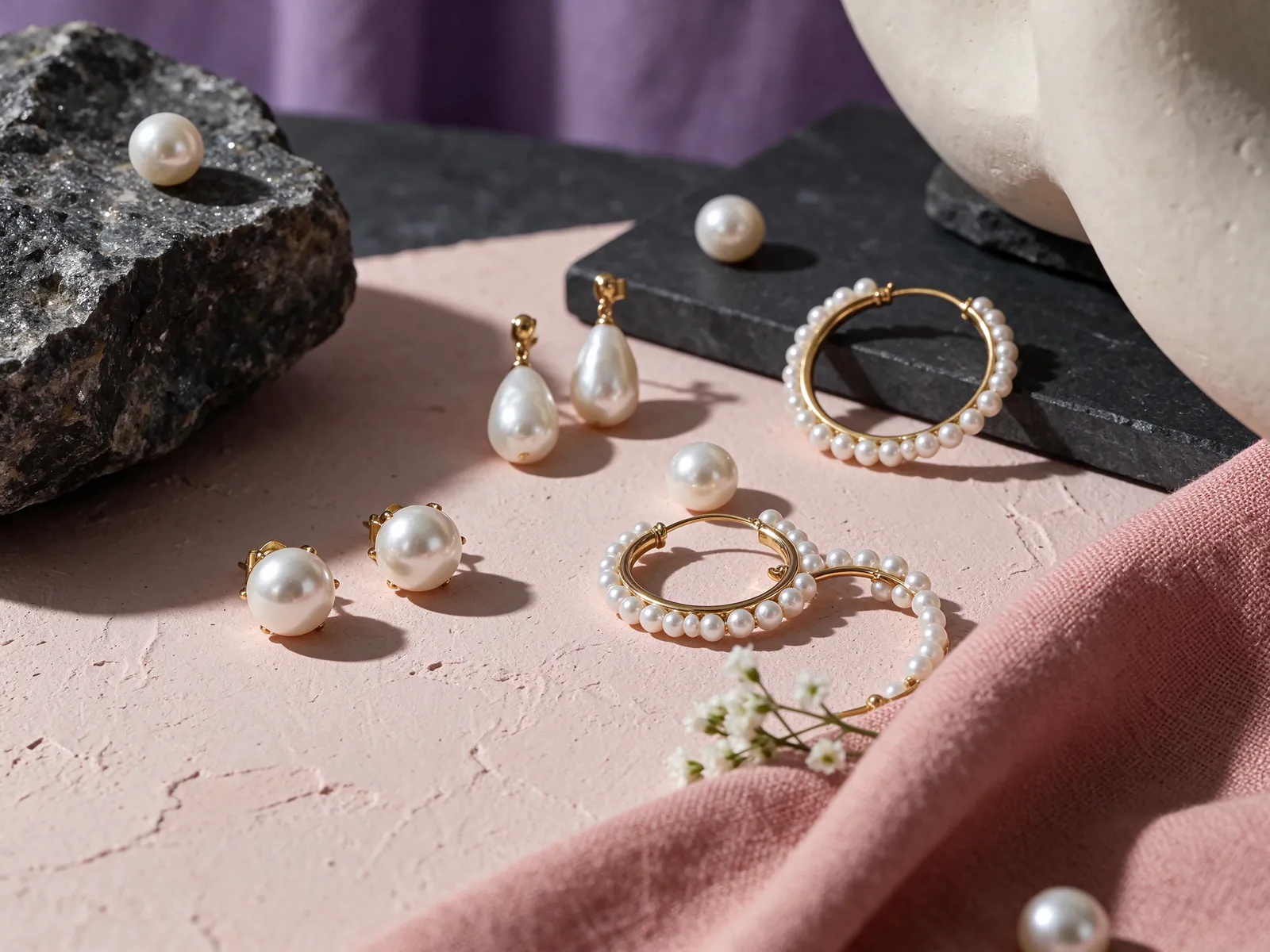
Match the earring's movement to the way you work
A stud centers attention close to the ear, while a drop or dangle extends the outline and can introduce movement. Both can belong in a work wardrobe. In a pearl studs vs drops vs dangles comparison, connect the shape to your actual day: holding a phone, adjusting glasses, turning during conversation or moving hair behind your ear. A category name cannot tell you whether a particular structure works with all of those actions.
Do not estimate comfort from apparent pearl size alone. Ask about the dimensions and weight of the complete earrings, and examine how the fastening works. During a fitting, change from sitting to standing and turn your head gently. Notice whether the lobe feels pulled, whether a piece repeatedly meets the collar and whether you keep adjusting it. These observations are more informative than a promise that one style will feel comfortable to everybody.
Try the glasses, headset and phone you normally use
Check an over-ear headset against the backing and the arm of your glasses. With earbuds, mimic insertion and removal to see whether your fingers brush the setting. Hold a phone as you normally would and notice any pressure between the handset and ear. If these actions require repeated readjustment, compare another outline. This fitting exercise does not establish suitability for workouts or other active use.
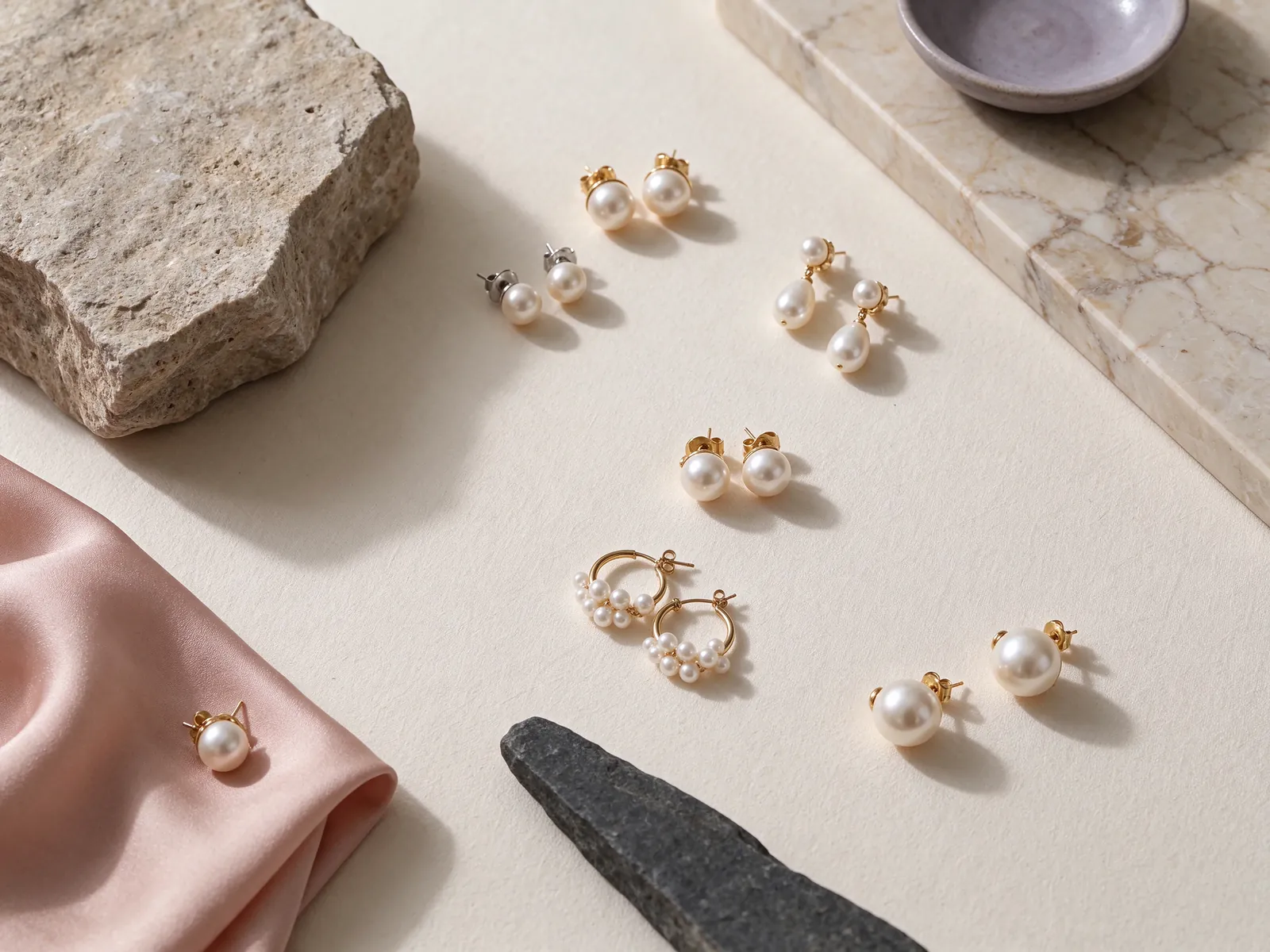
Plan around loose hair, pulled-back hair and extra piercings
Hair changes how much of an earring you see. Pulled-back hair exposes the lobe and metal outline, while loose hair may show only a small reflection as you turn. Try both if they are part of your routine. Rather than increasing size just to make the pearl visible, consider whether the setting catches strands or competes with a bold glasses frame. The aim is a readable arrangement of details around your face.
If you wear more than one earring per ear, decide which piece should draw attention first. When exploring pearl studs for a second piercing, check the spacing between piercings and the room occupied by the backings. Two pieces may look separated from the front but meet behind the lobe. Slight differences in left and right piercing positions are another reason to judge the overall balance instead of demanding identical placement at every point.
Add accessories in stages to find the right emphasis
Start with your work top, glasses and main earrings, then add a secondary ear piece if desired. Compare the arrangement before and after each addition. If the area looks crowded, simplifying an outline may work better than reducing all sizes at once. Check a three-quarter view as well as the front so the combination is not balanced only from a single camera angle.
Let your neckline help define a useful everyday silhouette
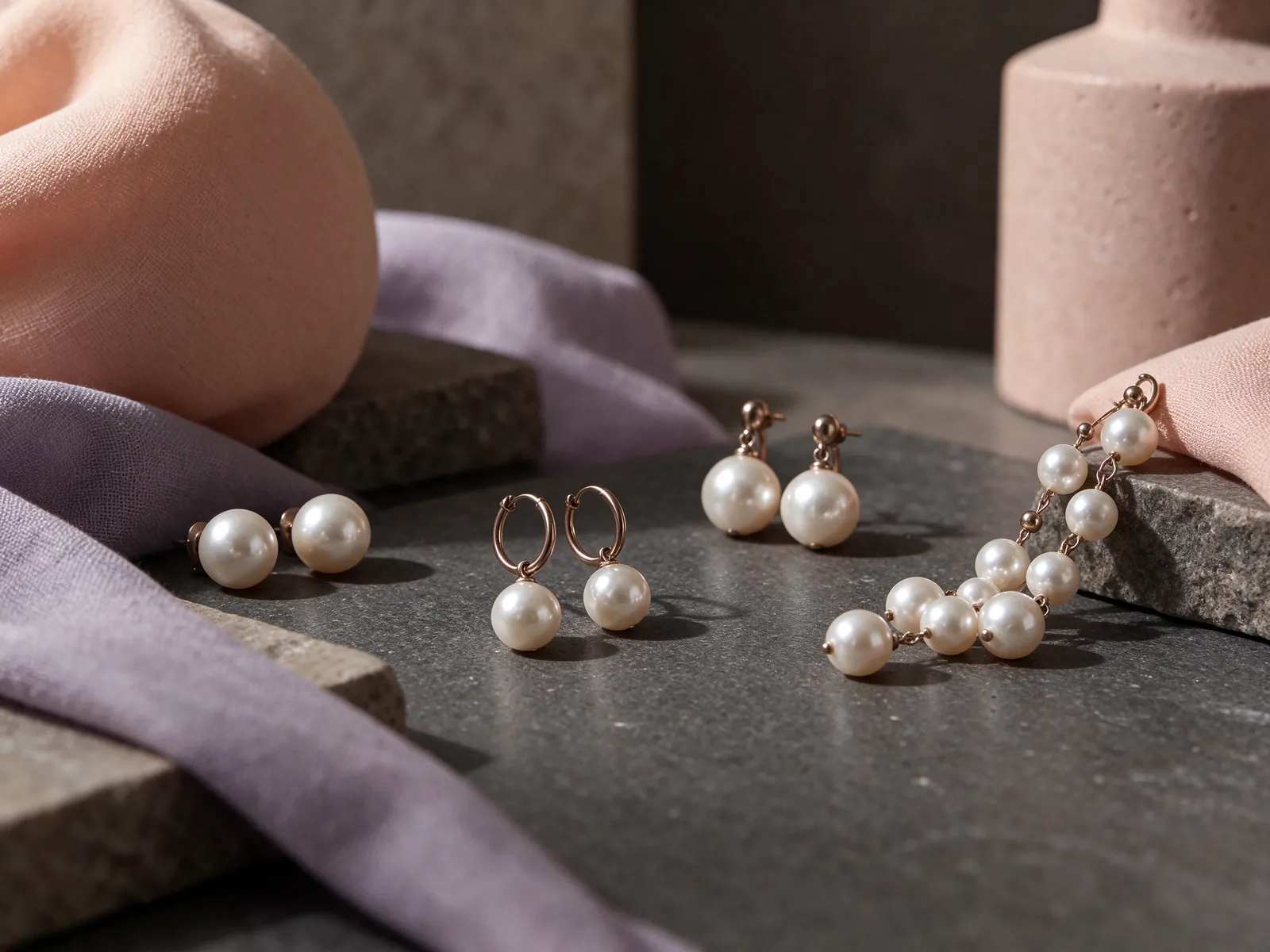
A button-down shirt creates defined collar lines, while a high-neck sweater places fabric closer to the ear. Try the earrings with those shapes rather than only with an open neckline. A short drop may need extra attention to whether it touches knitwear when you turn. With a blazer, look at the upper-body proportions: its shoulder line can make an earring seem different from how it appears against a simple T-shirt.
Use familiar colors and textures to compare the pair. Plain clothing lets the pearl outline stand out; a busy print or decorated collar may benefit from quieter ear details. Check color in soft daylight and your normal indoor lighting, since a white-background photograph is not the same as wearing the piece. If you want to explore a stronger focal point, compare the 12mm pearl earrings topic separately rather than treating that size as a default for office wear.
Shift the outfit after work without automatically changing scale
For a day that includes a meeting and dinner, choose around the more formal setting first. Changing a jacket or wearing your hair up can make the same earrings feel more prominent later. You do not have to increase pearl size to change the mood. Where a neckline or hair accessory already makes a statement, a simpler earring can keep the outfit's different details distinct.
Assess the pair together, beyond a size or pearl-type label
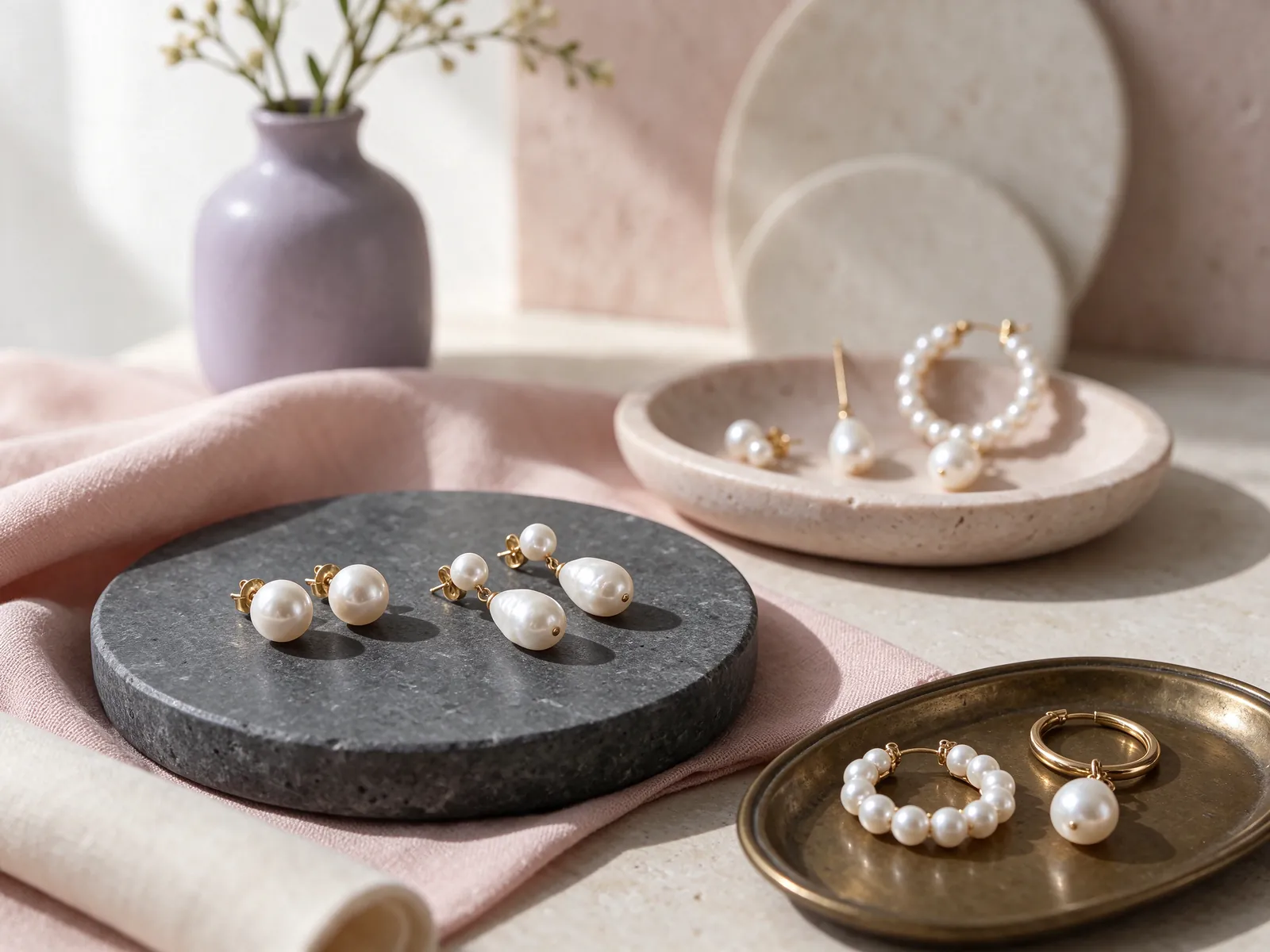
Place both pearls in the same light and observe their shapes, colors and luster together. Rotate them to see how surface reflections change. One side can look brighter in a photograph simply because of its angle to the light. For earrings, the useful question is how the pair relates when worn and viewed at a normal distance. Matching does not require every close-up reflection to look identical.
GIA identifies seven pearl quality factors: size, shape, color, luster, surface quality, nacre quality and matching for multi-pearl jewelry. This gives you a broader framework than selecting by diameter alone. A shape or color cannot establish origin or whether a pearl is natural or cultured. If those details matter to you, read the specific jewelry description and any relevant documentation, and check which item the document describes rather than assuming that a category name supplies every detail.
Connect the setting color with jewelry already in your rotation
Consider your favorite watch, rings and necklace when choosing the metal tone. Flint Jewelry's customization material options are 18K 750 white gold, 18K 750 yellow gold, 18K 750 rose gold, PT950 platinum and PT900 platinum. You can discuss the tone and outline you want to emphasize without making every accessory identical. Repeating a familiar tone can connect an outfit, but the material name does not replace evaluating fit and backing structure.
Compare designs with a checklist you can actually reuse
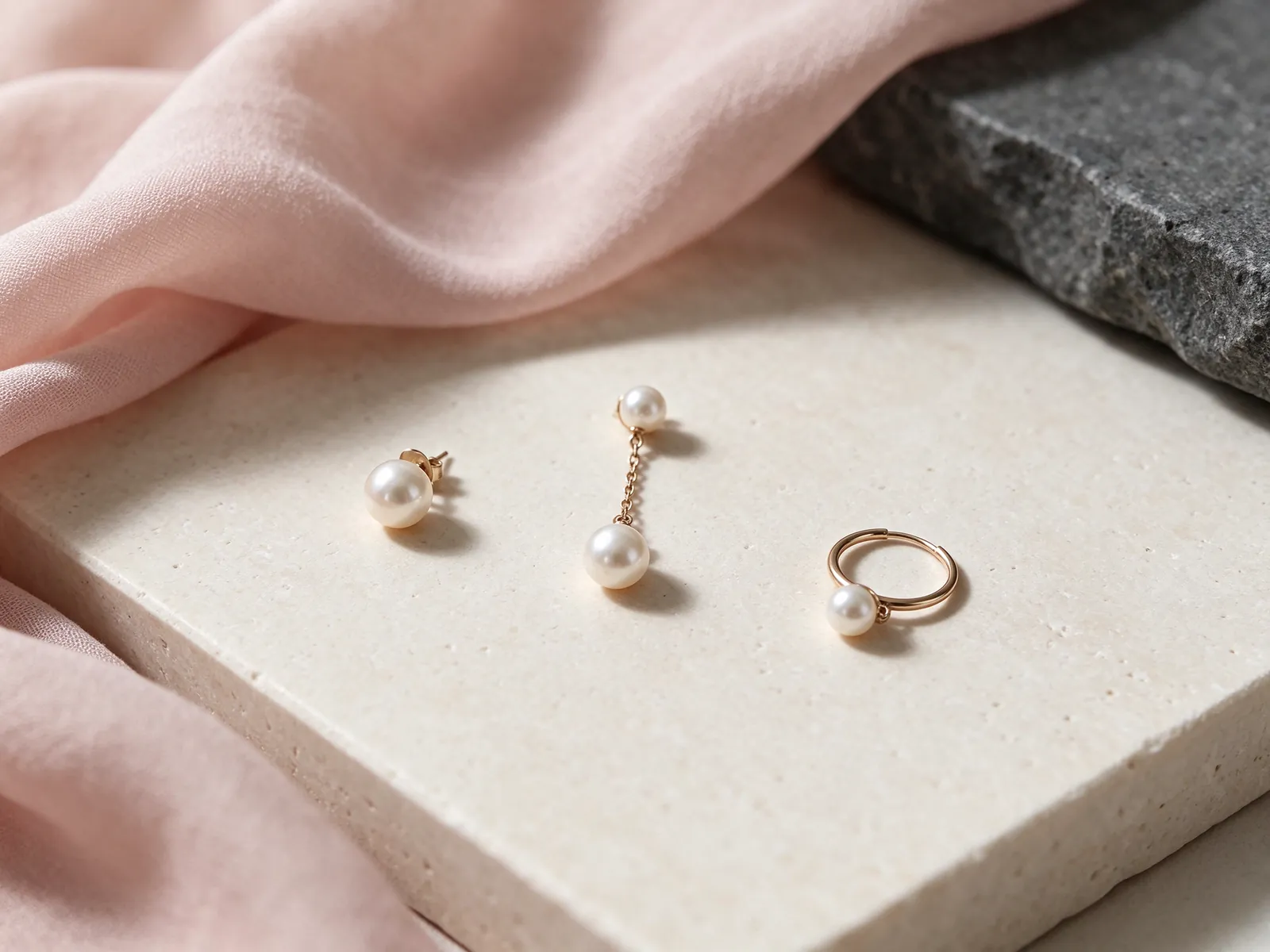
Choose a few outfits that represent your work week before browsing designs. Include the clothes you wear for presentations, a typical everyday top and an outfit that continues into the evening. Add your usual hairstyle, glasses and headset habits to the list. The pearl earrings design hub can help you separate close-fitting from hanging outlines; your checklist then provides a consistent way to compare them against the same needs.
Record practical observations after a fitting: how much lobe remains visible, whether you like the side depth, where a collar touches and how easily you manage the closure. These are more useful than simply noting that a pair looks elegant. For a customization conversation, explain which features you want to keep and which you want to change. An outfit photo and specific observations communicate more than a close-up of an earring alone.
Buying a gift requires a different starting point
Observe the recipient's existing earring habits rather than substituting your own preferences. Do they usually wear studs, short drops or multiple ear pieces? Are glasses and high collars frequent choices? A preferred metal color can narrow the discussion, but fastening habits and piercing positions still affect suitability. If you do not know those details, learn about their routine before choosing solely from an attractive image.
Protect everyday earrings with a simple removal and care routine
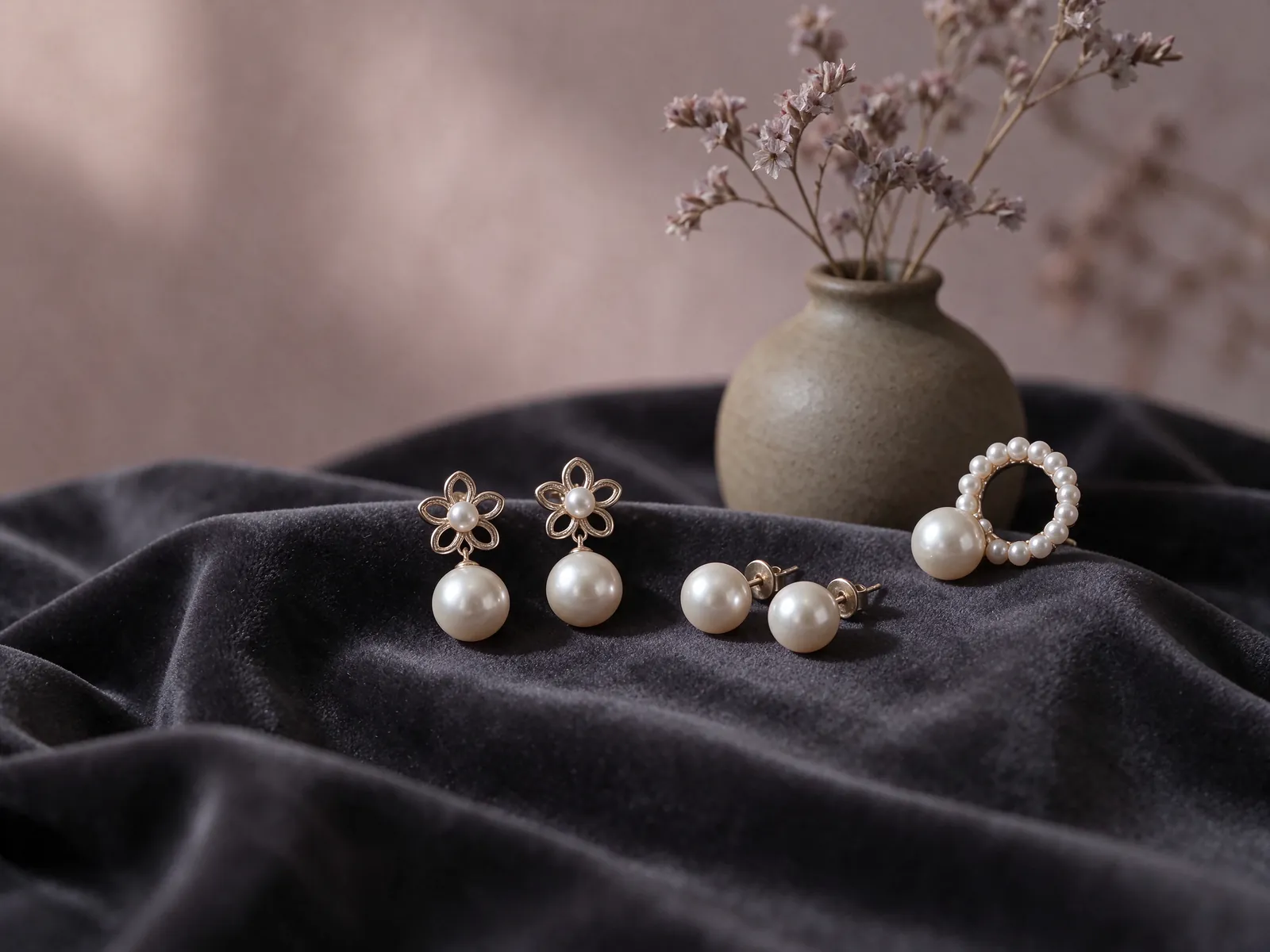
Apply perfume and hair products before putting on pearl earrings to reduce direct spray contact. Remove the earrings before pulling a top over your head, particularly one with a close neckline. After wearing, gently wipe with a very soft clean cloth and put the pair in a separate compartment. Keeping pearls away from keys and harder jewelry reduces unwanted rubbing and makes the small backings easier to keep track of.
GIA gives pearl a Mohs hardness of 2.5 and says pearls should never go into ultrasonic or steam cleaners. That number supports gentle care; it does not describe the impact resistance of the complete earring. Avoid acids, perfume, hair spray and excessive heat. If a backing, post or pearl attachment seems altered, stop wearing the earrings and ask about the appropriate next step instead of bending or squeezing components into place.
A daily style is not an all-activity wearing instruction
Take earrings off before sleeping, showering or exercising. A design that fits a work outfit does not automatically suit those activities or contact with personal-care products. Carry a small divided jewelry case if you may remove the pair away from home. Check both earrings and backings before closing it. A consistent storage habit avoids leaving small parts in tissue, loose in a bag or near a desk edge.
Would you like to discuss everyday pearl earrings for your own work wardrobe? Bring together your usual hairstyle, necklines, headset habits and preferred silhouette, then contact Flint Jewelry on WhatsApp or call +85260106207 to talk about styling and customization preferences.
| Work situation | Check first | Action during a fitting | Useful selection focus |
|---|---|---|---|
| Button-down shirt and blazer | Lobe space beside the collar lines | Look at upper-body proportions | Separate ear details from neckline details |
| Loose hair and glasses | Contact with hair and the frame | Turn gently with hair in its usual position | Balance visibility with the setting outline |
| Headset and phone calls | Pressure around the backing | Mimic your usual calls and headset use | Compare without repeated readjustment |
| High-neck sweater | Distance from the lower earring to fabric | Observe a side view while turning | Notice any repeated collar contact |
| More than one piercing | Front spacing and backing clearance | Inspect the combination from both views | Give one piece the leading role |
Pearl knowledge and authoritative references
GIA ranks pearl at 2.5 on the Mohs hardness scale and advises against ultrasonic and steam cleaning. Gentle wiping and separate storage are appropriate everyday care habits.
Read the reference for this factFrequently asked questions
Can a fuller pearl outline still work on a small earlobe?
It may, depending on piercing position and the setting's shape and projection. Compare the visible lobe edge and side profile, then try the pair with your everyday hair and neckline. There is no single diameter that suits every small lobe.
What should guide my choice in a casual office?
Start with the most formal situation you regularly encounter, then compare the earrings with your usual casual work clothes. A familiar metal tone and clear outline can express your style without making size the only decision.
Will a small stud necessarily avoid headset contact?
No. The backing and headset shape matter as well as the front. Try your normal headset and glasses during a fitting, checking contact behind the lobe and while you remove or replace the equipment.
Should I reject a pair if one pearl looks brighter in a photo?
First compare both in the same light and at similar angles. Lighting can change apparent brightness. Rotate the pearls and assess the pair at normal viewing distance before deciding how well their color, shape and luster relate.
Can I use the same cleaning machine I use for other jewelry?
Not for pearls: GIA advises against ultrasonic and steam cleaners. Wipe after wearing with a very soft clean cloth, avoid acids and direct perfume or hair spray contact, and ask about any changes to the setting before continuing to wear the pair.
Updated: