
Choosing a Japanese Akoya pearl ring: how do band width and setting height affect comfort across Akoya pearl ring designs?
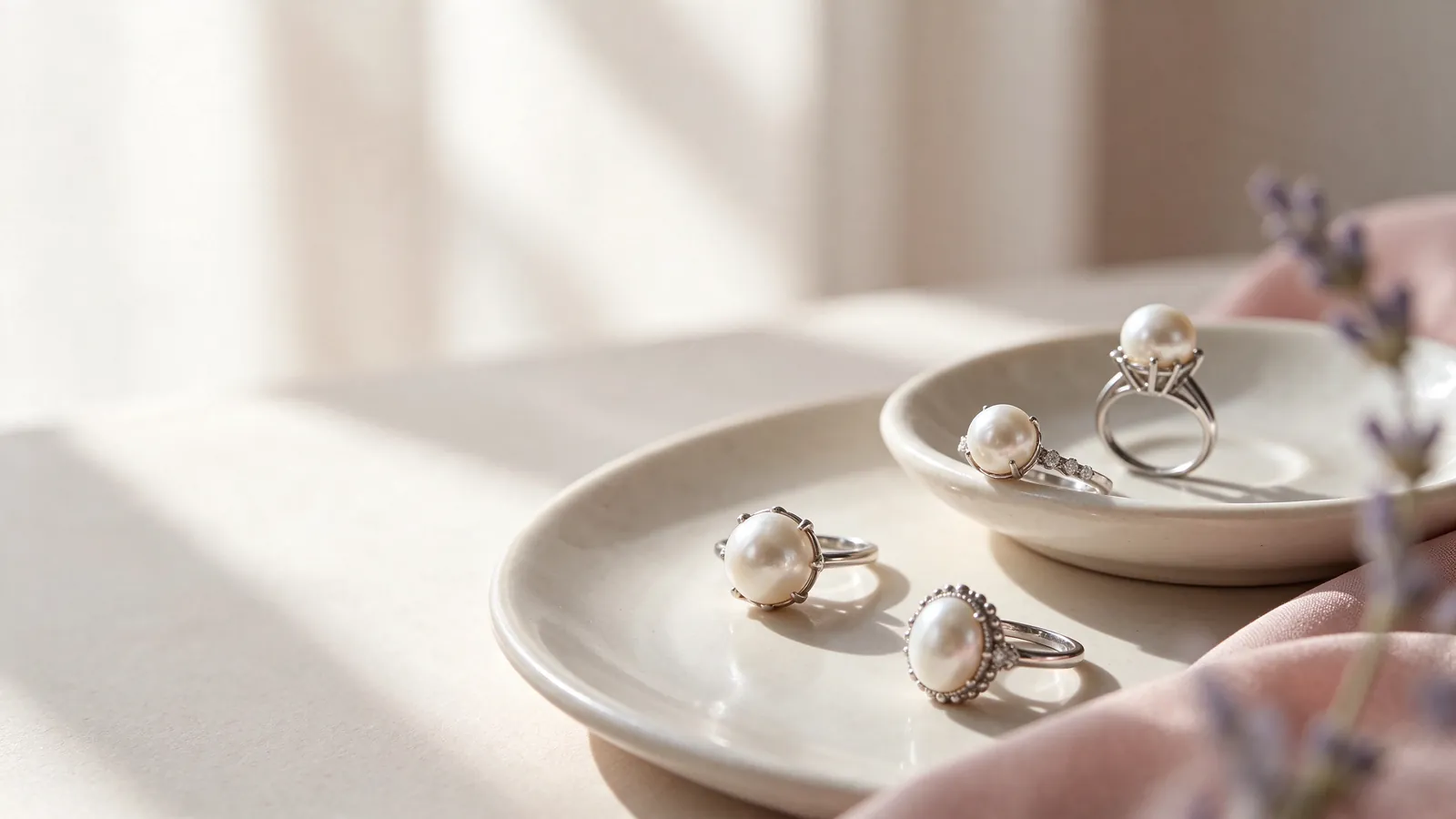
Begin with the entire ring rather than its center pearl. On the finger you intend to use, notice how much space the band occupies and how it feels beside adjacent fingers. A familiar size number does not capture the differences between band widths and shapes. Compare the ring while your hand is resting naturally, then while it is moving, so that a flattering posed photograph is not the only basis for your choice.
Turn your hand to inspect the side profile. The distance between pearl and finger, along with any projecting setting, matters when you reach into a bag or move a sleeve past the ring. Try those gestures gently using your own clothing and phone. A wider exploration of pearl rings can help distinguish the outlines you like, but the fitting should still focus on how the particular design behaves on your hand.
How can you check knuckle clearance and comfort in motion when trying Akoya pearl ring designs for a Japanese Akoya pearl ring?
Slide the ring on slowly, noticing resistance at the knuckle and pressure after it reaches the finger base. Then remove it without forceful tugging. Persistent turning or uncomfortable compression deserves attention even if the ring passes the knuckle. Record the hand, finger and band width used for the fitting; unusual swelling or cold hands can make one session less representative of your normal experience.
Read a Japanese-origin description as a specific question
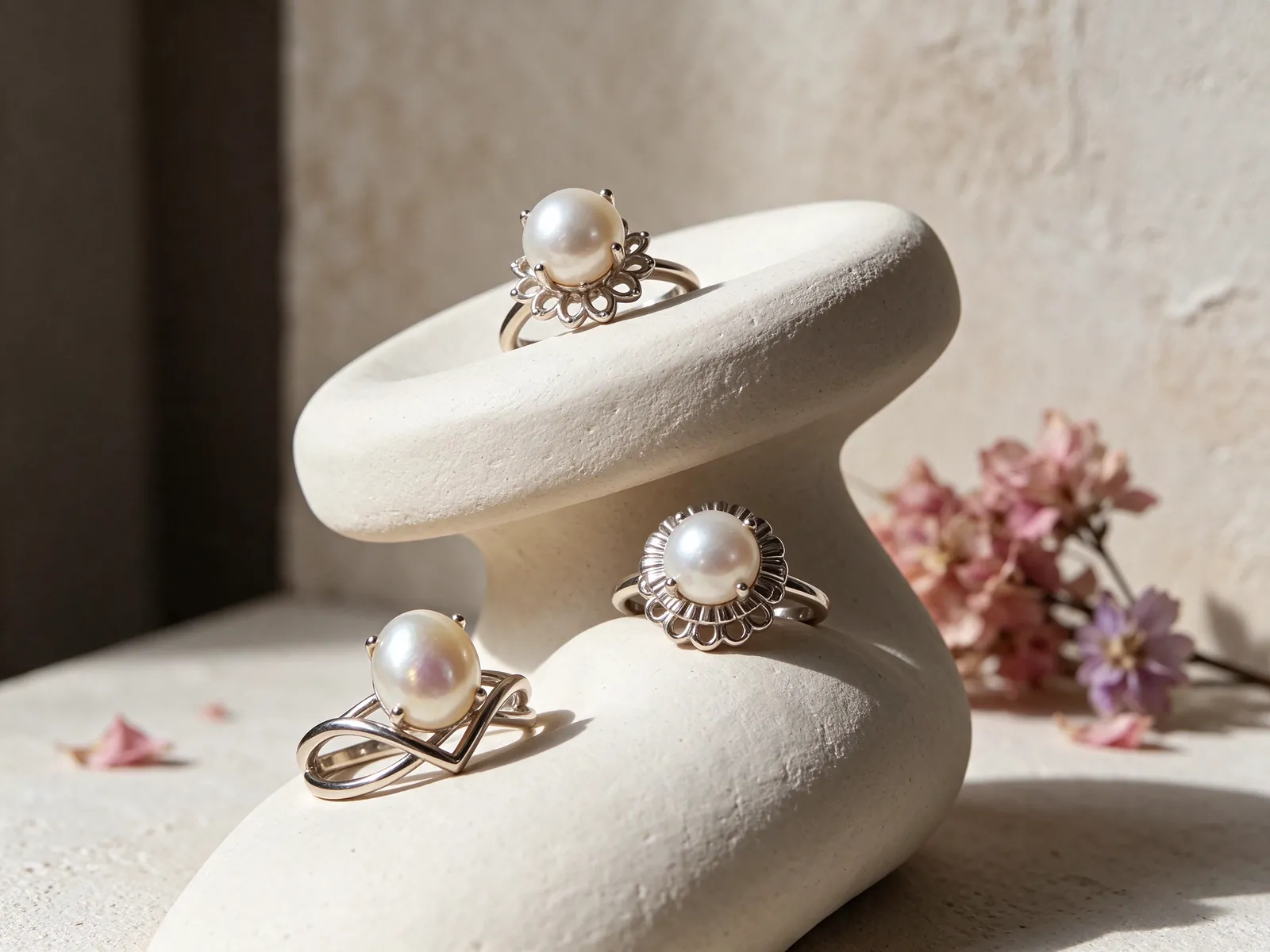
Japanese Akoya pearl ring wording should lead to a clear conversation about what is being described. Is Japanese attached to the pearl's stated origin, the making of the jewelry or the style? The guide to an Akoya pearl necklace provides a related comparison when coordinating a ring with a strand, but it does not establish the identity or origin of any particular pearl simply because the ring appears within an Akoya topic.
Keep quality separate from origin. GIA discusses seven pearl value factors: size, shape, color, luster, surface quality, nacre quality and, for multi-pearl jewelry, matching. Decide which visible features you value in a single-pearl ring and whether matching matters for jewelry you already own. Neither a white color nor a round shape proves where a pearl came from, and neither shows that a certificate accompanies the ring.
Read documents for their actual conclusions
If an origin statement or laboratory document is offered, ask how it relates to the pearl being discussed. Read the conclusion and the subject of the document rather than treating a title as a blanket assurance of quality. This lets you distinguish the seller's description from what the document actually states without expecting an origin phrase to answer every buying question.
Find a silhouette that feels balanced, not merely large
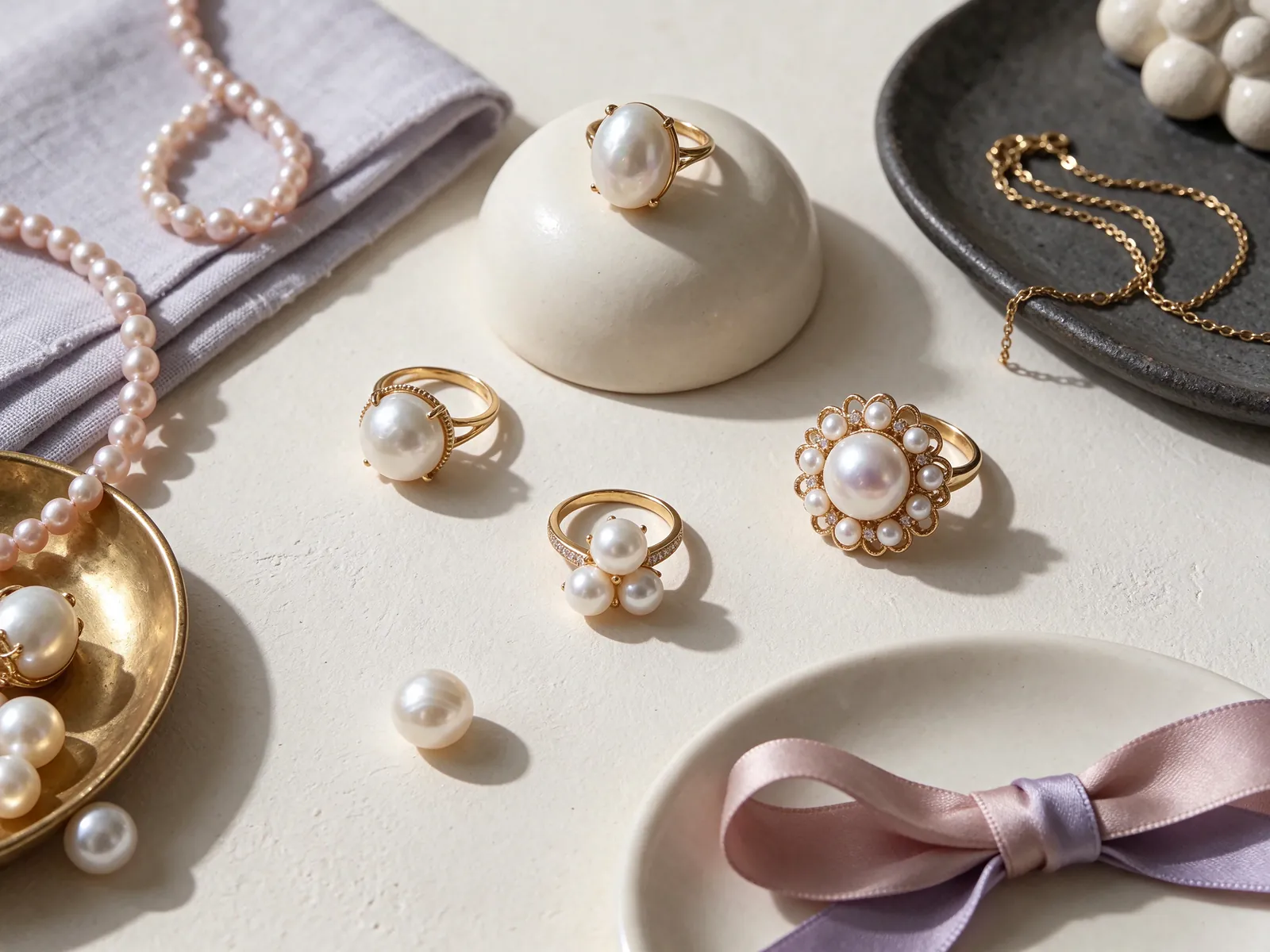
A ring's visual presence changes with finger length, the space below the knuckle, hand width and nail shape. View the design at arm's length as well as close up. An open area around the pearl can produce a restrained composition; a more defined frame can give a stronger focal point. Neither approach needs to be tied to a fixed rule about hand type, and the largest-looking pearl is not automatically the most balanced option.
Use the same comparison method if a South Sea pearl ring or freshwater pearl ring is also on your shortlist. Consider the intended finger, side profile and preferred amount of detail rather than guessing dimensions from a pearl-type name. If a darker color direction appeals to you, a Tahitian pearl ring offers another topic to explore. Compare the actual appearance with your clothes instead of assuming a category name predicts every design.
Use your everyday clothing as the styling test
Try the ring with a cuff, sweater or blouse similar to what you regularly wear. Busy patterns and decorative sleeves may make a quieter outline appealing, while simple clothing can leave space for a stronger ring statement. Take a photograph with your hand relaxed at your side. That context helps reveal whether you like the whole combination, not just the close-up of the jewelry.
Evaluate the pearl across views, not across photo filters
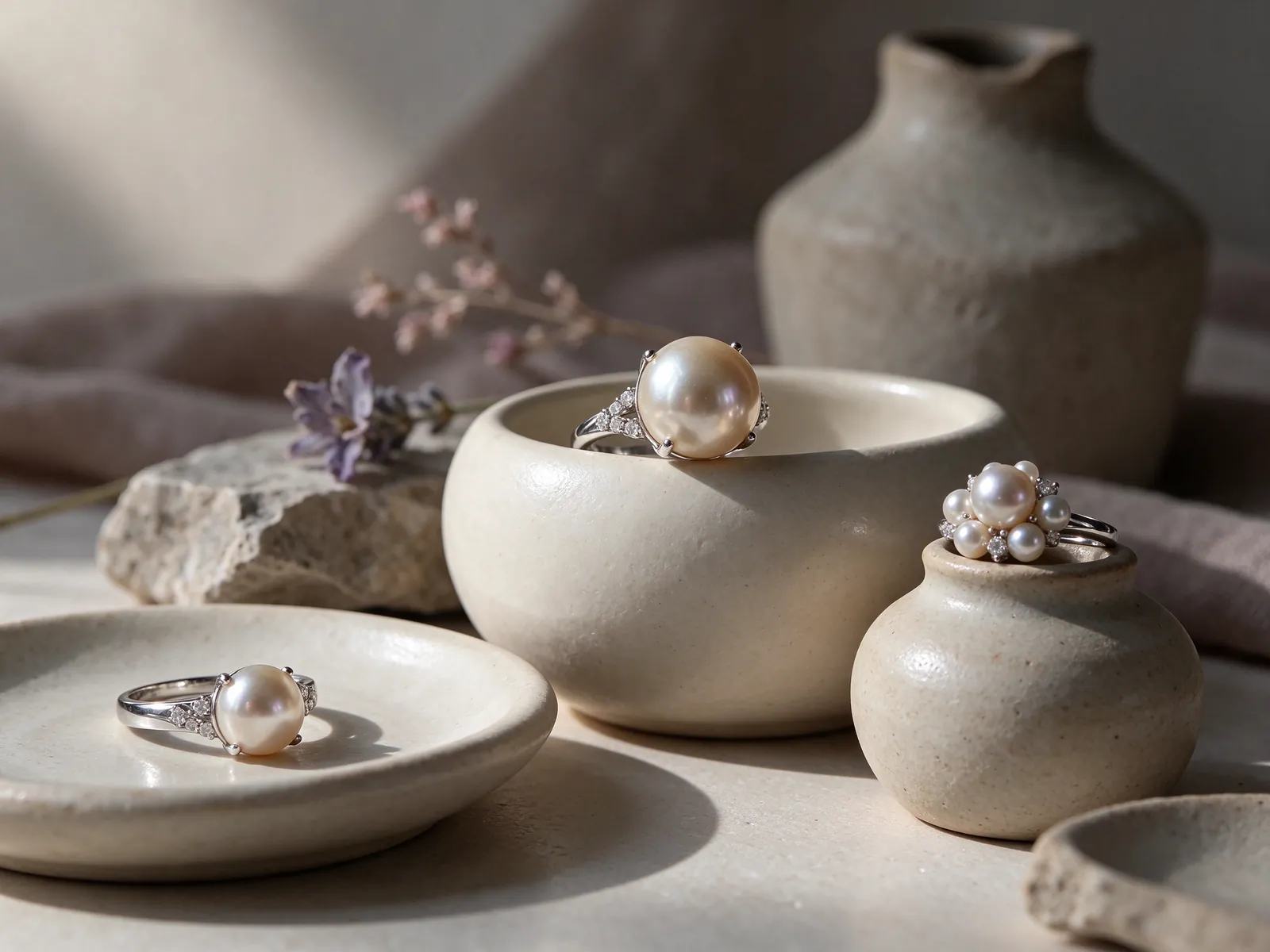
For a useful comparison, keep the background, lighting and distance as consistent as possible. Look at the overall color, rotate the ring and observe how reflections and surface features change. An image with bright exposure can make a pearl appear whiter while reducing visible detail. For a remote discussion, request a front view and turned views so you can see more than the most flattering angle.
GIA separates bodycolor, overtone and orient, while noting that not every pearl exhibits all three components. You can begin by describing the cooler or warmer impression you prefer, then compare the actual pearl. Notice where a surface feature sits and how visible it is during normal wear. A magnified image is useful for detail, but return to ordinary viewing distance before deciding how the ring looks as a whole.
Coordinate with other pearls in a shared environment
When planning to wear the ring with pearl earrings or a necklace, compare them together if possible. If not, photographs in similar conditions give a better starting point than unrelated product images. Look for a pleasing relationship in color and luster rather than insisting on identical photographs. Pieces at the neckline and on the hand catch light from different positions, so coordination is a more practical goal than photographic sameness.
Decide whether the pearl or its frame should lead
A single-pearl silhouette highlights the relationship between the pearl and the band. With a pearl halo ring, consider the complete outline created by the frame, not just the center. Does the surrounding detail keep the pearl visually prominent, and how much room does the face occupy on your finger? Check the side as well as the front, especially if your sleeves pass close to the ring.
A pavé pearl ring brings attention to detail along the band, making comfort beside neighboring fingers part of the comparison. A pearl and diamond ring may use its surrounding stones to frame the pearl or extend the outline sideways. Compare those effects with jewelry you normally wear. The amount of sparkle is one preference, but the direction of the lines and the space around the center can be equally important.
Check physical spacing before making a ring stack
Look from the side when placing another ring next to the pearl ring. Check whether its edge reaches the pearl or the setting, then move the fingers gently. If the pieces collide, split them between fingers or hands instead. That arrangement can also create a cleaner visual focus, allowing the pearl to stand out without requiring a tightly packed stack that feels awkward in use.
Prepare priorities for a customization conversation
The five metal options for discussion are 18K 750 white gold, 18K 750 yellow gold, 18K 750 rose gold, PT950 platinum and PT900 platinum. Consider which metal color you enjoy with your clothing and existing jewelry, then look at that direction alongside the pearl's actual appearance. Treat a cool or warm palette as a way to explore your preferences rather than a universal formula for what anyone should wear.
For a conversation with Flint Jewelry, explain your intended finger, usual activities and preferred silhouette. Mention an existing necklace, earrings or ring if coordination is important. A reference ring is more helpful when you describe its width and the location of any tightness, rather than giving only its size. For a gift, first establish the recipient's intended hand and finger; a ring worn elsewhere is not an exact fitting substitute.
Describe trade-offs through real movements
A preference becomes clearer when linked to an action: reaching into a tote, pulling on a sweater or typing at a desk. Identify which of these matters most and whether you want a quiet outline or a stronger visual center. These details make design discussion practical. They also help you recognize when separate priorities compete, instead of expecting the phrase everyday ring to define one perfect solution.
Choose a wearing routine that respects pearl care
GIA lists pearl at 2.5 on the Mohs hardness scale. Because a ring sits on an active hand, consider when it could meet hard surfaces, cleaning products or impact. Remove it before household tasks, exercise or handling objects that create those risks. A setting that looks discreet is not a reason to overlook contact. Choosing appropriate occasions to wear the ring may fit your routine better than wearing it through every task.
Wipe the pearl after wear using a very soft, clean cloth, and store the ring separately from pieces that could scratch it. GIA advises avoiding acids, perfume, hair spray and excessive heat. It also states that pearls should never be cleaned in ultrasonic or steam cleaners. The right approach must consider the entire ring, so do not automatically apply a cleaning method used for another gemstone or a plain metal piece.
Respond to changes by pausing wear
Notice whether the pearl's position changes, the setting catches fabric differently or the band appears unusually altered. If the pearl seems loose, stop wearing the ring rather than twisting it to test the attachment or using household glue. Note when you noticed the change and the activity involved. A clear description supports a useful discussion about inspection without assuming what work will be needed.
To discuss a silhouette and fit that suit your preferences, contact Flint Jewelry on WhatsApp or call +85260106207. Describe the intended finger, a reference band width and your daily movements so the conversation can address the proportions and comfort you value.
| Decision area | Look for | Test in context | Useful takeaway |
|---|---|---|---|
| Band and fit | Width, finger-base pressure and turning | Slide on and off, then relax and move the hand | A familiar size does not replace a fitting of this design |
| Side profile | Projection of the pearl and surrounding setting | Try a phone, bag opening and familiar sleeve gently | Balance visual presence with movement |
| Pearl appearance | Color, reflections and visible surface features | Use consistent light and several turned views | Return from a close-up to normal viewing distance |
| Frame and accents | Which part of the ring first draws attention | Compare against everyday clothing and jewelry | Choose the outline, not simply the amount of sparkle |
| Care routine | Potential impact, abrasion, chemical contact or heat | Review regular work and household activities | Plan when to wear and when to remove the ring |
Pearl knowledge and authoritative references
GIA gives pearl a Mohs hardness of 2.5 and advises that pearls should never be cleaned with ultrasonic or steam cleaners.
Read the reference for this factFrequently asked questions
Can a round white pearl prove that my ring has Japanese origin?
No. Shape and color alone do not establish origin or certification. Ask what the origin description concerns and what information relates to the specific pearl. Read any supplied document for its actual stated conclusions rather than extending them beyond what it says.
Should a ring that passes my knuckle easily be considered the right fit?
Knuckle passage is only one check. Once seated, assess pressure, turning and contact with neighboring fingers, then try removing it without force. The complete band width and shape matter, and a fitting during unusual swelling or cold conditions may not represent your normal comfort.
How do I choose between a simple outline and a halo for daily wear?
Compare the total face-up footprint, the side profile and the way each design works with your sleeves. Decide how much surrounding detail you enjoy and whether the pearl remains the focal point. Neither style is automatically the daily choice for every hand or routine.
What information helps when discussing an Akoya pearl ring as a gift?
The intended hand and finger, preferred silhouette, typical activities and any jewelry it should coordinate with are useful starting points. An existing ring can provide context, but include its width and where it is worn. Do not turn a photograph or a size from another finger into an exact measurement.
What should I do if the pearl seems to shift in its setting?
Pause wearing the ring and avoid twisting the pearl or attempting to attach it with household glue. Describe when the movement was noticed and what was happening at the time, then discuss inspection. The cause and appropriate next step should not be guessed from the symptom alone.
Updated: