
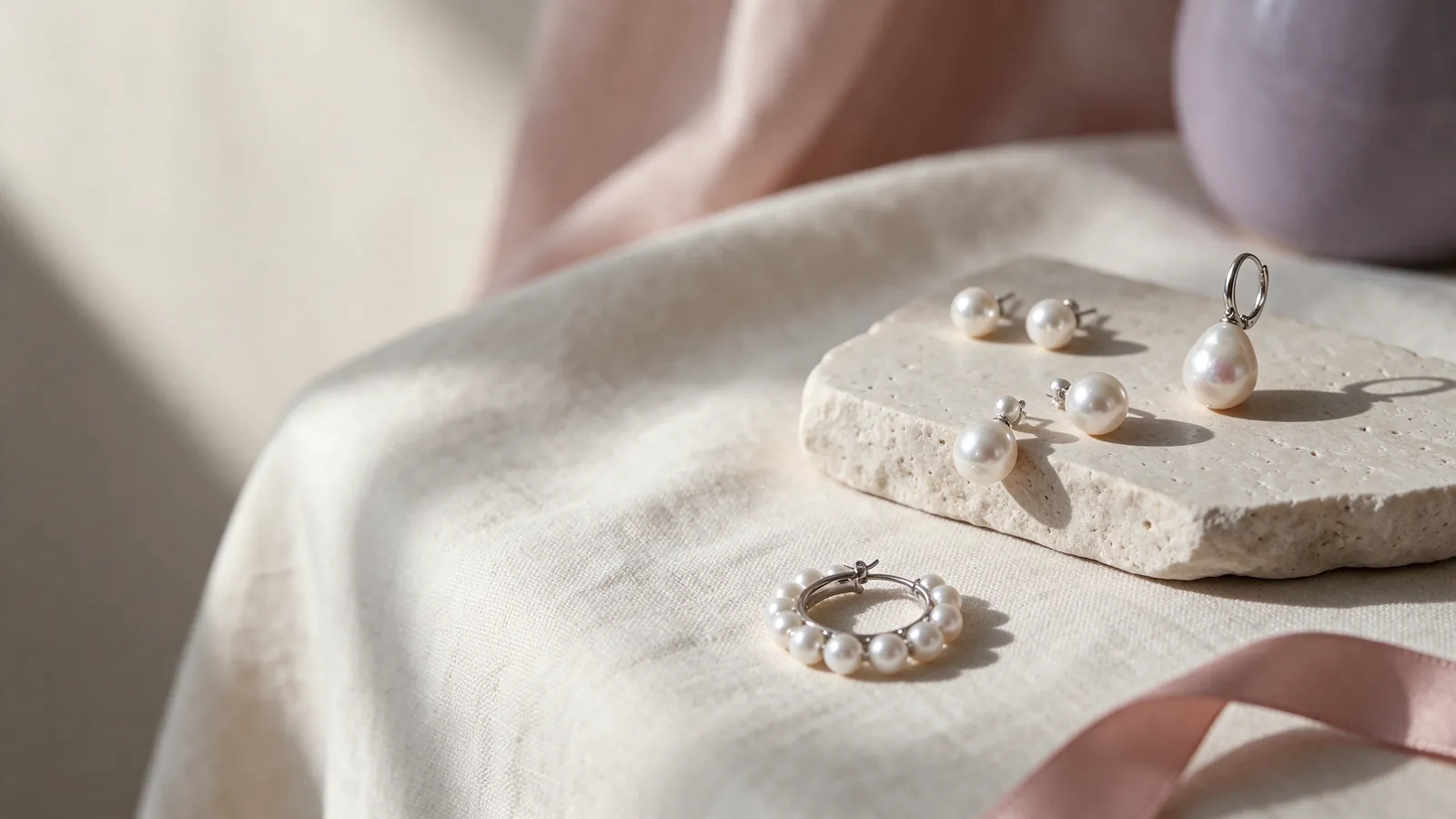
How do you assess post compatibility and fit when comparing earlobe support backs for pearl earrings with pearl earring support catches and support pads for pearl earrings?
Begin by identifying the post and the way its original back attaches. Similar-looking fittings are not necessarily interchangeable: a threaded connection differs from a smooth post, and a locking mechanism may have its own requirements. Establish the post dimensions and available length before selecting a replacement. The fitting should attach and release normally, without force or bending. Reading about pearl earring back types gives you a useful starting point before comparing contact surfaces or support features.
Once the connection is suitable, examine the back's position against the ear. Is the surface resting evenly, or is one corner touching a fold? Does it extend beyond the lobe, turn sideways or become visible from the front? A broad plate is not automatically a good match for the space available. Compare fittings on the same earrings where possible; changing the decoration and the back together makes it harder to identify the reason for a different fit.
When trying earlobe support backs for pearl earrings, pearl earring support catches or support pads for pearl earrings, what pressure or pinching should prompt you to stop?
Remove the earrings if you notice pinching, stinging, itching, warmth or discomfort that continues. Pushing the back closer is not an answer to these sensations. Gentle movement may expose an edge that did not bother you while still. Even a comfortable first try does not establish all-day comfort. Persistent symptoms or skin changes after removal deserve attention and medical advice when appropriate, rather than repeated trials with tighter fittings.
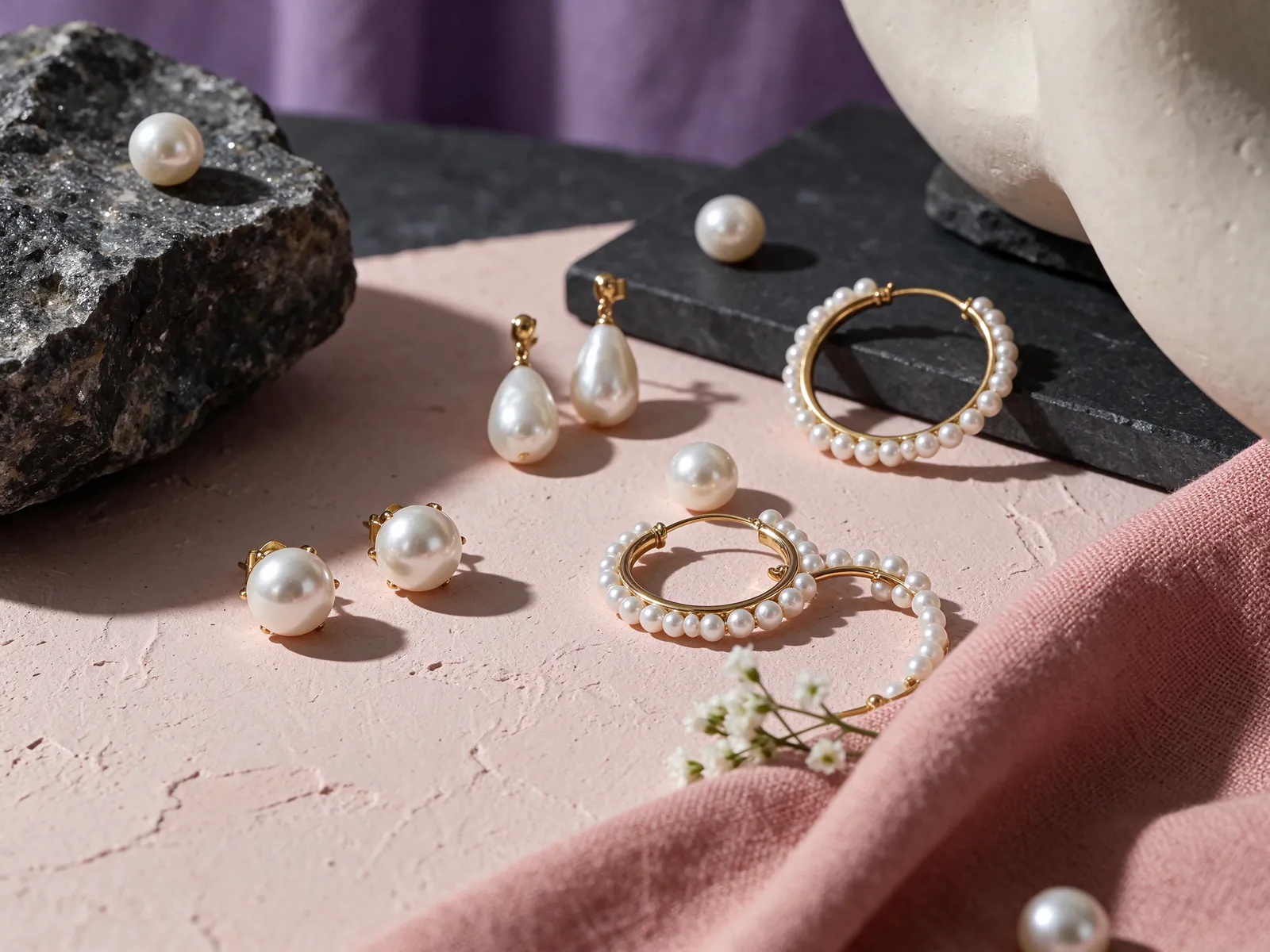
Separate the job of holding the post from the job of supporting its position
Think of fastening, retention and support as separate questions. A conventional back fastens onto the post. A loss-prevention feature addresses the way a connection locks or releases. A support feature considers contact behind the lobe and the position of the earring in front. A particular fitting may combine functions, but a label such as secure does not establish its contact design. Ask how it connects, how it comes off and where it is intended to sit.
Pearl earring support catches should not be identified solely by a larger silhouette. The outline, any extension and the way the catch aligns with the post all matter. Support pads for pearl earrings also should not be treated as universal add-ons. Inserting a pad beside an existing back changes the space between components and the length of post available for fastening. Understand the intended assembly instead of building a combination that only appears to fit.
Name the observation rather than prescribing a tighter back
Forward tilt, difficult release and a sharp contact point are different observations. Tilt calls for a look at balance; difficult release calls for a look at operation; a sharp contact point calls for a look at shape and position. Describing the issue precisely helps you compare an appropriate fitting or a different earring profile without assuming that greater pressure is the solution.
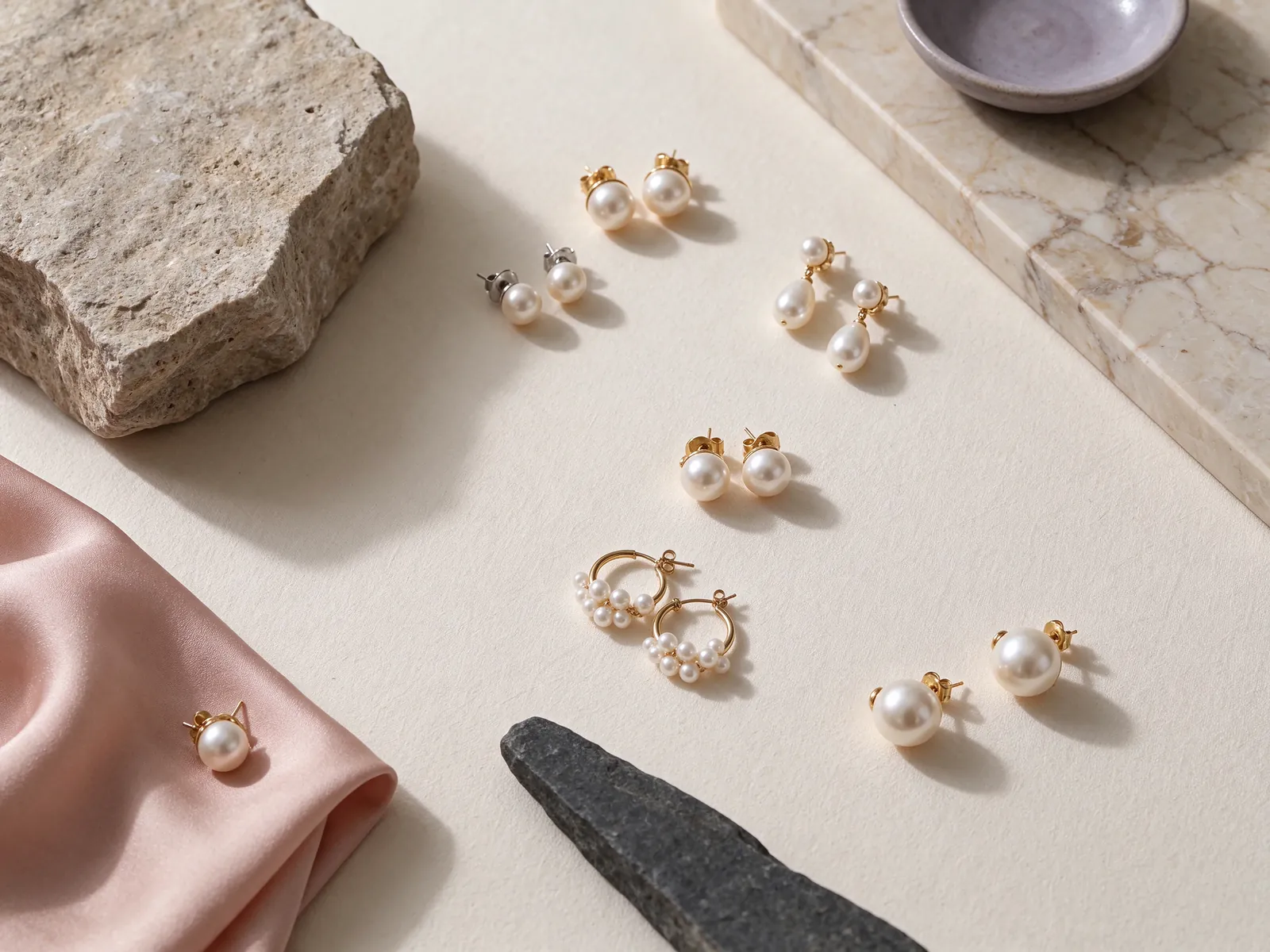
Statement size is only one part of the balance equation
A pearl's diameter describes visible size, not the finished earring's weight or the position of its post. When looking at 12mm pearl earrings, consider how close the pearl sits to the lobe, how the metal framework extends and where the attachment is placed. There is no universal pearl-diameter cutoff that tells every wearer to use a support back. Two earrings with similar front coverage can have different side profiles and require different comparisons.
The outline of geometric pearl earrings may spread upward, outward or down below the ear. Assess the full design rather than treating the largest pearl as the only relevant element. A hanging ornament still moves when your head moves; an expanded back does not turn it into a fixed stud. Watch both the resting angle and gentle motion, including contact with hair or clothing. Reconsider the design if keeping its preferred angle depends on uncomfortable pressure.
Compare a side view, not just a polished front view
Use similar posture and lighting to record the front and side positions. The front view helps compare alignment; the side view shows projection and the catch's placement. These photographs are useful for discussing fit, not for diagnosing the lobe or proving a result. An unseen back, post measurement or finished weight cannot be established from the front product image alone.
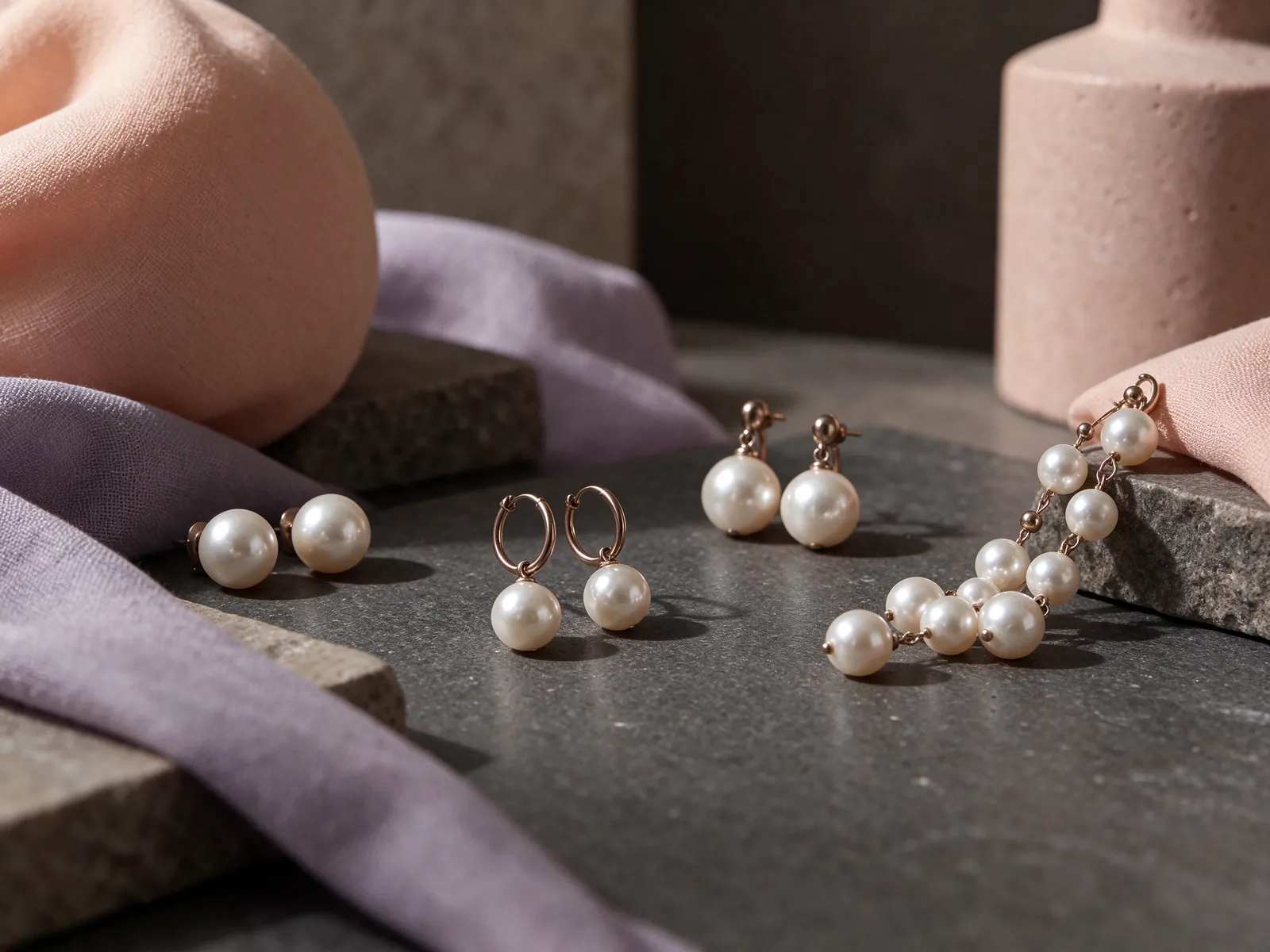
Match a smaller lobe's outline instead of following a blanket size recommendation
A lobe's thickness, lower edge and piercing location affect the space available behind it. A smaller lobe does not necessarily call for the widest support plate or one fixed pearl size. When considering pearl earring size for small earlobes, compare the front's coverage with the rear's contact area. An earring can appear centered while its back presses into a fold. Examine both ears because their outlines and piercing positions need not be identical.
If a large design still feels unsuitable with a support fitting, include a closer profile or small pearl stud earrings in the comparison. A smaller appearance does not prove lower weight, so ask about the finished construction rather than making that assumption. It nevertheless gives you another visual proportion to assess. The goal is a front-and-back combination that suits your circumstances, not a back expected to make every statement shape appropriate.
Let each ear have its own assessment
Do not push one catch farther forward merely to make the rear positions look identical. Check each side's alignment within the fitting's intended operation. If one earring changes angle when you look down or turn, make a note of that specific movement. This information is more useful in a fitting discussion than repeatedly tightening the side that appears different.
Include glasses, necklines and hairstyle in the try-on
Try the earrings with the clothes and accessories you expect to wear, not only with an unobstructed neckline. A support fitting may sit near a glasses arm, mask loop or hair accessory, while a drop can meet a jacket collar. The pearl earring size guide helps organize a visual comparison, but your own rear clearance and movements still need assessment. Turning toward someone or looking down at a desk can reveal contact that a straight-ahead mirror pose misses.
With hair swept up, inspect the back from the side and rear as well as the front. Do not reposition a plate incorrectly or add pressure just to hide its edge. If a long ornament brushes a high neckline, compare a shorter design or a different collar; a support back is not an anti-tangle device. Complete perfume, hair spray and styling before adding pearls so the surface is not exposed to those sprays during preparation.
Rehearse ordinary movements, not endurance
Gently turn your head, look down, arrange your hair and move your collar to check likely points of contact. Stop if a fitting pinches or the ornament pulls. You do not need to tolerate discomfort to demonstrate that earrings can last through an event. For a more active occasion, comparing a shape without long extensions may be more useful than searching for a stronger back.
Care for the pearl while removing and cleaning the fitting
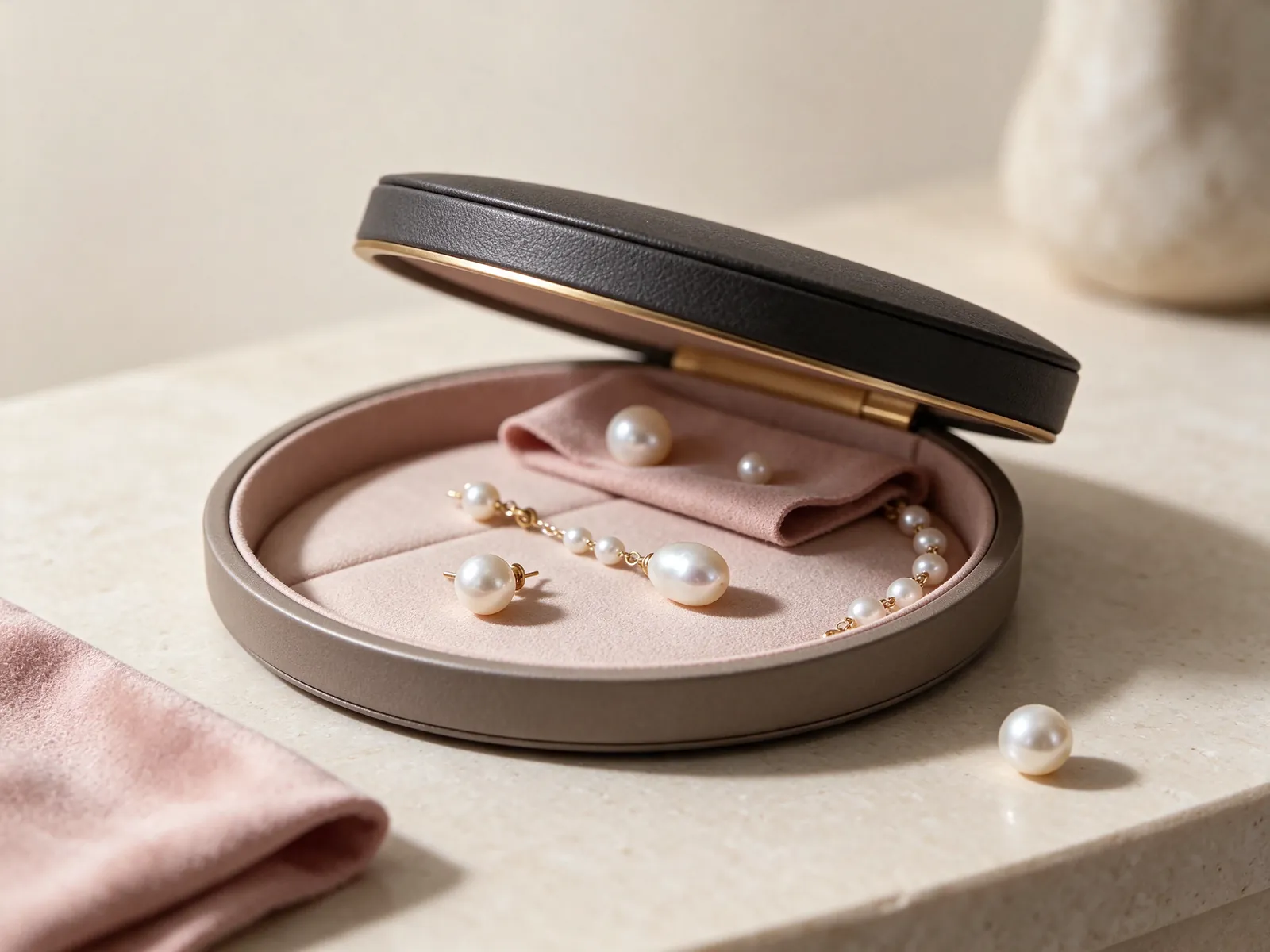
Place a soft cloth on a steady surface before handling removable backs, keeping small parts from rolling away. Support a suitable metal area while operating the catch, rather than using the pearl or a dangling ornament as leverage. A jammed fitting should not be forced with improvised tools or by twisting the pearl. Stop handling it and have its construction examined. Keep separated backs with the correct earrings in storage, without allowing hard edges to rub the pearl surfaces.
GIA rates pearl at 2.5 on the Mohs hardness scale and states that ultrasonic and steam cleaners should not be used. This matters when cleaning a catch attached to a pearl earring: a method appropriate for a separate metal fitting is not automatically appropriate for the entire piece. Wipe pearls after wearing with a very soft, clean cloth. Address catch recesses according to suitable instructions for the construction, instead of applying an unverified cleaning solution everywhere.
Inspect the pad even when it looks soft
Look for tears, distortion, dirt and uneven edges, and check that the assembly still attaches as intended after removal. Appearance does not establish skin compatibility. If itching develops, the discussion of pearl earrings for sensitive ears can help distinguish contact considerations from mechanical pressure. Replacing a pad alone does not establish that the cause of discomfort has been identified or resolved.
Use practical details to start a focused jewelry discussion
For a conversation with Flint Jewelry, describe the earring's profile, how the original catch operates and the particular concern you notice. Front, side and fitting photographs can explain the arrangement, especially when accompanied by dimensions in the original documentation. Do not guess pearl identity, post measurements or weight from the photographs. If you do not have a measurement, describe a visible feature such as forward tilt or the corner that touches the ear.
When comparing pearl earrings, separate appearance preferences from wearing requirements. Useful details include the front coverage you like, the collars you usually wear, glasses use and the exact area that feels pressed. You can share those observations in a WhatsApp discussion rather than starting with a request for the largest back. A conversation about an existing pair should follow that pair's actual structure; a familiar accessory name alone does not establish compatibility.
Choose the complete arrangement, not a promise attached to a component
Review normal attachment and release first, rear contact and front position next, and your intended outfit last. A component that improves the angle but creates a new pressure point is not a good trade just for the photograph. A useful decision comes from knowing what was compared and which sensations call for removal, rather than expecting one support design to suit every wearer.
To discuss pearl earring fit, share your preferred style and these observations on WhatsApp at +85260106207.
| Fitting or context | Initial check | Try-on observation | What to compare next |
|---|---|---|---|
| Conventional back | Post type and compatible connection | Attachment and release without force | Fastening before support features |
| Loss-prevention mechanism | How it locks and releases | Operation without pulling on the pearl | Retention separately from contact design |
| Support plate or pad | Shape and intended contact position | Corners, folds and uneven pressure | Useful contact rather than width alone |
| Statement or hanging design | Post location and side projection | Resting tilt and movement near clothing | The whole front-and-back arrangement |
| Small lobe or swept-up hair | Available rear space on each ear | Visible edges and nearby accessories | Fit within the finished outfit |
Pearl knowledge and authoritative references
GIA rates pearl at 2.5 on the Mohs hardness scale. When caring for an attached support fitting, avoid assuming that a metal-cleaning method is suitable for the whole pearl earring.
Read the reference for this factFrequently asked questions
Is a larger support plate always a better choice?
No. A compatible post connection and an appropriate contact outline are more important than size alone. A large plate can sit unevenly or press at an edge. Assess its actual position behind your ear rather than judging the silhouette in a photograph.
Can an extra pad be layered with the back I already use?
Only consider an arrangement that the components are intended to use. Extra thickness changes rear spacing and available post length. Understand the assembly and release method first, and do not force a combination onto the post.
Are support backs for pierced earrings interchangeable with clip-on fittings?
They are not automatically interchangeable. Clip-on earrings use a different fastening structure and need their own contact and operating assessment. A name used for a post accessory does not establish that it will work with a clip.
What if only one earring leans forward?
Compare that side's piercing position, lobe outline and catch alignment before changing anything. Do not treat greater pressure as the default adjustment. If the preferred angle requires pinching, remove the earrings and reconsider the full fitting or design.
Will a support back correct a drooping lobe or ensure comfort all evening?
Do not treat a fitting as corrective treatment or a comfort guarantee. Its role should be evaluated through its connection, contact position and your response when worn. A short comfortable trial does not establish an entire evening's experience, and discomfort is a reason to remove the earrings.
Updated: