
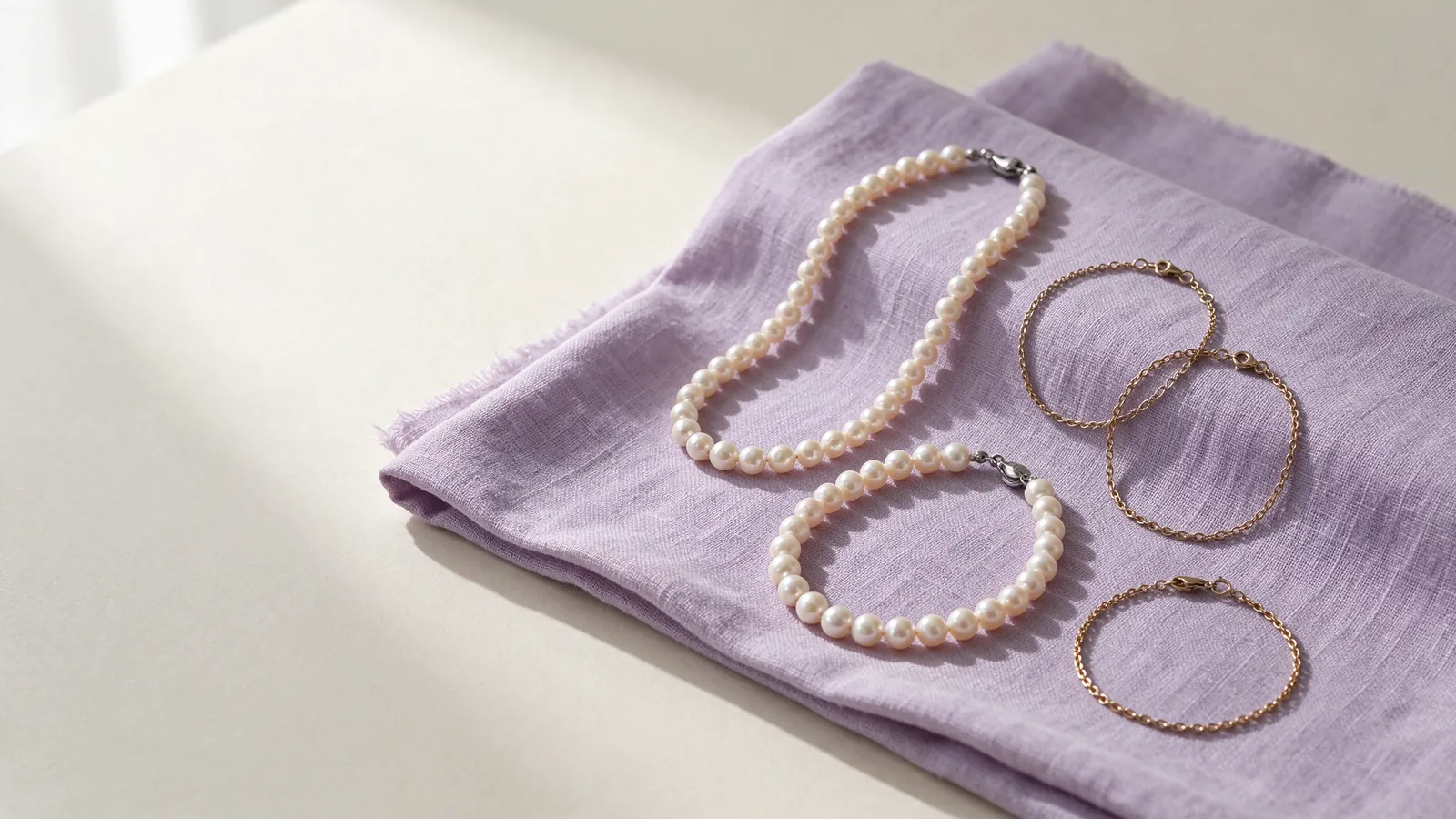
How do spacing and wrist proportions influence a small pearl bracelet, baby pearl bracelet or mini pearl bracelet?
Begin with the outline you want to see when your arm is relaxed. A continuous arrangement reads as a connected line of pearls, while spaced accents let the chain and exposed wrist contribute to the design. Both can feel understated, but they place emphasis in different places. In a pearl bracelet comparison, include the side profile and fastening as well as the front. A close-up of a few pearls cannot show whether the complete bracelet gives you the balance you want.
Do not treat wrist width as a rule that assigns you one pearl size. A fine-scale line can be visible on a wider wrist, and a narrow wrist can carry a more defined arrangement. Let your arm hang, raise your hand and rest it on a table. Watch how the pearls distribute themselves and whether the clasp turns into view. The important question is whether that moving outline suits your style, not whether the bracelet earns the smallest-sounding label.
How can a small pearl bracelet, baby pearl bracelet or mini pearl bracelet work with your watch?
Check the points of contact during movement: the crown, case edge, strap and bracelet clasp. Type, bend your wrist and reach for something you use every day. A gap that looks comfortable while standing still may close when the bracelet slides. If the pearls repeatedly meet the watch, try opposite wrists. Small size is a visual feature, not a reason to assume that rubbing against a hard watch case is harmless.
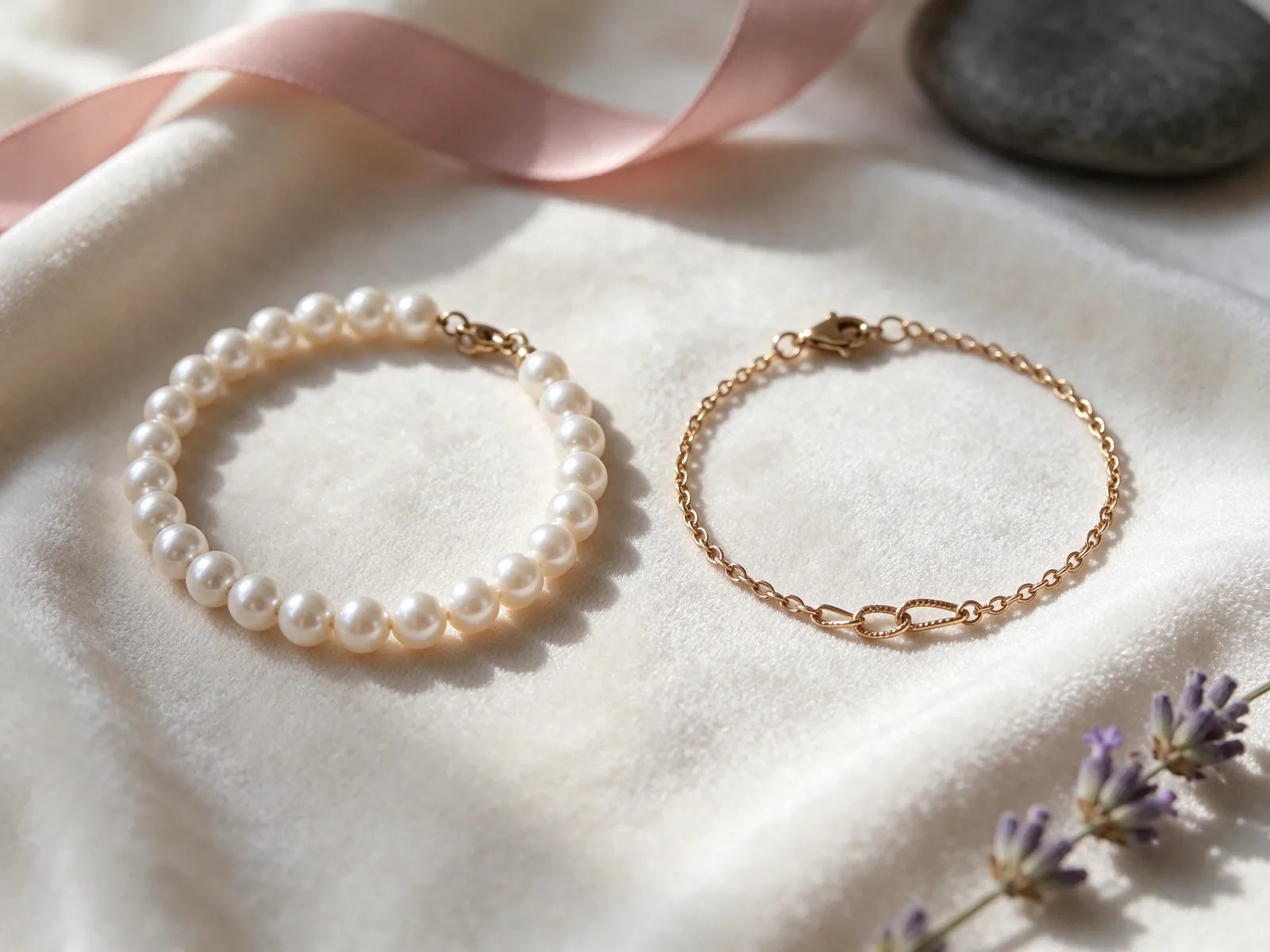
Separate descriptive names from the information about the pearls
The labels small pearl bracelet, baby pearl bracelet and mini pearl bracelet do not define a single diameter standard. They also do not establish species, origin, treatment status or natural-versus-cultured identity. Use the name to understand the intended look, then read the dimensions and pearl description on their own terms. Two bracelets with similar names may have different spacing, varying pearl shapes or very different fastenings, all of which affect their appearance and fit.
If you are interested in a freshwater pearl bracelet, that is a category preference to explore separately from wanting a delicate silhouette. Ask yourself whether pearl identity or the visual line is driving your choice; either can matter, but they answer different questions. Do not assume that baby and seed are interchangeable specifications. A clear description of the look you want, followed by separate questions about the pearls, is more useful than combining several size-related style words into one supposed technical name.
How do you avoid reading size from a styling photograph?
Look for written pearl dimensions and an explanation of wearable length. Ask to understand the back and clasp as well as the visible front. A magnified image can make tiny details look substantial, while a distant image can obscure them. If dimensions are expressed as a range, distinguish a deliberately graduated arrangement from variation across a strand so that you know what kind of visual consistency to expect.
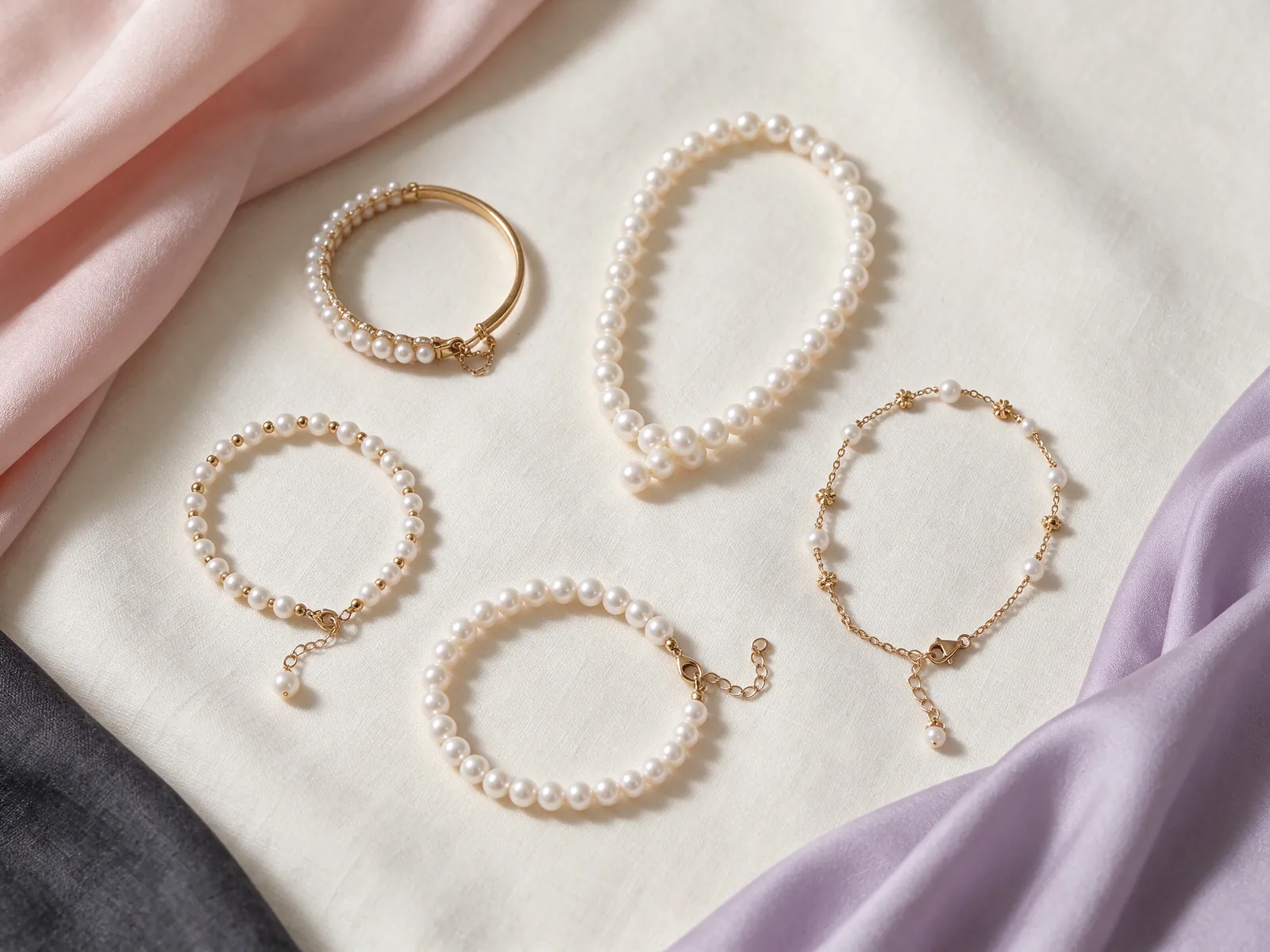
Look beyond size to luster, surface and coordinated appearance
GIA's seven pearl value factors are size, shape, color, luster, surface quality, nacre quality and matching. A fine-scale bracelet still benefits from looking at all of these rather than letting smallness dominate the decision. Matching is especially relevant to the overall impression because your eye moves from pearl to pearl. View the complete line in soft light before looking closely at individual surfaces. Strong reflections do not answer every question about surface detail or the quality of the entire arrangement.
For a white pearl bracelet, try comparing the color impression against a neutral sleeve. You may prefer a warmer or cooler look, but brightness and whiteness do not identify origin or prove a certificate. Bodycolor, overtone and orient are different components, and a pearl need not show all three. Keep lighting and background similar when comparing pieces, since contrasting photography styles can exaggerate differences that may look less dramatic in ordinary wear.
When is visible variation part of the appeal?
First decide whether you want a regular bead-like rhythm or a line with changing contours. Slight differences may be distracting to one person and appealing to another. Judge the arrangement at a normal viewing distance and ask whether the variations support its character. An intentionally varied design should not be assessed only against the expectation that every pearl must resemble an identical round bead.
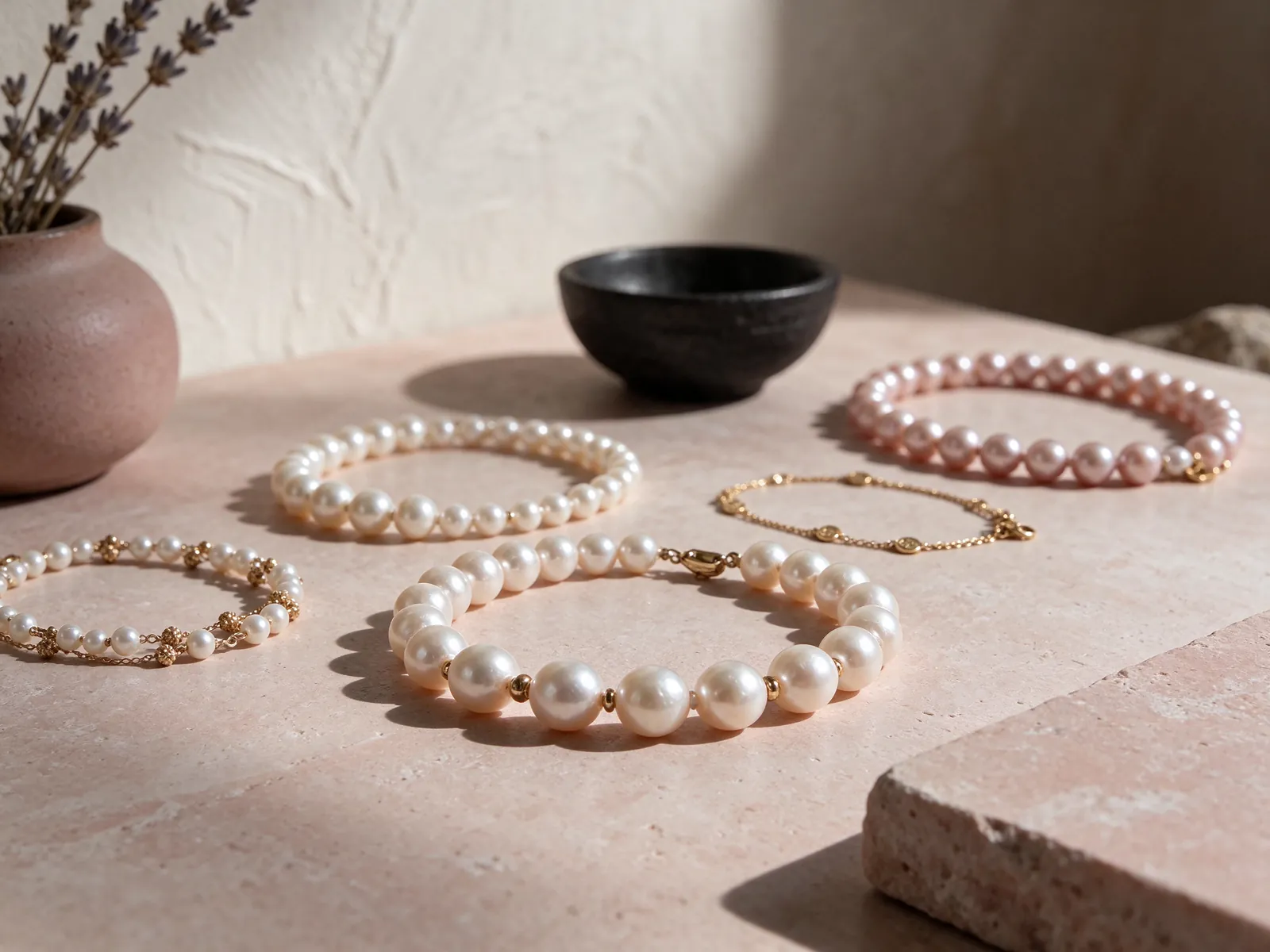
Use shape and construction to refine the silhouette
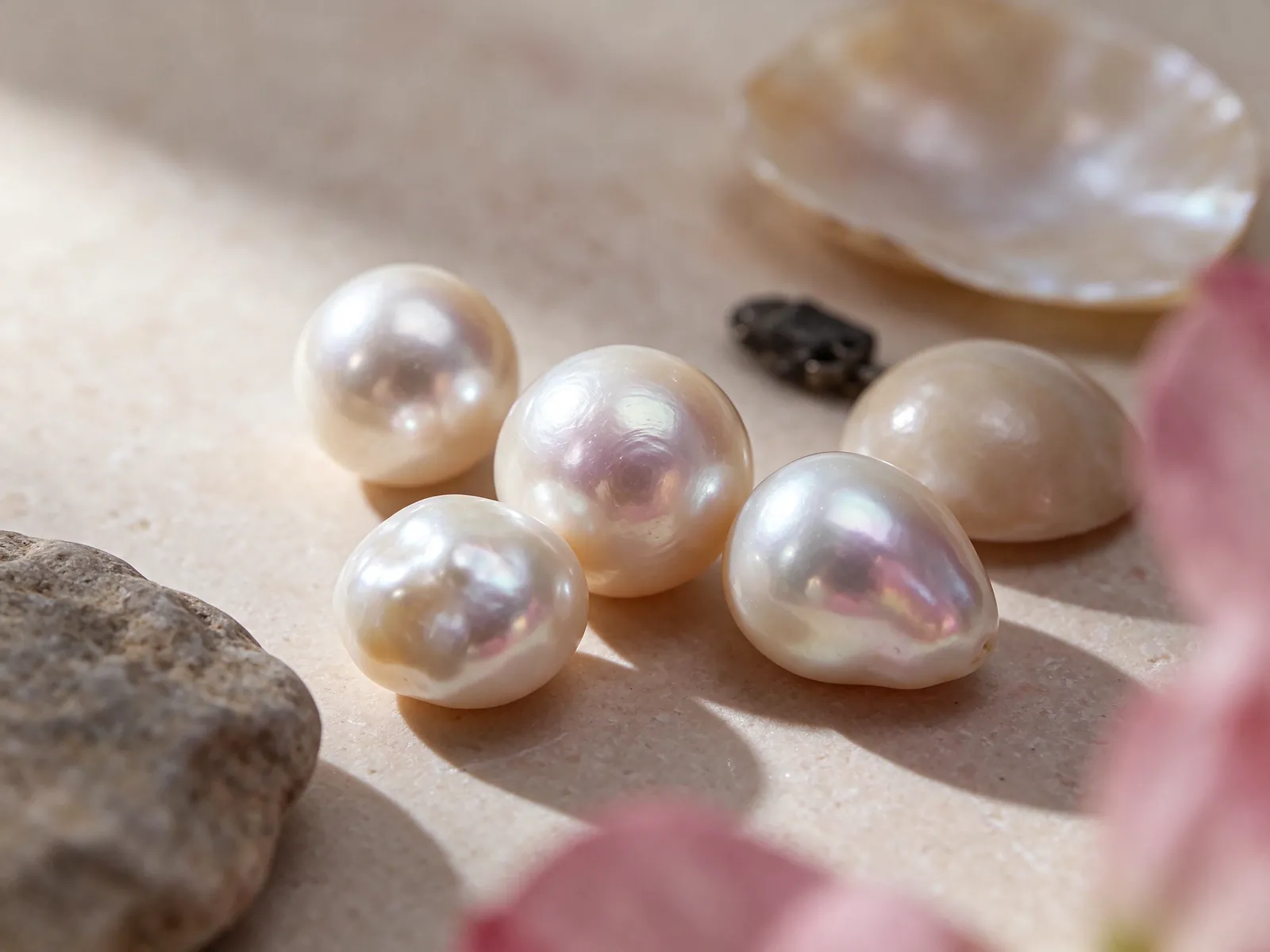
Rounded pearls, elongated forms and irregular outlines can produce different effects even within a fine-scale bracelet. Rounded forms emphasize repetition; longer outlines can lead the eye along the arrangement; irregular forms add changes to the edge and reflections. Compare these effects with the clothes and jewelry you already wear. Include the clasp in that comparison, because a bold fastening can determine the bracelet's visual weight more strongly than the individual pearl size.
Explore the styling approach of a baroque pearl bracelet if you like an outline that is less uniform. Irregular shape alone does not reveal natural-versus-cultured identity, and it does not tell you whether the bracelet will sit narrowly against the wrist. Inspect the most projecting contours and imagine them beside your usual cuffs. For someone who wears fitted sleeves, contact with fabric may be a more important selection detail than the appearance of an isolated pearl.
What is a useful side-by-side test for open and continuous styles?
Keep your wrist in the same position, then compare where each bracelet rests after bending your hand. Check whether spaced accents rotate underneath and whether a continuous strand feels too restrictive or moves too far down. Put your sleeve back where you normally wear it. Seeing the exposed pearls, links or clasp in that position is more informative than comparing two perfectly arranged display images.
Treat wrist measurement as a starting point, not the finished fit
Wrap a flexible measuring tape around your intended wearing position with the wrist relaxed. Keep it against the skin without tightening it. A paper strip or non-stretching cord can also record the circumference if you mark the overlap and measure it flat. The result describes your wrist, not the ideal length of every bracelet. Pearls and different clasp or link shapes take up interior space, so two pieces labeled with the same length can sit differently.
Next, test movement and fastening separately. Notice tension when you bend your wrist, unwanted sliding and the position of the clasp against a table or watch strap. Then check whether fastening it is comfortable for you. Do not apply one fixed extra-length formula to every construction. When buying a gift, knowing how the recipient likes an existing bracelet to sit can be more helpful than estimating fit from body height or a photograph.
How can you check the fit for a workday?
Recreate ordinary writing, typing, phone use and carrying a familiar bag. Pay attention to the underside of the wrist, where a clasp or pearls may meet the desk. Gently try a jacket cuff as well. These movements help reveal comfort conflicts; they are not durability tests and should not involve pulling or deliberate impacts. If the bracelet repeatedly presses against a work surface, reconsider its fit or wearing position.
Give a delicate bracelet room in your outfit
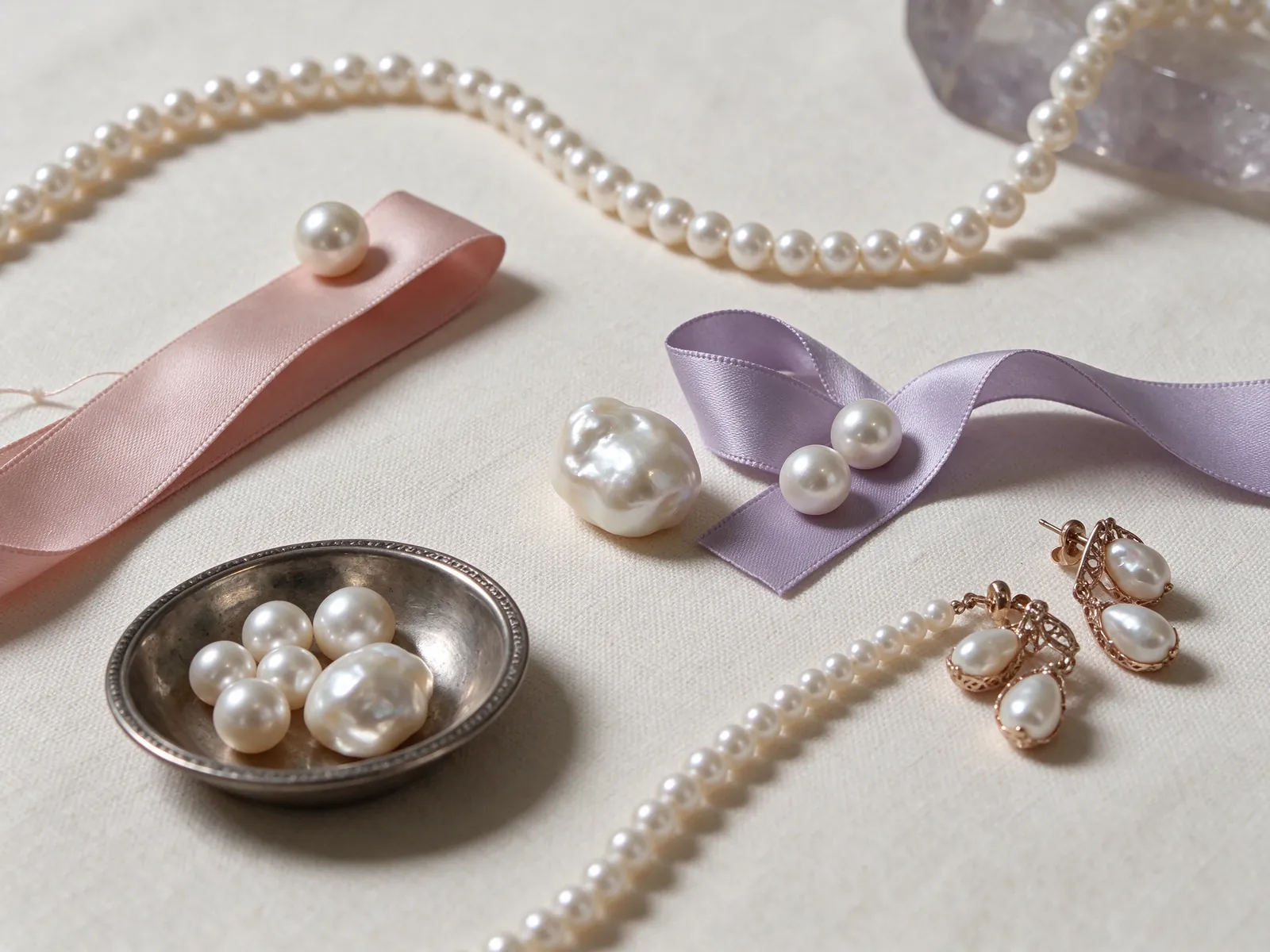
A bracelet can be subtle without disappearing. Begin with the cuff position you actually use during the day. A clean sleeve edge or contrast between pearls and fabric can clarify a fine line without adding more pieces. Continuous pearls may complement soft knitwear, while open spacing can echo a more streamlined cuff. Treat these as options rather than rules, and judge the part of the bracelet that remains visible when your clothes sit normally.
Reading about a black Akoya pearl bracelet can broaden your thinking about darker accents beside a watch face or sleeve. Keep that color question separate from scale, and do not infer pearl identity or treatment from a dark appearance alone. For a stack, decide which piece should lead visually, then inspect how the accessories move together. A layered look is less practical if hard fittings repeatedly rub the pearls; separate placement may give you clearer lines as well as less contact.
How can one fine pearl line work for evening wear?
Try simplifying the area around the wrist before adding layers. Darker fabric, an uncluttered cuff or fewer neighboring accessories can make the pearl line more distinct. If earrings or a necklace already lead the outfit, the bracelet can support them rather than compete. When wearing multiple bracelets, check their separation after movement; the neat spacing visible in a posed photograph may not persist through the evening.
Plan for gentle handling and everyday contact
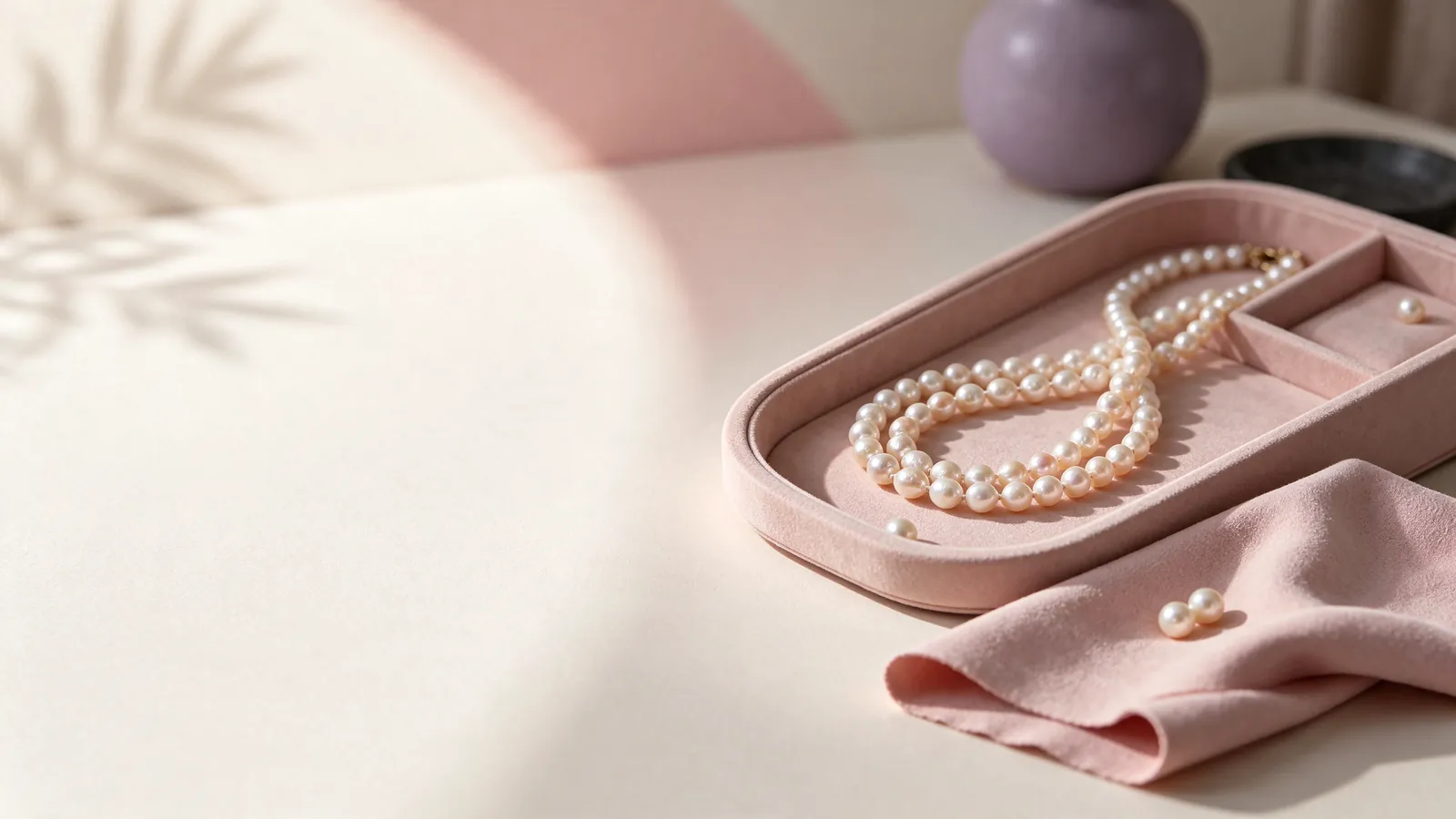
Pearl is listed by GIA at 2.5 on the Mohs hardness scale. A wrist accessory encounters desks, bag hardware and other jewelry, so abrasion deserves attention even when the pearls are small. The hardness figure does not predict years of wear. Put pearls on after perfume and hair styling, avoiding direct exposure to sprays. Consider taking the bracelet off for tasks with repeated knocks instead of assuming a fine-scale design is protected by its light appearance.
After use, gently wipe the pearls with a very soft, clean cloth and keep the bracelet separate from harder objects in storage. Avoid acids and excessive heat. GIA advises never cleaning pearls in ultrasonic or steam cleaners. If a strung bracelet is cleaned using water, its string must be fully dry before it is worn again. Do not stretch the arrangement to reach between pearls with a brush; construction should guide handling, not a desire to make narrow gaps easier to access.
What changes should prompt you to stop wearing it temporarily?
Notice a clasp that no longer shuts normally, visibly distorted links or a change in how a strand hangs. If the fit changes unexpectedly, avoid forcing the bracelet back into shape or attempting to glue a pearl. Record the change and where contact happened so the concern is easy to explain. Routine visual checks can identify warning signs, but they are not a complete inspection or a promise of long-term structural soundness. To talk about wrist fit and styling with Flint Jewelry, contact us on WhatsApp at +85260106207 and share the pearl spacing, sleeve styles and watch placement you prefer.
| Feature | What to observe | Buying priority | Outfit consideration | Movement check |
|---|---|---|---|---|
| Continuous line | Overall rhythm and wrist-side outline | Whether matching supports the look you want | See what shows beneath a normally positioned cuff | Lower your arm and bend your hand |
| Open spacing | The balance of pearls, links and bare wrist | Where pearl accents settle during movement | Avoid repeated contact with the watch case | Type and reach for an everyday object |
| Shape | The outer edge and projecting contours | Regular repetition versus intentional variation | Check contact with fitted sleeves | Gently put on a usual jacket |
| Fit and fastening | Interior space and the clasp position | Comfort depends on construction as well as length | Watch for pressure at a desk or beside a strap | Fasten it, write and hold a phone |
| Gentle care | Contact with hard objects | Pearl has Mohs hardness 2.5; consider abrasion | Tightly stacked hard accessories can create rubbing | Wipe after wear and store separately |
Pearl knowledge and authoritative references
GIA places pearl at 2.5 on the Mohs hardness scale. For a small pearl bracelet, repeated contact with a watch case, clasp or other hard surface is a relevant abrasion concern; this number is not a lifespan guarantee.
Read the reference for this factFrequently asked questions
Can a fine-scale pearl bracelet still make a visible style statement?
Yes. A continuous line, clear fabric contrast or distinctive fastening can make small pearls noticeable. Give the bracelet room beside your usual cuff and evaluate its whole silhouette rather than relying on pearl size alone.
Is a baby pearl bracelet the same specification as a seed pearl bracelet?
Do not assume the names are exact equivalents. Baby describes a small-scale look in this context; it does not provide pearl dimensions or identity. Read the actual description and measurements instead of substituting one label for another.
What if the pearl accents on a spaced bracelet keep rotating underneath my wrist?
Check the fit and how the arrangement settles during ordinary movement. The position of the clasp and the bracelet's construction affect what stays visible. Compare it with your preferred wearing position rather than tightening it automatically.
Does a bright white appearance prove pearl origin or certification?
No. Color and reflections alone cannot establish origin, natural-versus-cultured identity or a certificate. Lighting also affects photographs. Consider written pearl information separately from the color and luster you prefer visually.
Can I wear a strung bracelet immediately after cleaning it with water?
Wait until the string is completely dry before wearing it again, as GIA advises. Routine care includes gentle wiping with a very soft, clean cloth. Do not use steam or ultrasonic cleaners to speed up or intensify pearl cleaning.
Updated: