
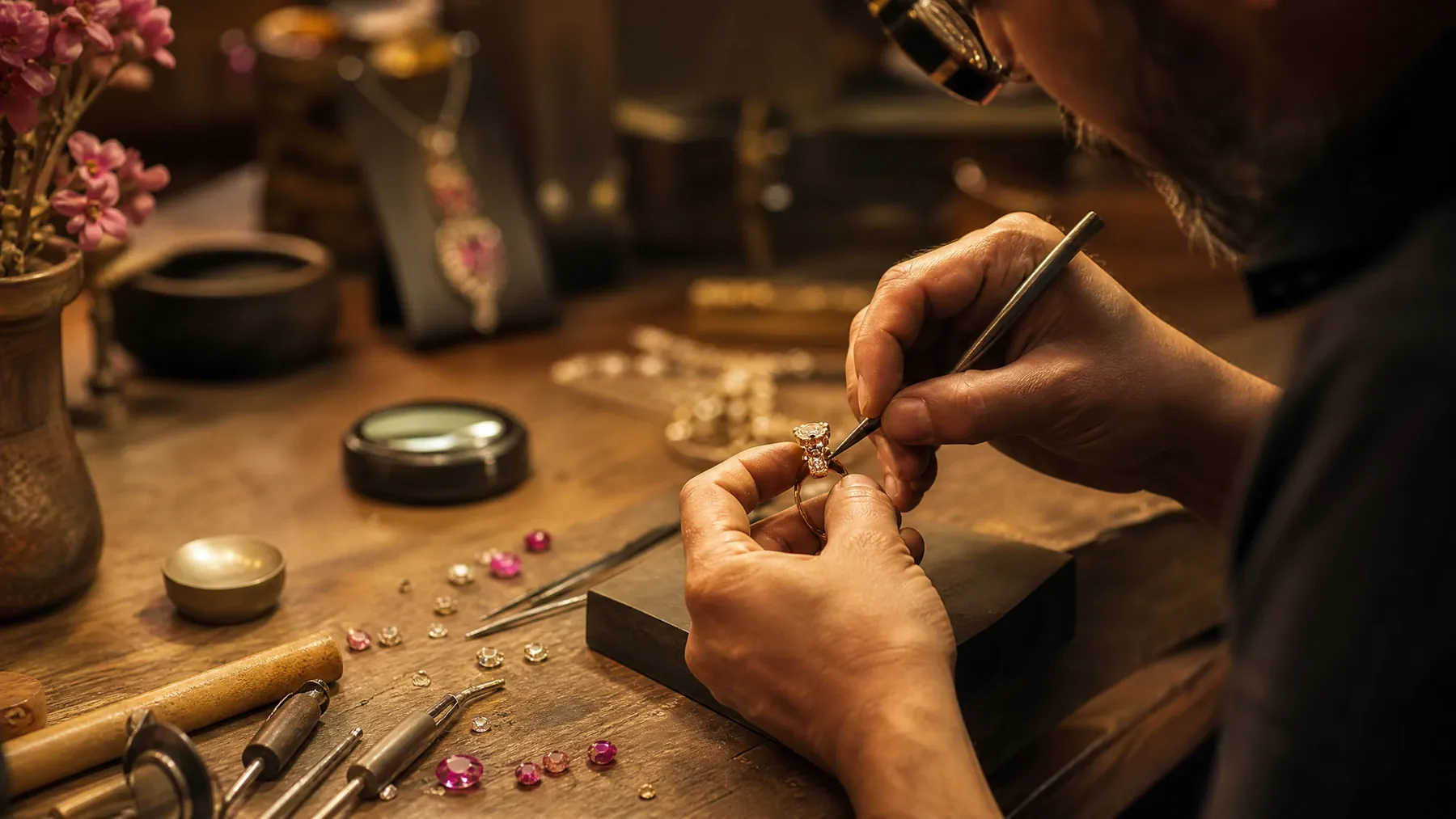
Lab Grown vs Natural Diamond: The 2026 Reality
The lab-grown diamond market has exploded in recent years, with prices dropping 60-70% since 2020. This has fundamentally changed the engagement ring landscape. But is a lab diamond right for you? As jewelers who work with both daily, here is our honest assessment.
What Are Lab-Grown Diamonds?
Lab-grown diamonds are chemically, physically, and optically identical to natural diamonds. They are pure carbon crystallized in a diamond structure — the only difference is their origin. Two methods produce them:
- HPHT (High Pressure High Temperature): Mimics the natural diamond formation process using extreme pressure and heat
- CVD (Chemical Vapor Deposition): Grows diamond layer by layer from a carbon-rich gas in a vacuum chamber
Both methods produce real diamonds that pass all standard gemological tests. Even experienced jewelers cannot distinguish them without specialized equipment.
Price Comparison: 2026 Market Reality
The price gap between lab and natural diamonds has widened dramatically:
- 1-carat lab diamond (VS1, G color, excellent cut): $800-$1,500
- 1-carat natural diamond (same specs): $5,000-$8,000
- Savings: 70-85% for equivalent visual quality
This means a $2,000 budget that previously bought a 0.5ct natural diamond now buys a 1.5-2ct lab diamond of equal or better quality. The visual impact difference is dramatic.
Quality: Can You Tell the Difference?
In blind tests, neither consumers nor jewelers can distinguish lab from natural diamonds by appearance alone. Both exhibit identical:
- Brilliance and fire
- Hardness (10 on Mohs scale)
- Thermal conductivity
- Crystal structure
The only way to identify a lab diamond is through specialized spectroscopy equipment that detects trace growth patterns invisible to the naked eye.
Resale Value: The Uncomfortable Truth
This is where the conversation gets complicated:
- Natural diamonds: Retain approximately 30-50% of retail value on resale (varies by quality and market conditions)
- Lab diamonds: Currently retain approximately 10-20% of retail value, and this percentage is declining as production costs fall
However, consider this perspective: most people never resell their engagement rings. If you are buying for sentimental value rather than investment, resale value may be irrelevant to your decision.
Ethics and Sustainability
Both options have ethical considerations:
- Lab diamonds: No mining impact, no conflict concerns, but energy-intensive production (improving with renewable energy)
- Natural diamonds: Modern Kimberley Process has reduced conflict diamonds to less than 1% of market; mining provides employment for 10 million people worldwide; environmental impact of mining is significant
Neither option is perfectly "ethical" — both involve trade-offs. Choose based on which concerns matter most to you personally.
Our Recommendation
We work with both and recommend based on your priorities:
- Choose lab-grown if: You want maximum size and quality for your budget, you prioritize environmental concerns, or you view the ring as a symbol rather than an investment
- Choose natural if: You value rarity and geological history, resale value matters to you, or you prefer something formed over billions of years
- Consider moissanite if: You want the best value overall — 90% savings with excellent visual properties
Frequently Asked Questions
Will lab diamond prices keep falling?
Yes, production costs continue to decrease as technology improves. This is why resale values for lab diamonds are declining. However, this also means you get more stone for your money each year.
Do lab diamonds pass a diamond tester?
Yes. Lab diamonds are real diamonds and pass all standard thermal and electrical conductivity tests. Only advanced spectroscopy can identify their lab origin.
Should I tell people it's lab-grown?
That is entirely your choice. There is no obligation to disclose, and no one can tell by looking. Many couples proudly share that they chose lab-grown for ethical or practical reasons.
Can lab diamonds be certified?
Yes. GIA, IGI, and other major labs certify lab-grown diamonds using the same 4Cs grading system as natural diamonds. We provide IGI or GIA certification with all our lab diamond pieces.
Get Expert Guidance
Not sure which option is right for you? Book a free consultation and we will help you compare options within your specific budget. We can show you side-by-side comparisons of lab and natural diamonds at your target size and quality level.
Explore our lab-grown diamond ring collection or natural diamond engagement rings.
Flint Jewelry Design Team
Our team combines 20+ years of jewelry expertise with hands-on experience crafting thousands of pieces for clients worldwide.