
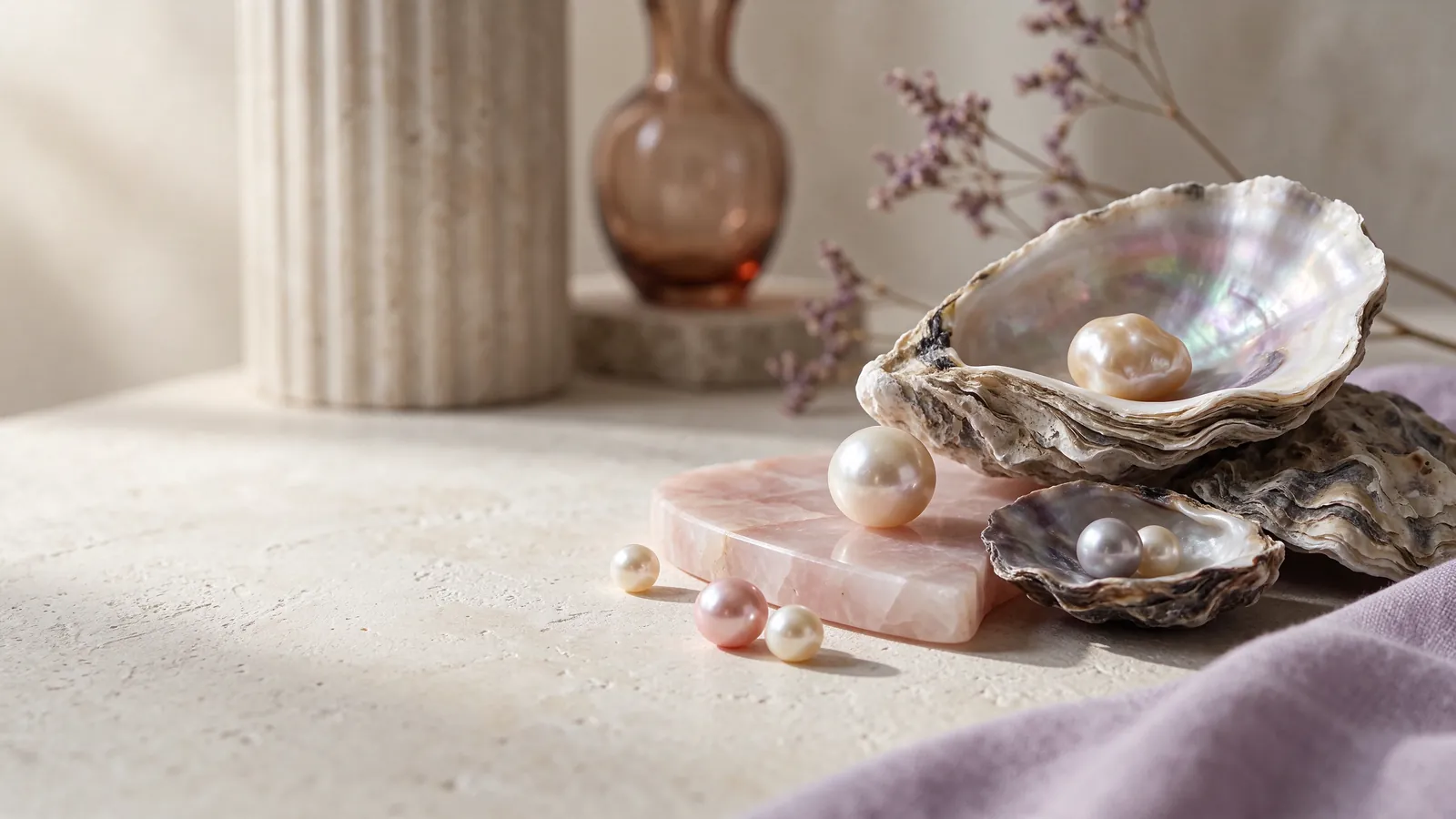
are abalone pearls real pearls? How formation explains abalone pearl vs abalone shell and abalone pearl vs mother-of-pearl
Start with the difference between something that grew as a pearl and something fashioned from a shell. An abalone pearl forms through nacre growth. Abalone shell is the shell itself and may be cut and polished into a decorative element for jewelry. The finished objects can look related, but workmanship does not convert shell into pearl. A polished shell circle remains shell even when it resembles the face of a pearl ornament.
Mother-of-pearl refers to the nacreous layer lining a shell rather than a separate pearl. It can describe material associated with abalone shell, but the broader name does not establish an abalone source on its own. If you are starting with an unfamiliar product title, what is an abalone pearl offers useful background. Then return to the listing and identify whether its central element is described as a pearl, a section of shell or material from the inner lining.
Reading material descriptions for abalone pearl vs abalone shell and abalone pearl vs mother-of-pearl: are abalone pearls real pearls?
A useful description answers separate questions about animal source, material and processing. Abalone names the source; pearl or shell identifies the form; polished or mounted explains later workmanship. A title may answer only one of those questions. Before purchasing an iridescent abalone ornament, ask for the missing material term rather than interpreting a source name or an attractive shape as a complete identification.
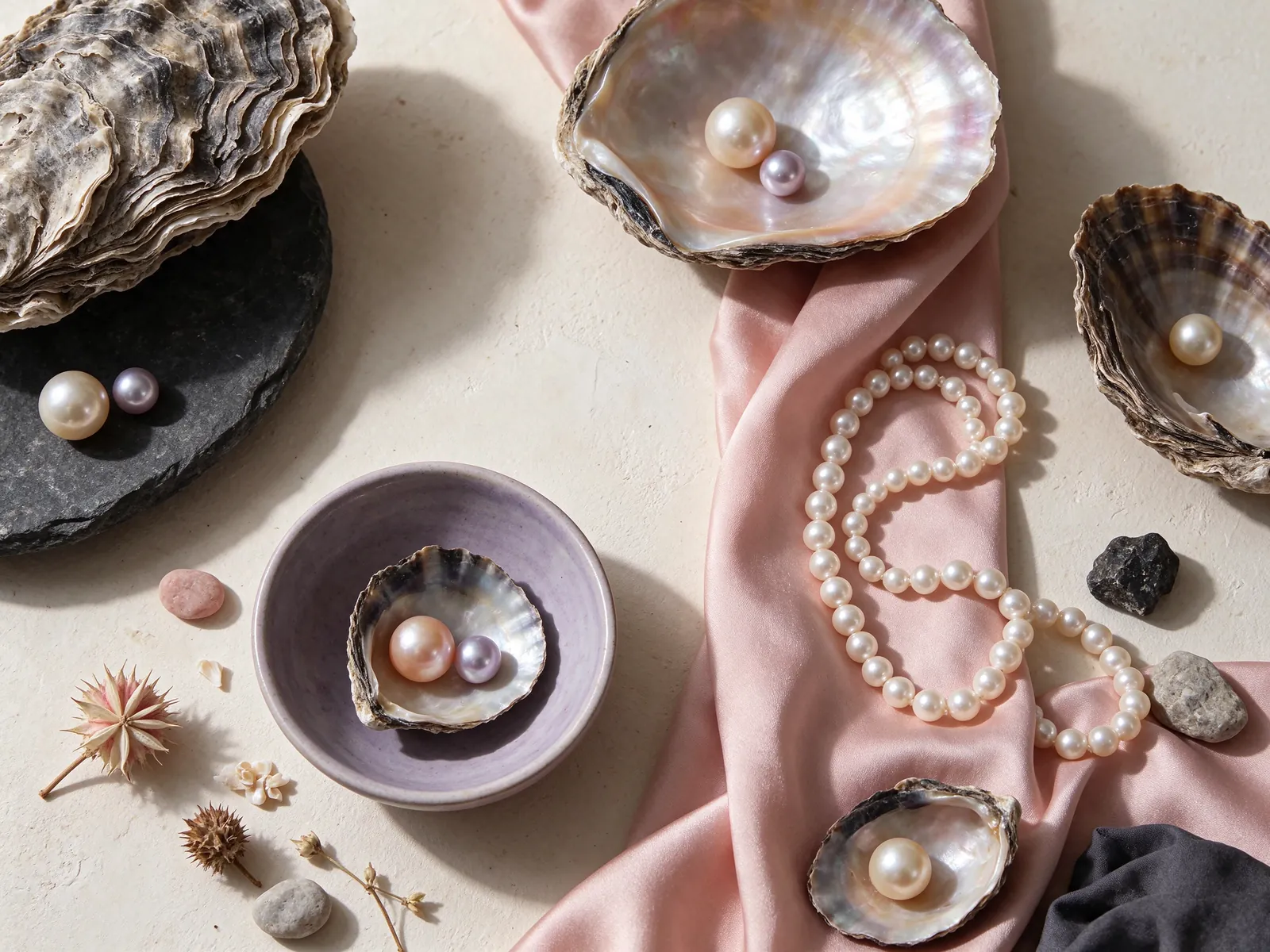
Inspect the parts that a front view leaves out
The most colorful front photograph may be the least informative image of construction. Ask to see the edge, side profile and back of the same item. A closed mounting can conceal part of the decorative material, while a rear view may show components that are absent from the front. Ask whether there is backing or a joined assembly. These details explain the finished object, but no single visible edge or backing proves identity by itself.
Avoid treating roundness as a test. Shell can be worked into a round disc, and a raised or curved face can be created by shaping material. A pearl also need not have a perfectly spherical outline. Photographs are useful for understanding contour and the visible surface, not for filling in everything hidden by the setting. If the back is enclosed, request a clear written description of the component rather than assuming what is underneath.
Do not turn inspection into a destructive experiment
Scraping the surface, biting it or removing it from a mounting may cause damage without settling the question. Save the listing, receipt and available images instead. Where identification affects a transaction, contact a suitable gemological laboratory about examination options and restrictions for mounted items. The relevant conclusion should concern the actual object, not another specimen with a similar pattern or another piece shown beside it.

Evaluate color for visual appeal, not as a material certificate
Related nacreous materials can share iridescent effects. The apparent color in a photograph also depends on lighting, angle and background. To understand an item's look, compare images of that item in soft daylight and ordinary indoor light. Pay attention to the overall pattern as well as the brightest reflection. Strong blue-green color does not, on its own, establish pearl identity, origin, treatment status or natural formation.
For an outfit, decide whether you want the ornament to lead or quietly support the look. A patterned, multicolored element can stand out against a plain top; a simpler silhouette can keep the effect more restrained. The comparison of abalone pearls vs classic white pearls helps frame different visual preferences. Choosing the appearance you enjoy is worthwhile, but it remains separate from determining what material is actually present.
For earrings, judge how the two pieces work together
Request a side-by-side view under consistent light. Compare the direction of the color pattern, contour and visual balance, rather than looking for one identical highlight. A deliberately asymmetric combination can work well if that is your preference; a more orderly look calls for attention to the pair as a whole. Neither stylistic matching nor deliberate contrast establishes that the two elements share an origin or formation history.

Ask identity questions before quality questions
Once a material is identified as pearl, questions about formation, treatment and quality still remain distinct. Natural-looking shell is not a natural pearl simply because it came from an animal. The discussion of natural vs cultured pearls concerns how pearls form, not whether shell has a natural source. Likewise, an irregular outline or the lack of a visible bead cannot independently establish a particular pearl's formation identity.
GIA lists seven pearl value factors: size, shape, color, luster, surface quality, nacre quality and matching. They provide an organized way to consider pearl quality rather than relying on a single promotional grade. They do not turn mother-of-pearl into pearl or answer every identification question. For a comparison across materials, establish what each component is first, then assess the appearance and construction relevant to how you plan to wear it.
Check the scope of any identification document
Determine whether a document describes a whole piece, an individual mounted element or an unmounted material. Check that its identifying information relates to the object you are considering. A statement about material identity may not also establish geographic origin or address all treatments. Quality observations may answer another question entirely. Read the conclusion and its limits rather than assuming that a laboratory heading makes every possible claim about the item.

Match a pendant to your neckline and routine
After clarifying the material, evaluate how the pendant will function as jewelry. Consider the outline, surrounding frame and suspension point alongside the clothing you use most often. An abalone pearl pendant guide can help you think beyond a close-up color image. A pendant seen against a solid crew-neck top may create a different impression from the same silhouette in the open space of a shirt neckline. Assess the whole arrangement, not just the center.
A relatively broad decorative face can display a pattern across one visual area, while a more three-dimensional component invites attention to its side profile. That is a design observation, not a universal identification rule. To keep the look focused, choose supporting accessories with simpler outlines. If you enjoy a bolder combination, consider whether the other patterns complement the central piece or make its individual color bands harder to appreciate.
Comfort cannot be read from a material name alone
Ask for finished dimensions, total weight, the shape of the rear surface and the intended chain fit. Consider where the ornament may meet bag straps, clothing hardware or other hard surfaces during the day. A photograph does not supply these details, and a material label does not guarantee them. Separating visual scale from actual weight and contact points makes a comparison more useful than choosing solely from a magnified image.
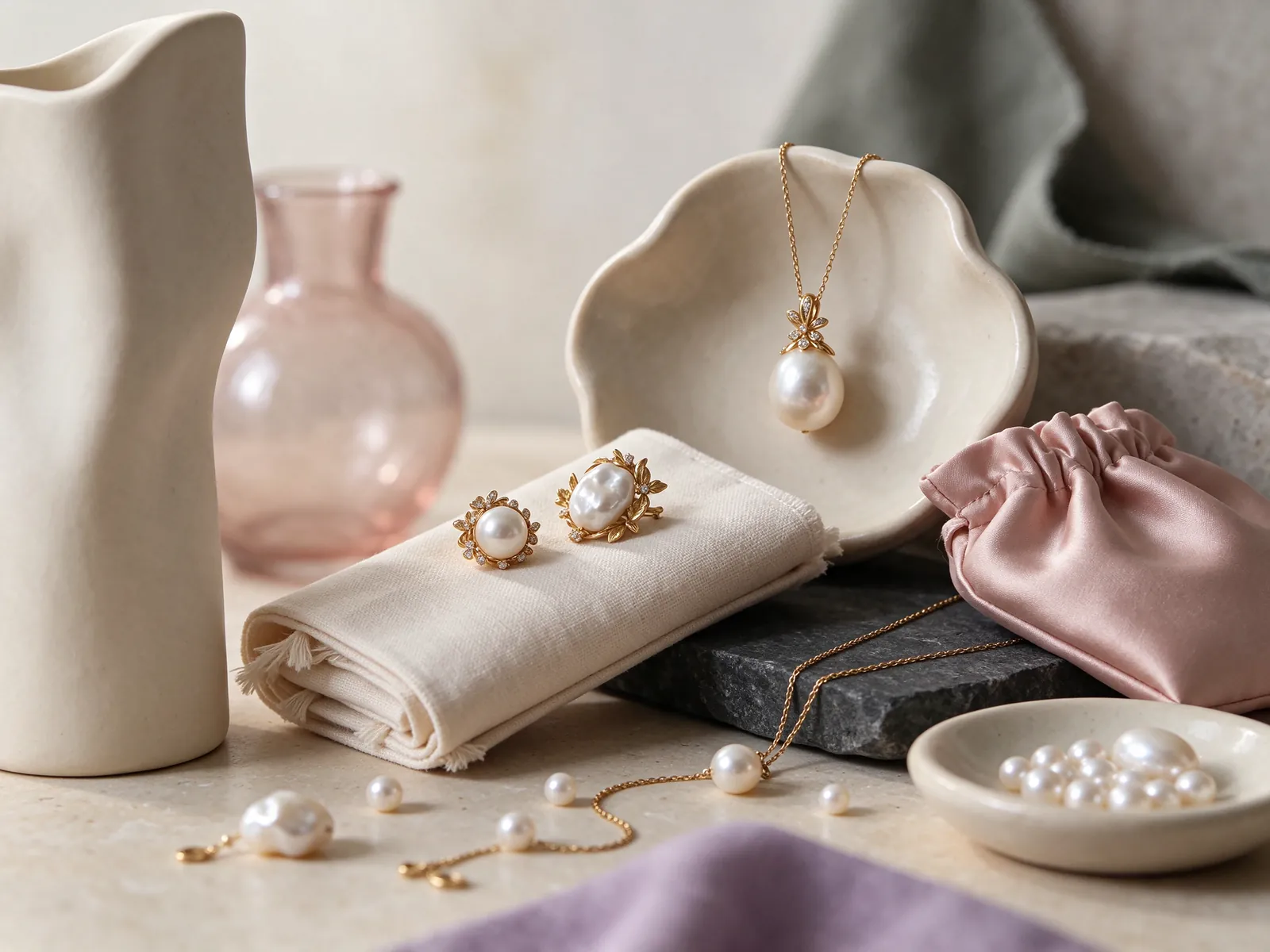
Keep shape labels separate from names of pearl forms
Words such as round, domed and curved tell you about shape. Shell, mother-of-pearl and pearl tell you something different about material. When a title combines them, ask what the center contains, what is at the back and whether the piece includes several joined components. Do not infer a growth process from the fact that a polished surface is rounded. A complete description is more helpful than grouping visually similar ornaments under one pearl name.
The separate topic Mabé pearls vs round pearls is useful when your question concerns named pearl forms and their finished structures. The wider pearl types guide helps organize animal source, formation and shape as different categories of inquiry. Neither discussion makes an abalone shell disc a pearl because it resembles a rounded example. Use the comparisons to ask better questions, while preserving the specific material term attached to the item.
Give a thoughtful gift without changing its identity
Start with the recipient's preferred colors, clothing and taste for balanced or irregular outlines. Then retain the correct material name when presenting the gift. A mother-of-pearl ornament does not need to be called a pearl to be a considered choice. Clear material and care information gives the recipient something practical to keep, and avoids passing along an identification claim that the original description did not make.

Choose care for the complete item, not just its shimmer
GIA gives pearl a Mohs hardness of 2.5 and states that pearls should not be cleaned with ultrasonic or steam cleaners. For routine care, it recommends a very soft clean cloth after wearing and avoiding acids, perfume, hair spray and excessive heat. The numerical hardness applies to pearl, not automatically to shell, a backing layer or a complete ornament. It is not a claim that a finished piece is waterproof or protected from impact.
For shell or mother-of-pearl jewelry, consider the actual surface finish, mounting and any additional components before selecting a method. Ask the provider of the finished item before soaking it or applying chemicals. Keep decorative surfaces from rubbing directly against other hard objects in storage, and avoid pulling on the central element when handling the piece. Similar iridescence does not mean every material and joined part tolerates the same treatment.
Document a change before trying to hide it
If an edge chips, a component loosens or the surface changes, pause wear that could worsen the issue and take clear photographs. Do not attempt to restore shine by polishing away the affected surface or experimenting with stronger cleaners. Explain the material name, construction and what happened to someone with relevant experience. Any next step should depend on the physical item and its condition, not a promised outcome from an image alone.
Want to understand pearl material descriptions or explore jewelry styling for your usual wardrobe? Contact Flint Jewelry on WhatsApp +85260106207 and share the wording or styling question you would like to discuss.
| Question | Abalone pearl | Abalone shell | Mother-of-pearl | Shopping focus |
|---|---|---|---|---|
| What does the name describe? | A pearl formed by nacre growth | The shell or worked shell material | The nacreous inner shell layer | Request the complete material name |
| Can appearances overlap? | Can show iridescence | Its inner layer can be iridescent | Can show nacre-related shimmer | Compare the same item under different light |
| What about a round shape? | Inspect the actual pearl and setting | Shell can be cut into a round disc | Lining material can be shaped | Do not identify material from outline alone |
| What should construction views show? | Component and mounting | Edges, back and any backing | Used layer and assembled parts | Ask about areas hidden by the frame |
| How should quality be approached? | GIA describes seven pearl value factors | Shimmer does not establish pearl identity | A shell layer is not a separate pearl | Identify material, then assess appearance and use |
Pearl knowledge and authoritative references
GIA identifies seven pearl value factors: size, shape, color, luster, surface quality, nacre quality and matching. This framework concerns pearl quality and does not convert a shell layer into a pearl.
Read the reference for this factFrequently asked questions
Is the word abalone enough to identify the center of a pendant?
No. It can describe the animal source without specifying pearl, shell or mother-of-pearl. Ask for the complete material description and for an explanation of any backing or joined components.
Does a domed mother-of-pearl piece become a pearl because of its shape?
No. A dome is an outline or profile, not a formation identity. Shaping mother-of-pearl does not make it a grown pearl. Use the material name rather than a visual resemblance when describing it.
Can vivid color prove that an item is untreated?
Color alone cannot settle treatment status or pearl formation. Photographic conditions also affect the appearance. Look for information or suitable examination that addresses those questions for the particular object.
Is a seller's pearl grade a useful way to identify shell material?
A grade does not establish that shell is pearl. Begin with material identity, then consider the relevant visual and construction details. GIA's pearl value factors provide a pearl quality framework, not a shell identification shortcut.
Can I clean the entire ornament according to its metal frame?
Not without considering the decorative element and other components. GIA advises against ultrasonic and steam cleaning for pearls. For shell, backing and joined parts, ask about a method suitable for the complete finished item.
Updated: