
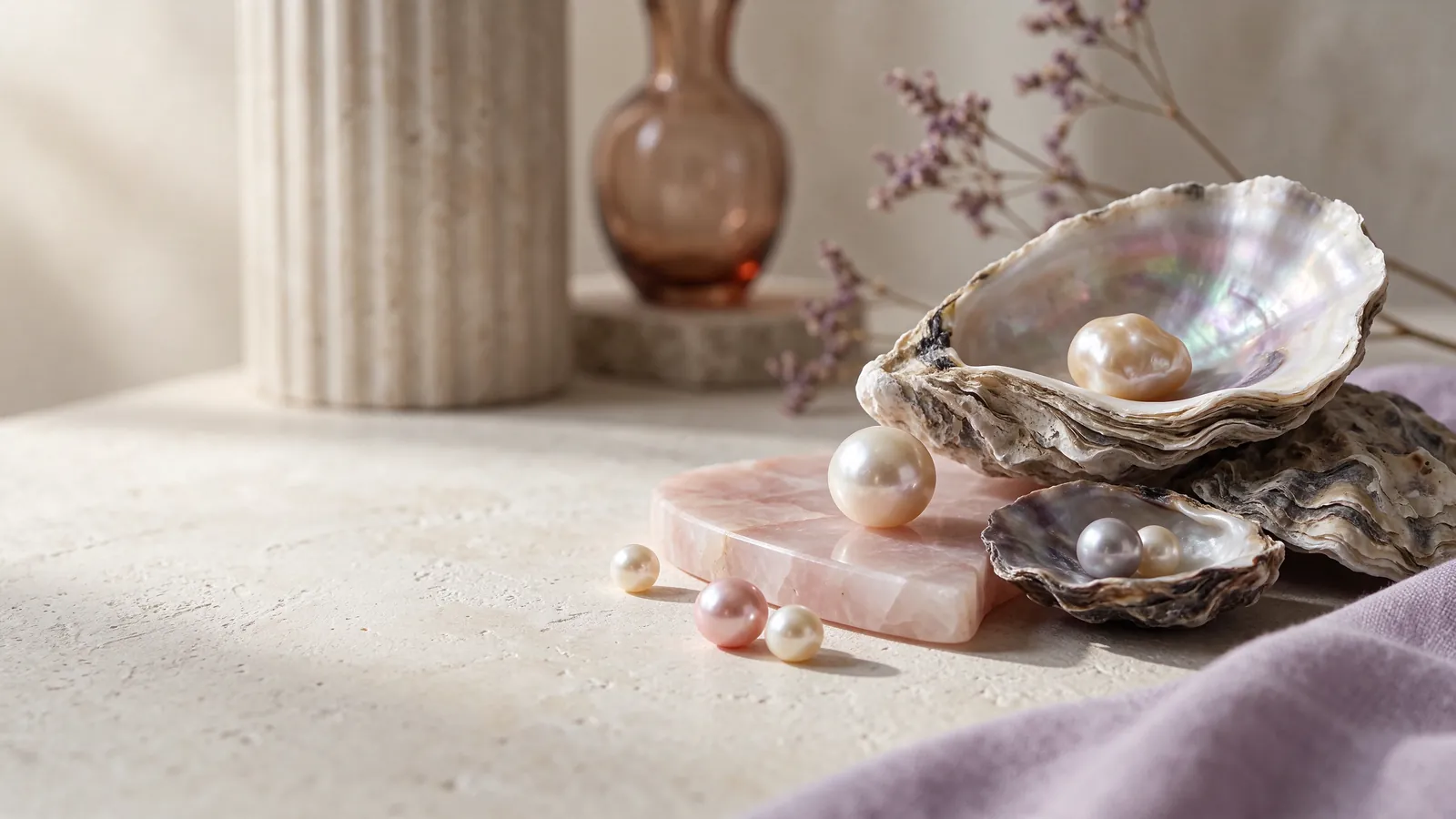
are abalone pearls real pearls? How formation explains abalone pearl vs abalone shell and abalone pearl vs mother-of-pearl
The useful distinction is between a pearl that grew through nacre deposition and a section of shell made into an ornament. An abalone pearl is a pearl; abalone shell is the shell itself, which can be cut and polished for jewellery. Cutting a bright shell section into a circle does not turn it into a pearl. When comparing two iridescent pieces, begin with their material descriptions rather than assuming that a shared shimmer means a shared identity.
Mother-of-pearl names the nacreous inner shell layer, not a separate pearl. The terms abalone shell and mother-of-pearl therefore overlap in some contexts, but mother-of-pearl is not automatically abalone material. Reading what is an abalone pearl helps separate the animal name from the form of material being described. In a listing, look for a clear statement of whether the decorative element is a pearl, a shell section or material taken from the shell lining.
Reading material descriptions for abalone pearl vs abalone shell and abalone pearl vs mother-of-pearl: are abalone pearls real pearls?
Read a description in three parts: animal source, material form and subsequent workmanship. Abalone addresses the first question; pearl or shell addresses the second; cut, polished or mounted addresses the third. None of these answers replaces the others. A phrase such as iridescent abalone pendant remains incomplete if it does not identify the centre material. Ask for that missing distinction before using the title to decide what the piece actually contains.
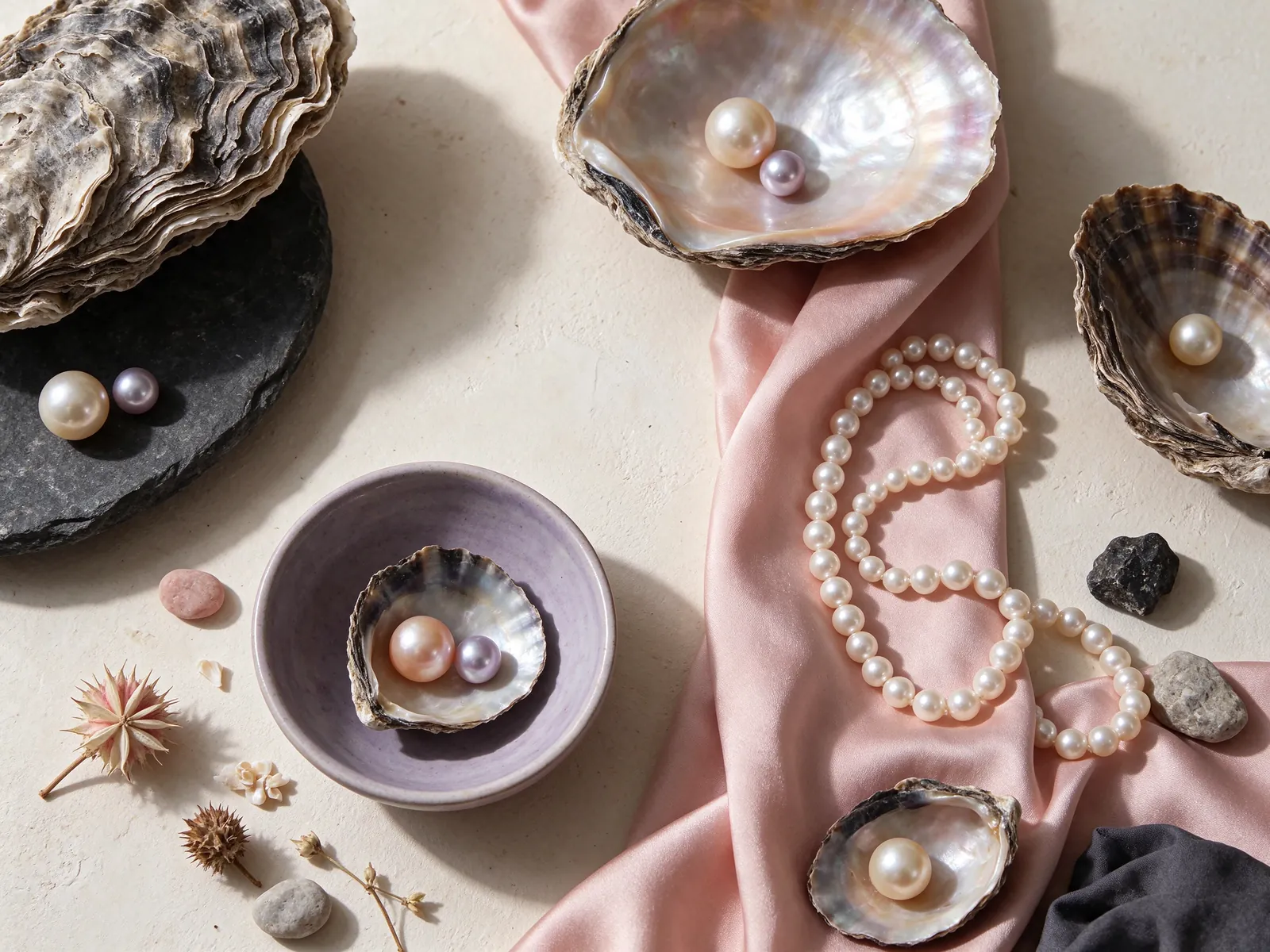
Look beyond the attractive front photograph
A front view is useful for judging the visual effect, but it may conceal the structure that matters to a buying decision. Ask for side and rear views as well. Notice whether the mounting hides the edge, whether the back is covered and whether the description mentions backing or joined components. These observations help you understand construction; a flat surface or a backing is not, by itself, an identification test.
Outline is another common distraction. A round shell disc remains shell, and a domed surface does not establish that an ornament is a pearl. Equally, a pearl does not need to resemble a perfectly spherical bead for its identity to be discussed. Use photographs to understand what is visible and text to address what is concealed. If an important area is enclosed by the mounting, do not fill that gap with an assumption based on the front view.
Keep identification separate from home experiments
Scratching, biting or opening a setting can damage a piece without providing a reliable answer. Keep the original description and receipt, along with clear photographs. If material identity is central to a purchase, ask an appropriate gemmological laboratory about available examination and any limitations created by the mounting. A document should relate to the actual item, rather than another object that happens to have similar colours or a similar silhouette.
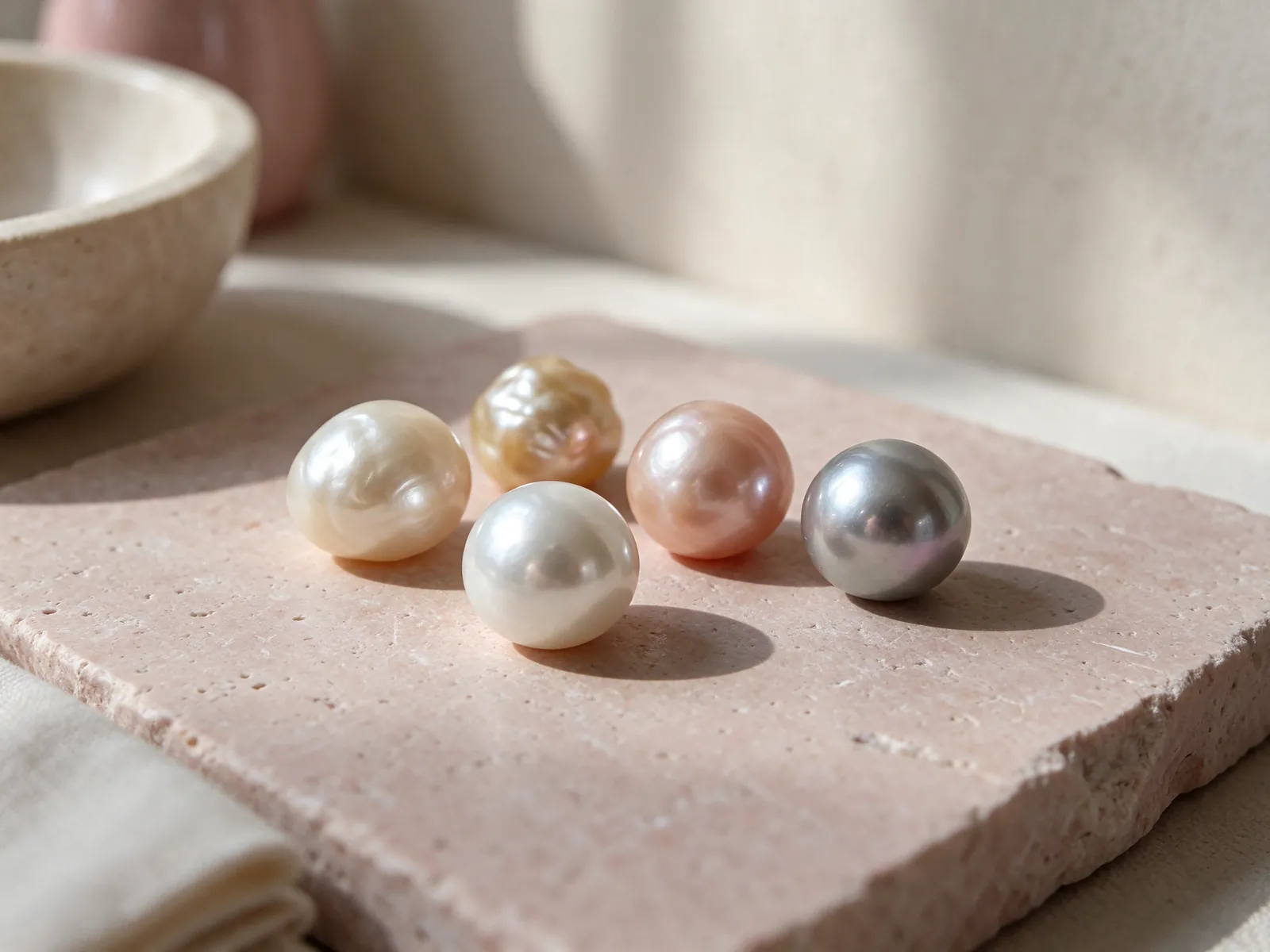
Use iridescence to plan an outfit, not to prove identity
Nacre-related materials can look visually connected. Lighting, viewing angle and background can also change how that connection appears in photographs. Request views of the same item under gentle daylight and ordinary indoor lighting, and compare the overall colour impression rather than the brightest highlight. A vivid image does not establish origin, natural formation, treatment status or a quality grade. It answers a narrower question: how the item looked under those photographic conditions.
For styling, a multicoloured decorative element can serve as the focal point against a plain blouse or knit. If you prefer a quieter effect, compare the outline and balance of the whole piece rather than pursuing maximum shimmer. The discussion of abalone pearls vs classic white pearls offers a useful visual comparison. Different appearances can suit different wardrobes, but choosing an appearance is a separate decision from confirming the material named in the listing.
Assess a pair under the same conditions
For earrings, compare both pieces side by side against the same background. Look at the direction of colour bands, the outlines and the visual weight. Matching one bright spot is less useful than seeing how the pair works together. An intentionally asymmetric pair may appeal to you even when its contours differ. Treat that as a styling preference, not evidence that the materials have the same source or formation history.

Separate material identity, formation and quality
The phrase real pearl does not answer every subsequent question. Once an object is identified as a pearl, its formation, treatment and quality can still be considered separately. A shell section with natural iridescence is not thereby a natural pearl. The guide to natural vs cultured pearls addresses formation within the pearl category. Neither an animal source nor the absence of a visible central bead supplies a shortcut to identifying a particular pearl as natural or cultured.
GIA describes seven pearl value factors: size, shape, colour, lustre, surface quality, nacre quality and matching. This is a useful framework for organising observations about pearls. It is not a rule for reclassifying shell as pearl, and a single seller grade does not answer all seven questions. When comparing a pearl with a mother-of-pearl ornament, establish the different material identities first, then compare appearance and construction according to the purpose of the purchase.
Read what a document actually covers
Check whether a description applies to the whole ornament, one mounted component or an unmounted specimen. Look for information that connects the document to the item in front of you. A material identification need not answer geographic origin or every treatment question; a quality observation need not establish formation. Reading the scope of the conclusion is more informative than treating a laboratory name or an impressive title as an answer to everything.

Choose a pendant by silhouette and wearing context
A pendant can be assessed for wearability after its centre material is understood. Look at the face, frame, suspension point and how the piece sits with your usual neckline. An abalone pearl pendant discussion can help you think about the decorative element as a focal point rather than only a patch of colour. Compare it with the shirts, round-neck tops or open necklines you actually wear, not just with a magnified product photograph.
A broad face may show colour bands across a relatively even visual area, while a more three-dimensional element invites viewing from different directions. These are observations about design, not fixed rules for identifying a material. For a restrained outfit, let the frame and clothing support one focal point. For a more expressive look, keep other accessories simpler so that the central outline remains legible instead of competing with several patterned or reflective surfaces.
Ask separately about dimensions, weight and contact
Apparent scale in a photograph does not establish wearing comfort. Ask about the finished dimensions, total weight, rear contact surface and compatibility between the suspension and chain. Consider contact with bag straps, zips and other hard objects during your routine. These are questions about the individual finished piece; neither pearl nor mother-of-pearl, used as a material name, supplies those details or a guarantee of daily durability.
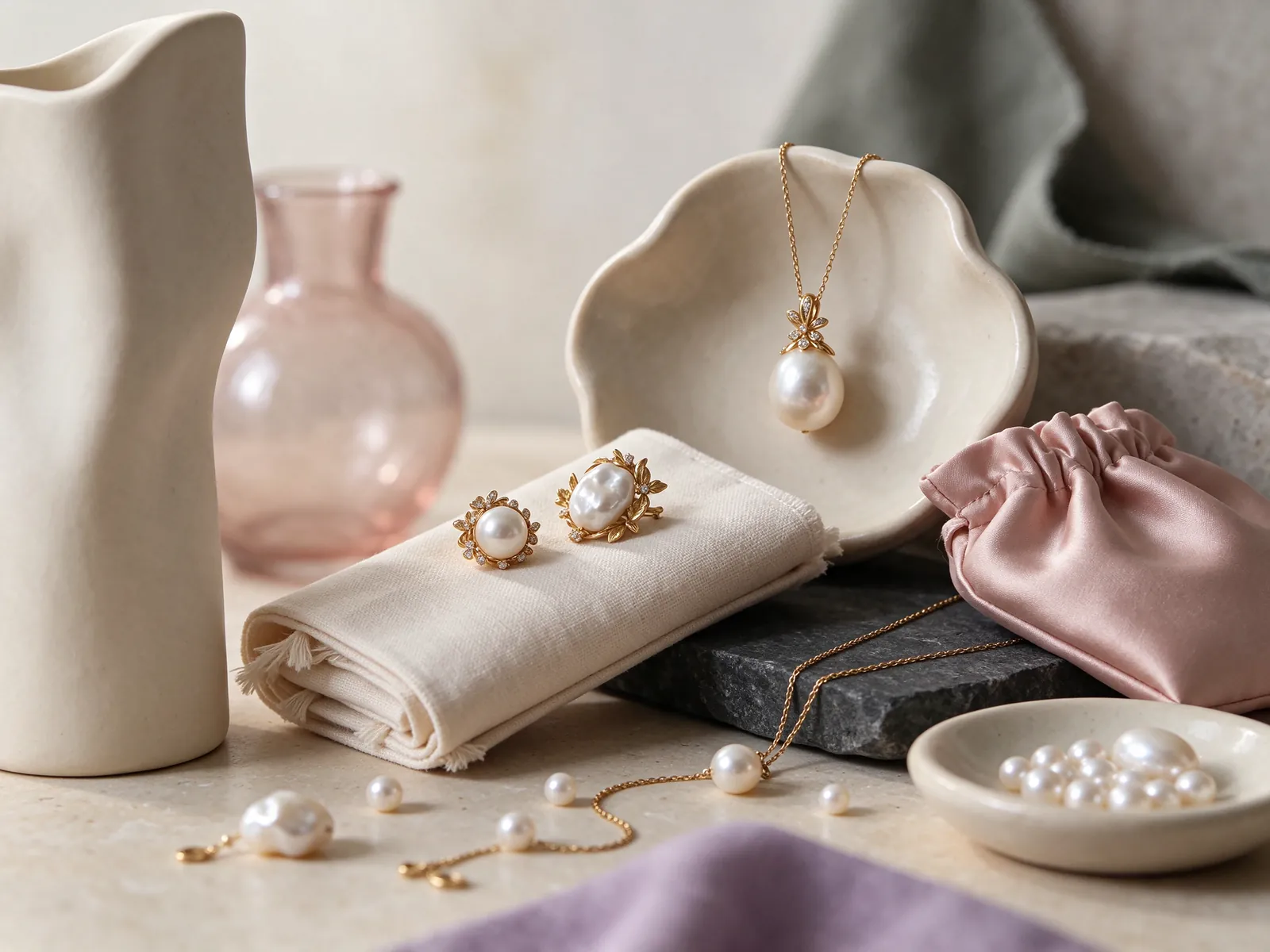
Untangle rounded shapes and compound product names
A product title may combine shape words with material words: domed, round, shell, mother-of-pearl and pearl can appear in close proximity. First decide which words describe the silhouette and which identify the substance. Then ask what forms the centre and the back, and whether the ornament is a single material or a combination. This avoids turning a carved or polished shape into an unsupported claim about how that material grew.
For a separate comparison of pearl forms, Mabé pearls vs round pearls encourages attention to complete names and finished structures rather than grouping every rounded object together. The broader pearl types guide also helps distinguish questions about animal source, formation and shape. An abalone shell section does not acquire another pearl name merely because its profile looks similar. Keep each comparison tied to the material actually described.
For a gift, preserve the correct material name
Choose around the recipient's colours, clothing and preference for regular or asymmetric outlines. If the material is described as mother-of-pearl, retain that wording when presenting the gift rather than upgrading the name to pearl. Clear material and care information helps the recipient use the piece thoughtfully. The value of a considered gift lies in its suitability, not in making one material sound like another.

Care should follow the material and the whole construction
For identified pearls, GIA lists a Mohs hardness of 2.5 and advises against ultrasonic or steam cleaning. Its routine guidance includes a very soft clean cloth after wearing and avoiding acids, perfume, hair spray and excessive heat. The hardness figure describes pearl; it must not be transferred to a shell section, backing, adhesive or complete mounted ornament. It also does not establish resistance to impact or water for a finished piece.
Shell and mother-of-pearl ornaments require attention to their actual finish, mounting and other components. Before soaking or applying a chemical cleaner, ask the provider of the finished item about an appropriate method. Store jewellery so decorative surfaces do not rub directly against other hard objects, and avoid pulling on the ornament when putting it on or removing it. Shared iridescence is not a reason to treat every component as if it had identical care requirements.
Record changes before attempting a remedy
If you notice a scratch, edge chip, loose part or altered backing, stop activities that might worsen it and photograph the affected area clearly. Do not polish the surface to hide the problem or use stronger cleaning as an experiment. Describe the material, construction and circumstances to someone with relevant experience. Any proposed handling should depend on the individual item, not a promise made from a photograph alone.
Want to clarify pearl material terms or discuss jewellery styling around your everyday wardrobe? Contact Flint Jewellery on WhatsApp +85260106207 and share the material description or styling question you have in mind.
| Comparison | Abalone pearl | Abalone shell | Mother-of-pearl | Buying question |
|---|---|---|---|---|
| Material meaning | A pearl formed through nacre growth | The shell or material worked from it | The nacreous inner shell layer | What is the full material description? |
| Related appearance | Can show iridescence | Its inner layer can show iridescence | Can show nacre-related shimmer | Can I see views under comparable lighting? |
| Shape and workmanship | Assess the actual finished shape | Can be cut and polished into sections | Can be worked into decorative elements | Does the name describe material or outline? |
| Construction | Check the component and mounting | Inspect edge, back and any backing | Ask about the layer and joined parts | What is concealed by the mounting? |
| Comparison framework | GIA describes seven pearl value factors | Pearl identity does not follow from shimmer | A shell layer is not a separate pearl | Establish identity before comparing appearance |
Pearl knowledge and authoritative references
GIA describes seven pearl value factors: size, shape, colour, lustre, surface quality, nacre quality and matching. They organise pearl quality observations; they do not identify a shell section as a pearl.
Read the reference for this factFrequently asked questions
Does a listing labelled only abalone mean an abalone pearl?
Not necessarily. It may name the animal source without identifying the decorative material. Ask whether the item contains a pearl, shell section or mother-of-pearl, and keep that answer separate from shape and workmanship.
Can a round mother-of-pearl disc be described as a pearl simply because it is round?
No. Round describes its outline, while mother-of-pearl describes the material. Cutting shell lining into a circle does not change it into a grown pearl. Preserve the material name when comparing or giving the item.
Does blue-green colour establish natural formation or an absence of treatment?
No. Colour alone does not answer either question, and photographs also depend on lighting and presentation. Formation and treatment should be addressed through information or appropriate examination relating to the actual item.
Should I apply a pearl grade when judging a mother-of-pearl ornament?
Establish material identity first. Pearl quality observations do not reclassify shell as pearl. For the ornament, consider the colour pattern, outline, edge, back and mounting in relation to your intended use.
Does a metal frame make ultrasonic cleaning suitable?
The frame alone cannot decide the cleaning method. GIA advises against ultrasonic and steam cleaning for pearls. Shell, backing and other components also need consideration, so describe the complete ornament before seeking cleaning advice.
Updated: