

How does pearl placement balance a geometric pearl pendant such as a bar pearl pendant or a rectangle pearl pendant?
Start with the outline of the whole piece rather than the pearl in isolation. A central pearl can give a bar a composed, symmetrical appearance, while an off-centre pearl encourages the eye to follow the metal towards one end. This visual emphasis is not the same as the physical balance of the hanging pendant. When comparing a pearl pendant, look at its front and side to see whether the pearl sits beside the metal, in front of it or within an open space.
A bar pearl pendant places a curved outline next to a straight one; a rectangle pearl pendant also asks you to judge the space inside its frame. A pearl close to an edge can create a compact composition, while a more visible gap can make the outline feel open. Neither arrangement is automatically more refined. Compare a close view with a full wearing view, and notice how much attention goes to the pearl, the frame and the clothing behind them.
Where should a geometric pearl pendant sit at your neckline when choosing a bar pearl pendant or a rectangle pearl pendant?
Try it with a familiar top, comparing a position within the neckline with one below the edge or over the fabric. Open space can appear quite different against skin and a dark knit. If a horizontal bar follows the neckline too closely, the two lines may merge; move naturally to check whether that remains the case.

Compare vertical bars, horizontal lines and open frames
A vertical line directs attention up and down, making it useful to compare with an open shirt or a simple round-neck top. A horizontal bar introduces a different rhythm across the neckline. Treat these as styling observations, not rules that flatter every wearer. If your wardrobe includes striped shirts, try the pendant against a plain top first and then against stripes. That separates the jewellery's own outline from the pattern of the fabric and makes the comparison easier to judge.
An open frame is not necessarily visually lighter than a solid bar. The breadth of its edges, its side profile and the pearl's position all contribute to its presence. If you enjoy architectural shapes, compare the directional volume discussed in a pyramid pearl pendant with the flatter negative space of a rectangle. Consider whether you prefer a silhouette that reads immediately from the front or a shape that becomes more interesting from an angle, then check how far its edges project from the body.
Let the background reveal the negative space
Compare light, dark and patterned clothing. The opening in a frame includes whatever sits behind it, so a clear outline on a plain blouse can become busier on a print. If patterned tops are part of your routine, favour the composition you can still recognise against them rather than judging only on a display background.
Choose a resting position that works when you move
Decide where you would like the lowest part of the pendant to rest before focusing on chain length. The height of the bail, the pendant's vertical outline and the thickness of your clothing also affect that final position. With a V-neck, compare the pendant to the opening rather than expecting it to sit at a universal point. With a round neckline, check whether the fabric edge hides the pearl or cuts across the bar. Your usual clothes provide a more useful test than a fixed length recommendation.
A geometric outline has an obvious direction, so rotation can change its appearance noticeably. Stand in front of a mirror, then sit down, lean forward and turn gently. Look for a pearl that becomes hidden by the metal or a frame that repeatedly catches the collar. Try an outer layer as well: lapels, buttons and zips can push a pendant away from its resting point. If a cross-body bag strap passes through the same area, include that contact in the comparison instead of judging a still pose alone.
Test high necks and open shirts differently
Over a high-neck knit, check the outline on fabric and whether the chain feels pulled at the neck. With an open shirt, watch for the pendant slipping behind an edge or meeting a button. Establish the geometric shape on its own before layering another chain, and avoid arrangements that repeatedly rub against the pearl.

Read the chain, bail and corners as one combination
When considering pearl pendant chain compatibility, remember that the chain contributes to the design rather than simply carrying it. A visually strong chain may compete with a fine frame, while a very understated one can make a broad bar appear disconnected from the upper part of the necklace. Appearance cannot establish compatibility, however. Check whether the bail accommodates the chain and its clasp, and whether the parts move freely together. If you want to use a chain you already own, comparing the actual pieces is more reliable than estimating an opening from a photograph.
Pay attention to the corners, the back and the area near the pearl's attachment. Gently feel accessible contact surfaces and observe how they meet fine fabric without pulling the pendant through it. A polished front does not tell you whether every edge feels equally smooth. Open and close the clasp yourself so you can assess the operation rather than its appearance. For frequent wear with fine knits, the back of the pendant and the way it settles against clothing deserve as much attention as the front.
Check whether changing the chain is part of the design
A wide-looking bail does not prove that a pendant is removable. The clasp must pass through the complete opening, and some designs use a fixed connection. Understand the intended operation before making chain changes; do not force a clasp through an opening, pull on the pearl or prise apart a fixed component.
Assess the pearl independently of the geometric setting
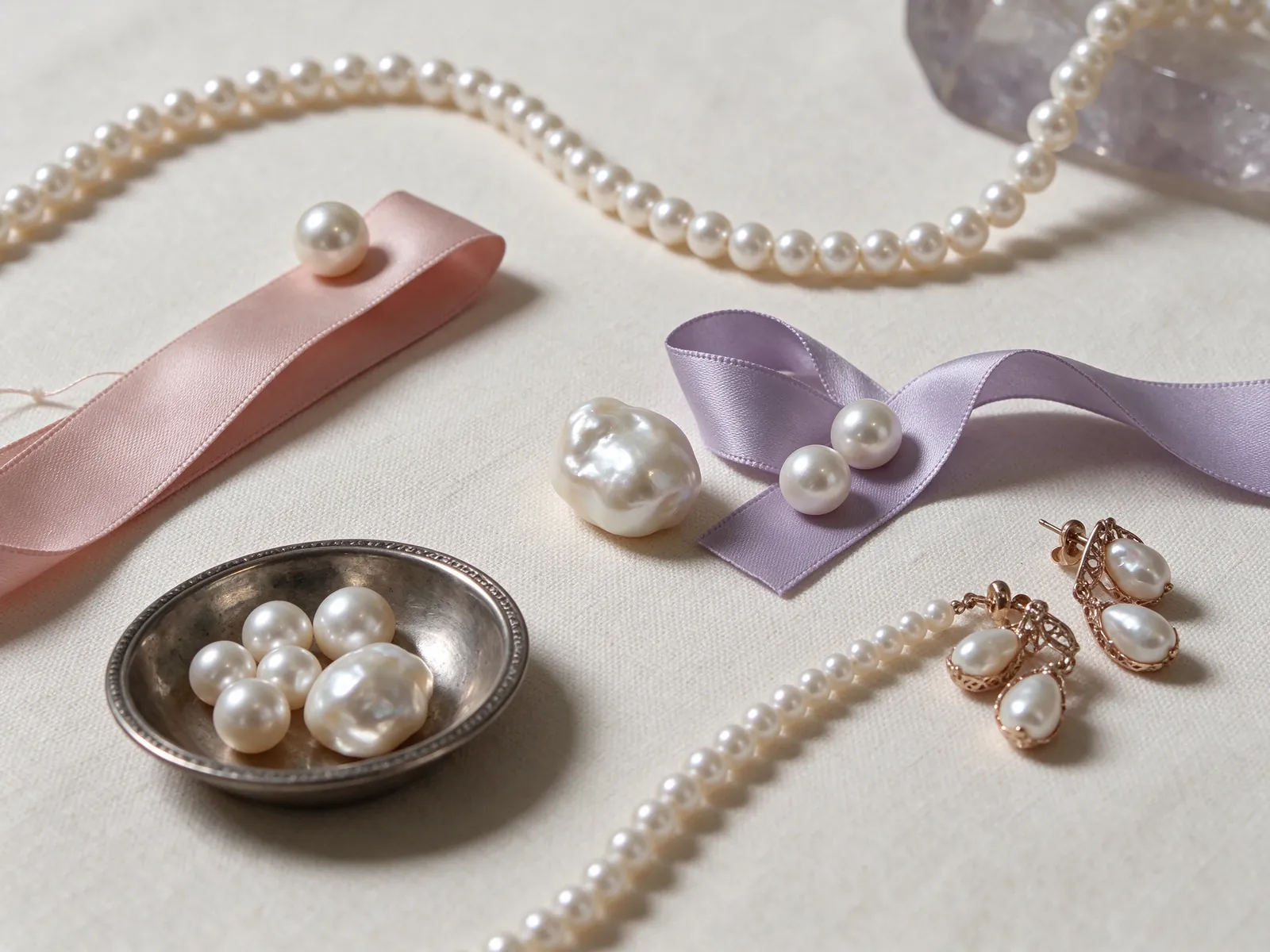
Straight metal edges do not require a perfectly round pearl. A less regular outline can create an appealing contrast, while a more centred composition may suit someone who prefers a quieter effect. GIA describes seven pearl value factors: size, shape, colour, lustre, surface quality, nacre quality and matching. This framework keeps attention on the pearl itself rather than allowing the neatness of its setting to stand in for quality. For a single-pearl pendant, examine the relevant details without treating any one factor as the entire answer. Matching concerns the coordination of multiple pearls; a pendant containing only one pearl calls for attention to that individual pearl instead.
Look at reflections in gentle light, then change your viewing angle to inspect the surface. Metal can conceal part of a pearl, making side views especially useful. Colour also looks different against different backgrounds and metal tones, so a warm photograph is not enough to establish how the piece will look with your clothes. If you are also considering a heart diamond pearl pendant, decide whether you want the main emphasis on the pearl's reflection, decorative detail or the overall silhouette before comparing the individual descriptions.
Separate visible style from pearl identity
Shape and colour alone do not establish origin or natural-versus-cultured identity, and they do not demonstrate certification. Read identity information separately from design language. If a document accompanies a piece, check what object and details it describes rather than treating a precise geometric setting as evidence about the pearl's identity.
Organise the focal point across clothes and jewellery
For a shirt, blazer or plain knit, begin with the pendant as the main feature and add earrings only after its outline feels clear. Wider earrings may work better with a simpler bar, whereas a fine frame needs a background that leaves its opening easy to see. There is no need to fill every area with jewellery. Look for enough visual space between pieces for both the pearl's soft reflection and the metal's straight line to remain distinct, especially when your clothing already has a strong pattern.
When a jacket lapel is the strongest line in your outfit, compare the placement of a pearl brooch with the central composition of a pendant. The brooch directs attention to a point on the clothing, while the pendant usually works along the neckline. The fabric and position considerations in how to wear a pearl brooch can help you decide whether to keep the necklace alone or add an accent to the outer layer. If wearing both, avoid putting the brooch immediately beside the pendant's resting point.
Begin with a neutral colour background
Use a plain white, grey or dark top to decide whether you prefer a blended effect or a clear contrast. Then add the warm or cool colours you normally wear. Metal tones need not match every accessory exactly, but repeating a tone elsewhere can make the whole outfit feel more connected.

Care for the pearl as well as the frame
A metal border does not make the pearl resistant to every knock or cleaning method. GIA gives pearl a Mohs hardness of 2.5 and advises against ultrasonic and steam cleaning. After wearing, use a very soft, clean cloth and pay attention to residue near the frame without inserting a sharp tool into the gap. If an attachment area is difficult to reach, understand the cleaning method appropriate to the complete piece rather than trying stronger pressure or treating the metal and pearl as separate objects.
Put the pendant on after using perfume and hair products to reduce direct exposure, and avoid acids and excessive heat. Store it apart from other jewellery so a clasp or metal edge cannot rub against the pearl. Arrange the chain gently instead of winding it tightly around the frame. Before the next wear, check for unusual movement at the attachment, a tangled chain or a clasp that does not close normally. If something has changed, stop wearing it rather than pulling on the pearl to test its security.
Keep the outline protected during travel
A soft separate pouch or an individual compartment lets the pendant rest naturally without contact with hard accessories. Keep the chain away from items that can catch it, and do not secure the piece by compressing its frame. When unpacking, ease out any chain tangles before lifting the pendant so the attachment is not subjected to unnecessary pulling. Want to compare geometric lines with your usual necklines and an existing chain? Contact Flint Jewellery on WhatsApp +85260106207 to discuss your pendant styling preferences.
| Feature | Bar outline | Open rectangle | Wardrobe test | Useful question |
|---|---|---|---|---|
| Visual emphasis | Compare pearl position along the bar | Compare the pearl with the open space | View the whole piece on a plain top | Do I notice the pearl or metal first? |
| Direction | Compare vertical and horizontal rhythm | Look at long edges and corners | Compare with the shirt opening or collar | Do the lines merge with my clothes? |
| Movement | Watch for rotation hiding the pearl | Watch for frame contact at the neckline | Stand, sit and lean gently | Does the composition remain visible? |
| Chain and bail | Check whether the chain competes with the bar | Check whether it overwhelms fine edges | Compare the actual chain and clasp | Do the parts move and operate comfortably? |
| Care | Notice contact near the attachment | Notice corners and internal connections | Wipe gently and store separately | Is there unusual movement or fabric catching? |
Pearl knowledge and authoritative references
GIA identifies seven pearl value factors: size, shape, colour, lustre, surface quality, nacre quality and matching. A geometric frame offers a style comparison, not a substitute for assessing the pearl through those factors. Matching concerns the coordination of multiple pearls; a pendant containing only one pearl calls for attention to that individual pearl instead.
Read the reference for this factFrequently asked questions
Is an open rectangle always more minimal than a bar?
No. A fine frame can look airy, but broad edges can give it a strong presence. A bar can also be quiet or bold. Compare the complete outline, its metal emphasis and the clothing behind it rather than relying on the shape name.
Will an off-centre pearl make the pendant hang crookedly?
Visual emphasis and physical hanging balance are different. Bail placement, the connection and weight distribution all affect movement. Look at the actual front, side and wearing behaviour instead of inferring tilt from the pearl's position in a photograph.
Can I wear a geometric pendant on an existing chain?
Check whether the design is removable and whether the chain and clasp can pass through the bail. If compatible, try the whole combination for movement and position. Do not force a clasp or alter a fixed connection to make it fit.
Does a pearl have to be perfectly round inside a geometric frame?
No. A less regular outline can contrast effectively with straight edges. Decide whether you like its relationship with the open space, then assess lustre, surface and other pearl quality factors separately rather than using roundness as the only measure.
Does a protective metal frame allow ultrasonic cleaning?
No. GIA advises that pearls should never be cleaned with ultrasonic or steam cleaners. A frame does not change that guidance. Use a very soft, clean cloth for routine wiping and avoid scraping around the pearl's attachment.
Updated: