

pearl and diamond pendant proportions: balancing a pearl pendant with diamond within a diamond pearl pendant necklace
The appeal of this pairing lies in two different kinds of light: a pearl brings a softer surface impression, while a diamond introduces a more concentrated accent. Begin with the role you want each element to play. A pearl pendant can lead with its outline or use a small bright detail to draw attention towards it. Look at the chain and connecting elements as part of the composition, rather than assessing the stones in isolation.
Proportion is not a calculation that divides pearl millimetres by diamond carats. These units describe different things: dimension and weight. The metal surrounding a diamond also contributes to the visible circle, while the pearl's outline influences the lower part of the pendant. Compare the front, side and overall vertical line. Then step back to a normal conversational distance, where an otherwise attractive close-up may read quite differently against clothing.
Styling a pearl and diamond pendant: choosing a neckline for a pearl pendant with diamond worn as a diamond pearl pendant necklace
Use a familiar plain top as your first background. A dark fabric makes the edge of a white pearl easier to distinguish; a lighter fabric invites closer attention to lustre and metal detail. A baroque pearl pendant can add an irregular line to a simple neckline. Check that the collar does not cut across the connection between pearl and diamond, because that can separate the two elements visually even when the pendant itself is well balanced.

Choose the pendant position around clothes you actually wear
A crew neck offers a curved border, a V-neck creates a directional opening, and an open shirt adds collar points and a button line. With each, decide whether the pendant should sit entirely within the opening or visibly on the fabric. Avoid judging by the pearl alone: the diamond accent needs room too. A position that looks clear while standing may become crowded when you sit at a desk or put on a jacket.
If you prefer a lower focal point, consider the styling questions raised by a long pearl pendant necklace. Length is useful when it gives the pendant a quieter background, but not when it places a small accent among a print, pocket or row of buttons. Try one of your own necklaces with the intended outfit and note the position you enjoy. That is a more useful starting point for discussing length than simply asking for something short or long.
A practical standing, sitting and jacket check
Keep the same outfit for three observations: standing naturally, sitting comfortably and wearing your usual outer layer. Look for an uninterrupted pendant outline, sufficient room between collar edges and a chain that does not disappear awkwardly beneath a lapel. This exercise helps identify a preferred position; it does not establish a universally correct length. For a high neckline, consider whether the pendant reads clearly on the fabric and whether nearby embellishment competes with it.

Understand the difference between an accent and a surrounding frame
A diamond above the pearl gives the eye a route down from the chain. A surrounding frame directs attention towards the pearl's perimeter instead. The halo pearl pendant topic is useful for comparing those visual approaches, without assuming that more diamonds automatically create a more refined result. Tide · Stillwater uses a round bezel-set diamond above the white baroque pearl: it separates a clear circle from a flowing outline rather than surrounding the pearl with a halo.
Observe the space between the metal circle and the pearl as well as the elements themselves. That interval helps each texture remain legible. Strong lighting in a close-up can distract from spacing or make polished metal seem more prominent than it is in ordinary surroundings. Compare softer light and a familiar indoor background when considering the overall effect. A bright photograph alone cannot establish diamond quality or predict how the pendant will appear in every setting.
Use carat weight as information, not a sparkle score
The stated diamond weight for Tide · Stillwater is 0.03ct. This describes weight; it does not by itself specify the visible diameter, cut performance or brightness under all lighting. More useful design questions include how distinct the upper accent should look, how much metal should be visible around it and whether you want the pearl or the circle to lead the composition. Treat the number as one part of a fuller description.
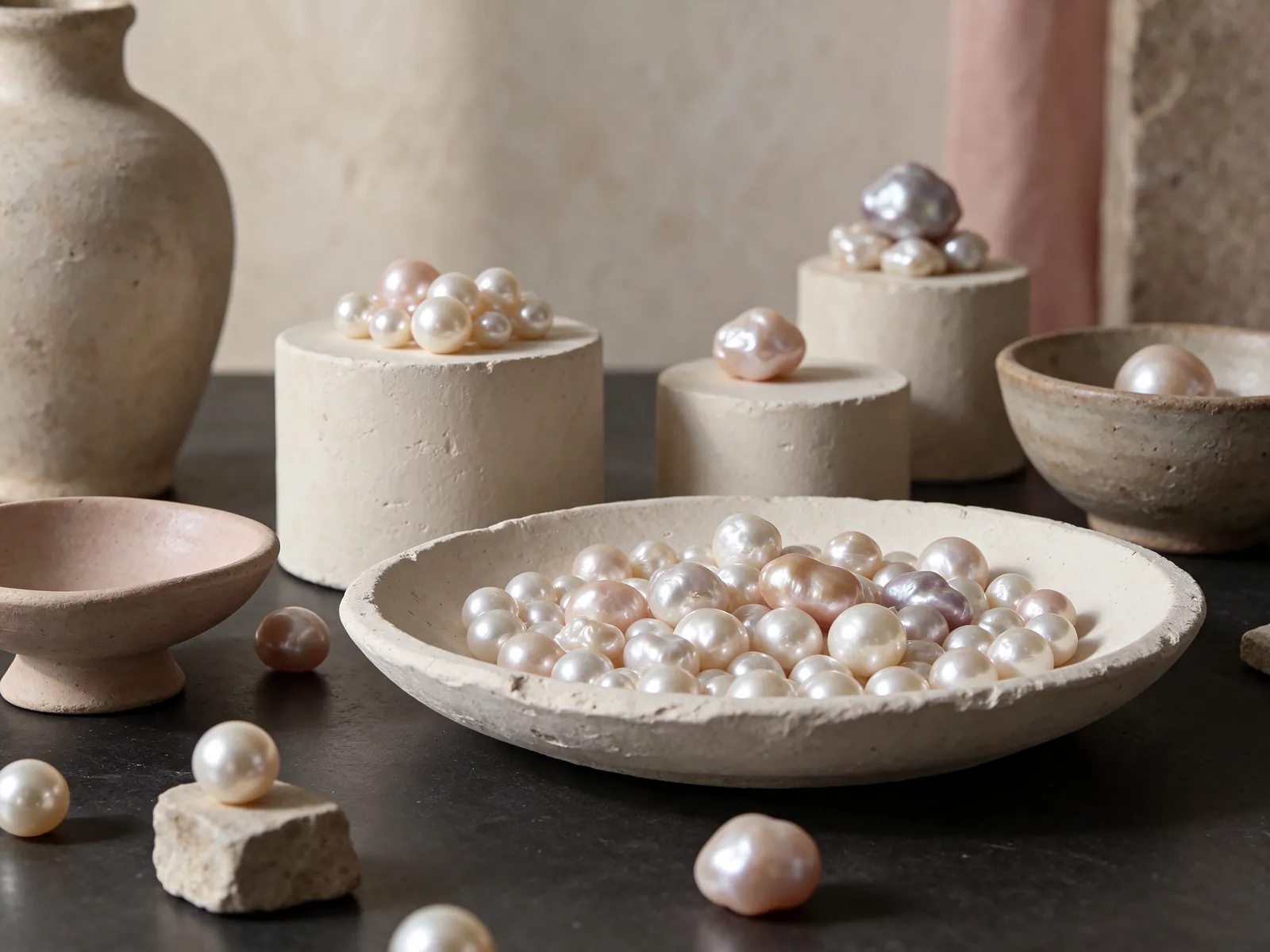
Read the Tide · Stillwater design in its own terms
Flint Tide · Stillwater Necklace, design FN012, is described with a white baroque pearl approximately 7–8mm, diamonds of 0.03ct and a chain length of 45 centimetres. Its defining arrangement places a round bezel-set diamond above the pearl, with fine elongated chain links supporting the vertical line. These details help establish a scale and a composition. They do not replace the separate question of how the piece relates to your neckline and preferred level of contrast.
An uneven pearl outline need not be made to look symmetrical. You might keep the clothing balanced and allow the pendant to introduce a small asymmetry, or simplify other neck jewellery when the outfit already has folds or an angled collar. Consider the side profile as well as the front. The pearl's curves affect how the whole pendant reads from different viewpoints, so one attractive frontal image is only part of the styling picture.
Bring scale back to a familiar necklace
Photographic enlargement can change your impression of size. Read the approximate 7–8mm description alongside the outline, and compare the intended effect with jewellery you already know. An irregular pearl is not described fully by an imagined perfect circle. Keep dimension, shape and lustre as separate observations, and do not infer pearl species or origin from a white colour or baroque appearance. Explain whether you prefer a more noticeable silhouette or a quieter detail.
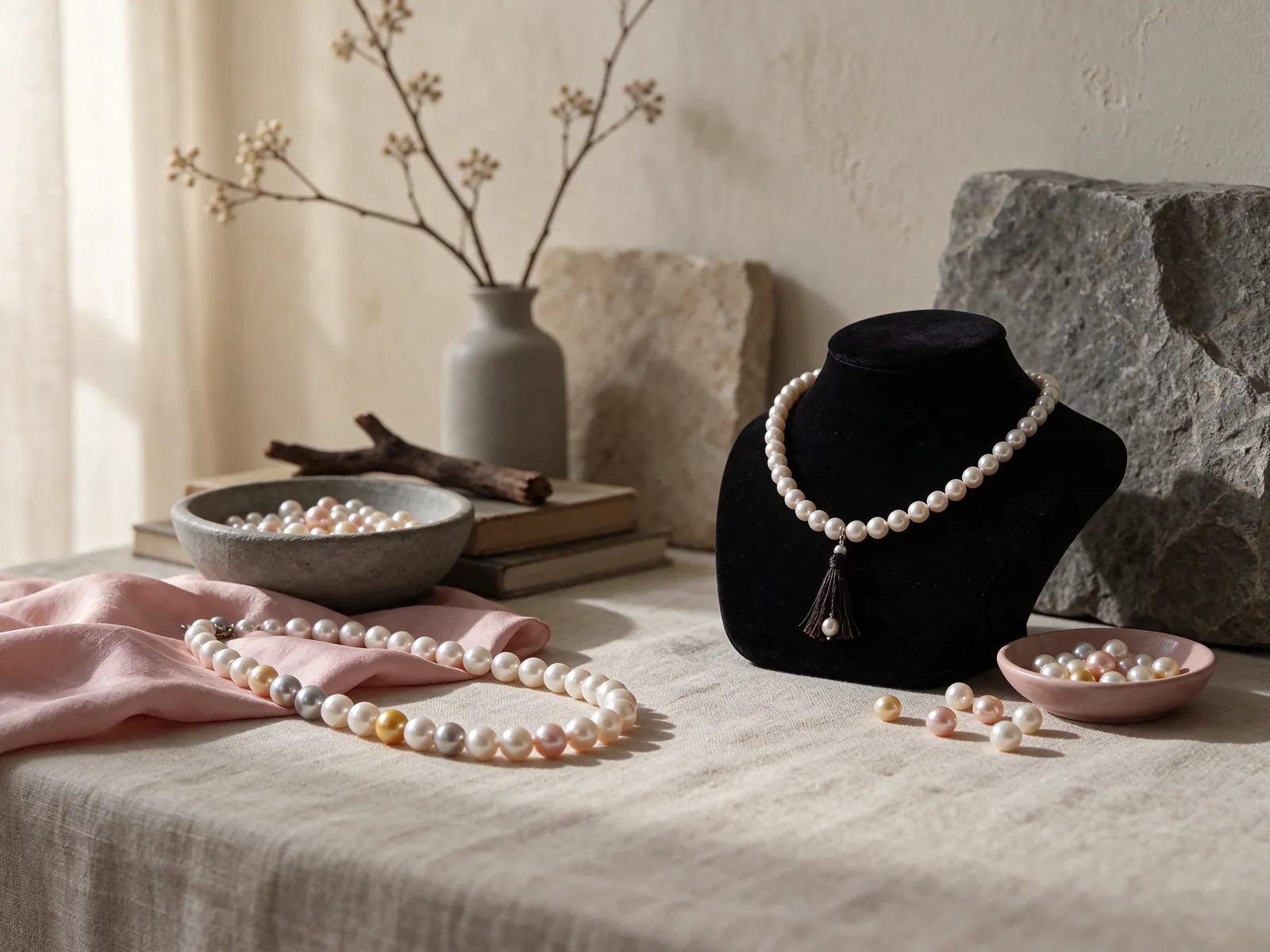
Coordinate metal tone without applying rigid colour rules
Start with the colours in your wardrobe and the jewellery you wear most often. A warmer or cooler fabric background can change how a white pearl and its metal surround appear together. Material discussions with Flint are limited to 18K 750 white gold, 18K 750 yellow gold, 18K 750 rose gold, PT950 platinum and PT900 platinum. Choose a preferred tone first, then discuss its relationship to the specific pendant proportions instead of combining every option in one look.
A small diamond accent and a distinct coloured gemstone suggest different priorities. If a colour focal point matters more to you, the pearl and sapphire pendant topic offers a separate direction for considering colour relationships; it does not add a sapphire to the Tide · Stillwater description. Think about earrings and other visible jewellery at the same time. Choosing which element should lead often makes the whole outfit feel more deliberate than allowing every component to compete equally.
Change one styling variable at a time
When comparing colour directions, keep the top and lighting consistent. First consider whether the metal blends into or stands apart from the background; then check whether the pearl remains clear. Finally add your usual earrings. Mixed tones can be a personal choice, while repeating one tone can help connect separate pieces. Neither approach is automatically correct, and no single metal colour is the necessary partner for every white pearl or every wearer.
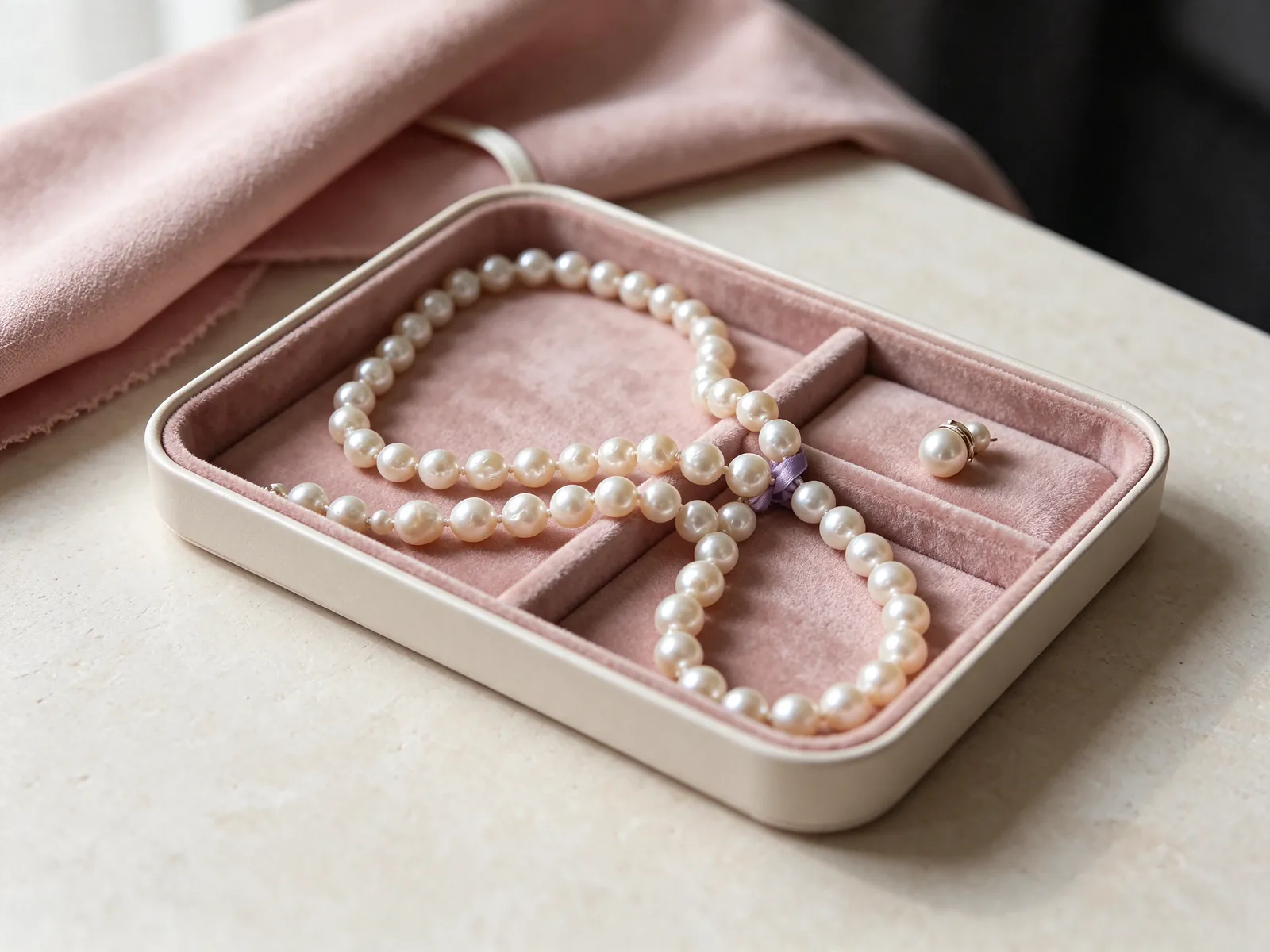
Separate quality questions from design preferences
GIA describes seven pearl value factors: size, shape, colour, lustre, surface quality, nacre quality and matching. This framework helps you ask specific questions rather than treating size as a complete quality judgement. For a single-pearl pendant, outline and dimensions contribute to the silhouette, while lustre and surface observations concern the pearl itself. The framework does not automatically assign a grade or certificate to a particular Flint design. Decide which features matter most to your intended look.
Matching becomes especially relevant when several pearls share a composition, though a single pearl also needs a considered relationship with its diamond, metal and chain. A graduated pearl pendant offers another way to think about visual rhythm, using progression rather than one principal pearl and a small upper accent. Compare the ideas to identify your preference, not to equate a greater number of pearls with a better choice. Clarity of intention makes the later design conversation more productive.
Ask questions that a description can actually answer
Ask how the stated dimensions relate to the overall pendant, which views show the outline clearly and what the written description says about the pearl. GIA distinguishes bodycolour, overtone and orient; not every pearl displays all three. If species, origin or documentation is important to you, read the relevant written information directly. Shape, white colour and the presence of a diamond cannot establish those details on their own, however appealing the composition may be.
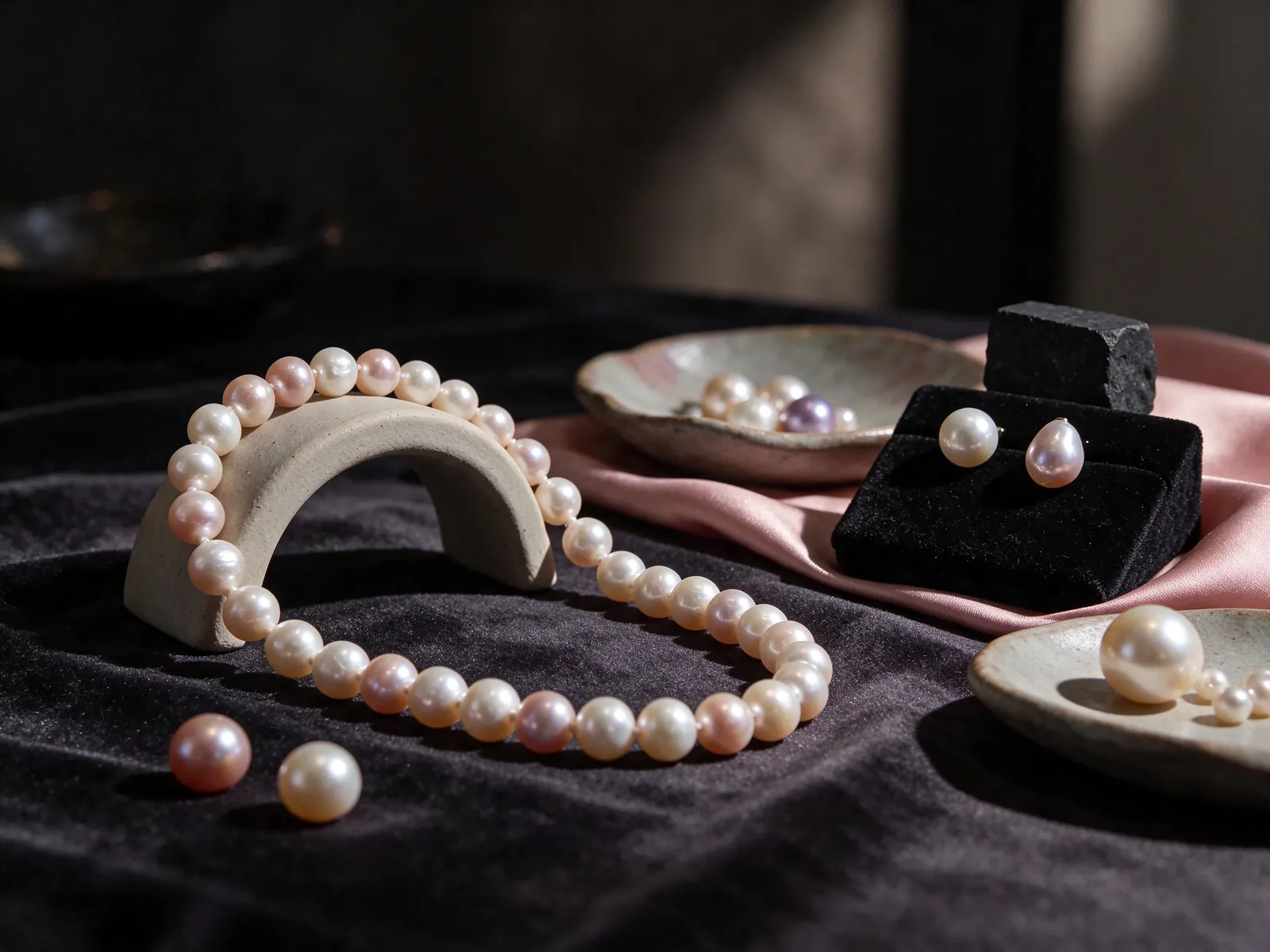
Care for the pearl and prepare a useful design conversation
The diamond does not make the pearl suitable for diamond-focused cleaning methods. GIA places pearl at 2.5 on the Mohs hardness scale and states that pearls should never be cleaned in ultrasonic or steam cleaners. After wearing, use a very soft, clean cloth for gentle wiping. Avoid contact with perfume, hair spray, acids and excessive heat. Consider the more delicate pearl when deciding how to care for the combined piece, rather than focusing only on the upper stone.
Store the necklace so the pearl does not rub against other jewellery, and avoid pulling on the connection between chain and pendant. Before wearing, observe whether the clasp closes normally, the chain looks unchanged and anything near the pearl feels loose. If something appears unusual, stop wearing it and discuss an inspection rather than attempting a forceful adjustment. These observations are practical habits, not a substitute for examination or a promise that damage can always be prevented.
Bring neckline, length and preference into the discussion
For a conversation with Flint Jewellery, bring a photograph of a usual neckline, the length of a familiar necklace and examples of pearl outlines you enjoy. Explain whether the pendant is mainly for work, relaxed outfits or formal clothing, and how noticeable you want the diamond accent to be. For a gift, the recipient's current earrings and neckline habits provide useful clues. These concrete preferences help connect pendant proportions with everyday wearing rather than an abstract idea of elegance. WhatsApp +85260106207 to share your usual neckline and preferred pearl outline with Flint Jewellery and discuss your pearl and diamond pendant design.
| What to observe | Design consideration | Styling check | Useful question |
|---|---|---|---|
| Visual emphasis | Relationship between pearl outline and upper accent | Begin against a plain top | Which element should attract attention first? |
| Neckline position | Whether the entire pendant is visible | Compare standing, sitting and a jacket | Does the collar interrupt the composition? |
| Baroque outline | Front silhouette and side profile | Allow space around the irregular curves | Which viewpoint best suits your preference? |
| Metal tone | Connection with chain and other jewellery | Keep fabric and lighting consistent | Should the tone blend in or stand out? |
| Daily care | The pearl determines cleaning limits | Gentle wiping and separate storage | Is the cleaning method appropriate for a pearl? |
Pearl knowledge and authoritative references
GIA places pearl at 2.5 on the Mohs hardness scale and advises against ultrasonic or steam cleaning, including when a pearl is paired with a diamond.
Read the reference for this factFrequently asked questions
Does a 0.03ct diamond tell me how large the complete pendant looks?
No. The stated 0.03ct describes diamond weight in Tide · Stillwater. Its approximately 7–8mm white baroque pearl, the bezel surround and the vertical arrangement also contribute to the overall appearance. Read weight and dimensions separately, then consider the complete piece against the neckline you intend to wear.
Will a 45-centimetre chain sit at the same point on everyone?
No. FN012 has a stated chain length of 45 centimetres, but neck circumference, body proportions, clothing and the pendant arrangement affect the visible position. Compare a necklace you already wear with a familiar top, and discuss the location you prefer rather than relying on the length alone.
Should I look for a perfectly balanced baroque pearl outline?
Balance can come from the whole outfit rather than a symmetrical pearl. An irregular outline is part of baroque styling, and a simple neckline can give those curves room. Review the front and side separately. A shape preference does not establish pearl species, origin or documentation.
Can I use an ultrasonic cleaner because the pendant contains a diamond?
No. GIA states that pearls should never be cleaned with ultrasonic or steam cleaners. The presence of a diamond does not change that advice for the pearl. Use a very soft, clean cloth for routine wiping, and discuss an appropriate approach if a mark needs more than gentle care.
What makes a first design discussion more useful?
A usual neckline photograph, the length of a familiar necklace, preferred pearl outlines and a chosen metal tone provide a concrete starting point. Mention the intended occasion and whether you wear earrings with the pendant. For a gift, concentrate on the recipient's existing clothing and jewellery habits rather than age alone.
Updated: