

A chain for pearl pendant designs needs a suitable fit: assessing pearl pendant chain compatibility across pearl pendant chain styles
Begin by identifying how the pendant attaches, rather than choosing the prettiest chain first. A closed bail has an internal passage that may be smaller than its outer silhouette suggests. When choosing a pearl pendant top, consider the chain you intend to keep alongside the pendant itself. The chain body and the end that must be threaded both need to pass through the opening. Two pieces can look beautifully coordinated in a photograph yet still be unsuitable for direct assembly.
Compatibility is not a comparison of chain width alone. The shape of the passage, the orientation of the bail, and the way a link turns can all affect the fit. Work over a steady surface with soft support for the pearl, and identify the threading direction before moving the chain. If the fitting catches or only advances when twisted under pressure, stop. Flattening an end piece or pulling on the pearl is not a sensible way to make a chosen combination work.
For a chain for pearl pendant designs, why check the end fitting as well as pearl pendant chain styles when assessing pearl pendant chain compatibility?
Look at the actual end that needs to travel through the bail, including its terminal plate, connecting ring and any raised junction. If only one end passes, check that the chain can still be fastened normally once assembled. Then observe whether the pendant rests naturally at the centre. A smooth passage and an unforced resting position are more informative than a close-up that shows only the slender chain body.

Azuki and Venetian chains create different visual rhythms
An azuki chain offers a linked, delicate rhythm that can leave the pearl as the main point of interest. A Venetian chain gives a more defined, orderly line, useful when you want the necklace itself to contribute to the look. These are styling directions rather than a rule that one chain suits every pearl. Link scale, finish and the pendant's outline still matter within either style, so compare the complete pairing rather than making a decision from the chain name alone.
Use a plain top for the first comparison, then try the textures you actually wear. If the chain's reflections draw your eye away from the pearl, a quieter visual line may better serve a pearl-focused look. If a delicate chain disappears against the fabric and you want a clear neckline outline, compare a more defined option. Brightness in a photograph does not demonstrate strength: lighting, background and viewing angle can change the apparent prominence of the same chain.
Keep apparent thickness separate from construction
A substantial-looking chain is not enough evidence that it is suitable for a particular pendant. Equally, a fine appearance is not a complete description of its construction. Look separately at the bail contact point, the movement of the links and the fastening. If the chain forms an awkward angle where it meets the pendant, reconsider the fit rather than assuming that a brighter or thicker version will resolve it.

Balance the pearl, bail and chain as a complete outline
With a single pearl pendant, the visual focus is concentrated, making the relationship between the pearl and its metal connection especially noticeable. A prominent bail paired with an almost invisible chain may look like a separate upper element. Strongly defined links may instead make the pearl feel like one small detail in a necklace-led design. There is no universal chain-width-to-pearl-size ratio that settles this choice. Step back to assess the whole neckline, then look closely at whether the connection appears natural.
A multi pearl pendant can spread attention across a broader outline, so consider the arrangement as well as its overall presence. A restrained chain can continue the design without adding another focal point; a more visible line can create a deliberate frame. Try the combination with your usual earrings before deciding, particularly if both pieces sit close to the face. This is a question of visual balance, not a reason to infer pearl type, origin or quality from colour and shape.
Check the pendant from the side as well as the front
A front view may conceal a bail that encourages the pendant to turn. After checking the overall appearance, look from the side and gently change posture. Notice whether the pearl faces forward naturally or whether the chain continually pushes the metal back into view. Occasional movement is different from a persistent awkward angle. Identify the contact point before deciding which part of the pairing to change.
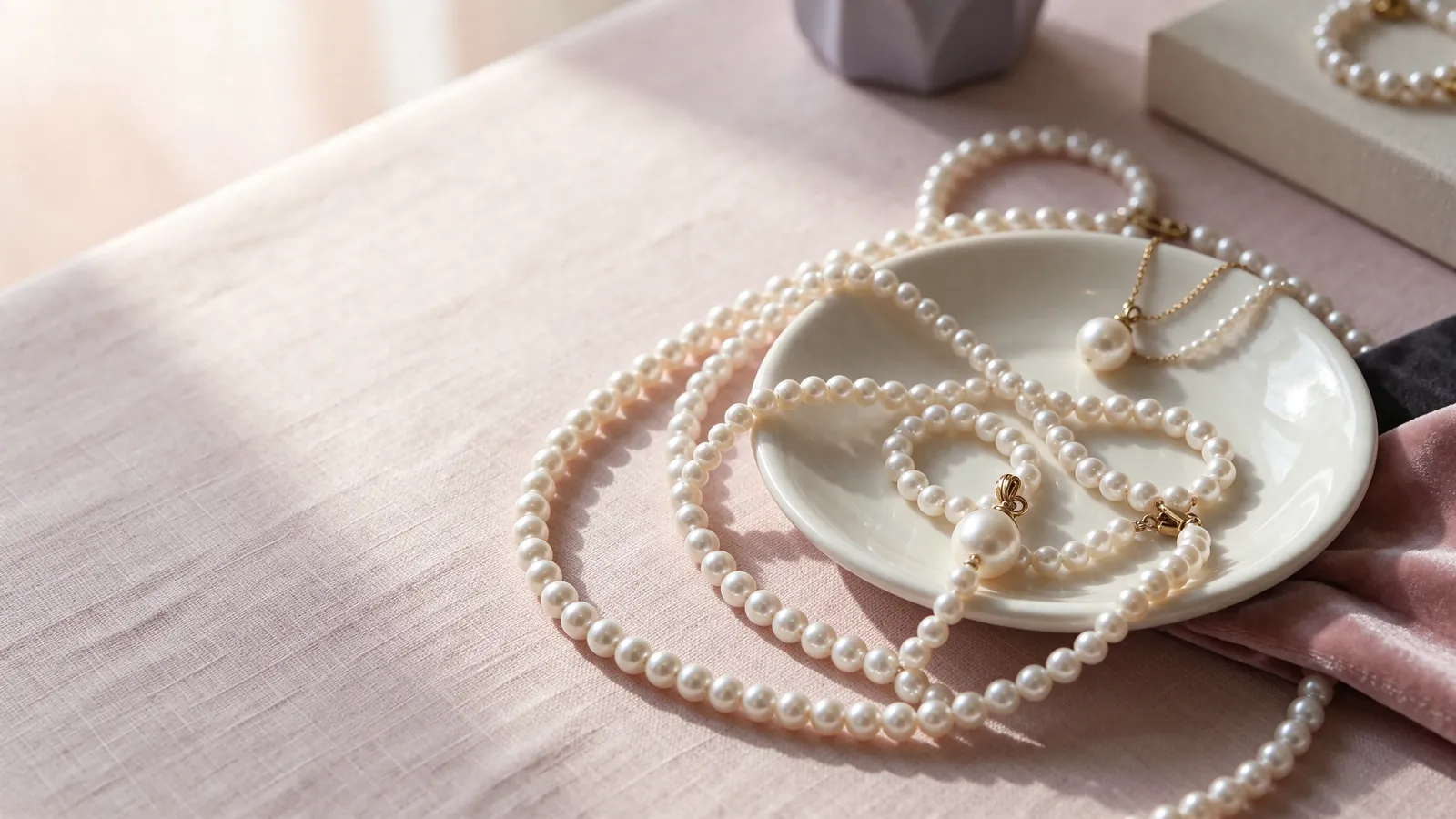
Choose a landing point around the necklines you wear
Chain length is only the starting point because the pendant adds its own drop. With a crew neck, see whether the pearl rests clearly on the fabric or sits directly against the edge. With an open shirt, assess the space between the collar and pendant; with a V-neck, notice whether the pendant competes with the point of the neckline. The same length can sit differently on different people and garments, so a successful outfit photograph is inspiration rather than a placement measurement.
Include seated posture in the comparison. A pendant that sits neatly while standing may meet the clothing edge when you sit down, and a longer pairing can move forwards as you bend. Try your usual jacket or scarf too, rather than judging the necklace in isolation. Decide on one clear landing point first. For a clean everyday look, the space between the pendant and neckline often matters more than adding further jewellery simply to make the arrangement feel layered.
Layer without crowding the bail
Give the pearl an independent position before adding another necklace. Check where the second chain's fittings and pendant sit, not just the difference in overall length. Turn your head gently and see whether the layers remain distinguishable or repeatedly gather around the pearl's bail. If the intended spacing quickly disappears, simplifying the pairing can create a clearer result than introducing an additional chain.

Attachment methods change what needs checking
A closed bail depends on threading an end through the passage. A pearl necklace enhancer moves the decision towards the opening, closure and the chain section it encloses. Being able to open does not establish that it fits every necklace. Check how it fastens and how it rests once closed, including whether the links are crowded or pushed sideways. If an existing chain cannot thread through a closed bail, a different attachment concept is a separate design choice, not permission to force the original opening wider.
A through pearl pendant makes the chain's route more directly related to the pearl's position, so do not carry over assumptions made for an exposed bail. Consider the passage, end fitting and resting orientation together. A Y-shaped pearl pendant necklace introduces a downward line beyond the neck curve, making the relationship with the opening of a shirt or dress particularly important. Decide whether you want a compact pearl-and-chain outline or a more extended vertical composition before comparing these different approaches.
Choose the attachment before refining the chain style
A useful order is attachment, placement, then appearance. Establish whether the design threads on, opens around a chain or forms part of a complete necklace. Next consider the desired resting position, and only then compare link rhythm and metal colour. Knowing whether you want to retain an existing chain or change pendants regularly gives the comparison a practical purpose beyond a pleasing front view.

Use metal colour to connect the pendant with your wardrobe
Matching the chain and bail visually can create a continuous line, while a deliberate contrast can make the connection part of the design. Compare both under the same light and alongside the earrings or rings you normally wear. For a mixed-colour look, let one tone act as the main thread and another provide a smaller echo. Pearl and metal reflect light differently, so a close-up of apparently similar pale colours may not predict the layered effect when the necklace is worn.
Flint Jewellery's customisation material options are 18K 750 white gold, 18K 750 yellow gold, 18K 750 rose gold, PT950 platinum and PT900 platinum. Begin a chain-matching discussion with the metal colour and pendant outline you prefer, then explore the design direction. Warm tones can give a gentle connection to neutral clothing; a white-metal direction can form a distinct outline against a dark neckline. These are aesthetic comparisons and do not remove the need to check the chain and bail as individual components.
A change of background is not evidence of pearl identity
A pearl beside warm metal may give a warmer overall impression, while a different chain or top can shift the way its colour appears. Use that observation for styling, not to decide species, origin or treatment status. Keep the lighting and garment consistent while comparing metal tones. This makes it easier to recognise whether the chain's line or the surrounding background is influencing your preference.

Bring practical details to the final chain-matching check
Before discussing a pairing, gather clear views of the pendant front, side and bail opening, along with close-ups of the existing chain and its ends. Add the necklines you wear, your preferred resting position and whether you intend to layer. These details turn a general style preference into a useful comparison. Bringing the pieces themselves helps establish how they thread and move; photographs support a styling conversation but cannot show every internal dimension or contact point.
The final check should cover smooth threading, normal fastening, a natural forward-facing position and any repeated contact with your collar when seated. If you are still choosing the overall outline, start with the different pearl pendant design directions and return to the fitting sequence afterwards. When taking the necklace off, arrange chain and pendant separately enough to avoid tangling. Do not wind the metal links tightly around the pearl; a clearly organised pairing is easier to handle gently next time.
Handle pearl and metal contact gently
GIA lists pearl at 2.5 on the Mohs hardness scale. This is a useful reminder to avoid unnecessary scratching while arranging a chain, not a measure of a necklace's carrying capacity. After wearing, use a very soft, clean cloth, and keep perfume and hair spray away from the pearl. GIA advises against ultrasonic and steam cleaning. Support the metal connection and chain when repositioning the pendant rather than repeatedly rubbing links over the pearl.
Ready to bring your pearl pendant and everyday wardrobe into balance? Contact Flint Jewellery on WhatsApp at +85260106207. Share views of the pendant, bail and existing chain, together with your usual neckline and preferred resting position, to discuss a suitable chain-matching direction.
| Decision point | Inspect first | Styling consideration | Avoid |
|---|---|---|---|
| Closed bail | Internal passage and the threading end | A natural forward-facing position | Pulling on the pearl to overcome resistance |
| Azuki chain line | Link contact with the bail | Keeping the pearl as the focus | Treating a fine appearance as a strength rating |
| Venetian chain line | Movement where the chain meets the pendant | A defined outline beside the pendant | Using reflected brightness to judge construction |
| Neckline placement | The complete chain and pendant drop | Check standing and seated positions | Copying another person's chain length without trying it |
| Layering | Contact between chains and the bail | Distinct positions for each piece | Adding layers that repeatedly gather together |
Pearl knowledge and authoritative references
GIA lists pearl at 2.5 on the Mohs hardness scale. Avoid repeated metal-link abrasion when arranging or storing a pendant; this hardness figure is not a chain load rating.
Read the reference for this factFrequently asked questions
Why does the end fitting catch when the chain body passes easily?
A terminal plate or connecting ring can have a wider outline than the chain itself. A closed bail must accommodate the actual end being threaded. Identify the obstruction and stop rather than flattening the fitting or pulling on the pearl; a slender chain body alone does not establish compatibility.
Is azuki or Venetian better when I want the pearl to stand out?
A delicate azuki line can keep attention on the pendant, while a Venetian line can make the whole necklace more defined. Compare the complete pairings against the same top and check the bail connection as well. Neither name provides a universal answer for every design.
Will a longer chain stop my pendant turning sideways?
Length changes the resting point but may not address a contact point that pushes the pendant out of alignment. Check the bail direction, links and side view first. A persistent sideways position needs a closer look at the pairing rather than an assumption that length alone is responsible.
What should I bring if I want to keep my existing chain?
The chain and pendant themselves are most useful. Clear photographs of the bail opening, links and both end fittings can support the discussion. Explain your usual necklines, preferred placement and layering habits so the comparison covers appearance as well as fit.
Can I clean the pearl and its chain together in an ultrasonic cleaner?
No. GIA states that pearls should not be cleaned using ultrasonic or steam cleaners. For routine care, use a very soft, clean cloth and avoid repeatedly dragging metal links across the pearl when organising the necklace.
Updated: