
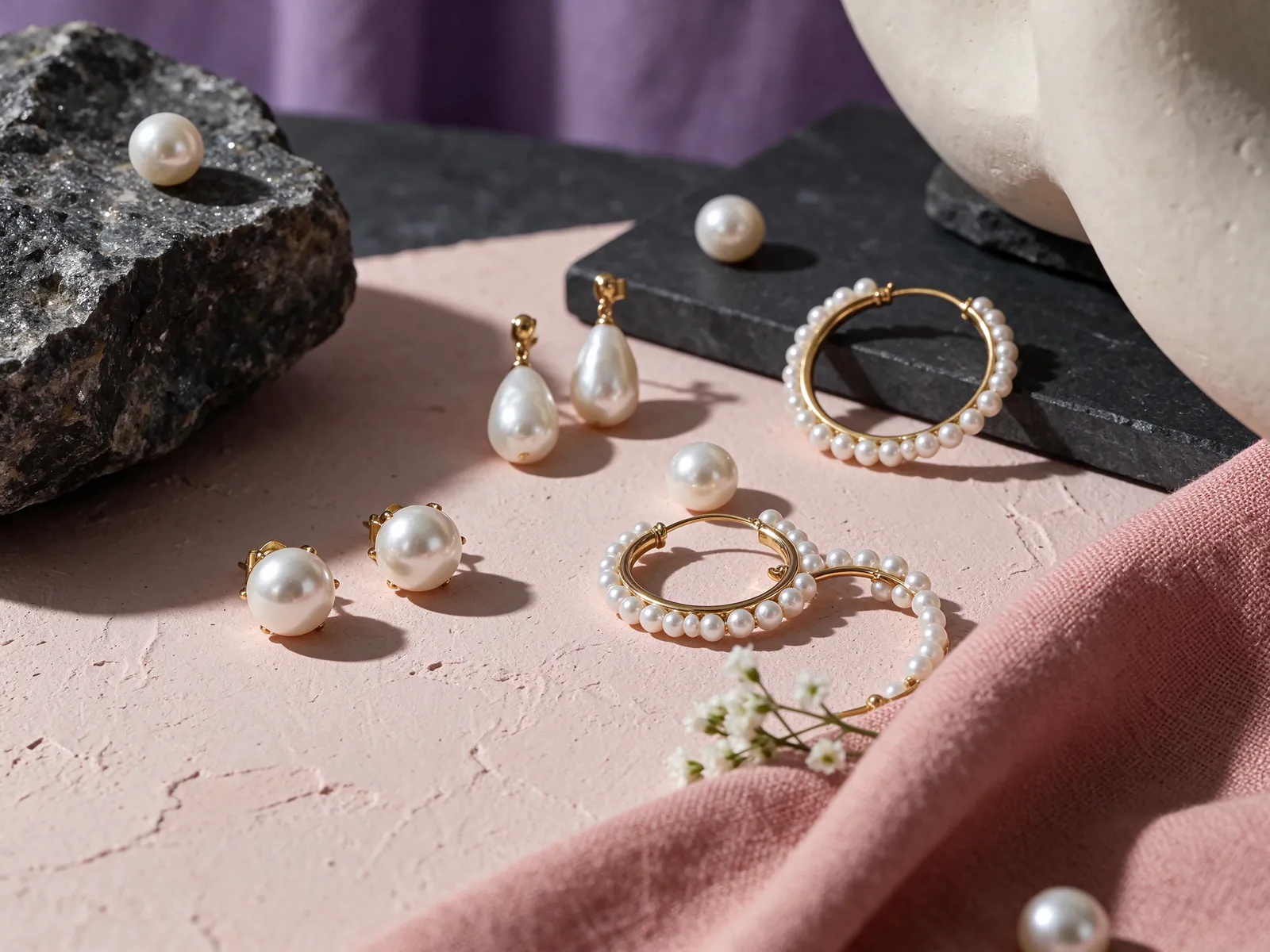
How do black pearls and mourning traditions shape funeral pearl jewellery etiquette when wearing pearls to a funeral?
Funeral pearl jewellery etiquette begins with the particular family, not a colour chart. Read the invitation or funeral notice for dress guidance before choosing accessories. A request for plain clothing, a specified colour or an outfit recalling the person who died should guide the whole look. Emily Post’s funeral guidance notes that attire is not limited to black or dark grey, while emphasising clean, neat clothing suited to a serious occasion. That general reference does not replace the customs of a Hong Kong family or religious community. If instructions are unclear, ask the attendance coordinator briefly. You can attend thoughtfully without wearing any jewellery.
The association between black pearls and mourning needs cultural context. In the black-pearl section of its wedding guest article, WSP says darker pearls can suggest mourning to some people in Japan and explains that this is not a hard prohibition. It is an observation in wedding guidance, not a rule requiring black pearls at a Hong Kong funeral. Nor does it establish that white pearls are disrespectful. Reading about pearl meaning and symbolism can explain why people interpret a piece differently, but the family’s stated preferences remain the practical guide to this ceremony. Avoid treating somebody else’s pearl colour as evidence of their feelings.
When wearing pearls to a funeral, how can family wishes guide funeral pearl jewellery etiquette beyond the association between black pearls and mourning?
Ask whether there are colours or accessories to avoid, rather than asking a bereaved relative to evaluate several jewellery photographs. An organiser or reception contact may be able to answer without adding to the family's workload. If the request is simply to keep things restrained, choose one uncomplicated piece or leave accessories off. If jewellery is specifically discouraged, a private attachment to your pearls need not become a discussion at the ceremony.

Judge colour against the outfit rather than in isolation
Place the possible necklace or earrings beside the clothes you intend to wear. White pearls can create a strong contrast against a dark top, while dark pearls may still draw attention through their lustre or reflective metal settings. A subdued colour does not automatically produce a subdued outfit. If the neckline is already decorative, leave it clear; if earrings are conspicuous, consider omitting the necklace instead of trying to make every accessory equally noticeable.
Exploring black pearl meaning helps distinguish a cultural association from a dress instruction. It cannot tell you a pearl's species, origin or natural-versus-cultured identity from its colour. Similarly, pearl colour meanings should not override a family's chosen dress code. If those gemmological details matter to a purchase, read the stated description and any accompanying documentation, rather than assuming that a dark photograph proves a particular kind of pearl.
Check the overall effect under ordinary lighting
GIA distinguishes bodycolour, overtone and orient: every pearl has a bodycolour, but not every pearl displays the other two phenomena. Look at your chosen piece in ordinary light and check side reflections and the setting as well as the front view. A close-up photograph cannot show how the whole outfit will appear. This is a styling exercise, not an identification test or a reason to seek a particular colour effect for attendance. If the combination seems too conspicuous, reducing accessories may be more useful than trying to find a universally correct pearl colour.
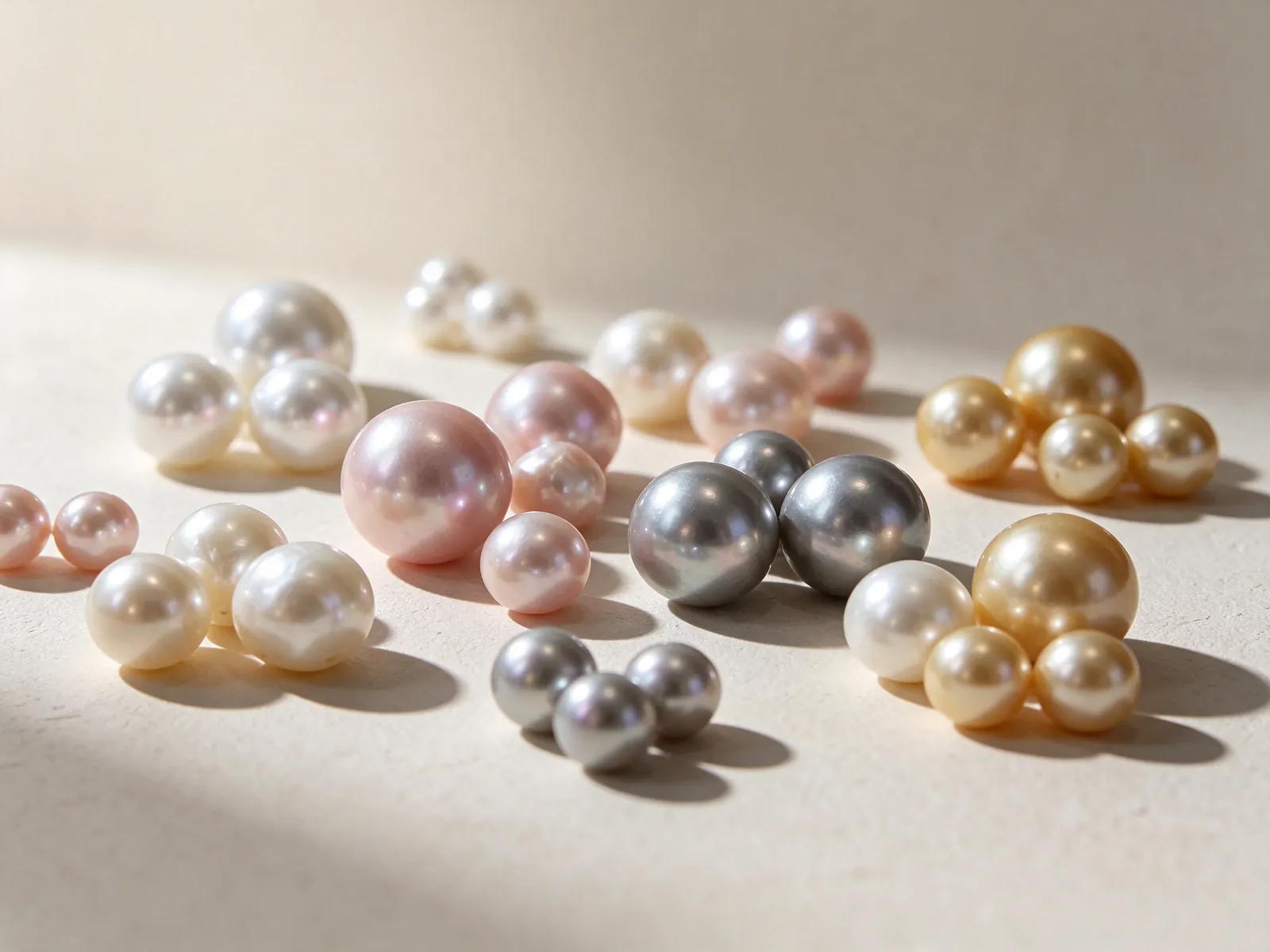
Restraint depends on silhouette, movement and reflective detail
There is no pearl diameter limit that defines respectful attire for every funeral. The arrangement and setting change how prominent a piece looks: close-fitting studs behave differently from long drops, and a single pendant has a different visual weight from several layered necklaces. Use a full-length mirror rather than judging only a magnified jewellery image. The relevant question is whether the piece sits quietly within your outfit, not whether it reaches an arbitrary measurement.
Look beyond the pearls themselves. A broad polished setting, swinging elements or a complicated cluster can make even modest-looking pearls conspicuous. Choose a single main jewellery position, then remove details that compete with it. This also gives a useful buying brief if you genuinely need a versatile piece: consider a shape you would wear again with ordinary formal clothing, rather than assuming that attendance requires an entirely new funeral-only set.
Try sitting, turning and walking before leaving home
Move in the complete outfit and notice whether earrings touch your collar, a pendant repeatedly shifts, or you need to straighten the necklace. Try sitting and handling a programme as well as walking. Include the coat and scarf you expect to use; a piece that looks settled while standing may catch when you remove an outer layer. If an accessory demands your attention, choose a simpler alternative or leave it off. Pearl diameter, price and quality grades do not measure respect. The useful test is whether you can participate naturally without making jewellery a continuing concern.
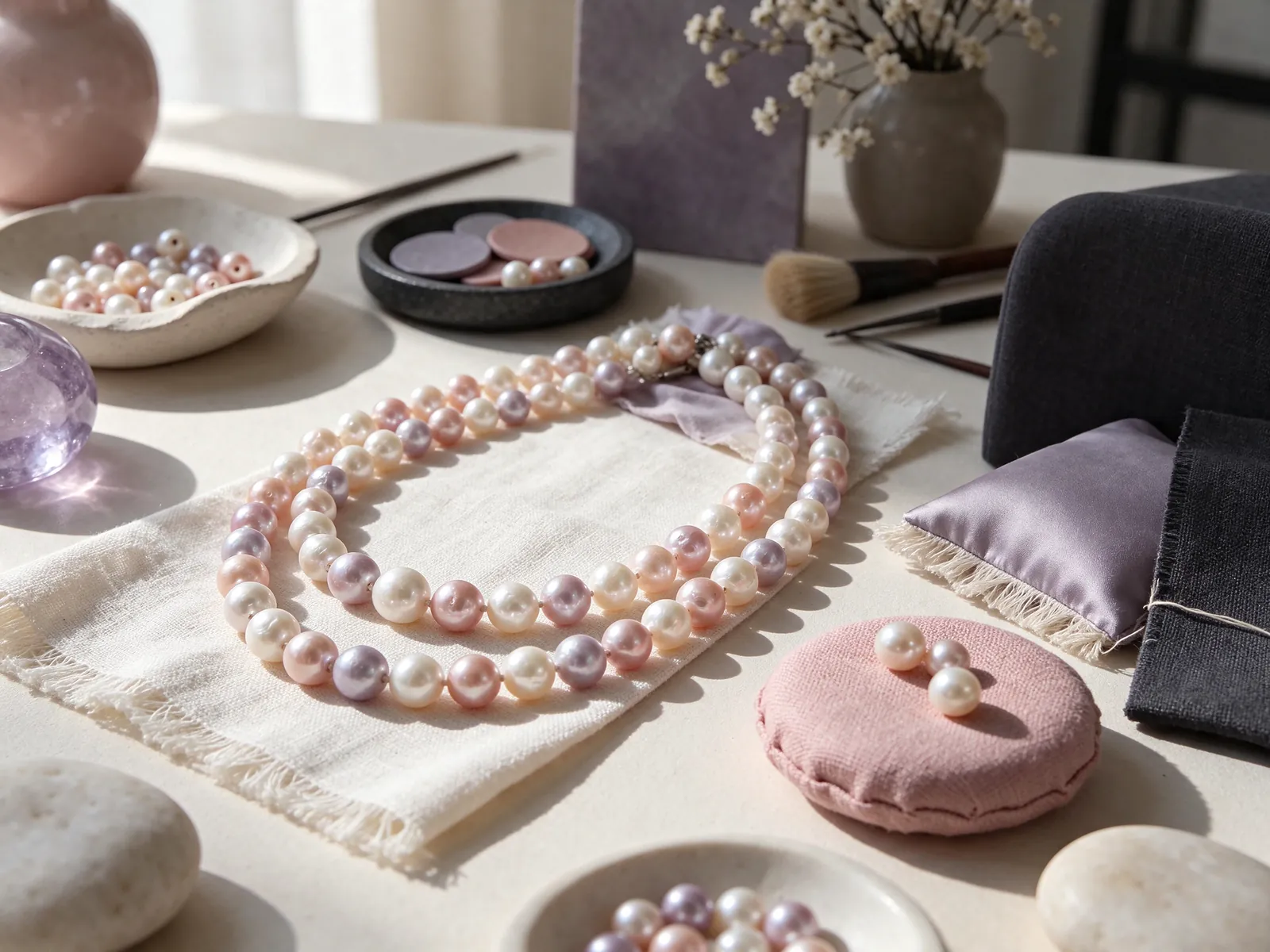
Fit accessories to the neckline and your role on the day
Choose clothes first and jewellery second. A high neckline or detailed collar may work better without a necklace, while an open neckline needs a check of where a pendant actually rests. Include your jacket, shawl and bag strap in the trial, especially if you will move between indoor and outdoor spaces. Avoid a combination that needs repeated rearrangement whenever you sit down or put on your coat.
Pearls need not be assigned by gender. The practical questions in genderless pearl jewellery are still scale, comfort and the family's guidance, rather than assumptions about who should wear a necklace or earrings. Your responsibilities also matter: somebody helping relatives or welcoming guests may prefer fewer moving accessories. A personal or religious item that you normally wear can remain the main piece, without adding pearls simply to signal that you are mourning.
Count the visual details beyond jewellery
Glasses, brooches, buttons and bag hardware can all contribute reflection or decoration. Look at them together instead of approving each item separately. If the combination feels busy, reduce the optional details rather than trying to match every metal surface. A restrained outfit is an overall impression; it does not require a perfectly coordinated jewellery set or a prescribed number of pieces.

Keep movement quiet and protect the pearls
Think through what you may actually do: handle a programme, carry a bag, assist a relative or sit close to others. Test a bracelet for movement and sound during those actions. Check that fastenings feel secure and that nothing is likely to brush another person. Different ceremonies involve different activities, so this is preparation for your role rather than a claim that every service follows the same sequence.
GIA gives pearl a Mohs hardness of 2.5. That is a reason to avoid rubbing pearls against hard objects, not a promise about their ability to withstand an impact. Apply perfume and hair products before putting the jewellery on, avoiding direct contact with the pearls. If you expect to remove a piece during the day, bring a separate soft pouch instead of placing it loose beside keys or other hard items in your bag.
Use gentle care after the ceremony
After wearing, wipe pearls with a very soft, clean cloth and store them separately. GIA advises against ultrasonic and steam cleaning. Avoid prolonged soaking, abrasive toothpaste and heated drying. Before any water cleaning, consider the whole piece, including its thread, adhesive, prongs and metal; general pearl-care advice is not permission to immerse every construction. If thread becomes wet, let it dry completely before wearing again. A loose clasp, unstable glued component or worn thread is a reason to stop wearing and arrange an inspection. Restringing or repair depends on the condition and should not be treated as a guaranteed restoration.
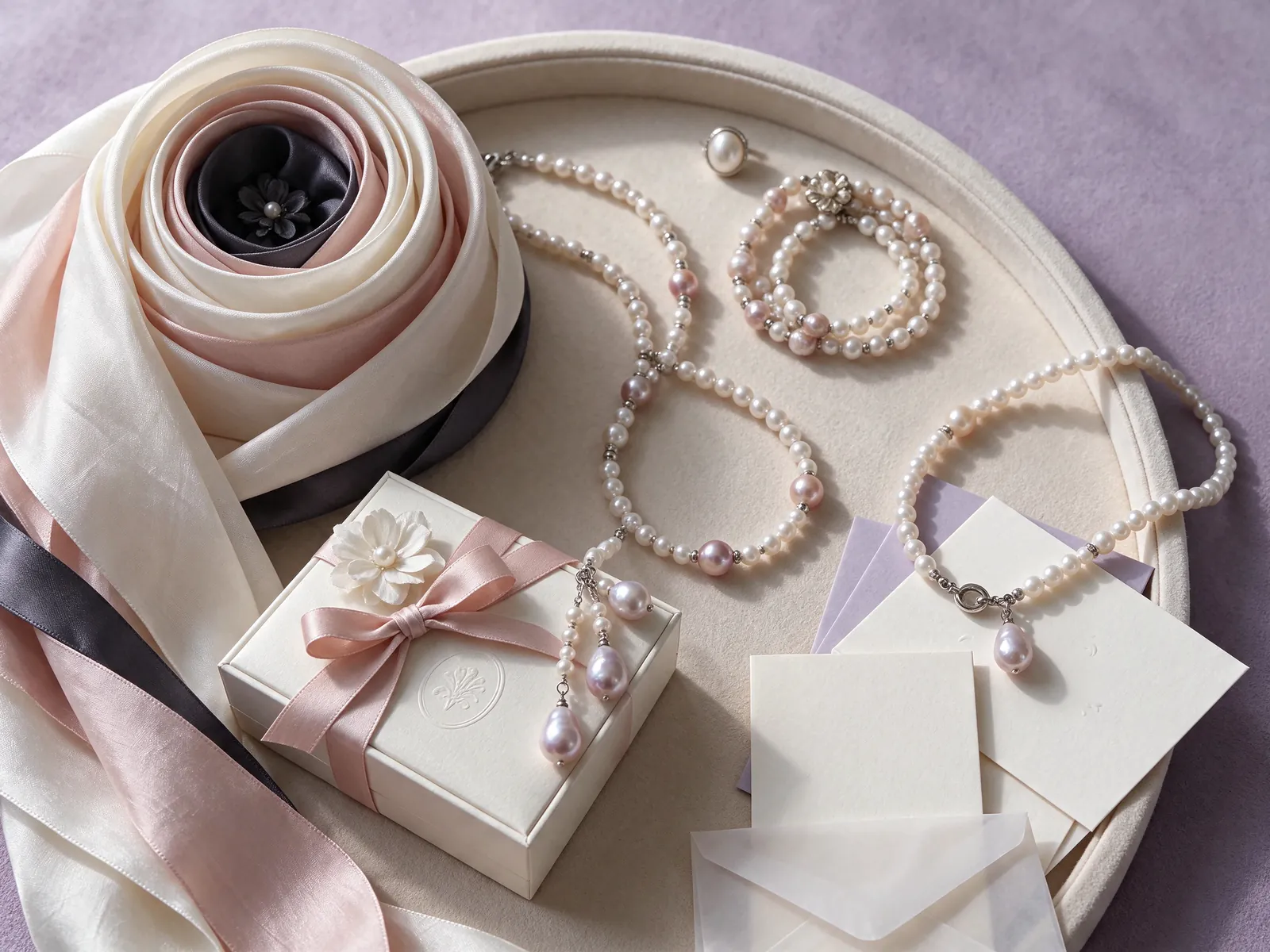
Review existing pieces before deciding to buy
Begin with jewellery you already own. Check earring backs, necklace clasps and visible thread, then try the suitable candidates with your clothes. If none works, going without jewellery remains a complete solution. Borrowing a family piece deserves permission and care, especially when the owner associates it with a particular person. Do not let the urgency of preparing for a service turn into pressure to purchase something that you would otherwise not choose.
An inherited necklace may carry personal meaning, but other relatives may feel differently about its use. Establish permission where ownership or shared use has not been settled. The separate subject of remembrance pearl gifts concerns the recipient's wishes, not an obligation to buy for a funeral. A gift should not be introduced as something a bereaved person ought to wear or as a way to change their grief.
If buying, ask about use as well as appearance
If a purchase is genuinely useful, ask how the clasp operates, how the piece feels when worn and where it sits with your usual neckline. Consider future use at work or another formal occasion. Read explicit descriptions for pearl identity, treatments and any accompanying documents; an identification statement is not a price promise or a warranty, and colour or roundness does not prove certification. To discuss styling with Flint Jewellery, use WhatsApp +85260106207 and explain your clothing, wearing habits and requirements. Design details and quotations need a separate discussion. A styling enquiry does not establish availability of anything pictured, and extra spending is not a measure of respect.

Prepare a simple fallback and distinguish different occasions
Lay out the entire outfit and make sure you can manage the fastenings without last-minute help. Decide on a fallback, such as wearing only the earrings or leaving jewellery at home. If the family updates the dress guidance, adjust without feeling obliged to explain the symbolism behind your earlier choice. A practical plan also reduces the temptation to keep changing accessories once you arrive.
A wedding, a remembrance gathering and a funeral may have quite different expectations. Guidance on wedding guest pearl jewellery etiquette addresses another setting; its decorative choices should not automatically be carried into a farewell ceremony. Where the day includes several gatherings, check each arrangement rather than assuming one dress instruction covers everything. You may use the same piece, but the decision belongs to the actual event and its hosts.
Once there, focus on participation rather than comparison
Avoid judging other guests’ pearl colours or comparing your accessories with theirs. If a piece becomes noisy or inconvenient, put it away discreetly at an appropriate moment. Respect the family’s and venue’s photography instructions before taking outfit or jewellery pictures. Images on this page are styling and knowledge illustrations only; they do not establish pearl type, natural or cultured identity, treatment, origin, grade, certification, dimensions, price or stock. The aim is to be present without adding distraction, not to demonstrate that you have assembled a complete or supposedly correct mourning collection.
| Situation | What to establish | A considered option | What to avoid |
|---|---|---|---|
| Specific dress guidance | The family's or organiser's request | Simplify accordingly, including no jewellery | Using symbolism to override instructions |
| White pearls with a dark top | Whole-outfit contrast and collar detail | Keep one main jewellery position | Ignoring reflective settings |
| Helping relatives or guests | Movement, sound and fastening security | Accessories that stay settled | Long moving pieces that need attention |
| Borrowed or inherited jewellery | Permission and the condition of clasp and thread | Wear discreetly if appropriate | Using an unsettled or damaged family piece |
| Putting pearls away afterwards | Clean surface and fully dry thread | Soft cloth and separate storage | Steam, ultrasonic cleaning or loose storage with keys |
Pearl knowledge and authoritative references
GIA lists pearl at 2.5 on the Mohs hardness scale. Avoid contact with hard objects when wearing or storing funeral accessories; the hardness figure is not an impact-resistance guarantee.
Read the reference for this factFrequently asked questions
Do I need to buy black pearls if I only own white ones?
No. Check the family's guidance and assess the jewellery you already own with your outfit. Dark-pearl mourning associations in a Japanese context do not establish a compulsory Hong Kong rule. If no existing piece feels suitable, attending without jewellery is a thoughtful option.
Is an inherited pearl necklace appropriate to wear?
It may be, provided you have permission to use it and it fits the family's guidance. Consider relatives' feelings, especially if ownership or shared use is unresolved. Check the clasp and thread before wearing; personal significance does not remove the need to protect the piece.
Should I keep the same pearls on for a later remembrance gathering?
There is no need to make jewellery changes symbolic. Check the arrangements for each gathering and choose what is practical. If you remove a piece, use a separate soft pouch rather than leaving it loose with hard objects in your bag.
Why test a bracelet if it is not particularly shiny?
Quiet styling involves movement as well as appearance. A bracelet may shift or make contact when you turn pages, hold a bag or help somebody. Testing these actions reveals sound and fastening issues that a still photograph cannot show.
How can I ask about unfamiliar religious dress expectations sensitively?
Read the invitation first, then direct a concise question to the attendance organiser if possible. Ask whether any colours or accessories should be avoided. Avoid asking a busy bereaved relative to approve several outfit photographs or to explain every custom.
Updated: