

pearl size ranges explained: a pearl size guide to lower and upper limits for pearl diameter in mm
A range contains possible measurements; its upper number is not necessarily the diameter of the pearl you are considering. WSP's published explanation lists Akoya pearls in 0.5mm increments and gives 7.0–7.5mm as an example. It includes 7.0mm but excludes 7.5mm, with 7.49mm stated as the maximum. This describes WSP's grouping, not a measured specification for a Flint pearl. Two group members can have different individual measurements, so keep the group label and the individual dimension in separate comparison columns.
Before ranking two labels from smaller to larger, check that they describe the same thing. One seller may use an interval while another shows a rounded number or a minimum. Ask what the number represents, which endpoints are included and which pearl it describes. WSP's published explanation is useful for reading its notation, but it does not establish the boundary rules for every other seller.
pearl size guide example: pearl size ranges explained for 9mm UP when comparing pearl diameter in mm
In its explanation for other pearls, WSP gives 9mm UP as an example running from 9.0mm to below 10.0mm, stated as up to 9.9mm. Retain that explanation beside the label rather than remembering UP alone. The example has an upper boundary; it is not permission to assume an unlimited range. Elsewhere, ask for the minimum, maximum and treatment of both endpoints. A minimum alone leaves the complete interval unresolved.

Separate a pearl measurement from a jewellery measurement
Start with the name beside the dimension. Pearl diameter, overall width and overall height answer different questions. An outer setting can occupy more space than the pearl it surrounds, so comparing one design's overall width with another design's pearl diameter creates a misleading match. Record the pearl measurement separately from the dimensions of the finished design, even when both are expressed in millimetres.
Next identify whether the figure is approximate, measured individually or assigned to a group. Preserve ‘approximately’ rather than adding decimal places or assuming a particular tolerance. For several pearls, ask whether the figure covers every pearl, a principal pearl or one position. If the two descriptions have different levels of precision, seek comparable information first. More decimal places do not establish better pearl quality; they only change what the written measurement tells you.
Keep the original label intact in your notes
Copy the wording before adding your interpretation. A useful note has spaces for the original label, the object measured, the interval boundaries and any individual measurement. Do not rewrite 7.0–7.5mm as simply 7.5mm, or replace 9mm UP with an exact 9mm. Leaving an unanswered field blank is more accurate than filling it with an assumption.

Consider the outline as well as the number
A single diameter is easier to visualise for a near-round outline than an elongated, flattened or uneven one. Ask whether the dimension follows the longest direction, widest direction or another specified axis, and whether separate length and width are available. Front and side views can help you understand orientation and thickness, but do not supply missing millimetres. Compare the same direction rather than assuming that one shared number means the same footprint. This describes shape more clearly without ranking shapes as better or worse.
For styling, decide whether you want a restrained accent or a clearly defined focal shape before comparing measurements. The discussion of baby pearl jewellery offers a useful next step for readers drawn to delicate scale. A large close-up does not show how small details relate to clothing, and a broad metal surround can change the visual emphasis without changing the pearl itself.
Ask about direction when an outline is uneven
Specify whether you mean the longest direction, the widest direction or the dimension used in the description. Shape alone cannot establish pearl origin or natural-versus-cultured identity. For an appearance-led decision, information about the outline and its orientation is more useful than guessing a pearl category from a photograph or treating one number as a complete description.

Use photographs for composition, not as a ruler
Cropping, camera distance and screen zoom change the apparent size of an object. Two close-ups can make different pearls look similar in size, while different crops can exaggerate a modest difference. Read the written dimension first and use the image to understand the arrangement. Measuring the pearl on your screen does not provide its real diameter, even when the image looks exceptionally detailed.
Metal edges and open space affect how prominently a pearl sits within a design. If this is part of your decision, explore choosing metals for pearl jewellery separately from the diameter question. Compare the pearl's own dimensions first, then consider whether the frame gives the crisp or softer outline you prefer. The width of a frame should not be mistaken for the width of the pearl.
Pair a detail view with a whole-design view
A detail view helps with outline and visible features; a whole-design view helps with the proportions between elements. Neither is necessarily displayed at actual size. An editorial styling or knowledge image is not a measured specification for a particular item and cannot establish pearl identity, grade or availability. Where image angles differ, ask about comparable dimensions instead of turning the photographic difference into a size conclusion.
A shared range does not describe the entire matching effect
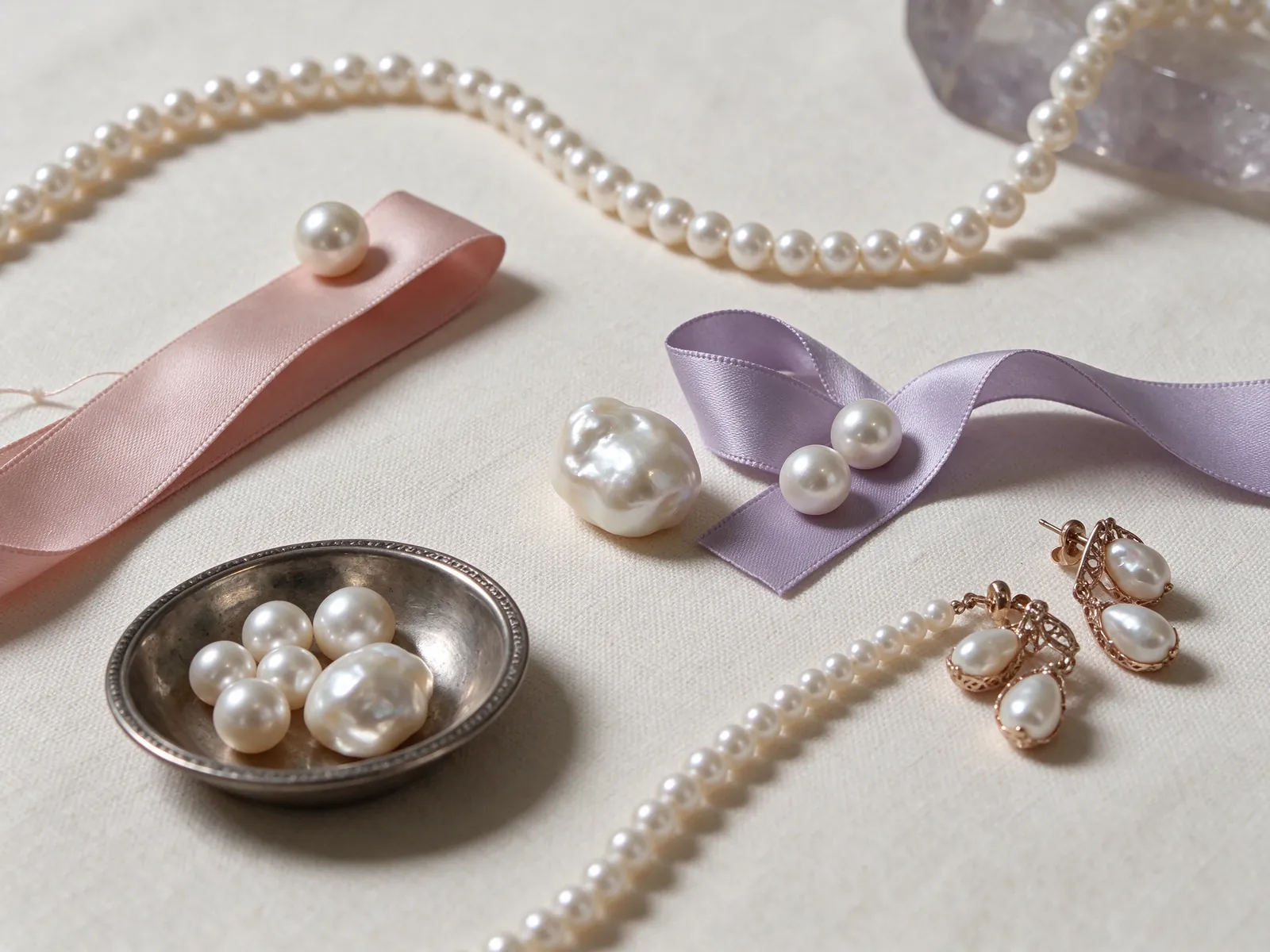
Several pearls can fall within one interval without measuring identically. First establish whether the arrangement aims for a consistent rhythm or an intentional change in scale. For consistency, look at neighbouring outlines; for a graduated arrangement, look at how the changes relate to the design. The lower and upper limits alone cannot tell you where each pearl sits or how the sequence looks as a whole.
The subject of pearl matching quality goes beyond size to consider how shape, colour, lustre and surface features work together. Membership of one size group and visual harmony are separate questions. Similar diameters can look different when the other factors differ, while an intentional change in diameter can form a coherent arrangement. Explain whether you prefer a uniform or graduated rhythm. That preference helps interpret the whole design, but is not a quality grade derived from the interval alone.
Check which pearls the range covers
Ask whether the interval describes all the pearls in the design or only its principal pearls. Where sizes vary, ask whether individual dimensions relate to positions in the arrangement. These questions connect the label to what you see. A complete photograph remains important because a list of measurements cannot communicate every aspect of matching or the overall visual rhythm.

Do not turn diameter into a quality or certificate claim
GIA discusses seven pearl value factors: size, shape, colour, lustre, surface quality, nacre quality and, for jewellery with two or more pearls, matching. Diameter addresses size; it cannot supply the other assessments. A larger measurement alone does not establish stronger lustre, a cleaner surface or pearl identity. Comparisons of size and value also need the same pearl type and otherwise equal factors. Keep your preferred scale in one column and quality information in others rather than converting millimetres into a price or an overall grade.
Where a document accompanies a pearl, read the issuing organisation, the object described and the measurements actually recorded. The guide to how to read a pearl certificate helps separate those details from a sales label. A pearl grading guide is useful when a seller uses terms such as AAA, which are not a universal grading scale. A size-group name is not a certificate, and a document is not itself a promise of price, retained value or service. If the document records a range, preserve its stated meaning rather than claiming its upper limit for every pearl.
Make size preference the first step, not the final verdict
Choose a scale and outline that suit your intended look, then compare the remaining information on its own terms. This avoids selecting the largest number while overlooking the lustre or surface characteristics you care about more. If a document records a range, retain that wording rather than treating its upper boundary as an exact measurement guaranteed for each pearl.
Prepare four focused questions before enquiring
Keep the original label beside the relevant photograph. Ask what is measured, whether the number is individual or grouped, how the boundaries work and which pearls the description covers. This order moves from the object to the measurement and back to the design. It is more effective than repeatedly asking how big something is while receiving answers about different dimensions.
Once the notation is clear, return to Pearl Jewellery to explore your preferred direction in context. Describe the intended effect as delicate, concentrated or graduated and keep the original measurements in your notes. In a WhatsApp enquiry to Flint Jewellery, share the exact label and relevant image, then specify whether you need clarification of the interval, an individual measurement or its direction. WSP's examples explain notation; they do not indicate that Flint offers the same size groups, diameters or brand services.
A concise enquiry that preserves the original meaning
You could ask: “Does this label describe an individual pearl or a size group? What are the lower and upper limits, are the endpoints included, and does the range apply to all the pearls shown?” For an elongated outline, add the direction you want measured. This wording does not presume what UP means and invites an answer you can compare with other descriptions.
| Label or value | Lower boundary in WSP's explanation | Upper boundary in WSP's explanation | Endpoint reading | Buying implication |
|---|---|---|---|---|
| 7.0–7.5mm | 7.0mm | Below 7.5mm | Lower limit included; upper limit excluded | A group, not an exact 7.5mm measurement |
| 7.0mm | Start of the 7.0–7.5mm group | Same group remains below 7.5mm | Included at the lower boundary | Preserve the original decimal notation |
| 7.49mm | Within the 7.0–7.5mm group | Maximum stated on WSP's page for that group | Still below 7.5mm | Group members can have different measurements |
| 7.5mm | Not included in the preceding group | Outside the 7.0–7.5mm group | Excluded endpoint for that group | Do not convert the label's upper limit into an actual diameter |
| 9mm UP | 9.0mm | Below 10.0mm; stated as up to 9.9mm | A bounded group in WSP's explanation | Ask other sellers for their own UP definition |
Pearl knowledge and authoritative references
WSP's published 7.0–7.5mm example includes 7.0mm and excludes 7.5mm, stating up to 7.49mm; its 9mm UP example is stated as 9.0–9.9mm. These boundaries describe WSP's own grouping, not all sellers' labels.
Read the reference for this factFrequently asked questions
Does 7.0–7.5mm promise an exact 7.5mm pearl?
No. WSP describes its group as including 7.0mm and excluding 7.5mm, with 7.49mm stated as the maximum. The group is not an individual measurement. Other sellers' intervals should be read according to their own explanations.
Can I determine the maximum from UP alone?
Not across all sellers. WSP defines its 9mm UP group as 9.0mm to below 10.0mm, stated as up to 9.9mm. An unexplained UP label elsewhere needs a separate answer about its lower and upper boundaries.
Why can a smaller stated pearl look larger in a photograph?
Camera distance, cropping and screen zoom affect apparent scale. Use the written measurement for diameter and the picture for outline and composition. A measurement taken from your screen cannot establish the pearl's real size.
Do pearls in one size interval all match perfectly?
A shared interval can contain different individual measurements. It also does not describe colour, lustre, shape or arrangement. Ask which pearls the range covers and assess the whole design alongside its written dimensions.
Is a larger diameter evidence of a better pearl or a certificate?
Diameter is only part of size, one of GIA's seven pearl value factors. It does not alone establish the other quality factors, pearl identity or certification. Treat size preference and documentary information as separate comparisons.
Updated: