

How does the chain pass through a through pearl pendant, a floating pearl pendant necklace or a slide pearl pendant necklace?
Begin with the route of the chain rather than the name on the page. In a through-style construction, the chain passes through a drilled pearl, so the connection can look more horizontal than a pearl hanging below a visible bail. A front photograph may conceal the openings. Look at each side to understand whether the chain enters the pearl directly or passes through metal caps or fittings at the holes.
A floating pearl pendant necklace describes a visual impression, not a complete account of its construction. When comparing a pearl pendant with other designs, ask what connects the pearl to the chain and which parts remain visible in wear. A restrained front view may still involve fittings at the sides. Those fittings influence the visual balance between pearl and metal, but their presence alone does not establish durability or pearl identity.
Does pearl movement mean adjustable length on a through pearl pendant, a floating pearl pendant necklace or a slide pearl pendant necklace?
No: the pearl moving along a chain and the clasp changing the wearing length are different actions. A slide pearl pendant necklace name should prompt questions about both, rather than an assumption that both are available. Pearl removal is a further question. Separating movement, length and removal gives you a useful description of what the necklace does instead of relying on an appealing style label.

Test the wearing position without forcing the mechanism
During a fitting, first place the clasp where it is intended to sit and note the pearl's position in the mirror. Then sit down and turn gently, as you would during an ordinary day. Notice whether the pearl shifts, whether the clasp moves round, and whether you would need to centre the pearl by hand. These observations help you decide whether the wearing behaviour suits you; they are not a demand that every necklace stay motionless.
If adjustable placement matters more than the floating effect, compare the line of a Y-shaped pearl pendant necklace. Its downward outline asks a different styling question from a pearl joined to chain on either side. Decide whether you want to change the overall necklace length, the position of the pearl, or the appearance of a drop. A design can meet one of these preferences without meeting the others.
An open clasp is not proof of a removable pearl
The chain's end fitting may not pass through the pearl even when the clasp opens. Ask how removal works before attempting it, and do not pull on the openings or twist a cap to find out. If changing chains is important, make that a requirement at the beginning of your selection rather than treating removal as an automatic benefit of through-style construction.
Match the chain to the whole connection, not just its colour
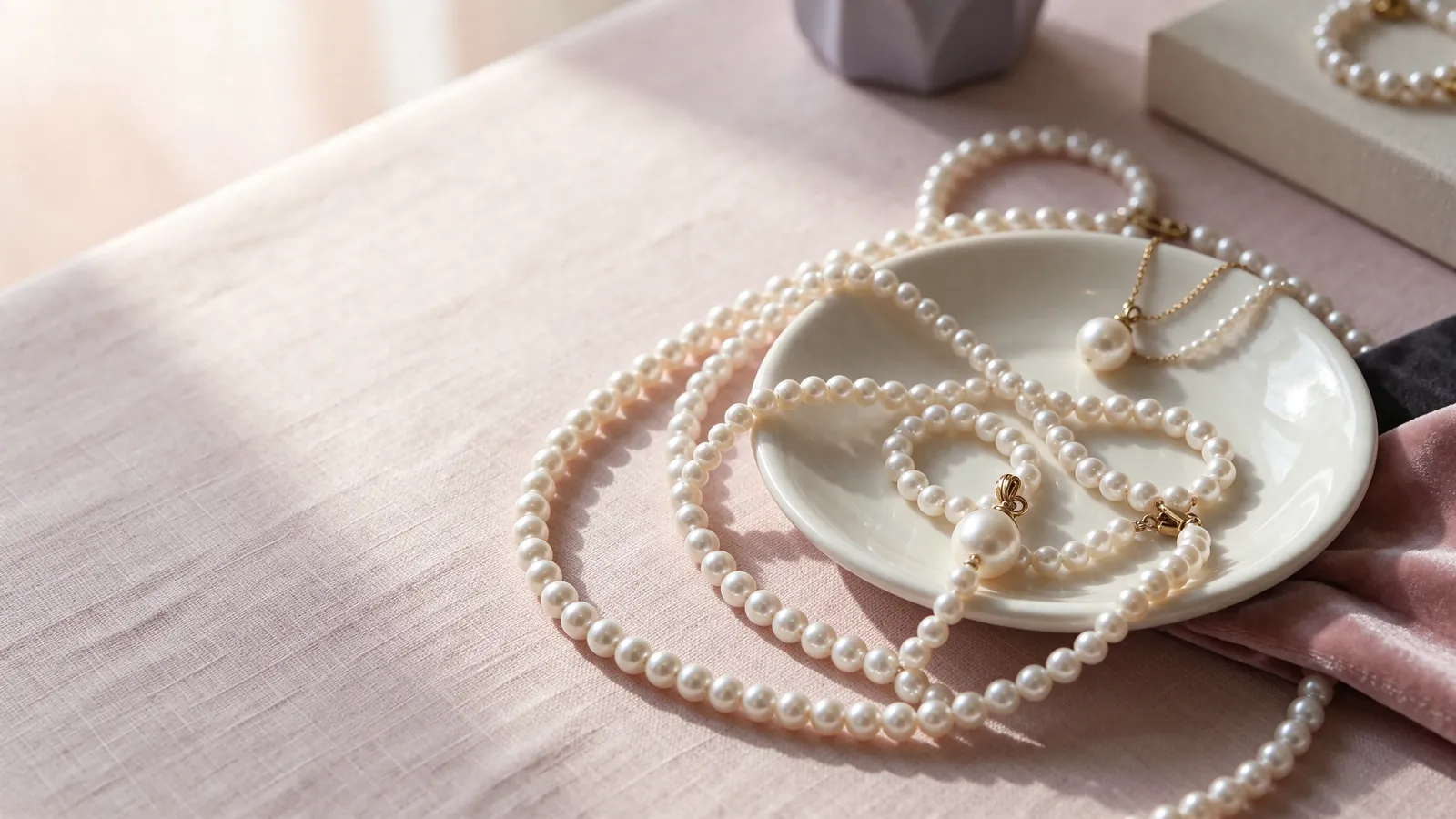
Choosing a chain for pearl pendant styling involves more than finding a fine line in a matching colour. With a through-style necklace, the chain links, connecting sections and end fittings all affect how the chain passes through the pearl. A chain that suits a conventional bail may not suit a drilled opening. Look at the complete chain before making a comparison, including the parts normally hidden at the back of the neck.
Inspect a metal cap from the side as well as the front: does its edge meet the pearl neatly, and is the amount of visible metal what you wanted? For a direct hole opening, look for obvious chips or uneven edges. These are practical appearance checks, not a method of determining species, origin or treatment. A cap is also not a reason to assume that a chain can move freely through the opening.
Bring photographs of both chain ends when discussing a change
If you already own a chain, a photograph of its middle links is only part of the information needed. Include its clasp and end fittings. A pearl pendant top may be chosen separately from a chain, but that separation does not establish compatibility with every connection. Compare how the pieces attach before deciding that an existing chain can be reused.
Use your everyday neckline as the fitting reference
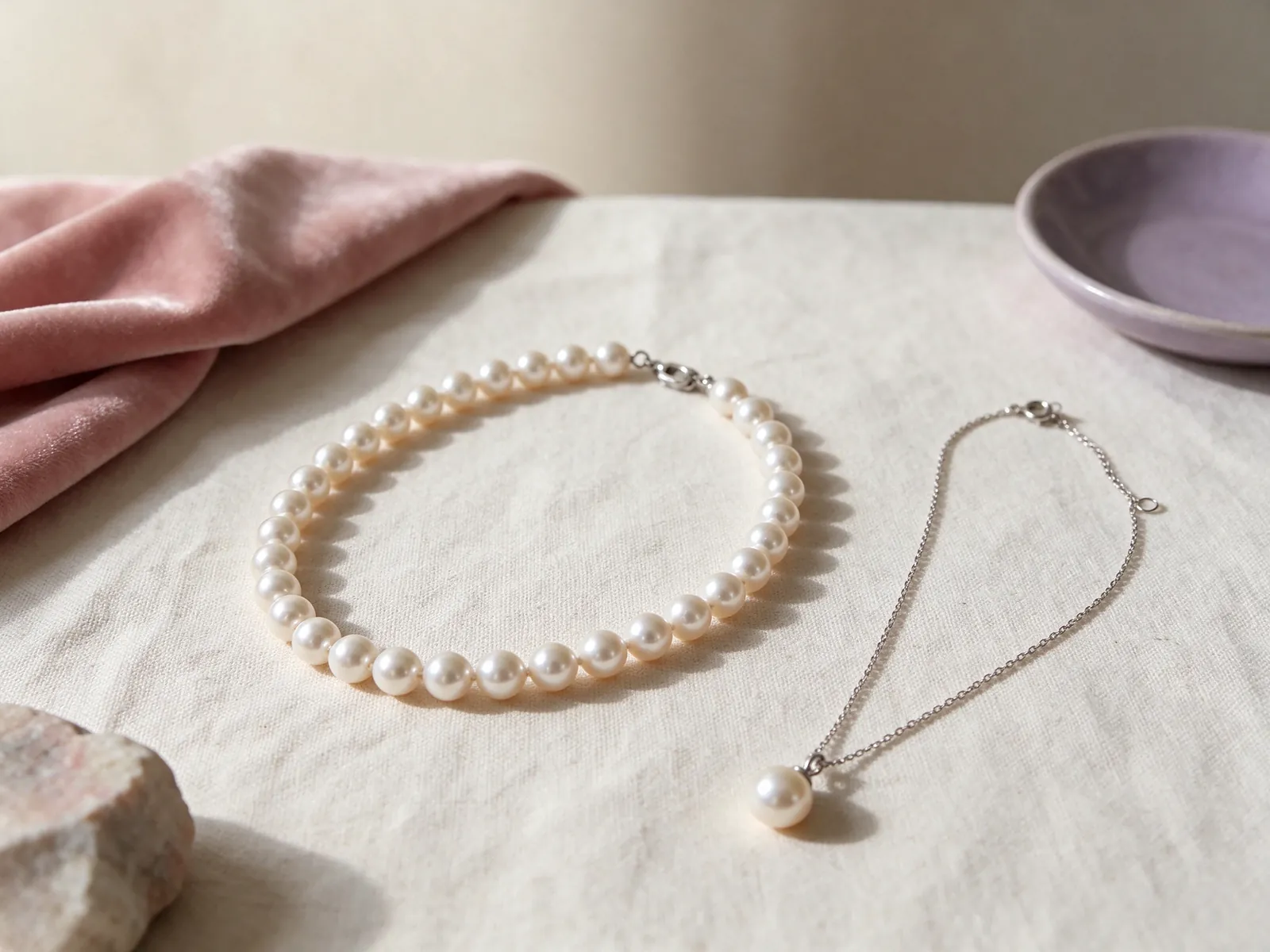
With a round-neck top, try a position entirely above the neckline and another entirely on the fabric. A pearl caught visually on the edge of a collar can be partly hidden when you sit. With a shirt, check the placket and buttons as well as the open collar. Through-style designs draw attention to the pearl and the chain on both sides, so the surrounding fabric is part of the composition.
A V-neck does not require the pearl to sit exactly at its lowest point. Space between the pearl and the neckline can keep both outlines legible. If you usually wear high collars or prefer jewellery over fabric, consider how a long pearl pendant necklace places its focal point. Compare the actual wearing positions rather than treating one necklace length as a universal solution for every body and wardrobe.
Layer only after checking contact and tangling
Start with visibly different positions for two necklaces, then see whether the second chain crosses the pearl or touches an opening. Turn and look down, not just straight ahead. If the necklaces tangle easily, wearing them separately may preserve the clear floating outline and make care simpler. A successful layered look is one that works during movement as well as in a photograph.

Give the exposed pearl a closer visual assessment
Without a prominent bail, one pearl carries much of the visual interest. GIA describes seven pearl value factors: size, shape, colour, lustre, surface quality, nacre quality and matching. For a single pearl, begin by observing the clarity of reflected light and its outline from several angles. A bright photographic highlight is not a grade, and roundness alone does not identify where a pearl came from or whether it is natural or cultured.
GIA distinguishes bodycolour, overtone and orient, and notes that not every pearl shows all three. Compare colour in similar lighting against clothes you actually wear, rather than choosing from differently lit photographs. A multi pearl pendant introduces another consideration: the relationship between the pearls. If you prefer a single focal point, a through-style outline may appeal; if you enjoy a sequence of colours or shapes, consider how several pearls work together.
Consider the side that may turn towards the viewer
Ask whether the pearl can rotate in the particular construction. If it can, consider the appearance of more than one face rather than selecting only the photographed side. Drilling direction and fittings influence how the pearl is presented, but a covered area near an opening cannot establish the condition of the whole surface or nacre. Evaluate the visible outline without turning those observations into unsupported quality claims.

Choose around the way you change and wear necklaces
A wish to move a pearl between necklaces is a connection requirement, not simply a preference for a minimal look. A pearl necklace enhancer uses an opening connection concept that differs from a chain passing through a pearl. Compare those ideas if you want to attach a pendant to different necklaces. Neither a neat front view nor the word floating tells you that the connection can open.
For a gift, think about the recipient's routine: do they often change necklines, adjust a clasp, or layer necklaces? Someone who enjoys a simple complete necklace may have different priorities from someone who regularly swaps chains. A familiar top and photographs of an existing necklace make a discussion more specific. The aim is to choose an understandable wearing arrangement, not to assume that an extra movement feature is always preferable.
Write a short operation checklist before choosing
List how the wearing length changes, how the pearl is positioned, and whether chain changes require tools. Add a look at the hole openings and clasp. A fixed length, fixed pearl or non-removable pearl is not automatically a drawback; it becomes a drawback only when it conflicts with what you wanted to do. This checklist makes different designs easier to compare fairly.

Care for the pearl even when the necklace is mostly chain
GIA gives pearl a Mohs hardness of 2.5 and says pearls should never be cleaned in ultrasonic or steam cleaners. A metal chain does not make the assembled necklace suitable for those methods. After wearing, gently wipe the pearl with a very soft, clean cloth. Treat the openings carefully as well: do not use a sharp object or push a brush into the hole to remove dirt.
Avoid contact with acids, perfume and hair spray, and avoid excessive heat. Put the necklace on after using personal-care sprays, and store the pearl separately from harder jewellery that could rub against it. If a fitting appears loose or the chain behaves differently near an opening, stop pulling the pearl along the chain and ask a jewellery professional to assess the assembly. Do not try to dismantle the cap as a cleaning step.
Untangle the chain without using the pearl as a handle
Lay the chain out before storage and check both sides of the pearl for tangles. Do not pull against the pearl or force a knot through an opening. If the necklace also contains strung pearl sections, GIA advises allowing the string to dry completely after cleaning with water before wearing. Care should follow the materials and connections in the entire piece, not just the chain you see first.
To discuss a through-style outline with your everyday neckline, contact Flint Jewellery on WhatsApp +85260106207. Share your preferred pearl placement, a familiar neckline and photographs of an existing chain so the conversation can focus on connections, length adjustment and your plans for changing chains.
| Detail | Where to look | Question to ask | Why it matters in wear |
|---|---|---|---|
| Chain route | Front and both sides of the pearl | Through the pearl or through a bail? | Sets the horizontal or hanging outline |
| Hole fittings | Openings and cap edges | How do the pearl and chain meet? | Changes the visible balance of metal and pearl |
| Pearl movement | Position after sitting and turning | Does it move or need manual centring? | Helps assess your everyday wearing routine |
| Length adjustment | Clasp, tail and adjustment mechanism | What part of the wearing position changes? | Helps match collars and necklines |
| Removal | Chain ends and connecting fittings | Can the pearl be removed, and how? | Determines whether chain changes suit your plans |
Pearl knowledge and authoritative references
GIA describes seven pearl value factors: size, shape, colour, lustre, surface quality, nacre quality and matching. A through-style single pearl can be assessed visually for lustre, outline and visible surface; matching is particularly relevant when comparing several pearls. These factors are not certification or a grade for an individual item.
Read the reference for this factFrequently asked questions
Can a pearl look floating while having visible side fittings?
Yes. Floating describes the overall impression, while side fittings explain part of the construction. Examine the side views to decide whether their visible metal suits the look you want.
Should a sliding pearl always remain centred by itself?
Do not assume this. Ask how the particular construction positions the pearl, then observe it while sitting and turning. Decide whether any manual centring fits your routine.
Can I choose a replacement chain by matching its colour?
Colour is only one consideration. The links, end fittings, clasp and hole connection also matter. Compare the complete attachment arrangement before attempting to pass another chain through the pearl.
What should I wear to a necklace fitting?
Bring or wear a top with a neckline you use often. Check the pearl above and below the fabric edge, and look at its position when seated as well as standing.
Can I clean the chain ultrasonically while the pearl stays attached?
No. GIA advises against ultrasonic and steam cleaning for pearls. Treat the assembled necklace according to the pearl's care needs and ask a jewellery professional about any difficult dirt near the openings.
Updated: