

What outline details can you compare in drop shaped pearls and pear shaped pearls described as teardrop pearls?
Start with the whole outline rather than looking for a sharp point. Drop shaped pearls usually move from a narrower end into a fuller curve, but that transition can be gentle or pronounced. Pear shaped pearls may describe a similar appearance without telling you how long or broad the pearl actually is. Look for the widest part, then follow both edges towards the taper to understand the balance.
Short, rounded teardrop pearls can feel visually different from elongated examples even when both names seem appropriate. Decide whether you like a compact silhouette, a long flowing line or a marked contrast between the ends. The pearl shape guide helps place that preference alongside other outlines. Compare photographs with the pearls facing the same direction, because an angled view can make a fuller body appear narrower than it is.
How do taper and symmetry affect the appearance of drop shaped pearls and pear shaped pearls known as teardrop pearls?
Imagine a line running from the narrow end through the centre of the fuller end. Compare the curves on either side of that line. A balanced outline gives an orderly impression, while a slightly off-centre taper can add character. Neither observation identifies the pearl or decides every aspect of quality. For a restrained look, check whether a sideways lean remains noticeable in the position from which you would normally see it.

Check the side profile before naming the structure
A front photograph cannot tell the complete three-dimensional story. Turn the pearl to see whether the body remains rounded or presents a dome with a flatter back. These profiles can share a teardrop outline but occupy space differently. Ask for side and back views when they are missing; a bright highlight on the front is not a reliable substitute for seeing the structure.
WSP includes drop shapes in its freshwater pearl guide and explains that mabé domes can also have teardrop outlines. The shape word therefore belongs to appearance, not to one exclusive pearl type. Comparing half round pearls is useful when a curved front and flatter back are involved. Keep outline and structure as separate observations rather than assuming that every teardrop-shaped object is the same kind of pearl.
Distinguish a real uneven curve from camera perspective
Look at the front, rotate towards both sides and then inspect the back. If a bulge appears consistently, it is more informative than a slant visible in only one photograph. A slow rotating view can reveal where the outline changes. Use it to understand form, not to infer origin, treatment or natural versus cultured identity. Those questions need explicit information rather than a visual guess.

Read length, width and fullness separately
For a directional shape, length and maximum width answer different questions. Two pearls of similar length can look quite different if one has a much fuller body. When reading dimensions, check whether they describe the pearl alone or the complete jewellery piece, including its metal connection. A total length does not tell you the pearl's proportions, and it should not be compared directly with a pearl-only measurement.
A length-to-width relationship can describe your taste without creating a universal ideal. If the ends are rounded and the width changes gently, compare oval pearls. If the silhouette is slender with narrowing at both ends, rice shaped pearls provide another useful reference. These neighbouring descriptions help explain what you like; they do not require every individual pearl to fit a rigid, non-overlapping category.
Use a simple sketch to communicate the curve you prefer
Sketch a gently tapering top and a rounded lower end, then mark the widest point. Draw a shorter, fuller version beside it. This makes preferences such as a softer taper or a more elongated body easier to explain. If actual dimensions are available, use them to inform the sketch. The drawing expresses your preferred curve; it need not set a fixed diameter or a universal buying standard.
Assess lustre and surface alongside the silhouette
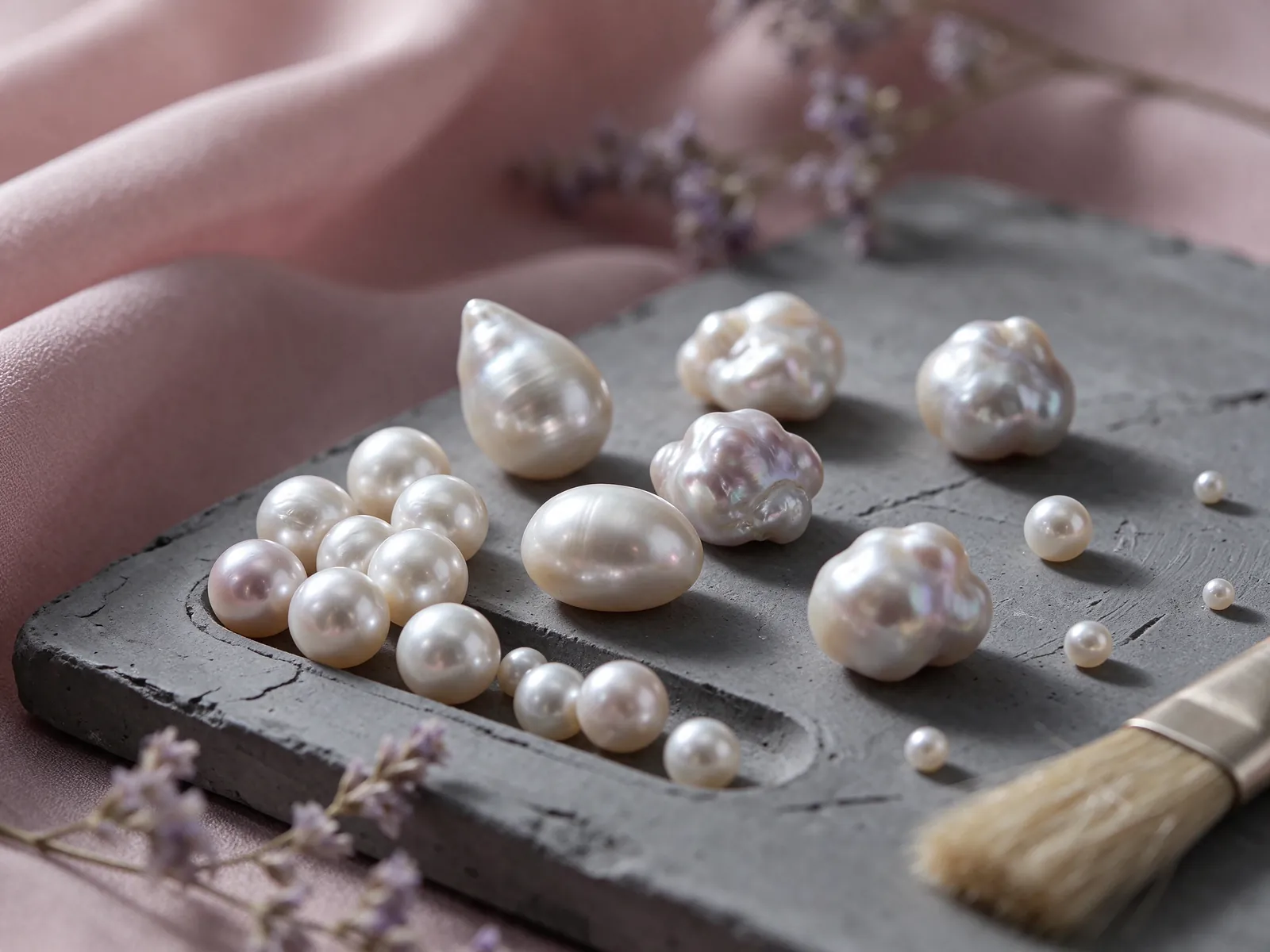
A pleasing outline is only part of the visual experience. Under gentle light, inspect the clarity of reflections and then rotate the pearl to examine surface changes. The narrow end and the fuller end may reflect light differently because their curves face different directions. Avoid judging the whole pearl from its brightest spot, especially when a strong light obscures small variations elsewhere on the surface.
GIA describes seven pearl value factors: size, shape, colour, lustre, surface quality, nacre quality and matching. A drop outline addresses shape, not all seven. If the body carries rings, the guide to circle pearls helps distinguish surface texture from the outer silhouette. Rings and a drop-like outline can describe different features of the same pearl, so assess the texture and the overall curve separately.
Compare lighting conditions rather than photograph brightness alone
Background, exposure and lighting direction influence what a photograph reveals. A dark setting can emphasise highlights, while intense illumination can hide subtle surface detail. Seek views taken under comparable conditions and separate apparent brightness from reflection clarity. A whiter-looking photograph does not, by itself, establish a different bodycolour, treatment status or grade. Use written descriptions and observation together rather than asking an image to answer every question.
When comparing a pair, include direction and visual weight
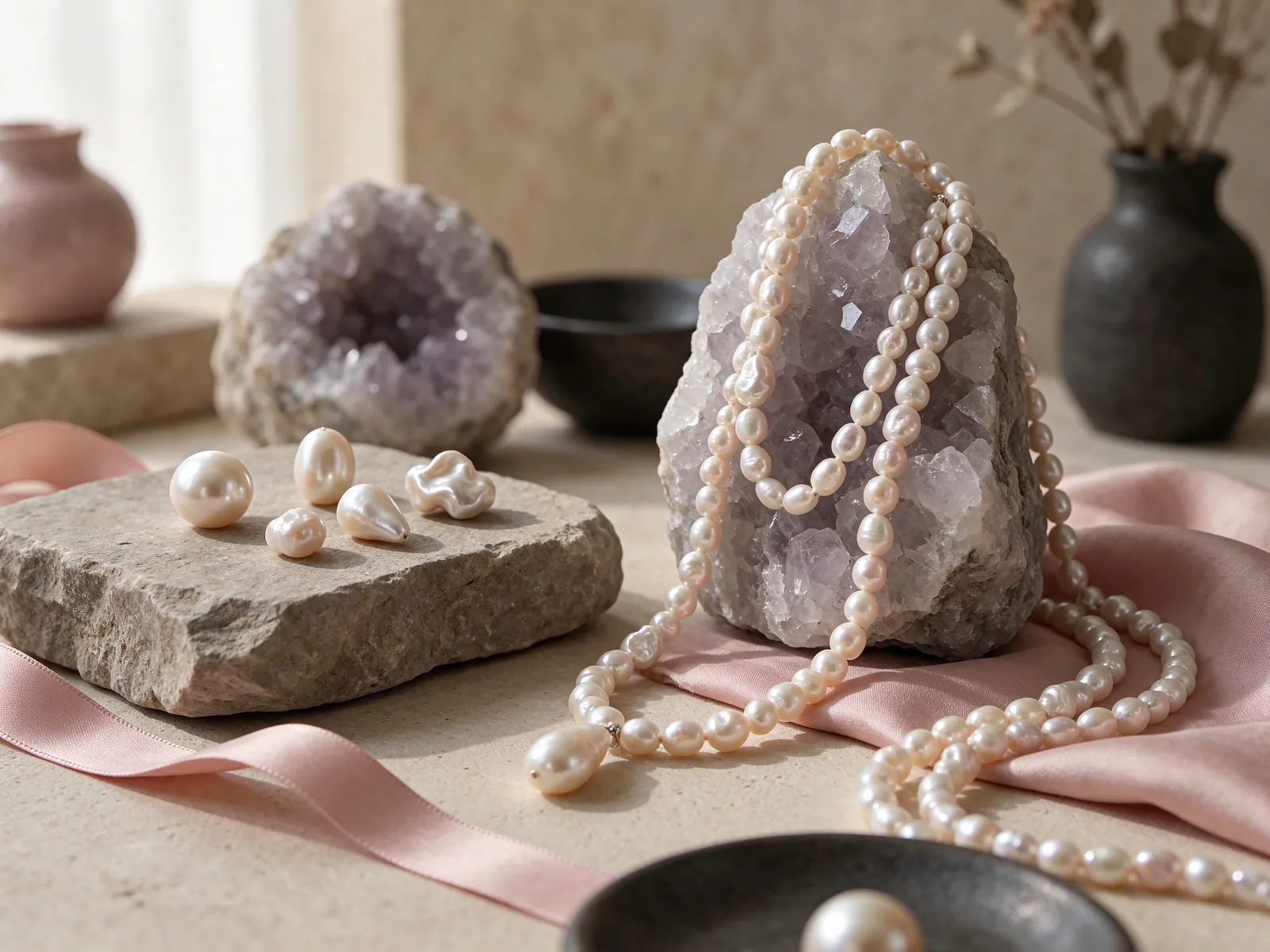
A pair can share similar lengths yet look uneven because the widest parts sit at different heights. Align the narrow ends in the same direction, compare width and fullness, and then examine colour and lustre. If both pearls will be seen together, these differences can become more apparent than when each is admired separately. Similar colour should not distract from noticeably different curves.
Consider whether you want the shapes to face the same way or echo each other. Slightly sideways tapers may create a mirrored impression, but turning both in the same direction can produce a different balance. Unlike round pearls, a directional silhouette asks you to consider rotation as well as size. There is no single arrangement for every taste; decide whether your priority is consistency or a deliberate variation.
Judge the visible pearl rather than the tabletop arrangement
An orderly layout on a table may change when the pearls are held upright. Examine the intended viewing position as well as a flat comparison. For mounted jewellery, notice how much of each pearl is covered by metal, where the connection sits and how the form moves. A partly hidden curve does not automatically mean a smaller pearl or a less attractive shape; presentation affects what you can see.
Choose the outline's presence against your clothes
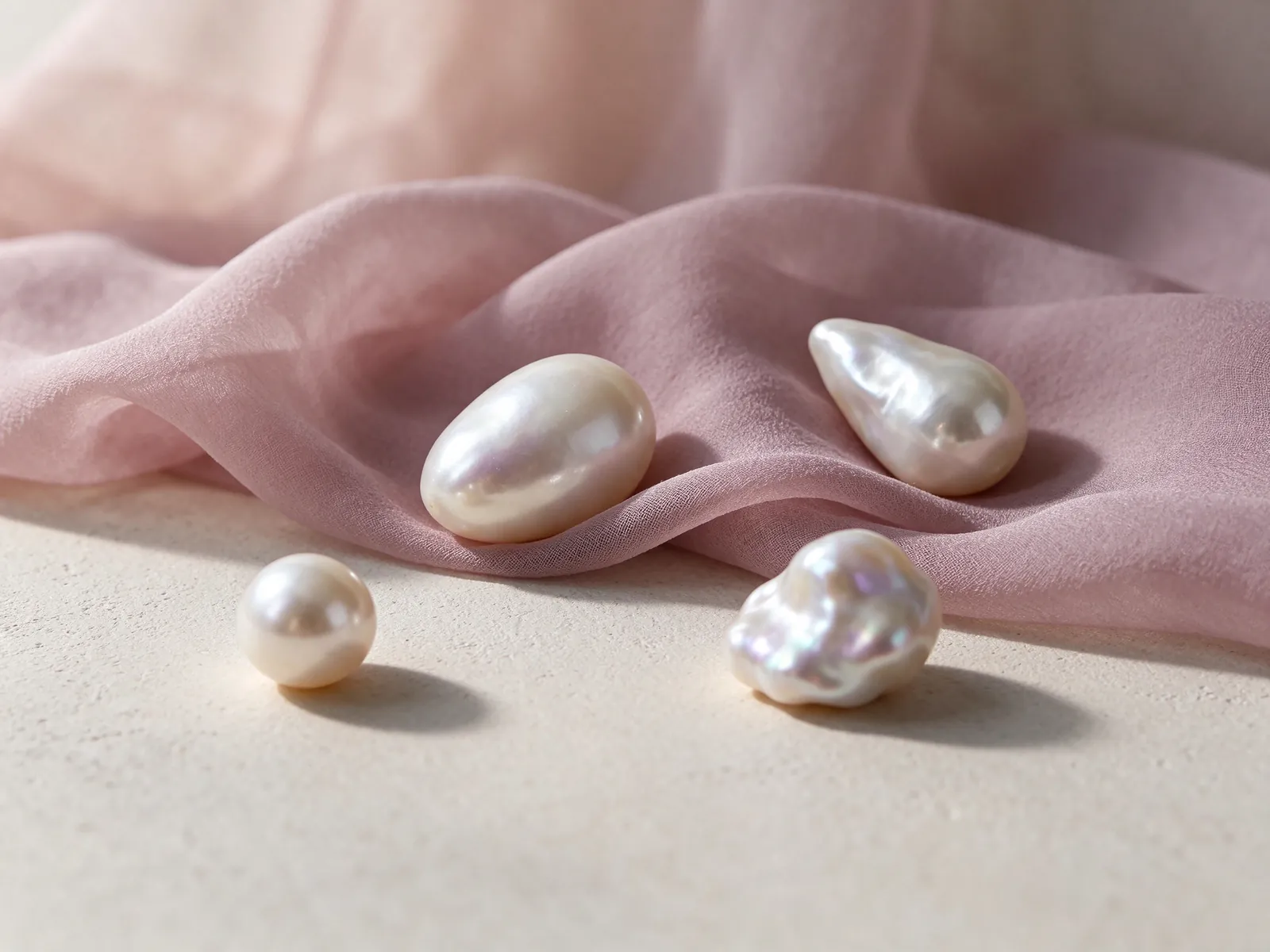
A taper creates direction, so consider the lines already present in your outfit. A simple neckline and an uncluttered fabric can make the curve easier to notice. Ruffles, bows or dense prints may compete with its details. This is not a rule assigning a pearl shape to a face shape; it is a way to decide whether the pearl or the clothing should lead the overall impression.
To explore alternatives, compare the gradual taper with the broad front-facing impression of coin pearls and the extended lines of stick pearls. Someone who likes softness may favour the rounded lower curve, while someone drawn to graphic lines may focus on an elongated taper. Describing the presence you want, such as gentle, slim or visually substantial, is more useful than selecting an outline solely because its name sounds fashionable.
Step back to check the everyday view
Close inspection reveals detail, but styling also benefits from an ordinary conversational distance. Look closely first, then step back and see whether the silhouette remains distinct or blends into a pattern. Hair, a scarf and a moving collar can change the impression as you turn. The aim is not to remove every surrounding element, but to choose a degree of presence you enjoy in normal use.
Ask precise questions and handle the surface gently
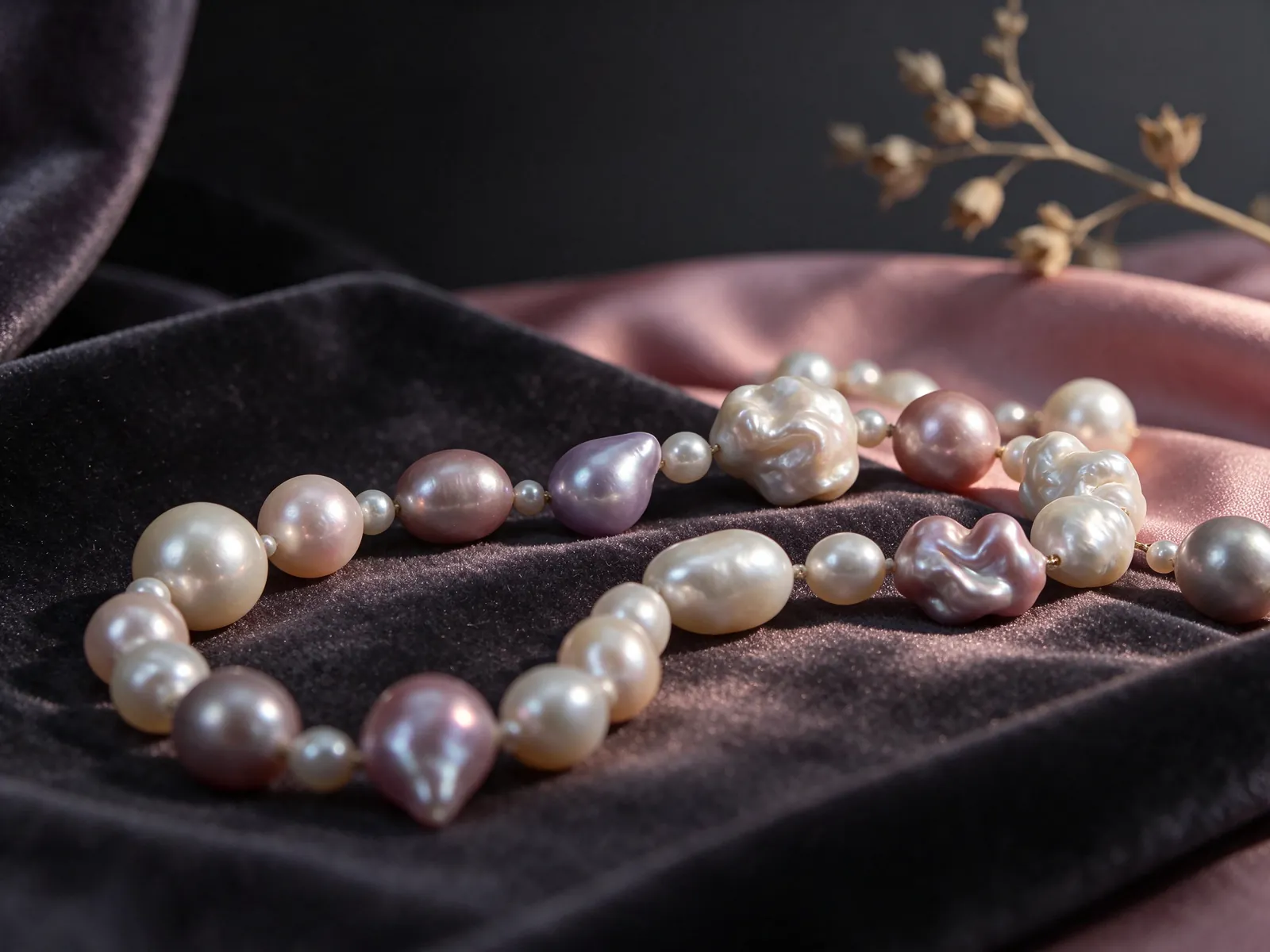
Before choosing, separate your questions into outline, dimensions and pearl identity. Ask for views that show the taper, widest point and back, and clarify what any measurement includes. For natural or cultured identity, origin or treatment information, ask what the description or relevant document actually states. Neither the pointed end nor the colour provides those answers on its own. A clear shape preference and clear identity information serve different purposes.
GIA gives pearl a Mohs hardness of 2.5, so avoid rubbing the surface against harder jewellery. After wearing, wipe it gently with a very soft, clean cloth and store it away from direct contact with other pieces. Do not use the narrowing end as a convenient gripping point or scrape deposits with a fingernail. Protect the whole outline rather than treating the fuller end as the only delicate part.
Plan perfume, cleaning and storage around gentle handling
Apply perfume and hair products before putting on pearls to reduce direct exposure. GIA advises against ultrasonic and steam cleaning and recommends avoiding acids and excessive heat. If water cleaning involves strung pearls, let the string dry completely before wearing them again. For storage, choose a place where other pieces will not press against the pearl. A crisp-looking taper does not make its surface suited to rough treatment.
Do you prefer a compact, rounded pear outline or a longer drop silhouette? Contact Flint Jewellery on WhatsApp +85260106207 to share the curves you enjoy and the viewing angles you would like to compare. We can discuss the shape details that matter to your personal style.
| Form | Front-view focus | Side-view check | Preference to clarify |
|---|---|---|---|
| Drop or pear | Transition from taper to fullest curve | Body depth and balance as it turns | Compact fullness or an elongated line? |
| Oval | Rounded ends and gradual width changes | Whether fullness continues around the body | An obvious taper or a more even outline? |
| Rice-like | Slenderness and narrowing at both ends | How slim the body appears in profile | A fine line or a fuller visual centre? |
| Teardrop dome | A front outline that can resemble a drop | Dome height and back structure | A rounded body or a dome presentation? |
| Ringed drop | Outer silhouette and rings considered separately | Texture and reflections during rotation | Do surface rings suit the preferred curve? |
Pearl knowledge and authoritative references
GIA lists seven pearl value factors: size, shape, colour, lustre, surface quality, nacre quality and matching. A drop silhouette addresses shape; it does not replace assessment of the other six factors.
Read the reference for this factFrequently asked questions
Can a softly rounded taper still look like a drop?
Yes. The visual contrast between a narrower end and a fuller end matters more than having a sharp point. Examine the transition along both sides and decide whether it gives the directional outline you prefer.
What dimensions are most useful when comparing drop outlines?
Pearl length and maximum width help explain the proportions. Check whether the figures refer to the pearl or the entire jewellery piece, because a metal connection included in total length can change the comparison.
Does a slightly off-centre tip mean the pearl is unsuitable?
Not automatically. It may create a characterful outline, or it may conflict with the balanced look you want. Inspect it in the intended viewing position and consider matching if another pearl will be seen beside it.
Can ringed surfaces and a drop outline appear together?
They describe different aspects: rings concern surface features, while drop concerns the outer silhouette. Look at each separately, including how the rings and curves affect reflections when the pearl turns.
Is a rotating video enough to establish natural pearl identity?
No. A rotating view is useful for shape, thickness and visible surface detail, but it does not establish natural versus cultured identity, origin or treatment. Those questions require explicit descriptive information or relevant documentation.
Updated: