

If your pearl earring silicone cover came off, how should its fit be assessed for pearl earring back cover refitting and pearl earring silicone back care?
Take off the earrings before inspecting the loose piece. Place the earring, backing and silicone cover separately on a soft, stable tray rather than working over a washbasin. A cover coming off may mean a cushion separating from a clip earring plate, a cover leaving a stud backing, or an entire silicone-covered backing sliding off a post. First identify whether the earring is a clip or a pierced design. Then establish what detached: replacing an ear-contact pad and securing a post are not the same task.
Look for a central opening, a recessed seat or a surrounding lip, then compare it with the metal component without dismantling anything else. WSP’s Repairs FAQ describes aligning a cover’s central hole with a plate on the back of an earring. Its description of completion is a cover that fully covers the plate without gaps or misalignment. This concerns that construction, not a universal technique for pearl earrings. Understanding pearl earring back types helps distinguish the fastening from a cushion that contacts the ear.
If your pearl earring silicone cover came off, damage or resistance calls for a pause in pearl earring back cover refitting and a review of pearl earring silicone back care
A split opening, missing edge, stretched shape or tilted plate changes how the parts meet. Even an intact-looking cover deserves attention if it slips away with light contact or stops halfway into position. Repeated pressing is not a test of secure fit. Leave the parts in their current condition if there is resistance, so the attachment point and any distortion can be examined clearly.

Inspect on a table and record the attachment, not just the front
In good light, photograph the earring from the front and back, followed by the cover's inner face and the backing's side profile. Show the opening, plate and post clearly. If the other earring in the pair is intact, it can provide a visual comparison, but do not remove its cover simply to see what lies underneath. Note whether the part came loose while taking the earring off, adjusting your hair or putting it away.
Include other visible changes without manipulating them: an angled post on a stud, a lifted metal plate on a clip or a pearl that appears loose. Do not twist the pearl to test its attachment or squeeze the backing with pliers. An enquiry about pearl repair Hong Kong can focus on assessment. Explain whether a clip’s contact cushion has detached while its plate remains, or whether a whole stud backing slipped off the post. That is more informative than describing the entire earring as broken.
Compare the pair without exchanging its parts
Matching-looking backs are not a reason to swap covers as an experiment. One side may have had a replacement backing or experienced different wear. Place the two earrings beside one another for photographs and mark which side lost its cover in your accompanying description. This preserves a useful comparison without turning one detached component into a problem affecting both earrings.

A suitable refit follows the construction, not force or adhesive
Obtain handling instructions that correspond to the actual component before attempting reattachment. Fitting a cushion over a clip plate is not the same action as placing a stud back onto a post. If the instructions identify the cover as removable and the parts remain intact, follow that specific method. A photograph of another earring is not enough to determine insertion direction. Openings, lips and plates have different shapes; a cover that appears to go over a plate has not necessarily reached its intended seat.
Avoid superglue, nail adhesive and adhesive tape as a way to hold the cushion in place. Do not enlarge its opening, heat it to soften it or file the metal backing. These alterations obscure the original connection and can complicate later inspection. If the cover participates in retaining the earring, do not wear it without the fit being established. If it is a contact pad, the fastening and any exposed edges still need checking.
Ask how the fastening works, not how many times to press
Ask whether the cover is designed to detach, which component secures the earring and whether this cover still suits the metal fitting. For studs, clarify how the post is retained; for clips, clarify the clamping mechanism and pad position. Use the matching instructions’ way of confirming that the parts are seated, rather than a click or repeated pressing. WSP’s FAQ directs customers who find attachment difficult to its Customer Support. Treat difficulty as a reason to seek advice, not an invitation to press harder.
Care for the pearl separately from the loose backing components
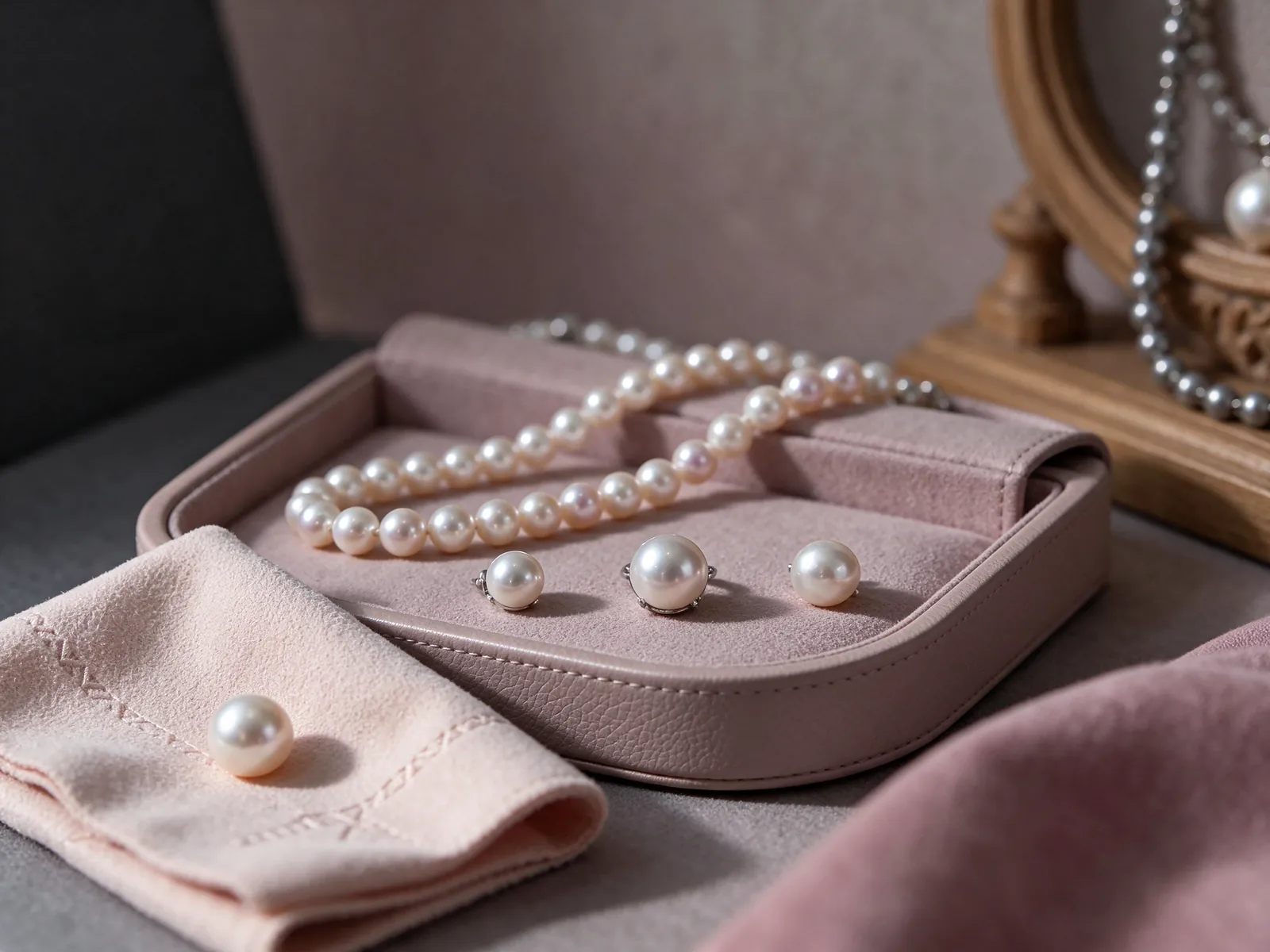
GIA lists pearl at 2.5 on the Mohs hardness scale. That describes scratch resistance, not the lifespan or elasticity of a silicone cover. Keep metal posts and backings from scraping the pearl while arranging the loose parts. A very soft, clean cloth is suitable for routine wiping after wear. Guidance on how to clean pearls addresses the pearl surface; it does not establish which cleaning product is suitable for an unidentified backing cover.
Do not put the assembled pearl earring into an ultrasonic or steam cleaner; GIA says these methods should never be used for pearls. This pearl-care rule does not establish a cleaning method for a separate silicone piece. Follow component-specific instructions rather than experimenting with alcohol, nail-polish remover or perfume before refitting. If the cushion feels sticky or has visible residue, photograph and describe it. Avoid prolonged soaking of the whole earring, especially when its construction may include adhesive or other materials at the pearl connection.
Keep sharp metal parts away from the pearl in storage
Contain the detached cover in a small closable bag or box, then keep it with its earring in a divided jewellery box. The small bag is for loose parts, not prolonged sealed storage of the pearl earring. Separate metal backings so they cannot rub against the pearl, and label the container rather than the silicone. The pearl care guide explains precautions around perfume, hairspray and excessive heat. Finish using styling products before putting on jewellery whose fastening has been confirmed secure.
Choose a replacement by attachment design and wearing habits
Do not select a replacement cover solely by its outside diameter, colour or a general label saying it fits earrings. Show whether the earring is a clip or stud, provide photographs of the connection and mention previous replacement or cutting of the cover. Ask whether the proposed part is intended for that construction. Cushioning and retention are not interchangeable functions. Clear and opaque appearances do not reveal holding strength, durability or individual skin comfort; a photograph also cannot confirm the identity of the silicone or other material.
Explain whether you regularly wear a face covering, manage long hair or choose high collars. The shape of the backing and how it sits can be discussed in relation to those habits. A larger cushion is not automatically more comfortable, and it cannot be assumed to compensate for an earring's weight. Once the fit is established, notice pressure behind the ear, trapped hair or forward tilting rather than continually pushing the backing tighter.
Condition matters more than a calendar-based replacement rule
A clean-looking cover may have a stretched opening, while residue alone does not establish the reason for detachment. Inspect shape, attachment and retention; bring any applicable original-brand care instructions into the discussion. There is no single replacement interval given here for all covers. If a replacement repeatedly slips out, return attention to the backing and its connection instead of adding a thicker cushion to conceal the underlying fit problem.
Change your styling plan rather than improvise before going out
Discovering a detached cover just before work or dinner is a reason to change the jewellery plan, not rush the refit. Choose another pair with a confirmed fastening, or make a necklace the focal point of the outfit. Do not borrow an unrelated backing simply because it slides onto the post. Wearing only the intact earring can be a styling decision, but do not remove its cover to make both sides appear alike. Preserving the intact side also keeps a useful visual reference for the affected part.
If a piece is missing, clarify whether you have lost the cushion, the whole backing or the earring itself. Advice about how to replace one lost pearl earring concerns matching an entire missing earring rather than choosing a backing component. Keeping these questions separate avoids an unnecessary discussion about pearl matching when the earring remains in your possession. Retain everything you still have and photograph the difference between the two sides.
Leave room around hair and collars once the fit is confirmed
After the earring is ready to wear again, remove it before pulling a high-necked garment over your head. When arranging hair, avoid dragging fingers across the back of the ear. With an exposed-ear hairstyle, look for hair caught behind the backing; with loose hair, notice tangling around the earring. These are practical ways to reduce pulling, not a claim that any fastening can withstand a tug.

Make an assessment enquiry specific to the retained parts
Send clear views of the earring, the cover's inner and outer surfaces, and the connection point. Explain whether you have tried to refit it, where resistance occurred and whether it subsequently slipped away again. If you retain purchase documents or handling instructions, bring them with the pieces. There is no need to make the damage look tidy before asking: the actual condition is more useful than a cosmetically altered attachment.
Installation advice and after-sales terms answer different questions. WSP pearl repair warranty discusses that brand’s information, but its terms do not apply to Flint Jewellery or establish that Flint supplies the same cover or handles WSP claims. When enquiring with Flint Jewellery, describe the need for an earring back assessment and confirm the applicable scope, costs and arrangements through WhatsApp. Photographs support an initial conversation; they do not replace examining the physical connection. Refitting or replacement depends on the particular component and its condition.
Frame the question around fit and condition
Try a concrete question such as: 'The intact cover has separated from the metal plate; can this construction be refitted?' If the opening is split, ask whether the backing needs assessment alongside a replacement cover. Mention a bent post at the same time. This keeps the conversation focused on the fastening rather than assuming that every loose cushion simply needs pushing back on.
| Observation | Identify first | Immediate action | Avoid | Explain at assessment |
|---|---|---|---|---|
| Cushion off the plate | Cushion versus retaining part | Keep cover and earring together | Copying an unrelated refit method | Inner cover and backing shape |
| Whole covered backing off the post | Post-retention construction | Pause wear and retain both pieces | Borrowing an unconfirmed backing | When the backing came away |
| Split opening or missing lip | Damage at the connection | Preserve the present condition | Cutting, glue or heating | Split location and recurring slipping |
| Tilted backing or resistance | Plate and post alignment | Stop pressing | Squeezing with pliers | Where movement stops |
| Cover missing | Remaining fastening components | Photograph and ask about suitable parts | Choosing by colour alone | Back, side and attachment views |
Pearl knowledge and authoritative references
GIA lists pearl at 2.5 on the Mohs hardness scale. Keep metal backing components from scraping the pearl during inspection; the number does not measure a silicone cover's durability or grip.
Read the reference for this factFrequently asked questions
Can I wear the earring if the backing still grips without its cover?
Grip alone does not establish the cover’s role. Identify a clip cushion or stud-back cover first, then check the fastening, distortion and exposed edges. Until the construction is understood, pause wear rather than using your ear to test it. A clip pad is not a substitute for a stud’s post-retaining back.
Does WSP's central-hole instruction apply to my pearl earrings?
It describes a particular central-hole-and-plate construction, not every earring back. Your fitting needs corresponding instructions and a matching attachment design. Similar appearance is not enough. If reattachment is difficult or meets resistance, keep the parts and seek advice rather than increasing pressure.
Should I remove the other earring's cover to compare the two?
An intact earring can be photographed beside the affected one without dismantling it. Avoid removing or exchanging its cover for an experiment. The two sides may have different wear or replacement histories, and a swap does not establish compatibility.
Can alcohol remove stickiness from the loose silicone piece?
Do not experiment with alcohol or nail-polish remover. Follow handling advice appropriate to that component and describe any stickiness or visible change. Care for the pearl separately with a very soft, clean cloth, avoid prolonged soaking of the whole earring and never use ultrasonic or steam cleaning on pearls.
What if I cannot find the detached cover?
Photograph the remaining backing, its side profile and the attachment point, and explain that the cover alone is missing. Whether refitting or a replacement is appropriate depends on the construction and physical condition. An initial photograph cannot establish a guaranteed repair outcome.
Updated: