

Finding visual balance with the pearl shape guide: pearl shapes explained through round vs irregular pearls
A useful starting point for Pearl Jewellery is the kind of visual rhythm you enjoy. A round silhouette can make a repeated arrangement feel orderly, while an irregular outline introduces changes in direction and emphasis. Neither approach is automatically better dressed or more sophisticated. With a plain shirt, you might prefer the quiet repetition of rounded pearls, or use a distinctive pendant to interrupt the clean lines and create a focal point.
Think about the entire piece rather than a pearl photographed on its own. Earrings need to work together across the face, a pendant needs a pleasing hanging direction, and a strand needs a rhythm that suits its arrangement. A silhouette that looks balanced lying flat may appear different against the body. Front, side and worn views each answer a different question, so use them together when comparing designs.
Naming forms accurately in the pearl shape guide: pearl shapes explained beyond round vs irregular pearls
Separate names into the information they actually convey. Baroque describes an irregular shape. In CIBJO terminology, Keshi cultured pearl denotes a non-beaded cultured pearl formed as a by-product of saltwater pearl cultivation. Seed emphasises small size; CIBJO defines seed pearl specifically as a small natural pearl. Rice is a silhouette description, not a synonym for seed. A small pearl is not necessarily rice-shaped, and an irregular outline is not enough to call a pearl Keshi. Keeping the categories apart makes descriptions much easier to read.

Round, near-round and button forms: check the profile as well as the face
When comparing round pearls, look for the overall impression of a sphere from more than one direction. Near-round means a form that remains close to round with some departure from that outline; it does not mean a hemisphere. For a pair of studs, compare both pearls in profile as well as from the front. In a strand, consider the transition between neighbouring pearls rather than judging the whole arrangement from one enlarged bead.
A button-shaped pearl can have a rounded face and a flatter profile. That difference matters when considering how far an earring projects, but the setting also affects its position. Button, half-round and Mabé should not be treated as interchangeable labels. Ask what the actual silhouette looks like from the side, then consider the pearl together with its mount rather than assuming a name guarantees a particular fit.
For a close-to-the-ear look, consider the mount
If you want an understated stud, examine the pearl's depth, the position of the ear post and the visible setting. The same general pearl outline can sit differently in different designs. Your earlobe and usual hairstyle also affect what you see when wearing it. Dimensions and the weight of the complete earring are useful practical questions; a front photograph alone cannot settle how prominent it will feel.

Oval, potato and rice forms: length does not tell the whole story
The long axis of oval pearls gives the eye a direction to follow, but two oval outlines can still feel quite different. One may be short and full, another more elongated. Potato is an everyday appearance description rather than a precise geometric specification. Compare the ends, the widest point and any uneven contours. These details help explain why pearls sharing a broad shape name do not necessarily create the same visual weight.
For rice shaped pearls, the useful distinction is the narrow, elongated outline, not an assumption that the pearl must be tiny. Read length and width separately from the shape name. Arranged horizontally, elongated pearls can create a flowing line around a neckline; suspended vertically, they emphasise a downward direction. Compare those orientations against clothes you actually wear, particularly whether your preferred necklines are curved, open or strongly linear.
Why a strand of oval pearls can have an uneven rhythm
Matching involves more than calling every pearl oval. Changes in fullness, length and orientation can alter the rhythm of a strand. Look first at the complete arrangement, then at neighbouring pearls to decide whether you enjoy its consistency or its variation. For earrings, compare the position of the widest point and the direction of each long axis. The aim is a balance you like, not an abstract demand that every outline be identical.
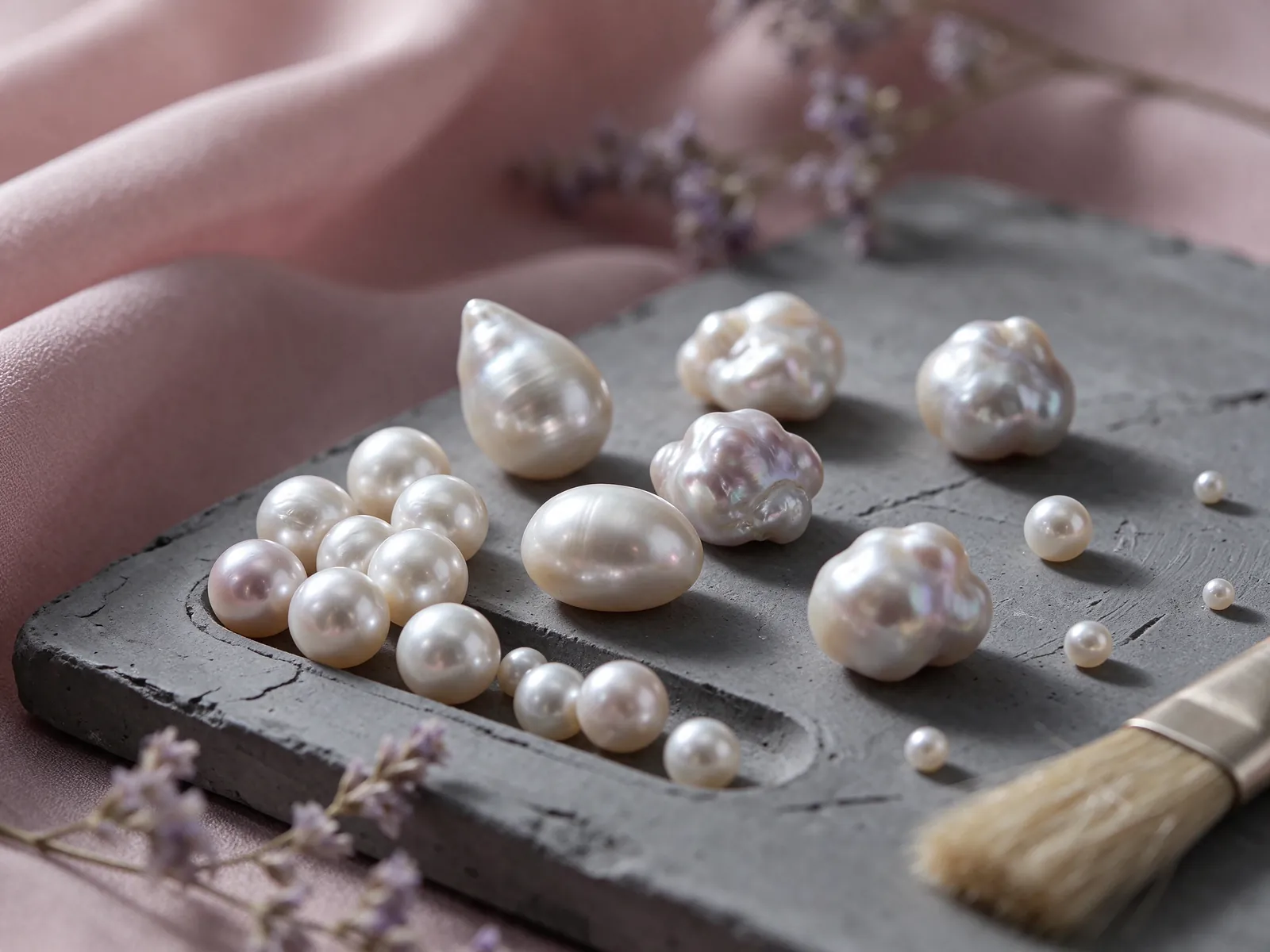
Drop, coin and stick shapes: let the hanging direction guide you
The outline of drop shaped pearls has a narrower end and a fuller end, creating a clear sense of direction. In a pendant, the attachment point helps determine how that outline hangs. Check where the fitting meets the pearl and how the fuller end sits against your neckline. In earrings, consider the drop together with the overall length and your hairstyle. It is a styling option, not a promise that one shape will flatter every face.
The shape of coin pearls has a flatter, broader visual outline, while stick forms emphasise an elongated line. A broad front can look quite different when turned sideways, so a single face-on image is especially limited here. Try imagining the silhouette against a simple top before comparing it with patterned clothing. That makes it easier to see whether the outline remains a clear feature or competes with the fabric's details.
A flat pearl needs more than a flat photograph
Use a front view to assess the main visible face, a side view to understand depth and curvature, and a naturally hanging view to judge orientation. A deliberately arranged photograph may hold a pendant at an angle it does not maintain during wear. For a flat or elongated form, movement is part of the appearance. Consider whether you like the changing outline, rather than expecting the same face to remain visible all day.
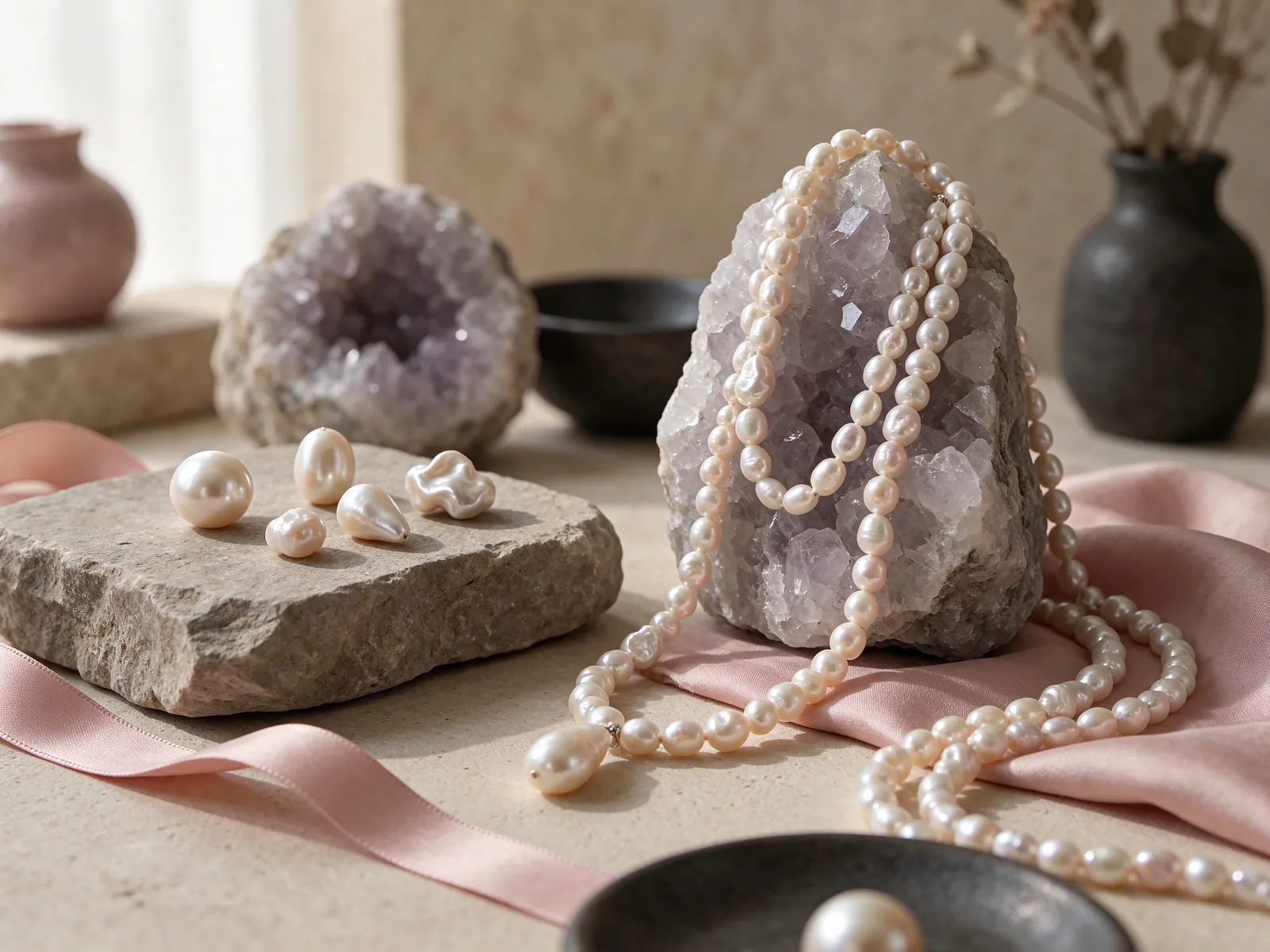
Baroque outlines and ringed surfaces describe different things
The appeal of baroque pearls lies in irregular contours, which can create a sculptural focal point. Look for the curve, projection or change in outline that you find most engaging, then consider how the setting presents it. A minimal outfit can give that detail room to stand out. An irregular pearl need not make the entire design look unstructured; repetition, placement and the surrounding lines can still create a coherent composition.
The term ringed pearls describes pearls with rings around the surface; this does not mean their overall body is spherical. Keep the outer silhouette and the surface pattern separate when reading a description. A ringed pearl still has its own underlying form. If you enjoy the rings, examine how light changes across them and how clearly they show in the finished piece, rather than treating all ringed pearls as one shape.
Matching irregular earrings can mean similarity or complement
A pair can share similar proportions, or use different contours that complement one another. Compare visual weight, colour and hanging direction across both earrings before inspecting each pearl alone. If you want deliberate asymmetry, decide what links the pair: perhaps a related curve or comparable fullness. Two attractive individual pearls do not necessarily create the relationship you want when worn together, so the paired view is important.
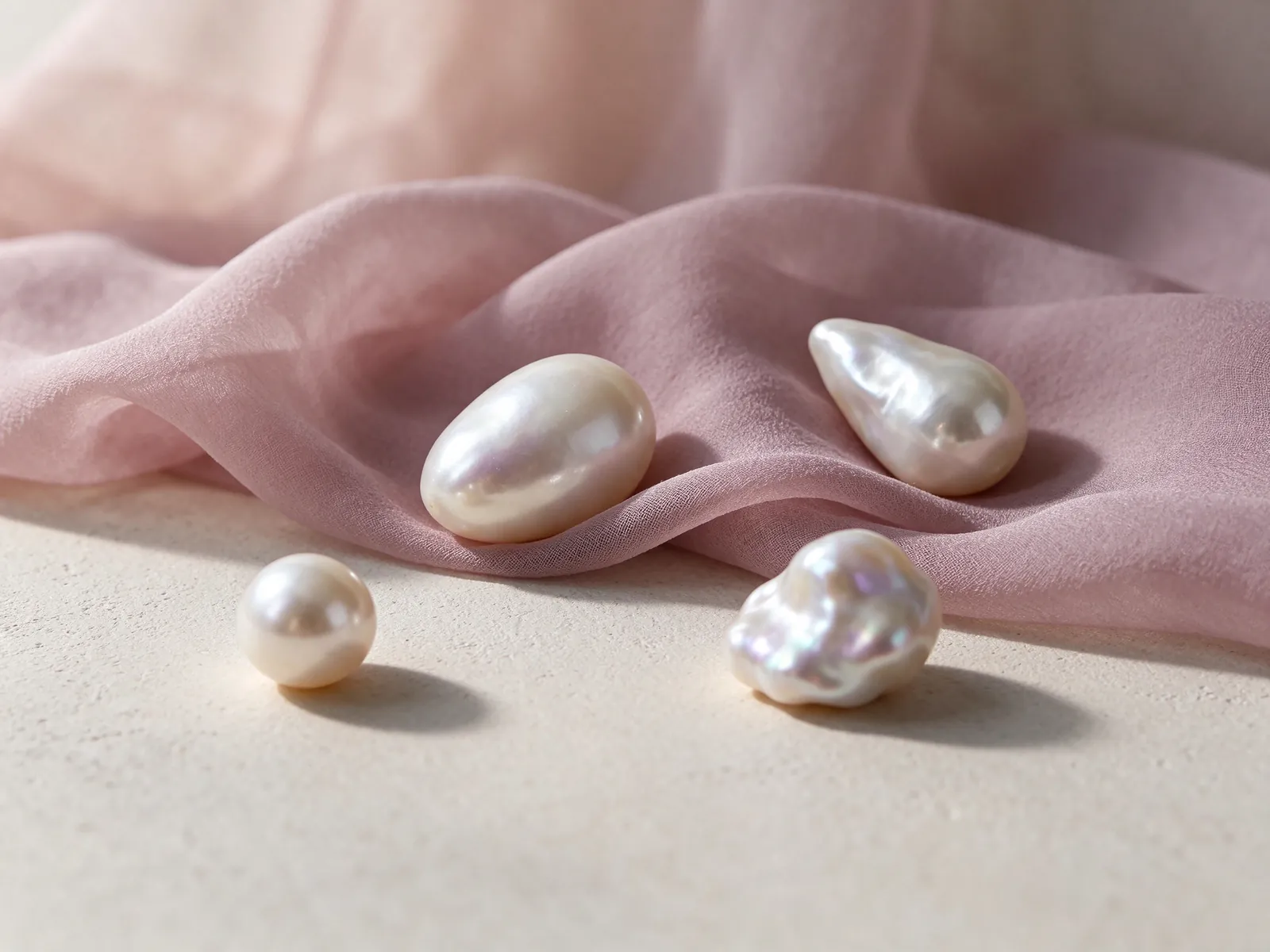
Shape is one of seven quality factors, not a complete verdict
GIA identifies seven pearl quality factors: size, shape, colour, lustre, surface quality, nacre quality and matching. Shape belongs within that broader framework. If your priority is an orderly strand, matching may deserve particular attention; if you are drawn to reflected light, compare lustre carefully. Choosing an irregular outline does not remove the other factors from consideration, and choosing a round outline does not answer every quality question.
Colour and shape also convey different information. Neither alone establishes origin, natural-versus-cultured identity or the existence of a certificate. When documentation is available, read the information it actually records instead of turning a shape name into proof of identity. For visual comparisons, photographs can help with appearance and proportion, but their lighting and angle should not be mistaken for a complete account of the pearl.
Compare like with like when judging photographs
Similar backgrounds, distances and lighting make comparisons easier. Strong shadow can change your impression of depth, while a bright reflection may hide a local contour. Close views are useful for detail; worn views are useful for scale and composition. If a side is missing or an outline is obscured, request another angle. It is better to resolve that specific visual question than to draw a broad conclusion from an ambiguous image.
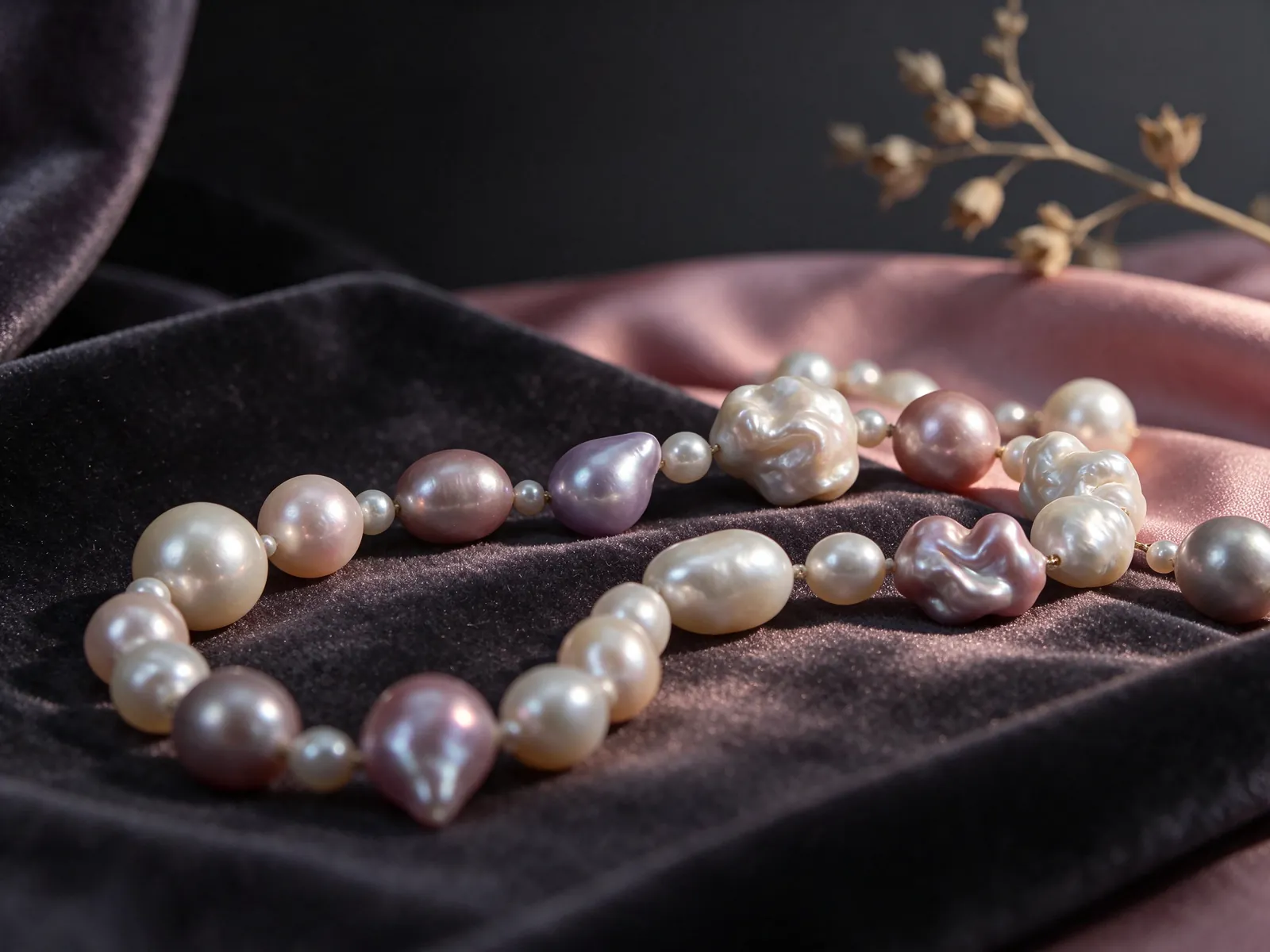
Make the final choice around your wardrobe and wearing habits
Choose a familiar outfit for your final comparison, not only something imagined for a special occasion. Check whether the neckline leaves room for the whole pendant silhouette and whether loose hair hides part of an earring. A long form may echo an open neckline; a broader form may need more clear space to be seen. These are useful experiments rather than rigid rules about which clothes belong with which pearl.
Practical habits matter too. Headphones, scarves and high collars can change how an earring or pendant interacts with your clothes. Consider projecting contours, the movement of a suspended piece and the position of its fittings. Comfort depends on the complete design, dimensions and weight as well as your preferences. No shape name alone guarantees an unobtrusive fit, so keep the whole piece in the discussion.
Describe the effect you want when asking about a design
Useful descriptions might include a rounded look with modest projection, a drop with a clearly defined hanging direction, or a pair with complementary rather than identical outlines. Explain how you plan to wear it and which dimensions you would like to understand. A conversation with Flint Jewellery can then focus on proportion and design questions instead of expecting a single shape label to express every part of your preference. For a conversation about your preferred pearl silhouette and how it relates to a design, contact Flint Jewellery on WhatsApp +85260106207.
| Form | Main outline | Helpful extra view | Buying focus | Styling consideration |
|---|---|---|---|---|
| Round / near-round | Spherical or close to spherical | Profile and alternative angles | Overall roundness and matching | Even repetition or a simple stud |
| Oval / potato | A long axis with variable fullness | Both ends and the widest point | Proportion and transitions in a strand | Echo curved or linear clothing details |
| Rice | Narrow and elongated | Horizontal and vertical arrangements | Read dimensions separately from shape | Compare the rhythm along a neckline |
| Drop | A narrower end and a fuller end | Natural hanging view and profile | Attachment point and orientation | Use the fuller end as a focal point |
| Coin / stick | Flatter and broad, or strongly elongated | Side view during a turn | Depth, visible face and direction | Give the outline space against a plain top |
| Baroque | Irregular contours or projections | Multiple angles and a paired view | Visual weight and complementary forms | Build a composition around an individual outline |
Pearl knowledge and authoritative references
GIA lists seven pearl quality factors: size, shape, colour, lustre, surface quality, nacre quality and matching. Shape is one part of the comparison, not the entire assessment.
Read the reference for this factFrequently asked questions
Does near-round mean a pearl has a flat back?
No. Near-round describes a form close to spherical with some departure from roundness. It is not a synonym for a hemisphere or a button shape. Compare the profile rather than assuming the back from the front view.
Can a rice-shaped pearl be called a seed pearl simply because of its outline?
No. Rice describes an elongated silhouette, while seed emphasises small size. CIBJO defines seed pearl specifically as a small natural pearl. A rice outline establishes neither that term nor natural identity, and a small size does not identify a rice outline.
Are circled pearls the same as round pearls?
No. Circled or ringed refers to rings around the surface. Round describes the overall body shape. Read those as separate observations and inspect both the silhouette and the surface pattern.
Must baroque earrings have identical outlines?
Not necessarily. Similar proportions can create a balanced pair, but complementary contours can also work. Consider both earrings together, especially their visual weight, colour and hanging direction, before judging the individual pearls.
Can a shape name establish where a pearl came from?
No. Shape alone cannot establish origin, natural-versus-cultured identity or a certificate. Appearance and documentation serve different purposes; consult the relevant jewellery documentation for identity information.
Updated: