

How Do the Body and Fastening Differ on a sterling silver pearl brooch or a 925 silver pearl pin?
Begin with the construction rather than the headline. The decorative body carries the visual design, while the pin, hinge and fastening attach it to clothing. A description of the body does not automatically describe those other components. Read each material statement against the part it names. The pearl brooch guide provides a useful starting point for considering fastening arrangements and intended use while keeping appearance separate from material information.
When comparing a sterling silver pearl brooch with a 925 silver pearl pin, request a back view as well as the attractive front view. The back shows the direction of the pin and the position of the fastening; a side view helps you understand how far the decoration projects. These views answer different questions. None should be used to guess the pearl species, the weight or an unlisted component material.
Which Fastening Details Should You Check on a sterling silver pearl brooch or a 925 silver pearl pin?
Ask which part moves when opening the fastening, how the pin tip is enclosed when closed, and whether the fastening has its own material description. If you have experienced discomfort from metal contact, discuss the parts likely to touch you individually. A familiar metal label is not a universal assurance of comfort, and a photograph cannot tell you the composition of an unlabelled catch.

Keep silver appearance separate from pearl assessment
A silver-coloured outline can create a cool visual accent, but colour is not a complete material description. Likewise, the metal name is not a pearl quality grade. Look for written pearl information and photographs that show the surface clearly. Strong lighting can change the impression of reflections, so do not treat a brighter photograph as proof that one pearl has better lustre.
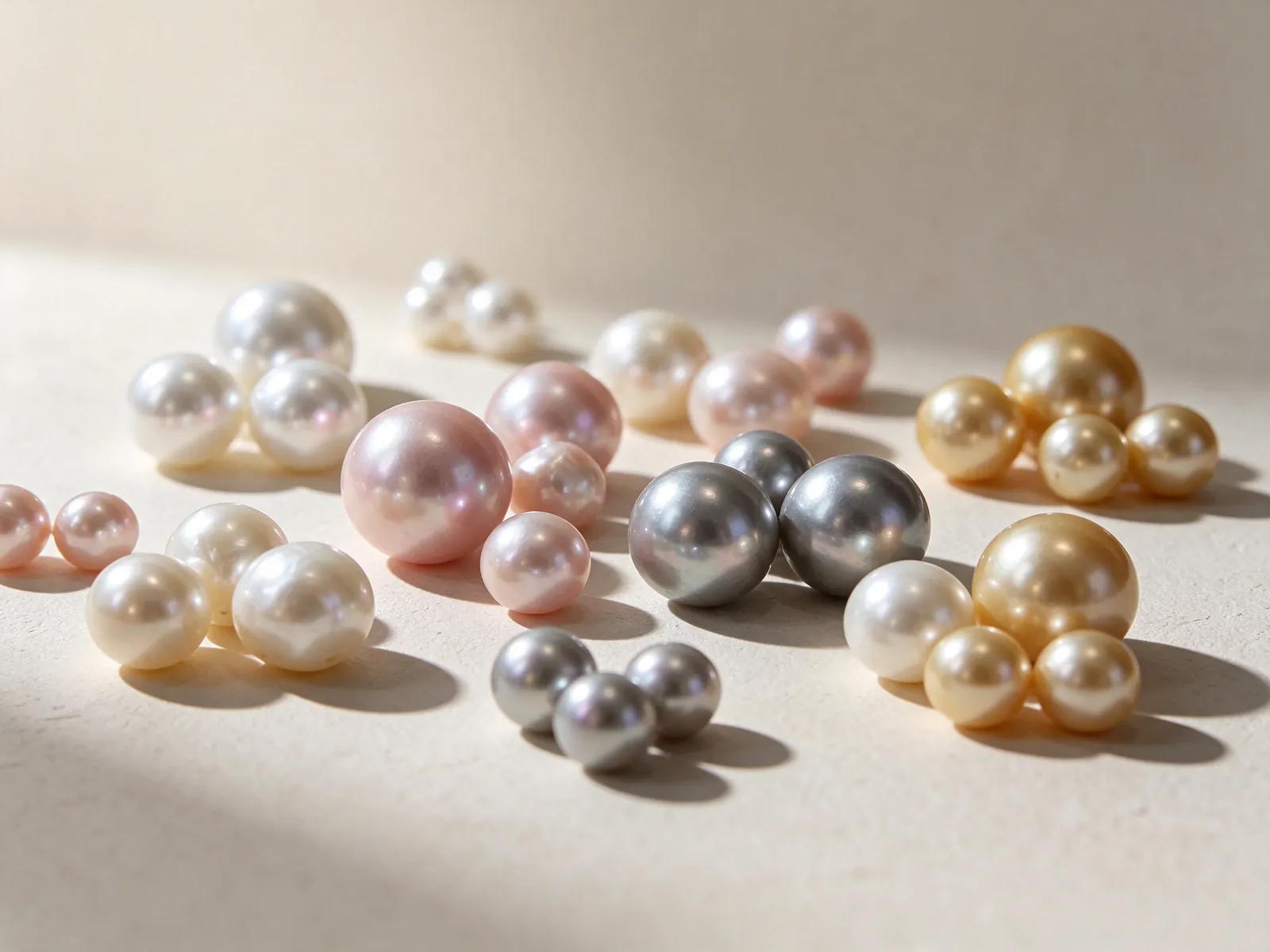
GIA describes seven pearl value factors: size, shape, colour, lustre, surface quality, nacre quality and matching. On a single-pearl brooch, consider the visible shape, reflections and surface; on a multi-pearl composition, also consider how the pearls work together. The pearl shape guide helps you compare round, near-round and irregular outlines and consider how each works with the brooch design, without allowing a metal name to stand in for pearl information.
Use close-ups for visible features, not identity claims
A close-up can help you inspect the visible pearl surface and the area where it meets the setting. It cannot establish origin, natural-versus-cultured identity or certification. If documentation matters to your purchase, ask what document accompanies the piece and what it covers. Keep that enquiry separate from whether you like the pearl's outline or colour.
Choose a wearing surface before choosing a silhouette
A structured jacket lapel, a soft cardigan and a light scarf support a brooch differently. Start with the garment you expect to wear most often. A paper outline can help you compare the visual scale and distance from the neckline, but it does not reproduce the weight or demonstrate that the fabric will support a particular piece. Treat proportion and support as separate decisions.
Fine knit loops can catch, while delicate fabrics may show puncture marks or distortion. Do not force a pin through a resistant area, and consider garment-care advice before using a brooch on easily marked fabric. If you would rather avoid a pin through clothing, reading about a silver pearl pendant can help compare suspended jewellery with a garment attachment. It does not mean that a brooch can be converted into a pendant.
Check the route of bags, scarves and seat belts
During a trial, gently turn, sit and put on your usual outer layer. Notice whether a bag strap, scarf edge or seat belt passes over the proposed position. A placement that looks balanced in a mirror may still invite repeated contact. The useful position is one that suits your movements as well as the garment, rather than a universal rule about wearing a brooch on one side.

Balance and fastening operation matter beyond the front view
A brooch may lean because of the relationship between its decoration, projection, pin position and fabric. Study where the attachment sits in relation to the visible design. An elongated outline also raises a practical question: do you want it horizontal, upright or angled? Front dimensions alone cannot tell you how heavy a piece is or how it will sit on your own clothing.
Follow the fastening's intended operation rather than bending the pin to suit a difficult placement. Close it properly before checking for fabric distortion, and release it before withdrawing the pin. For ideas on how to wear a pearl brooch, bring those checks back to the proposed lapel or scarf position: fastening direction, decorative balance and fabric support need individual attention rather than assumptions based on a material name.
Recognise when a piece needs examination
Stop wearing a brooch if the fastening will not close normally, the pin appears bent or a pearl or decorative element is loose. Have the piece examined by someone familiar with its construction. Do not use household glue, squeeze the catch forcefully or repeatedly bend the pin as a test. Cleaning a surface does not resolve a structural problem.
Build a focal point with colour and negative space
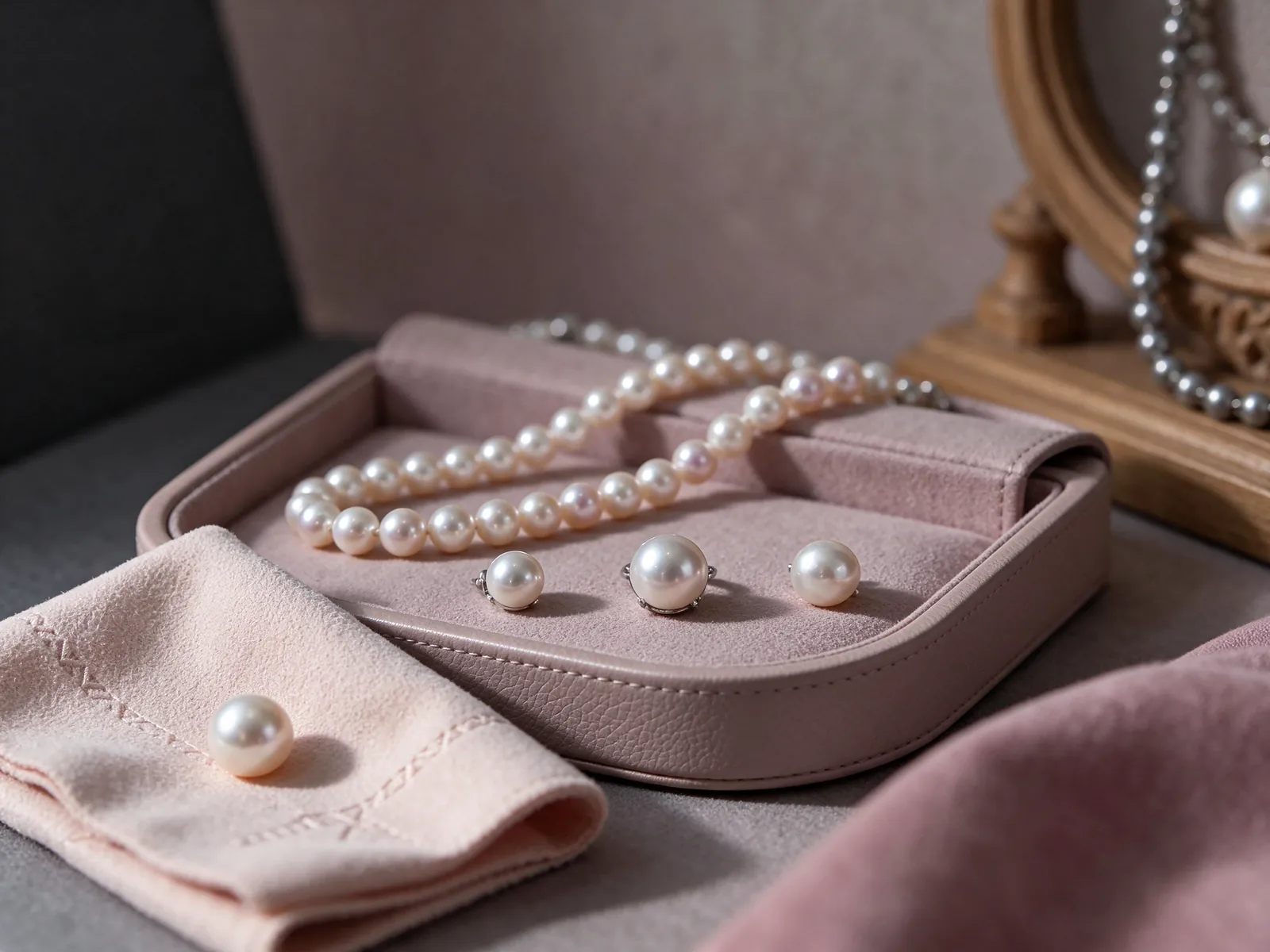
On a dark jacket, a silver-coloured outline and pearl reflections may form a distinct focal point. On a pale blouse, the same visual combination can be more understated. Consider the actual fabric finish, print and buttons before adding other jewellery nearby. If the neckline already has strong detail, try placing the brooch in a quieter area so that its outline is easier to read.
The pearl colour guide can extend your understanding of tones and visual coordination. Apply those ideas to the outfit without using a photograph to establish pearl type, origin or untreated status. Decide whether the pearl, the metal outline or the garment pattern should lead; then allow the other elements to support that choice rather than compete with it.
Evaluate directional motifs in an outfit view
Curves and asymmetry can shift the visual balance when a design is rotated. The baroque pearl brooch topic offers a useful discussion of irregular outlines and open space, but each brooch must still be positioned according to its own attachment. An outline alone does not establish pearl type or treatment status. Step back to view the upper body rather than judging only a close-up. Check whether the direction relates comfortably to the lapel or scarf.
Give the pearl and the metal separate care consideration
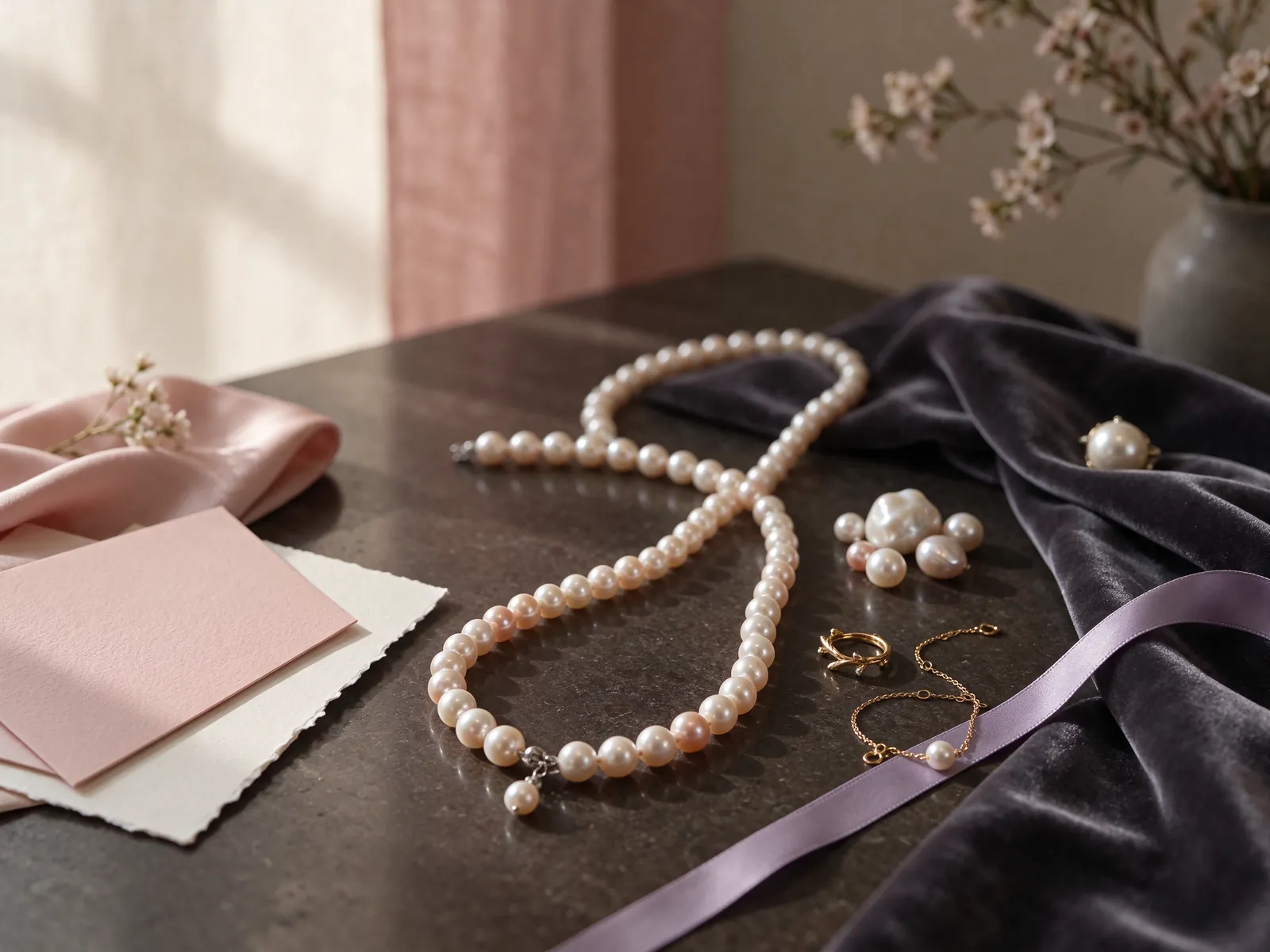
A pearl brooch is not simply a silver object for cleaning purposes. GIA lists pearl at 2.5 on the Mohs hardness scale and advises against ultrasonic or steam cleaning. That figure is a reason to avoid abrasion, not a promise about impact resistance or lifespan. After wearing, gently wipe the pearl with a very soft, clean cloth and keep perfume, hair spray, acids and excessive heat away.
Do not immerse the whole brooch in silver-cleaning liquid or allow metal-polishing products to touch the pearl. If the metal needs attention, establish a suitable method for the assembled piece, with professional help where appropriate. Remove the brooch before cleaning and work on a stable surface. Avoid scraping around the pearl with a hard tool to remove fibres from the fastening.
Store the closed fastening away from harder jewellery
Check that the fastening is properly closed before storage so the pin does not snag another item or its pouch. Separate the pearl from harder jewellery that could rub against it. Avoid prolonged heat and direct sunlight. A brief look at the pin and catch after wearing a thick garment also helps you notice a problem before the next occasion.

Make gift choices and material enquiries practical
For a gift, consider whether the recipient regularly wears lapels or scarves and whether they are comfortable putting a pin through clothing. Their preferred fabric, usual jewellery scale and everyday movements are more informative than a favourite metal colour alone. A decorative motif can be appealing without necessarily fitting their wardrobe, so begin with wearing habits rather than assuming that any pearl brooch is equally practical.
When asking a seller about a piece, describe the garment and proposed placement alongside your questions about the body and fastening. Request clear back images and pearl information, and ask about any accompanying document directly. Packaging and a brand name do not establish certification. Using the same questions for each piece makes comparisons more useful than relying on different photographic moods.
Keep a Flint material enquiry distinct from the silver comparison
Flint Jewellery's pearl jewellery material options are 18K 750 white gold, 18K 750 yellow gold, 18K 750 rose gold, PT950 platinum and PT900 platinum. This page compares silver brooch considerations; it is not a Flint silver brooch product offer. To discuss material preferences, WhatsApp +85260106207 with your colour direction and intended use. Any particular design, pearl details and wearing arrangement should be explained for that individual piece.
| Comparison point | Information to read | Wearing observation | What it does not establish |
|---|---|---|---|
| Body and silver appearance | An explicit body material description | Contrast with the garment colour | The material of every fastening component |
| Pin and fastening | Separate component details and operation | Closure and fabric distortion | Universal comfort from a 925 label |
| Pearl appearance | Lustre, surface and other pearl information | Reflections and outline in ordinary light | Species or certification from the metal setting |
| Fabric and proportion | Back, side and overall views | Contact with lapels, straps and layers | Weight or secure support from a front image |
| Care and storage | Care appropriate to pearl and metal | Closed fastening and separate storage | Whole-piece suitability for silver cleaner |
Pearl knowledge and authoritative references
GIA describes seven pearl quality factors: size, shape, colour, lustre, surface quality, nacre quality and matching for multiple pearls. When comparing a pearl brooch, read pearl information separately from metal and fastening details; these general assessment factors are not a Flint product grade or certification.
Read the reference for this factFrequently asked questions
Does a 925 description include the pin and catch automatically?
No. Read which component the description identifies, then look for separate pin and fastening information. A body material statement alone is not a complete account of every part. Ask the seller to explain any unclear component descriptions.
Can I use a pearl brooch on a fine-knit cardigan?
Consider the knit structure, support and likelihood of catching before inserting the pin. Do not force it through resistant loops. The choice of metal does not guarantee that a garment will remain unmarked or support the piece comfortably.
Can a round pearl photograph prove certification?
No. Shape is a visible characteristic, not a certificate or proof of pearl identity. If documentation matters, ask what document accompanies the piece and what it covers, separately from your assessment of its appearance.
Should I use an ultrasonic cleaner for the fastening and pearl together?
No. GIA advises that pearls should not be cleaned with ultrasonic or steam cleaners. Treat the assembled brooch as a piece with different care needs rather than applying a metal-cleaning method to every component.
Does this comparison describe Flint silver brooch products?
This is a material-reading and styling comparison, not a Flint silver brooch product offer. Flint Jewellery's pearl jewellery material options are 18K 750 white gold, 18K 750 yellow gold, 18K 750 rose gold, PT950 platinum and PT900 platinum. Individual jewellery details should be considered separately.
Updated: