
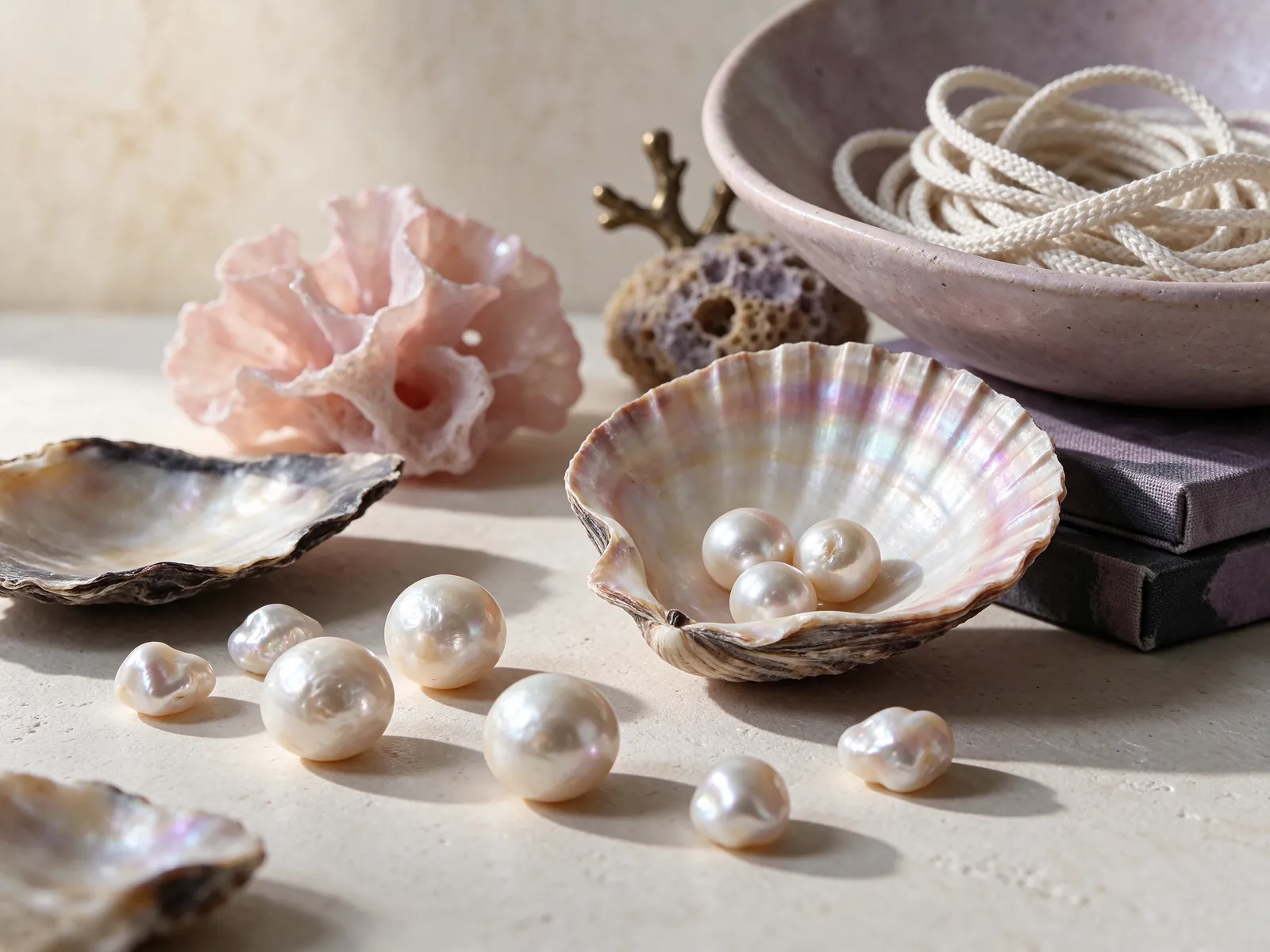
How shell-attached growth explains Mabé pearls vs round pearls, answers “is a Mabe pearl cut in half” and shows why Mabe pearls are half round
A mabé pearl is not best understood as a round pearl with something missing. In cultivation, a nucleus is fixed against the inside of a mollusc's shell. Nacre develops over the exposed face, while the attached side does not become a complete sphere. Most mabé pearls therefore start as half-domes. The outline comes from the position in which they grow, rather than from dividing a finished round pearl. To discuss the pearl profile and wearing style you prefer, contact us on WhatsApp +85260106207.
A typical round pearl develops within a pearl sac in the mollusc's body, with growth surrounding it to produce a three-dimensional form. A mabé presents a principal outward-facing dome instead. The explanation of what is a Mabé pearl helps separate that original growth pattern from the processing used to finish its back. Both stages matter when deciding how a pearl can be supported in jewellery.
Mabé pearls vs round pearls: the half-dome misconception behind “is a Mabe pearl cut in half” and why Mabe pearls are half round
A circular outline in a front-facing photograph does not establish a spherical back. Ask to see the side as well: the front shows the outline and reflections, whereas the side reveals the relationship between dome and mounting. Equally, a domed appearance alone cannot identify an unnamed pearl as mabé. The material description is more informative than guessing from one photograph.

Removing a blister from its shell is different from bisecting a round pearl
GIA describes mabé as an assembled cultured blister. The purpose-grown blister is cut from the shell, its original bead is removed, and the cavity is filled. A shell layer forms the backing, with adhesive holding the assembly together. The cutting takes place between the grown blister and its shell; it is not a cut through the centre of an independently formed round pearl. That distinction explains why the word ‘cut’ can otherwise be misleading.
Assembly does not mean the entire object is a plastic imitation. The dome has nacre grown by the mollusc, while filling and backing are additional components of the finished structure. When a description says only ‘half-round pearl’, ask what material and construction it refers to. A complete explanation should make the nacreous face and the assembled back understandable without suggesting that every domed material has the same identity.
What can an edge or back view tell you?
Look for an even edge, an orderly junction with the mount and support that holds the dome securely. A closed setting may conceal the back, so absence of a visible backing is not proof that there is none. Do not dismantle jewellery to investigate. The distinction discussed in abalone pearl vs abalone shell is useful here: an attractive nacreous shell surface is not automatically a pearl merely because its reflections look similar.
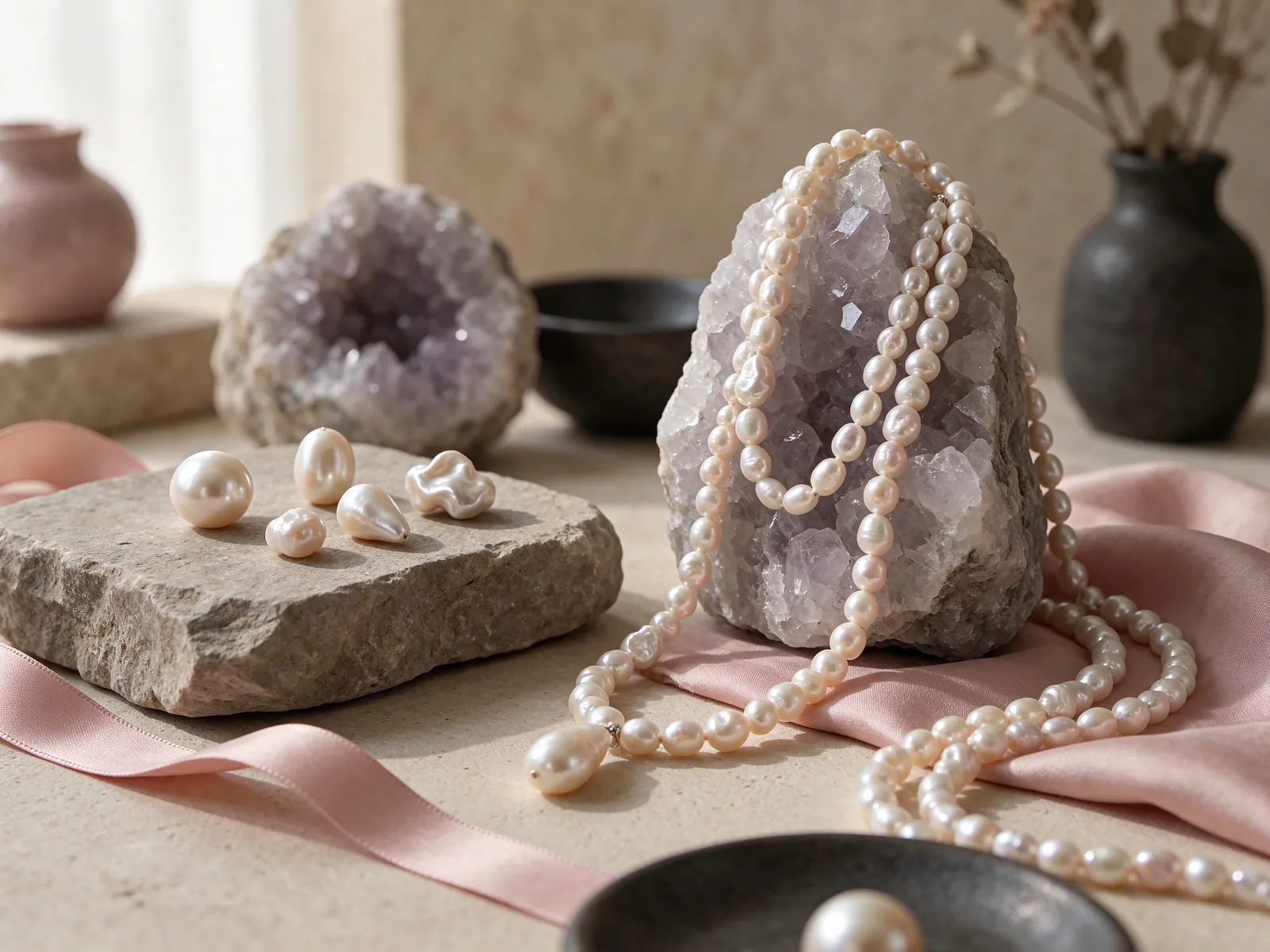
Compare the viewing angle before comparing the apparent size
A mabé concentrates attention on its outward dome. A round pearl reveals different areas of its spherical surface as it moves. For a fair visual comparison, consider front-facing width, dome height and the surrounding metal together. A broad face can make a strong focal point, but does not establish that the whole piece is lighter, larger or closer-fitting than another design. The backing and mounting also contribute to its profile.
Judge lustre under comparable lighting. A bright spotlight can produce a striking white reflection on either shape, while softer light may show surface texture more clearly. Turn each piece gradually and watch how reflections change across the face. A single overexposed image cannot tell you how crisp the lustre is. Different views are especially helpful when the main appeal is a broad, softly coloured dome rather than the outline alone.
Does shifting colour establish a particular origin?
GIA distinguishes bodycolour, overtone and orient, and not every pearl shows all three. Colour changes can help you decide whether a piece works with your clothes, but cannot independently prove origin, treatment status or natural formation. Use the pearl types guide to understand the wider categories, then return to the actual surface, its reflections and the information provided for the piece you are considering.

Keep shape, cultured identity and origin as separate questions
‘Round’ describes a shape, not a pearl species or a natural identity. Pearls from different categories may be round, and both natural and cultured pearls can have that outline. Mabé, by contrast, refers to a shell-grown and assembled structure. This comparison is therefore not a contest between two equivalent species labels. It explains how construction and viewing geometry can differ, rather than assigning a particular place of origin to either outline.
The distinction in natural vs cultured pearls is helpful because cultured does not mean imitation. Read descriptions of pearl type, formation, processing and origin as separate pieces of information. If a listing says only ‘pearl’ or ‘round pearl’, do not supply a country, mollusc species or laboratory conclusion yourself. Those details are not visible consequences of roundness or of a flat back.
Mabé or Mabe: what matters beyond the spelling?
The accent in Mabé does not indicate a grade, and the spelling Mabe does not establish a different origin. For choosing jewellery, look beyond spelling to a clear description of the shell-attached growth and assembled structure. Nor should every flat-backed bead be called mabé. Similar silhouettes can belong to different materials, so the actual material name matters more than a convenient visual label.
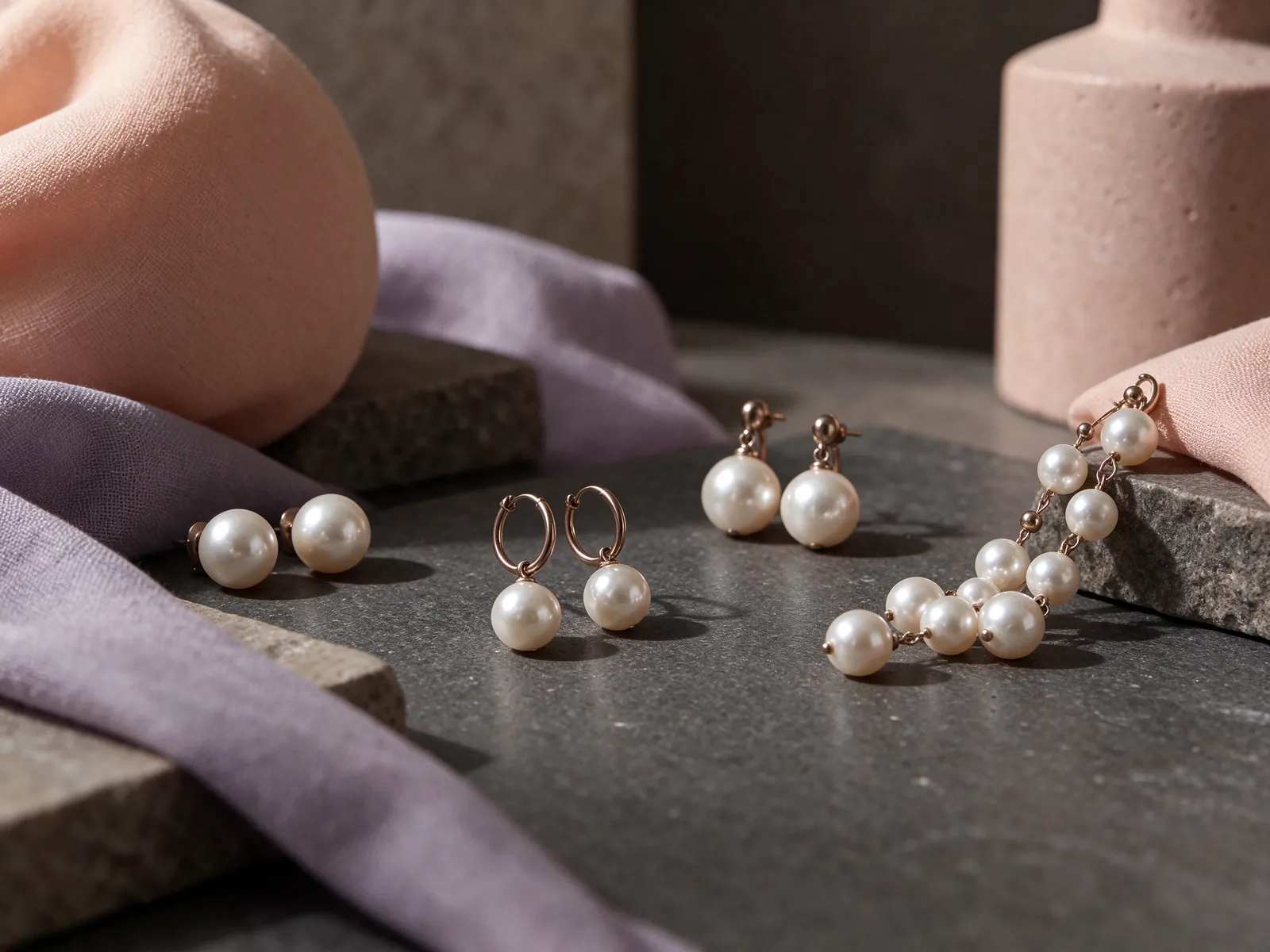
Earrings and pendants: choose the direction in which the pearl will be seen
For an earring intended to face forward, a mabé dome can suit a framed or close-to-the-ear composition. If you prefer a pearl that turns and shows its curvature from the side, a round drop offers another approach. Move your hair aside and inspect both views when trying earrings. A flat back alone does not guarantee a close fit: the mounting angle, fastening position and weight of the complete earring also affect how it sits.
When considering a Mabé pearl pendant, decide whether you want the face to rest against clothing or hang as a distinct focal point at the neckline. The back creates setting possibilities, but the bail and chain still influence whether the pendant turns. A plain top makes the dome and rim easy to see. A folded collar or textured knit can conceal part of the design, so assess it with the clothes you actually wear.
Matching a pair involves more than a shared colour name
Place both earrings in the same light and direction. Compare their outlines, dome heights, lustre and visible colour together. A shared colour name does not guarantee matching reflections, and a difference may become more noticeable beside the face. Round pearl pairs also need this attention, although their visible surfaces turn differently. In an intentionally asymmetric pair, look for a coherent composition rather than identical details.
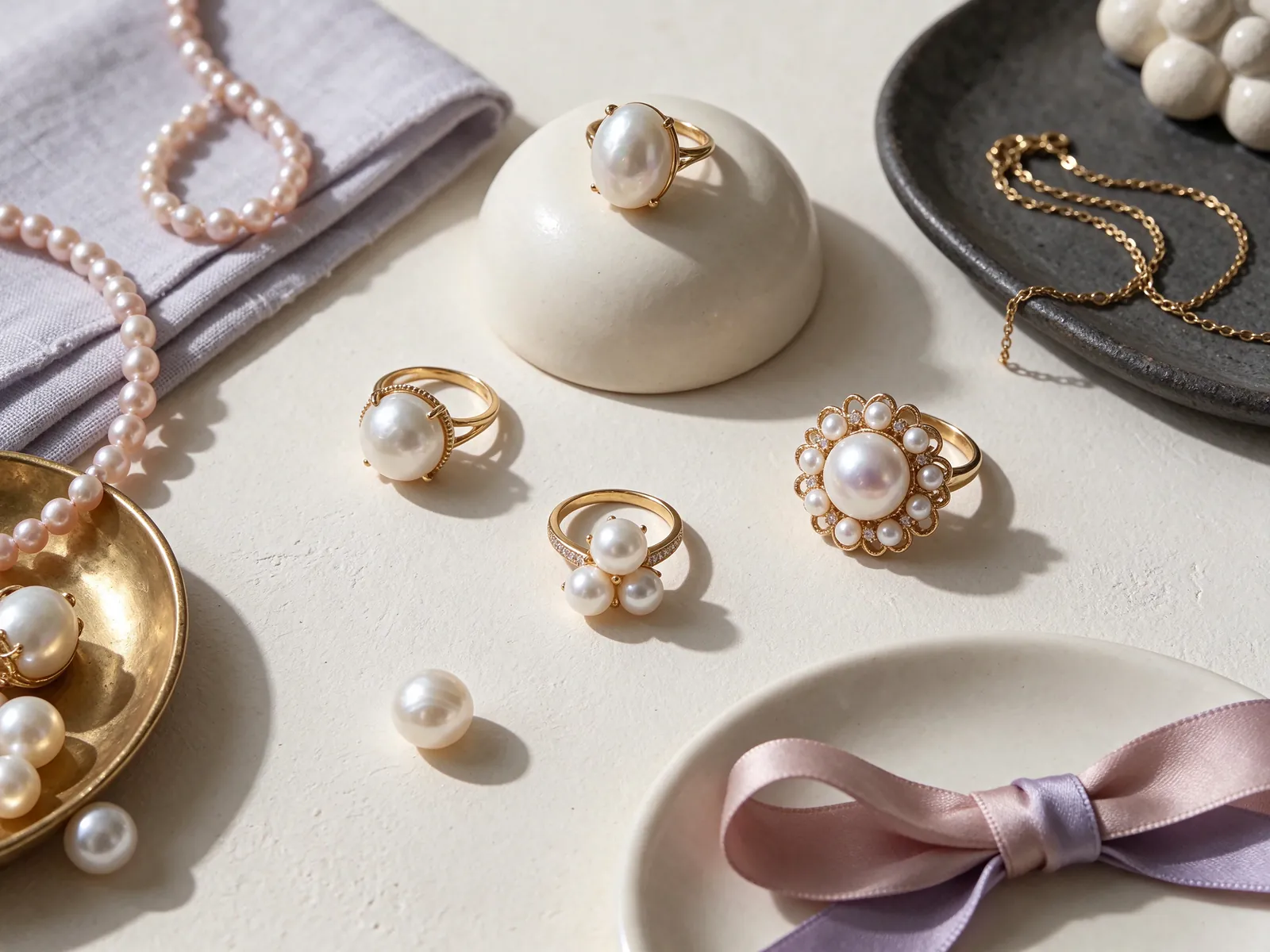
For rings, inspect the height and everyday contact points
A mabé pearl ring can place a broad face across the hand, but its flat back does not promise a low setting. View the ring from the side of the finger and consider dome, rim and band together. Close your hand naturally to assess the profile. A round pearl ring may show a fuller sphere, yet its practical height also depends on the mounting rather than the pearl name alone.
If your day involves typing, carrying objects or frequent contact with hard surfaces, consider those movements when choosing a ring. A flatter outline is not a guarantee against impact. Rings generally encounter more contact than pendants, and neighbouring stacked rings may rub a dome or rim. Removing pearl jewellery before rough work and storing pieces separately helps reduce avoidable abrasion, whichever pearl shape you choose.
Cleaning must respect both the nacre and the assembled structure
GIA advises against ultrasonic and steam cleaning for pearls. A mabé also has filling, a backing and joined components, so avoid improvised soaking, scraping or heating. After wear, use a very soft, clean cloth. Apply perfume and hair products before putting on jewellery and allow them to dry. If the dome becomes loose or an edge changes, stop wearing the piece and have it examined rather than attempting to glue it yourself.

Choose by complete quality, not by the idea of half a pearl
A mabé is not automatically worth half as much because its outline is a dome, and a round pearl is not automatically the better purchase. GIA identifies seven pearl value factors: size, shape, colour, lustre, surface quality, nacre quality and matching for multi-pearl jewellery. Those factors offer a more useful comparison than treating shape as the whole assessment. The quality of assembly and mounting also matters to the finished piece.
Begin with your usual neckline, hairstyle and daily activities. Decide whether an outward-facing dome or a moving spherical surface suits that use. Next compare lustre and surface in similar light, then examine support and stability from the side. If prices differ, understand the materials and workmanship involved rather than calculating a discount from ‘half-round’. The aim is a piece that fits how you wear jewellery, not a permanent ranking of the two structures.
Three questions to take into a fitting
Ask which direction you want the pearl to face, how the piece moves when you turn or walk, and where it might meet clothing or a hard surface. Connect those answers with front, side and back views. They reveal the practical advantages of each design. For questions about pearl identity or assembly, request a clear material description instead of trying to infer hidden structure from a silhouette. Contact us on WhatsApp +85260106207 to share your preferred pearl profile, jewellery style and wearing routine, and discuss the details worth comparing.
| Comparison | Mabé pearl | Round pearl | Practical buying check |
|---|---|---|---|
| Growth | Usually cultivated as a dome attached to the shell | Typically develops within a pearl sac in the body | Do not confuse shell removal with slicing a sphere |
| Finished structure | Usually filled and shell-backed after the original bead is removed | Spherical form does not imply the same assembled backing | Read the material description when a mount hides the back |
| Viewing geometry | An outward dome is the principal face | A sphere can show several sides as it turns | Compare width, height and mounting together |
| Wearing composition | Can support a framed earring or pendant focal point | Can suit compositions showing movement and curvature | Try the piece with your neckline and hairstyle |
| Quality | A half-dome is not a fixed value category | Roundness is not a complete quality assessment | Consider GIA's 7 factors plus assembly and support |
Pearl knowledge and authoritative references
GIA identifies 7 pearl value factors: size, shape, colour, lustre, surface quality, nacre quality and matching; matching is particularly relevant to jewellery containing two or more pearls.
Read the reference for this factFrequently asked questions
Why does a description mention cutting if mabé is not a sliced round pearl?
The grown blister is cut away from the shell to which it was attached. That is different from cutting a completed sphere through its centre. Most mabé pearls begin cultivation as domes; removal and assembly are later finishing steps.
Does a filled back make the nacreous face an imitation?
Not by itself. A typical mabé has a cultured nacreous dome and an assembled structure containing filling and shell backing. Those components should be described accurately, but their presence does not mean the entire face was manufactured as an imitation pearl.
Can a round front photograph confirm that the pearl is spherical?
No. A circular dome and a sphere can both look round from above. A side view helps explain the profile, while the material description establishes what is being offered. A photograph alone cannot reveal every component beneath a closed setting.
Will a flat-backed mabé pendant always stay flat against a blouse?
No. The bail, chain, setting and fabric all influence movement. Try the pendant on the intended neckline and observe whether it turns or catches on folds. A flat back creates design possibilities, not a universal fit guarantee.
Should I choose mabé for a ring because it is harder to knock?
Shape alone cannot establish impact resistance. Inspect the full profile and support, consider your activities, and avoid knocks and abrasion with either pearl type. Pearl jewellery should not be cleaned with steam or ultrasonic equipment.
Updated: