
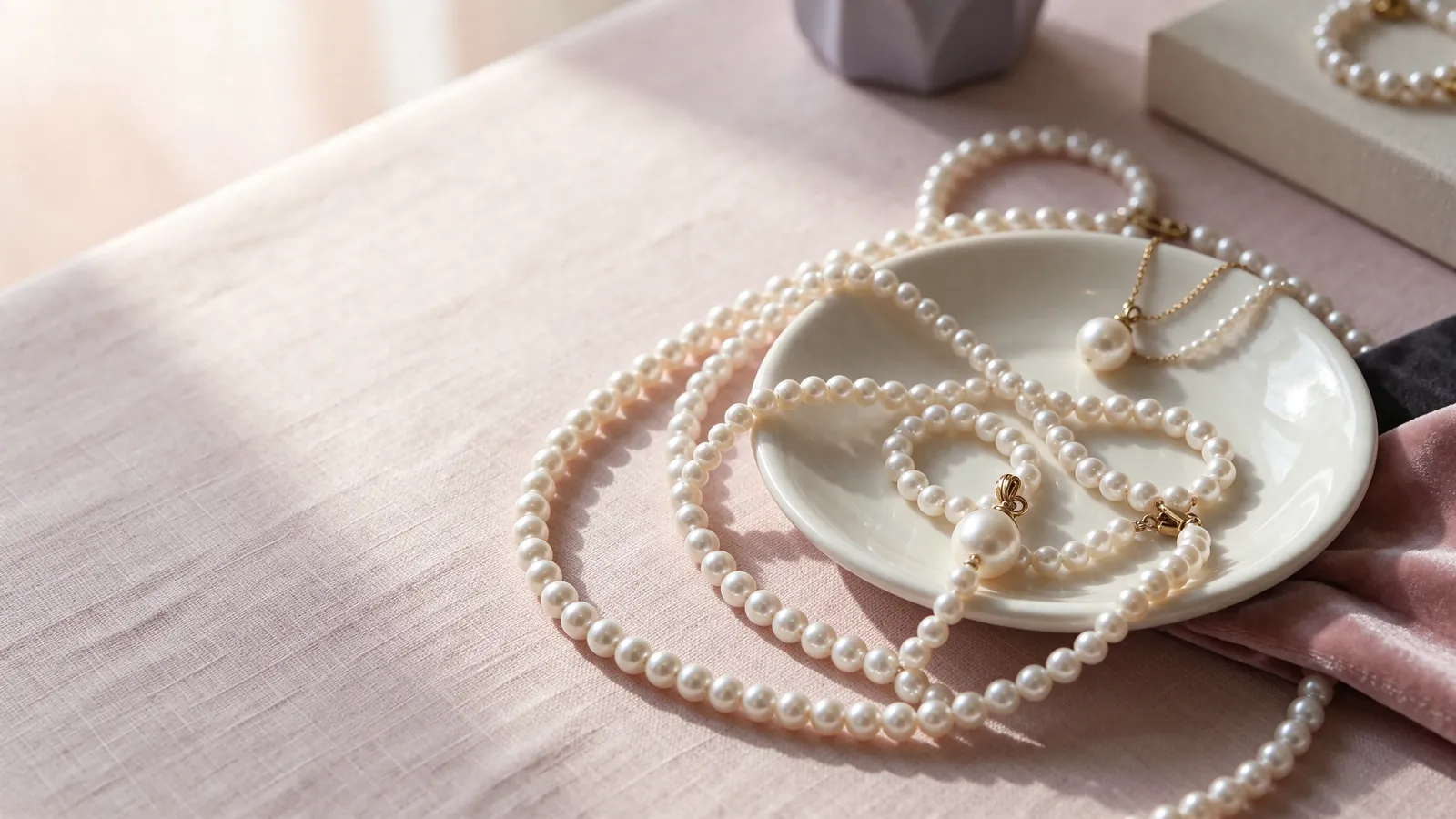
Which component does the metal label describe on a PT850 pearl pendant necklace or an 850 platinum pearl pendant chain?
For help framing your pendant and chain questions, contact Flint Jewellery on WhatsApp +85260106207 to discuss PT900 or PT950 platinum options. Start by separating the necklace into its chain, clasp, connecting parts and pendant. A title can place a metal name next to the pearl without explaining the scope of that description. Read the detailed wording for each part before treating the necklace as a single material choice. A white appearance cannot fill a gap in the component description.
The phrase 850 platinum pearl pendant chain places emphasis on the chain, whereas PT850 pearl pendant may emphasise the pendant. Neither search phrase proves how a particular necklace is assembled. When checking pearl pendant chain compatibility, distinguish the wording that identifies a component from the visual impression of the complete piece. This makes your questions more specific and your comparisons more useful.
Do the chain, clasp and pendant labels agree on a PT850 pearl pendant necklace or an 850 platinum pearl pendant chain?
Agreement is a question about what each label covers, not simply whether similar lettering appears somewhere on the necklace. Ask how the chain, clasp and pendant are described in the purchase documentation and whether the chain is included. A mark on a clasp should not be extended to every other part without that explanation. Keep an unanswered component question separate from a confirmed description.

Check the threading route before choosing a replacement chain
A pendant with a bail presents a different fitting problem from a necklace whose chain passes through the pearl position. For a bail, the broadest chain end matters as well as the chain itself. A fine-looking chain may have an end fitting that cannot pass through the opening. For a through-style construction, establish whether removal is part of the intended operation rather than assuming it from a photograph.
Decide whether you want to wear one assembled necklace or alternate pendants on a chain. Alternating pieces calls for attention to the opening, the end fitting and the normal removal method. When considering a dainty pearl pendant, also look at how much visual space its bail occupies. A small pendant does not automatically make every fine chain a suitable companion.
A smooth fitting demonstration is more informative than a forced fit
Have someone familiar with the construction explain the normal threading route. Observe whether the widest end passes without pressure and whether the pendant has room to move once attached. Stop if fitting requires squeezing the bail or pulling hard on the clasp. Passing through an opening answers only part of the compatibility question; it does not establish metal identity or promise freedom from future wear.
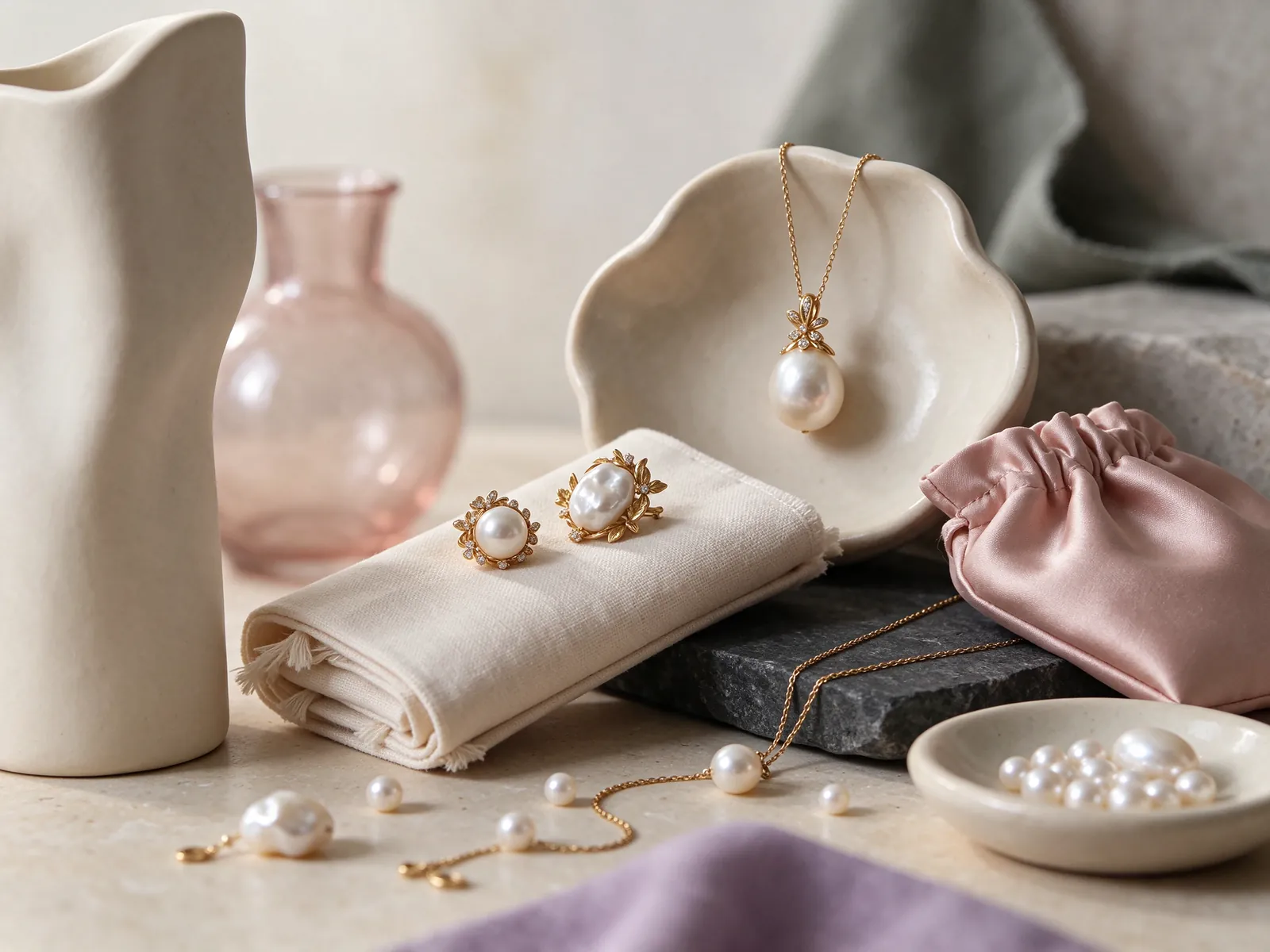
Choose the pendant position with your everyday collars in mind
A stated chain length does not produce the same pendant position on everyone. Neck shape, the garment and the pendant itself affect the result. With a shirt, check whether the pearl disappears behind the collar edge. With a round neckline, decide whether you prefer it above the fabric or resting on it. Try sitting and turning as well as standing in front of a mirror.
A directional design adds another consideration. Reading about a crescent moon pearl pendant can help you think about orientation, turning and the balance between outline and chain. A V-neck may frame a pendant differently from a high collar. Use those differences to assess your own outfit rather than adopting a fixed ideal length from someone else's photograph or assuming every pendant hangs in the same way.
An adjuster, where present, still needs a practical try-on
If the chain being considered has an adjustment mechanism, learn its intended operation before experimenting with positions. Not every chain is adjustable. Check whether the remaining tail catches in hair or touches the back collar repeatedly. Comparing the necklace with your usual work shirt and an evening neckline helps identify a comfortable position without turning one person's preference into a universal measurement.
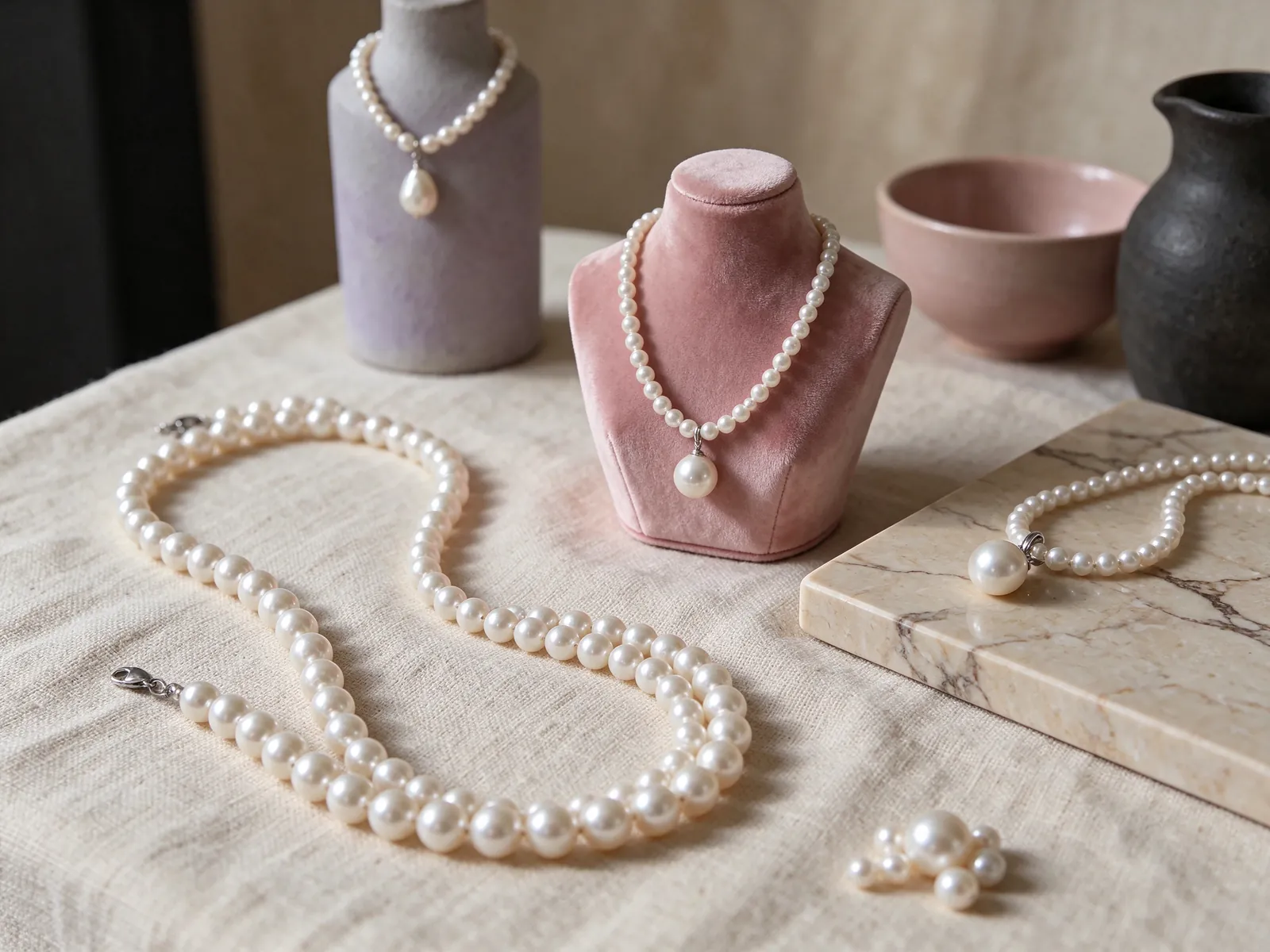
Balance chain reflection with pearl lustre and colour
The chain's visual prominence depends on its outline, links and reflection, not just its metal name. If the pearl is intended to be the focus, compare the complete necklace under similar lighting and notice which part draws your eye first. A brighter chain is not inherently unsuitable, but it may compete with the quiet effect you wanted from a simple pendant.
A pearl and sapphire pendant introduces a different styling question: should the pearl, the coloured detail or the complete outline lead? Thinking about that hierarchy can help you decide how restrained the accompanying chain should look. This is a comparison of styling approaches, not a way to identify gemstones in another photograph. Earrings and rings can support the same focal point without matching every reflection exactly.
A metal label does not grade the pearl
GIA describes seven pearl value factors: size, shape, colour, lustre, surface quality, nacre quality and matching. PT850 wording answers none of those pearl questions. For a single pendant, observe the visible lustre and surface alongside the design; when assembling a set, consider how the pearls relate visually. Shape and colour alone do not establish origin, natural-versus-cultured identity or the existence of a certificate.
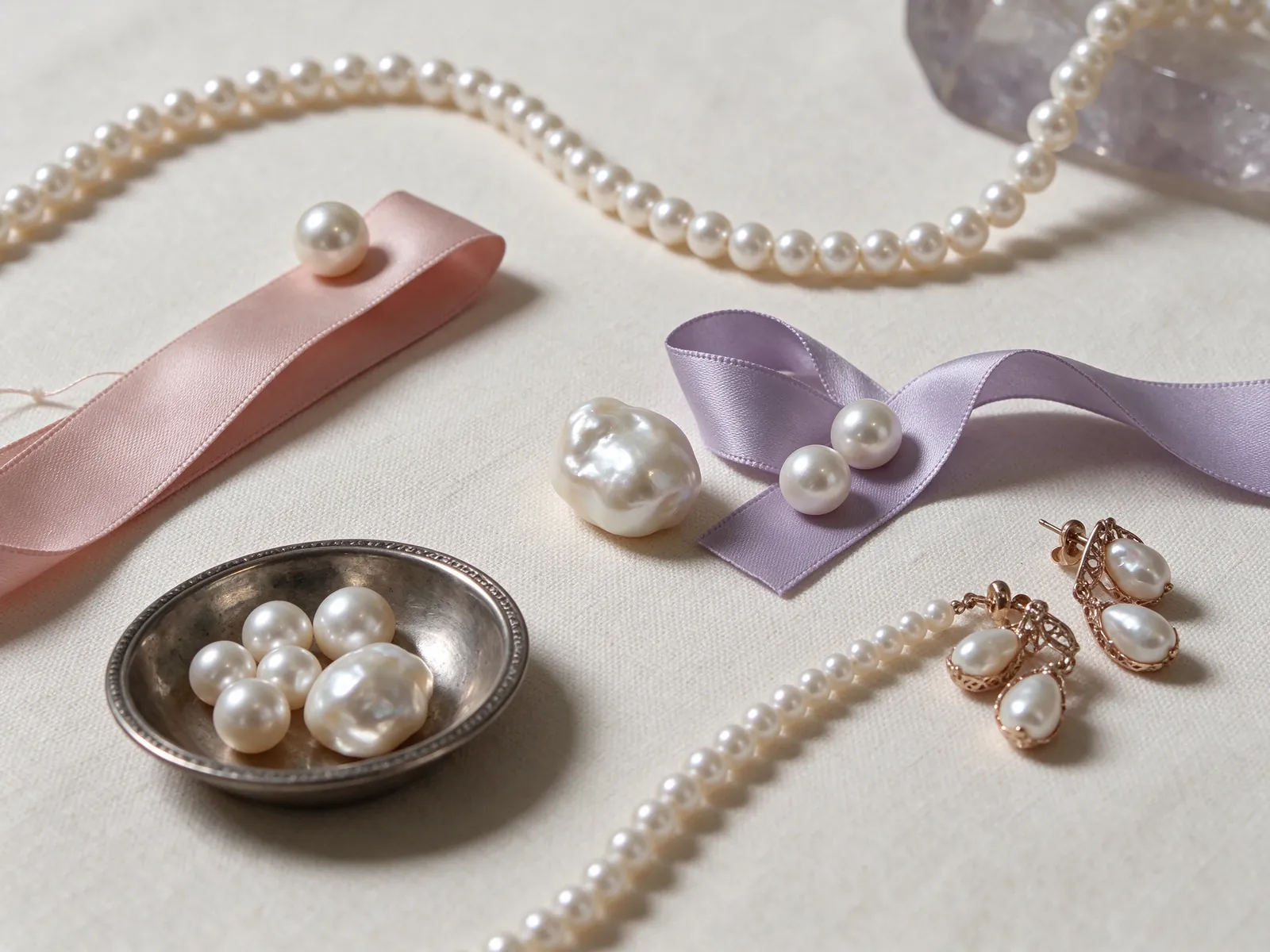
Plan layering around contact points rather than appearance alone
Before layering two necklaces, observe whether their pendants touch during ordinary movement and while seated. Different lengths do not guarantee that the pieces never meet. Begin with the pearl necklace on its own, then add the second piece and check again. If the pendants repeatedly overlap or the chains require constant untangling, separate wear may give a clearer outline and a simpler routine.
If you are also comparing a PT850 pearl bracelet, read its component descriptions independently from those of the necklace. Similar white tones do not establish identical metals. You can coordinate the gentle pearl effect while allowing the pendant to remain the main visual feature. A bracelet's contact with a desk is different from a necklace's contact with a collar, so the practical questions should differ too.
Include scarves, bag straps and hair in the fitting check
Try the everyday movements that bring your necklace near a scarf, shoulder strap or long hair. Notice repeated catching or a chain tail that needs continual rearrangement, without deliberately tugging to test strength. Remove the necklace for sleep, exercise or activities likely to catch jewellery. A useful fitting check concerns normal handling and placement; it does not turn any metal into a guarantee against accidents.

Treat pearl care as part of caring for the complete necklace
A platinum chain does not make the pearl suitable for the chain's cleaning treatment. GIA places pearl at 2.5 on the Mohs hardness scale and states that pearls should never be cleaned with ultrasonic or steam cleaners. The hardness figure explains why gentle handling matters, but it cannot calculate chain strength or establish that a particular metal protects the pearl from scratches.
After wearing, gently wipe the pearl with a very soft, clean cloth. GIA advises avoiding acids, perfume, hair spray and excessive heat. Apply fragrance and finish your hair before putting on the necklace. If the pendant and chain cannot be separated, do not place the complete piece in a cleaning machine merely because the chain is metal. Ask about a method suitable for the assembled construction.
Separate storage and a clasp check support a sensible routine
Store the necklace apart from other jewellery so another metal pendant does not rub against the pearl. Arrange the chain without tangles. Before wearing it again, check that the clasp closes normally and look for obvious changes in links or pendant movement. Stop wearing it if something has changed rather than bending parts back yourself. These observations are useful precautions, not a substitute for professional assessment.

Turn the comparison into a focused platinum consultation
For a discussion with Flint Jewellery, explain whether you prefer single wear or layering, which collars you wear most and whether an existing pendant is part of the question. Flint Jewellery's platinum options are PT900 and PT950. The component-reading approach used in a PT850 comparison remains useful, but it does not imply that the same PT850 chain or another seller's construction can be supplied. Material options are limited to 18K 750 white gold, 18K 750 yellow gold, 18K 750 rose gold, PT950 platinum and PT900 platinum; PT850 is not a Flint material option.
An existing piece can be described through its bail position, clasp shape, usual resting point and any turning or tangling you find inconvenient. Photographs can help explain the outline but cannot by themselves establish metal or pearl identity. Describing the wearing situation you want to improve makes the conversation more productive than asking whether one metal name is simply better than another.
Keep component descriptions separate from personal preferences
Organise your notes into component wording, fitting observations and styling preferences. Record what is said about the chain, clasp and pendant; then note movement and removal; finally describe your preferred neckline position. Do not turn a preference into a quality grade or an unanswered question into a confirmed material. This keeps the discussion centred on the details that actually influence your choice. Contact Flint Jewellery on WhatsApp +85260106207 with your neckline, pendant position and chain-fitting preferences to discuss PT900 or PT950 platinum options.
| Area | Description or fitting check | Styling question | What it does not establish |
|---|---|---|---|
| Chain | Identify wording that describes the chain and its end fitting | Does the chain compete with the pearl? | The metal of every other component |
| Clasp and connections | Understand label scope and normal opening and closure | Does the tail interfere with hair or a collar? | The complete necklace's material or strength |
| Bail or threading route | Check intended removal and clearance for the widest end | Does the pendant turn or ride against clothing? | That apparent sliding means user-removable |
| Pearl | Consider GIA's seven pearl value factors separately | Do lustre and outline suit the intended focal point? | Origin or certification from a metal name |
| Care and contact | GIA gives pearl a Mohs hardness of 2.5; no ultrasonic or steam cleaning | Do layered pendants touch during movement? | That a platinum chain makes a pearl scratch-proof |
Pearl knowledge and authoritative references
GIA describes seven pearl value factors: size, shape, colour, lustre, surface quality, nacre quality and matching across multiple pearls. PT850 metal wording cannot replace pearl evaluation and is not evidence of a Flint product grade or certification.
Read the reference for this factFrequently asked questions
Does a PT850 mark on the clasp describe the pendant as well?
Not by itself. Establish the scope of the clasp mark and read the descriptions for the chain and pendant separately. Similar appearance is not a substitute for component wording or purchase documentation.
Is a chain compatible once it passes through the bail?
Clearance is only one check. Consider the widest end, intended removal route, room for movement and clasp operation. Never force a fitting, and do not treat a successful try-on as a promise against future wear.
Can an adjustable chain solve every neckline problem?
No. Where an adjuster is present, learn its operation and test the necklace with your usual clothing. The pendant can still meet a collar edge, and the remaining chain tail can still interfere with hair or the back neckline.
Can I use a metal cleaning machine for a pearl necklace with a platinum chain?
Do not assume so. GIA states that pearls should never be cleaned with ultrasonic or steam cleaners. Care must suit the pearl and the assembled construction, not only the metal chain.
What platinum options can I discuss with Flint Jewellery?
Flint Jewellery's platinum options are PT900 and PT950. Bring your neckline, layering and component-fitting questions to that discussion. This PT850 comparison does not indicate a Flint PT850 chain offer.
Updated: