
Reading shell-rim colour in silver-lipped vs gold-lipped South Sea pearls: the role of South Sea pearl oyster varieties in understanding white and golden South Sea pearl origins
To discuss the wearing effect of white and golden tones, contact Flint Jewellery on WhatsApp +85260106207. Silver-lipped and gold-lipped oysters are varieties of the same species, Pinctada maxima, rather than two separate species. Start by asking what the name actually describes. WSP distinguishes the silver-lipped oyster by its silvery-white shell rim and the gold-lipped variety by a yellow rim. The feature belongs to the oyster shell; it is not a coloured border that you should expect to find on a loose pearl. This distinction matters when a description moves between oyster terminology and the appearance of jewellery. A variety name gives biological background, whereas a colour description tells you how the pearl looks.
If you are new to the category, what are South Sea pearls provides a useful starting point before this narrower comparison. Keep three questions separate as you browse: which oyster variety is described, what colour does this pearl show, and where was it cultivated? A useful description may address all three, but one answer does not automatically supply the others. In particular, a white-looking photograph is not documentation of a silver-lipped oyster or an Australian cultivation location.
From Australia to Indonesia and the Philippines: why South Sea pearl oyster varieties inform, but do not prove, white and golden South Sea pearl origins when comparing silver-lipped vs gold-lipped South Sea pearls
WSP describes silver-lipped oysters as farmed mainly in Australian waters and gold-lipped oysters as more common around Indonesia and the Philippines. These are general farming patterns, not individual provenance records. If location matters to your purchase, establish whether the place named refers to cultivation, jewellery manufacture or sale, and whether the description concerns your selected pearl rather than the category as a whole.
Assess the pearl’s colour separately from the oyster label
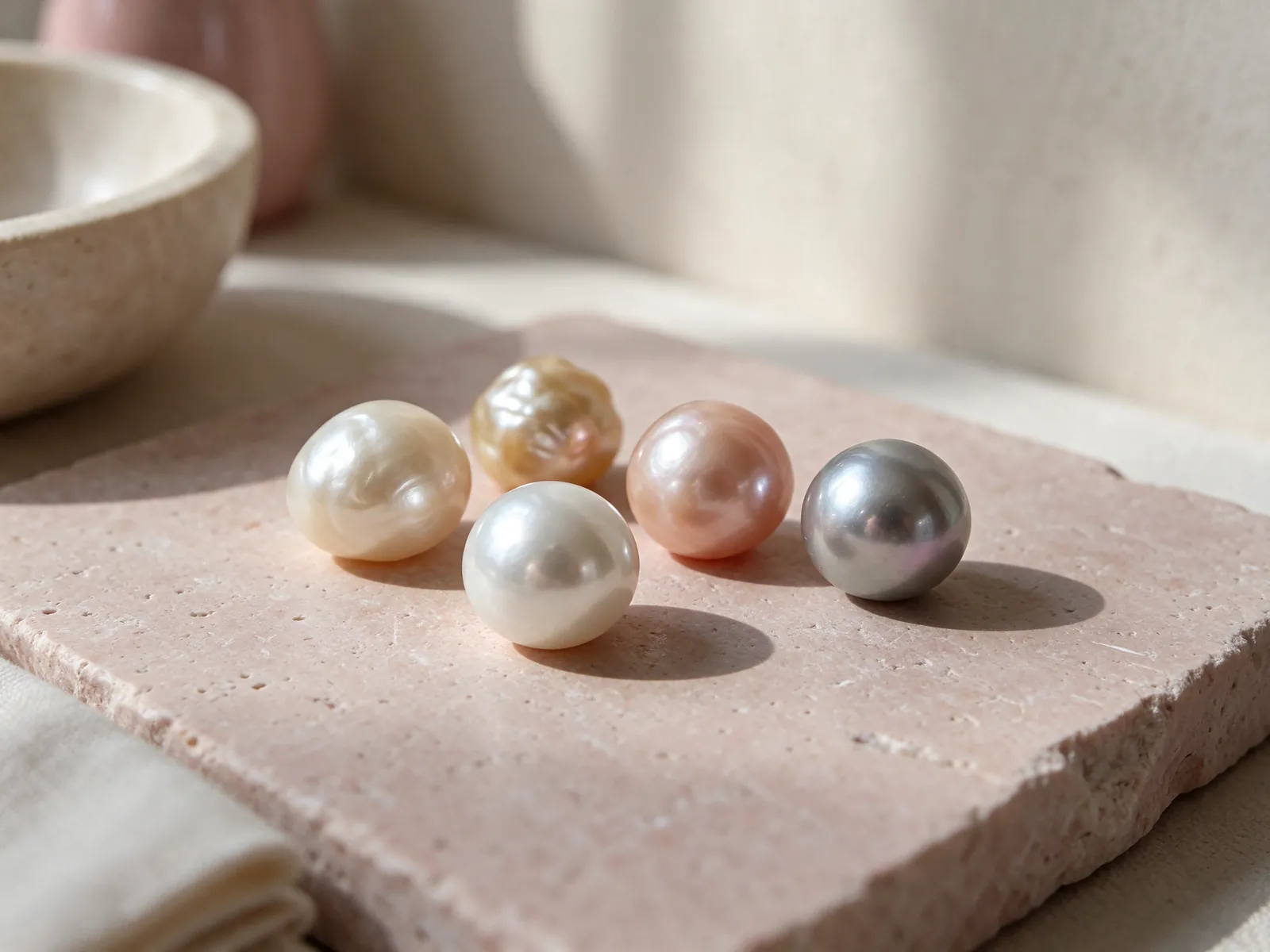
WSP describes silver-lipped oysters as mostly yielding white and silver pearls, while gold-lipped oysters tend towards yellow and gold. These are typical associations, not a way to identify an individual pearl’s variety, origin or treatment status from colour alone. GIA separates pearl colour into bodycolour, overtone and orient, and notes that not every pearl displays all three. For a practical comparison, first identify the main colour across the pearl, then look for additional colour over the surface and changes as you turn it. This is more informative than calling one pearl simply white and another simply gold. It also encourages you to notice whether a warm lamp or a coloured shirt is influencing the reflection you see.
For a closer look at shades, golden pearls addresses colour rather than oyster geography. When comparing candidates, use a similar background and the same light, then check them again in diffuse daylight. Two photographs taken with different lighting cannot offer a fair colour comparison. Try the pearl beside clothing you genuinely wear, not only beside a display cloth. A pleasing contrast with your skin, hair and wardrobe is a personal observation, not a rule dictated by the variety name.
For earrings, compare the pair as well as each pearl
Place both pearls together and look for a comfortable relationship in main colour, lustre and outline. If one seems warmer, swap their positions to check whether the lighting is responsible. Then consider the pair at normal wearing distance: the effect beside your face can be different from a magnified photograph. Matching is about the relationship between the pearls, not just two attractive individual close-ups.

Read cultivation geography without turning it into a quality ranking
The regional association is useful context, but it does not make a country name a shortcut to quality. Pearls described within the same region still need individual comparison. If a listing gives a location prominently but says little about appearance, ask about lustre, shape, visible surface features and matching. Those details help you understand what you will actually see when wearing the jewellery. A familiar place name should not displace the features that matter to your choice.
Read geographical wording in its full sentence. A piece assembled in one place does not necessarily contain a pearl cultivated there, and the seller’s address is not the pearl’s farming location. A clear question is: does this location refer to cultivation or to making the jewellery? Follow it by asking whether the information applies to one pearl, an identified pair or general variety background. This makes a provenance discussion more useful than asking which country always produces the best pearls.
Choose an accurate story when giving a pearl as a gift
You can share the shell-rim distinction and the general farming background as pearl knowledge. Attribute a particular cultivation location to the gift only when its own description supports that location. Otherwise, explain why you chose its colour, outline or effect with the recipient’s style. A thoughtful personal reason does not need a geographical claim to make the gift meaningful.
Use GIA’s seven value factors for a more balanced comparison
GIA identifies seven pearl value factors: size, shape, colour, lustre, surface quality, nacre quality and matching. This framework is more useful than assuming white outranks gold or that one lip variety guarantees a better pearl. Set your viewing priorities according to the jewellery you want. For a single-pearl pendant, the visible outline and lustre may lead the discussion; for earrings, matching also matters; for a multi-pearl piece, look at the relationship across the arrangement.
Look at how clearly light or surrounding objects are reflected rather than judging lustre only by the brightness of a photograph. Turn the pearl to see where surface features sit relative to the intended wearing position. A regular outline may suit a neat look, while an irregular outline can become a deliberate design feature. Nacre quality is a separate factor: a front-facing photograph cannot give you a nacre-thickness measurement. Keep visual observations distinct from information that needs another basis.
Relate any stated size to the whole piece
A pearl’s stated diameter is not the total size of an earring or pendant. Consider the setting, the position beside the ear or neckline, and whether hair will obscure the pearl. A larger pearl is not automatically the better everyday choice. Use dimensions, where provided, to understand proportion in your own wardrobe rather than treating size as a score.

Build a styling decision from your wardrobe and metal colours
Begin with familiar clothes. A white-toned pearl against a white shirt may create subtle layers, while a darker top can make its outline easier to see. A golden-toned pearl beside warm beige may blend softly or need more contrast, depending on the effect you want. Try navy or black as another reference. These are ways to explore a look, not instructions that every person with a particular skin tone must choose a particular pearl colour.
The surrounding metal colour can also change the overall impression. For a styling discussion, the material names to compare are 18K 750 white gold, 18K 750 yellow gold, 18K 750 rose gold, PT950 platinum and PT900 platinum; check the individual piece’s description for its actual material. If you normally mix metal colours, include your usual jewellery in the comparison. An editorial styling image can help communicate an idea, but it cannot establish the oyster variety or availability of the depicted arrangement. Let the visual preference and the pearl description remain separate.
Office earrings and an evening pendant need different tests
For office earrings, look at the outline with your everyday hairstyle and clothing. For an evening pendant, check neckline height, fabric sheen and nearby accessories together. An already detailed outfit may suit a quieter pearl effect, whereas a plain outfit can make a distinctive colour or shape the focal point. The occasion offers a clearer styling guide than cultivation geography.
Keep this oyster comparison separate from other pearl categories
Silver-lipped versus gold-lipped is a comparison within South Sea oyster varieties, not a system for classifying every light or dark pearl. If your shortlist includes dark pearls, what are Tahitian pearls introduces a different category before you compare actual colour, lustre and design use. Do not transfer the yellow shell-rim description to every warm-looking pearl. Equally, a dark appearance does not by itself supply an origin or a variety name.
For a wider buying question, freshwater vs saltwater pearls may be more relevant than the distinction between these two lip colours. The pearl types guide can help you organise the categories first. Keep a simple shortlist with separate notes for category background and visible appearance: one records variety and cultivation information, the other records lustre, outline and styling preferences. That separation prevents unlike terms from becoming an artificial ranking.
A colour name is useful, but it is not an identity record
Tahitian pearls vs other black pearls explores another example of why appearance and identity need separate attention. Apply the same reading habit here: white is a colour observation, not proof of a silver-lipped oyster, and gold is not a cultivation address. Use colour descriptions for visual decisions, then ask the appropriate questions when variety or origin matters.

Make the final choice practical, then plan everyday care
Before comparing pearls, write down your main purpose: daily earrings, a pendant for a particular neckline, or a gift with a clear style direction. View candidates under comparable light, turn them to understand the surface, and consider their effect when worn. Ask about oyster variety and cultivation wording as separate topics. When two pearls have different strengths, return to the purpose rather than looking for an undefined highest grade that supposedly settles every preference.
Care should not be based on an assumption that white or golden pearls are inherently the tougher choice. GIA recommends a very soft clean cloth after wearing and avoidance of acids, perfume, hair spray and excessive heat. Pearls should never go into ultrasonic or steam cleaners. Finish perfume and hair styling before putting them on, and store them so they do not rub against other jewellery. These habits offer a useful daily routine without attaching a durability promise to either oyster variety.
Describe the effect you want when discussing pearl choices
A discussion with Flint Jewellery can begin with concrete preferences: a soft blend or visible contrast, a regular outline or a distinctive shape, and the occasions you expect to wear the piece. Add any question about oyster variety or cultivation region separately. This gives the conversation a clear direction without turning general pearl knowledge into assumed specifications for an individual design. To discuss your preferred pearl tone and intended occasion, contact Flint Jewellery on WhatsApp +85260106207.
| Comparison point | Silver-lipped background | Gold-lipped background | Practical use | Not established by this alone |
|---|---|---|---|---|
| Species and variety | Pinctada maxima, silver-lipped variety | Pinctada maxima, gold-lipped variety | Understand that both belong to the same oyster species | The oyster record for an individual item |
| Oyster shell rim | Silvery white | Yellow | Check whether wording describes the shell or the pearl | Every aspect of the pearl’s colour |
| General farming geography | Mainly Australian waters | More common around Indonesia and the Philippines | Understand the category before reading individual provenance | An individual pearl’s cultivation location |
| Typical pearl colours | Mostly white and silver | Tends towards yellow and gold | Separate general colour associations from the actual pearl | Individual variety, origin or treatment status |
| Visible appearance | Observe the actual pearl | Observe the actual pearl | Compare under the same background and light | Variety or treatment status |
| Quality framework | GIA’s seven value factors | GIA’s seven value factors | Include matching when choosing a pair | A quality ranking based on lip colour |
| Styling | Try with your usual wardrobe | Try with your usual wardrobe | Consider neckline, hair and surrounding metal colours | A universal colour rule for every wearer |
Pearl knowledge and authoritative references
GIA identifies seven pearl value factors: size, shape, colour, lustre, surface quality, nacre quality and matching. They provide a shared framework for comparing pearls described with silver-lipped or gold-lipped backgrounds.
Read the reference for this factFrequently asked questions
Does silver-lipped refer to a silver-coloured line on the pearl?
No. In this comparison it describes the oyster’s silvery-white shell rim. The pearl’s visible colour should be described and assessed separately; the shell feature is not a border you should expect to see on jewellery.
Can a golden-looking pearl establish an Indonesian or Philippine origin?
No. WSP describes gold-lipped farming as more common around Indonesia and the Philippines, but that regional pattern is not a record for an individual pearl. Read cultivation wording specifically associated with the selected pearl, rather than inferring location from colour.
Should I choose an oyster variety before choosing earrings?
You can start with your priorities. If the wearing effect leads your decision, compare the pair’s colour, lustre and outline first. If variety or cultivation background is important, ask about it separately. Neither approach removes the need to look at the actual pair.
Does one lip variety guarantee better lustre?
The variety label alone is not a lustre assessment. GIA includes lustre among seven pearl value factors. Compare reflection clarity under similar lighting and consider surface, shape and matching alongside it rather than treating white or gold as a quality grade.
Do white and golden pearls need different ultrasonic-cleaning settings?
Neither should be cleaned ultrasonically or with steam. GIA recommends a very soft clean cloth after wear and avoiding acids, perfume, hair spray and excessive heat. Pearl colour does not create an exception to those care instructions.
Updated: