

What can a silver pearl pendant, sterling silver pearl pendant or 925 silver pearl pendant label tell you about the metal, not the pearl?
A silver pearl pendant description can bring several components under one short name. The pendant body, bail, chain and clasp still need to be understood individually. Sterling silver pearl pendant and 925 silver pearl pendant are metal-led descriptions; neither phrase establishes the pearl's identity, origin or quality. Begin by checking whether the listing concerns a pendant top or a pendant supplied with a chain, rather than assuming a complete necklace.
It also helps to separate wanting silver as a material from wanting a pale, silvery appearance. The first preference directs attention to metal descriptions and care; the second invites a wider discussion of colour and design. If you plan to reuse a chain, the pearl pendant without chain guide helps clarify whether a description concerns the top alone or a complete combination.
How do you check the pendant and chain separately in a silver pearl pendant, sterling silver pearl pendant or 925 silver pearl pendant description?
Make two short notes: one for the pendant and bail, another for the chain and clasp. Record what each description actually says, including whether a chain is included and whether the top is removable. If only the pendant material is named, do not fill in the chain material yourself. Ask the seller about the particular component rather than asking whether everything is silver.

Look at the pearl independently of the metal colour
A pearl beside pale metal may look warm, cool or more strongly contrasted depending on lighting and clothing. GIA distinguishes bodycolour, overtone and orient, and notes that not every pearl displays all three. Compare photographs with attention to their backgrounds and lighting. A creamy appearance under warm light is not enough to identify a pearl type, and a bright reflection is not a certificate of quality.
GIA describes seven pearl value factors: size, shape, colour, lustre, surface quality, nacre quality and matching. For a single pendant, examine the face presented to the viewer and the relationship between its outline and the setting. These factors offer a way to describe differences, not a licence to assign a grade from a photograph. The word silver says nothing about those pearl characteristics. Matching mainly concerns multi-pearl jewellery, rather than a pendant with one pearl.
Separate the pendant silhouette from the pearl shape
A vertical outline draws the eye differently from a compact, rounded arrangement. Look first at the overall pendant, then at the pearl itself, and finally at the space between the pearl and bail. A shape can suit your style without proving origin or natural-versus-cultured identity. If a particular pearl characteristic matters to you, look for the information attached to that individual piece.

Try the pendant with the clothes you actually wear
For a V-neck, check whether the pendant sits comfortably within the opening rather than meeting the fabric edge. With a round neckline, decide whether you prefer a clear position on skin or a deliberate position over fabric. A pendant resting on the boundary may move between the two as you walk. There is no single chain length that produces the same result on every wearer.
With a shirt, notice whether the pendant overlaps the button line. With knitwear, inspect the contact between textured fabric and projecting parts of the setting. Patterned clothing raises another question: does the pearl remain visually distinct against the print? If you wear earrings as well, choose which piece should lead the look. Matching metal colours need not mean giving every accessory equal visual emphasis.
Check a layered look while sitting and moving
Layering should work beyond a still mirror view. Sit down, turn and look down to see whether chains cross or the pendant touches another metal piece. Distinct resting positions can make a simpler arrangement more legible. If pieces repeatedly rub together, wearing them separately may be more practical than maintaining the layered look. Choose spacing through a real fitting rather than copying a photograph.
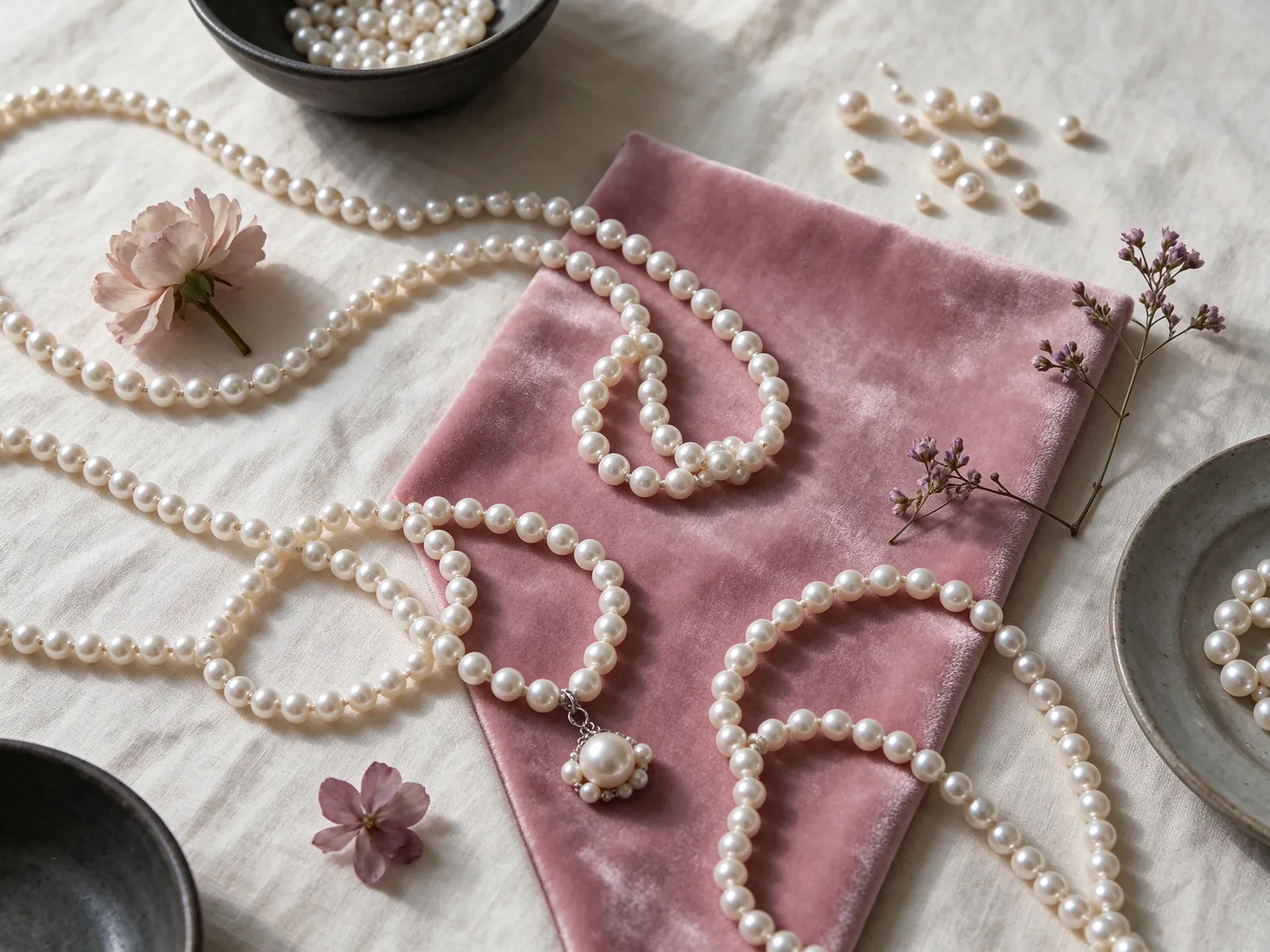
Inspect the bail and clasp before reusing a chain
A removable pendant is only useful with your existing chain if the parts fit together. The chain end and clasp must pass through the bail, not merely the narrow chain body. Look at the bail's opening and direction without forcing anything through it. Bringing the actual chain to a fitting discussion answers more than naming its style or assuming that a fine-looking chain will work.
Check whether the pendant turns over, whether the bail presses it towards clothing and whether the clasp is manageable with your usual hand movements. The PT850 pearl pendant necklace topic can help with reading another chain-material label; it is a comparison subject, not a Flint material option. A pendant's title does not establish the material or compatibility of a separate chain.
Observe whether the front stays where you want it
Look from the front and side, then turn gently and see how the pendant settles. This is particularly useful when the design has a distinct front and back. The exercise assesses wearing appearance, not structural lifetime. If a component feels loose or behaves unusually, stop wearing it and seek an appropriate jewellery professional's advice rather than tightening the chain to disguise the problem.

Compare material directions without changing the pearl question
If the attraction is a pale metal look, compare the considerations for an 18K gold pearl pendant and a platinum pearl pendant before deciding that silver must be the material. Start with your priorities: colour, silhouette, an existing chain or the care routine. Flint Jewellery's material discussions concern 18K 750 white, yellow or rose gold, PT950 and PT900 platinum. Silver and 925 remain informational comparison subjects here.
Changing a metal description does not automatically change the pearl's quality in the same direction. Keep separate notes for pearl appearance, metal wording, construction and neckline placement. If your search also includes a 10K gold pearl pendant, read that as another naming comparison rather than an alternative Flint product. There is no need to assume the same design exists in every material to make a useful comparison.
Describe the effect rather than only asking for silver colour
Explain whether you want the metal to recede beside the pearl, which neckline you wear most and whether a particular chain needs to be retained. Warm-coloured clothing can also be part of the discussion rather than a reason to rule out a metal in advance. These details make it easier to compare the silhouettes and wearing arrangements that suit your preferences.

Protect the pearl before considering metal cleaning
A pendant combining pearl and metal cannot be cleaned solely according to its metal label. GIA gives pearl a Mohs hardness of 2.5 and says never to use ultrasonic or steam cleaners. A method suitable for a metal-only object is not automatically suitable for a pearl pendant. Avoid immersing the whole piece in silver-cleaning solutions or trying aggressive cleaning close to the pearl.
After wearing, use a very soft, clean cloth to wipe the pearl gently. GIA advises avoiding acids, perfume, hair spray and excessive heat. Completing your perfume and hair routine before putting on jewellery helps reduce direct contact. Store the pendant separately from harder or pointed pieces that could rub against it. These habits protect the pearl; they do not promise permanent metal colour or a fixed repair outcome.
Respond to a change in appearance without improvising
If silver components change in appearance, describe the pearl connection and affected area to the seller of that piece or a suitable jewellery professional. Access for cleaning varies with construction. Check the bail and clasp as well as the visible surface. A loose pearl, bent part or unusual mark calls for assessment, not an assumption that everything can be treated as ordinary dirt.
Turn a gift idea into a practical wearing brief
For yourself, begin with your usual neckline, layering habits and whether you change chains. For a gift, find out whether the recipient enjoys necklaces, which metal colours they prefer and how they store jewellery. Age or height alone is not enough to select a chain position. Clarifying pendant-only versus pendant-with-chain needs avoids relying on an existing chain that may not fit.
Someone who wears jackets but rarely necklaces may prefer a different accessory. Compare the wearing considerations for a silver pearl brooch before settling on a pendant: a brooch involves fabric and fastening position, while a pendant involves a chain and neckline. The shared word silver does not make their practical requirements identical. A thoughtful brief starts with the recipient's habits, not an assumed symbolic or therapeutic effect.
Ask three kinds of questions before choosing
Group your final questions around component materials, stated pearl information and wearing or cleaning needs. Apply the answers to the clothes and routines you have in mind. If the pearl's identity or a document is important, appearance cannot fill an information gap. Enjoying a silhouette and understanding the individual piece are separate steps, and both deserve attention before a decision. To discuss your neckline, preferred silhouette and existing chain, contact Flint Jewellery on WhatsApp +85260106207 about 18K 750 white, yellow or rose gold, PT950 and PT900 platinum.
| Reading point | What to distinguish | Practical reason |
|---|---|---|
| Silver or 925 wording | Metal information versus pearl details | Clarify material preference versus colour preference |
| Pendant and chain | Bail, chain end and clasp as separate components | Assess whether an existing chain can be used |
| Pearl appearance | Lustre, surface, shape and colour independently of metal | Compare the visible face against your clothes |
| Neckline and movement | Resting position, turning and contact with other pieces | Check the look while sitting and walking |
| Cleaning | Pearl care versus metal-only cleaning methods | Avoid ultrasonic, steam and unsuitable solutions |
Pearl knowledge and authoritative references
GIA describes seven pearl value factors: size, shape, colour, lustre, surface quality, nacre quality and matching. Matching mainly concerns multi-pearl jewellery. These factors provide an observation framework, not a Flint product grade or certification.
Read the reference for this factFrequently asked questions
Does sterling silver tell me whether a pearl is natural or cultured?
No. It is metal wording, not a pearl identity statement. Shape, colour and a silver label cannot establish natural-versus-cultured identity. Look for the pearl information attached to the individual piece rather than drawing an identity conclusion from its appearance.
Can I put a removable pendant on any chain I already own?
Not necessarily. The chain end and clasp must pass through the bail, and the pendant should settle in a suitable direction. A fine chain body alone does not establish fit. Use the actual chain to check compatibility and never force parts through the opening.
How should I choose between wearing the pendant on skin or over clothing?
Try both with your usual necklines. A clear position within an opening or fully over fabric can be easier to maintain than a position on the fabric edge. Check while sitting and moving; chain length and pendant proportions affect each wearer differently.
Is polishing the silver enough to care for the whole pendant?
No. The pearl needs its own care approach, and metal cleaning methods may be unsuitable near it. GIA advises a very soft, clean cloth after wearing and prohibits ultrasonic or steam cleaning of pearls. Seek advice for the particular construction before treating the metal.
What material directions can I discuss with Flint Jewellery?
Flint Jewellery's options are 18K 750 white, yellow or rose gold, PT950 and PT900 platinum. This silver page is a naming and wearing comparison, not a silver product offer. Bring your preferred silhouette, neckline and existing-chain needs to a discussion of those material directions.
Updated: