

Colour and proportion in a pearl and sapphire pendant: finding balance in a sapphire pearl pendant or a pearl pendant with sapphires
Ask about pendant selection on WhatsApp +85260106207. Start by deciding which element you want to notice first. A pearl and sapphire pendant can place the pearl at the centre of attention, with sapphire providing a small coloured accent, or give the gemstone a stronger role. Stone count alone does not describe that balance: a small dark area may attract more attention than a larger pale one. Compare the silhouette with a simpler pearl pendant, then consider what the sapphire adds to the focal point rather than selecting by your favourite blue alone.
Look at the piece against a plain top in gentle daylight and the indoor lighting you normally use. Notice whether the pearl retains a clear reflection, whether the sapphire becomes difficult to see and whether the metal border competes with both. A phone photograph can help you remember a combination, but automatic colour adjustment may change its appearance. Check the pendant at ordinary conversation distance as well as close up, separating the effect of the whole necklace from your inspection of individual details.
Trying on a pearl and sapphire pendant: does a sapphire pearl pendant or a pearl pendant with sapphires sit well with your neckline?
Wear a familiar top, stand naturally, then sit down and turn your shoulders. Check whether the pendant remains visible, catches the neckline or turns away from the front. With a V-neck, compare its position with the centre of the opening; with a round neck, look for a distinct space between pendant and fabric edge. The length of the pendant itself affects where it finishes, so chain length is only part of the decision. Choose for the neckline and posture you use most often.

Read the outline, then inspect the setting from the side
A sapphire pearl pendant may lead the eye downwards or create an off-centre arrangement beside the pearl. Temporarily cover the chain and inspect the pendant on its own: can you distinguish the pearl, gemstone and spaces between them, or does the setting divide the outline into too many small details? If you enjoy more open shapes, the crescent moon pearl pendant guide offers another way to think about curved lines and negative space. Use that comparison to identify a preference, not to assign a fixed personality to a shape.
From the side, examine how the gemstone setting, pearl and bail sit in relation to one another. During a try-on, notice whether the pendant tilts noticeably or projects away from the body. A detailed front view does not tell you how smoothly the piece rests against clothing, while a deliberately dimensional shape may work well with a simple outfit. Gently feel the outer edges and ask about any projecting areas that need care, particularly if you regularly wear knitted tops or scarves.
Observe gemstone movement and pearl reflections separately
Turn the pendant slowly. First follow the changing light and dark areas of the sapphire, then look at the clarity of the pearl's reflection. These are different visual effects; they do not need to appear equally bright at every angle. Ask which face of the gemstone is intended to be seen when worn. If your favourite effect appears only under a concentrated display light, view the piece in ordinary lighting before deciding whether it suits the occasions you have in mind.
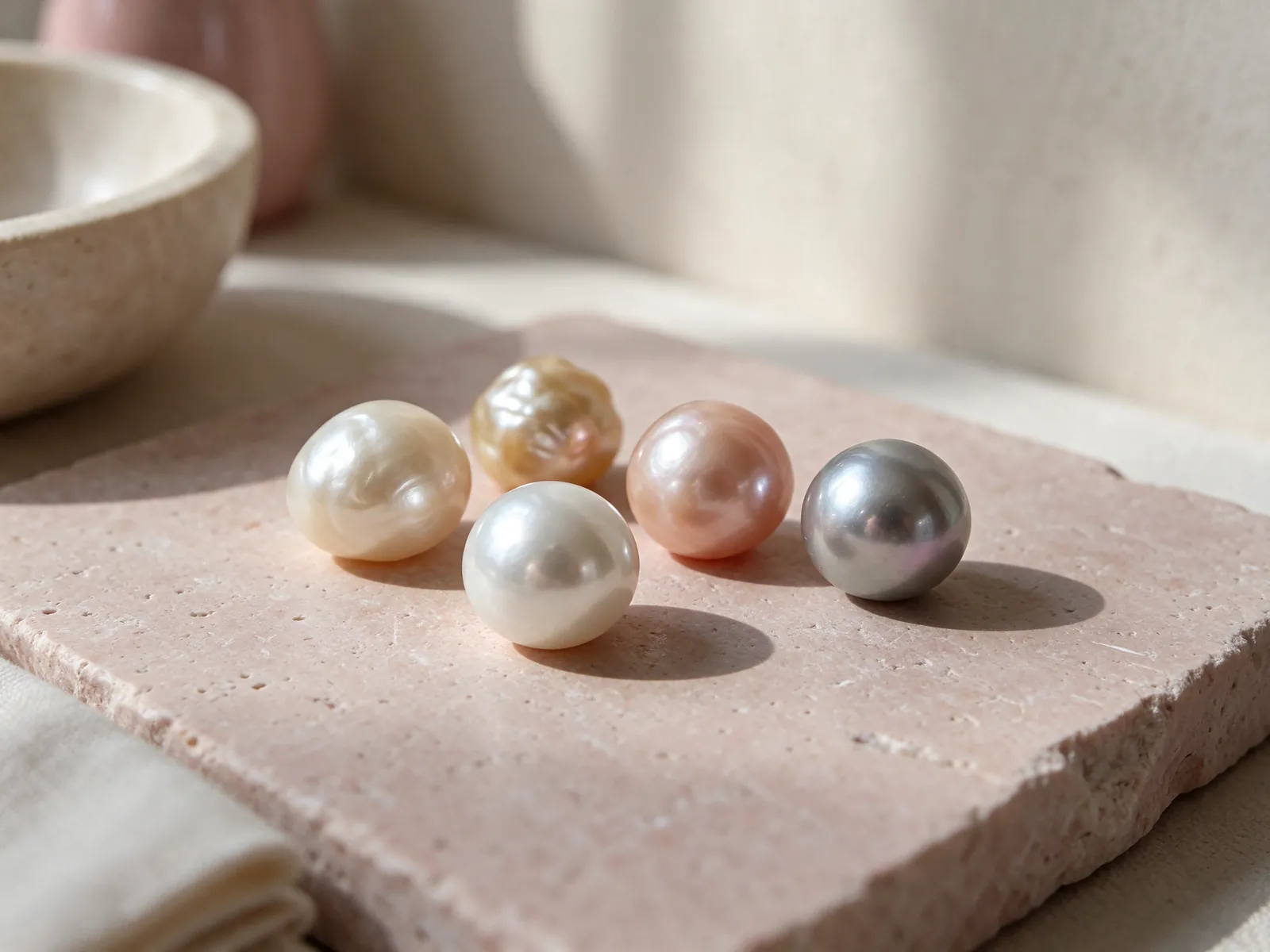
Compare the complete footprint, not isolated size numbers
The apparent size includes the bail, metal surround, sapphire and spacing, not only the pearl. Ask for the pearl measurement and the overall pendant height and width separately, including whether the height includes the bail. For a quieter everyday look, consider the visual spacing discussed in the dainty pearl pendant guide, then assess whether adding colour changes the impression. A smaller pearl beside a prominent sapphire need not look more restrained than a larger pearl worn alone; contrast and the complete outline both matter.
Let the pendant hang naturally and check whether it keeps its front facing outwards. Sit down to see if it rests awkwardly at a collar edge or clothing fold. Sapphire carat weight and a pearl measurement in millimetres describe different things and cannot be compared as if they were one size scale. Ask for the complete dimensions instead of estimating pendant length from carat weight. When choosing a gift, observe the recipient's normal necklace position and clothing habits rather than assuming that larger always feels more special.
When is a more concentrated focal point useful?
A printed blouse, decorative collar or prominent buttons already introduces several points of interest. Try a more compact outline and a clearly readable gemstone arrangement so that the pendant has its own space. If you also wear noticeable earrings, remove the other jewellery first and add it back one piece at a time. The aim is not to make every accessory tiny; it is to establish an order of attention and decide whether the sapphire remains the colour accent you intended.

Read pearl information and sapphire information as separate descriptions
For a pearl pendant with sapphires, ask for a description of each gem rather than treating the whole piece as one identity. For the pearl, ask about type, natural or cultured identity, dimensions and disclosed treatments. For the sapphire, ask about the stated gemstone identity, natural or laboratory-grown status and disclosed treatments. Appearance alone cannot answer these questions. GIA describes seven pearl quality factors: size, shape, colour, lustre, surface quality, nacre quality and matching. Use them to structure your observation of the pearl, alongside your assessment of the design. Matching is principally relevant to multiple-pearl arrangements; it does not require a single pearl and its accompanying sapphire to share the same appearance.
When documentation accompanies a piece, establish which pearl or gemstone it describes and what the document actually records. The pearl pendant with GIA certificate topic explains why the report's wording matters more than a familiar institution name. Do not assume that every component of the necklace has the same assessment. Compare identifying details, such as the object description and measurements, with the item being considered, and ask how any additional statement about origin or quality is supported if it is not recorded in that document.
A pearl label does not identify the accompanying sapphire
If you encounter the term Kingfisher certified pearl jewellery, first understand the scope and wording of the relevant document. A label concerning a pearl cannot automatically answer questions about a sapphire's identity, treatment or origin; a sapphire document likewise cannot establish the pearl's identity. Place the two descriptions side by side to spot unanswered questions. Documentation helps you understand the object, but it does not replace checking the setting, trying on the necklace or considering whether its care requirements suit your routine.
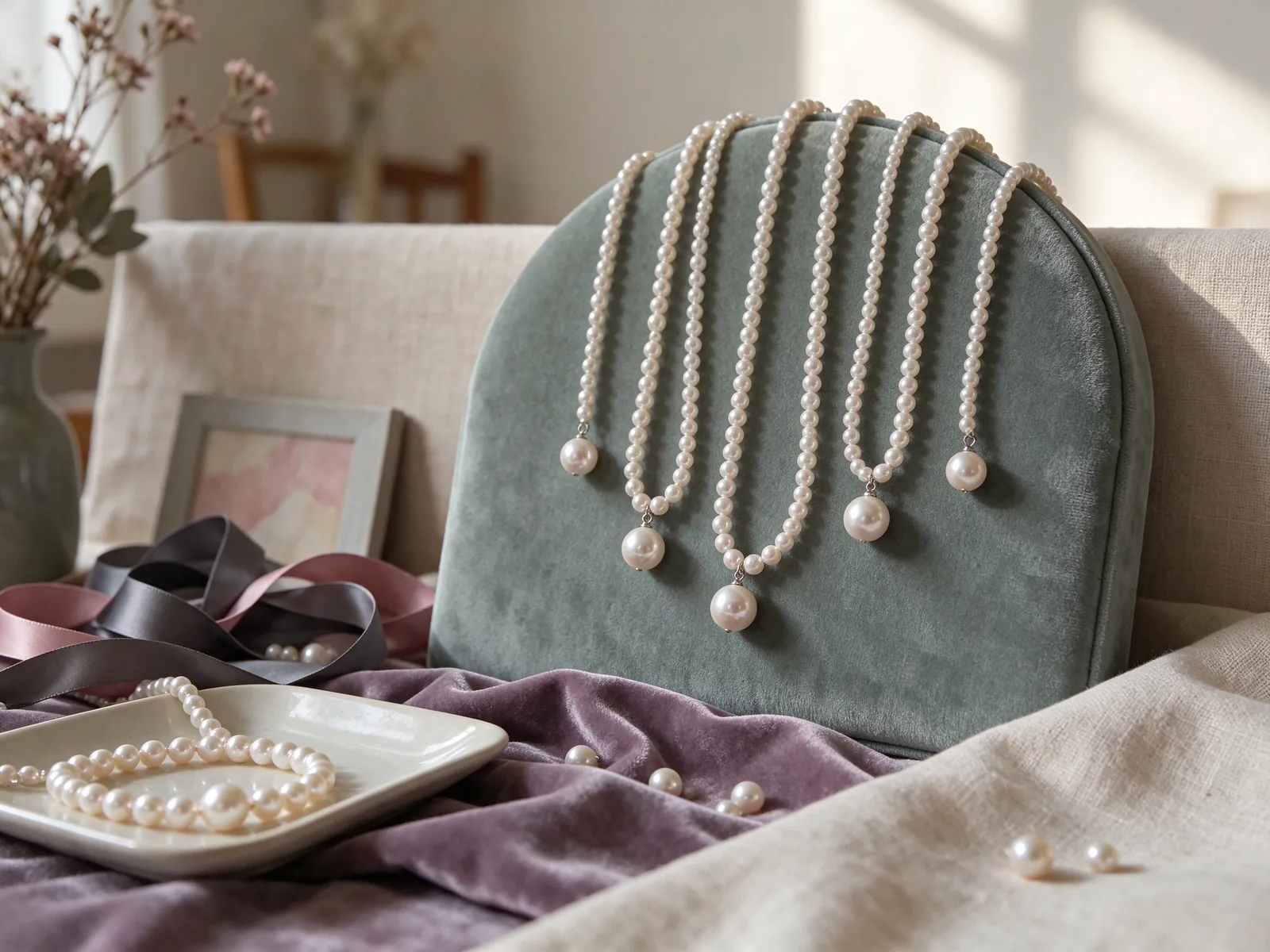
Check chain compatibility before settling on the metal colour
Ask whether a chain is included and whether the pendant can be removed. If you plan to use an existing chain, check that its clasp passes through the bail and that the chain moves freely when worn. A chain strand fitting through the opening is not enough: the clasp may be the wider part. Discuss the chain's thickness and its suitability for the pendant's weight, and try the fastening yourself. A configuration that looks elegant is less useful if you cannot comfortably put it on without help.
Metal colour creates a visual transition between the pearl, sapphire and clothing. A cooler-looking border can make the colour contrast clearer, while a warmer border may echo cream or beige fabrics; judge the effect against your own wardrobe. If discussing metal choices, distinguish the material description from your colour preference. The five options to consider are 18K 750 white gold, 18K 750 yellow gold, 18K 750 rose gold, PT950 platinum and PT900 platinum. A material choice alone does not establish the configuration of a particular pendant.
Test the wearing position with your usual movements
Try the necklace seated as well as standing, then add a jacket and see whether the lapels hide the sapphire. If the chain offers adjustable positions, compare each one and notice whether the fastening moves towards the front. A lower position may rest against fabric, while a shorter one brings the pendant closer to the neck and collar edge. Neither is automatically better. The useful choice balances your usual clothing, natural movement and a fastening arrangement that you can operate comfortably.

Give the blue accent space in workwear and evening outfits
With a white work shirt, try an open neckline to see whether the pearl and sapphire are fully visible. If you prefer a buttoned collar, check whether wearing the pendant over the shirt puts it against a button. With a navy top, matching the sapphire exactly to the fabric is not essential; look instead at whether the pearl separates the colours and keeps the outline readable. Grey and warm ivory can be useful comparison backgrounds, but choose around the clothes you actually wear rather than building a new wardrobe for one necklace.
For dinner or a gathering, let the pendant be the main point of interest near the neckline and start with simpler earrings. If you add another necklace, check whether the chains twist together or another charm touches the pearl, then repeat the check while seated. There is no need to repeat blue in every accessory. Neutral shoes or a bag can leave the gemstone colour clear. Think about the rhythm of the outfit and the spacing between pieces, rather than requiring an exact colour match throughout.
Ask gift questions about habits rather than symbolism
Useful questions include whether the recipient wears necklaces near the collarbone or lower down, prefers symmetry or an off-centre shape, and fastens chains independently. If a shared try-on is not possible, ask about common necklines and daily activities instead of only asking whether she likes blue. Find out whether she already has a suitable chain and is comfortable avoiding perfume contact and storing the pendant separately. Practical preferences help narrow the choice without assigning personality traits or promised effects to a gemstone.

Care for the combined piece with the pearl in mind
Do not choose a cleaning method only because the pendant contains a sapphire. GIA places pearl at 2.5 on the Mohs hardness scale and states that pearls should never be cleaned with ultrasonic or steam cleaners. That number does not guarantee the durability of the complete pendant or predict how it will respond to a knock. After wearing, gently wipe the pearl with a very soft, clean cloth. Avoid acids, perfume, hair spray and excessive heat, and follow instructions appropriate to the whole piece for the chain and setting.
Store the pendant separately from other jewellery so that clasps or gemstone edges do not rub against the pearl. Avoid strong cleaning products and do not adjust claws yourself with tools. If you notice a changed pearl position, a distorted bail or an obviously loose gemstone, stop wearing the piece and seek an inspection rather than waiting for a component to fall out. When changing jackets or carrying a shoulder bag, notice whether clothing or straps pull on the chain and take care to avoid accidental tugging.
Bring five decisions together at the final try-on
Before deciding, check the colour in ordinary light, the position with a familiar neckline, the separate pearl and sapphire descriptions, the chain and bail fit, and whether the care routine is realistic for you. Keep these answers together when comparing designs so that a display photograph does not become your only memory. If two directions still appeal, identify the occasion when you would wear the pendant most, then return to that occasion's clothing and movements to make the comparison more concrete. For questions about choosing a pearl and sapphire pendant, contact WhatsApp +85260106207.
| Area to compare | Close-up observation | Try-on check | Wardrobe question | Ask before buying |
|---|---|---|---|---|
| Colour and lustre | Separate pearl reflections from sapphire light and dark areas | Turn the pendant in ordinary indoor light and gentle daylight | Is the outline clear against a familiar top? | How does the photograph compare with the piece in person? |
| Complete proportions | Include the bail, setting and spaces between gems | Compare standing and seated positions | Does it overlap a button or collar edge? | Does overall height include the bail? |
| Chain configuration | Check whether the clasp passes through the bail | Fasten it, turn and add a jacket | Does the chain visually suit the pendant? | Is a chain included, and is the pendant removable? |
| Gem descriptions | Read pearl and sapphire information separately | Compare document descriptions with the object | Documentation does not replace a try-on | Are identity and treatments clearly disclosed? |
| Care and storage | Keep the pearl away from rubbing clasps and other gems | Wipe gently with a very soft, clean cloth after wearing | Can you avoid perfume and hair spray contact? | Which cleaning method is suitable for the complete piece? |
Pearl knowledge and authoritative references
GIA describes seven pearl quality factors: size, shape, colour, lustre, surface quality, nacre quality and matching. These provide a framework for observing the pearl separately from the design of a combined pendant. Matching is principally relevant to multiple-pearl arrangements; it does not require a single pearl and its accompanying sapphire to share the same appearance.
Read the reference for this factFrequently asked questions
Should the sapphire be as noticeable as the pearl?
Not necessarily. You may prefer the pearl to lead with sapphire as a colour accent, or a stronger gemstone outline. Compare what attracts your eye first against your usual clothing. The useful balance is the one that suits your intended outfit, not equal prominence for every component.
Does a higher sapphire carat weight mean a longer pendant?
No. Carat weight describes gemstone weight, not pendant length. Ask separately for the pearl measurement and the complete pendant dimensions, including whether the bail is included in the height. A try-on also shows how the setting and spaces between components affect its apparent size.
Can I reuse a chain I already own?
Check that the clasp, not only the chain strand, can pass through the bail and that the combination moves freely. Also discuss chain thickness, the pendant's weight and the fastening arrangement. Confirm whether the pendant is removable and whether a chain forms part of the purchase.
Does a pearl document also describe the sapphire?
Only the document's actual wording can establish what it covers. A pearl description does not automatically establish the sapphire's identity, treatment or origin. Read the descriptions of both gems separately and match the identifying information to the piece being considered.
Can I use an ultrasonic cleaner because the piece contains sapphire?
No. GIA states that pearls should never be cleaned in ultrasonic or steam cleaners. The presence of sapphire does not remove the pearl's care needs. Gently wipe with a very soft, clean cloth after wearing and follow cleaning guidance suitable for the complete setting.
Updated: