
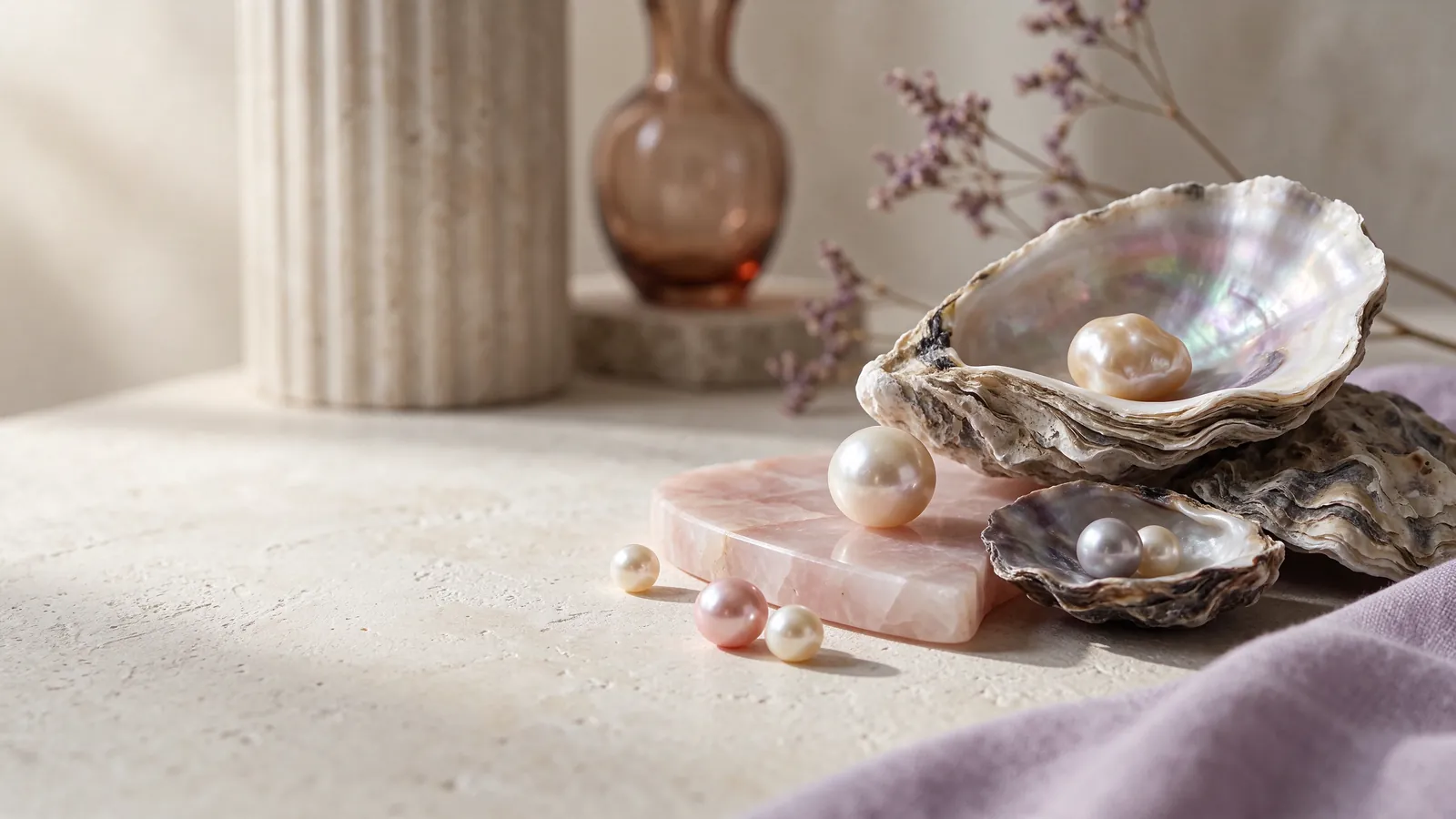
Growing environments explain the difference between freshwater and saltwater pearls: freshwater vs saltwater pearls across saltwater cultured pearl types
Freshwater pearls come from mussels living in rivers and lakes, while Akoya pearls are cultured in saltwater oysters. This distinction tells you about a growing environment. It does not tell you whether an individual pearl has the appearance you prefer, or whether a finished piece will suit your wardrobe. Use the pearl types guide to place the categories in context, then return to the particular pearls and jewellery you are considering.
The word saltwater is not proof of natural formation without human intervention, and freshwater is not a quality grade. When a description uses either term, ask what other information accompanies it: the specific category, formation identity and individual qualities. A broad environment label and a detailed pearl description are not equivalent pieces of information. Separating them makes comparisons clearer and helps you avoid choosing on the strength of a category name alone.
Within saltwater cultured pearl types, how does Akoya illustrate the difference between freshwater and saltwater pearls in a freshwater vs saltwater pearls comparison?
GIA lists four major types of whole cultured pearls: Akoya, South Sea, Tahitian and freshwater. Akoya offers a concrete example of saltwater pearl culture, but it is not another name for every saltwater pearl. South Sea and Tahitian are also saltwater cultured categories. Learn the broad distinction first, then identify the particular type. For earrings or a pendant, the relevant next step is to inspect the pearl's visible qualities and its relationship with the setting, rather than applying an impression of Akoya to all marine pearls.
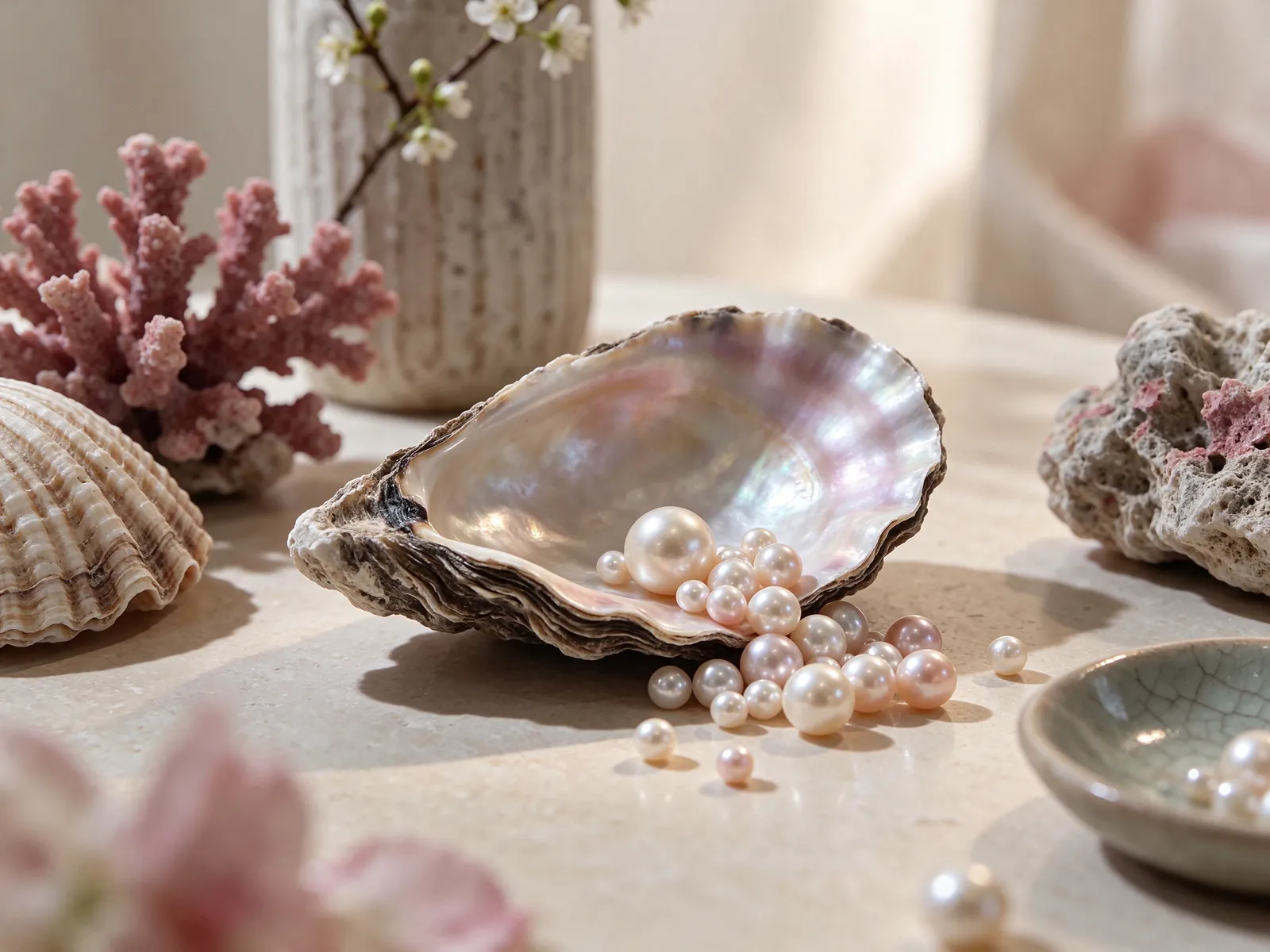
Keep environment, formation and nucleation as separate questions
A useful way to approach what are freshwater pearls is to ask three separate questions: where did the pearl grow, how did it form, and what is described about nucleation? Each question adds different information. Freshwater should not be treated as a synonym for imitation, and cultured should not be confused with plastic or glass. If a description answers only the environmental question, it has not automatically answered the other two. Natural and cultured pearls differ in whether human intervention is involved in their growth; this is not a distinction between real and fake pearls.
A round outline or a smooth-looking photograph cannot establish the presence of a bead nucleus. Reading about bead-nucleated vs non-bead-nucleated freshwater pearls can help you organise the questions, but nucleation should not replace a discussion of nacre quality and surface condition. When comparing two pieces, seek equivalent descriptions rather than filling gaps with assumptions about how a category is usually presented.
Make the description correspond to the actual pearls
For a multi-pearl design, establish whether a description applies to every pearl or only to a particular component. If a document accompanies an individual pearl, check that it relates to the item being discussed. General educational material can explain terminology, but cannot take the place of an individual description. The practical aim is a clear connection between the words you read and the jewellery you are assessing.
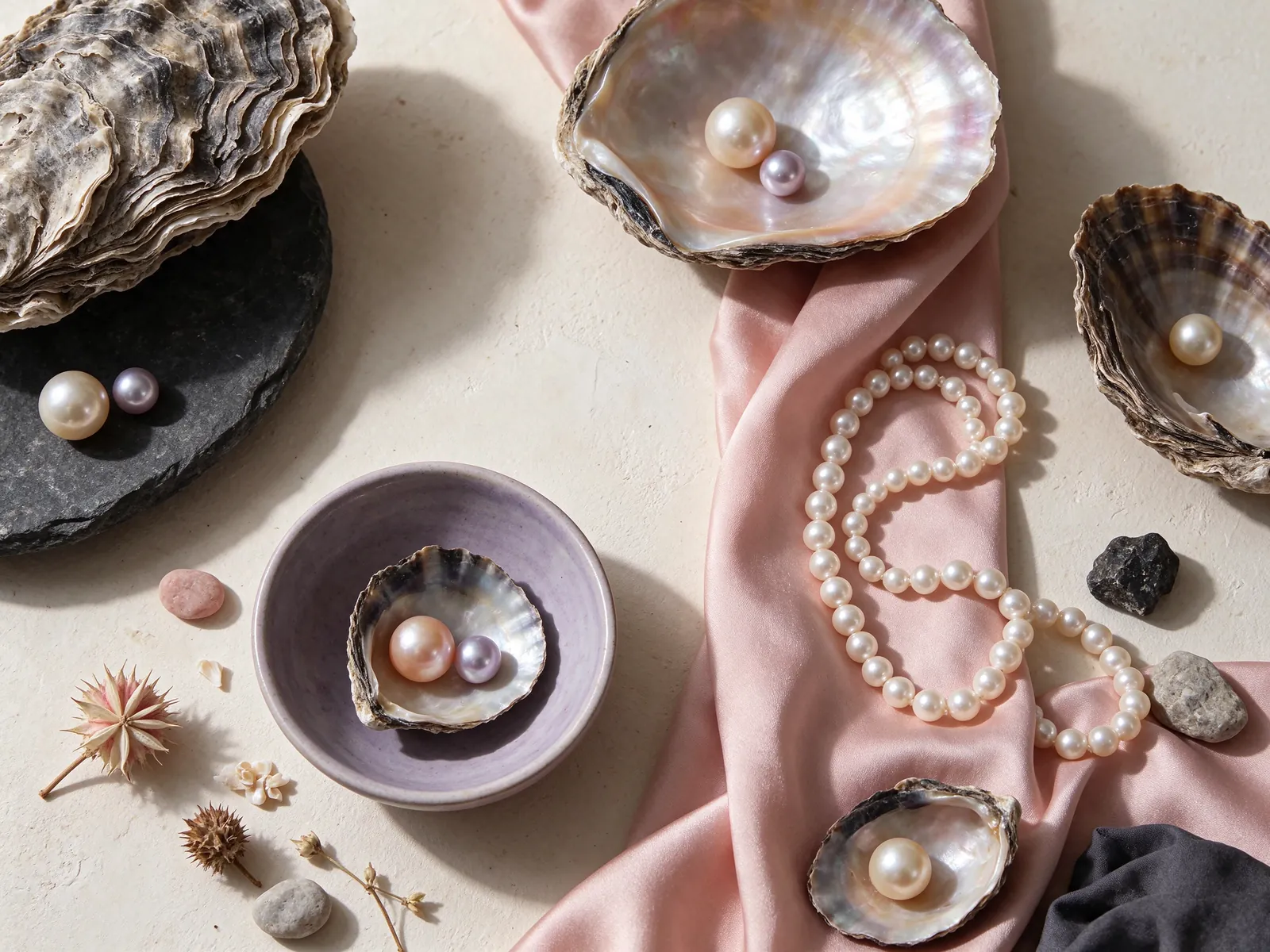
Compare individual qualities instead of ranking two environments
GIA describes seven pearl value factors: size, shape, colour, lustre, surface quality, nacre quality and matching. These provide a useful framework for comparing freshwater and saltwater pearls, without prescribing one ideal style for everyone. A neat round outline and an irregular silhouette can both appeal for different reasons. Decide which features matter to you before treating a difference as either an advantage or a drawback.
When exploring Akoya vs freshwater pearls, try to compare under similar lighting, against a similar background and at a comparable viewing distance. Notice the clarity of reflections, then look at the surface from more than one angle. For earrings, assess the pair together. A bright studio photograph and a shaded casual photograph are not a fair comparison; exposure and background can influence how white or luminous a pearl appears.
Separate lustre from colour and surface appearance
Colour is not the same as lustre, and a strong reflection does not establish a completely featureless surface. GIA distinguishes bodycolour, overtone and orient, noting that not every pearl displays all three. Consider how the actual colour works with your skin and clothing, but do not use a pink or dark appearance to infer origin, treatment status or natural formation. Those are separate identity questions.

Saltwater is a family of categories, not a single jewellery look
Learning what are South Sea pearls gives context to one of the saltwater categories beyond Akoya. For a jewellery decision, however, the next questions concern the actual pearl's visual presence, shape and position in the setting. A type name cannot supply an individual diameter, origin or grade. Treat editorial imagery as a way to consider proportions, not as a specification for a piece you might purchase.
Similarly, understanding what are Tahitian pearls broadens the comparison without making dark colour an identification test. If you enjoy a contrasting pearl against a warm ivory blouse, compare the actual tones and the overall balance. If you prefer a quieter effect, focus on how the pearl and setting blend with your clothing. Neither styling preference requires an assumption that one growing environment belongs only at formal events.
Choose the focal point before choosing the category
A pearl near the face creates a different emphasis from a pendant sitting against a blouse. Decide where you want the jewellery to draw attention, then consider the pearl, chain and setting together. A simple outline may be easier to combine with patterned clothing, while a plain top can give an unusual shape more space. These are decisions about the whole design, not just the pearl name.

Let everyday use, gifting and matching shape your shortlist
For everyday jewellery, start with the clothes and hairstyles you actually wear. Long hair may conceal a close-fitting earring, and a high neckline can change where a pendant rests. Picture several familiar outfits rather than relying only on a styled photograph. Decide whether you want a small, discreet accent or a more prominent silhouette, then compare freshwater and saltwater options by those practical priorities.
For a gift, learn whether the recipient prefers earrings or necklaces, restrained shapes or more individual outlines, and whether they combine several pieces. Saltwater is not an automatic answer to a gifting question, and freshwater need not be regarded as an introductory choice only. If the gift is intended to join an existing collection, look for compatible colour, lustre and proportions rather than assuming a shared category guarantees a match.
Matching means different things in different designs
In a pair of earrings, both pearls are seen together, so their relationship in shape, colour and lustre matters. A single-pearl pendant concentrates attention on one pearl and its setting. A multi-pearl necklace also has an overall visual rhythm. Deliberate variation can work well when a repeated tone or line creates coherence; decide whether you want uniformity or intentional contrast before evaluating the matching.
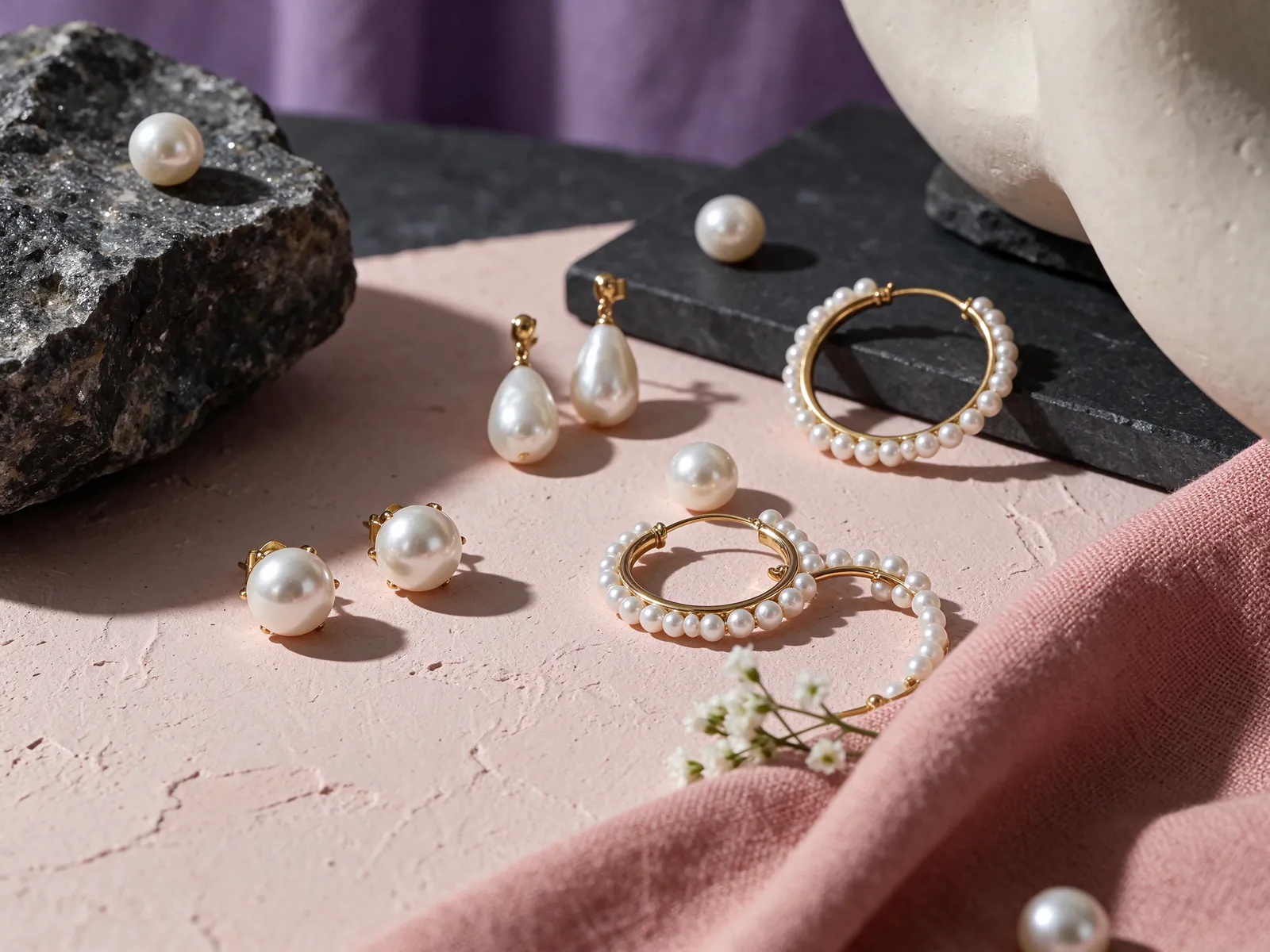
Compare budgets and descriptions without inventing a category price rule
An environment label alone cannot tell you what a finished piece should cost. Consider the individual pearls, matching requirements, jewellery construction and metal elements together. A single-pearl pendant and a multi-pearl necklace differ in more than growing environment. Set out the appearance and design features you do not want to compromise, then judge the complete piece against your budget instead of expecting a fixed freshwater-to-saltwater price relationship.
Geographical wording can also be confused with a pearl category. The topic Japanese pearls vs Akoya pearls is a useful reminder to distinguish place names from specific types. In an item description or an individual report, separate statements about origin, formation identity and quality. A document title or an institution's name does not independently establish every feature of the jewellery; what matters is the actual information and the pearl to which it applies.
Build a like-for-like comparison
Place the category description, visible qualities, matching, jewellery format and accompanying information side by side for each piece. Leave unknown details unanswered rather than supplying them from photographs or category expectations. This is a way to identify useful questions, not a method of assigning your own grade. If a detail does not affect your decision, keep your attention on comfort, proportions and the appearance you genuinely enjoy.

Apply pearl care to both categories and make the final choice
Saltwater does not mean a pearl jewel can be worn swimming, and freshwater does not mean it must remain unworn. GIA advises avoiding acids, perfume, hair spray and excessive heat, and says pearls should never be cleaned in ultrasonic or steam cleaners. Finish fragrance and hair styling before putting jewellery on, then wipe the pearls with a very soft, clean cloth after wearing.
For strung pearls cleaned with water, allow the string to dry completely before wearing. Store pearl jewellery so that it does not rub against harder items, and keep it away from excessive heat. Consider whether these habits fit your routine rather than guessing durability from the environment name. When an activity involves cleaning products, fragrance or water, wearing the pearls afterwards can reduce unnecessary exposure.
Return to the pearl, the proportions and your own preference
Before deciding, confirm that you enjoy the actual colour and shape, that the lustre and surface meet your expectations, and that the jewellery works with your usual clothes. Check whether the description answers the identity questions important to you. Freshwater and saltwater provide a useful background, but the final decision belongs to the individual piece and your wearing needs, not to an assumed hierarchy between environments. For help bringing your wardrobe, gifting preferences and favourite pearl appearance into the same conversation, contact Flint Jewellery on WhatsApp +85260106207.
| Comparison | What freshwater tells you | What saltwater tells you | What to assess next | Wearing consideration |
|---|---|---|---|---|
| Environment | Mussels living in rivers and lakes | Marine environment; Akoya, South Sea and Tahitian are cultured categories | Specific category and individual identity | The name does not prescribe a formal or casual look |
| Formation and nucleation | The label does not answer every formation question | The label does not answer every formation question | Separate formation identity from nucleation information | Do not infer comfort from nucleation |
| Individual quality | Not a quality grade | Not a quality grade | GIA's seven factors, including lustre and surface | Choose the shape and colour you enjoy |
| Matching and proportions | Requires inspection of the actual jewellery | Requires inspection of the actual jewellery | Pair harmony and the rhythm of multi-pearl designs | Consider neckline, hairstyle and focal point |
| Care | Not a waterproof claim | Not a waterproof claim | No ultrasonic or steam cleaning | Put on after fragrance and hair styling |
Pearl knowledge and authoritative references
GIA describes seven pearl value factors: size, shape, colour, lustre, surface quality, nacre quality and matching. These individual comparison factors are more informative than treating freshwater or saltwater as a grade.
Read the reference for this factFrequently asked questions
Does saltwater always mean Akoya?
No. Akoya is one saltwater cultured category; South Sea and Tahitian are others. Saltwater is the broader environmental classification. Identify the specific category before assessing the individual pearl's qualities and the jewellery design.
Does freshwater mean an imitation pearl?
No. Freshwater describes the environment of pearls from mussels living in rivers and lakes. It is not a synonym for plastic or glass. Formation identity and imitation status are separate questions, and an individual item should not be identified from a broad label alone.
Can white or dark colour identify the growing environment?
Colour alone cannot establish pearl origin, formation identity or treatment status. Photographic lighting also changes appearance. If the category is important to your decision, use the individual pearl description rather than treating colour as an identification test.
Can earrings intentionally combine freshwater and saltwater pearls?
A mixed pairing can be considered as a design choice, provided the actual pearls are clearly described. Compare visual weight, shape, lustre and colour. For an intentionally asymmetric look, a shared tone or repeated line can connect the two sides without requiring identical outlines.
Is saltwater automatically the better gift?
No. The recipient's preferred jewellery format, clothing style and care habits are more useful starting points. Growing environment is not a quality ranking or a substitute for personal taste. Select an individual piece that suits the wearer rather than choosing a label alone.
Updated: