

how to remove stains from pearls: why gentle wiping comes first in pearl stain cleaning when you try to clean food stains off pearls
At a restaurant, the first useful step is to take the jewellery away from the food, not to find the strongest cleaning product. Remove the piece carefully and support it on a clean, soft cloth. Use another soft, dry cloth to gently wipe the affected surface. Move to a clean part of the cloth once it picks up sauce, rather than carrying the residue along the strand.
If dry wiping does not lift the surface residue, slightly dampen a separate clean, soft cloth with plain water and wring it well. It should not drip onto the piece. Do not use a cloth carrying stain remover or metal-cleaning products. Gently remove surface moisture with a clean dry cloth afterwards. This local approach is not permission to soak a necklace or let water run into drill holes. If care requirements for the glue, setting or string are unclear, ask before proceeding. For ordinary maintenance, how to clean pearls helps distinguish a routine wipe from responding to a spill.
how to remove stains from pearls: when should pearl stain cleaning stop if you cannot clean food stains off pearls with gentle wiping?
A mark that remains after gentle wiping, a change in colour or visible surface damage is a reason to stop. Do not scrape with a fingernail to discover whether the spot is removable. Appearance alone may not distinguish residue from an altered surface; record the contact and seek professional assessment instead of increasing pressure.

Treat the contact, not a guessed recipe for each sauce
WSP's care guidance identifies coffee, tea, soy sauce, miso and cooking oil as contacts that may stain or discolour pearls. It separately lists fruit juice, salad dressing and vinegar among acidic contacts to avoid. A vinegar-based sauce needs attention even if it looks pale: remove the jewellery from the food and wipe gently, rather than trying to neutralise it with another household chemical. A dark splash cannot establish how deeply a mark has affected the surface. An oily splash does not justify adding washing-up liquid or a solvent.
Look separately at the pearl, string and metal fitting. A stain beside a clasp is not an invitation to scrub the entire piece as if it were plain metal. Keep any metal-cleaning product away from the pearl. For the fitting-related questions, how to clean pearl clasps and earring posts provides a useful next topic. Residue caught in a drill hole, beneath a claw or beside a glued joint should not be picked out with a toothpick or brush. Limit wiping to surfaces the soft cloth can reach without force.
What if there is no suitable cloth at the table?
Remove the jewellery and keep it on a clean, soft surface clear of cutlery and further splashes. Restaurant wipes may carry fragrance, alcohol or lotion, even when they feel soft. A napkin already used on food or utensils is not a clean care tool. If a suitable cloth is unavailable, postpone wiping rather than improvising with a rough or contaminated one. Visible colour change or damage is a reason to seek assessment, not to keep searching for a stronger wipe.

Observe a persistent mark without trying to polish it away
Compare the affected area before and after wiping under similar, gentle lighting. A flash photograph or a different background can change how colour and reflections appear. Look for the location of the remaining mark, visible residue and any surface irregularity; do not aim to make every pearl look identical. A clear photograph can help explain the incident but cannot establish the condition by itself.
An overall loss of brightness and a small food mark are different observations, even when they occur together. The topic how to care for dull pearls can help you separate lustre concerns from local residue. There is no useful target number of rubbing attempts: once gentle wiping is ineffective, continuing simply to achieve a spotless appearance is not the right next step.
Why Mohs hardness 2.5 matters to the choice of tool
GIA lists pearl at 2.5 on the Mohs hardness scale. This matters to scratching risk, not stain-removal performance, water resistance or the chance of restoring colour. Avoid rough cloths, abrasive powders, toothpaste and hard brushes. A cloth intended for polishing metal is not suitable merely because its fabric feels soft. GIA also states that pearls must never be cleaned with ultrasonic or steam cleaners; a stubborn mark does not change that advice.
Support the jewellery according to its construction
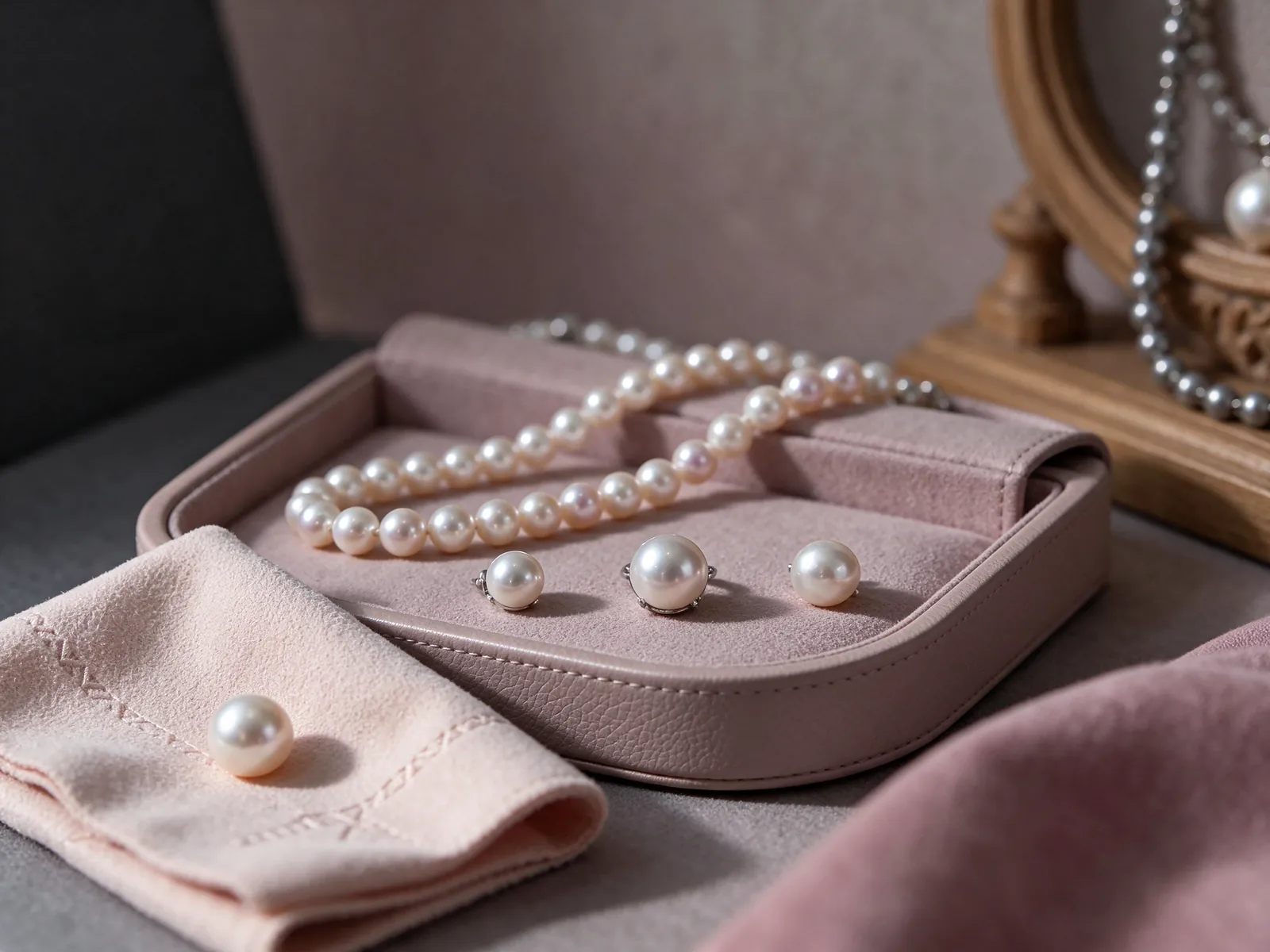
Lay a necklace down and support the strand rather than holding one end taut while wiping. Work locally so that you do not pull on knots or distribute sauce to neighbouring pearls. If water reaches a strung piece, GIA advises that the string must be completely dry before it is worn again. A dry-looking pearl surface does not establish that the string is dry.
With an earring or ring, consider the joint between the pearl and its setting: attachment may involve glue or claws. Support the piece without twisting the pearl, forcing a damp cloth into a tight gap or soaking it to dissolve trapped sauce. A loose pearl, altered knot or unreliable clasp calls for stopping wear. For strand concerns, when to restring a pearl necklace is relevant, but a single spill does not determine a restringing date or establish whether components need replacement.
Consider access for care when choosing a design
If jewellery is often worn to working lunches, consider whether you can see the pearl surfaces, remove the piece comfortably and support it for wiping. Layered strands or a necklace beneath a collar may make contact harder to notice. Ask about care for the particular construction rather than assuming a simple silhouette is stain-proof. Images on this page illustrate styling and care topics; they do not establish pearl identity, treatment status or a cleaning result.
Plan dinner styling around movement and cosmetics
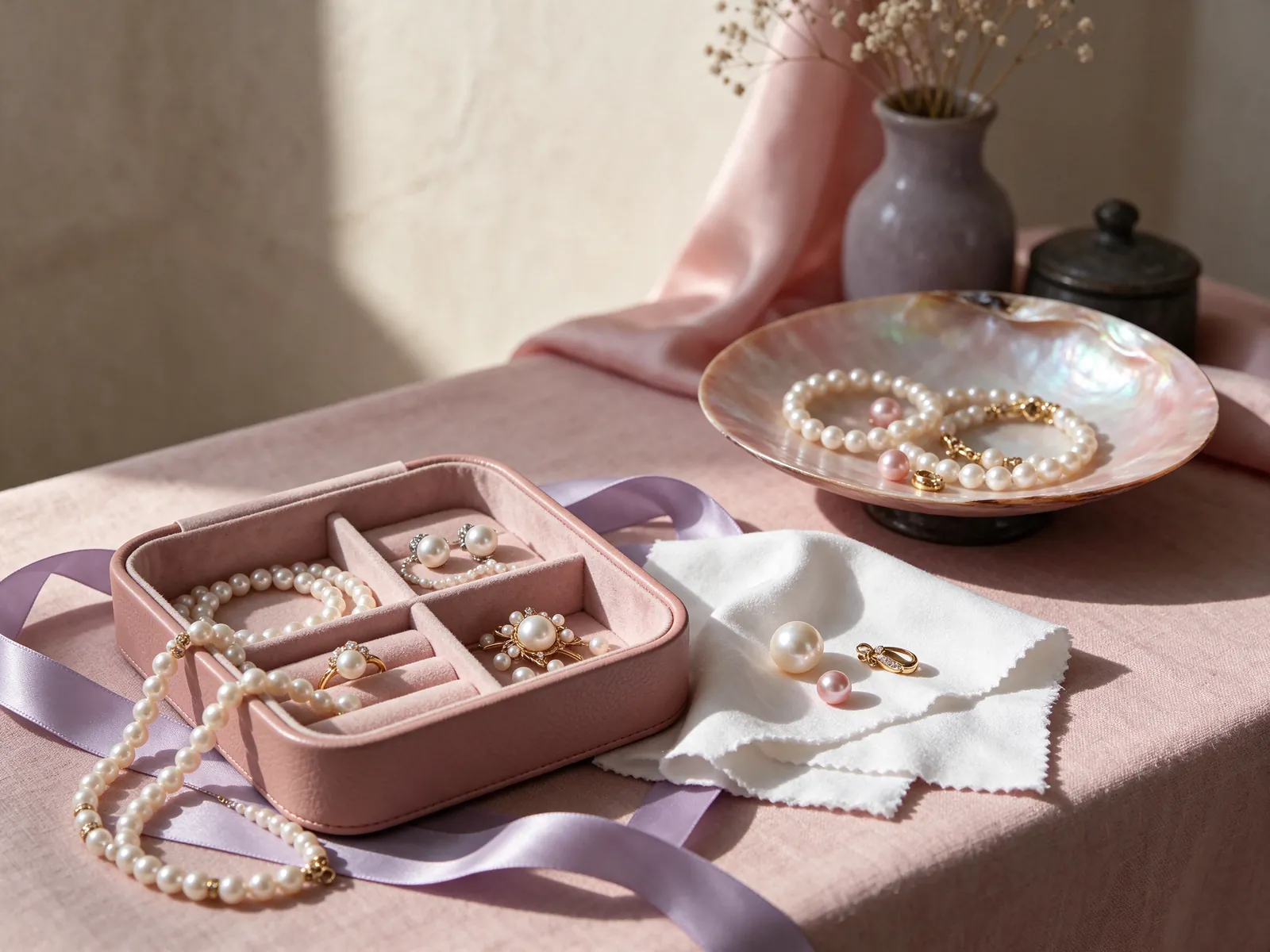
Complete perfume, hair products and make-up before putting on pearls. At dinner, notice whether a long strand can reach the edge of a plate or whether a pearl ring is frequently close to food. Adjust the styling or remove the piece before eating when appropriate. This is a practical decision about movement, not a claim that any jewellery design resists stains or water.
After dealing with a sauce spill, check your hands before touching the cleaned pearls again. Food oil, hand cream or perfume can introduce a second contact. Reading can sweat and perfume damage pearls helps connect food-related care with other everyday exposures. Move the jewellery away before refreshing perfume or make-up rather than cleaning one residue while adding another.
Pack a cloth rather than an emergency chemical kit
A clean, soft cloth and a separate space for the removed jewellery are useful dinner companions. Once part of the cloth has picked up sauce, keep that part away from the rest of the strand. A homemade stain solution is not a substitute for careful removal and restrained local wiping.
Dry, separate and reassess before wearing again
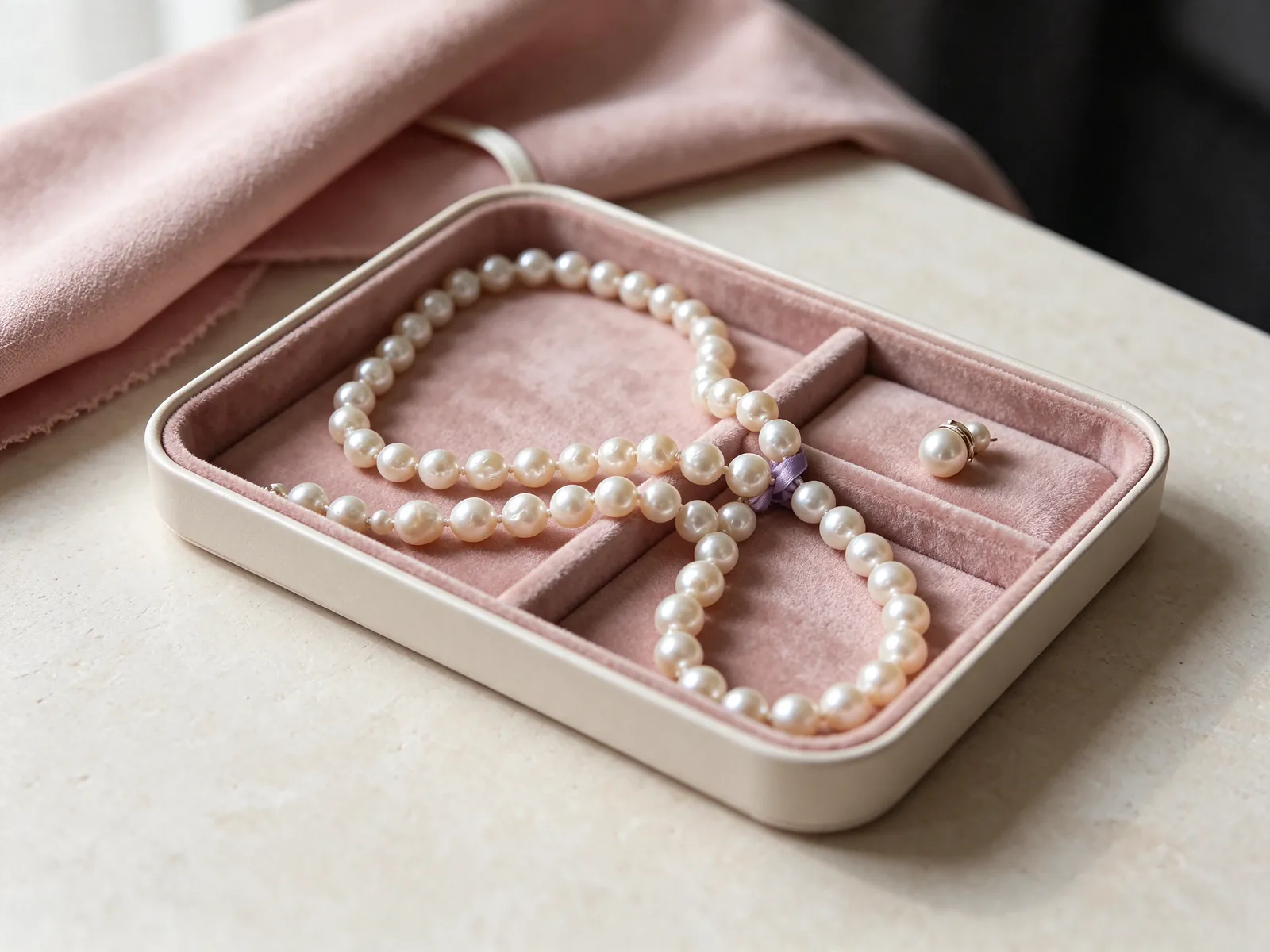
After using a damp cloth, let the supported piece dry naturally in a clean place. Do not accelerate drying with a hairdryer, heater or strong sunlight, or put a damp strand straight into a pouch or jewellery box. If the string became wet, a dry-looking pearl surface is not sufficient. There is no fixed waiting interval that replaces establishing complete string dryness. When uncertain, choose another accessory and ask about the care requirements of the string and the whole piece.
When dry, separate the pearls from keys, coins and other hard jewellery in your bag or storage area. The guidance on how to store pearls is useful for arranging that separation. Running the piece under a tap or wearing it in the shower is not the next stain-cleaning step; can you shower with pearls addresses a different exposure from a slightly damp cloth.
Inspect the original spot and the fastening
Before wearing again, look at the affected area and check that the fastening and pearls appear secure. If a mark or structural concern remains, do not conceal it beneath clothing and resume wear. Keep the piece separate for assessment and use a different accessory without trying another round of cleaning first.
Prepare a useful account for professional assessment
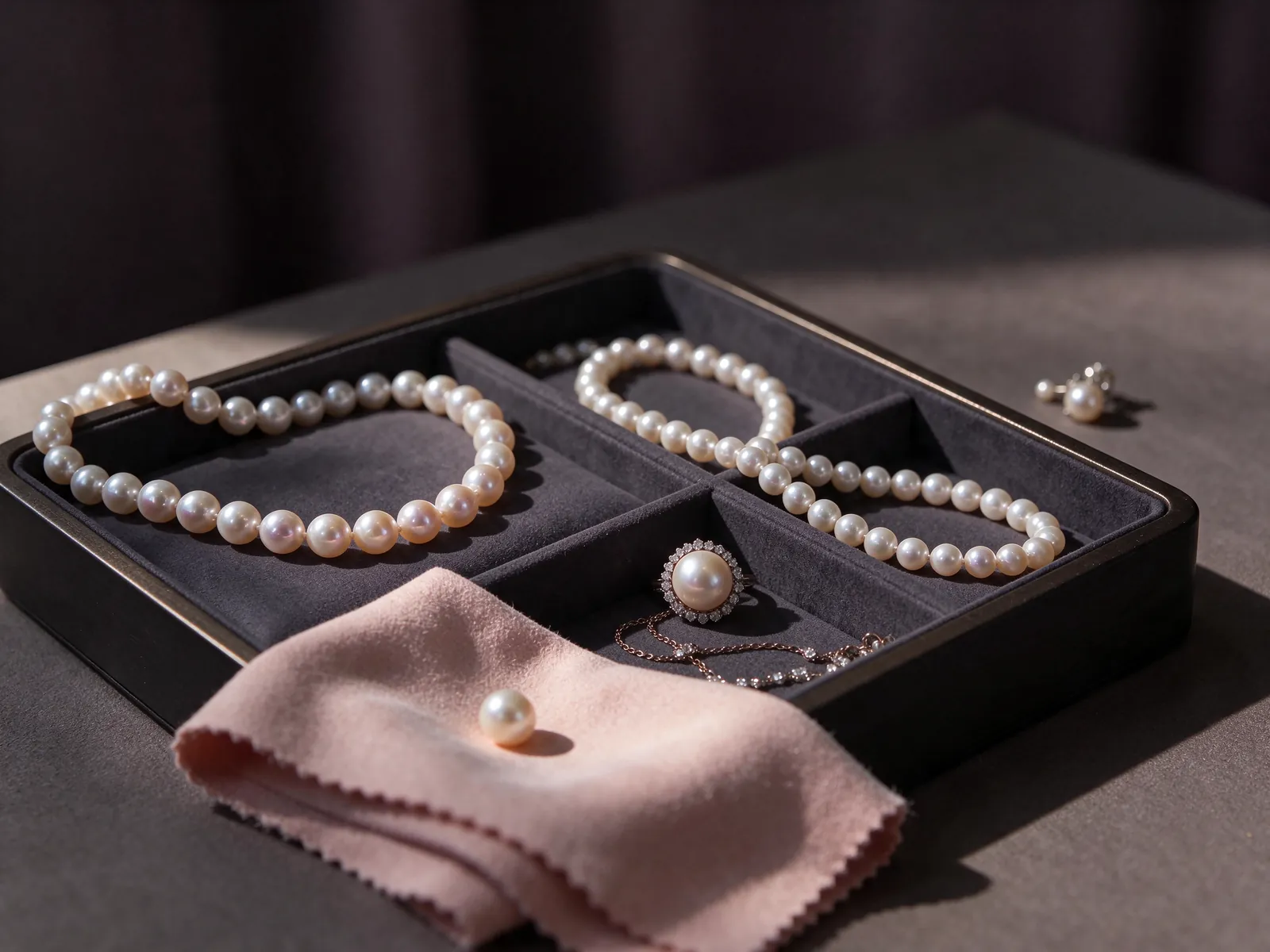
Explain what touched the jewellery, including whether the sauce contained vinegar or fruit juice, where the contact occurred and whether the string became wet. Describe what changed after dry or damp wiping. If another product was used, give its name and how it was applied. Do not improve the photograph with further rubbing or test a fixed mark with a fingernail. The contact history and present condition are more useful than guessing pearl type, treatment status or the depth of a stain.
You can ask Flint Jewellery about pearl care on WhatsApp after gathering these details. Separate a care discussion from an assessment of the actual piece and any subsequent repair decision. A discussion cannot establish that the original colour will return. For a broader routine, the pearl care guide links the habits of wearing, wiping and storing, rather than treating every incident as a reason for deeper cleaning.
Keep the condition stable while awaiting advice
Stop wearing and cleaning the affected piece, and keep it separately once dry. Save clear photographs and the contact details. Avoid acidic household products, bleaching attempts and polishing experiments. If remaining residue cannot be removed gently, let a professional decide the next action rather than repeatedly changing the surface yourself.
| What you observe | Gentle action | Reason to stop | Wear or storage decision |
|---|---|---|---|
| Fresh sauce, tea or coffee contact | Remove jewellery and wipe gently with a soft dry cloth | Visible colour change, damage or a fixed mark after gentle wiping | Keep clear of further food contact |
| Residue remaining after dry wiping | If needed, use a well-wrung slightly damp soft cloth locally | Colour change or a mark that remains | Do not soak the whole piece |
| Wet string or knots | Support the strand and allow natural drying | Dryness is uncertain or knots appear altered | Wear only when the string is completely dry |
| Residue inside a hole or setting gap | Observe and record without picking | Access would require scraping or twisting | Stop wear and seek assessment |
| Persistent discolouration or surface damage | Stop cleaning and record the contact history | Do not escalate to stronger methods | Keep the dry piece separate for assessment |
Pearl knowledge and authoritative references
GIA lists pearl at 2.5 on the Mohs hardness scale. This supports avoiding rough, abrasive or scraping tools; it is not a stain-removal success rate.
Read the reference for this factFrequently asked questions
Does a soy sauce splash always leave a permanent dark spot?
The colour of the food does not establish the outcome. Soy sauce may stain or discolour pearls, so use gentle dry wiping and, if needed, a well-wrung damp cloth. Stop if a mark remains; neither guaranteed removal nor inevitable permanent staining can be concluded from the splash alone.
Can I add washing-up liquid when the residue is cooking oil?
Do not switch to washing-up liquid or a solvent simply because the residue is oily. This local response uses dry wiping and a well-wrung slightly damp cloth when needed. GIA mentions occasional gentle cleaning with warm, soapy water, but that does not establish that every glued, set or strung piece can be immersed. If residue remains, seek advice based on the whole piece rather than choosing a stronger recipe.
Should I brush sauce out of a pearl's drill hole?
No. Avoid brushes, toothpicks and fingernails in drill holes or setting gaps, and do not twist the pearl to reach the residue. If a soft cloth cannot reach it gently, leave the next action to a professional.
Can I put the necklace back on once the pearls look dry?
If the string became wet, dry-looking pearl surfaces are not enough. GIA advises that the string must be completely dry before wearing. Choose another accessory when that is uncertain rather than relying on a fixed number of hours.
Can a photograph confirm the repair a stain needs?
Photographs and a contact history help explain the issue, but cannot reliably distinguish every residue, colour change or damaged surface. Describe the methods already tried and arrange assessment of the actual piece when needed; a photograph cannot guarantee a cleaning result.
Updated: