

How does pearl spacing shape a multi pearl pendant, whether a double pearl pendant or a three pearl pendant?
Begin with the direction of the design. Two pearls arranged side by side invite a comparison between left and right, while a vertical pair draws attention downwards. Three pearls may establish a central focus or continue a line; five may create a more repeated rhythm. These are visual possibilities, not a ranking of quality. When choosing a pearl pendant, identify whether you prefer a compact focal point or an extended outline before deciding how many pearls it should contain.
Spacing changes whether you notice individual pearls or read the arrangement as one shape. A closely grouped double pearl pendant can feel quite different from a pair separated by visible chain or metalwork. Look beyond a close-up: does the outline remain legible at normal mirror distance? Are the gaps deliberate, and do the connections support the rhythm rather than distract from it? A three pearl pendant should be judged by the relationship between all its elements, not just its centre pearl.
Where should a double pearl pendant or three pearl pendant sit so a multi pearl pendant complements your neckline?
Try the arrangement with a familiar top. Notice the difference between sitting above the neckline, inside its opening and against the fabric. A horizontal row close to a collar edge may compete with that edge, while the lowest pearl in a vertical design may disappear behind it. Sit down and turn gently as well as standing still. Useful placement keeps the whole arrangement visible without requiring you to repeatedly move the pendant or straighten the collar.

Compare the complete silhouette, not pearl count alone
More pearls do not necessarily produce a wider pendant. Pearl size, the gaps between them and their direction all affect the overall outline. A compact row of small pearls may occupy less visual space than a widely separated pair. Read individual pearl measurements separately from the pendant's total width and height. A close photograph cannot establish actual dimensions, and one pearl's diameter does not describe the size of the finished arrangement.
Equal sizes can create a regular beat, whereas changing sizes introduce emphasis. If you enjoy a deliberate progression from smaller to larger pearls, compare the idea of a graduated pearl pendant. Not every multi-pearl arrangement is graduated: alternating sizes or an asymmetric pair can create a different effect. Ask where your eye settles first and whether that position works with your neckline. This helps separate a preference for size progression from a preference for simply having more pearls.
Use front, side and everyday-distance views
The front shows spacing, while the side can reveal whether pearls sit at different depths or whether connections project noticeably. Then step back to the distance at which you usually check your outfit. Does the arrangement remain distinct against the fabric? Compare views in similar light and from comparable angles, rather than treating a tighter crop as proof of a larger pendant. Record the complete silhouette you like, not only the most attractive individual pearl.

Matching matters when pearls share the same setting
A multi-pearl design places pearls beside their own points of comparison. In soft, consistent light, look at the clarity of reflections across the group, then consider shape and colour together. Some arrangements seek similarity; others use contrast intentionally. The question is whether the differences help the design you want. A bright spotlight can make one surface look especially lively, so avoid judging the entire group by a single highlight in a photograph.
GIA describes seven pearl value factors: size, shape, colour, lustre, surface quality, nacre quality and matching. Pearl count is not one of those factors. Matching also does not replace examining the individual pearls. If small diamond accents appeal to you, compare a pearl and diamond pendant for the relationship between sparkle and pearl lustre. Decide whether the accents support the pearl arrangement or become its main attraction; their presence does not establish equal quality across the pearls.
Distinguish intentional contrast from an unwanted difference
First look at the group, then examine each pearl. A warmer pearl beside a cooler one may create a contrast you enjoy, while someone seeking a uniform look may find the same combination distracting. Consider visible surface features from a wearing angle as well as close up. Appearance helps you assess your preferences, but it cannot on its own establish pearl type, origin or natural-versus-cultured identity. Read the specific description when those details matter to your decision.
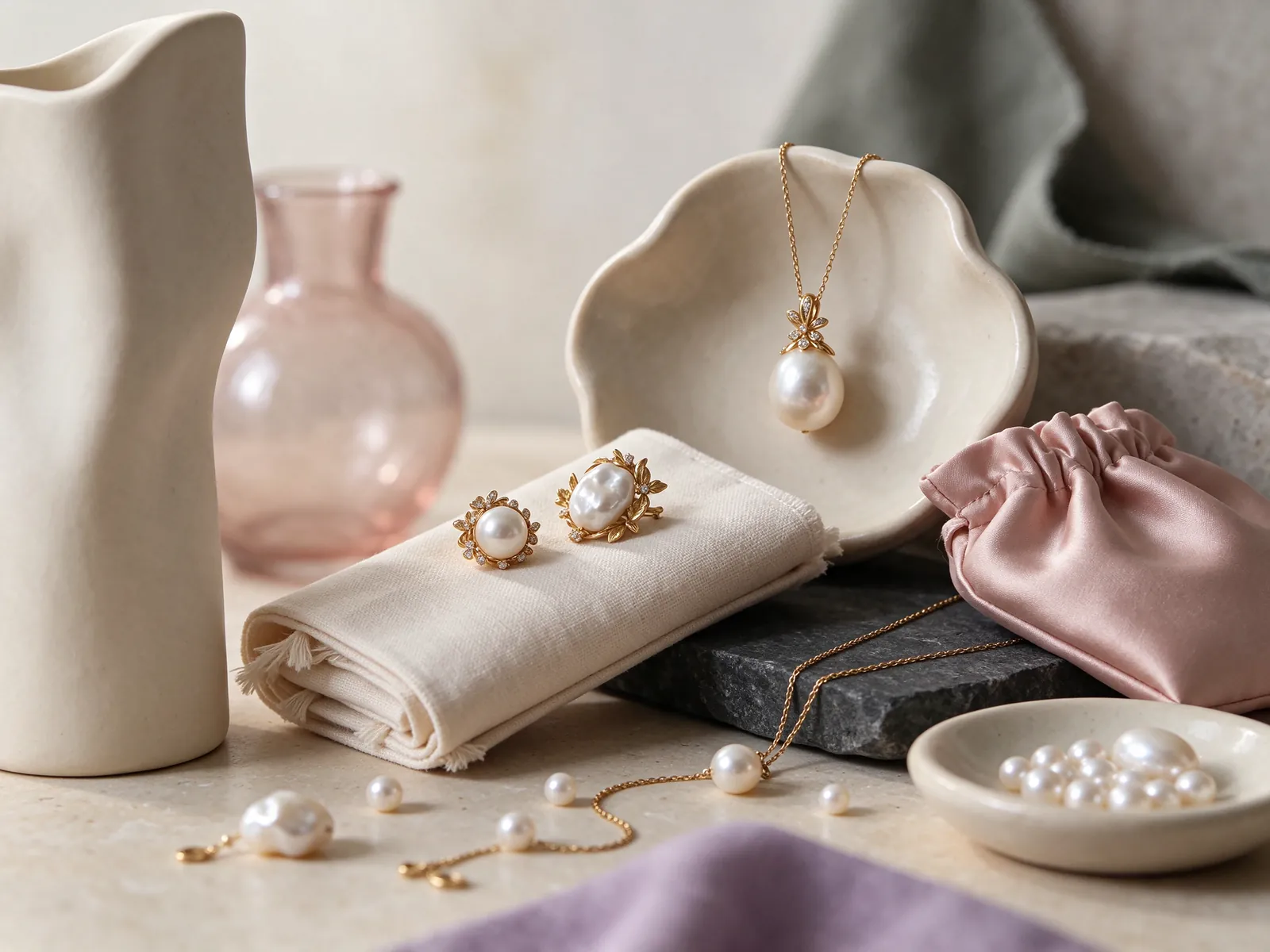
Understand the chain and the connections
A chain contributes to the outline rather than merely holding it up. A central bail, connections at both sides and a chain running through pearls can produce different movement. When selecting a chain for pearl pendant designs, check compatibility before visual colour matching. The clasp must suit the available opening, and the pendant's attachment may not allow removal. Also consider whether the chain's visible thickness overwhelms smaller pearls or leaves the intended spacing clear.
A vertical pair combined with an extended chain line can suggest a different styling direction from a fixed horizontal row. Compare a Y-shaped pearl pendant necklace if that downward line appeals to you. Adjusting chain length and adjusting pearl spacing are separate functions; one does not guarantee the other. During a fitting, observe whether pearls overlap, turn over or move independently. Look at the reverse too, since a pendant may not remain front-facing throughout normal movement.
Through-pearl construction needs a different visual check
With a through pearl pendant, look at the relationship between the chain, the openings and the pearl's movement. With a bail-based arrangement, examine the bail and the connecting metalwork instead. Neither a front photograph nor an apparently simple outline proves how a pearl is secured or how durable the assembly is. If several connection points are present, inspect them individually before considering a chain change or layering the piece with another pendant.

Make room for the arrangement in your wardrobe
With a shirt, check whether the button line and pendant compete for the same centre. A horizontal arrangement can sit within an open collar, while a vertical one needs space for its lowest pearl. With a crew neck, compare placement above the edge and against the fabric. Busy prints may make gaps between pearls harder to see. Before choosing a fuller arrangement, try a quieter background and see whether the existing outline becomes more convincing.
For layering, decide whether the multi-pearl arrangement is the main feature. A simpler second chain can leave its rhythm readable, provided the focal points do not repeatedly collide or cover one another. A long pearl pendant necklace offers another placement idea when you want the focus lower, but consider clothing decorations and bag straps along that line. More necklaces are not automatically better balanced; the space around an already detailed arrangement can be part of the styling.
Coordinate earrings without repeating the pearl count
Prominent earrings may work with a more restrained pendant outline, while simpler earrings can leave attention at the neckline. Look at the combination with your hairstyle, since covered ears change which jewellery is visible. Harmony can come from related colours or similar line directions; the pieces do not need identical pearl counts. If a scarf or high collar hides the pendant, a different placement may be more useful than a more elaborate arrangement.
Turn a shortlist into practical fitting questions
Compare arrangements in a consistent order: direction, overall outline, gaps, size relationships, colour balance and attachment. Replace notes such as 'too much' with observations such as 'the row extends beyond the collar opening' or 'the lower pearl disappears when seated'. These descriptions explain what needs to change. They also help you distinguish the pendant's own effect from the attraction of a photograph's outfit, lighting or pose.
Base the shortlist on clothes you regularly wear, not only an imagined special occasion. A photograph of a familiar neckline can help you explain preferred placement and whether you like symmetry or a deliberate contrast. Mention an existing chain if you hope to use it, and ask about movement or access to the clasp if those affect everyday handling. Specific preferences are more useful than asking which pearl count is universally best. For material preferences, consider 18K 750 white gold, 18K 750 yellow gold, 18K 750 rose gold, PT950 platinum and PT900 platinum, then think about how your preferred metal colour relates to the spaces between the pearls.
For a gift, start with clothing habits
Notice whether the recipient usually wears open collars, round necklines or high necks, and whether they prefer one focal piece or layered jewellery. These habits are more informative than an age-based style label. If uncertain, compare a compact outline with a more repeated rhythm and ask which they prefer. A pearl count can carry your personal meaning, but it should not be presented as a universal symbolism or a property shared by every wearer.

Care for each pearl without stressing the arrangement
After wearing, gently wipe accessible surfaces with a very soft, clean cloth, working around the group without pulling its connections. GIA ranks pearl at 2.5 on the Mohs hardness scale. Store the pendant separately from harder jewellery to limit rubbing, and straighten the chain before putting it away so a knot does not pull against the pearls. Avoid compressing movable elements underneath other objects in a crowded storage pouch.
Apply perfume and hair spray before putting pearls on, and avoid acids and excessive heat. GIA advises against ultrasonic and steam cleaning for pearls; small pearls in a multi-pearl arrangement are not an exception. If a connection loosens or the arrangement starts turning differently, stop pulling or repeatedly repositioning it and have its construction examined. Cleaning a surface and addressing an attachment problem are different tasks, so wiping alone cannot resolve a loose connection.
Do not scrape narrow spaces between pearls
Avoid sharp tools in the gaps between pearls and metalwork, and do not twist pearls apart to reach the reverse. Clean only the areas you can gently access with a soft cloth. Where pearls are strung and water is used for cleaning, GIA says the string must be completely dry before wearing. If you do not understand the fixing method, avoid soaking the pendant rather than risking its arrangement in pursuit of a perfectly cleared gap. To compare a double pearl pendant with a three pearl pendant, share your usual neckline, preferred placement and existing chain details on WhatsApp +85260106207, and discuss the multi pearl pendant outline you would enjoy wearing.
| Feature | Visual difference | Fitting check | Useful question |
|---|---|---|---|
| Two pearls | A paired focus or vertical extension | Watch for overlap and turning | Do you prefer contrast or a downward line? |
| Three pearls | A centre point or a continuous rhythm | Check the position of the middle pearl | Should the centre or the whole outline lead? |
| Five pearls | More repeated elements; size and gaps still matter | Keep the complete row clear of the collar | Do you like close grouping or distinct spaces? |
| Size and matching | Uniform, graduated or intentionally contrasting | Compare the group in consistent light | Does the difference support your preferred look? |
| Chain and attachment | Bail, side connections or through-pearl structure | Observe the direction when sitting and turning | Does it work with your chain and everyday clothes? |
Pearl knowledge and authoritative references
GIA describes seven pearl value factors: size, shape, colour, lustre, surface quality, nacre quality and matching. Matching is particularly relevant when several pearls are viewed together in a pendant.
Read the reference for this factFrequently asked questions
Is a double pearl pendant always the more minimal choice?
No. A large pair with wide spacing or prominent metalwork can be more noticeable than a compact row of smaller pearls. Compare total width, height and the worn silhouette instead of relying on count.
Does a three pearl pendant have to be symmetrical?
No. It can use a central focus, alternating sizes or deliberate asymmetry. Judge whether the direction suits your preferences and how it sits, rather than treating every unequal spacing as a fault.
Do different pearl colours within a pendant indicate poor quality?
Colour contrast may be intentional. Assess lustre, surface appearance and matching in consistent light, then decide whether that contrast is the effect you want. Colour difference alone is not a quality verdict.
Can I reuse a chain from a single-pearl pendant?
Only if the attachment, opening and clasp are compatible and the pendant allows that change. The movement of a multi-pearl arrangement may also differ, so similar colour and length are not sufficient checks.
How can I keep a horizontal row visible with a shirt?
Try it within the collar opening and against the fabric, then sit and turn to check coverage. If the collar repeatedly obscures the row, consider a different placement or arrangement direction rather than adding pearls.
Updated: