

Hanadama vs Akoya pearls through lustre and surface quality: what are Hanadama pearls, and how should you compare Hanadama and non-Hanadama Akoya?
Hanadama and Akoya are not competing pearl species. Akoya names the pearl category, while Hanadama is a quality designation generally used for white Akoya within it. WSP’s comparison article expressly states that no special Hanadama oyster or species exists. A useful comparison therefore places Akoya carrying the designation beside Akoya without it. Establish the basis for each description, including any corresponding report, rather than letting the names supply an assumed quality ranking or an unstated country of origin.
Non-Hanadama does not describe one fixed low grade. The missing designation does not, by itself, establish weak lustre or an unsuitable gift. WSP explains Hanadama through five areas: lustre, nacre thickness, surface condition, shape and finish. Its introduction also acknowledges differences between certifying bodies. Treat this as the source’s explanation, not a worldwide grading scale. The pearl grading guide helps separate observable qualities from labels, so you can assess the information available for each actual piece.
Reading reports for Hanadama vs Akoya pearls: what are Hanadama pearls, and which findings help distinguish Hanadama and non-Hanadama Akoya?
Read the issuing organisation, complete report title, identifying information and findings first. Establish whether the document covers one pearl, a pair or a strand before applying results to jewellery. The guide to how to read a pearl certificate helps turn unfamiliar fields into specific questions. Compare any identifying photograph and dimensions with the item being discussed. If a cropped screenshot omits the scope, ask for the missing information rather than assuming the designation covers the entire piece.

Assessing lustre without letting the lighting decide
Put the options under similar lighting, against the same background and at a comparable distance. Look at the contrast between light and dark areas and the definition of reflected shapes. GIA describes lustre through the brightness and clarity of reflections; a whiter-looking photograph does not necessarily show better lustre. Exposure and image processing can make an image brighter. Compare the pearls together where possible, or request views from the same setting and several angles instead of ranking unrelated promotional photographs.
Colour preference is separate from lustre and treatment disclosure. A pink-looking pearl is not automatically more lustrous than a whiter-looking one, nor does a soft pink impression establish that it is untreated. WSP’s Hanadama colour guide discusses both colour-treated and untreated options. Ask about the stated bodycolour, any visible overtone and available treatment information separately. Then use a blouse or knitwear you regularly wear as a background. Your preferred colour can guide styling without becoming a report finding or proof of origin.
Move from the whole piece to the detail and back
First assess the overall brightness of the piece, then examine an individual pearl, and finally return to normal wearing distance. These views answer different questions: consistency, reflection detail and visual balance. If an image shows only the brightest angle, ask for another view. A particularly attractive highlight should not be used to infer the appearance of every pearl in a strand.
Surface and shape are visible; nacre thickness needs its own evidence
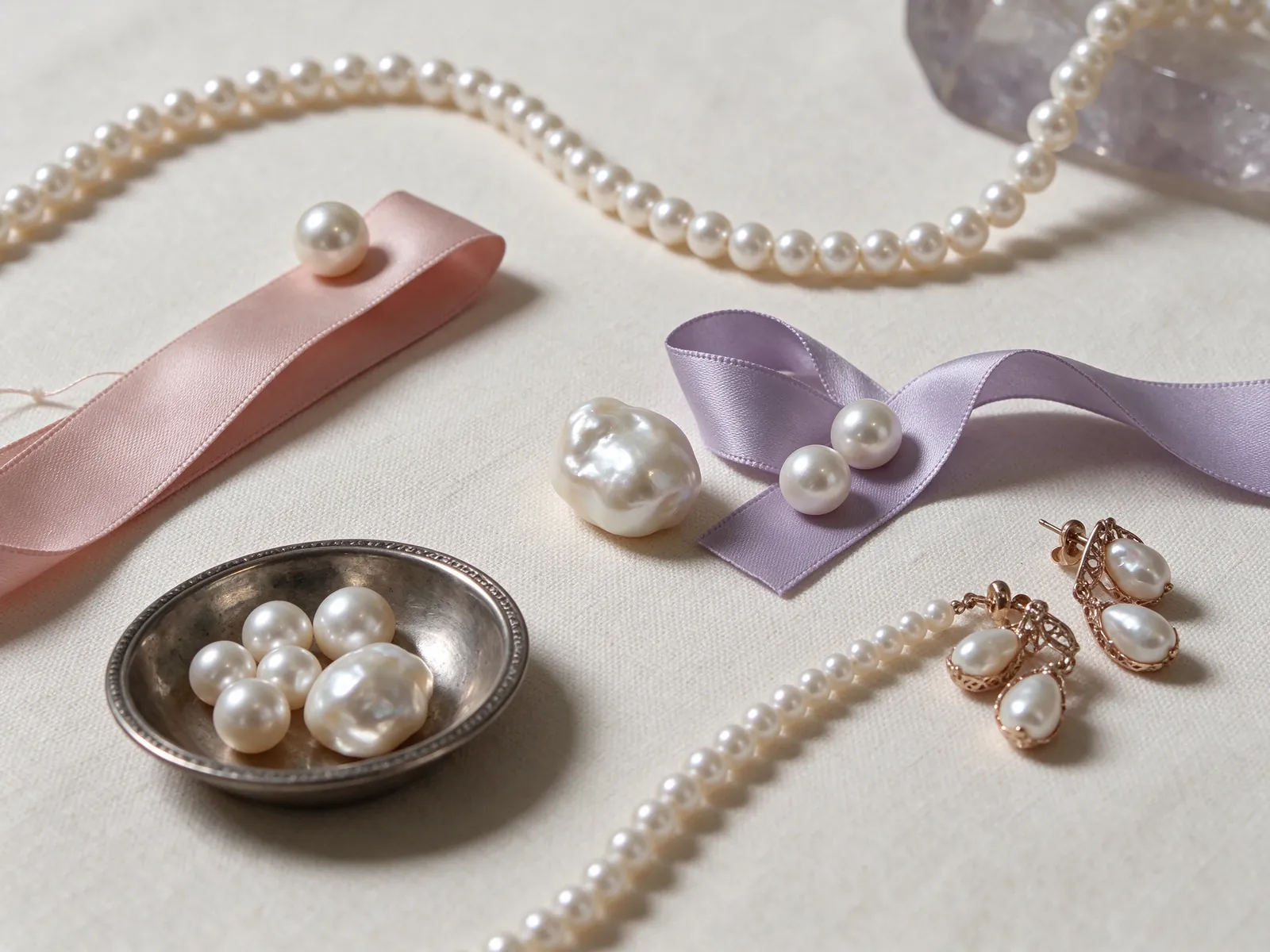
For surface comparison, consider where features occur and how noticeable they are when worn, rather than merely counting marks. An outward-facing feature on a pendant may have a different visual impact from one near the setting. Rotate the pearl or compare several angles, including the back if visible. Hanadama should not be read as a promise that no surface features exist. A tidy photograph does not establish nacre thickness, and two pearls with relevant reports can still differ in visible appearance.
For shape, examine the outline from more than one direction. A necklace also needs an overall rhythm, not just an attractive outline on one pearl. Your preference for a round, orderly look is useful for styling, but shape alone cannot establish pearl identity or origin. Likewise, diameter, pale colour and a bright reflection do not provide a reliable way to calculate nacre thickness.
Read a thickness result in the context of the tested object
If a report provides a nacre thickness result, check the unit, wording and the pearl or group covered. The Pearl Science Laboratory’s published Aurora Hanadama definition specifies white-series Akoya of at least 6 mm and nacre thickness of at least 0.4 mm. These are that laboratory’s named criteria, not universal thresholds for all Hanadama or Akoya. Reading about certified Hanadama pearls should connect the exact designation with its conditions. Do not fill in measurements from a photograph or extend one result to pearls outside the document’s coverage.
General Hanadama and Aurora Hanadama: names with different evidential meaning
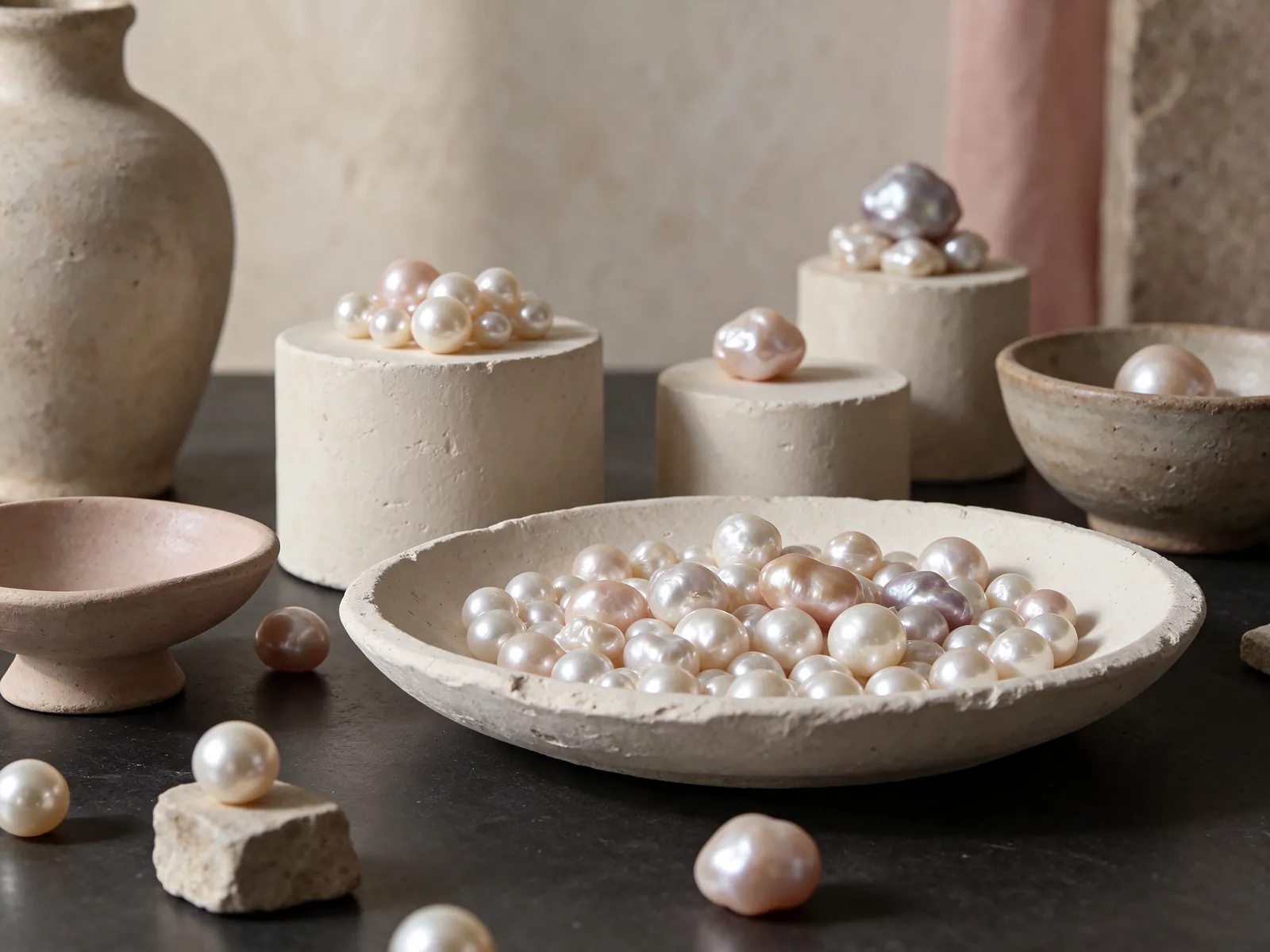
The Pearl Science Laboratory states that the general term Hanadama commonly refers to high-quality pearls but lacks a clear definition. Aurora Hanadama, by contrast, has criteria defined by that laboratory. Reading about Aurora Hanadama pearls therefore requires the full name and corresponding report, not an assumption that every general Hanadama claim is a PSL credential. Its definition checks surface under its own standards, permits shapes up to semi-round, and emphasises lustre through both brilliance and interference colour. Perfect roundness is not an accurate universal requirement.
GIA describes seven pearl value factors: size, shape, colour, lustre, surface quality, nacre quality and, for jewellery with two or more pearls, matching. These provide a useful checklist, not a conversion from Hanadama into a GIA grade. Merchant labels such as AAA or AAAA are not automatically equivalent to either. Use a report for its stated findings and a visual comparison for personal preference. Neither a name nor this educational checklist establishes a price, resale outcome, repair guarantee or a report held by Flint Jewellery.
Compare findings that genuinely address the same question
When two documents have different formats, list the clearly stated findings separately. Discuss the areas that can meaningfully be compared and retain the differences where they cannot. Avoid inventing a shared grade to make the comparison look simpler. The practical questions are which pearls each document covers, what it records and which aspects still need visual assessment.
For a necklace, inspect matching and the front-facing curve
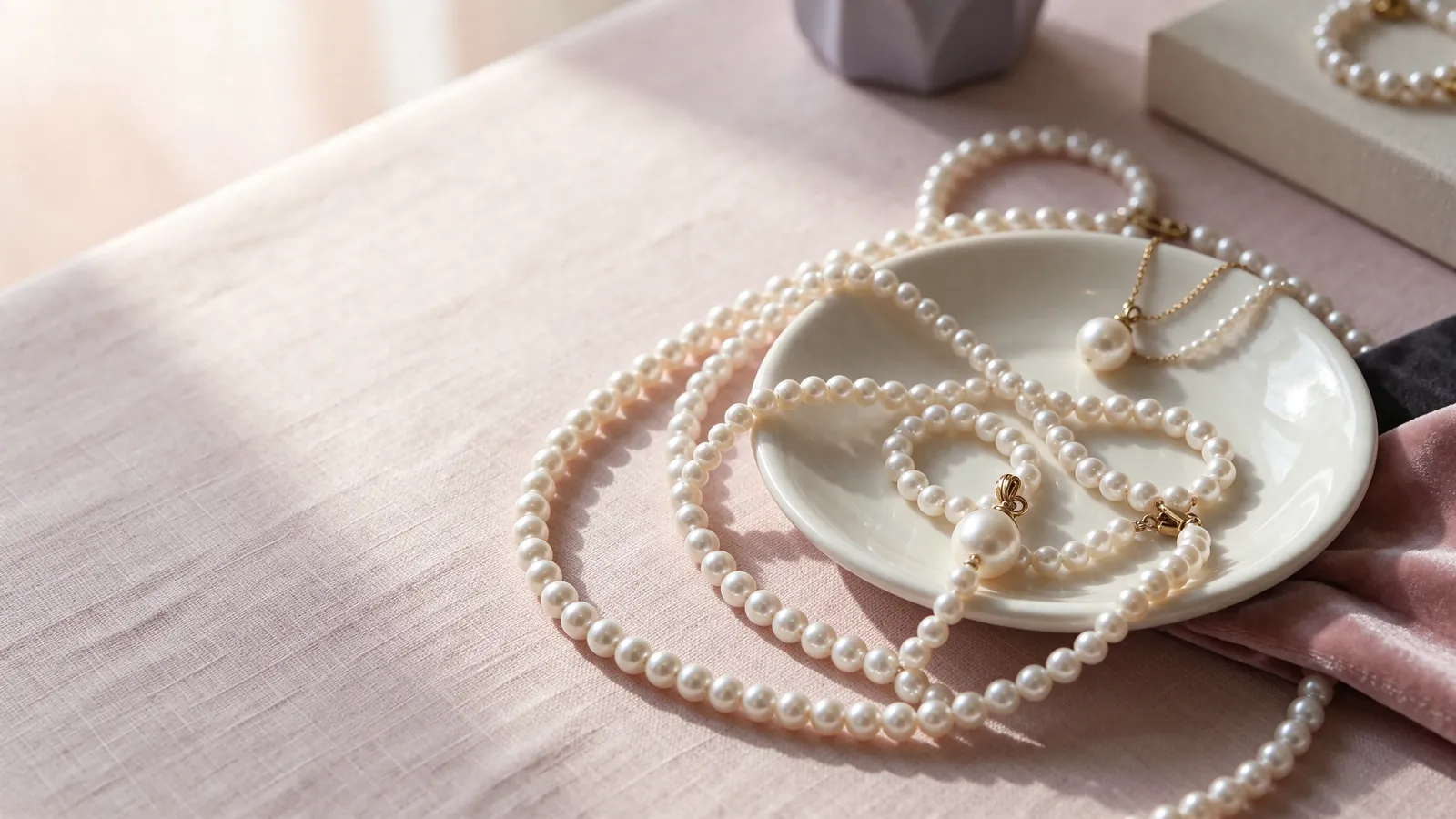
When reading the Hanadama Akoya pearl necklace guide, examine the entire strand for harmony in colour, lustre, shape and apparent size, not only a close-up. Compare a full laid-out view with the front-facing curve when worn. Notice whether a pearl stands out unexpectedly, but distinguish a planned graduation in size from inconsistent matching. Apply the same method to a strand without the designation. For a reported strand, check that the document’s identifying information relates to that strand rather than an unrelated individual pearl.
The relationship with a neckline often affects daily enjoyment more directly than terminology. With a round-neck top, compare how the strand sits beside the edge of the fabric; with an open collar, notice whether the necklace curve competes with the opening. Understanding pearl matching quality helps you judge the whole piece rather than its brightest detail, especially if you tend to wear patterned clothes or prefer a quiet, coordinated look.
Use a familiar outfit as your comparison background
Start with a top you wear often and keep your posture and viewing distance similar for each option. Note overall brightness, colour harmony and proportion separately. If the necklace is intended for both work and gatherings, try a darker outfit as well. This turns the comparison into a decision about real use while allowing the report to provide its own, separate information.

For a pendant, balance the single pearl with your wardrobe
A Hanadama pearl pendant concentrates attention on one pearl. Inspect its forward-facing surface and how reflections change as it turns, then consider whether the setting and chain complement or overpower it. Against a plain top, the outline may be easy to assess; with layered jewellery, check whether it remains distinct. A report for a necklace cannot simply certify a different pendant pearl. Establish the correspondence of any document separately from the complete pendant’s setting, chain length and visual balance.
Diameter and quality designation are separate choices. A larger pearl is not automatically Hanadama, and a smaller one is not automatically less lustrous. Read the stated size and consider its proportion against the clothes you intend to wear. The pearl size guide helps frame size questions, but photographs taken from different distances should not be treated as a common scale or used to calculate an unstated diameter.
For a gift, start with the recipient's wearing habits
Someone who normally wears a simple pendant may appreciate a single focal point, while a frequent necklace wearer may care more about strand matching and neckline balance. The Hanadama name can help explain a quality concept, but it should not be presented as a separate species or a guarantee of every attribute. Choose a gift you can describe through appearance, documentation and likely use.

Make the final choice with appearance, documents and use together
Create three headings for each option: what the document states, what you can see and how you plan to wear it. Record coverage under the first, lustre and visible features under the second, and outfit or occasion under the third. If each option has advantages, decide which need matters most before allocating your budget. There is no reason to assume that a familiar designation automatically makes one piece better suited to your wardrobe.
Care should not depend on the designation. GIA recommends a very soft, clean cloth after wearing and says pearls should never be cleaned in ultrasonic or steam cleaners. Avoid contact with perfume and hair spray. The name does not make a pearl resistant to scratching or chemicals. Consider the whole piece, including thread, glued joints and settings; do not soak it for long periods or use abrasive methods to remove yellowing. Loose pearls or worn thread require assessment, not an assumption that a quality report promises a free repair or restoration.
Ask questions that produce a usable comparison
Ask which pearls a report covers, which field describes lustre, whether a nacre result is stated and whether comparable multi-angle views are available. Then consider the piece with a familiar outfit. Images on this page illustrate styling and knowledge; they do not establish species, origin, treatment, size, grade, certification, price or stock. Contact Flint Jewellery on WhatsApp about pearl quality and report terminology. Any particular design or document requires individual confirmation; this guide is not evidence that it is available.
| Comparison area | Akoya with a Hanadama designation | Akoya without the designation | Buying and styling action |
|---|---|---|---|
| Name and issuer | A quality designation generally used for white Akoya | Not one universal low grade | Distinguish the general name from Aurora Hanadama and its report |
| Lustre and colour | Still inspect reflection and colour preference | Use the same viewing conditions | Separate brightness from outfit harmony |
| Surface and shape | The label does not replace several viewing angles | Assess visible features and outlines directly | Consider what is noticeable when worn |
| Nacre and report | Read the full designation, findings and covered objects | Interpret any report on its own terms | PSL’s 0.4 mm criterion is not a universal Hanadama threshold |
| Overall styling | Check strand matching or the pendant's focal point | Use the same jewellery-specific checks | Compare neckline, purpose and stated size |
Pearl knowledge and authoritative references
The Pearl Science Laboratory’s published Aurora Hanadama definition applies to white-series Akoya of at least 6 mm, with nacre thickness of at least 0.4 mm. These are that laboratory’s named criteria, not standards for every Hanadama designation or specifications of a Flint design.
Read the reference for this factFrequently asked questions
Is Hanadama produced by a different kind of oyster?
No. Hanadama is a quality designation generally used for white Akoya, not a separate species or a special oyster. Distinguish a general name from a laboratory’s particular designation. Neither the name nor a photograph proves unstated origin, treatment status or which document accompanies a piece of jewellery.
Should I rule out an Akoya pearl that is not called Hanadama?
No. The absence of that designation does not describe every quality factor. Compare lustre, surface, proportion and matching under similar conditions, then read any available documentation. The choice should also reflect your wearing preferences and intended use.
Can a bright photograph confirm that a pearl is Hanadama?
No. Lighting, exposure and background can affect apparent brightness, and a photograph cannot establish report identity or a nacre measurement. Several views are useful for appearance, while the basis of a designation needs to be understood through its associated information.
Does a report for one pearl cover the whole necklace?
Do not assume that it does. Read the identifying information and the objects covered. One pearl's result cannot automatically be applied to the rest, and the strand still needs to be assessed for harmony in colour, lustre and shape.
For a gift, should the Hanadama name come before personal style?
Begin with the recipient's preferred jewellery form, neckline and colour preferences, then compare quality and documentation. A designation can help explain the gift, but it cannot replace an appropriate proportion or a style the recipient will enjoy wearing.
Does Hanadama mean untreated and perfectly round?
No. Treatment status needs explicit disclosure; white or pink colour and the Hanadama name do not establish it. The Pearl Science Laboratory’s Aurora Hanadama definition permits shapes up to semi-round, so perfect roundness should not be stated as a universal rule. Check the exact issuer’s criteria and the corresponding report.
Updated: