

Hanadama vs Akoya pearls through luster and surface quality: what are Hanadama pearls, and how should you compare Hanadama and non-Hanadama Akoya?
Akoya describes a pearl category, while Hanadama is a quality designation generally used for white Akoya. These are not two competing species, and WSP’s comparison article confirms that no special Hanadama oyster exists. Identify the options as Akoya carrying the designation and Akoya without it, then compare their documented and visible qualities. Ask what supports the description of the actual pearl rather than assuming the name proves its origin, treatment status or every aspect of its quality.
An Akoya pearl without the designation is not assigned to one universal low grade. The missing name alone does not establish its luster, surface or suitability for a gift. WSP describes Hanadama using five areas: luster, nacre thickness, surface condition, shape and finish, while recognizing that certifying bodies can use different criteria. This is the source’s explanation, not a global grading scale. The pearl grading guide offers a broader way to organize observations and keep individual quality factors separate from commercial labels.
Reading reports for Hanadama vs Akoya pearls: what are Hanadama pearls, and which findings help distinguish Hanadama and non-Hanadama Akoya?
Begin with the issuer, full report title and identifying information. Establish what was examined: one pearl, a pair or a strand. Only then read the findings as information about the covered objects. Learning how to read a pearl certificate helps turn unfamiliar fields into useful questions. Compare any identifying photograph and dimensions with the item under discussion. When a screenshot omits the scope, request the missing details rather than assuming a prominent designation covers every pearl in the piece.

Compare luster in a shared setting, not across unrelated photographs
A fair comparison uses similar lighting, background and distance. Examine how clearly reflections are defined and how light and dark areas contrast. GIA describes luster through the brightness and clarity of reflections; an image that looks whiter is not automatically evidence of better luster. Separate promotional photographs can differ in exposure and processing. Compare the pearls together if possible, or request several views from a consistent setting, including a slightly turned angle, rather than relying on one dramatic highlight.
Keep color preference separate from luster and treatment information. A rosy impression does not automatically show stronger luster or establish that a pearl is untreated. WSP’s Hanadama color guide discusses both color-treated and untreated options, so the designation is not a treatment disclosure. Ask about bodycolor, any visible overtone and the information available about treatment. Then compare against an outfit you actually wear. A softer appearance may suit your skin and neckline better than a striking highlight, but that preference is not a certificate finding.
Use three viewing distances to answer different questions
Look at the full piece for overall consistency, move closer to inspect a pearl's reflected detail, and return to normal wearing distance to judge balance. Each step has a purpose. A close-up can be attractive while saying little about how a necklace looks as a whole. If only the brightest angle is shown, another angle will provide a more useful comparison.
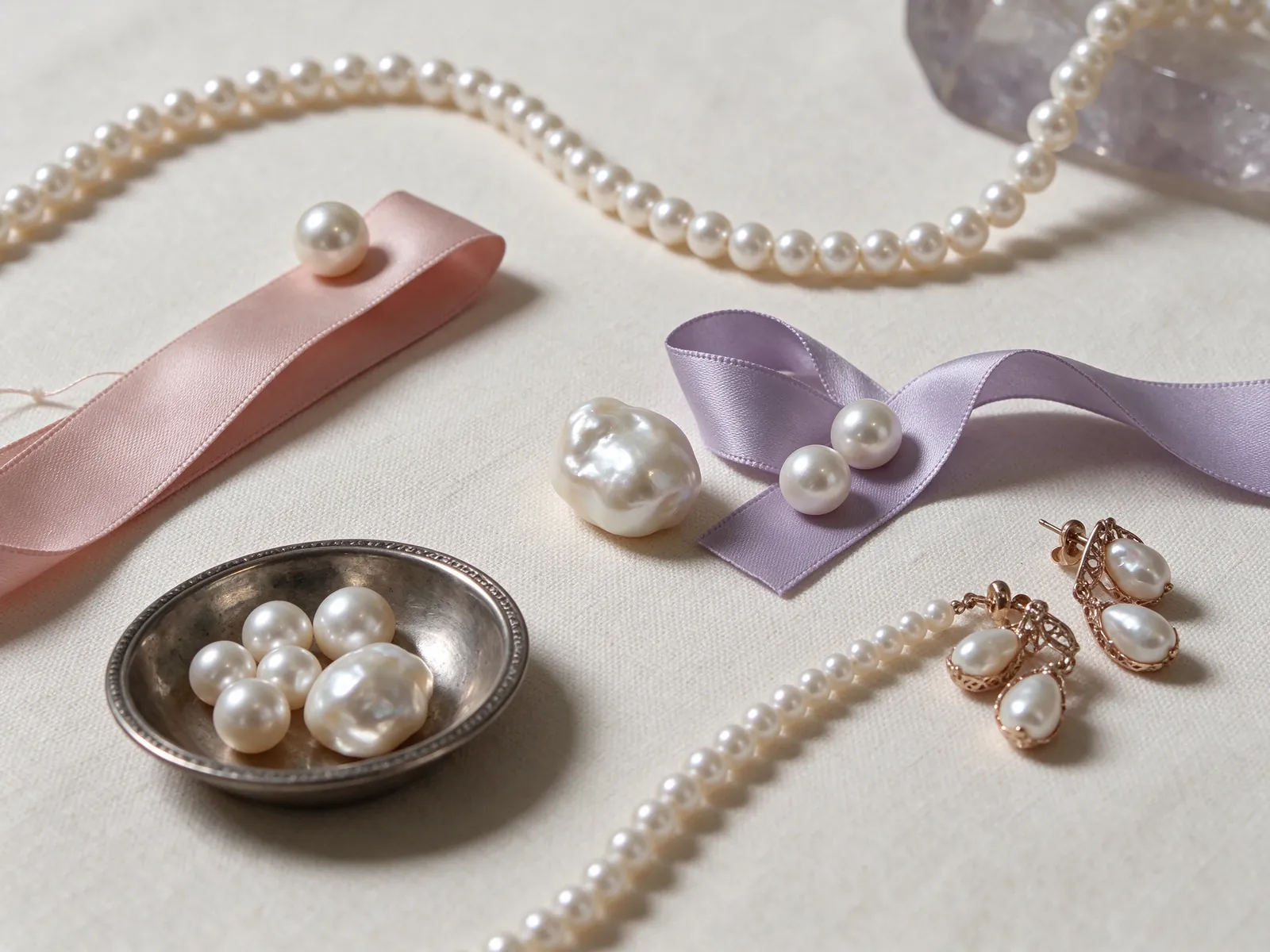
Separate surface observations from nacre measurements
Consider surface features by their location, distribution and visibility during wear. A small feature facing outward on a pendant may draw more attention than one near a setting. Review several angles, including the back where visible, rather than letting a front image stand for the whole pearl. Hanadama is not a promise that surface features are absent. Even pearls with corresponding reports can look different. A clean-looking photograph helps assess appearance but supplies no measurement of nacre thickness.
Shape also deserves its own observation. Examine the outline as the pearl turns, and distinguish the form of one pearl from the visual rhythm of a strand. A preference for a rounded, orderly appearance can guide your choice, but shape alone cannot identify origin or establish natural-versus-cultured identity. Neither diameter nor a bright white appearance is a reliable substitute for a stated nacre thickness result.
Check the scope before using a thickness result
For a thickness result, check the unit, wording and the pearl or group covered. The Pearl Science Laboratory’s published Aurora Hanadama definition applies to white-series Akoya measuring at least 6 mm, with nacre thickness of at least 0.4 mm. Those numbers belong to that laboratory’s named criteria; they are not universal thresholds for all Hanadama or Akoya. The guide to certified Hanadama pearls helps connect the exact name to its conditions. Do not infer measurements from brightness or apply one pearl’s result to objects the document does not cover.
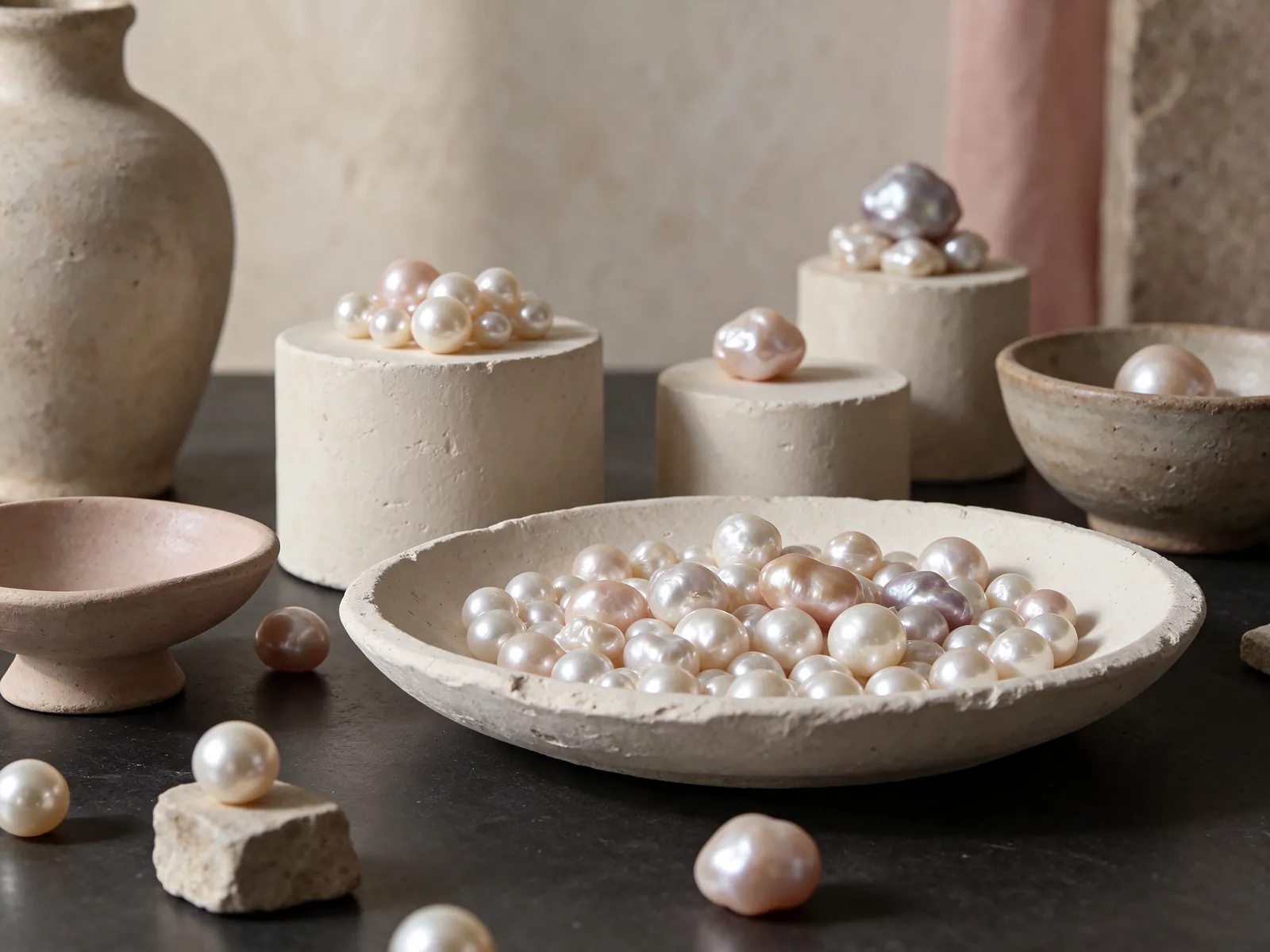
General Hanadama and Aurora Hanadama do not mean the same report
The Pearl Science Laboratory explains that Hanadama is a general term for high-quality pearls without a clear definition. Aurora Hanadama is different: it has criteria defined by that laboratory. Information about Aurora Hanadama pearls should therefore be read with the full designation and matching report, not treated as evidence that every general Hanadama claim is a PSL credential. The definition checks surface under its own standards, allows shapes up to semi-round, and gives particular weight to brilliance and interference color. It does not require absolute roundness in every case.
GIA identifies seven pearl value factors: size, shape, color, luster, surface quality, nacre quality and matching for jewelry containing two or more pearls. This educational framework prevents overlooked factors; it does not convert Hanadama into a GIA grade. Merchant labels such as AAA and AAAA are not automatically equivalent credentials. A report supplies findings for its identified subject, while direct observation supports your aesthetic decision. Neither the checklist nor a designation establishes a price, resale result, repair guarantee or a report held by Flint Jewelry.
Do not force different documents into a shared grade
List each document's clear findings separately and compare only the areas that genuinely address the same question. If an area is expressed differently or is not listed, retain that difference. Inventing a conversion would make the table look tidy while making the conclusion less reliable. Ask what each document covers, what it records and what you still need to examine visually.
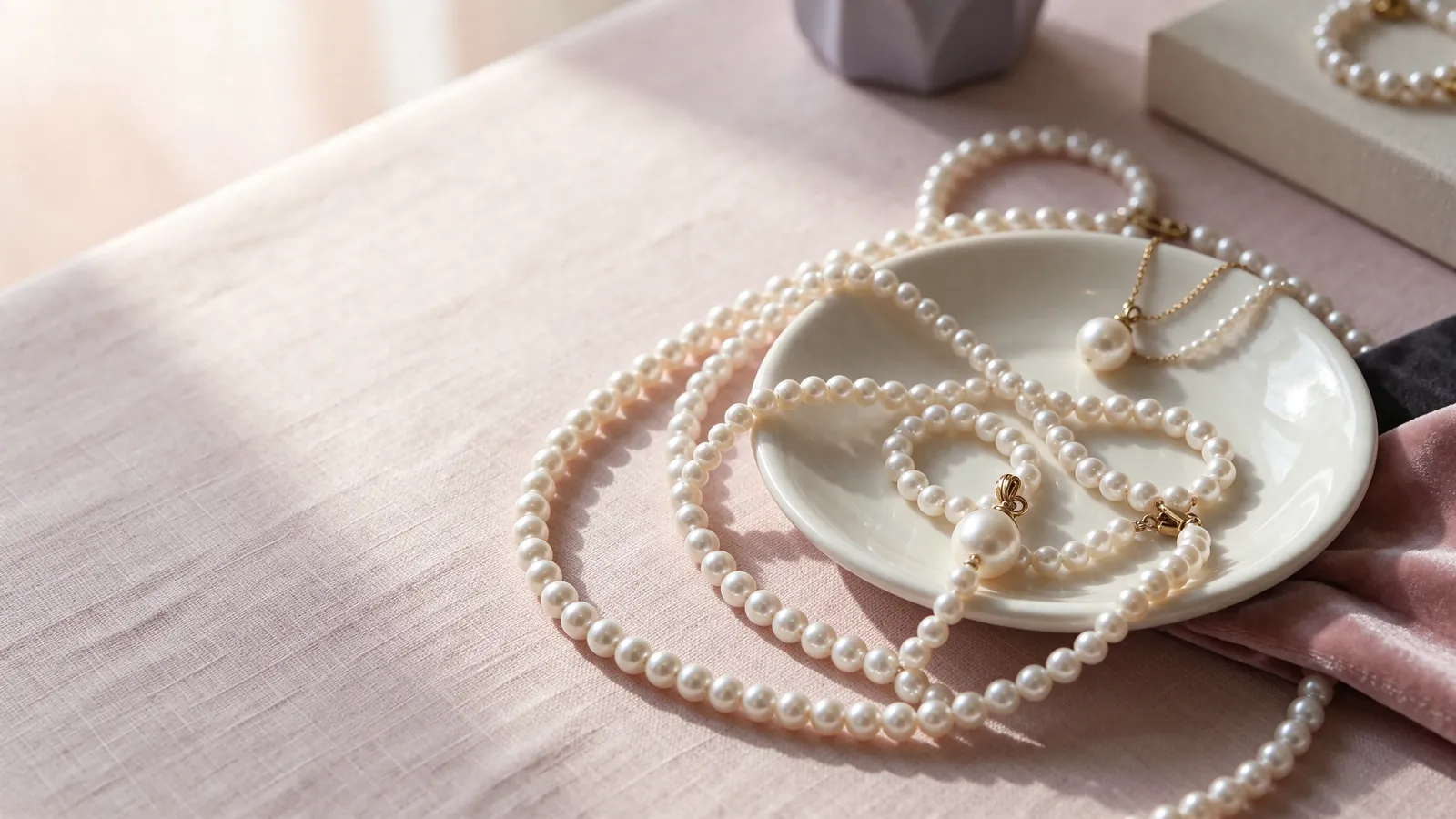
A necklace needs a whole-strand comparison
The Hanadama Akoya pearl necklace guide focuses on the complete strand, including harmony in color, luster, shape and apparent size. Compare a laid-out view with the front-facing curve when worn. Notice an unexpectedly different pearl, but distinguish intentional size graduation from poor consistency. Inspect a strand without the designation just as carefully. If a report is presented for the necklace, confirm that its identifying information corresponds to that strand; a close-up and a report for a separate pearl do not establish whole-strand coverage.
Consider where the strand sits against your usual neckline. A crew-neck top creates a different background from an open shirt collar, and a busy pattern can change how clearly the necklace is seen. Reading about pearl matching quality helps focus attention on the entire piece. Decide whether you want a quiet, coordinated effect or a stronger focal line, then compare the options against the clothes you plan to wear.
Test the look with a regular outfit and a dressier one
Keep the posture and viewing distance similar while comparing each option with a familiar outfit. Record color harmony, brightness and proportion as separate impressions. Then use an outfit intended for a gathering or celebration if that is also part of the necklace's purpose. This practical check complements the document rather than asking a designation to predict every wearing situation.

A pendant concentrates attention on one pearl and its proportion
A Hanadama pearl pendant creates one focal point. Examine the front-facing surface and changes in reflection as it moves, then evaluate whether the setting supports that focus or competes with it. A plain top makes the outline easy to see, while layered jewelry changes the balance. A report for a necklace cannot automatically be applied to a different pendant pearl. Confirm any document’s correspondence to the specific pearl separately from judging the complete pendant’s setting, chain length and visual proportion.
Keep diameter separate from the quality designation. Bigger does not automatically mean Hanadama, and smaller does not automatically mean weaker luster. Read the stated size before judging proportion against your clothing. The pearl size guide can help organize this part of the decision, but an image without clear size information should not be used to calculate diameter. Photos taken from different distances are not a common scale.
Choose a gift around the recipient's preferred jewelry form
Start with what the recipient normally wears. A simple-pendant wearer may prefer one clear focal point, whereas someone who enjoys strands may prioritize matching and neckline balance. Hanadama can be part of explaining the quality concept behind a gift, but it should not be described as a separate species or an all-purpose guarantee. Appearance, documentation and likely use make a fuller explanation.

Bring documentation, appearance and everyday use into the final decision
For each option, make a short list under three headings: documented information, observed appearance and intended use. The first records the report's identity and coverage; the second records luster, visible features and matching; the third records outfits and occasions. Where the choices have different strengths, prioritize your main need before setting a budget. A quality designation is one part of the comparison, not a prediction of personal satisfaction.
Care remains important whatever the designation. GIA recommends a very soft, clean cloth after wearing and says pearls should never be cleaned in ultrasonic or steam cleaners. Avoid contact with perfume and hair spray. Hanadama does not make pearls resistant to scratches or chemicals. Consider thread, glued joints and settings as part of the whole piece; avoid prolonged soaking and abrasive yellow-removal methods. A loose pearl or worn strand needs individual assessment. A quality report is not a promise of a free repair or restoration to the original appearance.
Use precise questions instead of asking only which label is better
Ask which pearls the document covers, which findings concern luster, whether a nacre result is stated and whether comparable views are available. Then evaluate the piece with your regular clothing. This page’s images illustrate styling and knowledge, not species, origin, treatment, size, grade, certification, price or stock. Contact Flint Jewelry on WhatsApp about pearl quality and report terminology. A specific design or document requires individual confirmation; nothing here establishes that it is available.
| What to compare | Akoya carrying the Hanadama designation | Akoya without the designation | Practical decision |
|---|---|---|---|
| Name and issuer | A quality designation generally used for white Akoya | Not one universal low grade | Distinguish the general name from Aurora Hanadama and its report |
| Luster and color | Inspect actual reflections and preferred color | Compare under the same conditions | Do not mistake a color preference for stronger luster |
| Surface and outline | Several views still matter | Assess visible features in several views | Consider how noticeable features are during wear |
| Nacre and report | Read the full designation, findings and covered objects | Interpret any report on its own terms | PSL’s 0.4 mm criterion is not a universal Hanadama threshold |
| Wearing effect | Evaluate strand matching or pendant balance | Apply the same form-specific comparison | Match proportion and neckline to intended use |
Pearl knowledge and authoritative references
The Pearl Science Laboratory’s published Aurora Hanadama definition applies to white-series Akoya of at least 6 mm, with nacre thickness of at least 0.4 mm. These are that laboratory’s named criteria, not standards for every Hanadama designation or specifications of a Flint design.
Read the reference for this factFrequently asked questions
Are Hanadama pearls a different species from Akoya?
No. Hanadama is a quality designation generally used for white Akoya, not a separate species or a special oyster. Distinguish a general name from a laboratory’s particular designation. Neither the name nor a photograph proves unstated origin, treatment status or which document accompanies a piece of jewelry.
Can an Akoya pearl without the Hanadama name still be a good choice?
Yes, it can be considered on its actual qualities. The missing designation alone does not describe luster, surface, proportion or matching. Compare these aspects fairly, read available documentation and decide whether the piece suits your preferences and intended use.
Is a very shiny close-up enough to verify Hanadama?
No. Exposure, lighting and background influence the image, and a photograph cannot identify a report or provide a nacre measurement. Multiple views can support an appearance comparison, but the meaning and basis of the designation need their own documentary explanation.
Can a single-pearl report be applied to an entire strand?
Not automatically. Check the identifying information and the report's coverage before applying findings. A result for one pearl is not a result for every other pearl, and whole-strand harmony in color, luster and shape still requires observation.
How should I weigh the designation when buying a gift?
First consider whether the recipient prefers pendants or strands, their usual neckline and preferred color impression. Then compare appearance and documentation. The designation can help explain the gift, but it cannot replace a style and proportion the recipient is likely to enjoy.
Does Hanadama mean untreated and perfectly round?
No. An explicit treatment disclosure is needed; a white or pink color impression and the name do not prove untreated status. The Pearl Science Laboratory’s Aurora Hanadama definition allows shapes up to semi-round. Verify the exact issuer and report instead of assuming every Hanadama pearl must be perfectly round.
Updated: