

What creates visual balance in a geometric pearl pendant, whether a bar pearl pendant or a rectangle pearl pendant?
When you first compare designs, step back from the pearl close-up and consider the whole composition. A pearl centered on a bar may create a calm rhythm; one placed toward an end can make the eye travel along the line. That visual pull does not tell you how the pendant physically hangs. A useful pearl pendant comparison includes both front and side views, showing whether the pearl overlaps the metal, sits alongside it or occupies an opening in the outline.
With a bar pearl pendant, the main conversation is between a curve and a straight edge. With a rectangle pearl pendant, the space inside the frame becomes part of the design as well. A small visible gap can produce a close, contained impression, while a more open arrangement reveals more of the background. Compare the wearing view with the detail view so you can judge the actual visual relationship to your neckline instead of selecting a shape only because it looks striking when enlarged.
How can neckline placement refine the balance of a geometric pearl pendant when comparing a bar pearl pendant with a rectangle pearl pendant?
Use a top you wear often and compare the outline above the fabric edge, just below it and against the fabric itself. A frame's opening includes the background, so its effect changes between skin and clothing. Check whether a horizontal line disappears into the neckline and whether the pearl stays visible as you turn.

Decide how the direction of the metal fits your clothes
A vertical bar encourages an up-and-down reading, which is worth trying with an open shirt or an uncomplicated crewneck. A horizontal bar brings attention across the chest and may echo a wider neckline. These are ways to compare an outfit, not universal rules about body shape. If you like striped or patterned tops, establish the pendant's outline on a plain background first. Then try your usual pattern to see whether the jewelry remains distinct or becomes another line within the fabric.
A rectangle with an open center can look airy, but thick edges or a pronounced side profile can still give it substantial visual presence. Consider the architectural volume of a pyramid pearl pendant if you are deciding between flat negative space and a shape that reads more strongly from the side. Ask what appeals to you: a clear front silhouette, changing angles or a quiet contrast with the pearl. Then examine any projecting corners and how the piece rests against the body rather than assuming all frames behave alike.
Treat open space as part of the outfit
Try the frame against light, dark and printed fabric. The center does not remain visually empty when you wear it; it reveals the background. A print may fill the opening with competing detail, while a plain top lets its edges read clearly. Choose the effect you enjoy with the clothes you actually use.
Test the resting point beyond a standing mirror view
Begin with the location where you want the bottom of the pendant to sit. Chain length contributes to that location, but so do the bail, the vertical size of the outline and the layer beneath it. For a V-neck, look at the relationship to the opening; for a crewneck, watch whether the edge covers the pearl or crosses the bar. There is no single length that resolves every neckline. An actual outfit test gives you more information than choosing a chain measurement in isolation.
Sit down, lean forward slightly and turn your upper body while observing the pendant. Because geometric designs have direction, a turn or flip can change the composition more obviously than it would with a simpler rounded outline. Try a jacket too, checking whether a lapel, zipper or button pushes the piece aside. If you regularly use a cross-body bag, consider where the strap passes. The aim is to find a position that works in normal movement, not only in a carefully arranged photograph.
Compare a turtleneck with an open collar
Over a turtleneck, assess the outline on fabric and check for uncomfortable pull at the neck. With an open collar, look for the pendant slipping behind the shirt or landing on a button. If you want layered necklaces, add the second one only after checking the geometric piece alone, and avoid repeated contact with the pearl.

Make chain compatibility and contact surfaces part of the choice
When assessing pearl pendant chain compatibility, remember that a chain affects the visual balance above the pendant. A bold chain can draw attention away from a narrow frame, while a very delicate-looking one may appear disconnected from a broad bar. That aesthetic judgment does not establish whether the pieces fit together. Examine the bail opening, the chain and the clasp as a complete combination. If your plan involves a chain from your jewelry box, bring the actual chain into the comparison rather than guessing its fit from a close-up of the pendant.
Look beyond the polished front to the back, corners and pearl attachment. Gently check accessible surfaces and observe contact with fine fabric without dragging or tugging the piece. A smooth-looking silhouette does not guarantee that every edge will meet clothing in the same way. Try operating the clasp yourself so you know whether it suits your routine. If you wear fine knits often, a pendant's rear surface and its tendency to catch or turn can be more useful decision points than a dramatic front image.
Understand the intended connection before swapping chains
Do not assume a wide bail means a removable pendant. The entire clasp needs a clear path through the opening, and a fixed connection may be part of the design. Learn how the piece is meant to operate before changing chains. Never push against the pearl or open a fixed component to make a chain fit.
Evaluate the pearl without letting the frame answer for it
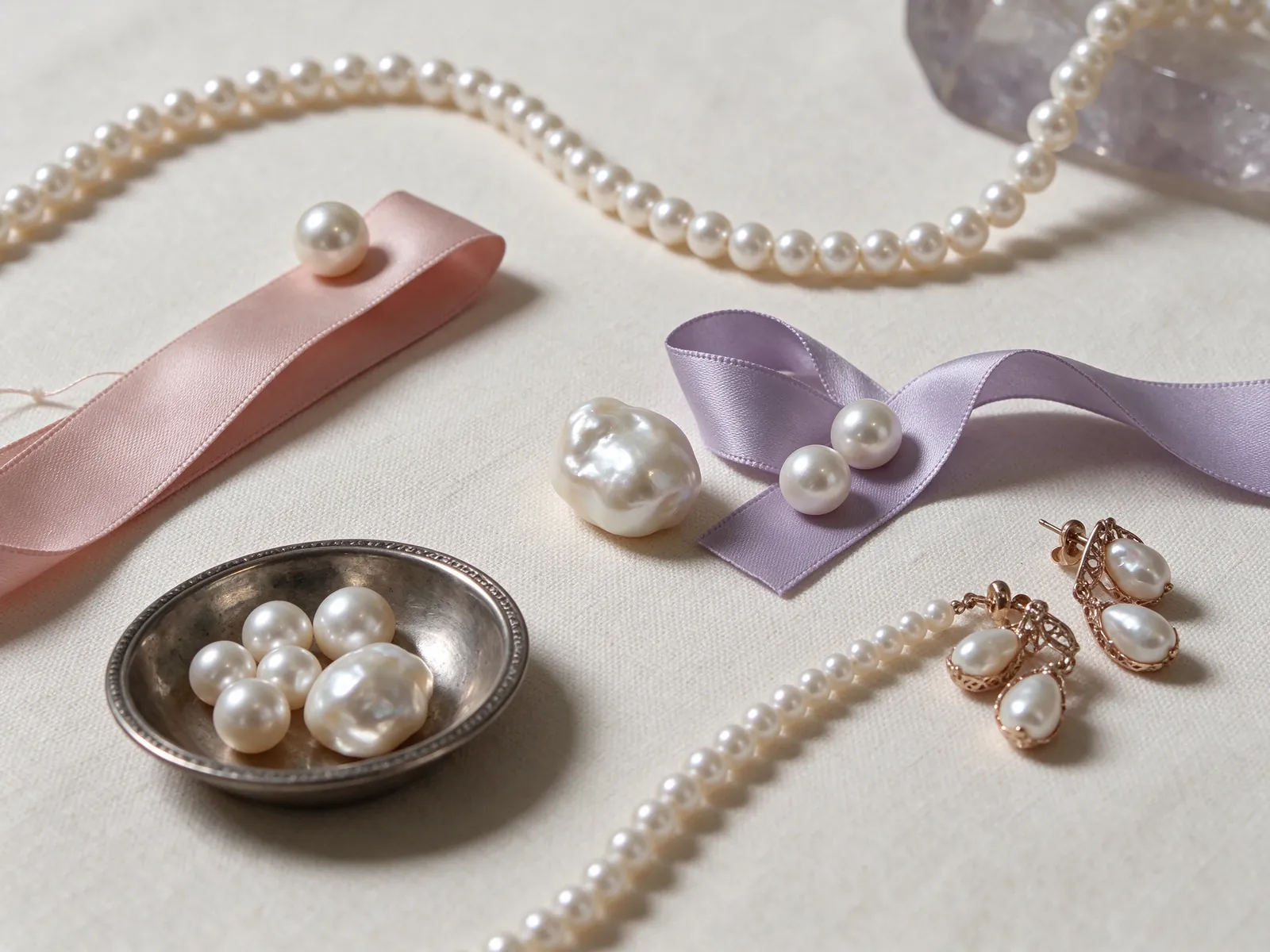
A straight-sided frame can accommodate different pearl outlines visually. A slightly irregular shape may create an expressive contrast, while a more even arrangement may appeal to someone who likes symmetry. GIA lists seven pearl value factors: size, shape, color, luster, surface quality, nacre quality and matching. Use that distinction to separate the pearl's qualities from the setting's design. For a single-pearl pendant, focus on the relevant observations and information rather than treating either roundness or a precise metal outline as a complete quality judgment. Matching concerns how multiple pearls coordinate; for a pendant containing only one pearl, focus instead on that individual pearl.
View the pearl in gentle light and notice the clarity of reflections, then change angles to look at its surface. Frame edges can hide areas, so a side view matters. Backgrounds and metal tones also affect the impression of color; a warm photograph alone is not enough to predict the effect with your wardrobe. When comparing this style with a heart diamond pearl pendant, decide whether you want attention to settle on reflection, decorative detail or silhouette before reading the descriptions of the individual pieces.
Keep design observations separate from identity information
Color and shape cannot by themselves establish where a pearl originated or whether it is natural or cultured. They do not establish certification either. Read identity details independently of styling language, and if documentation accompanies a piece, examine what it actually describes. A carefully made frame is not evidence of the pearl's identity.
Give the pendant a clear role in the full outfit
Start with the pendant alone on a shirt, blazer or plain sweater. Once its outline feels right, decide whether earrings improve the balance. A wider earring silhouette may call for a quieter bar, while a fine frame benefits from a background that leaves the opening readable. More pieces do not necessarily produce a more complete outfit. Leave enough visual room between accessories for the pearl's reflection and the metal line to register, especially if your clothing already supplies pattern, texture or strong seams.
A jacket can shift the best focal point from the neckline to a lapel. Compare a pearl brooch placed on clothing with the central line usually created by a pendant. The fabric and placement discussion in how to wear a pearl brooch offers another way to think about that choice. You may prefer the pendant alone or a separate accent on the outer layer. If you combine both, avoid placing the brooch right beside the pendant's lowest point, where their outlines can compete for the same small area.
Use a neutral top before choosing a color relationship
A plain white, gray or dark background helps you see whether you prefer gentle blending or a stronger contrast. Then compare your usual warm and cool clothing colors. Accessories do not all need the same metal tone, but repeating a tone in another part of the outfit can create a useful sense of connection.

Plan gentle care around the pearl and its attachment
A frame does not make a pearl immune to knocks or unsuitable cleaning. GIA places pearl at 2.5 on the Mohs hardness scale and states that pearls should never be cleaned in ultrasonic or steam cleaners. Wipe with a very soft, clean cloth after wearing, paying attention to residue near the setting without scraping the gap with a pointed tool. If a connection is hard to reach, use care guidance appropriate to the complete piece instead of applying extra pressure to the pearl or its attachment.
Apply perfume and hair products before putting the pendant on, and avoid acids and excessive heat. In storage, separate it from jewelry whose edges or clasps could rub the pearl. Lay the chain gently rather than wrapping it tightly around the frame. Before wearing again, look for a knot, unexpected movement near the pearl or a clasp that no longer closes normally. If you notice a change, set the piece aside rather than testing the connection by pulling on it or continuing to wear it through the problem.
Pack the shape without compressing it
Use a soft separate pouch or an individual compartment so the pendant rests without hard accessories against it. Keep the chain apart from things it can catch, and avoid pressing the frame tightly to secure the pearl. When taking it out, untangle the chain gently before lifting the pendant to limit unnecessary strain. Want to compare geometric shapes with your everyday necklines and a chain you already own? Contact Flint Jewelry on WhatsApp +85260106207 to discuss your pendant styling preferences.
| Decision point | Bar design | Open frame | Practical test | What to ask |
|---|---|---|---|---|
| Visual balance | Notice the pearl's position along the line | Notice its relationship to the opening | Compare a full wearing view on a plain top | Where does my eye settle first? |
| Direction | Try vertical and horizontal outlines | Look at long edges and projecting corners | Compare with collar and shirt lines | Does the shape remain distinct? |
| Resting position | Check changes when the bar rotates | Check contact with the neckline edge | Sit, turn and try an outer layer | Is the pearl visible during movement? |
| Chain fit | Compare the chain's visual emphasis | Compare the chain with the frame's edges | Use the actual chain and clasp | Does it fit and move as intended? |
| Care and contact | Watch the attachment area | Watch corners and inner connections | Wipe gently and store separately | Is there catching or unusual movement? |
Pearl knowledge and authoritative references
GIA describes seven pearl value factors: size, shape, color, luster, surface quality, nacre quality and matching. The geometric setting contributes to style but does not replace assessment of the pearl itself. Matching concerns how multiple pearls coordinate; for a pendant containing only one pearl, focus instead on that individual pearl.
Read the reference for this factFrequently asked questions
Should I choose a frame if I want a minimal look?
Only if you prefer the complete composition. Fine edges can look open and quiet, but broad frame edges can be visually strong. A bar may also be understated. Compare each outline with your normal clothing rather than assigning a style to the shape name.
Does an off-center pearl mean the bar will tilt?
Not necessarily. Visual placement does not establish physical hanging balance. The bail, connection and overall weight distribution affect behavior. Observe front and side views and actual movement before deciding whether the resting angle suits you.
What should I check before using my own chain?
Confirm that the pendant is intended to be removable, then compare the bail with both the chain and its clasp. Test the final combination for movement and placement. Do not force a clasp through an opening or alter a fixed connection.
Can an irregular pearl work inside straight metal lines?
Yes, the contrast may be part of what you enjoy. Judge its position and the space around it, then consider luster, surface and other quality factors separately. Perfect roundness is not the only consideration in either style or pearl quality.
Can I clean the whole framed pendant with steam?
No. GIA advises against steam and ultrasonic cleaning for pearls. The metal frame does not change that guidance. Routine care uses a very soft, clean cloth, with no pointed tools scraping around the pearl or its attachment.
Updated: