

What Can Front and Side Views Show When Comparing coin pearls and flat pearls with disc shaped pearls?
Think of coin pearls as a shape description to investigate, not a promise of a perfectly uniform disk. From the front, trace the visible outline: does it look rounded, slightly stretched or uneven at particular points? Comparing it through the pearl shape guide makes it easier to separate the silhouette from the volume behind it. Your first decision is whether that outline appeals to you, before judging what its name might suggest.
Then turn your attention to the profile. Flat pearls can look broad from one direction but narrow from another, and the center may curve more than the edge. Disc shaped pearls do not necessarily have matching front and back surfaces. Ask for views that explain all three areas rather than relying on a single face-on image. A tilted camera can stretch the apparent outline or hide thickness, so photographs should be read together.
For coin pearls and flat pearls, Why Doesn't the Term disc shaped pearls Confirm Pearl Identity?
An outline cannot establish species, origin or natural versus cultured identity. WSP includes coin shapes in its freshwater pearl discussion, giving context for the term rather than an identification rule. For an individual pearl, read identity information separately. A recognizable disk-like form is not a substitute for the description or applicable identification documents.

Compare the actual profile, not every circular front view
Start by checking whether the two faces seem gently curved, unevenly raised or relatively flat. The location of the thicker area can change the impression even when the front outline remains similar. A comparison with half round pearls is useful when you want to understand the relationship between a domed face and its base. Do not combine these descriptions merely because both may look round from above; the side view supplies the important distinction.
If the outline looks stretched, compare the longest direction with the full body rather than deciding from the word oval alone. Looking at oval pearls can help distinguish a fuller three-dimensional form from a flatter face that happens to be elongated. Use a consistent viewing angle when comparing two examples. A straight-on image beside a sloping one may exaggerate differences in roundness, leaving you to compare photography rather than the pearls' appearance.
Use movement to understand the edge
A rotating view can show where the broad face gives way to the thinner edge and whether the reverse has a similar curve. Watch that transition rather than following only the moving highlight. It is a practical visual aid, not a measured cross-section, but it can make an otherwise ambiguous profile easier to understand.

Look beyond the brightest reflection on a broad surface
A wide face may draw your eye to one bright spot, but the surrounding surface deserves equal attention. GIA separates luster from surface quality in its pearl value factors. Examine how clearly light is reflected and where visible surface features sit, instead of treating a bright photograph as a complete quality assessment. Similar lighting across comparison images is helpful; otherwise, a change in lamp position can seem like a difference in the pearl itself.
A feature at the center of the displayed face can have a different visual effect from one near a covered edge. Decide which areas will matter in normal wear before dismissing every irregularity as equivalent. When the feature is a ridged appearance, circle pearls provide a related but distinct topic: a ringed surface description does not answer the same question as a flattened outline. Consider texture, placement and overall luster together.
Name the color effect you are comparing
GIA distinguishes bodycolor, overtone and orient; not all pearls show all three. When comparing pictures, say whether you mean the overall hue or an apparent surface color effect. Similar backgrounds help because nearby clothing and lighting can change the impression. A colorful reflection alone does not identify origin, species or treatment status.
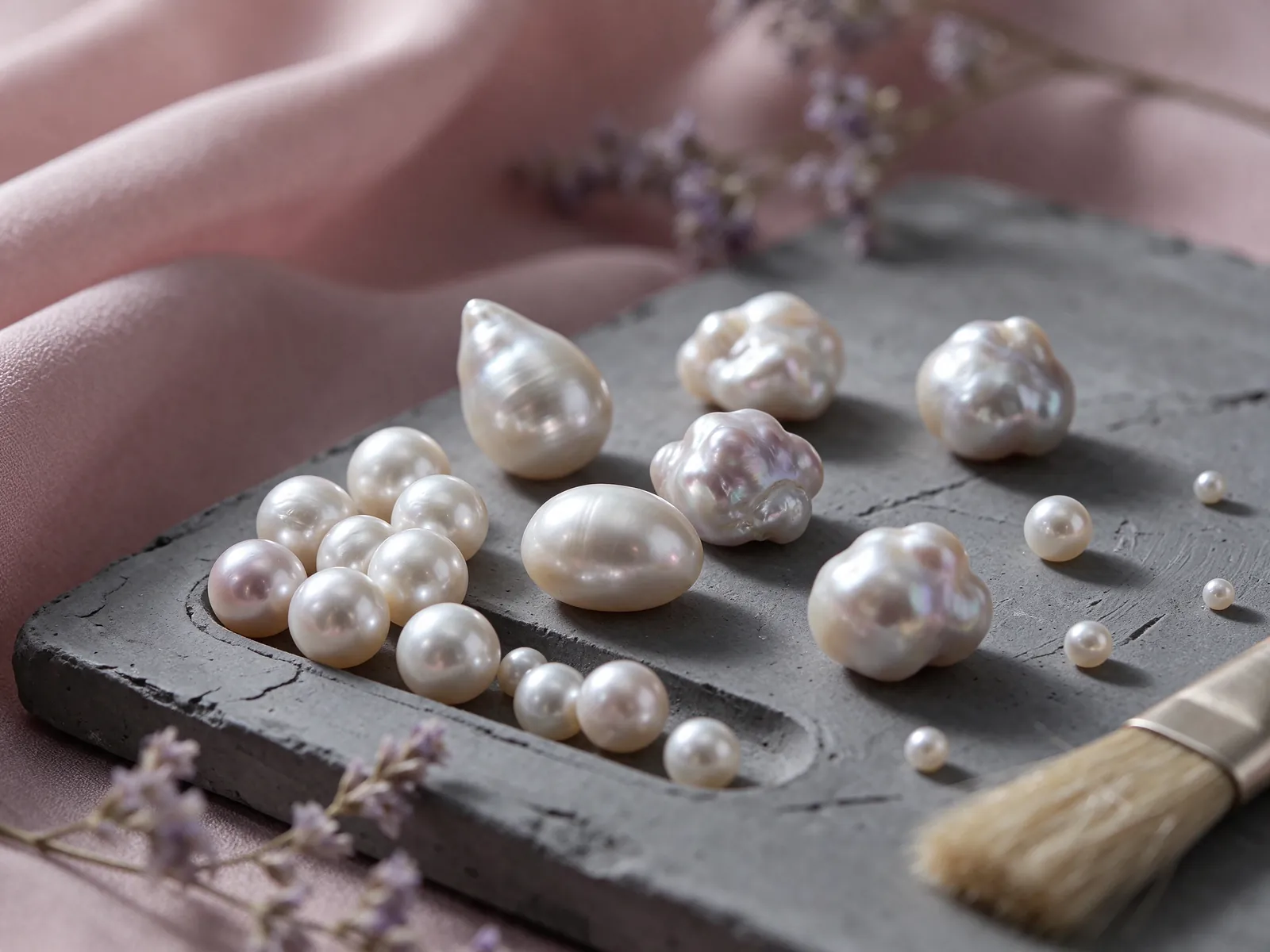
Connect measurements to visible scale and orientation
A flattened pearl is not fully explained by an unlabeled size figure. If measurements are supplied, find out whether each refers to face width, maximum length or side thickness. Those directions describe different aspects of the object. Also separate real measurements from apparent size on a screen, where cropping and scaling can enlarge a small subject. A thin profile can still present a broad visual area, so thin should not automatically be read as discreet.
For styling, consider how the face will point and whether movement can expose the edge or reverse. A broad disk may create a different impression as it turns. If you are choosing between a wide focal area and a downward line, compare drop shaped pearls for their tapered outline and directional effect. The goal is to identify your preferred visual rhythm, not to treat a shape as inherently formal, casual or suited to everyone.
Check what a connection changes
A visible attachment, hole position or setting may cover an edge or influence which face points outward. Ask how the pearl sits during normal movement and compare both faces accordingly. Understanding orientation is more useful than assuming the most attractive photographed face will always be the only one you see.
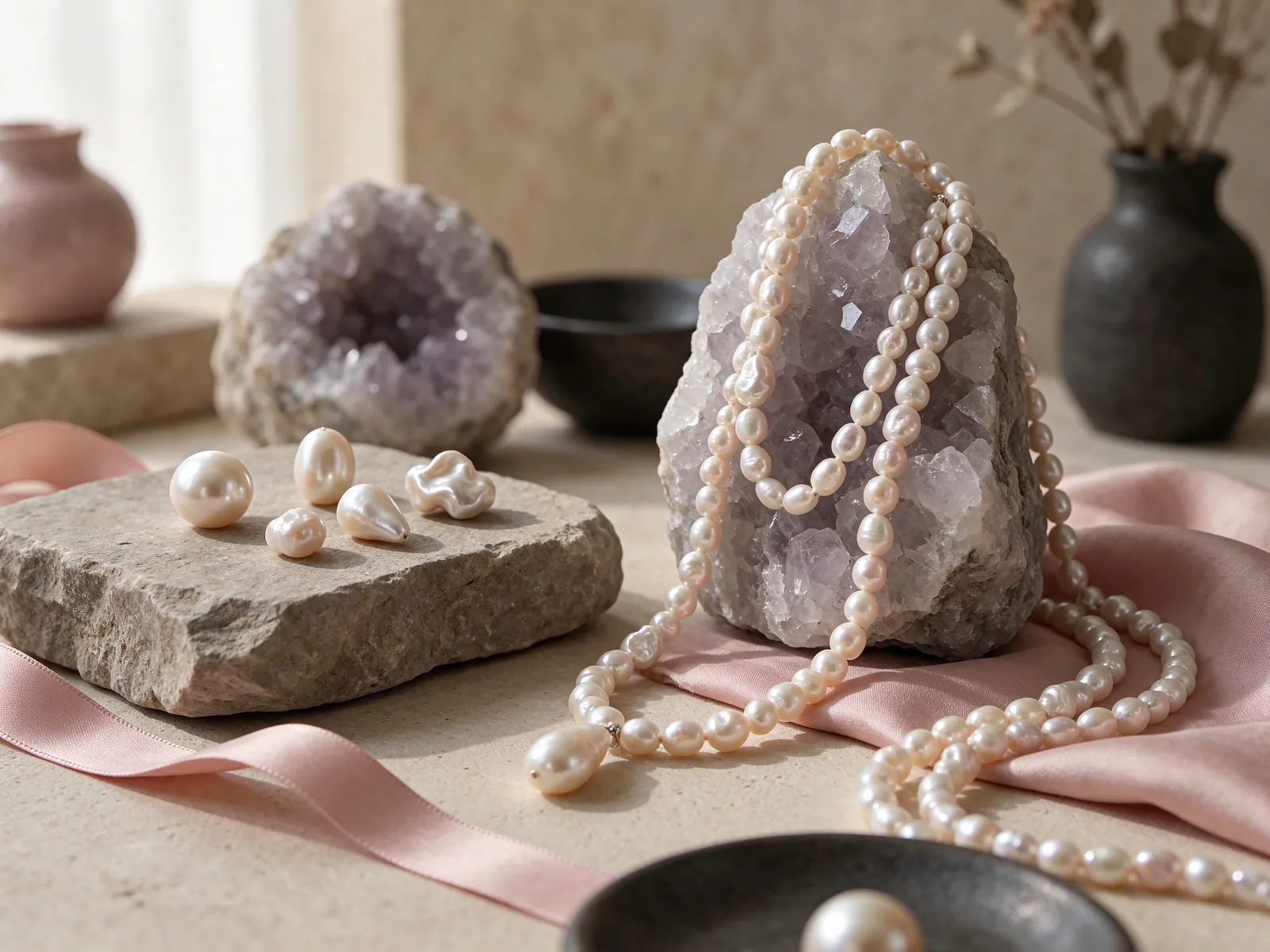
Give the rounded outline room within an outfit
A quieter neckline or plain fabric can make a broad silhouette more legible. With large circular prints or dense embellishment, that same outline may blend into the background or compete with it. Try imagining the pearl against your usual clothing before seeking a larger focal piece. Sometimes fewer nearby accessories or a clearer background does more for the shape than extra visual size. The best starting point is how you actually dress, not a display arrangement.
Mixed shapes can work when their roles are clear. The extended direction of stick pearls contrasts with a broad disk, while rice shaped pearls offer another slim-outline reference. Use those comparisons to decide whether you want compact visual weight or a more linear sequence. You do not need to repeat one shape throughout an outfit, but several equally strong elements may hide the rounded form that attracted you in the first place.
Choose the kind of consistency you want in a group
Compare a pair or group in the same light, against one background and at similar angles. Look at thickness, outline, color and luster as a set. Matching is a GIA value factor, but your visual preference may allow variation. Judge whether differences feel balanced together rather than evaluating only the most flattering individual view.
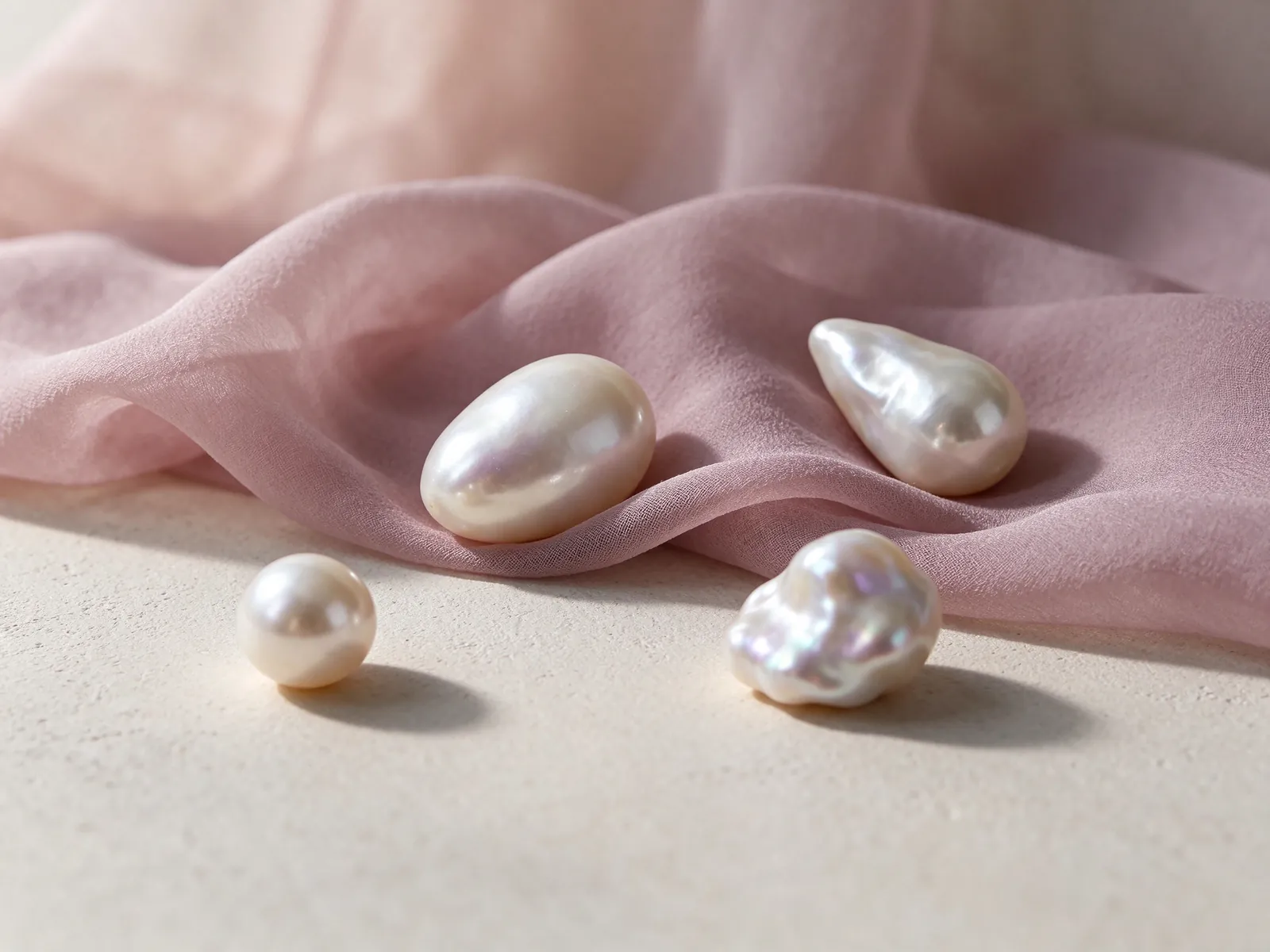
Read shape information and pearl identity as separate subjects
Coin, flat and disc-shaped are understandable descriptions of appearance, but they leave other questions open. Read any stated pearl type, origin and natural or cultured identity on their own terms. When documents accompany a pearl, consider what they actually cover and the pearl or group to which they apply. Do not add unstated identity details simply because the shape resembles an example you have seen elsewhere. A useful description should be read for what it says, not what it evokes.
GIA identifies seven pearl value factors: size, shape, color, luster, surface quality, nacre quality and matching. This is particularly relevant when a pleasing rounded face dominates your first impression. Shape is one factor, not a complete grade for everything else. Organize a comparison around the appearance you prefer, then consider the separate information available for each factor. That approach is more informative than treating a coin label as a shorthand for overall quality.
Make your questions concrete
Describe the outline, apparent thickness and wearing direction you have in mind. Ask for front, reverse and profile views, clarification of measurement directions and the identity information provided. These requests address distinct parts of your decision. A general question about a supposed coin-shape grade would not explain the same practical details.
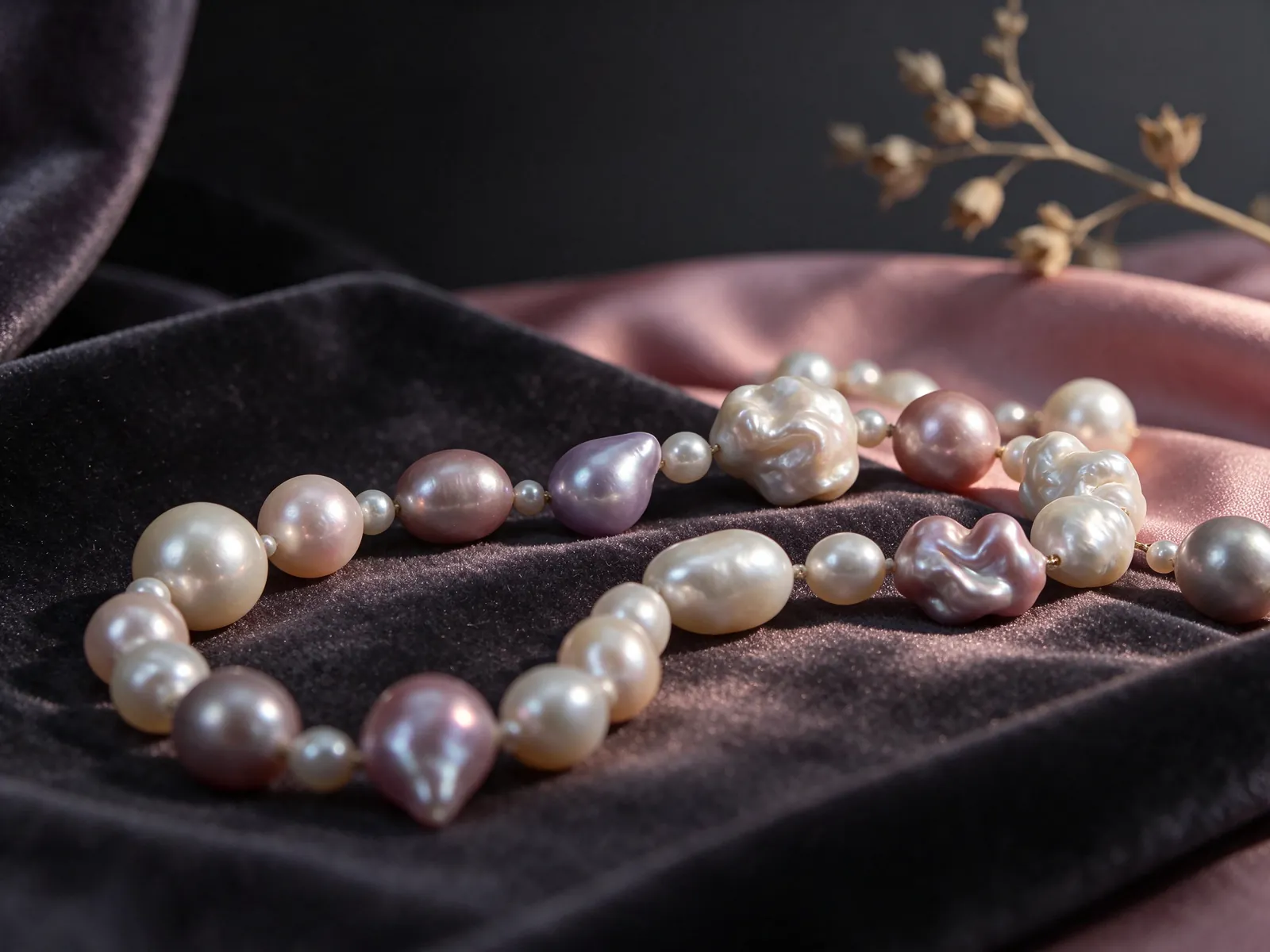
Care for the broad face without aggressive polishing
Pearl has a Mohs hardness of 2.5 according to GIA. Reduce contact with harder objects, including pressure or rubbing from other jewelry during storage. Both the face and edge of a flattened form need that consideration. The hardness figure does not predict a fixed lifespan or certify resistance to impacts for this shape. Its practical lesson is to avoid abrasion and unsuitable cleaning, rather than using the number as a durability promise.
Wipe gently after wear with a very soft, clean cloth, and avoid acids, perfume, hair spray and excessive heat. GIA advises never using ultrasonic or steam cleaners on pearls. If a strung piece is cleaned with water, let the string become completely dry before wearing it again. A large visible face does not require more force to clean, and a thin profile does not make the material waterproof. Avoid improvised polishing products intended to intensify the shine.
Notice changes without testing the surface by force
Before wearing, inspect the familiar outline under soft light and note new edge damage, surface changes or looseness at a visible connection. If something is damaged or loose, stop wearing it and seek an appropriate assessment. Do not pull the connection or attempt a glue repair; routine observation should remain gentle. To discuss a flattened outline, the two faces or wearing direction, contact Flint Jewelry on WhatsApp +85260106207 and share the pearl shapes you prefer.
| Area to compare | Visible detail | Question to ask | Why it matters in wear |
|---|---|---|---|
| Front silhouette | Rounded outline, stretched direction and edge changes | Was the image taken straight on? | A plain background can clarify the broad shape |
| Profile and reverse | Face curves, edge thickness and two-sided differences | What direction does each dimension measure? | Turning may reveal a different visual area |
| Luster and features | Reflection clarity and the location of surface features | Are the images under comparable light? | The displayed face drives the first impression |
| Pair or group | Outline, thickness, color and luster across the set | Are all views at similar angles? | Variation should be judged within the whole arrangement |
| Identity and care | Stated identity details and applicable documents | Which questions does the information answer? | Keep away from abrasive contact and unsuitable cleaners |
Pearl knowledge and authoritative references
GIA lists seven pearl value factors: size, shape, color, luster, surface quality, nacre quality and matching. A disk-like outline describes one of those factors, not the full quality assessment.
Read the reference for this factFrequently asked questions
Do disc-shaped pearls have identical front and back faces?
Not necessarily. The description does not guarantee equal curves, a uniform edge or two flat surfaces. View the front, reverse and profile together to understand the actual proportions.
Why can a thin coin pearl still look prominent?
Side thickness and front-facing area are different aspects of scale. A thin profile can accompany a broad face. Judge the visible outline against your normal clothing and read the measurement directions rather than using thin as a synonym for small.
Does a baroque description automatically mean coin-shaped?
No. Baroque concerns irregular form, whereas coin describes a flattened, disk-like impression. The terms can overlap in an appearance, but one does not automatically establish the other or identify the pearl.
Can a bright front-view photo establish overall pearl quality?
No. Lighting affects the photograph, and GIA considers seven value factors rather than shape or luster alone. Compare the surrounding surface and other views, and read separate information for the factors a photo cannot establish.
Is steam cleaning suitable for a broad, flat pearl surface?
No. GIA advises against steam and ultrasonic cleaning for pearls regardless of a flattened appearance. Gently wipe with a very soft, clean cloth after wear and avoid abrasive contact, acids, perfume and excessive heat.
Updated: