

Understanding oval shaped pearls through the proportions and outlines of oval pearls and potato pearls
The simplest way to read an oval pearl is to locate its longest direction and compare it with the width across the body. Some outlines feel compact and full; others look more elongated. Make comparisons with the pearls pointing in the same direction. The amount of space a pearl occupies in a photograph depends on framing and distance, so it is not a reliable measure of actual size.
Use proportions as descriptive information, not as a universal naming cutoff. Turning a pearl changes the outline you see, and a slightly longer body may appear nearly circular from another angle. The pearl shape guide can help you compare silhouettes, but your own preference should be specific: a fuller middle, a more visible long axis, or gentler transitions towards the ends.
A closer look at oval shaped pearls: comparing the ends and side curves of oval pearls and potato pearls
Examine whether the ends are equally rounded and whether either side has a noticeable swell or indentation. A softly rounded oval with some unevenness may be called potato-shaped. Rather than asking the name to guarantee symmetry, follow the actual curves. This gives you a clearer vocabulary for discussing the silhouette you enjoy and the differences you would notice when wearing it.

Separate a shape description from identity and quality
Potato pearls describes a rounded oval appearance. It does not specify a bodycolor, diameter, grade or origin. WSP includes the term in its freshwater pearl introduction, which is useful context for the name. It should not be reversed into a rule that identifies every pearl with that outline. An individual pearl's identity needs its own information, independent of visual shape terminology.
Choosing an oval instead of round pearls is a decision about the line you want, not an automatic move down a quality ladder. GIA evaluates pearls through seven factors, including shape as well as size, color, luster, surface quality, nacre quality and matching. Start with whether you like the silhouette, then examine those other qualities instead of making the outline carry every judgment.
Use each part of a description for the question it answers
Dimensions help you understand scale and proportions; images help you inspect visible curves; identity information addresses what the pearl is. None replaces the others. If treatment or identity information is provided, read it directly rather than guessing from the oval label. A photograph of a pleasing shape does not establish natural versus cultured identity or prove that a certificate exists.

Compare neighboring silhouettes before settling on an oval
Like ovals, rice shaped pearls also draw the eye along a long direction, so compare more than the name. Look at the body width, the fullness of the middle and the way the sides narrow at each end. A side-by-side view lets you decide whether you want a softer, more substantial curve or a slimmer line without assuming every example in either category shares the same proportions.
The contrast with drop shaped pearls is often most useful at the ends. A drop emphasizes a narrower end against a fuller one; an oval is understood by comparing its rounded ends and overall balance. If a setting conceals a tip, ask to understand the full body rather than filling in the hidden shape mentally. Slight asymmetry alone does not make every oval a drop.
Describe the silhouette in plain, visible terms
Try describing your preference as ‘rounded at both ends, full through the middle and not too narrow’. Alternatively, say that you want a pronounced long axis without a pointed tip. Such language communicates your taste more clearly than a single category name. It also leaves room to compare individual pearls honestly rather than expecting identical geometry from every example.
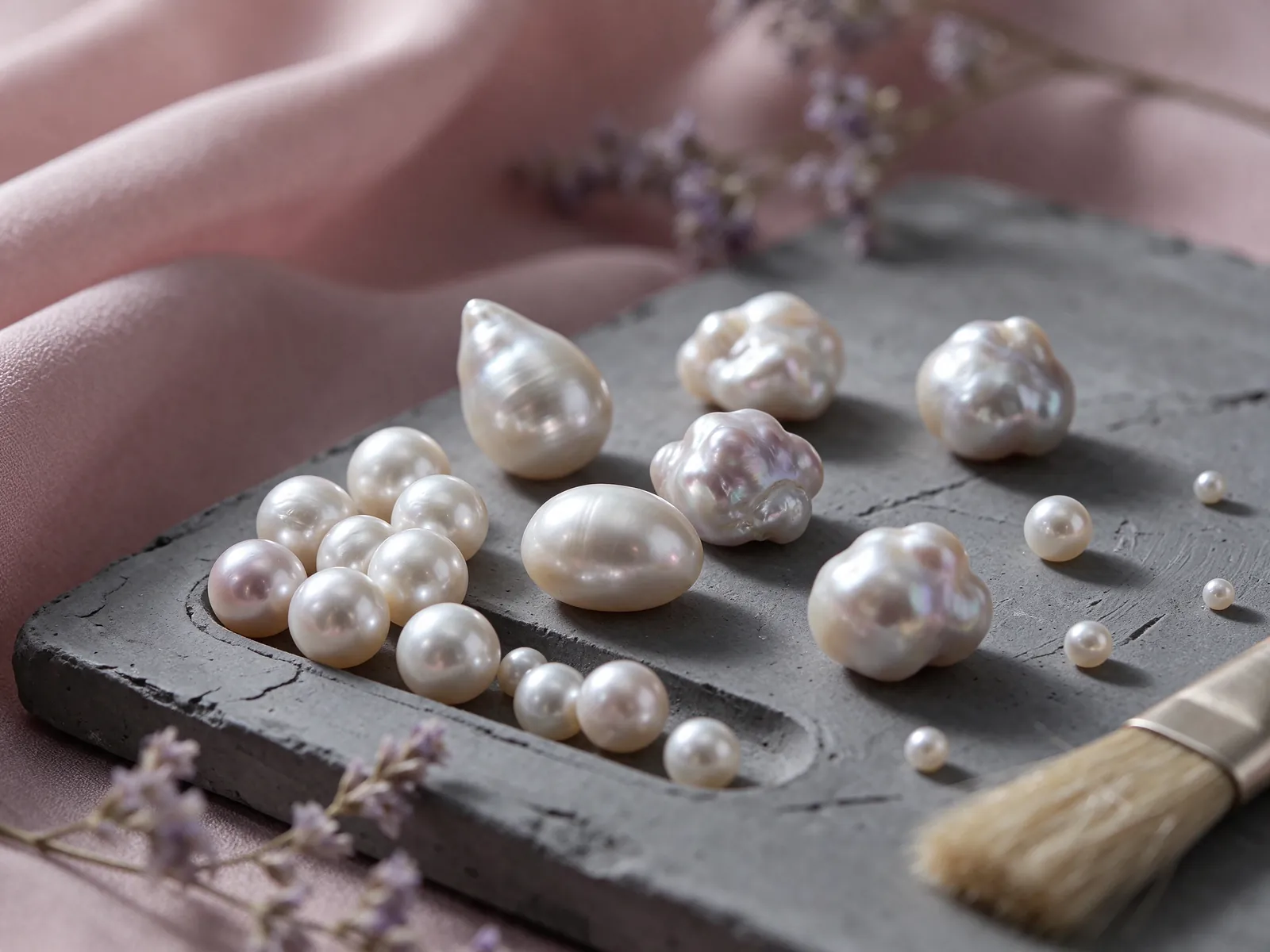
Read the edge first, then study reflections and surface details
A bright highlight can distract from an outline, while a shadow can make a side appear narrower than it is. Start by tracing the boundary of the pearl in an image that is not washed out. Then look at the reflections and visible surface features separately. A front view explains the face you see; a side view adds information about depth and local curve changes.
A mounted pearl may show only part of its body. The setting can cover an end, and the drilling or attachment direction can determine whether the long axis appears upright or sideways. Compare a close view with a view of the complete jewelry design. That combination makes it easier to understand which curves remain visible and how the pearl's position contributes to the overall appearance.
Identify the actual feature behind a concern
If something looks uneven, decide whether you are seeing a change in the outside curve, a surface feature or simply a reflection. Look from another angle where possible. Describing the specific feature is more helpful than saying the pearl is ‘not round enough’ when an oval was the intended choice. It also keeps a shape preference separate from an assessment of luster.
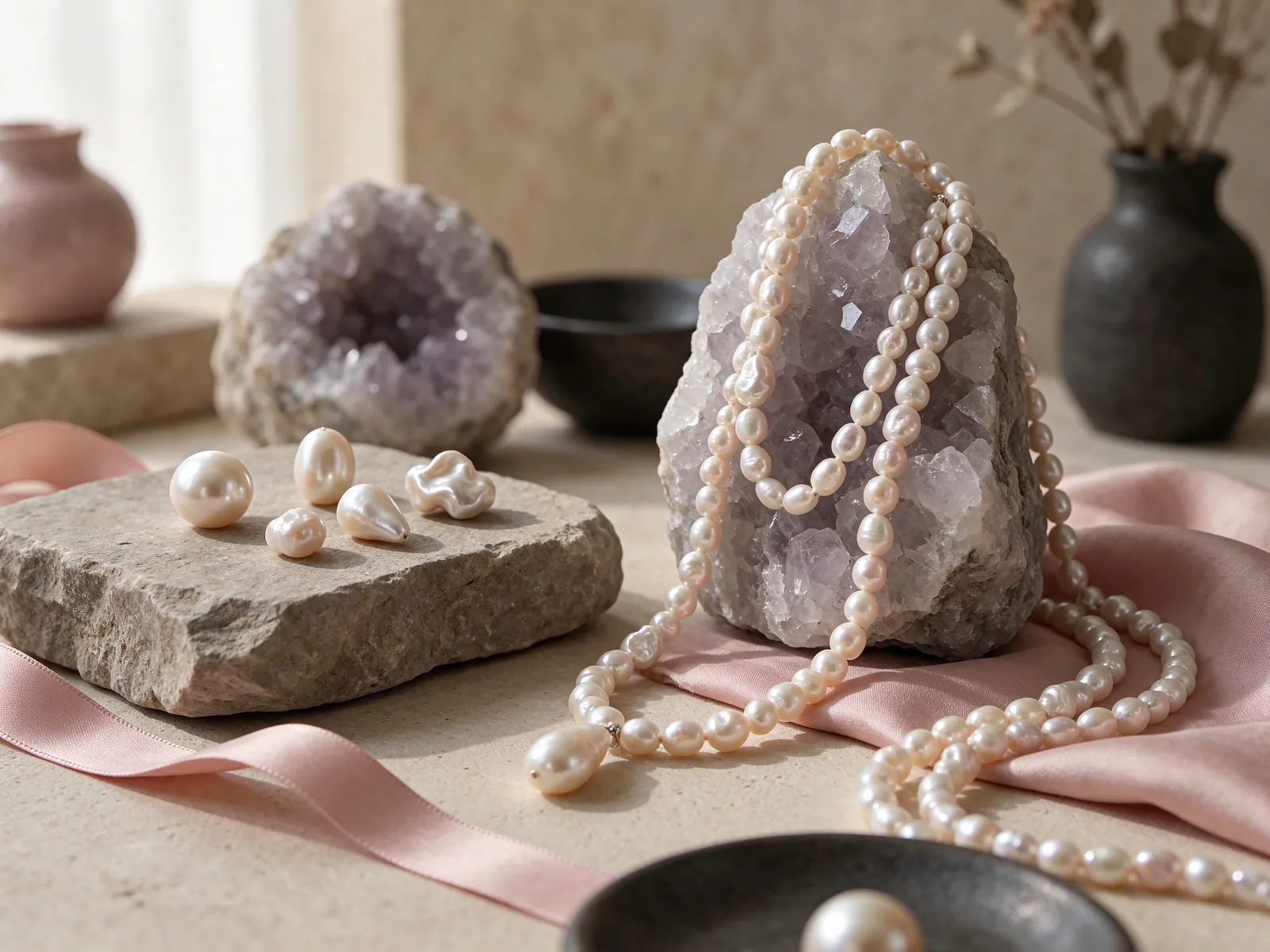
Choose an orientation that works with your clothing
An upright oval creates a different visual line from one arranged across the body. Neither direction is universally better, and neither guarantees a flattering result for every person. Compare the silhouette with a familiar neckline or collar. Patterns, seams and the space around the pearl affect how clearly its long axis stands out, so a close-up alone cannot show the whole styling effect.
A quieter fabric background can make a softly rounded outline easier to appreciate. A stronger contrast at the boundary may emphasize the long direction. Think about color separately: dark clothing, warm tones and glossy fabrics change the reflections you notice, but they do not change what the shape name means. Evaluate the combination in lighting similar to the setting where you expect to wear it.
Consider contact and movement, not just the photograph
Notice where the pearl might meet a jacket edge, scarf or collar, and how the mounting allows it to move. A preference for an elongated outline is not necessarily a preference for more size. The practical choice brings together the visible shape, its wearing position and your usual clothing. A beautiful isolated image is only one part of that decision.

Decide how much variation belongs in a matched group
For a pair or group of ovals, compare end fullness and orientation alongside length and width. One pearl can feel rounder while another looks more tapered even if their lengths are similar. If you like the individuality of baroque pearls, unevenness may be intentional. Decide whether those differences create the rhythm you want or interrupt a design you expected to feel balanced.
When comparing an oval with coin pearls, consider the fuller body against a flatter face instead of assuming a similar front outline means a similar profile. With stick pearls, the contrast is between rounded curves and a stronger linear form. For a mixed arrangement, decide whether the goal is repetition, progression or deliberate contrast before examining each pearl's visible volume and direction.
View the whole group in a consistent setting
Pictures taken separately can hide differences through changes in angle or exposure. Look at the group together against one background under the same lighting, then inspect each pearl. Matching also involves color, luster and size relationships. You can welcome natural-looking variation while still defining which differences would disturb the overall balance you want.

Protect the outline and ask useful questions before choosing
Rounded ends do not make a pearl resistant to scratches. GIA places pearl at 2.5 on the Mohs hardness scale, so keep exposed sides and tips from rubbing against harder jewelry. Wipe pearls after wearing with a very soft, clean cloth. Avoid acids, perfume, hair spray and excessive heat. Ultrasonic and steam cleaners should never be used for pearls.
Before choosing, organize your questions around appearance and daily use. Ask about proportions, end shapes, side views and matching, then consider the fixed orientation, covered areas and likely contact with clothes. If strung pearls are cleaned with water, GIA says the string must be completely dry before wearing. A dry-looking pearl surface is not a reason to overlook moisture in the string.
Keep your decision tied to observable preferences
Write down the features that matter most, such as a full center, gentle ends and similar long-axis direction within a group. Compare those preferences with the actual visible outline and wearing arrangement. The names oval and potato make useful starting points, but a well-informed choice depends on the curves you see, the variation you accept and how the design fits your everyday style. For a discussion of oval pearls, potato pearls or other silhouettes, contact Flint Jewelry on WhatsApp +85260106207 with your preferred curves, orientation and everyday styling.
| Observation | Look for | Avoid assuming | Question to ask | Wearing consideration |
|---|---|---|---|---|
| Long axis | Fullness versus elongation in the same orientation | A larger crop means a larger pearl | How do the length and width relate to this view? | Choose an upright or sideways visual line |
| End shapes | Rounded tips and differences in taper | All uneven ovals are drops | Is either end hidden by the setting? | The exposed tip affects the silhouette |
| Side profile | Body depth and local curves | Front and side outlines must match | Can the side profile be seen? | Consider collars, scarves and jacket edges |
| Group balance | Shape, color, luster and size relationships | A shared name guarantees matching | Can the pearls be viewed together under one light? | Decide which variation feels intentional |
| Care | Protection from harder objects | Rounded pearls resist scratches | Where is contact likely during wear? | Wipe gently and avoid unsuitable cleaners |
Pearl knowledge and authoritative references
GIA describes 7 pearl quality factors: size, shape, color, luster, surface quality, nacre quality and matching. The oval silhouette is only the shape component, not a complete quality judgment.
Read the reference for this factFrequently asked questions
Is potato-shaped a pearl grade?
No. It describes a rounded oval appearance rather than a grade. GIA considers shape alongside other quality factors, so the term alone does not tell you the luster, surface quality, nacre quality or matching of an individual pearl.
Can two oval pearls with similar lengths still look different?
Yes. Width, end fullness, side curves and orientation can create different silhouettes. Compare the actual pearls together rather than using length or the category name as the only measure of similarity.
How can I tell whether I prefer an oval or a drop?
Focus on the ends. Decide whether you enjoy two softly rounded ends or the directional contrast of one narrower end and one fuller end. Examine the full body where possible because a setting may cover the feature that matters most.
Does wearing an oval vertically always create a better look?
No direction is universally better. An upright oval and a sideways oval produce different visual rhythms. Compare them with your clothing, neckline and the surrounding design, and consider how the pearl will move or touch fabric.
Do oval pearls need different cleaners from round pearls?
Shape does not make ultrasonic or steam cleaning suitable. GIA advises never using those methods for pearls. Wipe gently after wearing, avoid acids and excessive heat, and allow the string of water-cleaned strung pearls to dry completely before wearing.
Updated: