

Viewing half round pearls, hemispherical pearls and domed pearls from the top and side
When a description uses half round pearls, the useful question is how the surface rises above its base. A circular front alone does not answer that question. The pearl shape guide helps distinguish the outline seen from above from the profile seen at the side. Record those observations separately: a broad round face and a raised center describe different aspects of the same form, and either can influence how the finished jewelry looks when worn.
The terms hemispherical pearls and domed pearls describe a visual form, not a requirement that every example match a perfect geometric hemisphere. A dome can have an oval or teardrop outline. To understand a photo, follow the curve from its highest point toward the edge, then identify where the metal mounting begins. If only the front is visible, request a side view rather than interpreting the brightest reflection as proof of height.
Can a flat back identify half round pearls, hemispherical pearls or domed pearls as Mabé?
A flat back is not enough. It describes what is visible, while Mabé identity concerns the pearl and its formation. On mounted jewelry, the flat surface in a back view may be metal rather than the pearl itself. Use the pearl name and identification information to address identity, and use photographs to understand the visible shape.

Understand the connection between Mabé and a dome without merging the terms
WSP's article explains that Mabé pearls are often described as half-round or hemispherical, with outlines that may be round, oval, teardrop-shaped, or other forms following the nucleus shape. That is useful context for a long front silhouette with a raised side. Reading what is a Mabé pearl helps with the formation question; observing the dome helps with the design question. One kind of information should not be substituted for the other.
Orientation can change the effect of an otherwise similar outline. A vertical oval brings a longer line to the ear or chest, while a horizontal oval emphasizes width. A teardrop shifts attention toward or away from its pointed end depending on how it is set. Compare consistent orientations when choosing a silhouette. None of those visual choices establishes pearl species, geographic origin, or treatment status.
Make two requests: the visual profile and the pearl information
For a clear discussion, describe a preferred look such as 'a wide oval outline with a gentle raised center'. Then ask separately what pearl is used in the actual piece. This approach makes room for the design you like without assuming that a familiar appearance proves a particular identity or construction.

Compare domes with nearly spherical and flatter forms
Near-round means close to a sphere, not a dome with a comparatively flat base. When looking at round pearls, consider whether the form remains nearly spherical as the viewpoint changes. A half-dome description instead focuses attention on the rise above the edge and base. Neither phrase should be used as shorthand for a better or worse purchase: first decide which form suits your intended piece, then evaluate its other qualities.
The flatter outline of coin pearls provides a useful shape comparison. Rather than classifying from a circular front, look for the side curve: does the center rise distinctly, or does the piece present a relatively flat thickness? A metal border or strong light can obscure the answer. Side views and a clear written shape description are more useful than judging a dome by the area occupied by a white highlight in a photograph.
Build a comparison around views, not just labels
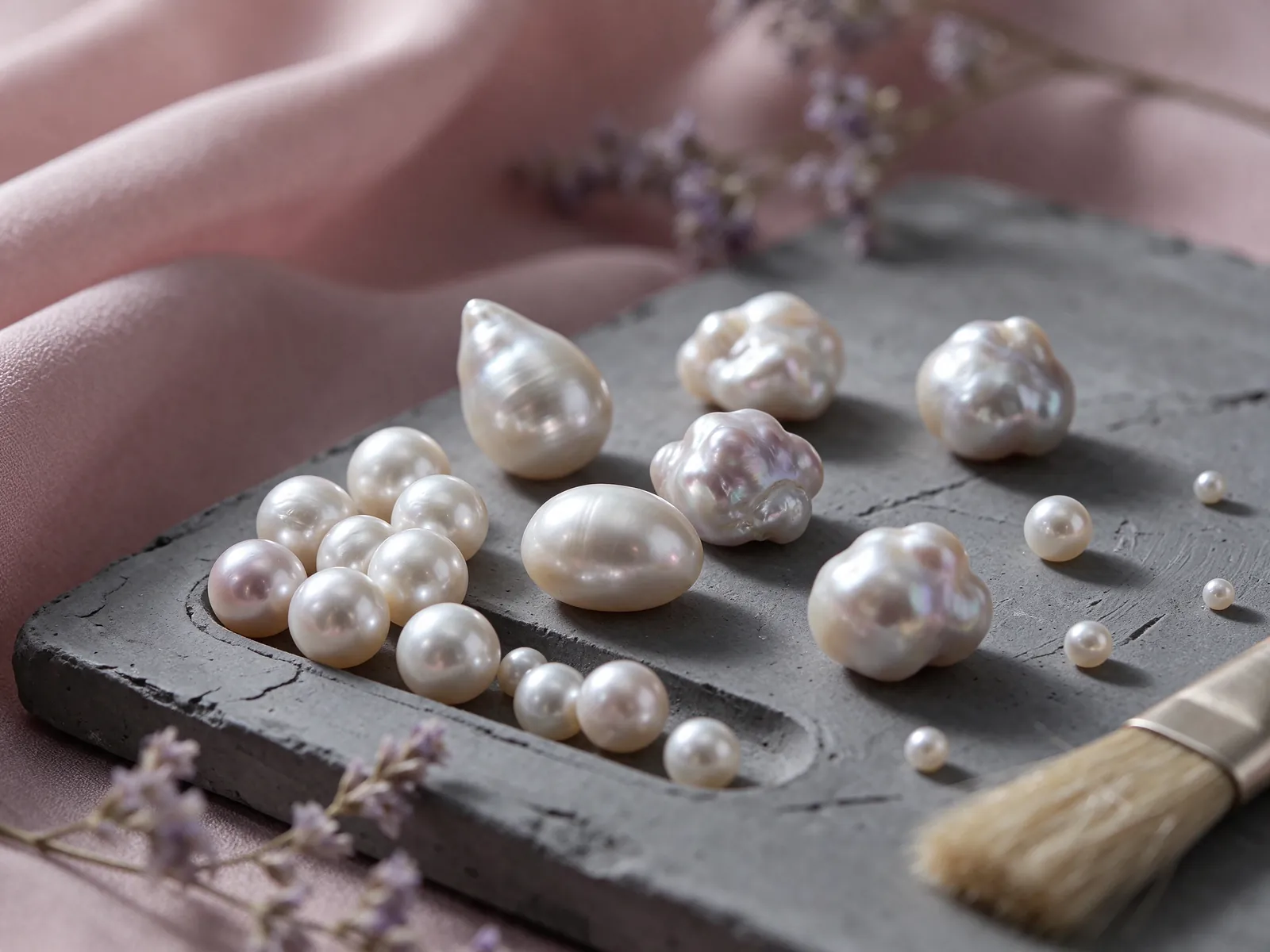
Keep separate notes for the top edge and side curve. Several pieces can look round from the front while having very different profiles. Your notes might distinguish a rounded face with a raised center from a rounded face with flatter depth. That makes it easier to explain which kind of volume you want without overrelying on one shape word.
Consider the mounting when assessing projection and wear
The profile you wear combines the pearl with its setting. A broad border can emphasize the edge, and a more exposed curved surface can emphasize the dome. Those effects are visual, not universal durability claims. In a side view, locate the visible pearl curve, the support beneath it, and the outline of the complete piece. This prevents you from attributing all of the finished height to the pearl alone.
Different jewelry positions raise different practical questions. An earring sits beside the ear and hair; a pendant must hang in the intended direction; a ring moves with your hand near sleeves, pockets, and objects you hold. Think about those movements when comparing profiles. A low setting does not eliminate the possibility of contact, and a more projected form does not by itself prove that a piece will feel uncomfortable.
Look at ordinary movement rather than testing with impact
During a try-on, turn your head or adjust a collar gently to observe the piece in context. For a ring, notice where the dome sits as you open and close your hand naturally. Never knock it against a surface as a test. Without a try-on, use the actual piece's stated dimensions and side views rather than estimating size from a photograph.
Give color and luster their own place in the comparison
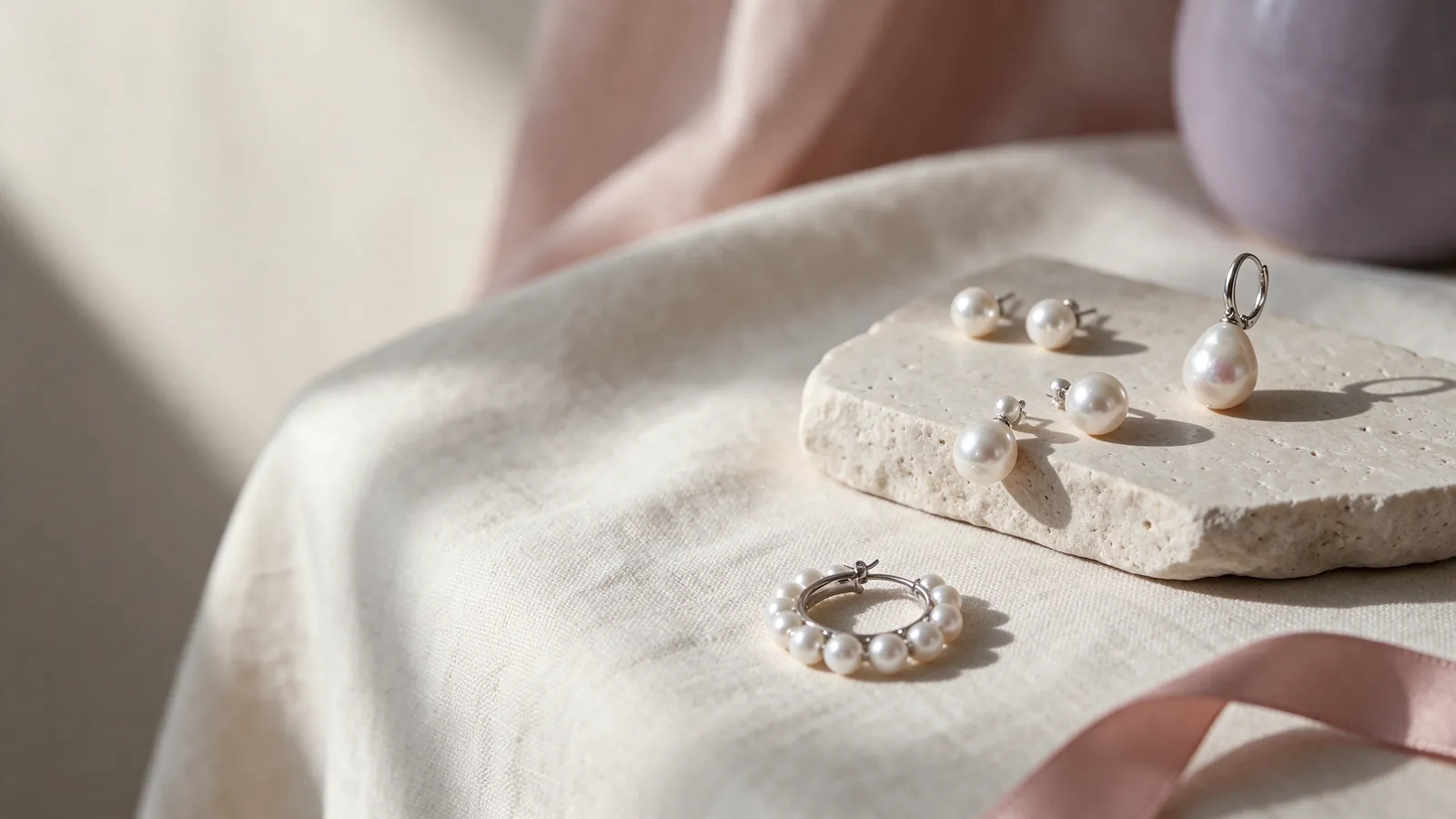
A curved pearl surface can make a reflection particularly noticeable, but a single bright spot is not a complete assessment. Consider the rest of the surface and compare under similar lighting where possible. GIA names seven pearl quality factors: size, shape, color, luster, surface quality, nacre quality, and matching. The dome belongs to the shape discussion; it does not settle all of the other factors or establish an overall grade.
The pearl color guide can help separate bodycolor from a visible overtone. GIA also identifies orient as a distinct color component, and not every pearl has all three. For styling, compare the visible color near garments you often wear rather than relying on a screen against an unrelated background. Differences between photographs may reflect lighting, so they should not be used alone to infer species or treatment.
Check a pair for the balance you actually want
With earrings, compare the direction of the outline, position of each raised center, luster, and color side by side. Look for a visual relationship that fits the design. A deliberately asymmetric pair need not follow the same expectations as a symmetric one, and pleasing balance does not require you to claim that every small detail is identical.

Use the dome as a focal shape beside hair and clothing
A domed face offers concentrated visual area that can stand out against a simple outfit. If you wear your hair up, an earring's outer edge may become more visible; with hair down, check whether the silhouette is partly hidden. A pendant benefits from a neckline that lets its shape read clearly. Start with the garment and hairstyle you usually wear, rather than choosing from a close-up photo with no surrounding context.
Compare stick pearls if you are deciding between a compact curved face and a more extended line. The comparison can reveal whether you prefer width, length, or a combination; it is not an instruction to wear both forms together. When adding a dome to jewelry you already own, reduce competing focal points first. This makes it easier to see whether the new outline adds the proportion you wanted.
Adjust the outfit rather than assigning the shape to one occasion
For dressier clothing, try a clear collar line with fewer additional accessories. For a casual look, compare the piece against a plain shirt before adding a busy pattern. Strong buttons and prints may compete with the outline. These adjustments concern visual proportion; a dome does not need to be reserved for a particular age or a single category of event.

Keep care focused on the pearl, not just the metal frame
GIA places pearl at 2.5 on the Mohs hardness scale. A substantial-looking frame therefore does not remove the need to protect the pearl surface. After wearing, use a very soft, clean cloth on accessible areas and store the piece separately from jewelry that could rub against it. Avoid pushing a sharp tool under a rim to remove dirt; a less visible edge still needs gentle treatment.
GIA advises against ultrasonic and steam cleaning for pearls, and warns about acids, perfume, hair spray, and excessive heat. Apply sprays before putting jewelry on and wipe the pearl gently after taking it off. Do not assume the dome can be soaked freely because its front looks smooth. If the piece also includes stringing that has been cleaned with water, allow the string to dry completely before wearing it.
Treat changes at the edge as a reason to pause wearing
Unexpected movement or a change between the pearl and mounting calls for caution. Do not press the pearl down, pry at the edge, or attempt a glue repair yourself. Stop wearing the piece and describe the change to a professional familiar with pearl jewelry. The actual construction, rather than the word domed, determines what assessment or care is appropriate.
For help comparing a half-dome profile with other pearl shapes, contact Flint Jewelry on WhatsApp +85260106207. Describe the top outline, side height, and wearing position you prefer.
| View or feature | What to notice | Practical choice | Conclusion to avoid |
|---|---|---|---|
| Front outline | Round, oval, or teardrop edge | Choose compact area or a longer line | Identifying origin from the outline |
| Side curve | Rise of the center above the edge | Compare projection with daily movements | Estimating dimensions from an unscaled photo |
| Mounting and back | Metal support versus exposed pearl | Understand the complete worn profile | Calling every flat back Mabé |
| Surface and color | Reflections and visible color components | Compare with familiar garments and similar lighting | Judging all quality from one bright spot |
| Two-piece balance | Orientation, color, and luster together | Assess the relationship intended by the design | Assuming every detail must be identical |
Pearl knowledge and authoritative references
GIA lists 7 pearl quality factors: size, shape, color, luster, surface quality, nacre quality, and matching. A domed profile describes shape and cannot replace assessment of the other factors.
Read the reference for this factFrequently asked questions
Is half round a description of how a pearl was cut?
Not by itself. It describes a profile in this guide, not a proven cutting process. Information about the actual pearl's formation and construction must come from its identification and description rather than from the shape phrase.
Can a teardrop-shaped front also be domed?
Yes. The outer outline and raised side profile are separate observations. WSP discusses teardrop outlines in its Mabé article, but a teardrop dome seen in jewelry is not automatically identified as Mabé by appearance alone.
What if the pearl's base is hidden inside the setting?
Use the visible side curve, front outline, complete profile, and written pearl description. A back view may show only the mounting. Ask for useful views or construction information rather than attempting to remove the pearl yourself.
Does stronger projection mean a more valuable pearl?
Projection is a design and shape observation, not a standalone value conclusion. GIA lists seven quality factors, including color, luster, surface quality, nacre quality, and matching alongside size and shape. A profile should also suit the way you plan to wear the piece.
How can I keep a dome pendant visible against a printed shirt?
Check where it sits relative to the neckline and pattern. Compare with fewer additional accessories, or try a plain shirt to see the outline more clearly. Choose the combination that preserves the focal shape without treating one clothing style as mandatory.
Updated: