
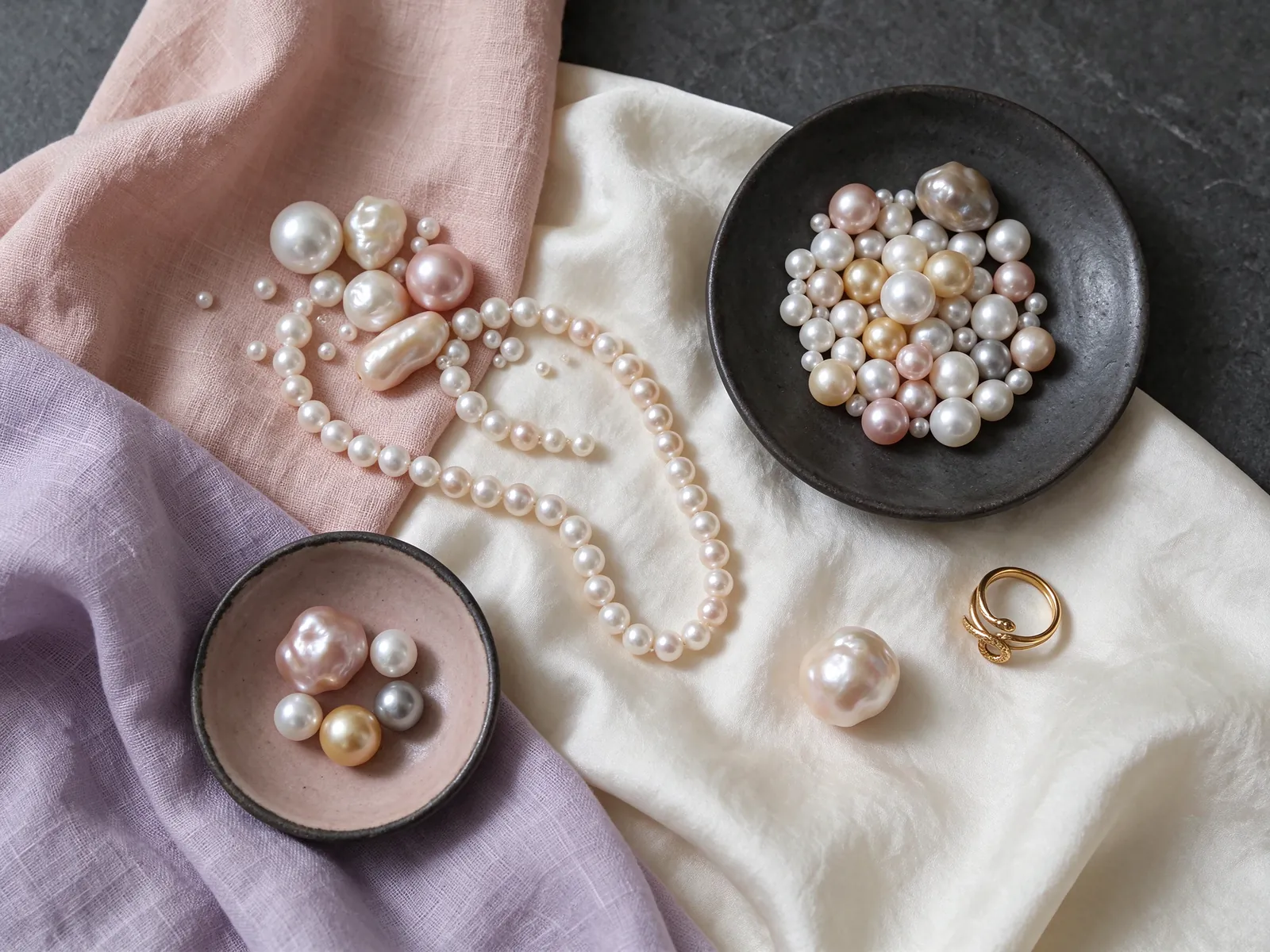
How does an orange pearl pendant top work with your wardrobe when styling an orange freshwater pearl pendant?
Begin with your wardrobe rather than an isolated color swatch. An orange pearl pendant can become the warm accent in a white shirt, an ivory sweater or a navy dress, but each background changes how prominent it feels. A quiet apricot impression and a bright orange impression serve different styling goals. Looking at pearl pendant silhouettes helps you decide whether you prefer a small point of color, a longer vertical line or a decorative frame. There is no need to match every accessory to the same orange tone.
Choose a position that makes the complete pearl visible. A V-neck can direct attention toward a centered pendant, provided the pearl does not keep catching at the fabric edge. With a crew neck, test a position entirely above the collar or entirely over the fabric. A turtleneck calls for attention to texture: a fine, smooth knit provides a different background from bulky stitching. Skin-tone categories cannot substitute for trying the actual shade against the clothing and lighting you expect to use.
How should you check chain compatibility for an orange pearl pendant top when wearing an orange freshwater pearl pendant?
The chain's thickest link is only part of the fitting check. Compare the bail's inside opening with the clasp, end tag and connecting rings too. Passing the chain through should not require squeezing or twisting the fittings. Then watch the pendant while turning and sitting: it should not repeatedly catch on the chain pattern or tip forward. If you already own a chain, use that specific chain for the comparison. An orange freshwater pearl pendant description does not specify clasp compatibility.

Read orange as a color description, not an identity statement
The word orange can cover a range from soft peach-orange to a stronger, clearer warm impression. View the shade in gentle daylight, then check it under the indoor light where you will wear it most often. Keep the background similar when comparing photographs, since lighting and camera settings can change apparent saturation. A pink pearl pendant can provide a useful neighboring color direction if you are undecided. Compare it with the same outfit instead of treating pink and orange as quality categories.
GIA separates bodycolor, overtone and orient, and explains that not every pearl shows all three. Bodycolor is the principal overall color. Overtone is an additional color impression over it, while orient describes a richer rainbow-like effect. These terms can help you communicate whether you prefer an overall orange appearance or a warmer base with a softer pink impression. None of them alone proves pearl type, geographic origin, treatment status or natural-versus-cultured identity.
Keep natural color and natural pearl formation separate
Ask what pearl type is stated and whether color treatment is disclosed. When natural color is mentioned, clarify that the statement concerns color rather than how the pearl formed. Cultured identity does not automatically mean treated color; natural color does not automatically mean a natural (non-cultured) pearl. If documentation accompanies the jewelry, read its actual conclusions and the item it covers. An orange appearance is not enough to establish freshwater identity, even when another orange pearl elsewhere is described as freshwater.

Compare reflections, surface features and the full outline
Color is one part of a broader assessment. GIA lists seven pearl quality factors: size, shape, color, luster, surface quality, nacre quality and matching. For a single pendant, use this framework to organize questions about the pearl and its setting rather than to calculate value from the orange hue. If the pendant will be worn with earrings, matching also offers a way to consider coordination. A harmonious set can relate through color or shape without making every piece identical.
Look at reflections as you gently rotate the pendant, then examine visible surface details from the front and sides. A close look and a normal wearing-distance view answer different questions: one reveals detail, while the other shows the overall effect. Compare pieces in similar light so that a brighter photograph does not masquerade as better luster. Symmetry may appeal to someone seeking a clean outline, while a less regular shape may suit a relaxed look. Shape preference is not evidence of pearl formation or origin.
Check which part a dimension actually measures
A pearl diameter and the pendant's total dimensions are not interchangeable. A tall bail lengthens the silhouette, and a wide frame increases the space it occupies on a neckline. Identify whether a measurement covers the pearl, overall height, overall width or bail opening. Use front and side views to understand the complete form. Do not borrow dimensions from a similar-colored piece, and do not assume a pearl-only measurement explains how the setting will fit against your collar.

Let the frame support the warmth rather than overpower it
Metal appearance changes the boundary around the pearl. A warm-looking frame may blend with its orange impression; a cool-looking frame may make the color stand out more distinctly. The design discussion around an 18K gold pearl pendant can help you compare that warmth with jewelry you already wear. A platinum pearl pendant offers a contrasting direction. These comparisons do not establish that an orange design is available in a particular material, and they do not replace checking its actual construction.
Notice the proportion of visible metal to pearl. A minimal bail keeps the warm color central, whereas a broader frame introduces a second focal element. Lay your chain against the same clothing background and consider whether its pattern is too prominent for the effect you want. Mixed metal colors can be a deliberate style choice. A perfectly coordinated color is less useful if the chain catches, the pendant turns sideways or the combination sits at an awkward point on your neckline.
Use precise material names without assuming a specific design
The material directions to discuss are 18K 750 white gold, 18K 750 yellow gold, 18K 750 rose gold, PT950 platinum and PT900 platinum. Listing a direction does not mean a particular orange pendant exists in every option. Explain the visual contrast you prefer, then address bail shape, frame proportions and chain fit separately. A metal name is also not a universal guarantee that the complete piece will suit every person with sensitive skin.
Decide between a simple accent and a decorative silhouette
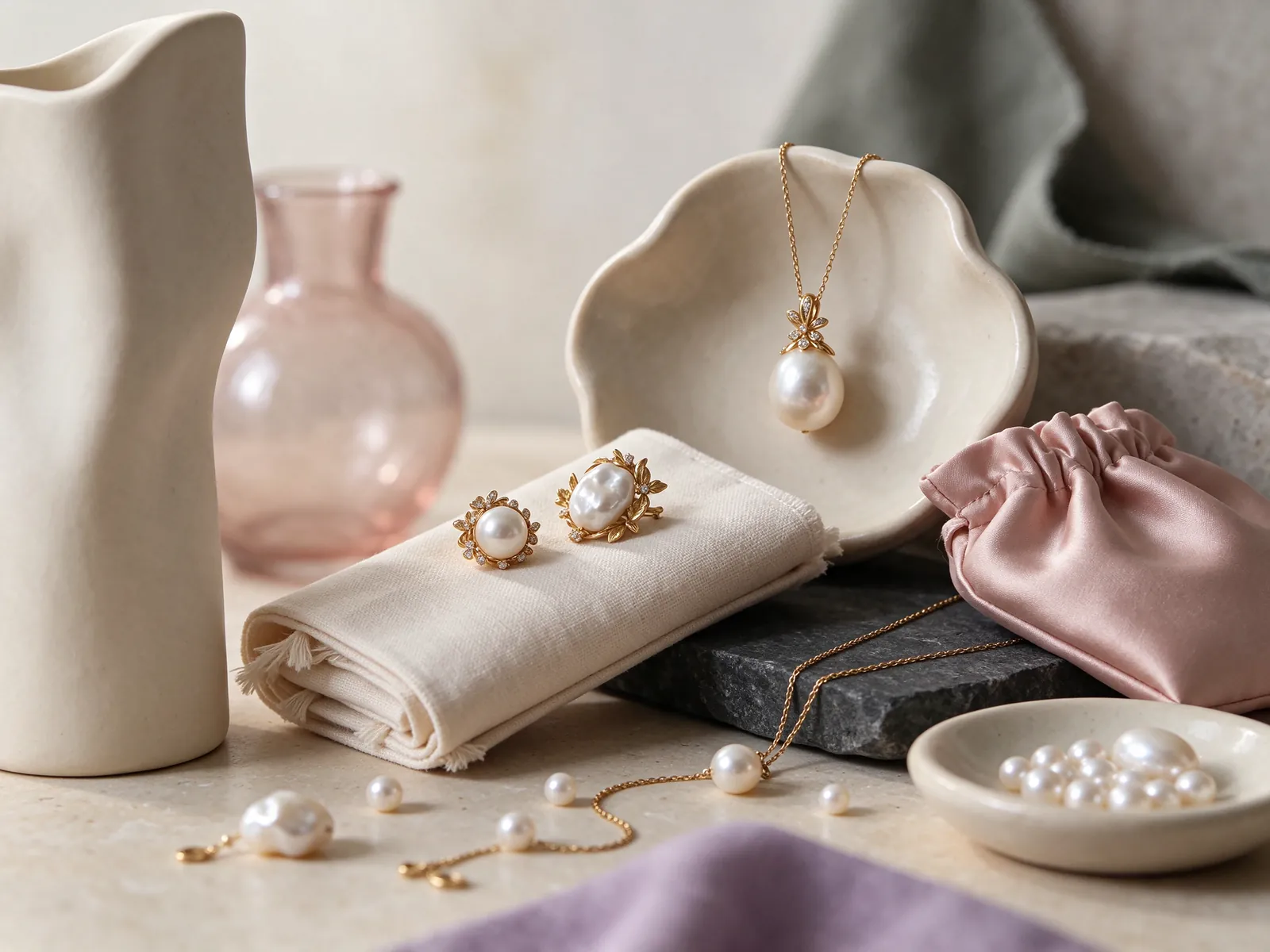
A single pearl with a restrained bail is a clear starting point when the color should lead. If you want softer metal curves, a ribbon pearl pendant illustrates how lines can direct attention around the pearl. Pay attention to whether the pearl sits inside those lines or below them, since the total height and the point of emphasis change. A silhouette comparison is not a statement that ribbon designs use orange pearls or share a particular pearl identity.
A flower pearl pendant offers a way to think about broader framing and a more decorative outline. Against a large clothing print, detailed metalwork can compete for attention. Against plain fabric, the outline is easier to read. Since orange already creates a warm accent, begin with the pendant alone and add other jewelry one piece at a time. You can then decide whether earrings or a ring complement it or make the outfit feel visually crowded.
Try the pendant in the movements your day involves
A straight-on mirror view misses practical details. Sit to see whether the collar lifts the pendant, turn to check whether it returns toward the center, and inspect the side view for tipping. Add a jacket or scarf if you routinely wear one, considering both coverage and possible snagging. A stable position that keeps the complete orange accent visible may serve your daily wardrobe better than a more elaborate frame.

Make gentle care part of the selection decision
Pearl has a Mohs hardness of 2.5 according to GIA. Care should therefore be chosen for the pearl, not simply for the apparent strength of the surrounding metal. Wipe after wear with a very soft, clean cloth, and store it apart from pieces that could rub against the surface. The orange hue does not establish greater durability. Avoid assuming that a cleaning method suitable for a harder gemstone is appropriate for the complete pendant.
Keep perfume, hair spray, acids and excessive heat away from the pearl. Put the pendant on after grooming so that sprays are less likely to land directly on it. Taking it off before exercise, swimming or household cleaning helps limit unwanted contact. GIA specifically advises never using ultrasonic or steam cleaners for pearls. The color description is not a promise of permanent appearance under all conditions, so do not use it as a reason to relax care.
Do not force a stuck fitting or scrub a stubborn mark
If a soft cloth does not remove a mark, avoid household cleaning chemicals, abrasive products or hot soaking. Settings may have different handling needs. If the chain or clasp begins catching, stop pulling and keep the chain with the pendant when describing the problem. Note whether the change concerns the pearl surface, bail or hanging position. This supports a useful discussion without assuming a particular repair result or trying to correct the issue through force.

Turn a favorite look into a practical comparison
Before choosing, list what matters to you: a soft or vivid orange impression, clear reflections, an uncomplicated outline and a chain you can comfortably use. Keep pearl identity, treatment information and dimensions in separate categories so that enthusiasm for the color does not obscure another unanswered question. Read whether a description concerns a pendant top or a necklace with a chain. A styled photograph showing a chain does not, by itself, establish what comes with the piece.
For a gift, begin with the recipient's clothing and wearing habits. Her usual necklines, preferred warm or cool metal appearance and interest in necklaces are more helpful than a claim that orange suits everyone. If her color preference is uncertain, compare peach-orange and brighter orange impressions against familiar wardrobe colors together. Practical comfort, ease of pairing and willingness to follow gentle care can make the choice meaningful without invoking unsupported rarity or investment claims.
Explain the wearing goal in a general selection inquiry
Mention the clothes you expect to pair with the pendant, the shade you enjoy, your existing clasp style and the position you want at your neckline. Include separate questions about pearl type and color treatment. This makes the discussion concrete without assuming that a particular orange shade or size is available. Return to the same everyday test at the end: will you enjoy wearing it regularly, and does its care fit your habits? For questions about choosing an orange pearl pendant, contact us on WhatsApp +85260106207: https://wa.me/85260106207
| Decision | Comparison method | Useful question |
|---|---|---|
| Color direction | Use the same outfit and similar light for soft and vivid orange impressions | Is the color treated, and what color component is described? |
| Luster and details | Turn the pearl to compare reflection clarity and visible surface features | What pearl type and quality information is stated? |
| Overall silhouette | Separate pearl diameter from frame width and total height | Which part of the pendant does each dimension measure? |
| Chain fit | Check the bail against the chain, clasp and end fittings | Does the widest fitting pass without force? |
| Everyday use | Test sitting, turning and pairing with outer layers | What care suits the pearl and this setting? |
Pearl knowledge and authoritative references
GIA identifies seven pearl quality factors: size, shape, color, luster, surface quality, nacre quality and matching. Orange describes a color impression, not the complete set of quality factors.
Read the reference for this factFrequently asked questions
Can an orange appearance prove freshwater pearl identity?
No. Color alone does not establish pearl type. An orange freshwater pearl pendant description should be supported by a clear statement about pearl identity, separate from any information about color treatment.
Is natural color the same as a natural (non-cultured) pearl?
No. Natural color concerns the color description, while natural-versus-cultured identity concerns formation. Ask about these separately and read the actual conclusions of any accompanying documentation.
What if my chain links fit through the bail but the clasp does not?
The complete fitting has not passed the compatibility check. Do not squeeze or bend the clasp to force it through. Compare the bail with the chain's widest component and discuss the specific chain and pendant together.
Will a flower frame make the same-size pearl look larger?
A broader frame increases the complete pendant's visual footprint, but it does not change the pearl's size. Look at overall width and height as well as pearl dimensions, especially when pairing with a narrow neckline or patterned clothing.
Does orange color change the pearl's cleaning requirements?
The color name does not establish cleaning tolerance. GIA advises against ultrasonic and steam cleaning for pearls. Use a very soft, clean cloth for routine care and avoid perfume, acids, abrasives and excessive heat.
Updated: