

What chain and hole details distinguish a through pearl pendant, a floating pearl pendant necklace and a slide pearl pendant necklace?
The first useful question is where the chain goes. A through pearl pendant is understood through a chain passing through a drilled pearl rather than a conspicuous bail above it. The openings may meet the chain directly or include metal fittings. Requesting a side view helps reveal this relationship, which can disappear in a front-facing image. Notice how much metal you see beside the pearl and whether that detail matches the outline you prefer.
The phrase floating pearl pendant necklace emphasizes appearance. It does not identify every hidden connection or operation. When looking at a pearl pendant, distinguish the visual effect from the actual chain route: a clean outline and a through-hole construction are related ideas, not interchangeable proof. Also inspect the back and clasp. Understanding the complete assembly helps you compare designs without guessing what a photograph leaves out.
Can pearl movement and length adjustment differ on a through pearl pendant, a floating pearl pendant necklace or a slide pearl pendant necklace?
Yes. A pearl might move on the chain while the necklace's wearing length remains fixed; a length-adjusting mechanism can also exist without a freely moving pearl. Treat a slide pearl pendant necklace label as the beginning of a conversation. Ask what moves, how the length changes, and whether the pearl can be removed. Each answer addresses a different part of everyday use.

Decide which kind of adjustment you will actually use
Think about the adjustment you want before judging the design. If your aim is to change the pearl's height with different tops, ask about the necklace's wearing length. If your concern is keeping the pearl at the center, ask how its position is controlled. Try the necklace with the clasp correctly placed, then sit and turn. This reveals whether repositioning is part of wearing it and whether you are comfortable with that routine.
For an intentionally downward silhouette, a Y-shaped pearl pendant necklace provides a useful comparison. Its line directs attention below the main necklace curve, whereas a through-style pearl connects visually to chain on either side. Compare what each outline does with your clothes rather than assuming all sliding names describe the same function. Being able to adjust one part of a necklace does not necessarily mean every part is adjustable.
Removal depends on the ends, not just the opening clasp
A clasp can open even when an end fitting prevents the pearl from coming off the chain. Ask for an explanation of the removal method instead of testing it by tugging. Do not twist caps or force the chain end into a hole. If you want to use several chains, establish that requirement early so you can compare connections built for the way you intend to wear them.
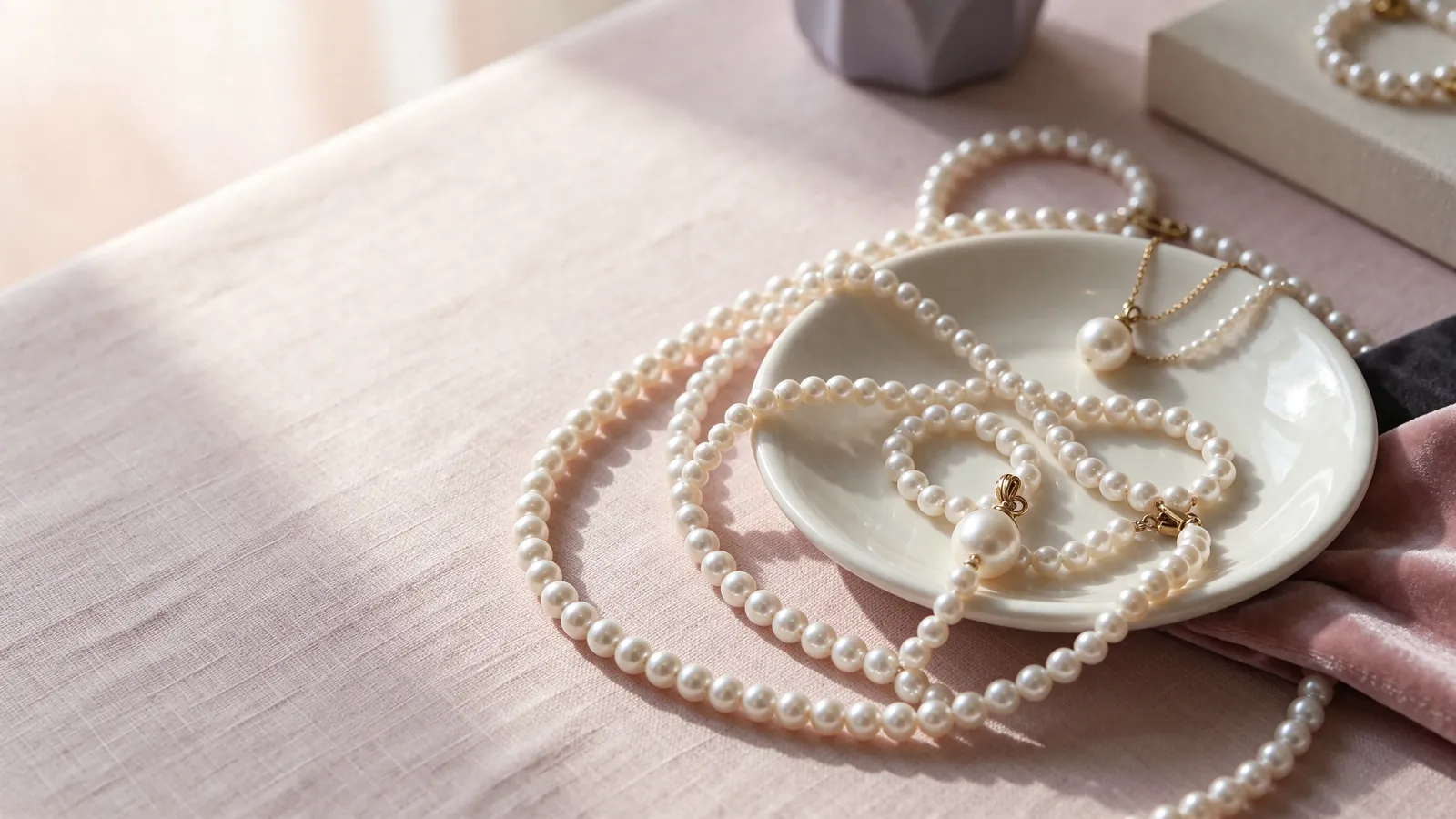
Examine the chain ends and the pearl openings together
Selecting a chain for pearl pendant wear means considering the entire attachment. Fine chain links do not tell you whether the connecting sections or ends can pass through a drilled pearl. Compare those parts as carefully as the chain's color and visual weight. A chain that works through a pendant bail may not work in a through-pearl arrangement, so existing jewelry is not automatically compatible simply because it looks delicate.
At a capped opening, look at the edge where metal meets pearl and the symmetry of the visible fittings. At an uncapped opening, look for obvious chips or irregular edges. These checks help you judge the visible finish, but they do not establish origin, pearl species, treatment status, or a promise against wear. If the chain catches during an intended movement, stop rather than pulling harder to see whether it will pass.
A separate pendant still needs a compatible connection
If you are considering a pearl pendant top separately from a chain, find out how the two pieces attach. Sold separately does not mean usable with any chain. Bring photos of your full chain, including both ends, so the discussion goes beyond link style. The decisive detail may be a fitting that is normally hidden behind your neck.
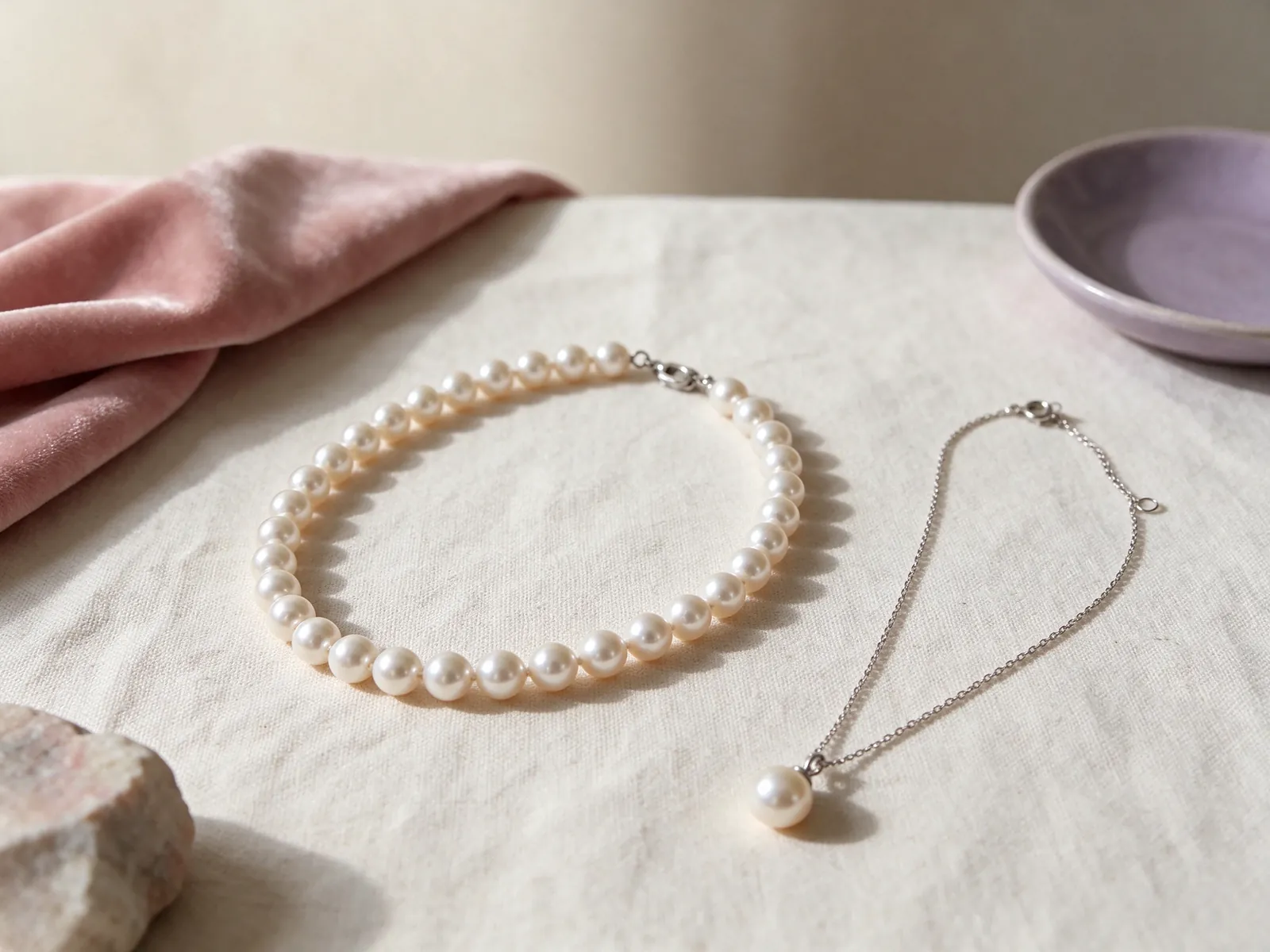
Plan placement around fabric, not a universal chain length
Use a familiar top when assessing where the pearl lands. With a crew neck, compare a pearl clearly above the fabric edge with one clearly below it. A position directly on the edge may be partly obscured as the fabric moves. With a button-front shirt, check whether the pearl overlaps a button or the placket. Repeat the check while seated, because the neckline and fabric folds may look different from a standing mirror view.
For a V-neck, allow the necklace curve and the neckline to remain individually visible; the pearl does not have to sit at the deepest point. If you prefer a pendant over a high collar, compare the placement of a long pearl pendant necklace. That comparison can clarify whether you want a low focal point or a compact horizontal one. Neither preference requires a single prescribed length for every wearer.
Give each necklace its own space when layering
Place a second necklace at a different visible level, then check whether its chain crosses the pearl or catches near a fitting. Move your shoulders and look down to see how the arrangement behaves. If tangling is frequent, a single necklace may better preserve the uncluttered effect. Layering should suit actual movement rather than depend on carefully arranging both chains for a still photograph.

Assess the pearl beyond one bright photograph
In a minimal through-style outline, the pearl supplies most of the visual focus. GIA identifies seven value factors: size, shape, color, luster, surface quality, nacre quality, and matching. Begin with the clarity of reflected light, then compare the outline and visible surface from several directions. A strongly lit highlight cannot assign a quality grade. Shape or color alone also cannot establish a pearl's origin, natural-versus-cultured identity, or certificate.
Color can include bodycolor, overtone, and orient; GIA explains that not every pearl exhibits all three. Use comparable lighting and clothing colors when deciding what appeals to you. If you like a rhythm of several pearls instead of one focal point, compare a multi pearl pendant. With multiple pearls, their relationship in color, shape, and arrangement becomes part of the decision, while a single pearl keeps attention on its own appearance.
Consider how rotation changes the visible face
Ask whether rotation is possible in the specific assembly. If the pearl can turn, examine the other faces that may become visible during wear, not just the face used in a product image. The drilling direction contributes to presentation, but it is not a quality grade. A fitting covering a small area near a hole likewise does not reveal the condition of the entire pearl surface or nacre.

Prioritize swapping, simplicity, or gifting deliberately
If swapping necklaces is central to your plan, focus on how the connection opens. A pearl necklace enhancer uses an opening attachment concept rather than simply a chain passing through a pearl. Explore that distinction before choosing a through-style outline for its minimal front view. A visually understated connection may be permanent in normal use, while an opening connection may make different styling choices possible; the appearance alone does not answer the question.
A gift is easier to choose when you know how the recipient wears jewelry. Consider their usual necklines, whether they layer necklaces, and whether they like adjusting a clasp or simply putting on a complete piece. More movement is not always more useful. A photo of a favorite top or existing necklace gives a concrete starting point for discussing pearl placement without assuming a particular chain length will suit them.
Turn style names into an operation checklist
Your checklist can be short: how is wearing length changed, how is the pearl positioned, and how would a chain be replaced? Add side views of the hole fittings and a look at the clasp. Fixed positioning or a non-removable pearl can suit someone who wants a complete necklace. Judge those characteristics against your own use instead of treating them as faults by definition.

Clean and store the assembled necklace with the pearl in mind
GIA places pearl at 2.5 on the Mohs hardness scale and advises never using ultrasonic or steam cleaners on pearls. The chain's metal appearance does not change that instruction for an attached pearl. Wipe the pearl gently after wear with a very soft, clean cloth. Near the openings, avoid sharp implements and do not push cleaning tools into the hole or beneath a cap.
Keep the pearl away from acids, perfume, hair spray, and excessive heat. Finish using sprays before putting on the necklace, and keep it apart from harder jewelry in storage to avoid rubbing. If dirt is difficult to reach near the opening, or a fitting appears to have shifted, have a jewelry professional assess the piece. Pulling the pearl, twisting the fitting, or dismantling the connection is not a routine cleaning method.
Do not pull a knot through the pearl
Before putting the necklace away, gently arrange both sides of the chain and check for tangles. Do not use the pearl as a handle to pull a knot tight or force it through an opening. If other parts of the necklace use string, GIA says the string must dry completely after cleaning strung pearls with water before wear. Follow the care needs of the whole assembly.
To discuss a through-style outline with your everyday neckline, contact Flint Jewelry on WhatsApp +85260106207. Share your preferred pearl placement, a familiar neckline, and photographs of an existing chain so the conversation can focus on connections, length adjustment, and your plans for changing chains.
| Feature | Check this area | Ask this question | Use it to decide |
|---|---|---|---|
| Chain placement | The pearl's front and sides | Does the chain pass through the pearl? | Whether you prefer a horizontal or hanging outline |
| Opening finish | Hole edges and metal fittings | How are the chain and pearl joined? | Whether the visible metal suits the look |
| Pearl position | The necklace during gentle movement | Does the pearl move or require centering? | Whether the wearing routine feels practical |
| Adjustable length | The clasp and adjustment parts | Which part of the placement can change? | Whether it works with your usual necklines |
| Chain replacement | End fittings and attachments | Can the pearl come off, and by what method? | Whether the connection matches your swapping plans |
Pearl knowledge and authoritative references
GIA identifies seven pearl value factors: size, shape, color, luster, surface quality, nacre quality, and matching. A through-style single pearl can be assessed visually for luster, outline, and visible surface; matching is particularly relevant when comparing several pearls. These factors are not certification or a grade for an individual item.
Read the reference for this factFrequently asked questions
Does a slide necklace name tell me how the clasp adjusts?
No. Ask separately about the pearl's movement and the necklace's wearing length. A style name does not explain which component moves or how its mechanism operates.
Can I use a pearl's round shape to identify its origin?
No. GIA's quality guidance does not make shape or color proof of origin or natural-versus-cultured identity. Assess the appearance for styling without treating it as identification.
Why check the necklace while sitting down?
Sitting can change fabric folds and the visible relationship between pearl and neckline. It also lets you observe whether the pearl or clasp shifts in a way that affects your preferred placement.
Is a fixed pearl a poor choice for a gift?
Not necessarily. It may suit someone who prefers a complete necklace and does not plan to move the pearl between chains. The recipient's routine matters more than the number of adjustment features.
What if the chain snags at a pearl opening?
Stop the movement rather than pull harder. Avoid probing the hole or twisting the fitting, and have a jewelry professional assess the connection if the behavior is unexpected.
Updated: